 Talmud Bavli
Yevamot 30a : Youtube
Daf TubeYoutube
2 video classes :
Yevamot Page 30a
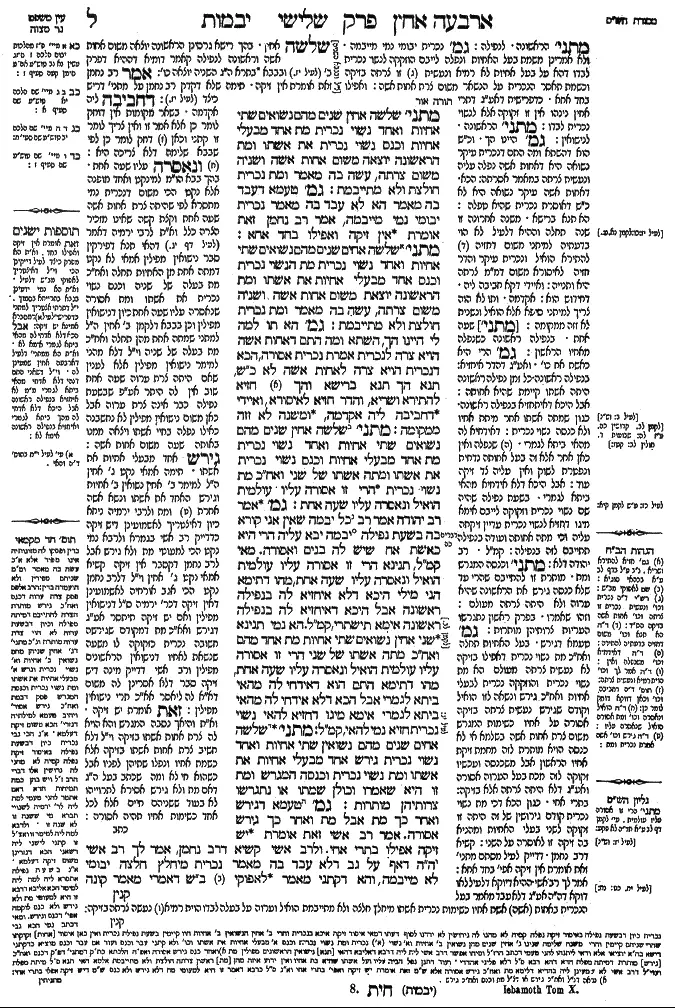
Yevamot 30a - Guemara
מתני׳ שלשה אחין שנים מהם נשואים שתי אחיות ואחד נשוי נכרית מת אחד מבעלי אחיות וכנס נשוי נכרית את אשתו ומת הראשונה יוצאה משום אחות אשה ושניה משום צרתה עשה בה מאמר ומת נכרית חולצת ולא מתייבמת:
גמ׳ טעמא דעבד בה מאמר הא לא עבד בה מאמר נכרית יבומי נמי מייבמה אמר רב נחמן זאת אומרת אין זיקה ואפילו בחד אחא:
מתני' שלשה אחים שנים מהם נשואים שתי אחיות ואחד נשוי נכרית מת הנשוי נכרית וכנס אחד מבעלי אחיות את אשתו ומת הראשונה יוצאת משום אחות אשה ושניה משום צרתה עשה בה מאמר ומת נכרית חולצת ולא מתייבמת:
גמ' הא תו למה לי היינו הך השתא ומה התם דאחות אשה הויא צרה לנכרית אמרת נכרית אסורה הכא דנכרית הויא צרה לאחות אשה לא כ"ש תנא הך תנא ברישא והך חזיא להתירא ושריא והדר חזיא לאיסורא ואיידי דחביבה ליה אקדמה ומשנה לא זזה ממקומה:
מתני׳ שלשה אחין שנים מהם נשואים שתי אחיות ואחד נשוי נכרית מת אחד מבעלי אחיות וכנס נשוי נכרית את אשתו ומתה אשתו של שני ואח"כ מת נשוי נכרית הרי זו אסורה עליו עולמית הואיל ונאסרה עליו שעה אחת:
גמ׳ אמר רב יהודה אמר רב כל יבמה שאין אני קורא בה בשעת נפילה (דברים כה, ה) יבמה יבא עליה הרי היא כאשת אח שיש לה בנים ואסורה מאי קמ"ל תנינא הרי זו אסורה עליו עולמית הואיל ונאסרה עליו שעה אחת מהו דתימא הני מילי היכא דלא איחזיא לה בנפילה ראשונה אבל היכא דאיחזיא לה בנפילה ראשונה אימא תישתרי קמ"ל הא נמי תנינא שני אחין נשואים שתי אחיות מת אחד מהם ואח"כ מתה אשתו של שני הרי זו אסורה עליו עולמית הואיל ונאסרה עליו שעה אחת מהו דתימא התם הוא דאידחי לה מהאי ביתא לגמרי אבל הכא דלא אידחי לה מהאי ביתא לגמרי אימא מיגו דחזיא להאי נשוי נכרית חזיא נמי להאי קמ"ל:
מתני׳ שלשה אחים שנים מהם נשואין שתי אחיות ואחד נשוי נכרית גירש אחד מבעלי אחיות את אשתו ומת נשוי נכרית וכנסה המגרש ומת זו היא שאמרו וכולן שמתו או נתגרשו צרותיהן מותרות:
גמ׳ טעמא דגירש ואחר כך מת אבל מת ואחר כך גירש אסורה אמר רב אשי זאת אומרת יש זיקה אפילו בתרי אחי ולרב אשי קשיא דרב נחמן אמר לך רב אשי ה"ה דאף על גב דלא עבד בה מאמר נכרית מיחלץ חלצה יבומי לא מייבמה והא דקתני מאמר לאפוקי ב"ש דאמרי מאמר קונה
Comments from Rashi on Masechet Yevamot Page 30a
מתני' הראשונה . לנפילה: גמ' נכרית יבומי נמי מייבמה . ולא אמרינן משמת בעל האחות ונפלה לייבם הוזקקה לנשוי נכרית לבדו דהא על בעל אחיות לא רמיא ונעשית זו צרתה בזיקה וכשמת תאסר הנכרית על הנשאר משום צרת אחות אשה: ואפילו בחד אחא . כדפרישית דאע"ג דתרי אחין נינהו אין זו זקוקה אלא לנשוי נכרית לבדו: מתני' הראשונה . לנישואין: גמ' היינו הך . וכ"ש הוא דהשתא ומה התם דנכרית עיקר נשואה היא דאחות אשה נפלה עליה ונעשית צרתה במאמר אסרתה: הכא . דאחות אשה עיקר נשואה היא לא כ"ש דאוסרת נכרית שהיא טפלה: הא תנא ברישא . משנה אחרונה זו שנה תחלה וההיא דלעיל לא הוי בדעתיה למיתני משום דחזיה להתירא הואיל ונכרית עיקר והדר חזיה לאיסורא משום דמ"מ צרתה היא ותנייה: ואיידי דקא חביבה ליה . דחידוש הוא: אקדמה . ותו לא הוה צריך למיתני סיפא אלא הואיל ונשנית לא זזה ממקומה: [מתני'] שעה אחת . בנפילה ראשונה כשנפלה מאחיו הראשון: גמ' הרי היא כאשת אח כו' . ואע"ג דהדר איחזיא: בנפילה ראשונה . כל זמן נפילה ראשונה היתה אשתו קיימת שהיא אחותה: אבל היכא דאיתחזיא בנפילה ראשונה . כגון שמתה אשתו אחר מיתת אחיו ולא כנסה נשוי נכרית: דאידחיא לה מהאי ביתא לגמרי . שנפלה ואין כאן אחר אלא זה בעל אחותה נדחית ונפטרת לשוק ואין עליה צד זיקה עוד: אבל היכא דלא אידחיא מהאי ביתא לגמרי . בשעת נפילה שהיה שם נשוי נכרית וזקוקה לייבם אימא מיגו דחזיא לנשוי נכרית עדיין זיקתה עליה וכי מתה אחותה ועודה בנפילה תתייבם לזה בנפילה: קמ"ל . רב יהודה דלא: מתני' וכנסה המגרש ומת . מותרת זו להתייבם שהרי עד שלא כנסה גירש את הראשונה שהיא ערוה ולא היתה צרתה מעולם: וזהו שאמרו . בפרק ראשון נתגרשו העריות צרותיהן מותרות: גמ' טעמא דגירש . בעל האחיות תחלה ואח"כ מת נשוי נכרית דאפילו בזיקה לא נעשית צרתה מעולם הא מת נשוי נכרית והוזקקה נכרית לבעלי אחיות ואח"כ גירש ונשאה לזו הואיל וקודם שגירש נעשית צרתה בזיקה אסורה על אחיו כשימות המגרש משום צרת אחות אשה בשלמא אי לא כנסה הויא מותרת לזה מחמת זיקת אחיו הראשון אבל משכנסה ועכשיו זקוקה לזה מכח בעל הערוה אסורה ואע"ג דלא היתה צרתה אלא בזיקה: בתרי אחי . כגון הכא דכי מת נשוי נכרית קודם גירושין של זה היתה זו זקוקה לשני בעלי האחיות ומהניא בה זיקה זו לאוסרה על השני: קשיא דרב נחמן . דדייק לעיל מסתם מתני' זאת אומרת אין זיקה אפי' בחד אחא: אמר לך רב אשי . ההיא דיוקא דלעיל לאו דוקא דה"ה אע"ג דלא עבד מאמר בעל הנכרית באחות (אשה) אשת אחיו כשימות נכרית אשתו מיחלץ חלצה ולא מתייבמת הואיל וערוה על בעלה לבדו הוית רמיא נעשה צרתה בזיקה:
Comments from Tosafot - Yevamot 30a
שלשה אחין . בהך רישא גרסינן הראשונה יוצאה משום אחות אשה וראשונה לנפילה קאמר דומיא דההיא דפרק ב' (לעיל יבמות יז.) ובבבא בתרא ה"ג השניה יוצאה כו': אמר רב נחמן זאת אומרת אין זיקה . תימה שלא דקדק רב נחמן על מתני' דריש כיצד (לעיל יבמות יז.): דחביבה ליה אקדמה . בשאר מקומות אין דוחק לומר כן אלא אמר זו ואין צריך לומר זו קתני וכאן דחק לומר כן לפי שבבא שלימה דלא צריכה היא: ונאסרה עליו שעה אחת . בהך בבא הו"מ למינקט ואחד מופנה אלא נקט הכי משום דנכרית נמי מתסרא לפי שהיתה צרת אחות אשה שעה אחת וקצת קשה שאינו מזכיר הצרה כלל וא"ת לרבי ירמיה דאמר (לעיל יבמות דף יג.) דהאי תנא דפירקין סבר נישואין מפילין אמאי לא נקט דמתה אחת מן האחיות תחלה ואח"כ מת בעלה של שניה וכנס נשוי נכרית את אשתו ומת אסורה שנאסרה עליו שעה אחת כיון דנישואין מפילין וכן בבבא דלקמן ב' אחין ה"ל למתני שמתה אחת מהן תחלה ואח"כ מת בעלה של שניה וי"ל דלא מהני למימר נישואין מפילין אלא לענין שאם היתה צרת ערוה שעה אחת שוב אין לה היתר אע"פ שבשעת נפילה כבר אינה צרת ערוה אבל כאן משום נישואין מפילין לא נחשבנה כאילו נפלה בחיי אשתו ויצאה ממנו באותה שעה משום אחות אשה: גירש אחד מבעלי אתיות את אשתו . תימה אמאי נקט ג' אחין ה"ל למימר ב' אחין נשואין ב' אחיות וגירש האחד את אשתו ונשא אשה אחרת ומת ולרבי ירמיה ניחא כיון דאיצטריך לאשמועינן דיש זיקה כדדייק רב אשי בגמרא ולרבא נמי נקט הכי למעוטי מת ולא גירש אבל לרב נחמן דקסבר אין זיקה קשיא אמאי נקט ג' אחין וי"ל דלרב נחמן נקט הכי אגב אורחיה לאשמועינן דאין זיקה דכר' ירמיה ס"ל דנישואין מפילין ואם יש זיקה תיתסר אע"ג דגירש ואח"כ מת דמקודם שגירשה חשובה נכרית כזקוקה לו משעה שנשאת לאחיו דנישואין הראשונים מפילין ורב אשי דדייק מינה דיש זיקה סבר דלא אסרינן לה משום דא"א לה ליאסר אא"כ תרי נישואין מפילין: זאת אומרת יש זיקה . וא"ת והיאך נסבה המגרש והא הויא לה צרת אחות אשתו בזיקה וי"ל דלא חשיב צרת אחות אשתו בזיקה אלא כשמת אחיו ונפלו שתיהן לפניו אבל כשהוא חי לא ומה שכתב בעל ה"ג דאם מת ולא גירש אסירא לתרוייהו לא בעוד ששניהם חיים אלא לכל אחד כשימות אחיו תהיה אסורה:
Yevamot 30a - Mishnah translated into english
MISHNA: In the case of three brothers, two of whom were married to two sisters and one who was married to an unrelated woman, the following occurred: The husband of one of the sisters died childless, and the brother who was married to the unrelated woman married, i.e., performed levirate marriage with, the deceased brother’s wife and later died himself, childless. In this situation, both women happen for levirate marriage before the other, remaining, brother. The first woman is dismissed due to the prohibition proscribing the sister of one’s wife, as she is the sister of this brother’s wife, and the second woman is dismissed due to her status as the first woman’s rival wife. Following the first levirate marriage, this second woman became the rival wife of the sister, and is therefore exempt from levirate marriage as well. If, however, the brother married to the unrelated woman performed only levirate betrothal, but had not yet consummated the levirate marriage with the sister, and he died, the unrelated woman, whose halakhic status with regard to yibbum is similar to that of a sister’s rival wife, must perform ḥalitza and may not enter into levirate marriage.
GEMARA: The Gemara deduces the following halakha from the second clause of the mishna: The reason that the mishna requires ḥalitza is specifically because he, the brother who was married to the unrelated woman, performed levirate betrothal with the sister. Consequently, had he not performed levirate betrothal with her, the unrelated woman would be permitted to enter into levirate marriage as well. This is true despite the fact that the levirate bond could potentially render her the rival wife of his wife’s sister. Rav Naḥman said: That is to say, the levirate bond is not substantial; the woman requiring levirate marriage is not considered married to the yavam. And this is true even if the levirate bond was with a single brother, as this widowed sister happened for levirate marriage only before the brother who was married to the unrelated woman; her levirate bond was with him alone.
MISHNA: In the case of three brothers, two of whom were married to two sisters and one who was married to an unrelated woman, the following occurred: He who was married to the unrelated woman died, and one of the husbands of the sisters married his wife, and then died childless as well. The first woman, i.e., the sister who was originally married to the brother who performed levirate marriage, is dismissed and is exempt from levirate marriage due to her status as the sister of his wife. And the second woman, i.e., the unrelated woman who had entered into levirate marriage, is dismissed as her rival wife. If, however, he performed levirate betrothal with the unrelated woman, and then died, then this unrelated woman must perform ḥalitza and may not enter into levirate marriage, as levirate betrothal rendered her status with regard to yibbum as similar to the rival wife of his wife’s sister.
GEMARA: The Gemara asks: Why do I need this mishna as well? This principle is identical to the principle behind the ruling in the previous mishna, and therefore this ruling can easily be deduced from the previous ruling. Now, just as there, when his wife’s sister became rival wife of the unrelated woman who was already the brother’s wife, you say that the unrelated woman is forbidden despite the fact that the forbidden relative joined later, here, where the unrelated woman became the rival wife of his wife’s sister afterward, is it not all the more so clear that she is exempt as a rival wife?
The Gemara answers: This mishna was unnecessary, and this is how the duplication occurred: The tanna taught this mishna at first, and with regard to that previous case saw it fitting to render her permitted, and he permitted her to the brother, for he held that if the forbidden relative joined the man’s household later, then she would not render the first wife prohibited as the rival wife of a forbidden relative. And then the tanna subsequently retracted and saw it fitting to render the woman forbidden. He decided that this woman should be considered the rival wife of a forbidden relative as well, and therefore rendered her forbidden to the brother.
And since that case was novel, it was beloved to him and he taught it earlier. In truth, it would have now been possible to eliminate the present mishna, for there was no longer any novelty in it; its ruling could be derived by an a fortiori argument from the previous ruling. However, a mishna does not move from its place. Since this version of the mishna had already been fixed, it was deemed inappropriate to remove it completely, and it remained in place despite the fact that it was no longer necessary.
MISHNA: In the case of three brothers, two of whom were married to two sisters and one who was married to an unrelated woman, the following occurred: One of the husbands of the sisters died, and he who was married to the unrelated woman married the deceased husband’s wife, and then the wife of the second brother, the other one of the sisters, died. Afterward, the brother who was married to the unrelated woman died, leaving two women for levirate marriage before the remaining brother: The unrelated woman and the woman who was previously prohibited as the sister of his deceased wife. In this case, the sister is forbidden to him forever. She is not forbidden due to her status as his wife’s sister, as his wife already died and one’s wife’s sister is permitted after the wife’s death. However, since she was already forbidden to him at one time, she is forbidden to him forever. When she first happened before the brothers for levirate marriage, before the third brother married her, she was forbidden to the second brother as his wife’s sister. Therefore, she is forbidden to him forever. In addition, she exempts her rival wife, the unrelated woman, from levirate marriage.
GEMARA: Rav Yehuda said that Rav said a principle on this matter: Any yevama to whom the verse “Her brother-in-law will have intercourse with her” (Deuteronomy 25:5) cannot be applied at the time that she happens before him for levirate marriage because she was forbidden to him at that moment, is then forever considered to be like the wife of a brother with whom she has children, and she is forbidden to him. The Gemara asks: What is Rav teaching us with this statement? We already learned this in the mishna: She is forbidden to him forever, since she was forbidden to him at one time.
The Gemara answers: This was necessary lest you say that this ruling applies only in cases where she was not eligible at all during the first time that she happened before the brothers for levirate marriage. Such is the case in the mishna, when she was forbidden to the yavam as his wife’s sister the entire time that she was eligible for levirate marriage. Even though his wife died after the other yavam married this woman, because she was forbidden to him that entire time, she is forbidden to him forever. But in cases where she was eligible at some point during the first time she happened before the brothers for levirate marriage, such as in the scenario where the brother’s wife died prior to the time when his other brother married her, one could say that she would be permitted. In that case, since the prohibition had in the meantime been canceled and she was indeed rendered eligible for levirate marriage with him during the period of the first time she happened before him, one might think that she would now be permitted. It is for this reason that Rav teaches us that even in this scenario she would be forbidden to him forever.
The Gemara raises an objection: We learned this as well, as a later mishna (32a) states: In the case of two brothers who were married to two sisters, if one of them, i.e., one of the brothers, died and afterward the wife of the second brother died, then she, the surviving wife, is forbidden to him, the surviving brother, forever, since she was forbidden to him during the period she happened before him at one time.
The Gemara answers: One cannot learn the halakhic principle from that case. Lest you say that there she is forbidden forever because of the following argument: When she was forbidden to the brother, she was precluded from entering this household completely, i.e., from the entire obligation of levirate marriage. She received total exemption from the mitzva of levirate marriage because this obligation applied only to the one remaining brother, and she was forbidden to him at the time that she happened before him for levirate marriage. But here, however, in the case Rav is referring to, where she was not completely precluded from entering this household because she still required levirate marriage with another brother, one could say: Since she is eligible and permitted to this brother, who was married to the unrelated woman, she is eligible for this second brother following the death of his wife as well, in other words, she was not rendered completely exempt from the obligation of levirate marriage. Lest one make this argument, Rav teaches us that under any circumstances she who was forbidden at one time is forbidden forever.
MISHNA: In the case of three brothers, two of whom were married to two sisters and one who was married to an unrelated woman, the following occurred: Shimon, the husband of one of the sisters, divorced his wife, and then Levi, who was married to the unrelated woman, died, and Shimon, the man who divorced his wife, married, i.e., performed levirate marriage with, her, i.e., this unrelated woman. And then Shimon himself later died, so that the unrelated woman happened for levirate marriage before Reuven, the third brother, who is married to the second sister. In this scenario, Reuven is allowed to consummate the levirate marriage with the unrelated woman. This is the case that was referred to when they said: And with regard to all those fifteen forbidden relatives who died or were divorced, their rival wives are permitted to enter into levirate marriage. This is because at the time that they happened before the yavam for levirate marriage they were no longer the rival wives of a forbidden relative.
GEMARA: The Gemara deduces from here that the reason for this halakha is specifically that Shimon divorced his wife and after that Levi died and Shimon married the unrelated woman. But if Levi had died first, and later Shimon divorced his wife, then the unrelated woman would be forbidden to Reuven due to the levirate bond that existed between her and Shimon prior to the latter’s divorce. She would be considered the rival wife of the divorced woman who is the sister of Reuven’s wife. Rav Ashi said: That is to say, the levirate bond is substantial, even with two brothers. Although the unrelated woman required levirate marriage with two brothers, the levirate bond is substantial enough to create a relationship between the unrelated woman and Shimon such that the unrelated woman is considered the rival wife of the divorced woman, i.e., the sister of Reuven’s wife.
The Gemara asks: And according to Rav Ashi, that which Rav Naḥman said is difficult, as Rav Naḥman deduced from the earlier mishna that the levirate bond is not substantial even in the case of a single brother. The Gemara answers: Rav Ashi could have said to you: Rav Naḥman’s deduction in the first mishna was not logically necessary. With regard to that mishna, one could have said that when the mishna requires ḥalitza in the case of levirate betrothal, the same is true even in the case where he who was married to the unrelated woman did not perform levirate betrothal with her. In that case as well, the unrelated woman must perform ḥalitza and may not enter into levirate marriage since she was the rival wife of his wife’s sister by levirate bond. And the reason that it teaches the ruling in the case of levirate betrothal was not in order to inform us that she was forbidden due to levirate betrothal, but rather to exclude the statement of Beit Shammai, who say that through the act of levirate betrothal one acquires the yevama
Traduction : The William Davidson digital edition of the Koren Noé Talmud, with commentary by Rabbi Adin Even-Israel Steinsaltz.