 Talmud Bavli
Yevamot 110a : Youtube
Daf TubeYoutube
1 video class :
Yevamot Page 110a
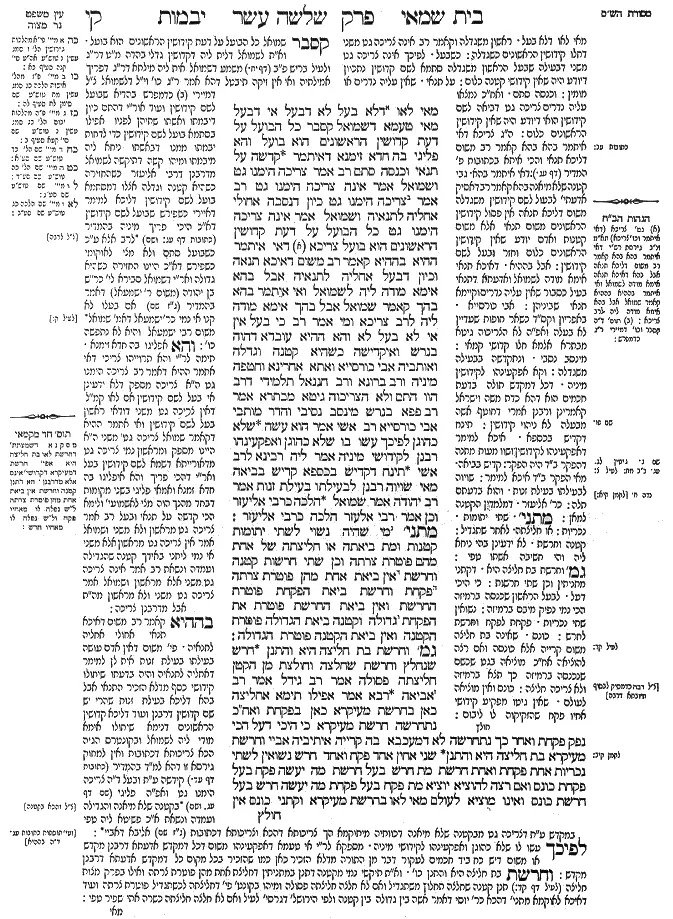
Yevamot 110a - Guemara
מאי לאו דלא בעל לא דבעל אי דבעל מאי טעמא דשמואל קסבר כל הבועל על דעת קדושין הראשונים הוא בועל והא פליגי בה חדא זימנא דאיתמר קדשה על תנאי וכנסה סתם רב אמר צריכה הימנו גט ושמואל אמר אינה צריכה הימנו גט רב אמר צריכה הימנו גט כיון דנסבה אחולי אחליה לתנאיה ושמואל אמר אינה צריכה הימנו גט כל הבועל על דעת קדושין הראשונים הוא בועל צריכא דאי איתמר ההיא בההיא קאמר רב משום דאיכא תנאה וכיון דבעל אחליה לתנאיה אבל בהא אימא מודה ליה לשמואל ואי איתמר בהא בהך קאמר שמואל אבל בהך אימא מודה ליה לרב צריכא ומי אמר רב כי בעל אין אי לא בעל לא והא ההיא עובדא דהוה בנרש ואיקדישה כשהיא קטנה וגדלה ואותביה אבי כורסייא ואתא אחרינא וחטפה מיניה ורב ברונא ורב חננאל תלמידי דרב הוו התם ולא הצריכוה גיטא מבתרא אמר רב פפא בנרש מינסב נסיבי והדר מותבי אבי כורסייא רב אשי אמר הוא עשה שלא כהוגן לפיכך עשו בו שלא כהוגן ואפקעינהו רבנן לקידושי מיניה אמר ליה רבינא לרב אשי תינח דקדיש בכספא קדיש בביאה מאי שויוה רבנן לבעילתו בעילת זנות אמר רב יהודה אמר שמואל הלכה כרבי אליעזר וכן אמר רבי אלעזר הלכה כרבי אליעזר:
מתני׳ מי שהיה נשוי לשתי יתומות קטנות ומת ביאתה או חליצתה של אחת מהם פוטרת צרתה וכן שתי חרשות קטנה וחרשת אין ביאת אחת מהן פוטרת צרתה פקחת וחרשת ביאת הפקחת פוטרת החרשת ואין ביאת החרשת פוטרת את הפקחת גדולה וקטנה ביאת הגדולה פוטרת הקטנה ואין ביאת הקטנה פוטרת הגדולה:
גמ׳ וחרשת בת חליצה היא והתנן חרש שנחלץ וחרשת שחלצה וחולצת מן הקטן חליצתה פסולה אמר רב גידל אמר רב אביאה רבא אמר אפילו תימא אחליצה כאן בחרשת מעיקרא כאן בפקחת ואח"כ נתחרשה חרשת מעיקרא כי היכי דעל הכי נפק פקחת ואחר כך נתחרשה לא דמעכבא בה קרייה איתיביה אביי וחרשת מעיקרא בת חליצה היא והתנן שני אחין אחד פקח ואחד חרש נשואין לשתי נכריות אחת פקחת ואחת חרשת מת חרש בעל חרשת מה יעשה פקח בעל פקחת כונס ואם רצה להוציא יוציא מת פקח בעל פקחת מה יעשה חרש בעל חרשת כונס ואינו מוציא לעולם מאי לאו בחרשת מעיקרא וקתני כונס אין
Comments from Rashi on Masechet Yevamot Page 110a
מאי לאו דלא בעל . ראשון משגדלה וקאמר רב אינה צריכה גט משני דחלו קידושין הראשונים כשגדלה: כשבעל . לפיכך אינה צריכה גט משני דבעילה שבעל הראשון משגדלה סתמא לשם קדושין נתכוון דיודע היה שאין קידושי קטנה כלום: על תנאי . שאין עליה נדרים או מומין: וכנסה סתם . ואח"כ נמצאו עליה נדרים צריכה גט דביאה לשם קידושין הואי דיודע היה שאין קידושין הראשונים כלום: ה"ג צריכא דאי איתמר בהא בהא קאמר רב משום דליכא תנאי . והכי איתא בכתובות פ' המדיר (דף עג.): דאי איתמר בהא . גבי קטנה שלא מיאנה בהא קאמר רב דאסיק אדעתי' לבעול לשם קידושין משגדלה משום דליכא תנאה אין פסול קידושין הראשונים משום תנאי אלא משום קטנות ואדם יודע שאין קידושין הראשונים כלום וחזר ובעל לשם קידושין: אבל בההיא . דאיכא תנאי אימא מודה לשמואל ואדעתא דתנאי בעיל כסבור שאין עליה נדרים וקיימא תנאי שביניהן: אבי כורסייא . באפריון וקס"ד כשאר חופות שעדיין לא בעלה ואפ"ה לא הצריכוה גיטא מבתרא. אלמא חלו קדושי קמאי: מינסב נסבי . ונתקדשה בבעילה משגדלה: וקא אפקעינהו לקידושין מיניה . דכל דמקדש תולה בדעת חכמים הוא דהא כדת משה וישראל קאמרינן ורבנן אמרי דחוטף אשה מבעלה לא ניהוי קידושין: תינח דקדיש בכספא . איכא למימר דאפקעינהו לקידושין ושוו מעות מתנה דהפקר ב"ד היה הפקר: קדיש בביאה . מאי הפקר ב"ד איכא למימר: שויוה לבעילתו בעילת זנות . והוא בדעתם תלה: כר' אליעזר . דמלמדין הקטנה למאן: מתני' שתי יתומות . נכריות: או חליצתה . לאחר שתגדיל: קטנה וחרשת . לא ידעינן בהי ניחא ליה והי חשיבה אשתו טפי: גמ' וחרשת בת חליצה היא . דקתני מתניתין וכן שתי חרשות: כי היכי דעל . לבעל הראשון שכנסה ברמיזה הכי נמי נפיק מיבם ברמיזה: נשואין שתי נכריות . פקחת לפקח וחרשת לחרש: כונס . שאינה בת חליצה משום קרייה אלא כונסה ואם רצה להוציאה אח"כ מוציאה בגט שכשם שנכנסה ברמיזה כך תצא ברמיזה ולא צריכה חליצה: כונס ואין מוציאה לעולם . שאין גיטו מפקיע קידושי אחיו פקח שהזקיקוה לו ליבום:
Comments from Tosafot - Yevamot 110a
קסבר שמואל כל הבועל על דעת קידושין הראשונים הוא בועל . וא"ת לשמואל דלית ליה דקדושין גדלי בהדה מ"ט דר"ג ולעיל בריש פ"ב (יבמות דף יח.) משמע דשמואל אית ליה מילתא דר"ג דפריך אמילתיה ואי אין זיקה תיבטל דהא אמר ר"ג כו' וי"ל דלשמואל צ"ל דמיירי כדמפרש בהדיא שבועל לשם קידושין ועוד אור"י דהתם כיון דיבמתו ואשתו שתיהן לפניו אפילו בסתמא בועל לשם קידושין כדי לדחות יבמתו ממנו דבאשתו ניחא ליה מיבמתו ומיהו קשה דתיקשה לשמואל מדרבנן דרבי אליעזר כשהחזירה כשהיא קטנה וגדלה אצלו דמסתמא בועל לשם קידושין דליכא למימר דאיירי כשפירש שבועל לשם קידושין דא"כ היכי פריך מיניה בהמדיר (כתובות דף עג: ושם) לרב אלא ע"כ כשבועל סתם ולא מצי לאוקומי כשפירש דא"כ היינו החזירה כשהיא גדולה ואר"י דשמואל סבירא לי' כר"ש בן יהודה (משום ר' ישמעאל) דאמר בהמדיר (ג"ז שם) אם בעלו לא קנו אי נמי כר' ישמעאל דאמ' שמואל משום רבי ישמעאל והיא לא נתפשה כו': והא אפליגו בה חדא זימנא . תימה לר"י והא תרוייהו צריכי דאי אתמר ההיא דאמר רב צריכה הימנו גט ה"א צריכה מספק דלא ידעינן אי בעל לשם קידושין אם לאו קמ"ל דאין צריכה גט משני דודאי ראשון בעל לשם קידושין ואי אתמר ההיא דקאמר שמואל צריכה גט משני ה"א היינו מספק ומראשון נמי צריכה גט מדאורייתא דשמא לשם קידושין בעל ואר"י דהכי פריך והא איפליגו בה חדא זמנא ואמאי פליגי בשני מקומות דבחד מהנך הוה מצי לאשמועי' ולימא הכי קדשה על תנאי ובעל רב אמר צריכה גט מראשון ולא משני ושמואל אמר אין צריכה גט מראשון אלא משני אי נמי ליתני באידך קטנה שהגדילה ועמדה ונשאת רב אמר אינה צריכה גט משני אלא מראשון ושמואל אמר צריכה גט משני ולא מראשון מה"ת אבל מדרבנן צריכה: בההיא קאמר רב משום דאיכא תנאי אחולי אחליה לתנאיה . פי' משום דאין אדם עושה בעילתו בעילת זנות אית לן למימר דאחליה לתנאיה והיה בדעתו שיחולו קידושי כסף מדלא הזכיר התנאי אבל בהא דליכא בעילת זנות שהרי יש שם קדושין דרבנן ועוד דליכא קדושין הראשונים דנימא שיחולו אימא מודי ליה לשמואל ובקונטרס הגיה הכא צריכותא דכתובות ואין למחוק גירסא זו דהא למ"ד בהמדיר (כתובות דף עד.) קידשה ע"ת ובעל ד"ה צריכה הימנו גט ואפ"ה פליגי (שם דף עג. ושם) בקטנה שלא מיאנה והגדילה ועמדה ונשאת א"כ פשיטא ליה טפי במקדש ע"ת דצריכה גט מבקטנה שלא מיאנה דכוותיה מיתוקמא הך צריכותא דהכא וצריכותא דכתובות (ג"ז שם) אליבא דאביי: לפיכך עשו לו שלא כהוגן ואפקעינהו לקידושי מיניה . מספקא לר"י אי טעמא דאפקעינהו משום דכל דמקדש אדעתא דרבנן מקדש או משום דיש כח ביד חכמים לעקור דבר מן התורה מדלא הזכיר כאן כמו שהזכיר בכל מקום כל דמקדש אדעתא דרבנן מקדש: וחרשת בת חליצה היא והתנן כו' . וא"ת תיקשי נמי מקטנה דתנן במתניתין דחליצת אחת מהן פוטרת צרתה ואילו בפרק מצות חליצה (לעיל יבמות דף קד:) תנן קטנה שחלצה תחלוץ משתגדיל ואם לא חלצה חליצתה פסולה ומיהו בקונט' פי' דחליצתה לכשתגדיל פוטרת צרתה ועוד דאיכא לאוקמא מתני' דהכא כר' יוסי דאמר אשה בין גדולה בין קטנה ולפי הירושל' דגרסי' לעיל ואם לא חלצה חליצתה כשרה אתי שפיר טפי:
Yevamot 110a - Mishnah translated into english
What, is it not a case where he did not have intercourse with her after she reached majority? If so, Rav thinks that even when he did not have intercourse with her, her marriage is fully realized once she reaches majority. The Gemara rejects this: No, this is referring to a case where he did have intercourse with her. The Gemara asks: If it is referring to a case where he had intercourse with her, what is Shmuel’s reasoning? If the first one engaged in intercourse with her after she reached majority, then the marriage was fully realized. Under such circumstances, the second betrothal would not take effect. The Gemara answers: Shmuel holds that when anyone has sexual intercourse with a woman he married as a minor, his intention is that the intercourse is within the framework established by the initial betrothal and is not a new act of acquisition.
The Gemara asks: But if this is the basis of the dispute, they already disagreed about this once, as it was stated with regard to the following case: A man betrothed a woman on some condition, and married her without mentioning the condition, and the condition was not fulfilled. Rav says: She requires a bill of divorce from him, and Shmuel says: She does not require a bill of divorce from him.
The Gemara explains: Rav says she requires a bill of divorce from him, for since he married her, he apparently retracted his condition, and is therefore married to her even though the condition was not met. And Shmuel says: She does not require a bill of divorce from him, because anyone who has sexual intercourse with his wife, his intention is that the intercourse is within the framework established by the initial betrothal and the condition he set at the time of betrothal still stands. Since it was not fulfilled, the marriage is annulled. If so, Rav and Shmuel already disagreed about this same issue.
The Gemara answers: It is necessary to state the dispute in both contexts, for if only that halakha about conditional betrothal was stated, one might think: In this case Rav says she needs a divorce since there is a condition with regard to the betrothal, but when he had intercourse with her, he retracted the condition. But in this case of betrothal to a minor, say that Rav would concede to Shmuel that the intercourse was not performed with the intention of it constituting a full betrothal. And if only this case of betrothal to a minor was stated, one might think: Shmuel said that the marriage is effective in this case of betrothal to a minor, but in that case of a conditional betrothal, say that he would concede to Rav. Therefore, it was necessary to state the dispute explicitly in both instances.
The Gemara asks: And did Rav actually say that when he engaged in sexual intercourse with her, yes, the original marriage is valid, and if he did not have intercourse with her, no, it is not valid? Wasn’t there an incident in the city of Neresh where a woman was betrothed when she was a minor, and she reached majority, and the husband seated her in a bridal chair under the marriage canopy and had not yet had intercourse with her, and another man came and seized her from him and married her? And Rav Bruna and Rav Ḥananel, the students of Rav, were there and they did not require her to receive a bill of divorce from the latter husband. Presumably, they regarded her as fully married to the first husband, so the marriage to the second marriage never took effect, despite the fact that the first marriage had not yet been consummated.
Rav Pappa said: There is a difference, because in Neresh their practice is to first marry a woman and have intercourse with her, and afterward they seat her in the bridal chair. In this incident, the husband had already had intercourse with her once she was an adult, and that is why Rav’s students did not require a bill of divorce from the second man. Rav Ashi says: There was a different reason, even if the practice was not as Rav Pappa describes. This bride snatcher acted improperly. Consequently, they treated him improperly by annulling the legal validity of his actions, and the Sages abrogated his betrothal.
Ravina said to Rav Ashi: This works out well if the second man betrothed her with money, as then the Sages could declare that money to be ownerless property and void the betrothal. If he betrothed her by means of intercourse, what is the halakha? How can the Sages dissolve the betrothal when the sexual act took place? The Gemara answers: The Sages rendered his sexual act a licentious sexual act, which does not create a bond of betrothal. With regard to the dispute in the mishna, Rav Yehuda said that Shmuel said: The halakha is in accordance with the opinion of Rabbi Eliezer, and the minor is instructed to make a declaration of refusal. Likewise, Rabbi Elazar said: The halakha is in accordance with the opinion of Rabbi Eliezer.
MISHNA: If a man was married to two orphaned minors and died, consummation of levirate marriage or ḥalitza with one of them exempts her rival wife from either levirate marriage or ḥalitza, rendering her free to remarry. Likewise, if two deaf-mutes were married to one man who died, consummation of levirate marriage or ḥalitza with one of them exempts her rival wife. In both of these cases, both women are married by rabbinic law and consequently become yevamot by rabbinic law. Since their statuses are equal, one can exempt the other. If one wife is a minor and the other is a deaf-mute, consummation of levirate marriage or ḥalitza with one of them does not exempt her rival wife. Although both women are married by rabbinic law, their statuses are not the same and one cannot exempt the other.
If one of them was halakhically competent and one was a deaf-mute, consummation of levirate marriage with the halakhically competent wife exempts the deaf-mute, as the halakhically competent women’s marriage and levirate marriage are by Torah law. But consummation of levirate marriage with the deaf-mute does not exempt the halakhically competent wife. Likewise, if one was an adult woman and one a minor girl, consummation of levirate marriage with the adult exempts the minor but consummation of levirate marriage with the minor does not exempt the adult.
GEMARA: The mishna states that ḥalitza by one deaf-mute exempts the other. The Gemara asks: Can a deaf-mute perform ḥalitza? Didn’t we learn in a mishna (104b): If a male deaf-mute performs ḥalitza, and if a female deaf-mute performs ḥalitza, and if a woman performs ḥalitza on a minor boy, her ḥalitza is disqualified?
Rav Giddel said that Rav said: The mishna is not referring to a deaf-mute’s ḥalitza, but rather to consummation of levirate marriage with one of the deaf-mutes. Rava said: You can even say it is referring to ḥalitza. Here, the mishna is referring to a woman who was a deaf-mute from the outset, when he married her, and there the mishna that disqualifies the ḥalitza is referring to someone who was halakhically competent when she was married and afterward became a deaf-mute.
The difference is that a deaf-mute from the outset, just as she entered into marriage with her first husband so she leaves the levirate bond by means of ḥalitza. Both her marriage and her status as a yevama are by rabbinic law. However, one who was halakhically competent, so that she was married by Torah law, and later became a deaf-mute, no, she cannot be released by ḥalitza, since recitation is indispensable for her ḥalitza, and she cannot recite the text that a yevama must recite.
Abaye raised an objection to this: And is one who is a deaf-mute from the outset a candidate for ḥalitza? Didn’t we learn in a mishna (Yevamot 112b): Two brothers, one who is halakhically competent and one who is a deaf-mute, are married to two unrelated women, one who is halakhically competent and one deaf-mute. If the male deaf-mute, who is the husband of the female deaf-mute, dies, what should the halakhically competent man, who is the husband of the halakhically competent woman, do? He may consummate the levirate marriage, but there is no option of performing ḥalitza. And if he wants to divorce her later, he may divorce her.
If the halakhically competent man, husband of the halakhically competent woman, dies, what should the male deaf-mute, who is the husband of the female deaf-mute, do? He may consummate the levirate marriage, but he may never divorce her, as a deaf-mute is not halakhically competent to divorce a woman to whom he is married by Torah law. What, is it not referring to a deaf-mute from the outset? And it is taught: Yes, he may consummate the levirate marriage,
Traduction : The William Davidson digital edition of the Koren Noé Talmud, with commentary by Rabbi Adin Even-Israel Steinsaltz.