 Talmud Bavli
The learning on the whole site is dedicated : L'ilui Nishmat Jamila bat Chlomo Abensour
The learning on the whole site is dedicated : L'ilui Nishmat אליעזר בן רחל
The learning on the whole site is dedicated : L'ilui Nishmat Amram ben Itshak Loubaton
Yevamot 45a : Youtube
Daf TubeYoutube
2 video classes :
Yevamot Page 45a
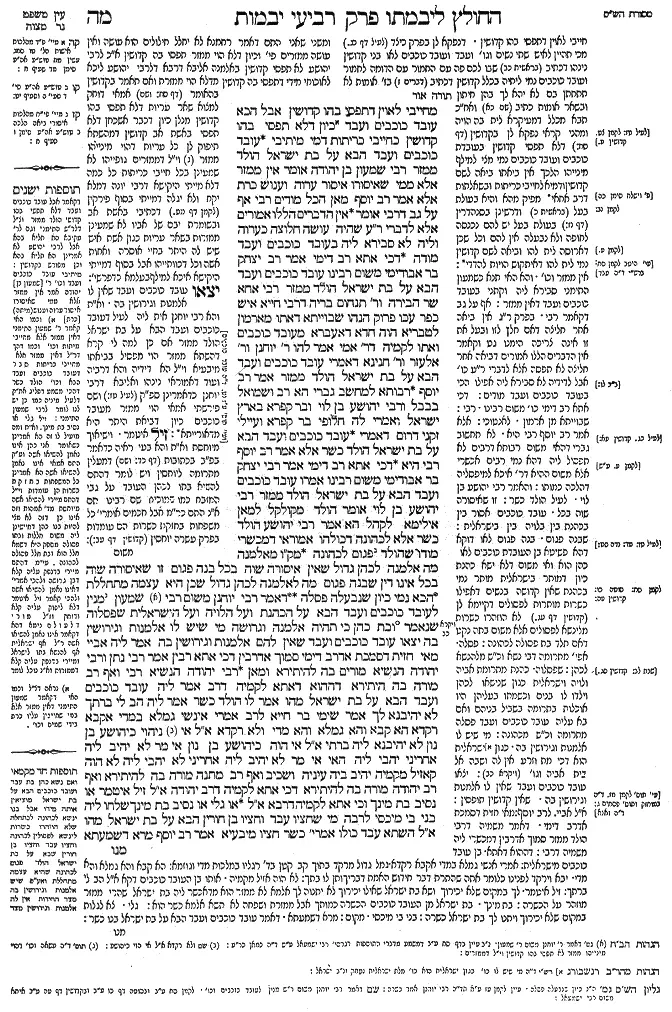
Yevamot 45a - Guemara
מחייבי לאוין דתפסי בהו קדושין אבל הכא עובד כוכבים ועבד כיון דלא תפסי בהו קדושין כחייבי כריתות דמי מיתיבי עובד כוכבים ועבד הבא על בת ישראל הולד ממזר רבי שמעון בן יהודה אומר אין ממזר אלא ממי שאיסורו איסור ערוה וענוש כרת אלא אמר רב יוסף מאן הכל מודים רבי אף על גב דרבי אומר אין הדברים הללו אמורים אלא לדברי ר"ע שהיה עושה חלוצה כערוה וליה לא סבירא ליה בעובד כוכבים ועבד מודה דכי אתא רב דימי אמר רב יצחק בר אבודימי משום רבינו עובד כוכבים ועבד הבא על בת ישראל הולד ממזר רבי אחא שר הבירה ור' תנחום בריה דרבי חייא איש כפר עכו פרוק הנהו שבוייתא דאתו מארמון לטבריא הוה חדא דאעברא מעובד כוכבים ואתו לקמיה דר' אמי אמר להו ר' יוחנן ור' אלעזר ור' חנינא דאמרי עובד כוכבים ועבד הבא על בת ישראל הולד ממזר אמר רב יוסף רבותא למחשב גברי הא רב ושמואל בבבל ורבי יהושע בן לוי ובר קפרא בארץ ישראל ואמרי לה חלופי בר קפרא ועיילי זקני דרום דאמרי עובד כוכבים ועבד הבא על בת ישראל הולד כשר אלא אמר רב יוסף רבי היא דכי אתא רב דימי אמר רבי יצחק בר אבודימי משום רבינו אמרו עובד כוכבים ועבד הבא על בת ישראל הולד ממזר רבי יהושע בן לוי אומר הולד מקולקל למאן אילימא לקהל הא אמר רבי יהושע הולד כשר אלא לכהונה דכולהו אמוראי דמכשרי מודו שהולד פגום לכהונה מק"ו מאלמנה מה אלמנה לכהן גדול שאין איסורה שוה בכל בנה פגום זו שאיסורה שוה בכל אינו דין שבנה פגום מה לאלמנה לכהן גדול שכן היא עצמה מתחללת הכא נמי כיון שנבעלה פסלה דאמר רבי יוחנן משום רבי שמעון מנין לעובד כוכבים ועבד הבא על הכהנת ועל הלויה ועל הישראלית שפסלוה שנאמר (ויקרא כב, יג) ובת כהן כי תהיה אלמנה וגרושה מי שיש לו אלמנות וגירושין בה יצאו עובד כוכבים ועבד שאין להם אלמנות וגירושין בה אמר ליה אביי מאי חזית דסמכת אדרב דימי סמוך אדרבין דכי אתא רבין אמר רבי נתן ורבי יהודה הנשיא מורים בה להיתירא ומאן רבי יהודה הנשיא רבי ואף רב מורה בה היתירא דההוא דאתא לקמיה דרב אמר ליה עובד כוכבים ועבד הבא על בת ישראל מהו אמר ליה הולד כשר אמר ליה הב לי ברתך לא יהיבנא לך אמר שימי בר חייא לרב אמרי אינשי גמלא במדי אקבא רקדא הא קבא והא גמלא והא מדי ולא רקדא א"ל אי ניהוי כיהושע בן נון לא יהיבנא ליה ברתי א"ל אי הוה כיהושע בן נון אי מר לא יהיב ליה אחריני יהבי ליה האי אי מר לא יהיב ליה אחריני לא יהבי ליה לא הוה קאזיל מקמיה יהיב ביה עיניה ושכיב ואף רב מתנה מורה בה להיתירא ואף רב יהודה מורה בה להיתירא דכי אתא לקמיה דרב יהודה א"ל זיל איטמר או נסיב בת מינך וכי אתא לקמיה דרבא א"ל או גלי או נסיב בת מינך שלחו ליה בני בי מיכסי לרבה מי שחציו עבד וחציו בן חורין הבא על בת ישראל מהו א"ל השתא עבד כולו אמרי' כשר חציו מיבעיא אמר רב יוסף מרא דשמעתא
Comments from Rashi on Masechet Yevamot Page 45a
חייבי לאוין דתפסי בהו קדושין . דנפקא לן בפרק כיצד (לעיל יבמות דף כג.) מכי תהיין לאיש שתי נשים וגו' ועבד ועובד כוכבים לאו בני קדושין נינהו דכתיב (בראשית כב) שבו לכם פה עם החמור עם הדומה לחמור ועובד כוכבים נמי ליתיה בכלל קדושין דכתיב (דברים ז) בז' אומות לא תתחתן בם לא יהא לך בהן חיתון ובשאר אומות כתיב (שם כא) ואח"כ תבא מכלל דמעיקרא לית בה הויה ומהני קראי נפקא לן בקדושין (דף סח:) דלא תפסי קדושין בעובדת כוכבים ועובד כוכבים נמי מצי למילף מינייהו הלכך אין ביאתו ביאה לשם קדושין ודמיא לחייבי כריתות ובשאלתות דרב אחאי מפיק מהא והיא בעולת בעל (בראשית כ) ודרשינן בסנהדרין (דף נז:) בעולת בעל יש להם נכנסה לחופה ולא נבעלה אין להם וכל שכן דארוסה לית להו וביאה לשם קדושין נמי לית להו דאיתקוש הויות להדדי: אין ממזר וכו' . והא האי תנא כשמעון התימני סבירא ליה וקתני בעובד כוכבים ועבד דאין ממזר: אף על גב דקאמר רבי . בפרק ר"ג אין ביאה אחר חליצה דאם חלץ לזו ובעל את זו אינה צריכה הימנו גט וקאמר אין הדברים הללו אמורים דביאה אחר חליצה לא תפסה אלא לדברי ר"ע כו' אבל לדידיה לא סבירא ליה אפילו הכי בעובד כוכבים ועבד מודים: דכי אתא רב דימי כו' משום רבינו . רבי: שבוייתא מן ארמון . לאנטוכי: אלא אמר רב יוסף רבי היא . לא תחשוב גברי דהאי משום רבותא דרבים לא תפסיל ליה דהא נמי רבים אכשרי אלא משום ההיא דר' איכא למיפסליה דהלכה כמותו: והאמר רבי יהושע בן לוי . לעיל הולד כשר: זו שאיסורה שוה בכל . עובד כוכבים אסור בין בכהנת בין בלויה בין בישראלית: שבנה פגום . בנה פגום לאו דוקא דהא פשיטא בן העובדת כוכבים לאו כהן הוא ואי משום דלא ישא כהנת כיון דמותר בישראלית מותר נמי בכהנת שאין קדושה בנשים דאפילו כשרות מותרות לפסולים דקיימא לן (קדושין דף עג.) לא הוזהרו כשרות מלינשא לפסולים אלא משום בתה נקט דאם תלד בת פסולה לכהונה: פסלה . אפי' מתרומה דבי נשא וכ"ש מלהנשא לכהן: שפסלוה . כהנת מתרומת אביה ולויה וישראלית כגון שנישאו לכהן וילדו לו בנים וכשמתו בעליהן היו אוכלות בתרומה בשביל בניהם ואם בא עליה עובד כוכבים ועבד פסלה מתרומה וכ"ש מכהונה: מי שיש לו אלמנות וגירושין בה . כגון ישראלית הוא דכי מת וזרע אין לה ושבה אל בית אביה וגו' (ויקרא כב): יצאו עובד כוכבים ועבד שאין לו אלמנות וגירושין בה . שאין קדושין תופסין: א"ל אביי . לרב יוסף: מאי חזית דסמכת אדרב דימי . דאמר משמיה דרבי הולד ממזר סמוך אדרבין דמכשרי ליה משמיה דרבי: דההוא דאתא . בן עובד כוכבים מישראלית: אמרי אנשי גמלא במדי אקבא רקדא . גמל גדול מרקד בתוך קב קטן בד' רגליו במלכות מדי. וגוזמא: הא קבא והא גמלא והא מדי . יבא וירקד לפנינו כלומר אתה שהתרת דבר חידוש האמת דבריך ותן לו בתך: לא הוה אזיל מקמיה . אותו בן העובד כוכבים דקא א"ל הב לי ברתך: זיל איטמר . לך במקום שלא יכירוך ושא בת ישראל שאילו יכירוך לא יתנוה לך. אלמא לא ממזר הוא מדאכשר ליה בת ישראל שהרי ממזר מוזהר על הכשרה: בת מינך . בת ישראל מן העובד כוכבים הכשרה כמותך אבל ממזרת ושפחה לא תשא. אלמא כשר הוא: גלי . צא לגלות במקום שלא יכירוך ויתנו לך בת ישראל כשרה: בני בי מיכסי . מקום: מרא דשמעתא . דאמר עובד כוכבים ועבד הבא על בת ישראל בנו כשר:
Comments from Tosafot - Yevamot 45a
יצאו עובד כוכבים ועבד שאין לו אלמנות וגירושין בה . וא"ת והא רבי יוחנן אית ליה לעיל דעובד כוכבים ועבד הבא על בת ישראל הולד ממזר אם כן למה לי קרא דהשתא ממזר הוי מפסיל בביאתו מיבעיא וי"ל הא דידיה והא דרביה ועוד דאמוראי נינהו ואליבא דרבי יוחנן כדאמרינן ספ"ק (לעיל יבמות טז:) ושם פירשתי אמאי הוי ממזר מעובד כוכבים כיון דביאת היתר היא מדאורייתא: זיל איטמר . וישיאוך מיוחסת וא"ת והא בעי ראיה כדאמר בפ"ב בכתובות (דף כד: ושם) דמעלין מתרומה ליוחסין ויש לומר דהתם להשיא בתו לכהן העובד על גבי המזבח כמו שמוכיח שם רבינו תם א"נ התם כר"מ אבל חכמים אומרי' כל משפחות בחזקת כשרות הם עומדות בפרק עשרה יוחסין (קדושין דף עב:):
Yevamot 45a - Mishnah translated into english
to forbidden relations for which one is liable for violation of a prohibition concerning which a betrothal between the couple would take effect. However, here, with regard to a gentile and a slave, since their betrothal of a Jewish woman would not take effect, a union with them is comparable to forbidden relations for which one is liable to receive karet, and therefore the offspring of such a union will be a mamzer.
The Gemara raises an objection from a baraita: In the case of a gentile or a slave who engaged in intercourse with a Jewish woman, the offspring born from such a union is a mamzer. Rabbi Shimon ben Yehuda says: The offspring is a mamzer only if born from relations with one who is forbidden by a prohibition of forbidden relations that are punishable by karet. It is apparent from the baraita that one who holds, as does Shimon HaTimni, that only the offspring from forbidden relations for which one is liable to receive karet is a mamzer, nevertheless holds that the offspring of a slave or gentile and a Jewish woman is not a mamzer.
Rather, Rav Yosef said: Who is included by saying: All agree? It is Rabbi Yehuda HaNasi, as although Rabbi Yehuda HaNasi says in a baraita (52b) concerning the mishna (50a–51b) that states that a levirate betrothal between a yavam and a yevama with whom he had already performed ḥalitza is ineffective: This statement was said only according to the statement of Rabbi Akiva, as he would consider a ḥalutza like a forbidden relative such that if the yavam betrothed her it would not take effect. And although Rabbi Yehuda HaNasi himself does not hold accordingly with regard to that issue, with regard to the offspring of a union with a gentile or a slave he concedes that the offspring is a mamzer. As, when Rav Dimi came from Eretz Yisrael, he said that Rav Yitzḥak bar Avudimi said in the name of our Master, i.e., Rabbi Yehuda HaNasi: With regard to a gentile or a slave who engaged in intercourse with a Jewish woman, the offspring is a mamzer.
The Gemara cites a related incident: Rabbi Aḥa, lord of the capital, and Rabbi Tanḥum, son of Rabbi Ḥiyya, the man of Akko village, redeemed those captives who came from Armon to Tiberias. One of them had been impregnated by a gentile, and they came before Rabbi Ami to ask what the offspring’s status would be when born. He said to them that Rabbi Yoḥanan and Rabbi Elazar and Rabbi Ḥanina all say: With regard to a gentile or a slave who engaged in intercourse with a Jewish woman, the offspring is a mamzer.
Upon hearing this, Rav Yosef said: Is it so great to enumerate men? The fact that several great Sages held this opinion does not prove that their opinion is the accepted halakha. But there are Rav and Shmuel in Babylonia, and Rabbi Yehoshua ben Levi and bar Kappara in Eretz Yisrael, and some say to remove bar Kappara from this list and insert instead the Elders of the South, who all say: With regard to a gentile or a slave who engaged in intercourse with a Jewish woman, the lineage of the offspring is unflawed, and he or she may marry into the congregation of Israel.
Rather, Rav Yosef said the halakha is in fact that the offspring is a mamzer because this is Rabbi Yehuda HaNasi’s opinion, as when Rav Dimi came from Eretz Yisrael he said that Rav Yitzḥak bar Avudimi said in the name of our Master, i.e., Rabbi Yehuda HaNasi, that they say: With regard to a gentile or a slave who engaged in intercourse with a Jewish woman, the offspring is a mamzer.
Rabbi Yehoshua ben Levi says: The lineage of the offspring is sullied, and if the child is a girl she is restricted in whom she may marry. The Gemara asks: To whom is she prohibited from marrying? If we say it is to the congregation of Israel, but didn’t Rabbi Yehoshua himself say that the lineage of the offspring is unflawed and he or she may marry into the congregation of Israel? Rather, the offspring is prohibited to marry into the priesthood, as all of the amora’im who render the offspring fit to enter the congregation of Israel agree that the offspring has flawed lineage and is forbidden to marry into the priesthood.
This is derived from an a fortiori inference from the halakha of a widow, as follows: Just as in the case of a widow who is married to a High Priest, where the prohibition that pertains to her is not equally applicable to all Jews, i.e., only a High Priest is prohibited from marrying a widow, and nevertheless her child from that union will have flawed lineage, then so too with regard to this woman who engaged in relations with a gentile or slave, where the prohibition that pertains to her is equally applicable to all Jews, isn’t it logical that her child from that union will have flawed lineage?
And if one would say that the logic of this a fortiori inference could be refuted by claiming that what is true with regard to a widow who is married to a High Priest, where her union with him is what makes her herself disqualified from subsequently marrying any priest and, if she is the daughter of a priest, from eating teruma, is not true with regard to the prohibition against a Jewish woman engaging in relations with a gentile or a slave. This is not correct, because here, too, once he has engaged in intercourse with her, he thereby renders her unfit to marry into the priesthood.
As Rabbi Yoḥanan said in the name of Rabbi Shimon: From where is it derived with regard to a gentile or a slave who engaged in intercourse with a daughter of a priest or with a female Levite or with a female Israelite that they thereby render her unfit to marry into the priesthood? As it is stated: “But a priest’s daughter when she will become a widow, or a divorcée, and have no child, she returns to her father’s house as in her youth” (Leviticus 22:13). The verse indicates that she returns to her father’s house and enjoys the rights of the priesthood only in a case where she engaged in intercourse with one to whom widowhood and divorce can apply, i.e., one with whom her marriage would be valid and would be broken only through death or divorce. Excluded from this is a union with a gentile or a slave, to whom neither widowhood nor divorce can apply, as no marriage bond can be formed with them.
Abaye said to Rav Yosef: What did you see that you rely upon Rav Dimi and his tradition that Rabbi Yehuda HaNasi holds that the offspring of a gentile or a slave and a Jewish woman is a mamzer? Rely instead upon Ravin, as when Ravin came from Eretz Yisrael he said that Rabbi Natan and Rabbi Yehuda HaNasi both rule that the offspring is permitted to marry into the congregation of Israel. And who is the Rabbi Yehuda HaNasi referred to in Ravin’s report? It is the one who is simply referred to as Rabbi, the redactor of the Mishna, whose opinion is accepted as the halakha.
The Gemara notes: And even Rav rules that the offspring is permitted, as is evident from an incident involving a certain individual who came before Rav and said to him: With regard to the offspring of a gentile or a slave who engaged in intercourse with a Jewish woman, what is its halakhic status?
Rav said to him: The lineage of the offspring is unflawed. The individual who asked the question was himself such a child, and he said to Rav: If so, give me your daughter in marriage. He said to him: I will not give her to you.
Shimi bar Ḥiyya, Rav’s grandson, said to Rav: People often say that a camel in Medes can dance upon a small space that holds only a single kav of produce. However, clearly that is an exaggeration, since if one would go to Medes one could demonstrate that this is a space that holds a kav, and this is a camel, and this is Medes, and yet the camel is not dancing, i.e., the truth of a statement becomes apparent when it is put to the test. So too, it would appear that you do not truly believe in your ruling because when put to the test, you are unwilling to rely on it.
He said to him: Even if he were as great as Joshua, son of Nun, I would not give him my daughter in marriage. My refusal to give her to him in marriage is not that I do not stand by my ruling; it is for other reasons. He said to him: If he were as great as Joshua, son of Nun, then even if the Master would not give him his daughter, others would still give him their daughters. However, with regard to this man, if the Master does not give him his daughter, others will not give him their daughters either out of fear of damaging the family lineage. Nevertheless, Rav remained unwilling to give his daughter to that individual.
That individual would not go from standing before Rav and continued to plead with him. Rav placed his eyes upon him and he died.
The Gemara adds: And even Rav Mattana rules that the offspring is permitted, and even Rav Yehuda rules that the offspring is permitted, as is evident from the fact that when a child of a gentile or slave and a Jewish woman came before Rav Yehuda, he said to him: Go and conceal your paternal lineage so that people will not refrain from giving you their daughters in marriage, as it is permitted for you to marry into the congregation of Israel, or otherwise, marry a woman of your own kind, i.e., a woman of similar lineage. And similarly, when such a person came before Rava, he said to him: Either go into exile to a place where your lineage is unknown, so that others will give you their daughters in marriage, or marry a woman of your own kind.
The residents of Bei Mikhsei sent the following question to Rabba: With regard to the offspring of one who is a half-slave half-freeman, who engaged in intercourse with a Jewish woman, what is its halakhic status? He said to them: Now that with regard to the offspring of a full slave we say that his lineage is unflawed, is it necessary to ask about a half-slave?
Rav Yosef said: The Master who is responsible for dissemination of this halakha that the offspring of a slave and a Jewish woman is not a mamzer,
Traduction : The William Davidson digital edition of the Koren Noé Talmud, with commentary by Rabbi Adin Even-Israel Steinsaltz.