 Talmud Bavli
Yevamot 60b : Youtube
Daf TubeYoutube
2 video classes :
Yevamot Page 60b
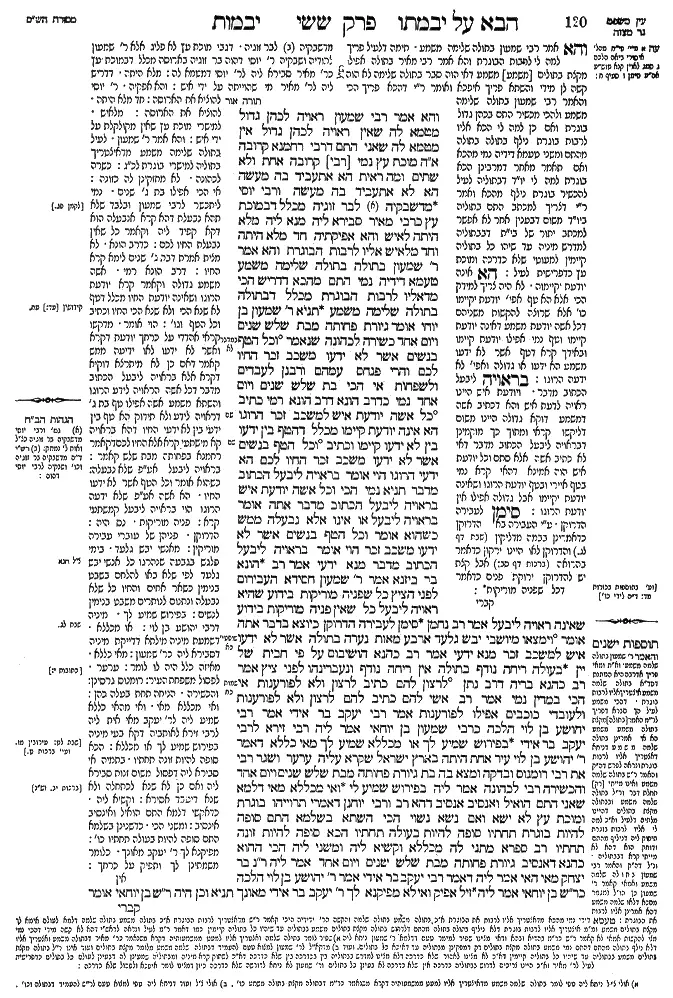
Yevamot 60b - Guemara
והא אמר רבי שמעון ראויה לכהן גדול מטמא לה שאין ראויה לכהן גדול אין מטמא לה שאני התם דרבי רחמנא קרובה א"ה מוכת עץ נמי [רבי] קרובה אחת ולא שתים ומה ראית הא אתעביד בה מעשה הא לא אתעביד בה מעשה ורבי יוסי מדשבקיה לבר זוגיה מכלל דבמוכת עץ כרבי מאיר סבירא ליה מנא ליה מלא היתה לאיש והא אפיקתיה חד מלא היתה וחד מלאיש אליו לרבות הבוגרת והא אמר ר' שמעון בתולה בתולה שלימה משמע טעמא דידיה נמי התם מהכא דדריש הכי מדאליו לרבות הבוגרת מכלל דבתולה בתולה שלימה משמע תניא ר' שמעון בן יוחי אומר גיורת פחותה מבת שלש שנים ויום אחד כשירה לכהונה שנאמר (במדבר לא, יח) וכל הטף בנשים אשר לא ידעו משכב זכר החיו לכם והרי פנחס עמהם ורבנן לעבדים ולשפחות אי הכי בת שלש שנים ויום אחד נמי כדרב הונא דרב הונא רמי כתיב (במדבר לא, יז) כל אשה יודעת איש למשכב זכר הרוגו הא אינה יודעת קיימו מכלל דהטף בין ידעו בין לא ידעו קיימו וכתיב (במדבר לא, יח) וכל הטף בנשים אשר לא ידעו משכב זכר החיו לכם הא ידעי הרוגו הוי אומר בראויה ליבעל הכתוב מדבר תניא נמי הכי וכל אשה יודעת איש בראויה ליבעל הכתוב מדבר אתה אומר בראויה ליבעל או אינו אלא נבעלה ממש כשהוא אומר וכל הטף בנשים אשר לא ידעו משכב זכר הוי אומר בראויה ליבעל הכתוב מדבר מנא ידעי אמר רב הונא בר ביזנא אמר ר' שמעון חסידא העבירום לפני הציץ כל שפניה מוריקות בידוע שהיא ראויה ליבעל כל שאין פניה מוריקות בידוע שאינה ראויה ליבעל אמר רב נחמן סימן לעבירה הדרוקן כיוצא בדבר אתה אומר (שופטים כא, יב) וימצאו מיושבי יבש גלעד ארבע מאות נערה בתולה אשר לא ידעו איש למשכב זכר מנא ידעי אמר רב כהנא הושיבום על פי חבית של יין בעולה ריחה נודף בתולה אין ריחה נודף ונעברינהו לפני הציץ אמר רב כהנא בריה דרב נתן (שמות כח, לח) לרצון להם כתיב לרצון ולא לפורענות אי הכי במדין נמי אמר רב אשי להם כתיב להם לרצון ולא לפורענות ולעובדי כוכבים אפילו לפורענות אמר רבי יעקב בר אידי אמר רבי יהושע בן לוי הלכה כרבי שמעון בן יוחאי אמר ליה רבי זירא לרבי יעקב בר אידי בפירוש שמיע לך או מכללא שמיע לך מאי כללא דאמר ר' יהושע בן לוי עיר אחת היתה בארץ ישראל שקרא עליה ערער ושגר רבי את רבי רומנוס ובדקה ומצא בה בת גיורת פחותה מבת שלש שנים ויום אחד והכשירה רבי לכהונה אמר ליה בפירוש שמיע לי ואי מכללא מאי דלמא שאני התם הואיל ואנסיב אנסיב דהא רב ורבי יוחנן דאמרי תרוייהו בוגרת ומוכת עץ לא ישא ואם נשא נשוי הכי השתא בשלמא התם סופה להיות בוגרת תחתיו סופה להיות בעולה תחתיו הכא סופה להיות זונה תחתיו רב ספרא מתני לה מכללא וקשיא ליה ומשני ליה הכי ההוא כהנא דאנסיב גיורת פחותה מבת שלש שנים ויום אחד אמר ליה ר"נ בר יצחק מאי האי אמר ליה דאמר רבי יעקב בר אידי אמר ר' יהושע בן לוי הלכה כר"ש בן יוחאי אמר ליה זיל אפיק ואי לא מפיקנא לך ר' יעקב בר אידי מאונך תניא וכן היה ר"ש בן יוחאי אומר
Comments from Rashi on Masechet Yevamot Page 60b
מדשבקיה לבר זוגיה . דגבי מוכת עץ לא פליג אלא ר' שמעון לחודיה ושבקיה ר' יוסי דהוה בר זוגיה בארוסה מכלל דבמוכת עץ כר' מאיר סבירא ליה לר' יוסי דמטמא לה: מלא היתה . דדריש ליה לר' מאיר מי שהוייתה על ידי איש: והא אפקיה . ר' יוסי להוציא את הארוסה: חד מלא היתה . להוציא את הארוסה: מלאיש . למישרי מוכת עץ שאין מקולקלת על ידי איש: והא אמר ר' שמעון . לעיל בתולה שלימה משמע מדאיצטריך בתוליה למישרי בוגרת לכ"ג: כשרה לכהונה . לא מחזקינן לה כזונה: אי הכי אפילו בת ג' שנים נמי . ליתכשר לרבי שמעון ובלבד שלא תהא נבעלת דהא קרא אנבעלה הוא דקא קפיד ליה וקאמר כל שאין נבעלת החיו לכם: כדרב הונא . לא מצית אמרת דבת ג' שנים לימא קרא החיו: דרב הונא רמי . אשה משמע גדולה וקאמר קרא יודעת הרוגו ושאינה יודעת החיו מכלל דטף לא שנא הכי ולא שנא הכי החיו וכתיב וכל הטף וגו': הוי אומר . מדקשו קראי אהדדי על כרחך יודעת דקרא ואשר לא ידעו לאו ידיעה ממש קאמר דאם כן לא מיתרצא דוקיא דקרא אלא בראויה ליבעל הכתוב מדבר דכל אשה הראויה לידע הרוגו והשתא משמע אשה אפילו טף בת ג' דראויה לידע ולא תידוק הא טף בין ידעי בין לא ידעי החיו דהא בראויה קא מישתעי קרא אלא החיו לכם דקאמר רחמנא בפחותה מבת שלש קאמר: בראויה ליבעל . אע"פ שלא נבעלה: כשהוא אומר וכל הטף אשר לא ידעו החיו . הא אשה אע"פ שלא ידעה הרוגו הוי בראויה ליבעל קמשתעי קרא: פניה מוריקות . נס היה: הדרוקן . פניהן של עוברי עבירה מוריקין: מאנשי יבש גלעד . בימי פלגש בגבעה שנהרגו כל אנשי יבש גלעד לפי שלא באו להלחם בשבט בנימין כשאר אחים והחיו כל שלא נבעלה ונתנום לנותרים משבט בנימין לנשים: בפירוש שמיע לך . מיניה דרבי יהושע בן לוי: או מכללא . דשמעת מיניה מילתא דדייקת מיניה דסבירא ליה כר' שמעון: מאי כללא . מאיזה כלל היה לו לומר: ערער . לפסול משפחת העיר: רומנוס . גרסינן: והכשירה . הניחה תחת בעלה כהן: ואי מכללא מאי . ואי מהאי כללא שמיע ליה לר' יעקב מאי אית ליה לרבי זירא לאותביה דקא בעי מיניה בפירוש שמיע לך או מכללא: הכא סופה להיות זונה תחתיו . בתמיה. אי סבירא ליה דפסול משום זנות סבירא ליה ואם כן לא שנא לכתחלה ולא שנא דיעבד אסירא: וקשיא ליה . כדאקשי דלמא התם הואיל ואינסיב אינסיב: ומשני הכי . כדשנינן בשלמא התם סופה להיות בעולה תחתיו כו': מפיקנא לך ר' יעקב מאונך . כלומר משמתינן לך ותפיק על כרחך:
Comments from Tosafot - Yevamot 60b
והא אמר רבי שמעון בתולה שלימה משמע . תימה דלעיל פריך למה לי לרבות הבוגרת והא אמר רבי מאיר בתולה אפילו מקצת בתולים [משמע] משמע דאי הוה סבר בתולה שלימה לא הוה קשה לן מידי והשתא פריך איפכא ואומר ר"י דהכא פריך הכי והאמר רבי שמעון בתולה שלימה משמע ולהכי מכשיר התם בכהן גדול בוגרת ואם כן למה לי הכא אליו לרבות בוגרת נילף בתולה בתולה מהתם ומשני טעמא דידיה נמי מהכא ואם תאמר מאחר דמרבינן הכא בוגרת למה לי יו"ד דבתוליה לעיל להכשיר בוגרת נילף מהכא ואמר ר"י דצריך למכתב התם בתוליה ביו"ד משום דבענין אחר לא אפשר למכתב יתור של בי"ת דבבתוליה למדרש מיניה עד שיהו כל בתוליה קיימין למעוטי שלא כדרכה ומוכת עץ כדפרישית לעיל: הא אינה יודעת יקיימוה . לא היה צריך למידק הכי אלא הא טף אפי' יודעת יקיימו כו' אלא שרוצה להקשות משניהם דכל אשה יודעת משמע דאינה יודעת קיימו וטף נמי אפילו יודעת קיימו ובאידך קרא דטף אשר לא ידעו משמע הא ידעו או גדולה ואפי' לא ידעה הרוגו: בראויה ליבעל הכתוב מדבר . ויודעת איש היינו ראויה לדעת איש והא דכתיב אשה דמשמע דוקא גדולה היינו משום דליקשו קראי ומתוך כך מוקמינן דבראויה ליבעל הכתוב מדבר דאי לא כתיב אשה אלא סתם וכל יודעת איש הוה אמינא דהאי קרא נמי בטף איירי ובטף יודעת הרוגו ושאינה יודעת יקיימו אבל גדולה אפילו אין יודעת הרוגו: סימן לעבירה הדרוקן . ע"י העבירה בא הדרוקן כדאמרינן בבמה מדליקין (שבת דף לג.) והדרוקן לאו היינו ירקון כדאמר בהרואה (ברכות דף סב:) אבל קצת יש להדרוקן ירוקת פנים כדאמר דכל שפניה מוריקות:
Yevamot 60b - Mishnah translated into english
Didn’t Rabbi Shimon say: If she was fit for a High Priest, her brother must become impure for her, and if she was not fit for a High Priest, her brother may not become impure for her? A divorced woman is not fit for a High Priest even if she had been only betrothed before her divorce. The Gemara answers: It is different there, as the Merciful One includes her by the term: Who is near, which includes any sister who is close to him, even if she is unfit for a High Priest.
The Gemara asks: If so, a woman whose hymen was torn accidentally should also be included. The Gemara responds that the term: Who is near, which is written in the singular, includes only one additional case and not two. The Gemara asks: And what did you see to render forbidden a woman whose hymen was accidentally torn and permit a divorcée who had previously been only betrothed, and not the opposite? The Gemara answers: In this case of the woman whose hymen was torn, an action has been performed on her body, whereas in that case of the divorcée, no action has been performed on her body.
The baraita cites Rabbi Yosei and Rabbi Shimon as holding that a priest may not become impure for his sister who was betrothed and then divorced, and it cites only Rabbi Shimon as holding that he may not become impure for his sister who was a grown woman. Based on this, the Gemara asks: From the fact that Rabbi Yosei left his partner, Rabbi Shimon, it may be inferred that with regard to a woman whose hymen was torn accidentally he holds in accordance with the opinion of Rabbi Meir, that a priest does become impure. From where does he derive this halakha? The Gemara explains that he derives it from the phrase: “Who has had no man,” as a woman whose hymen was torn accidentally has not been with a man.
The Gemara asks: Haven’t you already derived the halakha of a betrothed woman from that phrase? The Gemara answers: Rabbi Yosei learns one halakha from the phrase “has had no,” which indicates that she has not even been betrothed, and he derives one halakha from the term “man,” which indicates that only a woman who was with a man is no longer considered a virgin with regard to this halakha, but not one whose hymen was torn accidentally.
It was stated previously that according to Rabbi Shimon, the term “to him,” comes to include a grown woman. The Gemara asks: Didn’t Rabbi Shimon say with regard to a High Priest that the term virgin indicates a complete virgin, which does not include a grown woman? The Gemara answers: His reason there is also derived from here, as he expounds as follows: From the fact that the expression “to him” is needed to include a grown woman, it may be inferred that the term virgin by itself indicates a complete virgin.
§ The Gemara cites another ruling of Rabbi Shimon ben Yoḥai, also related to the discussion of defining who is considered a virgin. It is taught in a baraita that Rabbi Shimon ben Yoḥai says: A female convert who converted when she was less than three years and one day old is permitted to marry into the priesthood, as it is stated: “But all the women children that have not known man by lying with him, keep alive for yourselves” (Numbers 31:18). This verse indicates that these women were fit for all of the warriors, and since Pinehas the priest was with them (see Numbers 31:6), it is clear that young converts are permitted to priests.
The Gemara asks: And how do the Rabbis, who disagree with Rabbi Shimon, interpret this verse? The Gemara responds: They understand the phrase “keep alive for yourselves” to mean that they could keep them as slaves and as maidservants, but they could not necessarily marry them. The Gemara asks: If so, if the source for Rabbi Shimon’s ruling is this verse, a girl who converted at the age of three years and one day old should also be permitted to a priest, as long as she has never had intercourse, as stated by the verse.
The Gemara replies: His reasoning is as stated by Rav Huna, as Rav Huna raised a contradiction: It is written in one verse: “Kill every woman that has known man by lying with him” (Numbers 31:17), which indicates that a woman who has not known a man in this way you may keep alive. This proves by inference that the female children, who are not classified as women, you may keep alive regardless of whether they knew a man or they did not know a man. And it is written in a different verse: “But all the women children that have not known man by lying with him, keep alive for yourselves” (Numbers 31:18), which indicates that if they have known men, you must kill them. This is an apparent contradiction.
Rav Huna explains: You must say that the verse is speaking of a woman who is fit for intercourse. The verse does not mean to distinguish between women who have actually engaged in sexual intercourse and those who have not. Rather, it distinguishes between a girl over the age of three, with whom an act of intercourse is recognized as such, and a girl below the age of three.
This is also taught in a baraita: “Every woman that has known man”; the verse is speaking of a woman who is fit for intercourse. The baraita proceeds to discuss this halakha: Do you say it is referring to one who is fit for intercourse, or perhaps it is referring only to one who has actually had intercourse? When the verse states: “But all the women children that have not known man by lying with him, keep alive for yourselves,” which indicates that grown women must be killed even if they have not had intercourse with a man, you must say that the verse is speaking of a woman who is fit for intercourse.
The Gemara asks a practical question with regard to the events described by the Torah: From where did they know whether a particular girl was already three years old and fit for intercourse? Rav Huna bar Bizna said that Rabbi Shimon Ḥasida said: They passed them before the frontplate of the High Priest. Any girl whose face miraculously turned sallow, it was known that she was fit for intercourse, and any girl whose face did not turn sallow, it was thereby known that she was not fit for intercourse. Similarly, Rav Naḥman said: A sign of transgression in the area of sexual morality is the disease hidrokan, which causes one’s face to turn sallow.
Similarly, you can say with regard to the verse: “And they found among the inhabitants of Jabesh-gilead four hundred young virgins that had not known man by lying with him” (Judges 21:12). From where did they know that they were virgins? Rav Kahana said: They sat them on the opening of a barrel of wine. If she was a non-virgin, her breath would smell like wine; if she was a virgin, her breath did not smell like wine.
The Gemara suggests: They should have passed them before the frontplate, as described previously with regard to the daughters of Midian. Rav Kahana, son of Rav Natan, said: The verse states with regard to the frontplate: “And it shall be upon Aaron’s forehead…that they may be accepted before the Lord” (Exodus 28:38), which indicates that the frontplate is worn for acceptance but not for calamity. The Gemara raises a difficulty: If so, the frontplate should also not have been used with regard to the women of Midian. Rav Ashi said: The word “they” is written in the verse, indicating that for them, the Jewish people, the frontplate is for acceptance but not for calamity; but for gentiles it can be used even for calamity.
Rabbi Ya’akov bar Idi said that Rabbi Yehoshua ben Levi said: The halakha is in accordance with the opinion of Rabbi Shimon ben Yoḥai. Rabbi Zeira said to Rabbi Ya’akov bar Idi: Did you hear Rabbi Yehoshua ben Levi say this explicitly or did you learn it by inference?
The Gemara asks: What inference was Rabbi Zeira hinting at? The Gemara explains: As Rabbi Yehoshua ben Levi said: There was a certain city in Eretz Yisrael where they contested the lineage of a particular family. And Rabbi Yehuda HaNasi sent Rabbi Romanus, and he examined the family’s lineage and found that it included the daughter of a convert who had converted when she was less than three years and one day old, and she had married a priest. And Rabbi Yehuda HaNasi permitted her to the priesthood. This indicates that Rabbi Yehoshua ben Levi ruled in accordance with Rabbi Shimon. Rabbi Ya’akov bar Idi said to him: I heard explicitly that Rabbi Yehoshua ben Levi ruled in this manner.
The Gemara asks: And if Rabbi Yehoshua ben Levi’s opinion had been derived by inference, what of it? The Gemara answers: Perhaps it was different there, because since she had already married a priest, she could remain married after the fact, but it would not be permitted for her to marry a priest ab initio, as it is Rav and Rabbi Yoḥanan who both say: A High Priest may not marry a grown woman and a woman whose hymen was torn accidentally, but if he married one of them he is married and not required to divorce her.
The Gemara refutes this claim: How can these cases be compared? Granted, there, in the case of a grown woman, it is reasonable for her to be permitted after the fact, as a young woman will eventually be a grown woman under him, i.e., while married to him, and she will eventually be a non-virgin under him. However, here, in the case of a convert, will she eventually be a zona under him? If she is forbidden to a priest ab initio it is because she has the status of a zona, in which case she should be prohibited after the fact as well. Consequently, it can be proven from the incident cited previously that Rabbi Yehoshua ben Levi rules in accordance with the opinion of Rabbi Shimon.
The Gemara comments: Rav Safra taught this halakha after deriving Rabbi Yehoshua ben Levi’s ruling by inference, although he had never heard this ruling explicitly. And the question mentioned above was difficult for him, and he resolved it in this same manner.
The Gemara relates another incident related to this halakha: A certain priest married a convert, who had converted when she was less than three years and one day old. Rav Naḥman bar Yitzḥak said to him: What is this? Why are you violating the halakha? He said to him: It is permitted for me to marry her, as Rabbi Ya’akov bar Idi said that Rabbi Yehoshua ben Levi said that the halakha is in accordance with the opinion of Rabbi Shimon ben Yoḥai. He said to him: Go remove her, i.e., divorce her. And if not, I will remove Rabbi Ya’akov bar Idi from your ear [me’unekh] for you. In other words, I will take the necessary action to ensure that you obey and divorce her, so that you can no longer follow Rabbi Ya’akov bar Idi’s opinion.
§ It is taught in a baraita: And similarly, Rabbi Shimon ben Yoḥai would say:
Traduction : The William Davidson digital edition of the Koren Noé Talmud, with commentary by Rabbi Adin Even-Israel Steinsaltz.