 Talmud Bavli
Yevamot 122b : Youtube
Daf TubeYoutube
1 video class :
Yevamot Page 122b
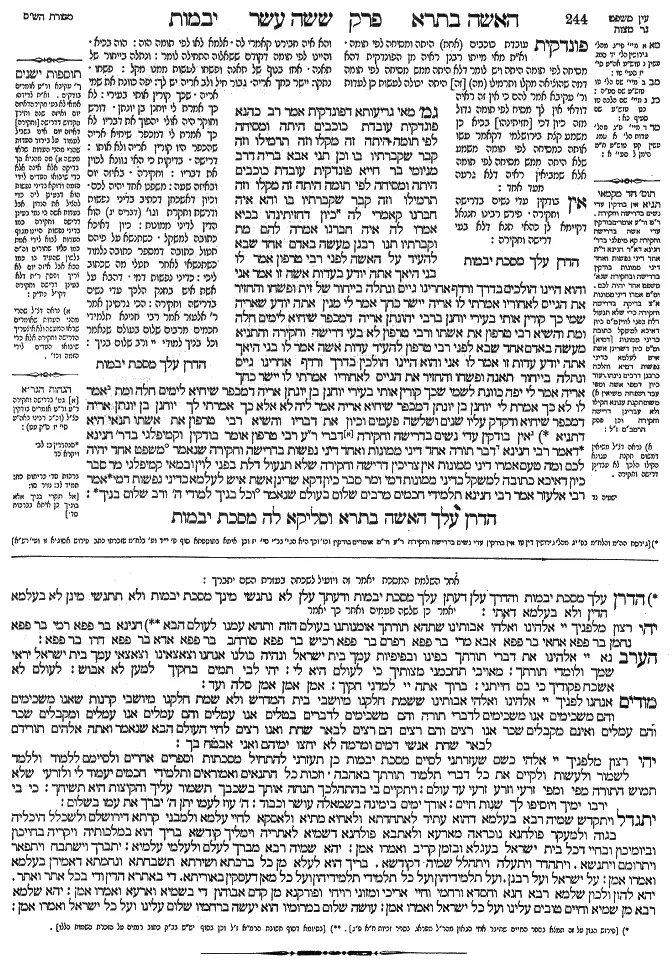
Yevamot 122b - Guemara
גמ׳ מאי גריעותא דפונדקית אמר רב כהנא פונדקית עובדת כוכבים היתה ומסיחה לפי תומה היתה זה מקלו וזה תרמילו וזה קבר שקברתיו בו וכן תני אבא בריה דרב מניומי בר חייא פונדקית עובדת כוכבים היתה ומסיחה לפי תומה היתה זה מקלו וזה תרמילו וזה קבר שקברתיו בו והא איה חברנו קאמרי לה כיון דחזיתינהו בכיא אמרו לה איה חברנו אמרה להם מת וקברתיו תנו רבנן מעשה באדם אחד שבא להעיד על האשה לפני רבי טרפון אמר לו בני היאך אתה יודע בעדות אשה זו אמר אני והוא היינו הולכים בדרך ורדף אחרינו גייס ונתלה בייחור של זית ופשחו והחזיר את הגייס לאחוריו אמרתי לו אריה יישר כחך אמר לי מנין אתה יודע שאריה שמי כך קורין אותי בעירי יוחנן ברבי יהונתן אריה דמכפר שיחיא לימים חלה ומת והשיא רבי טרפון את אשתו ורבי טרפון לא בעי דרישה וחקירה והתניא מעשה באדם אחד שבא לפני רבי טרפון להעיד עדות אשה אמר לו בני היאך אתה יודע עדות זו אמר לו אני והוא היינו הולכין בדרך ורדף אחרינו גייס ונתלה בייחור תאנה ופשחו והחזיר את הגייס לאחוריו אמרתי לו יישר כחך אריה אמר לי יפה כוונת לשמי שכך קורין אותי בעירי יוחנן בן יונתן אריה דמכפר שיחיא לימים חלה ומת אמר לו לא כך אמרת לי יוחנן בן יונתן דמכפר שיחיא אריה אמר ליה לא אלא כך אמרתי לך יוחנן בן יונתן אריה דמכפר שיחיא ודקדק עליו שנים ושלשה פעמים וכיון את דבריו והשיא רבי טרפון את אשתו תנאי היא דתניא אין בודקין עדי נשים בדרישה וחקירה דברי ר"ע רבי טרפון אומר בודקין וקמיפלגי בדר' חנינא דאמר רבי חנינא דבר תורה אחד דיני ממונות ואחד דיני נפשות בדרישה וחקירה שנאמר (ויקרא כד, כב) משפט אחד יהיה לכם ומה טעם אמרו דיני ממונות אין צריכין דרישה וחקירה שלא תנעול דלת בפני לוין ובמאי קמיפלגי מר סבר כיון דאיכא כתובה למשקל כדיני ממונות דמי ומר סבר כיון דקא שרינן אשת איש לעלמא כדיני נפשות דמי אמר רבי אלעזר אמר רבי חנינא תלמידי חכמים מרבים שלום בעולם שנאמר (ישעיהו נד, יג) וכל בניך למודי ה' ורב שלום בניך:
הדרן עלך האשה בתרא וסליקא לה מסכת יבמות
Comments from Rashi on Masechet Yevamot Page 122b
והא איה חבירנו קאמרי לה . אלמא לאו לפי תומה הוה: הוה בכיא . והיינו לפי תומה דקודם ששאלוה התחילה לומר: ונתלה בייחור של תאנה . אחז בנוף של תאנה ופשחו לעשות ממנו מקל: פשחו . נתקו: יישר כחך אריה . גבור חיל ולב אריה יש לך: יפה כוונת את שמי אריה . שכך קורין אותי בעירי: לא כך אמרת לי יוחנן בן יונתן . דורש וחוקר היה אולי יהפוך את דבריו לא כך אמרת לי דמכפר שיחיא אריה שהכפר היו קורין אריה ולא אותו: דרישה . בדיקות כי האי גוונא לכוין את דבריו: וחקירה . באיזה יום ובאיזה שעה: משפט אחד יהיה לכם . וכיון דאשכחן דכתיב בדיני נפשות ודרשת וחקרת וגו' (דברים יג) הוא הדין לדיני ממונות: כיון דאיכא כתובה למשקל . כשתנשא על פיהם תטול כתובה דמספר כתובה נלמוד כשתנשאי לאחר תטלי מה שכתוב ליכי: כדיני נפשות דמי . דהבא על אשת איש בחנק הלכך עדי נשים בדרישה וחקירה: הכי גרסינן אמר ר' אלעזר אמר רבי חנינא תלמידי חכמים מרבים שלום בעולם שנאמר וכל בניך למודי ה' ורב שלום בניך:
Comments from Tosafot - Yevamot 122b
פונדקית עובדת כוכבים (אחת) היתה ומסיחה לפי תומה . וא"ת מאי מייתו רבנן ראיה מן הפונדקית דהא מסיחה לפי תומה היתה ויש לומר דלא היתה ממש מסיחה לפי תומה דמה שהוציאה מקלו ותרמילו (מה) [זה] היתה יכולה לעשות כן לעדות ור' עקיבא אמר להם כי אין זה ראיה דודאי אין לך מסיח לפי תומה גדול מזה כיון דכי [חזיתינהו] בכיא כן משמע קצת בירושלמי דקאמר עשו אותה כמסיחה לפי תומה משמע שלא היתה ממש מסיחה לפי תומה אלא שמביאין ראיה דלא גרעה מעד אחד: אין בודקין עדי נשים בדרישה וחקירה . פירש רבינו חננאל דקיימא לן כהאי תנא דלא בעי דרישה וחקירה:
Yevamot 122b - Mishnah translated into english
GEMARA: The mishna assumed that an innkeeper is less trustworthy than an ordinary woman, such that the Rabbis argued that if the innkeeper was deemed credible, it should be obvious that an ordinary woman should be deemed credible. The Gemara asks: What was unfavorable about the innkeeper that made her less trustworthy than an ordinary woman? Rav Kahana said: She was a gentile innkeeper, and she was therefore deemed credible only because she was speaking offhandedly when she said that the man died and this is his staff, and this is his bag, and this is the grave in which I buried him. And similarly, Abba, son of Rav Minyumi, son of Ḥiyya, taught: She was a gentile innkeeper, and she was speaking offhandedly, saying that this is his staff, and this is his bag, and this is the grave in which I buried him.
But didn’t they say to her: Where is our friend? This indicates that she was answering their question rather than speaking offhandedly. The Gemara explains: Once she saw them, she cried. They said to her: Where is our friend? Then she said to them: He died, and I buried him. Since she cried before being questioned, the crying was considered the beginning of her account, and she is considered to have been speaking offhandedly.
§ The Sages taught: An incident occurred involving a certain individual who came to testify before Rabbi Tarfon with regard to a woman whose husband had died. He said to him: My son, how do you come to know testimony that the husband of this woman died? He said: He and I were traveling on the road together, and a troop of soldiers chased after us. He hung onto an olive branch, and tore it off to use as a heavy staff to intimidate the soldiers, and forced the troop to withdraw.
After this heroic act I said to him, admiring his bravery: Lion [arye], may your strength continue to be firm. He said to me: From where do you know that my name is Arye? That is what they call me in my city: Yoḥanan, son of Rabbi Yehonatan, the lion from the village Shiḥayya. After a while, he fell sick and died, and consequently the fellow traveler knew his name and could testify about him. And Rabbi Tarfon allowed his wife to marry based on this testimony.
The Gemara asks: But didn’t Rabbi Tarfon require inquiry and interrogation of the witness? Isn’t it taught in a baraita: An incident occurred involving a certain person who came before Rabbi Tarfon to present testimony that a woman’s husband died. He said to him: My son, how do you know this testimony? He told him: He and I were traveling on the road together, and a troop of soldiers chased after us. He hung onto a fig branch, and tore it off, and forced the troop to withdraw by intimidating the soldiers with the branch. I said to him: May your strength continue to be firm, lion. He said to me: You have intuited my name well, for that is what they call me in my city: Yoḥanan, son of Yonatan, the lion from the village Shiḥayya. The man concluded his story: After a while, he fell sick and died.
Rabbi Tarfon said to him, in order to check his story: Did you not tell me that the dead man said that his name was Yoḥanan, son of Yonatan, from the village Shiḥayya, which is called Lion? He replied to him: No. Rather, this is what I told you: He told me that he is called Yoḥanan, son of Yonatan, the lion from the village Shiḥayya. Then Rabbi Tarfon cross-examined him in this manner two or three times, and the witness repeatedly kept his statements consistent, so Rabbi Tarfon allowed his wife to marry. In this version of the story, the mere report of events does not seem sufficient. An interrogation of the witness is also necessary.
The Gemara answers: This is a dispute between tanna’im, as it is taught in a baraita: The court does not examine witnesses who give testimony concerning the marital status of women by means of the standard procedures of inquiry and interrogation; this is the statement of Rabbi Akiva. Rabbi Tarfon says: The court must examine them utilizing these means.
The Gemara comments: And they disagree about the statement of Rabbi Ḥanina, as Rabbi Ḥanina said: By Torah law, both cases of monetary law and cases of capital law require scrutiny by means of inquiry and interrogation of witnesses, as it is stated: “You shall have one law” (Leviticus 24:22), indicating that the legal procedures must be the same for each area of halakha. Consequently, since inquiry and interrogation are required for capital law (Deuteronomy 13:15), they are required for cases of monetary law as well.
And for what reason did the Sages say that cases of monetary law do not require inquiry and interrogation of witnesses? So as not to lock the door in the face of potential borrowers. If the procedures for litigation in cases of monetary law were too rigorous, people would be very hesitant to lend money.
And with regard to what do they disagree in the case of testimony that allows a woman to remarry? They disagree as follows: One Sage, Rabbi Akiva, holds that since there is the payment of the marriage contract for the woman to take when her husband dies, it is considered to be like cases of monetary law and does not require inquiry and interrogation procedures. And one Sage, Rabbi Tarfon, holds that since, based on this testimony, we permit a previously married woman to marry anyone in the world, and if her previous husband is still alive, her subsequent relationship will be considered adultery, which is a capital offense, it is considered to be like cases of capital law, which require the inquiry and interrogation procedures.
The tractate finishes on a positive note: Rabbi Elazar said that Rabbi Ḥanina said: Torah scholars increase peace in the world, as it is stated: “And all your children shall be taught of the Lord, and great shall be the peace of your children” (Isaiah 54:13). This indicates that because the children will be Torah scholars, who are taught of the Lord and His Torah, they will live in great peace, and peace will thereby be increased for the entire world.
Traduction : The William Davidson digital edition of the Koren Noé Talmud, with commentary by Rabbi Adin Even-Israel Steinsaltz.