 Talmud Bavli
Yevamot 121b : Youtube
Daf TubeYoutube
1 video class :
Yevamot Page 121b
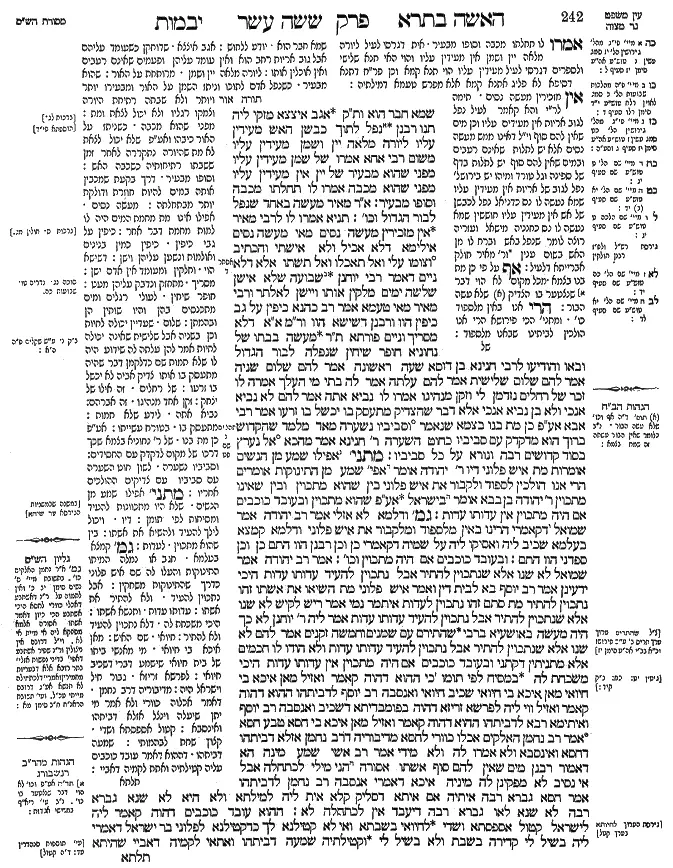
Yevamot 121b - Guemara
שמא חבר הוא ות"ק אגב איצצא מזקי ליה תנו רבנן נפל לתוך כבשן האש מעידין עליו ליורה מלאה יין ושמן מעידין עליו משום רבי אחא אמרו של שמן מעידין עליו מפני שהוא מבעיר של יין אין מעידין עליו מפני שהוא מכבה אמרו לו תחלתו מכבה וסופו מבעיר:
א"ר מאיר מעשה באחד שנפל לבור הגדול וכו':
תניא אמרו לו לרבי מאיר אין מזכירין מעשה נסים מאי מעשה נסים אילימא דלא אכיל ולא אישתי והכתיב (אסתר ד, טז) וצומו עלי ואל תאכלו ואל תשתו אלא דלא ניים דאמר רבי יוחנן שבועה שלא אישן שלשה ימים מלקין אותו ויישן לאלתר ורבי מאיר מאי טעמא אמר רב כהנא כיפין על גב כיפין הוו ורבנן דשישא הוו ור"מ א"א דלא מסריך וניים פורתא ת"ר מעשה בבתו של נחוניא חופר שיחין שנפלה לבור הגדול ובאו והודיעו לרבי חנינא בן דוסא שעה ראשונה אמר להם שלום שניה אמר להם שלום שלישית אמר להם עלתה אמר לה בתי מי העלך אמרה לו זכר של רחלים נזדמן לי וזקן מנהיגו אמרו לו נביא אתה אמר להם לא נביא אנכי ולא בן נביא אנכי אלא דבר שהצדיק מתעסק בו יכשל בו זרעו אמר רבי אבא אע"פ כן מת בנו בצמא שנאמר (תהלים נ, ג) וסביביו נשערה מאד מלמד שהקדוש ברוך הוא מדקדק עם סביביו כחוט השערה ר' חנינא אמר מהכא (תהלים פט, ח) אל נערץ בסוד קדושים רבה ונורא על כל סביביו:
מתני׳ אפילו שמע מן הנשים אומרות מת איש פלוני דיו ר' יהודה אומר אפי' שמע מן התינוקות אומרים הרי אנו הולכין לספוד ולקבור את איש פלוני בין שהוא מתכוין ובין שאינו מתכוין ר' יהודה בן בבא אומר בישראל אע"פ שהוא מתכוין ובעובד כוכבים אם היה מתכוין אין עדותו עדות:
גמ׳ ודלמא לא אזלי אמר רב יהודה אמר שמואל דקאמרי הרינו באין מלספוד ומלקבור את איש פלוני ודלמא קמצא בעלמא שכיב ליה ואסיקו ליה על שמיה דקאמרי כן וכן רבנן הוו התם כן וכן ספדני הוו התם:
ובעובד כוכבים אם היה מתכוין וכו':
אמר רב יהודה אמר שמואל לא שנו אלא שנתכוין להתיר אבל נתכוין להעיד עדותו עדות היכי ידעינן אמר רב יוסף בא לבית דין ואמר איש פלוני מת השיאו את אשתו זהו נתכוין להתיר מת סתם זהו נתכוין לעדות איתמר נמי אמר ריש לקיש לא שנו אלא שנתכוין להתיר אבל נתכוין להעיד עדותו עדות אמר ליה ר' יוחנן לא כך היה מעשה באושעיא ברבי שהתירם עם שמנים וחמשה זקנים אמר להם לא שנו אלא שנתכוין להתיר אבל נתכוין להעיד עדותו עדות ולא הודו לו חכמים אלא מתניתין דקתני ובעובד כוכבים אם היה מתכוין אין עדותו עדות היכי משכחת לה במסיח לפי תומו כי ההוא דהוה קאמר ואזיל מאן איכא בי חיואי מאן איכא בי חיואי שכיב חיואי ואנסבה רב יוסף לדביתהו ההוא דהוה קאמר ואזיל ווי ליה לפרשא זריזא דהוה בפומבדיתא דשכיב ואנסבה רב יוסף ואיתימא רבא לדביתהו ההוא דהוה קאמר ואזיל מאן איכא בי חסא טבע חסא אמר רב נחמן האלקים אכלו כוורי לחסא מדיבוריה דרב נחמן אזלא דביתהו דחסא ואינסבא ולא אמרו לה ולא מידי אמר רב אשי שמע מינה הא דאמור רבנן מים שאין להם סוף אשתו אסורה הני מילי לכתחלה אבל אי נסיב לא מפקינן לה מיניה איכא דאמרי אנסבה רב נחמן לדביתהו אמר חסא גברא רבה איתיה אם איתא דסליק קלא אית ליה למילתא ולא היא לא שנא גברא רבה לא שנא לאו גברא רבה דיעבד אין לכתחלה לא:
ההוא עובד כוכבים דהוה קאמר ליה לישראל קטול אספסתא ושדי לחיואי בשבתא ואי לא קטילנא לך כדקטילנא לפלוני בר ישראל דאמרי ליה בשיל לי קדירה בשבת ולא בשיל לי וקטילתיה שמעה דביתהו ואתאי לקמיה דאביי שהיתא
Comments from Rashi on Masechet Yevamot Page 121b
שמא חבר הוא . יודע ללחוש: אגב איצצא . שדוחקן כשעומד עליהם. אבל גוב אריות רחב הוא ואין עומד עליהן ופעמים שאינם רעבים ואין אוכלין אותו: ליורה מלאה יין ושמן . מרותחת על האור: שהוא מבעיר . כשנפל אדם לתוכו וניתז השמן על האור ומבעירו יותר ויותר ולא שבתה רתיחת היורה וצמקו רגליו ולא יכול לצאת ומת: מפני שהוא מכבה . כשניתז על האור כיבהו. ואע"פ שלא יכול לצאת לא מת שהיורה נתקררה לאחר זמן ששבתו רתיחותיה כשכבה האש: וסופו מבעיר . דרך בקעת שמכבין אותה במים להיות חוזרת ודולקת יותר מבתחלתה: מעשה נסים . אפילו אינו מת מחמת המים היה לו למות מחמת דבר אחר: כיפין על גבי כיפין . כיפין כמין בנינים ואולמות ונשען עליהן וישן: דשישא הוי . וחלקין ומעומד אין אדם ישן: מסריך . מתחזק ונדבק עליהן מעט: חופר שיחין . לעולי רגלים ומים מתכנסים בהן והיו שותין הן ובהמתן: שלום . שעדיין יכולה לחיות וכן בשניה אבל שלישית שאינה יכולה לחיות אמר להן עלתה לה שידוע היה לו שלא תמות שם כדלקמן דבר שהיה מתעסק בו אותו צדיק אביה לא יכשל בו זרעו: של רחלים . זה אילו של יצחק: זקן אחד מנהיגו . זה אברהם: נביא אתה . לידע שלא תמות: מתעסק בו . בטורח עשייתו: אע"פ כן מת בנו . של ר' נחוניא בצמא שכך דרכו של מקום לדקדק עם החסידים: וסביביו נשערה . לשון חוט השערה. עם סביביו עם צדיקים ההולכים אחריו: מתני' אפילו שמע מן הנשים . שלא היו מתכוונות להעיד ומסיחות לפי תומן: דיו . ויכול לילך להעיד ולהשיא את אשתו: בין שהוא מתכוין . לעדות: גמ' קמצא בעלמא . חגב או נמלה המיתו התינוקות והעלו לה שם איש פלוני כדרך שהתינוקות משחקין: אבל נתכוין להעיד . ולא להתיר את אשתו: עדותו עדות . ותנשא אשתו: היכי משכחת לה . דלא נתכוין להעיד ולא להתיר: חיואי . שם האיש: מאן איכא בי חיואי . מי מאנשי ביתו של בית חיואי שישמע דברי דשכיב חיואי: לפרשא זריזא . גבור חיל וישראל היה: מדיבוריה דרב נחמן . דאמר אכלוה כוורי ולא אמר מי יתן שיעלה וינצל אזלא דביתהו ואינסבא: קטול אספסתא ושדי . קצוץ שחת לבהמותי: שמעה דביתהו . דההוא דאמר עובד כוכבים עליה קטילתיה ואתת לקמיה דאביי:
Comments from Tosafot - Yevamot 121b
אמרו לו תחלתו מכבה וסופו מבעיר . אית דגרסי לעיל ליורה מלאה יין ושמן אין מעידין עליו והוי האי תנא שלישי ולספרים דגרסי לעיל מעידין עליו הוי תנא קמא וכן פר"ח דתנא דסיפא לא פליג אתנא קמא אלא מפרש טעמא דמילתיה: אין מזכירין מעשה נסים . תימה לר"י והא קאמר לעיל נפל לגוב אריות אין מעידים עליו וכן מים שאין להם סוף וי"ל דאינו ממש מעשה נסים אלא יש לתלות שאינם רעבים ובמים שאין להם סוף יש לתלות בדף של ספינה וגל טורד ומיהו יש בירושל' נפל לגוב של אריות אין מעידין עליו שמא נעשה לו נס כדניאל נפל לכבשן של אש אין מעידין עליו חוששין שמא נעשה לו נס כחנניה מישאל ועזריה רוצה לומר שנפל באש וברח לו מן האש בשום ענין ור' מאיר חולק אברייתא דלעיל: אף על פי כן מת בנו בצמא . מכל מקום לא הוי דבר שנצטער בו הצדיק שלא עשה הבור: הרי אנו באין מלספוד כו' . ומתני' הכי פירושא הרי אנו הולכין לביתינו שבאנו מלספוד:
Yevamot 121b - Mishnah translated into english
that perhaps he is a charmer [ḥabbar] of snakes and scorpions who knows magic or some stratagem to keep them from harming him. And the first tanna holds that we need not be concerned about this possibility, as, due to the pressure of his body falling on top of them, they will harm him, even if he could control them under other circumstances.
The Sages taught: If one fell into a blazing furnace, one may testify about him that he has died. If he fell into a boiling cauldron filled with wine or oil, one may also testify about him that he has died. In the name of Rabbi Aḥa, they said: If he fell into a cauldron of oil, one may testify about him that he has died, because this ignites the fire even more. Through the force of his fall, oil will splash into the fire and increase the heat of the cauldron. However, if he fell into a cauldron of wine, one may not testify about him that he has died, because when wine splashes into the fire it extinguishes the fire. They said to him: At first it partially extinguishes the fire but eventually it ignites it even more, and therefore it can be assumed that he has died.
§ The mishna stated that Rabbi Meir said: An incident occurred involving a certain individual who fell into the Great Cistern and emerged after three days. It is taught in a baraita: They said to Rabbi Meir: One does not mention miraculous acts to teach general halakha. The Gemara asks: What about that story defines it as an example of miraculous acts? If we say the fact that he did not eat or drink for three days and still survived is miraculous, but isn’t it written: “Fast for me, and neither eat nor drink three days, night or day” (Esther 4:16), demonstrating that one may survive this experience naturally?
The Gemara answers: Rather, the miraculous element is that he did not sleep during those three days, as Rabbi Yoḥanan said: If one says: I hereby take on an oath that I will not sleep for three days, the court flogs him for taking an oath in vain, and he may sleep immediately because it is impossible to remain awake for three consecutive days.
The Gemara asks: And according to Rabbi Meir, what is the reason this was not a miraculous incident? The Gemara answers that Rav Kahana said: There were several levels of arches built on top of other arches within the Great Cistern, and he supported himself on the arches and slept. And the Rabbis said that they were made of marble and it was impossible to hold onto them and sleep. And Rabbi Meir assumed that it is inconceivable that he didn’t grasp some part of an arch for a short time and sleep a little, and therefore this incident does not qualify as a miracle.
The Sages taught: An incident occurred involving the daughter of Neḥunya the well digger, who fell into the Great Cistern, and they came and notified Rabbi Ḥanina ben Dosa and asked that he pray for her. After the first hour, he said to them: She is at peace and unharmed. After the second hour, he said to them: She is at peace. After the third hour he said to them: She has ascended from the cistern.
When she came to Rabbi Ḥanina ben Dosa, he said to her: My daughter, who pulled you up from the cistern? She said to him: A male sheep, i.e., a ram, happened by and sensed me in that cistern, and there was an old man leading him who pulled me out. They said to Rabbi Ḥanina ben Dosa: Are you a prophet with knowledge of what is happening far away? He said to them, using a figure of speech from the Bible: “I am not a prophet, nor the son of a prophet am I” (Amos 7:14). Rather, I reasoned as follows: Could it be that concerning the endeavor that the righteous Neḥunya is engaged in, i.e., digging for the benefit of the public, his offspring would stumble upon its fruits and thereby be killed? I therefore knew that God would certainly save her.
Rabbi Abba said: Even so, the son of Neḥunya the well digger died of thirst, and the merit of his father, who attended to the water supply, did not protect him, as is stated: “And around Him it storms [nisara] mightily” (Psalms 50:3), which teaches that the Holy One, Blessed be He, is exacting with His surroundings, i.e., the righteous who are close to Him, up to a hairsbreadth [sa’ara], so that even slight deviations can elicit severe punishment. Rabbi Ḥanina said: This idea is derived from here: “A God dreaded in the great council of the holy ones, and feared by all that are about Him” (Psalms 89:8). This indicates that God is most feared by those that are nearest to Him, i.e., the righteous, because He is more exacting of them.
MISHNA: Even if one heard from the women, who were saying: So-and-so died, this is sufficient in order to testify to his death. Rabbi Yehuda says: Even if one heard from the children, who were saying: We are going to eulogize and bury so-and-so, that is also sufficient. Furthermore, one may rely upon someone mentioning that a man died, regardless of whether the speaker intends to testify and thereby allow the man’s wife to remarry or whether he does not intend to offer formal testimony.
Rabbi Yehuda ben Bava says: With regard to a Jew who offers this information, it may be relied upon even if he intends for his statement to be considered formal testimony. However, with regard to a gentile, if he intended to testify, his testimony is not considered valid testimony. His statement is relied upon only when he does not intend to state it as formal testimony.
GEMARA: With regard to relying on what children said, that they are going to eulogize and bury so-and-so, the Gemara asks: Perhaps they will not go; perhaps they only assumed that the individual would die, but in the end he didn’t. The Gemara answers: Rav Yehuda said that Shmuel said: It is referring to a situation where the children say: We are coming from eulogizing and burying so-and-so.
The Gemara asks: Since they are children, perhaps it was merely a grasshopper with which they played that died, and they brought it out as if to its funeral, calling it by the name of the individual suspected to be dead, and their statement should not be considered valid proof of his death. The Gemara answers: It is referring to a situation where the children say: Such and such rabbis were there; such and such eulogizers were there, so that it is clear that they were referring to an event that truly occurred.
§ It was taught in the mishna: With regard to a gentile, if he intended to testify, his testimony is not considered valid testimony. Rav Yehuda said that Shmuel said: They taught this only in a case where he intended to permit the woman to remarry through his testimony, but if he merely intended to testify about the man’s death, his testimony is considered testimony. The Gemara asks: How do we know the intention of the gentile? Rav Yosef said: If he came to the court and said: So-and-so died, allow his wife to marry, this is an instance of intending to permit her to remarry. If he said simply: He died, this is an instance of merely intending to testify.
This was also stated by other amora’im. Reish Lakish said: They taught this only when one intended to permit the woman to remarry, but if he merely intended to testify about the man’s death, his testimony is considered valid testimony. Rabbi Yoḥanan said to him: Didn’t such an incident occur involving Rabbi Oshaya the Distinguished, who permitted women to marry based upon the testimony of gentiles while he was with eighty-five Elders? He said to the Elders: They taught that one may not rely upon a gentile’s testimony only when he intended to permit the woman to remarry, but if he merely intended to testify about the man’s death, his testimony is considered valid testimony. But the Rabbis did not concur with him on this, and they maintained that one may not rely upon the testimony of a gentile at all.
The Gemara asks: But, if that is so, what about that which is taught in the mishna: With regard to a gentile, if he intended to testify, his testimony is not considered valid testimony, which implies that if the gentile does not intend to testify, his statement may be relied upon? How can you find a case where one would rely on his statement? The Gemara answers: One may rely on a gentile’s statement when he speaks offhandedly, without any intention to testify. Like that gentile who was going around saying: Who is from the house of Ḥivvai; who is from the house of Ḥivvai? Ḥivvai has died. And based upon this report, Rav Yosef allowed Ḥivvai’s wife to marry. There was also a certain gentile who was going around saying: Alas for the brave horseman who was in Pumbedita, for he is dead. And Rav Yosef, and some say Rava, allowed his wife to marry.
§ There was also a certain gentile who was going around saying: Who is from the house of Ḥasa? Ḥasa has drowned. Rav Naḥman said: By God! The fish have eaten Ḥasa. The Gemara relates: Due to Rav Naḥman’s statement, although he did not issue a court ruling permitting it, Ḥasa’s wife went and married, and no one said anything to her to protest this action. Rav Ashi said: Learn the following from this incident: That which the Sages said, that if a man fell into an endless body of water, his wife is prohibited from remarrying, this applies only ab initio, but if someone married her, we do not take her away from him.
There are those who say that Rav Naḥman actually issued a ruling and allowed his wife to marry. He said: Ḥasa is a great man; if it was so that he emerged from the water the incident would have generated publicity. Since nothing was heard from Ḥasa in a long while, it can be assumed that he died. The Gemara comments: That is not so. It is not different if he is a great man and it is not different if he is not a great man. If a woman remarried based on testimony that her husband drowned in an endless body of water, after the fact, yes, she may remain married, but she may not remarry ab initio.
The Gemara relates that a certain gentile said to a Jew: Harvest the fodder and give it to my animals on Shabbat, and if not, I will kill you like I killed so-and-so the Jew, for I said to him: Cook me a pot of food on Shabbat, and he didn’t cook it for me, so I killed him. The wife of the missing Jew heard the gentile say that he killed her husband, and she came before Abaye to ask if she was permitted to remarry. He deferred the ruling in her case
Traduction : The William Davidson digital edition of the Koren Noé Talmud, with commentary by Rabbi Adin Even-Israel Steinsaltz.