 Talmud Bavli
Yevamot 119b : Youtube
Daf TubeYoutube
1 video class :
Yevamot Page 119b
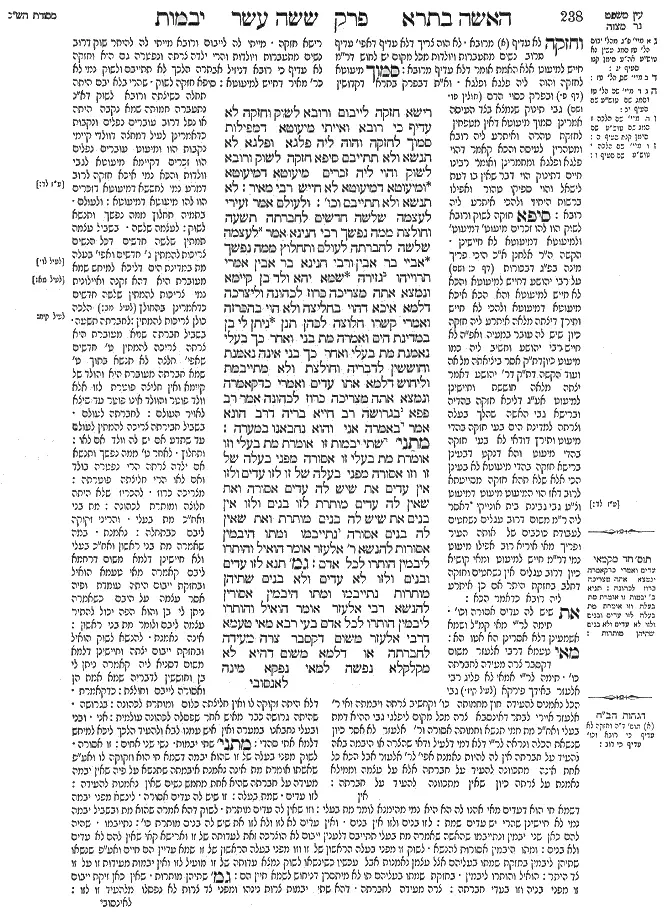
Yevamot 119b - Guemara
רישא חזקה לייבום ורובא לשוק וחזקה לא עדיף כי רובא ואייתי מיעוטא דמפילות סמוך לחזקה והוה ליה פלגא ופלגא לא תנשא ולא תתייבם סיפא חזקה לשוק ורובא לשוק והוי ליה זכרים מיעוטא דמיעוטא ומיעוטא דמיעוטא לא חייש רבי מאיר:
לא תנשא ולא תתייבם וכו':
ולעולם אמר זעירי לעצמה שלשה חדשים לחברתה תשעה וחולצת ממה נפשך רבי חנינא אמר לעצמה שלשה לחברתה לעולם ותחלוץ ממה נפשך אביי בר אבין ורבי חנינא בר אבין אמרי תרוייהו גזירה שמא יהא ולד בן קיימא ונמצא אתה מצריכה כרוז לכהונה וליצרכה דלמא איכא דהוי בחליצה ולא הוי בהכרזה ואמרי קשרו חלוצה לכהן תנן ניתן לי בן במדינת הים ואמרה מת בני ואחר כך בעלי נאמנת מת בעלי ואחר כך בני אינה נאמנת וחוששין לדבריה וחולצת ולא מתייבמת וליחוש דלמא אתו עדים ואמרי כדקאמרה ונמצא אתה מצריכה כרוז לכהונה אמר רב פפא בגרושה רב חייא בריה דרב הונא אמר באמרה אני והוא נחבאנו במערה:
מתני׳ שתי יבמות זו אומרת מת בעלי וזו אומרת מת בעלי זו אסורה מפני בעלה של זו וזו אסורה מפני בעלה של זו לזו עדים ולזו אין עדים את שיש לה עדים אסורה ואת שאין לה עדים מותרת לזו בנים ולזו אין בנים את שיש לה בנים מותרת ואת שאין לה בנים אסורה נתייבמו ומתו היבמין אסורות להנשא ר' אלעזר אומר הואיל והותרו ליבמין הותרו לכל אדם:
גמ׳ תנא לזו עדים ובנים ולזו לא עדים ולא בנים שתיהן מותרות נתייבמו ומתו היבמין אסורין להנשא רבי אלעזר אומר הואיל והותרו ליבמין הותרו לכל אדם בעי רבא מאי טעמא דרבי אלעזר משום דקסבר צרה מעידה לחברתה או דלמא משום דהיא לא מקלקלא נפשה למאי נפקא מינה
Comments from Rashi on Masechet Yevamot Page 119b
רישא חזקה . מייתי לה לייבום ורובא מייתי לה להיתר שוק דרוב נשים מתעברות ויולדות והרי ילדה צרתה ונפטרה גם היא וחזקה לא עדיף כי רובא דניזיל אבתרה הלכך לא תתייבם ולשוק נמי לא כר' מאיר דחייש למיעוטא: סיפא חזקה לשוק . שהרי בלא יבם היתה תחלה כשיצתה ורובא לשוק דא"נ נתעברה חמותה שמא נקבה היתה או נפל דרוב עוברים נפלים ונקבות כדאמרינן לעיל דמחצה דוולדי קיימי נקבות הוו ומיעוט עוברים נפלים הוו זכרים דקיימא מיעוטא לגבי וולדות והכא נמי איכא חזקה לרוב דמרע נמי לחששא דמיעוטא דזכרים הוו להו מיעוטא דמיעוטא: ולעולם . בתמיה'. תחלוץ ממה נפשך ותנשא לשוק: לעצמה שלשה . בשביל עצמה תמתין שלשה חדשים דכל הנשים צריכות להמתין ג' חדשים ואפי' בעלה מת במדינת הים דליכא למיחש שמא מעוברת היא דהא זקנה ואיילונית נמי צריכות להמתין שלשה חדשים כדאמרינן בהחולץ (לעיל יבמות מב:) הלכה כולן צריכות להמתין: לחברתה תשעה . בשביל חברתה שמא מעוברת היא צרתה צריכה להמתין ט' חדשים שאפי' חלצה לא תנשא בתוך ט' שמא חברתה מעוברת היא והולד של קיימא ואין חליצה פוטרת לזו אלא וולד פוטר והוולד אינו פוטר עד שיצא לאויר העולם: לחברתה לעולם . בשביל חבירתה צריכה להמתין לעולם עד שתדע אם יש לה וולד אם לאו: ותחלוץ . לאחר ט' ממה נפשך ותנשא אם ילדה צרתה הרי נפטרה בולד ואם לאו הרי חליצתה פוטרתה: מצריכה כרוז . להכריז שלא היתה חלוצה ומותרת לכהונה: מת בני ואח"כ מת בעלי . והריני זקוקה ליבם כבתחלה: נאמנת . במה שאמרה מת בני ראשון ואח"כ בעלי ולא חיישינן דלמא משום דרחמא ליבם קאמרה מאי טעמא הואיל ובחזקת ייבום היתה עומדת ופיה אסר עצמה על היבם כשאמרה ניתן לי בן והוא הפה יכול להתיר עצמה ליבם ולומר מת בני ראשון: אינה נאמנת . להנשא לשוק הואיל ובחזקת ייבום יצתה וחיישינן דלמא משום דסניא ליה קאמרה ניתן לי בן וחוששין לדבריה שמא אמת הן ואסורה לייבם וחולצת: כדקאמרת . דלא היתה זקוקה לו ואין חליצתה כלום ומותרת לכהונה: בגרושה . שהיתה גרושה כבר מאיש אחר שפסלה לכהונה עולמית: אני . ובני ובעלי נחבאנו במערה ואין איש עמנו לבא ולהעיד הלכך ליכא למיחש דלמא אתי סהדי: מתני' שתי יבמות . נשי שני אחים: זו אסורה . לשוק מפני בעלה של זו שהוא יבמה דשמא חי הוא וזקוקה לו ואע"פ שאשתו אומרת מת אינה נאמנת איבמתה שתנשא על פיה שאין יבמה מעידה על חברתה שהיא אחת מחמש נשים שאין נאמנות להעידה: לזו עדים . שמת בעלה: זו שיש לה עדים אסורה . לינשא מפני יבמה דשמא חי הוא דעדים מאי אהנו לה הא היא נמי מהימנא לומר מת בעלי: וזו שאין לה עדים מותרת . לשוק דהא אמרה שהוא מת ובשביל יבמה נמי לא חיישינן שהרי יש עדים שמת: לזו בנים ולזו אין בנים . ואין עדים לא לזו ולא לזו את שיש לה בנים מותרת כו': נתייבמו . שהיה להם כאן שני יבמין ונתייבמו שהאשה שאמרה מת בעלי תתייבם דלענין ייבום לא הוצרכה זאת לעדותה של זו. וארישא קאי שאין להם לא עדים ולא בנים: ומתו היבמין אסורות להנשא . לשוק זו מפני בעלה הראשון של זו וזו מפני בעלה הראשון של זו שמא עדיין הם חיים ואע"פ שנשאו שתיהן ליבמין בחזקת שמתו בעליהם אצל עצמן נאמנות אבל עכשיו כשינשאו לשוק נמצא עדותה של זו מועיל לזו ואין יבמות מעידות זו על זו צד היתר: הואיל והותרו ליבמין . בחזקת שמתו בעליהם תו לא מיתסרן דניחוש לשמא חיין הם: גמ' שתיהן מותרות . שאין כאן זיקת ייבום זו מפני בניה וזו בעדי חברתה: צרה מעידה לחברתה . דהא שתי יבמות צרות נינהו ומפני צד צרות לא נפסלו מלהעיד זו לזו:
Comments from Tosafot - Yevamot 119b
וחזקה לא עדיף מרובא . לא הוה צריך דלא עדיף דאפי' עדיף מרוב נשים מתעברות ויולדות מכל מקום יש לחוש דר"מ חייש למיעוט אלא האמת אומר דלא עדיף מרובא: סמוך מיעוטא לחזקה והוה ליה פלגא ופלגא . וא"ת דבפרק בתרא דקדושין (דף פ.) ובפרק כסוי הדם (חולין פו. ושם) גבי תינוק שנמצא בצד העיסה אמרינן סמוך מיעוטא דאין מטפחין לחזקת טהרה ואיתרע ליה רובא ומטהרין לעיסה והכא קאמר דהוי פלגא ופלגא ומחמרינן ואומר רבינו חיים דתינוק הוי דבר שאין בו דעת לישאל והוי ספיקו טהור ואפילו ברשות היחיד ולהכי איתרע ליה רובא: סיפא חזקה לשוק ורובא לשוק הוו להו זכרים מיעוט' דמיעוט' ולמיעוטא דמיעוטא לא חיישינן . הקשה ה"ר אלחנן א"כ היכי פריך מינה בפ"ג דבכורות (דף כ: ושם) על רבי יהושע דחייש למיעוטא והכא לא חייש למיעוטא והא הכא איכא מיעוטא דמיעוטא ולהכי לא חייש ותירץ דיצתה מלאה איתרע ליה חזקה כיון שיש לה עובר במעיה ואפ"ה לא חייש רבי יהושע וחשיב ליה כמו מיעוט כיון דת"ק אסר ביציאתה מלאה ועוד הקשה דת"ק דר' יהושע דאמר יצתה מלאה חוששת וחיישינן למיעוט אע"ג דליכא חזקה בהדיה וברישא גבי האשה שהלך בעלה וצרתה למדינת הים בעי חזקה בהדי מיעוט ותירץ דודאי לא בעי חזקה בהדי מיעוט והא דנקט דבעינן ברישא חזקה בהדי מיעוטא לא בעינן הכי אלא שלא תהא חזקה מסייעתא לרוב דאז הוי המיעוט מיעוט דמיעוט וצ"ע גבי גבינת בית אונייקי דאסר ליה ר"מ משום דרוב עגלים נשחטים לעבודת כוכבים של אותה העיר ופריך מאי איריא רוב אפילו מיעוט נמי דר"מ חייש למיעוט ומאי קושיא כיון דרוב עגלים אין נשחטים וחזקה דחלב בחזקת היתר אם כן איתרע ליה רובא כדאמר הכא: את שיש לה עדים אסורה וכו' . תימה לר"י מאי קמ"ל ושמא אשמעינן דלא אסרינן הא אטו הא: מאי טעמא דרבי אלעזר משום דקסבר צרה מעידה לחברתה כו' . תימה לר"י אמאי לא פליג רבי אלעזר באידך פירקא (לעיל יבמות קיז.) גבי הכל נאמנים להעידה חוץ מחמותה כו' וקחשיב צרתה ויבמתה ואי ר' אלעזר איירי לבתר דאינסבא צרה מכל מקום ליפלגי גבי ההיא דמת בעלי ואח"כ מת חמי תנשא וחמותה אסורה ור' אלעזר לא אסר כיון שנשאת הכלה ונראה לר"י דלא דמי דלעיל ודאי שהצרה או היבמה באה להעיד על חברתה אין לה להיות נאמנת אפי' לר' אלעזר אבל הכא כל אחת אינה מתכוונה להעיד על חברתה אלא על עצמה וממילא נאמנת על צרתה כיון שאין מתכוונה להעיד על חברתה:
Yevamot 119b - Mishnah translated into english
In the first clause of the mishna, the legal presumption is that this widow is obligated to enter into levirate marriage, but in a majority of cases she will actually be permitted to marry a man from the general public, because it is statistically probable that her rival wife had a child. A legal presumption is not as significant as a majority, meaning that the majority carries more weight than the presumption, and she should be permitted to marry immediately. But bring the minority who miscarry into consideration, and join this to the legal presumption, and it becomes similar to an even balance of half and half. Those who miscarry detract from the strength of the majority, causing it to be equal in legal significance to the legal presumption. Therefore, the ruling is that she shall not marry any man who is not her yavam and she shall not enter into levirate marriage either.
However, in the latter clause, the legal presumption is that the widow is permitted to marry a man from the general public, since her late husband had no brothers initially. And in a majority of cases her mother-in-law will not have had another son, and therefore the widow will actually be permitted to marry a man from the general public. Consequently, the possibility that her husband has a brother, necessitating levirate marriage, is not taken into account because it is a minority of a minority, i.e., it is a minority and it contradicts the legal presumption, and even Rabbi Meir is not concerned about a minority of a minority.
§ It was taught in the mishna that in the case of a woman whose husband and rival wife went overseas and then her husband died, she shall not marry and shall not enter into levirate marriage until she knows whether her rival wife is pregnant. The Gemara asks: But must she wait indefinitely? She should be permitted to perform ḥalitza on account of the uncertainty and then marry another man.
Ze’eiri said: In order for herself [le’atzma] to be permitted to marry, she must wait three months after performing ḥalitza, since every woman must wait three months after her husband’s death before she marries again. Additionally, due to the concern for the possibility that her fellow wife may be pregnant, she must wait nine months, after which time that wife would have given birth had she been pregnant, and then she performs ḥalitza whichever way you look at it. If her rival wife gave birth in the meantime, she is permitted to marry anyone she wishes, and the ḥalitza is superfluous; if her rival wife did not give birth, necessitating levirate marriage, she is exempted by the ḥalitza. However, she may not perform ḥalitza earlier because ḥalitza performed while any wife of the deceased husband is pregnant is ineffective.
Rabbi Ḥanina said: For those concerns relating to herself she must wait three months, as explained, but for concerns related to her fellow wife’s possible pregnancy she must wait indefinitely, until it is verified whether or not that wife gave birth. The Gemara challenges Rabbi Ḥanina’s opinion: But let her perform ḥalitza whichever way you look at it, since, whatever happened, after nine months she may certainly perform ḥalitza.
Abaye bar Avin and Rabbi Ḥanina bar Avin both say in explanation of Rabbi Ḥanina’s opinion: It is a rabbinic decree lest there be viable offspring of that other wife. If so, her ḥalitza is superfluous, since she was exempt from both levirate marriage and ḥalitza; and then it transpires that you necessitate an announcement on her behalf stating that she is permitted to the priesthood, as a woman who has undergone ḥalitza is forbidden to a priest, but in this case it has become clear retroactively that she did not undergo ḥalitza.
The Gemara asks: And so let an announcement be necessary for her if a viable offspring is found. The Gemara answers: Perhaps there will be people who were present at the ḥalitza ceremony but were not present at the announcement that she is permitted to marry a priest, and if this woman marries a priest they will mistakenly say: They are permitting a ḥalutza to marry a priest.
The Gemara deliberates further about this: We learned in a mishna (Yevamot 118b): If a woman says: A son was born to me in a country overseas, and she also said: My son died, and then my husband died, she is deemed credible. However, if she said: My husband died and then my son died, she is not deemed credible about the sequence of events, but even so one must be concerned about her statement that her husband died childless. Consequently, she must perform ḥalitza, but she may not enter into levirate marriage.
The Gemara says: Just as there is concern about an announcement for the priesthood, let us be concerned that perhaps witnesses will eventually come and testify that the sequence of events was as she said, rendering her ḥalitza superfluous. And then it transpires that you necessitate an announcement on her behalf stating that she is permitted to the priesthood, and nevertheless the mishna instructs her to perform ḥalitza. Rav Pappa said: There it is referring only to a divorced woman, who was divorced from a previous husband, so that she is already prohibited from marrying a priest in any case. Rav Ḥiyya, son of Rav Huna, said: It is referring to a case where she said: He and I were hiding alone with our son in a cave. Consequently, there is no concern that witnesses will come and testify about the sequence of the events.
MISHNA: If there are two sisters-in-law married to two childless brothers who testify about their marital status, and this one says: My husband died, and that one says: My husband died, although each one of them is deemed credible with regard to her own status as a widow, this one is prohibited from marrying due to the possibility that the husband of that other sister may be alive, obligating her in levirate marriage, and that one is prohibited from marrying due to the husband of this sister, according to the same rationale. Although each is accorded credibility as to her own husband’s death, the halakha is that sisters-in-law are among the five types of women not accorded credibility with regard to each other’s permissibility to marry because of possible conflicts of interest.
If this one has witnesses to her husband’s death, and that one does not have witnesses, then the one who has witnesses is prohibited from marrying, as there are no witnesses to the death of her yavam to exempt her from levirate marriage; but the one who has no witnesses is permitted to marry based on her own testimony that her husband died combined with the witnesses’ testimony exempting her from levirate marriage. If this one has children and that one has no children, then the one with children is permitted to marry, as she herself is deemed credible with regard to her husband’s death, and her children exempt her from levirate marriage. But the one without children is prohibited from marrying, as the death of her yavam has not been corroborated independently of her sister-in-law’s testimony.
If there were two additional yevamin with whom these two widows entered into levirate marriage, and then the yevamin died childless, the women are prohibited from marrying, since the concern about an additional living yavam still remains. Rabbi Elazar says: Since these women were permitted to marry the living brothers-in-law, as the testimony of each was deemed credible with regard to her own status, they are permitted, from then on, to marry any man because their statements, taken together, indicate that neither one is obligated to enter into levirate marriage.
GEMARA: It was taught in a baraita: If this one has witnesses that her husband died and also has children, and the other has neither witnesses nor children, they are both permitted to marry. This is because the woman who has children is exempt from levirate marriage, and the woman who has no children may rely upon the witnesses’ testimony that her yavam died.
It was taught in the mishna: If they both entered into levirate marriage and then the yevamin they married died, they are prohibited from marrying. Rabbi Elazar says: Since they were permitted to marry the yevamin, they are permitted to any man.
Rava raised a dilemma: What is Rabbi Elazar’s reasoning? Is it because he holds in general that one rival wife may testify for another rival wife about her husband’s death, and he similarly holds that all of the five types of women who are presumed to have a conflict of interest with each other may testify for one another nonetheless? Or perhaps it is because she would not cause herself injury. Although she would be suspected of lying and saying that her husband died in order to harm her rival wife, if she herself enters into levirate marriage it can be assumed that she was telling the truth, because if she does so while her husband is actually alive, she would be committing incest with her brother-in-law. Consequently, her rival wife is also permitted to marry on the basis of her testimony.
The Gemara asks: What is the practical difference between the two reasons?
Traduction : The William Davidson digital edition of the Koren Noé Talmud, with commentary by Rabbi Adin Even-Israel Steinsaltz.