 Talmud Bavli
Yevamot 120b : Youtube
Daf TubeYoutube
1 video class :
Yevamot Page 120b
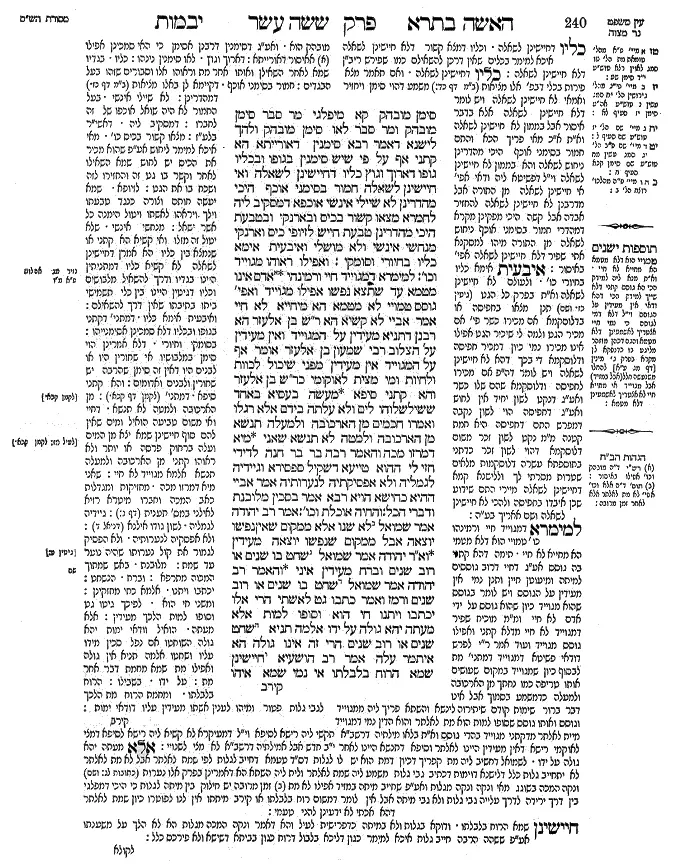
Yevamot 120b - Guemara
סימן מובהק קא מיפלגי מר סבר סימן מובהק ומר סבר לאו סימן מובהק ולהך לישנא דאמר רבא סימנין דאורייתא הא קתני אף על פי שיש סימנין בגופו ובכליו גופו דארוך וגוץ כליו דחיישינן לשאלה ואי חיישינן לשאלה חמור בסימני אוכף היכי מהדרינן לא שיילי אינשי אוכפא דמסקיב ליה לחמרא מצאו קשור בכיס ובארנקי ובטבעת היכי מהדרינן טבעת חייש לזיופי כיס וארנקי מנחשי אינשי ולא מושלי ואיבעית אימא כליו בחיורי וסומקי:
ואפילו ראוהו מגוייד וכו':
למימרא דמגוייד חיי ורמינהי אדם אינו מטמא עד שתצא נפשו אפילו מגוייד ואפי' גוסס טמויי לא מטמא הא מיחייא לא חיי אמר אביי לא קשיא הא ר"ש בן אלעזר הא רבנן דתניא מעידין על המגוייד ואין מעידין על הצלוב רבי שמעון בן אלעזר אומר אף על המגוייד אין מעידין מפני שיכול לכוות ולחיות ומי מצית לאוקומי כר"ש בן אלעזר והא קתני סיפא מעשה בעסיא באחד ששילשלוהו לים ולא עלתה בידם אלא רגלו ואמרו חכמים מן הארכובה ולמעלה תנשא מן הארכובה ולמטה לא תנשא שאני מיא דמרזו מכה והאמר רבה בר בר חנה לדידי חזי לי ההוא טייעא דשקיל ספסירא וגיידיה לגמליה ולא אפסיקתיה לנערותיה אמר אביי ההיא כחישא הויא רבא אמר בסכין מלובנת ודברי הכל:
והחיה אוכלת וכו':
אמר רב יהודה אמר שמואל לא שנו אלא ממקום שאין נפשו יוצאה אבל ממקום שנפשו יוצאה מעידין וא"ר יהודה אמר שמואל שחט בו שנים או רוב שנים וברח מעידין איני והאמר רב יהודה אמר שמואל שחט בו שנים או רוב שנים ורמז ואמר כתבו גט לאשתי הרי אלו יכתבו ויתנו חי הוא וסופו למות אלא מעתה יהא גולה על ידו אלמה תניא שחט שנים או רוב שנים הרי זה אינו גולה הא איתמר עלה אמר רב הושעיא חיישינן שמא הרוח בלבלתו אי נמי שמא איהו
Comments from Rashi on Masechet Yevamot Page 120b
מובהק הוא . ואע"ג דסימנין דרבנן אסימן כי האי סמכינן אפילו אאיסור דאורייתא: דארוך וגוץ . לאו סימנין נינהו: כליו . בגדיו שמא לאחר השאילן ואותו אחר מת וראוהו אלו וסבורים שזהו בעל הבגדים: חמור בסימני אוכף . דקיימא לן באלו מציאות (ב"מ דף כז.) דמהדרינן: לא שיילי אינשי . בעל החמור לא היה שואל אוכפו של זה לחברו: דמסקיב ליה . דאשי"ר בלע"ז: מצאו קשור בכיס כו' . מאי איכא למימר ליחוש אע"פ שהוא מכיר את הכיס יש לחוש שמא השאילו לאחר וקשר בו גט זה והחזירו לזה ושכח בו את הגט: לזיופא . שמא יעשה חותם וצורה כנגד טבעתו וילך ויראהו לאשתו ויטול הימנה כל אשר ישאל: מנחשי אינשי . שלא יטול זה מזלו. ואי קשיא הא קתני או שנמצא בין כליו הא אמרן דחיישינן לשאלה לא קשיא כליו דמתניתין היינו בגדיו ודרך להשאיל מלבושים וכליו דגיטין היינו בין כלי תשמישי ביתו בתיבתו שאין דרך להשאילם: ואיבעית אימא כליו . דמתני' דקתני בגופו ובכליו דלא סמכינן אסימנייהו: בסומקי וחיורי . דלא אמרינן הוי סימן במלבושיו אי שחורין היו או לבנים היו דאין זה סימן שהרבה יש שחורין ולבנים ואדומים: והא קתני סיפא . דמתני' (לקמן יבמות דף קכא.): מן הארכובה ולמטה לא תנשא . דחיי ואי משום טביעה הואיל ומים שאין להם סוף חיישינן שמא יצא מן המים ועלה ברחוק פרסה או יותר ולא ראוהו קתני מן הארכובה ולמעלה תנשא אלמא מגוייד לא חיי: שאני מיא דמרזו מכה . מחזיקות ומגדלות כאב המכה. וחברו מיטרא רזיא לאילני במס' תענית (דף ג:): גיידיה לגמליה . לשון גודו אילנא (דניאל ד): ולא אפסקיה לנערותיה . ולא הפסיק לגמור את קול נערותו שהיה נוער עד שמת: מלובנת . באש שמתוך המכוה מתרפא: וברח . הנשחט: יכתבו ויתנו . אלמא כחי מחזקינן: ומשני חי הוא . לפיכך גיטו גט וסופו למות הלכך מעידין: אלא מעתה . הואיל וודאי ימות יהא גולה השוחטו אם נפל סכין מידו עליו ושחטו אלמה תניא אין גולה ואפילו מת שמא מחמת דבר אחר מת: על ידו . בשבילו: הרוח בלבלתו . ומחמת הרוח מת הלכך לגבי גלות פטור ומיהו לענין אשתו מעידין עליו דודאי ימות:
Comments from Tosafot - Yevamot 120b
כליו דחיישינן לשאלה . וכליו דמצא קשור דלא חיישינן לשאלה איכא למימר בכלים שאין דרכן להשאילם כמו שפירש ריב"ן דלא חיישינן לשאלה: כליו דחיישינן לשאלה . ואם תאמר מצא פירות בכלי דבפ' אלו מציאות (ב"מ דף כד:) משמע דהוי סימן ויחזיר ואמאי לא חיישינן לשאלה ויש לומר דלא חיישינן לשאלה אלא בדבר איסור אבל בממון לא חיישינן לשאלה וא"ת א"כ מאי פריך הכא והתם חמור בסימני אוכף היכי מהדרינן ניחוש לשאלה והא בממון לא חיישינן לשאלה וי"ל דפשיטא ליה ודאי אפי' אי חיישינן לשאלה מן התורה אבל מדרבנן לא חיישינן לשאלה להחזיר אבדה אבל קשה היכי מפקינן מקרא דמהדרי חמור בסימני אוכף ניחוש לשאלה מן התורה מיהו למסקנא אתי שפיר דלא חיישינן לשאלה אפי' באיסור: איבעית אימא כליו בחיורי כו' . ולעולם לא חיישינן לשאלה וא"ת בפרק כל הגט (גיטין כז. ושם) תנן מצאו בחפיסה או בדלוסקמא אם מכירו כשר פי' אם מכיר הגט ולמה לי שיכיר הגט אפילו אינו מכירו נמי כיון דמכיר חפיסה ודלוסקמא די בכך דהא לא חיישינן לשאלה ויש לומר דה"פ אם מכירו לחפיסה ודלוסקמא שהם שלו כשר ואע"ג דנקט לשון יחיד אין לחוש ואע"ג דחפיסה הוי לשון נקבה דמפרש התם דחפיסה היא חמת קטנה מ"מ נקט לשון זכר משום דלוסקמא דהוי לשון זכר כדתני בתוספתא עשרה דלוסקמות מלאים שטרות מסרתי לך וללישנא קמא דחיישינן לשאלה מיירי התם שידוע שכן איבדו בחפיסה ולהכי לא חיישינן לשאלה ושם אאריך בע"ה: למיימרא דמגוייד חיי ורמינהו כו ' טמויי הוא דלא מטמי הא מחייא לא חיי . תימה דהא קתני בה גוסס אע"ג דחיי דרוב גוססים למיתה ומיעוטן חיין ותנן נמי אין מעידין על הגוסס ויש לומר בגוסס שהוא מגוייד כיון שהוא גוסס על ידי אדם לא חיי ומ"מ מוכיח שפיר דמגוייד לא חיי מדלא קתני ואפילו גוסס מגוייד ועוד אמר ר"י לפרש דודאי פשיטא דמגוייד דמתני' מת לבסוף כיון שמגוייד במקום שעושים אותו טריפה כמו נחתך מן הארכובה ולמעלה כדמשמע בסמוך אבל אינו דבר ברור שימות קודם שיתירוה לינשא והשתא פריך ליה ממגוייד וגוסס ואותו גוסס שסופו למות הוא מת לאלתר והוא הדין נמי דמגוייד מיית לאלתר מדקתני מגוייד בהדי גוסס וא"ת בלאו מילתיה דרשב"א תקשי ליה רישא לסיפא וי"ל דמעיקרא לא קשיא ליה רישא לסיפא דמצי לאוקמי רישא דאין מעידין היינו לאלתר וסיפא דתנשא היינו לאחר י"ב חדש אבל אמילתיה דרשב"א לא מצי לשנויי: אלא מעתה יהא גולה על ידו . לשמואל דחשיב ליה מת קפריך דכיון דמת הוא יש לו לגלות דס"ד טעמא דחייב לגלות לפי שמת לאלתר אבל לא מת לאלתר לא יתחייב גלות כלל דלישנא דוימות דכתיב גבי גלות משמע ליה שמת לאלתר ולית ליה השתא הא דאמרינן בפרק אלו נערות (כתובות לג: ושם) ונקה המכה בשוגג מאי ונקה ונקה מגלות ואע"פ שחייב מיתה במזיד אפילו לא מת זמן מרובה יש חילוק בין מיתה לגלות כי היכי דמפלגי בין דרך ירידה לדרך עלייה גבי גלות ולא גבי מיתה אבל אין לומר דמשום רוח בלבלתו או קירב מיתתו אין לנו לפוטרו כיון שמת לאלתר דהא אכתי לא ידעינן להני טעמי: חייישינן שמא הרוח בלבלתו . ודוקא בגלות ולא במיתה כדפרישית לעיל והא דאמר ונקה המכה מגלות הא לא הלך על משענתו אע"פ ששהה הרבה חייב גלות איכא למימר כגון דליכא בלבול דרוח כגון בביתא דשישא ולא פירכס כלל:
Yevamot 120b - Mishnah translated into english
is an unambiguous distinguishing mark that they disagree. One Sage, Rabbi Eliezer ben Mahavai, holds that a mole is an unambiguous distinguishing mark and may be relied upon by Torah law. Consequently, if a man’s corpse was identified in this manner, his wife may remarry. And one Sage, the anonymous first tanna, holds that a mole is not an unambiguous distinguishing mark.
The Gemara asks: According to the first version, that Rava said that distinguishing marks are recognized as valid identification by Torah law, there is a question: Isn’t it taught in the mishna: Although there are distinguishing marks on his body and his personal belongings, one may not rely on these as identification, implying that distinguishing marks are not valid identification by Torah law?
The Gemara answers: The mishna’s intent is that ordinary distinguishing marks on one’s body, which constitute only weak evidence to a person’s identity, e.g., that he was tall or short, are not valid identification. Additionally, one cannot rely upon distinguishing marks on his personal belongings, as we are concerned about borrowing, i.e., perhaps the deceased had borrowed the clothes he was wearing from someone else. The Gemara asks: But if we are concerned about borrowing, then, with regard to returning lost property, how can we return a donkey based solely upon distinguishing marks on the saddle? Why don’t we consider the possibility that the saddle was borrowed?
The Gemara answers: People do not normally borrow a saddle because it bruises the donkey, as the saddle must fit exactly to the donkey’s measurements. The Gemara raises further objections based upon the baraita cited earlier: If he found the lost bill of divorce tied to a purse, or a money bag, or a ring, he may rely upon the distinguishing marks on those items and deliver the bill of divorce to the woman. But how can we return it and not be concerned that these belongings may have been lent to someone else whose bill of divorce is tied to them?
The Gemara answers: The case of the ring is referring to a signet ring, which one does not lend, because he is concerned about forgery, i.e., that the borrower might use it to forge his consent on documents without his knowledge. With regard to a purse or a money bag, people consider it a bad omen to lend them out and do not lend them to others. And if you wish, say that the reason not to permit a woman to remarry and not to accept that her husband is dead based upon the distinguishing marks found on his personal belongings is that the distinguishing marks referred to are only general ones, e.g., he wore white or red clothing, but they are not unambiguous distinguishing marks.
§ We learned in the mishna: And even if one saw him cut open [meguyyad] and severely wounded, one may not testify that he died. The Gemara asks: Is this to say that a person who is cut open is fit to live for much time afterward? The Gemara raises a contradiction from what was taught in a mishna (Oholot 1:6): A dead person renders other people and objects impure only when his soul actually departs, even if he is cut open and severely wounded, and even if he is clearly dying. From this we may deduce that he does not yet render others ritually impure, as he still has some life in him, but he is not fit to live for much time afterward.
Abaye said: The contradiction raised is not difficult: This mishna here is in accordance with the opinion of Rabbi Shimon ben Elazar, while that mishna from tractate Oholot is in accordance with the opinion of the Rabbis, as it is taught in a baraita: One may testify about the death of a person who is cut open, but one may not testify about a crucified person. Rabbi Shimon ben Elazar says: Even concerning a person who is cut open, one may not testify that he is dead because his wound can be scorched, and this cauterization of the wound may stop the flow of blood and allow him to survive.
The Gemara challenges this: But can you establish the mishna to be in accordance with the opinion of Rabbi Shimon ben Elazar? Isn’t it taught in the latter clause (121a): An incident occurred in Asya in which they lowered a certain man into the sea on a rope, and when they pulled the rope back to land only his leg came up in their hands. They were not certain whether he was alive or dead. The Sages said: If his leg was cut from the knee and above, his wife may marry, as he would not survive such a wound; if his leg was cut only from the knee and below, she may not marry. This indicates that someone cut open in the first manner is assumed to be dead. If this follows Rabbi Shimon ben Elazar’s opinion, why doesn’t it say that there is a concern that he might be alive even if the leg was cut from the knee and above?
The Gemara answers: Water is different, as it aggravates the wound. Since he was in the water, it can be assumed that such a wound will certainly lead to death.
The Gemara asks: But didn’t Rabba bar bar Ḥanna say: I myself saw an Arab who took his sword [safseira] and cut open his camel, and the camel died so quickly that it could not even cease its braying before it died? This indicates that a living being that is cut open has no chance of surviving. Abaye said: That camel was emaciated and weak, causing it to die immediately, but a normal camel would not have died so quickly.
Rava said a different resolution to the apparent contradiction between the mishna here and the mishna in tractate Oholot: The mishna here is referring to a case where the man was cut open with a white-hot knife, and everyone agrees that one may not testify to the death of a person wounded in such a manner, as the wound would close due to the heat.
§ It was taught in the mishna: Or even if one saw that a wild animal was eating parts of him, one may not testify that he died. Rav Yehuda said that Shmuel said: They taught this only where the animal was eating from a place on his body that does not cause his soul to depart, i.e., does not inevitably lead to death, such as his hand or foot. But if the animal was eating from a place on his body that does cause his soul to depart, one may testify to his death.
And Rav Yehuda said that Shmuel said: If someone cut a man’s two passageways, the trachea and the esophagus, or most of the way through the two passageways, and the maimed person fled, one may testify to his death.
The Gemara challenges that conclusion: Is that so? But didn’t Rav Yehuda say that Shmuel said: If someone cut a man’s two passageways, or most of the way through the two passageways, and the maimed person gestured and thereby communicated: Write a bill of divorce for my wife, then these onlookers should write it and deliver it to her. Since only a living person may give a bill of divorce, this indicates that the maimed man is considered alive. The Gemara answers: He is still alive at the moment, but he will eventually die from the wound. Consequently, he may appoint an agent to deliver a bill of divorce to his wife, but after a while one may testify that he is dead.
The Gemara asks: If that is so, that such a wound is definitely fatal, one who unintentionally wounds another in this manner should be exiled on his account, in accordance with the halakha of one who unintentionally kills another. Why is it taught in a baraita: If one unintentionally cut the two passageways of another person, or most of the thickness of the two, he is not exiled? The Gemara answers: But it was stated with regard to that baraita that Rav Hoshaya said: We are concerned that perhaps the wind aggravated his condition and actually caused his death, in which case the perpetrator is not culpable for the death and should not be exiled. Alternatively, perhaps he, the maimed person,
Traduction : The William Davidson digital edition of the Koren Noé Talmud, with commentary by Rabbi Adin Even-Israel Steinsaltz.