 Talmud Bavli
The learning on the whole site is dedicated : L'ilui Nishmat יוסף בן מושה
The learning on the whole site is dedicated : L'ilui Nishmat Nissim ben Barukh Malka
The learning on the whole site is dedicated : L'ilui Nishmat אסתר בת חיים
Kiddushin 58b : Youtube
Daf TubeYoutube
2 video classes :
Kiddushin Page 58b
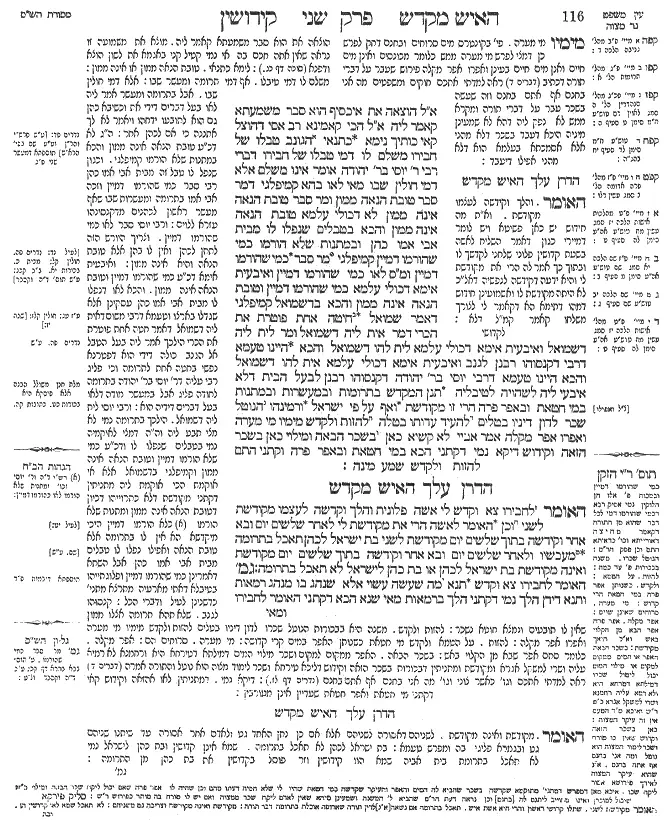
Kiddushin 58b - Guemara
א"ל הוצאה את איכסיף הוא סבר משמעתא קאמר ליה א"ל הכי קאמינא רב אסי דהוצל קאי כותיך נימא כתנאי הגונב טבלו של חבירו משלם לו דמי טבלו של חבירו דברי רבי ר' יוסי בר' יהודה אומר אינו משלם אלא דמי חולין שבו מאי לאו בהא קמיפלגי דמר סבר טובת הנאה ממון ומר סבר טובת הנאה אינה ממון לא דכולי עלמא טובת הנאה אינה ממון והכא בטבלים שנפלו לו מבית אבי אמו כהן ובמתנות שלא הורמו כמי שהורמו דמיין קמיפלגי מר סבר כמי שהורמו דמיין ומ"ס לאו כמי שהורמו דמיין ואיבעית אימא דכולי עלמא כמי שהורמו דמיין וטובת הנאה אינה ממון והכא בדשמואל קמיפלגי דאמר שמואל חיטה אחת פוטרת את הכרי דמר אית ליה דשמואל ומר לית ליה דשמואל ואיבעית אימא דכולי עלמא לית להו דשמואל והכא היינו טעמא דרבי דקנסוהו רבנן לגנב ואיבעית אימא דכולי עלמא אית להו דשמואל והכא היינו טעמא דרבי יוסי בר' יהודה דקנסוהו רבנן לבעל הבית דלא איבעי ליה לשהויה לטיבליה תנן המקדש בתרומות ובמעשרות ובמתנות במי חטאת ובאפר פרה הרי זו מקודשת ואף על פי ישראל ורמינהו הנוטל שכר לדון דיניו בטלים להעיד עדותו בטלה להזות ולקדש מימיו מי מערה ואפרו אפר מקלה אמר אביי לא קשיא כאן בשכר הבאה ומילוי כאן בשכר הזאה וקידוש דיקא נמי דקתני הכא במי חטאת ובאפר פרה וקתני התם להזות ולקדש שמע מינה
הדרן עלך האיש מקדש
מתני׳ האומר לחבירו צא וקדש לי אשה פלונית והלך וקדשה לעצמו מקודשת לשני וכן האומר לאשה הרי את מקודשת לי לאחר שלשים יום ובא אחר וקידשה בתוך שלשים יום מקודשת לשני בת ישראל לכהן תאכל בתרומה מעכשיו ולאחר שלשים יום ובא אחר וקידשה בתוך שלשים יום מקודשת ואינה מקודשת בת ישראל לכהן או בת כהן לישראל לא תאכל בתרומה גמ׳ האומר לחבירו צא וקדש תנא מה שעשה עשוי אלא שנהג בו מנהג רמאות ותנא דידן הלך נמי דקתני הלך ברמאות מאי שנא הכא דקתני האומר לחבירו
Comments from Rashi on Masechet Kiddushin Page 58b
הוצאה את הוא סבר משמעתא קאמר ליה . מוצא את משמועה זו נראה שאין אתה חכם בה אי נמי קטיל קני באגמא את לשון הוצא ודפנא (סוכה דף כג.): לימא כתנאי . טובת הנאה ממון או אינה ממון: משלם לו דמי טיבלו . אף דמי תרומה ומעשר שבו: אלא דמי חולין שבו . אבל בתרומה ומעשר אמר ליה לאו בעל דברים דידי את וכשיבא כהן גם הוא לתובעו ידחהו ויאמר לא לך אתננה כי אם לכהן אחר: ה"ג לא דכ"ע טובת הנאה אינה ממון והכא במתנות שלא הורמו קמיפלגי. וכגון שנפל לו טבל זה מבית אבי אמו כהן רבי סבר כמי שהורמו דמיין וזכה אבי אמו בתרומה ומעשרות שבו שאף מעשר ראשון לכהנים מדקנסינהו עזרא ללוים: ורבי יוסי סבר לאו כמי שהורמו דמיין . וצריך היורש הזה לתתן לכהן ואין לו בהן אלא טובת הנאה והיא אינה ממון: ואיבעית אימא דכ"ע כמי שהורמו דמיין וטובת הנאה אינה ממון . והכא לאו דנפלו לו מבית אבי אמו כהן עסקינן אלא שגדלו בארצו וטעמא דרבי משום דאית ליה דשמואל דאמר חטה אחת פוטרת את הכרי הילכך אמר ליה בעל הטבל אל הגנב כולה דידי הוא דפטרנא נפשי בחטה אחת לתרומה וכי פליג רבי עליה דר' יוסי בר' יהודה בתרומה לחודה פליג אבל במעשר מודה דלאו בעל דברים דידיה הוא: ורבי יוסי לית ליה דשמואל . הילכך בתרומה נמי לא מצי תבע ליה וה"ה דמצי לאוקמיה נמי בטבלים שנפלו לו ודכ"ע כמי שלא הורמו דמיין וטובת הנאה אינה ממון וקמיפלגי בדשמואל אלא אי אוקמת הכי אוקמת ליה מתניתין דקתני מקודשת דלא כתרוייהו דכיון דטובת הנאה אינה ממון ומתנות שלא הורמו כלא הורמו דמיין היכי מיקדשא הא אין לו בתרומה אלא טובת הנאה ואפילו נפלו לו טבלים מבית אבי אמו כהן אבל השתא דאמרינן כמי שהורמו דמיין ופלוגתייהו בטיבלא דאתי מארעיה מתרצא מתני' כדשנינן לעיל ודברי הכל: קנסוהו לגנב . שלא תהא תרומה אצלו ממון שאין לו תובעים ונמצא חוטא נשכר: להזות ולקדש . משנה היא בבכורות הנוטל שכרו לדון דיניו בטלים להזות ולקדש מימיו מי מערה ואפרו אפר מקלה: להזות . על הטמא ולקדש מי חטאת כשנותן האפר במים קרי קדושה: מי מערה . סרוחים הם: אפר מקלה . כלומר סתם אפר שבא מן הקלוי באש: בשכר הבאה . האפר ממקום למקום ושכר מילוי המים דמילתא דטירחא היא ורחמנא לא רמיא עליה ושרי למשקל אגרא ומקודשת ומתניתין דבכורות בשכר הזאה וקידוש דליכא טירחא ושכר לימוד מצוה הוא נוטל והתורה אמרה (דברים ד) ראה למדתי אתכם וגו' כאשר צוני וגו' מה אני בחנם אף אתם בחנם (נדרים דף לז.): דיקא נמי . דמתניתין לאו אהזאה וקידוש קאי דקתני מי חטאת ואפר חטאת שעדיין אינן מעורבין: מתני' האומר מקודשת ואינה מקודשת . לשניהם דאסורה לשניהם אלא אם כן נתן האחד גט ולאדם אחר אסורה עד שיתנו שניהם גט ובגמרא פליגי בה ומפרש טעמא: בת ישראל לכהן לא תאכל בתרומה . שמא אינן קדושין ובת כהן לישראל נמי לא תאכל בתרומת בית אביה שמא הוו קידושין וזר פוסל בקדושין את בת כהן מן התרומה: פרק שלישי . האומר מתני' האומר מקודשת ואינה מקודשת . לשניהם דאסורה לשניהם אלא אם כן נתן האחד גט ולאדם אחר אסורה עד שיתנו שניהם גט ובגמרא פליגי בה ומפרש טעמא: בת ישראל לכהן לא תאכל בתרומה . שמא אינן קדושין ובת כהן לישראל נמי לא תאכל בתרומת בית אביה שמא הוו קידושין וזר פוסל בקדושין את בת כהן מן התרומה:
Comments from Tosafot - Kiddushin 58b
מימיו מי מערה . פי' בקונטרס מים סרוחים ובחנם דחק לפרש כן דמצי לפרש מי מערה ממש כלומר מכונסים ואינן מים חיים ואנן מים חיים בעינן ואפרו אפר מקלה פירוש שעבר על דברי תורה דכתיב (דברים ד) ראה למדתי אתכם חוקים ומשפטים מה אני בחנם אף אתם בחנם וזה שעשה בשכר עבר על דברי תורה ומקרא ממש לא נפק ליה דהא לא שמעינן מיניה היכא דעבד בשכר דלא מהני אלא אסמכתא בעלמא הוא דלא מהני אפילו דיעבד: מתני': האומר . והלך וקידשה לעצמו מקודשת. וא"ת מה חידוש יש כאן פשיטא ויש לומר דמיירי כגון דאמר השליח לאשה בשעת קדושין פלוני שלחני לקדשך לו ובתוך כך אמר לה הרי את מקודשת לי והיא ידעה דקידשה לנפשיה דאל"כ לא היתה מקודשת לו ואשמועינן חידוש דמהו דתימא הא דקאמר לי לצורך משלחו קאמר קמ"ל דלא:
Kiddushin 58b - Mishnah translated into english
Rav Huna said to him: You are out [hotza’a]. Rabbi Ḥiyya bar Avin was embarrassed, as he thought Rav Huna told him he was out, i.e., wrong, due to the halakha he stated. Sensing Rabbi Ḥiyya bar Avin’s embarrassment, Rav Huna said to him: This is what I said: You are a Hutzla’a, as Rav Asi, from the town of Huzal, stands in accordance with your opinion.
The Gemara suggests: Let us say that it is parallel to a dispute between tanna’im. The baraita (Tosefta, Ma’aser Sheni 3:9) taught: One who steals another’s untithed produce pays him the full value of the other’s untithed produce; this is the statement of Rabbi Yehuda HaNasi. Rabbi Yosei, son of Rabbi Yehuda, says: He pays only the value of the non-sacred produce that it contains. What, is it not the case that they disagree about this issue: That one Sage, Rabbi Yehuda HaNasi, holds that the benefit of discretion has monetary value, so he must be compensated beyond the value of the non-sacred produce; and one Sage, Rabbi Yosei, son of Rabbi Yehuda, holds that the benefit of discretion does not have monetary value, and only the non-sacred produce is of value to the owner.
The Gemara rejects this: No, everyone agrees that the benefit of discretion does not have monetary value, and here the case is with an Israelite who came into possession of untithed produce as an inheritance from the household of his mother’s father, who was a priest. And they disagree with regard to the question of whether or not gifts that have not been separated are considered as though they have been separated. One Sage, Rabbi Yehuda HaNasi, holds that they are considered as though they have been separated, which means that the grandson inherited the teruma itself from his grandfather, so the thief must repay him the value of the terumot and tithes as well. And one Sage, Rabbi Yosei, son of Rabbi Yehuda, holds that such gifts are not considered as though they have been separated; and the produce is viewed as regular untithed produce, where the Israelite has only the benefit of discretion, which is of no monetary value.
And if you wish, say instead that everyone agrees that the gifts are considered as though they have been separated, and that the benefit of discretion does not have monetary value. The case is not concerning an Israelite who came into possession of untithed produce as an inheritance from the household of his mother’s father; rather, it is concerning regular untithed produce, and here they disagree with regard to a statement of Shmuel. As Shmuel says: By Torah law, even one grain given as teruma exempts the entire heap, since the Torah does not specify a minimum amount for teruma.
As one Sage, Rabbi Yehuda HaNasi, is of the opinion that the ruling is in accordance with the opinion of Shmuel, so the thief must pay the value of the untithed produce as well, since the owner can say that he would separate a single grain as teruma for the entire heap and the rest would remain non-sacred produce. And one Sage, Rabbi Yosei, son of Rabbi Yehuda, is of the opinion that the ruling is not in accordance with the opinion of Shmuel, which means that when the owner makes his claim he must subtract at least one-sixtieth of the total amount as teruma.
And if you wish, say instead that everyone is of the opinion that the ruling is not in accordance with the opinion of Shmuel; and here, this is the reasoning of Rabbi Yehuda HaNasi: Although the benefit of discretion does not have monetary value, and by right should not lead to reimbursement, the Sages penalized the thief. If he did not need to pay for the teruma contained in the produce, he would have been able to keep it, as no priest has the legal ability to demand that the teruma be given specifically to him.
And if you wish, say instead that everyone is of the opinion that the ruling is in accordance with the opinion of Shmuel, and here, this is the reasoning of Rabbi Yosei, son of Rabbi Yehuda: The Sages penalized the owner, since he should not have left his untithed produce in that state, and should have separated teruma without delay.
We learned in the mishna: With regard to one who betroths a woman with terumot, or with tithes, or with the gifts given to priests, or with the water of purification, or with the ashes of the red heifer, in all of these cases she is betrothed, and this is so even if the man betrothing her is an Israelite. And the Gemara raises a contradiction to this from the following baraita (Tosefta, Bekhorot 3:5): With regard to one who accepts payment to judge, his judgments are nullified. Similarly, with regard to one who accepts payment to testify, his testimony is nullified. With regard to one who accepts payment to sprinkle the purification water on one who was impure from impurity imparted by a corpse, or to sanctify the purification water by placing the ashes of the red heifer in them, his water is considered cave water, which is generally foul, and his ashes are burnt ashes. Using these items to betroth a woman is analogous to being paid for them, so they should be considered as having no monetary value, and the betrothal should not take effect.
Abaye said: This is not difficult, since here, the mishna is referring to one who betroths a woman with the value of the payment for bringing and filling the vessel with the purification waters, for which one is permitted to accept payment. Performing this act for the woman is comparable to giving her an item of value, since she will not have to pay someone to bring and fill the vessel for her. There, the baraita dealing with one who accepts payment for sprinkling or sanctifying the water is referring to payment for the actual sprinkling and sanctifying.
The Gemara comments: According to this answer, the language of the mishna and the baraita is also precise, as it teaches here, in the mishna, that she is betrothed with the water of purification or with the ashes of purification, which indicates that the water and ashes have not yet been mixed together; and it teaches there, in the baraita: To sprinkle or to sanctify, indicating that he receives payment for the actual sprinkling and sanctification. The Gemara affirms: Learn from it that this is the correct explanation of the mishna and the baraita.
May return to you “a man betroths”
MISHNA: With regard to one man who says to another: Go and betroth so-and-so to me, and the latter went and betrothed her to himself, she is betrothed to the second man. And similarly, with regard to one who says to a woman: You are hereby betrothed to me after thirty days, and another man came and betrothed her within those thirty days, she is betrothed to the second man. This is a full-fledged betrothal, so that if she is an Israelite woman betrothed to a priest, she may partake of teruma.
If the first man said to the woman: You are hereby betrothed to me from now, and only after thirty days shall the betrothal take effect, and another man came and betrothed her within those thirty days, there is uncertainty whether she is betrothed or whether she is not betrothed to each of them. Consequently, if she was the daughter of a non-priest betrothed to a priest, or the daughter of a priest betrothed to an Israelite, she may not partake of teruma. Since her betrothal is uncertain, the daughter of a non-priest cannot be considered the wife of a priest, and similarly a priest’s daughter who is doubtfully married to an Israelite loses her right to partake of teruma as the daughter of a priest.
GEMARA: The mishna teaches that in the case of one man who says to another: Go and betroth so-and-so to me, and the latter went and betrothed her to himself, she is betrothed to the second man. A tanna taught concerning this issue: What he did is done; it is effective and the woman is betrothed to the second man, but he has treated him, i.e., the first man, in a deceitful manner, and it is prohibited to act in this fashion. The Gemara explains: And the tanna of our mishna, when he teaches the apparently superfluous term: Went, also indicates that he went and acted deceitfully.
§ The Gemara asks a question concerning the language of the mishna: What is different here that the mishna teaches: With regard to one man who says to another,
Traduction : The William Davidson digital edition of the Koren Noé Talmud, with commentary by Rabbi Adin Even-Israel Steinsaltz.