 Talmud Bavli
The learning on the whole site is dedicated : L'ilui Nishmat Ledicia bat David Banoun
The learning on the whole site is dedicated : L'ilui Nishmat Jacques Isaac Ben Amram Loubaton
The learning on the whole site is dedicated : L'ilui Nishmat Amram ben Itshak Loubaton
Kiddushin 49a : Youtube
Daf TubeYoutube
2 video classes :
Kiddushin Page 49a
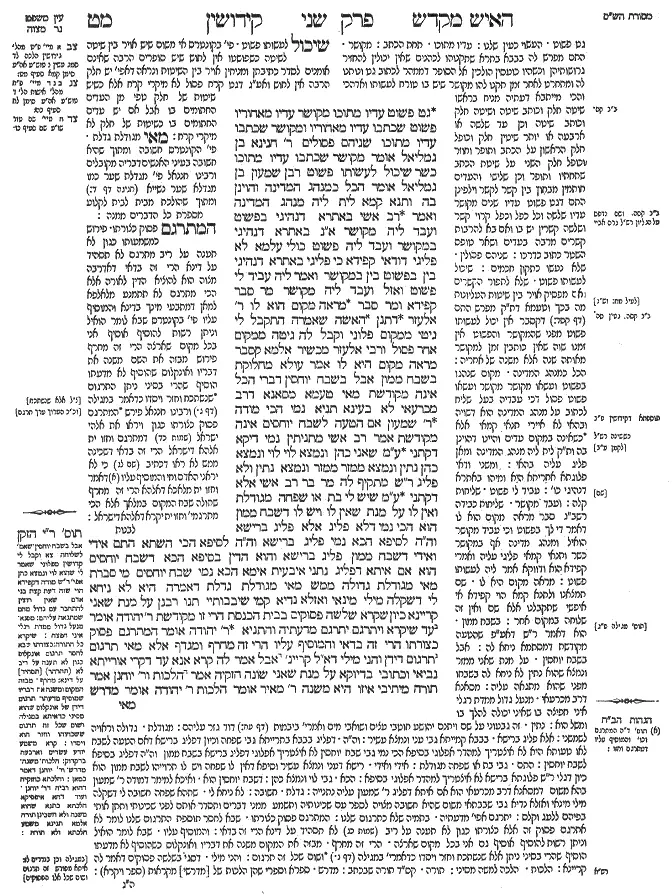
Kiddushin 49a - Guemara
גט פשוט עדיו מתוכו מקושר עדיו מאחוריו פשוט שכתבו עדיו מאחוריו ומקושר שכתבו עדיו מתוכו שניהם פסולים ר' חנינא בן גמליאל אומר מקושר שכתבו עדיו מתוכו כשר שיכול לעשותו פשוט רבן שמעון בן גמליאל אומר הכל כמנהג המדינה והוינן בה ותנא קמא לית ליה מנהג המדינה ואמר רב אשי באתרא דנהיגי בפשוט ועבד ליה מקושר א"נ באתרא דנהיגי במקושר ועבד ליה פשוט כולי עלמא לא פליגי דודאי קפידא כי פליגי באתרא דנהיגי בין בפשוט בין במקושר ואמר ליה עביד לי פשוט ואזל ועבד ליה מקושר מר סבר קפידא ומר סבר מראה מקום הוא לו ר' אלעזר דתנן האשה שאמרה התקבל לי גיטי ממקום פלוני וקבל לה גיטה ממקום אחר פסול ורבי אלעזר מכשיר אלמא קסבר מראה מקום היא לו אמר עולא מחלוקת בשבח ממון אבל בשבח יוחסין דברי הכל אינה מקודשת מאי טעמא מסאנא דרב מכרעאי לא בעינא תניא נמי הכי מודה ר' שמעון אם הטעה לשבח יוחסים אינה מקודשת אמר רב אשי מתניתין נמי דיקא דקתני ע"מ שאני כהן ונמצא לוי לוי ונמצא כהן נתין ונמצא ממזר ממזר ונמצא נתין ולא פליג ר"ש מתקיף לה מר בר רב אשי אלא דקתני ע"מ שיש לי בת או שפחה מגודלת ואין לו על מנת שאין לו ויש לו דשבח ממון הוא הכי נמי דלא פליג אלא פליג ברישא וה"ה לסיפא הכא נמי פליג ברישא וה"ה לסיפא הכי השתא התם אידי ואידי דשבח ממון פליג ברישא והוא הדין בסיפא הכא דשבח יוחסים הוא אם איתא דפליג נתני איבעית אימא הכא נמי שבח יוחסים מי סברת מאי מגודלת גדולה ממש מאי מגודלת גדלת דאמרה היא לא ניחא לי דשקלה מילי מינאי ואזלא נדיא קמי שיבבותיי תנו רבנן על מנת שאני קריינא כיון שקרא שלשה פסוקים בבית הכנסת הרי זו מקודשת ר' יהודה אומר עד שיקרא ויתרגם יתרגם מדעתיה והתניא ר' יהודה אומר המתרגם פסוק כצורתו הרי זה בדאי והמוסיף עליו הרי זה מחרף ומגדף אלא מאי תרגום תרגום דידן והני מילי דא"ל קריינ' אבל אמר לה קרא אנא עד דקרי אורייתא נביאי וכתובי בדיוקא על מנת שאני שונה חזקיה אמר הלכות ור' יוחנן אמר תורה מיתיבי איזו היא משנה ר' מאיר אומר הלכות ר' יהודה אומר מדרש
Comments from Rashi on Masechet Kiddushin Page 49a
גט פשוט . העשוי כעין שלנו: עדיו מתוכו . תחת הכתב: מקושר . התם מפרש לה בבבא בתרא שתקנוהו לכהנים שאין יכולין להחזיר גרושותיהן וכשהיו כועסין הולכין אל הסופר דממהר לכתוב גט ונותנו לה ומתחרט לאחר זמן תקנו להו מקושר שיש בו טורח לעשותו ואדהכי והכי מייתבא דעתיה מניח בראשו שיטה חלק וכותב שיטה ושיטה חלק וכותב שיטה וכן עד שלשה או ארבעה או יותר שיטין חלק וכופל חלק הראשון על הכתב ותופר וחוזר וכופל חלק השני על שיטת הכתב שתחתיו ותופר וכן שלישי והעדים חותמין מבחוץ בין קשר לקשר וילפינן התם דגט פשוט עדיו שנים מקושר עדיו שלשה וכל כפל וכפל קרוי קשר ושלשה קשרין יש בו ואם בא להרבות קשרים מרבה בעדים ושאר טופס השטר כתוב כדרכו: שניהם פסולין . שלא נעשו כתקון חכמים: שיכול לעשותו פשוט . שלא לתפור הקשרים ואם מפסיק אויר בין שיטות העליונות מה בכך וטעמא דת"ק מפרש התם (דף קסד:) דקסבר אין יכול לעשותו פשוט מפני שהמקושר והפשוט אין זמנו שוה שאין כותבין זמן למקושר מאותה שנה אלא משנה של אחריה: הכל כמנהג המדינה . מקום שנהגו בפשוט ועשאו מקושר מקושר ועשאו פשוט פסול דכי עבדיה בעל שליח לכתוב על מנהג המדינה הוא דשויה ובהאי לא איירי תנאי קמאי אלא כשאינה במקום עדים והיינו דהוינן בה ות"ק לית ליה מנהג המדינה ומאן פליג עליה בהאי: ומשני . ודאי פלוגתא אחריתא היא ומיהו באתרא דנהיגי כו': עביד לי פשוט . שליחות קלה: ועבד מקושר . שליחות כבידה רשב"ג סבר מראה מקום הוא לו דאמר די לך בפשוט וכי עביד מקושר הואיל ומנהג מדינה אף במקושר כשר ותנאי קמאי פליגי עליה ואמרי קפידא הוא ודווקא אמר ליה לעשותו פשוט: מראה מקום היא לו . שם תמצאנו ולתנא קמא הוי קפידא אי איפשי שתקבלנו אלא שם ואין זה שלוחה במקום אחר: מראה מקום היא לו . שם תמצאנו ולתנא קמא הוי קפידא אי איפשי שתקבלנו אלא שם ואין זה שלוחה במקום אחר: בשבח ממון . הוא דאמר ר"ש דאע"פ שהטעה מקודשת דמסתמא ניחא לה: אבל בשבח יוחסין . על מנת שאני ממזר ונמצא שהוא נתין לא ניחא לה בשבחו מפני שהוא מתגאה עליה: מסאנא דרב מכרעאי . מנעל גדול ממדת רגלי איני חפיצה בו שאיני יכולה להלך בו ומשל הוא: נתין . זה גבעוני על שם ויתנם יהושע חוטבי עצים ושואבי מים ואמרי' ביבמות (דף עח:) דוד גזר עליהם: מגודלת . גדולה וראויה לשמשני: אלא פליג ברישא . בבבא קמייתא גבי עני ונמצא עשיר: וה"ה . דפליג בבבא בתרייתא גבי שפחה וכיון דפליג ברישא דאם הטעה לשבח לאו טעותא היא לא איצטריך למהדר אפלוגי בסיפא הכי נמי גבי שבח יוחסין לא איצטריך אפלוגי דפליג ברישא בשבח ממון וה"ה דפליג בסיפא לשבח יוחסין: התם . גבי בת או שפחה מגודלת: אידי ואידי . רישא דעני ונמצא עשיר וסיפא דאין לו שפחה ויש לו תרוייהו לשבח ממון הוא כיון דגלי ר"ש פלוגתא ברישא לא איצטריך למהדר אפלוגי בסיפא: הכא . גבי לוי ונמצא כהן: דשבח יוחסין הוא . ואיכא למימר דמודה ר' שמעון בהא משום דמסאנא דרב מכרעאי הוא אם איתא דפליג ר' שמעון עליה נתנייה: גדלת . חשובה: לא ניחא לי . שתהא שפחה חשובה לי דשקלה מילי מינאי ואזלא נדיא גבי שבבתאי משום שהיא חשובה מצויה לספר עם שכינותיה ותשמע ממני דברים ותסדר אותם לפני שכינותי ותתן אותי בפיהם ללעג וקלס: יתרגם אפי' מדעתיה . בתמיה שלא כתרגום שלנו: המתרגם פסוק כצורתו . שבא לחסר תוספת התרגום שלנו לומר לא אתרגם פסוק זה אלא כצורתו כגון לא תענה על ריב (שמות כג) לא תסהיד על דינא הרי זה בדאי: והמוסיף עליו . שבא לומר הואיל וניתן רשות להוסיף אוסיף גם אני בכל מקום שארצה: הרי זה מחרף . מבזה את המקום משנה את דבריו ואונקלוס כשהוסיף לא מדעתו הוסיף שהרי בסיני ניתן אלא שנשתכח וחזר ויסדו כדאמרי' במגילה (דף ג.) ושום שכל זה תרגום: והני מילי . דסגי בשלשה פסוקים דאמר לה קריינא: הלכות . הלכה למשה מסיני: תורה . קס"ד תורה שבכתב: מדרש . ספרא וספרי שהן הלכות של [מדרשי] מקראות (ספר ויקרא):
Comments from Tosafot - Kiddushin 49a
שיכול לעשותו פשוט . פי' בקונטרס אי משום שיש אויר בין שיטה לשיטה כשפושטו אין לחוש שיש סופרים הרבה שאינם אומנים לסדר כתיבתן ומניחין אויר בין השיטות ונראה דאפי' יש חלק הרבה אין לחוש ואע"ג דגט קרח פסול לא מיקרי קרח אלא כשיש שיטות של חלק טפי מן העדים החתומים בו אבל אם יש עדים החתומים בו כשיטות של חלק לא מיקרי קרח: מאי מגודלת גדלת . פי' הקונטרס חשובה ומתוך שהיא חשובה בעיני האנשים דבריה מקובלים ורבינו חננאל פי' מגדלת שער כמו מגדלא שער נשייא (חגיגה דף ד:) ומתוך שהולכת מבית לבית לקלוע מספרת כל הדברים ממנה: המתרגם פסוק כצורתו . פירוש כמשמעותו כגון לא תענה על ריב מתרגם לא תסהיד על דינא הרי זה בדאי דאדרבה מצוה הוא להוציא הדין לאורה אלא הכי מתרגם לא תתמנע מלאלפא למאן דמתבעי מינך בדינא והמוסיף עליו פי' בקונטרס שבא לומר הואיל וניתן רשות להוסיף אוסיף אני בכל מקום שארצה הרי זה מחרף פירוש מבזה את השם משנה את דבריו ואונקלוס שהוסיף לא מדעתו הוסיף שהרי בסיני ניתן התרגום שנשתכח וחזר ויסדו כדאמר במגילה (דף ג.) ורבינו חננאל פירש. המתרגם פסוק כצורתו כגון ויראו את אלהי ישראל (שמות כד) דמתרגם וחזו ית אלהא דישראל הרי זה בדאי דשכינה ממש לא ראו דכתיב (שם לג) כי לא יראני האדם וחי והמוסיף עליו דאמר וחזו ית מלאכא דאלהא הרי זה מחרף שתולה שבח המקום במלאך אלא הכי מתרגמי' וחזו ית יקרא דאלהא דישראל:
Kiddushin 49a - Mishnah translated into english
In an ordinary document, its witnesses are to sign inside it, i.e., on the written side of the paper. In a folded and tied document, its witnesses are to sign on the back of it. With regard to an ordinary document whose witnesses wrote their signatures on the back of it, or a tied document whose witnesses wrote their signatures inside of it, both of these are not valid. Rabbi Ḥanina ben Gamliel says: A tied document whose witnesses wrote their signatures inside of it is valid, because one can transform it into an ordinary document by untying it. Rabban Shimon ben Gamliel says: Everything is in accordance with regional custom. If an ordinary document is generally used and one wrote a bound one, or vice versa, the document is invalid.
And we discussed it: And does the first tanna not accept that one should follow the regional custom? It is not reasonable that he should take issue with such a basic concept. And Rav Ashi says that they have a dispute in a case where one instructed a scribe to write a document for him: If they are in a place where the custom is to write an ordinary document, and he made a tied one for him; alternatively, if they are in a place where the custom is to write a tied document, and he made an ordinary one for him; in both of these cases, everyone agrees that he was certainly particular in his instructions to the agent that he should follow the regional custom, and if the latter deviated from the custom the document is invalid.
The situation in which they disagree is where they are in a place where the custom is to use either an ordinary document or a tied one, and the one requesting the document said to the scribe: Make an ordinary document for me, and the scribe went and made a tied document for him. In such a case, one Sage, the first tanna, holds that the one requesting the document was particular about wanting an ordinary document, and since the scribe wrote a tied document, it is considered to have been written without his consent. And one Sage, Rabban Shimon ben Gamliel, holds that the one requesting the document was merely indicating his position to the scribe, stating that if the scribe wanted to save himself the trouble of writing a tied document there would no objection.
Rabbi Elazar also holds that when one instructs an agent in such a manner he is merely indicating his position to him, as we learned in a mishna (Gittin 65a): If there was a woman who said to her agent: Receive my bill of divorce for me from my husband in such and such a place, and he received her bill of divorce for her elsewhere, it is invalid. And Rabbi Elazar deems it valid. Apparently, he holds that she is merely indicating a place to him where he can receive the bill of divorce, but she does not insist that he accept it in that particular spot.
§ Ulla says: The dispute in the mishna between the first tanna and Rabbi Shimon is only where he misled her with enhanced monetary value, i.e., he gave her something worth more than the item he had stipulated. But where he misled her with enhanced lineage, so that she was under the impression that his genealogy was less impressive than it in fact is, everyone agrees that she is not betrothed. What is the reason for this? A woman says: I do not desire a shoe that is larger than my foot. She does not wish to marry a man whose social standing is far greater than her own. This is also taught in a baraita (Tosefta 2:6): Rabbi Shimon concedes that if he misled her with enhanced lineage, she is not betrothed.
Rav Ashi says: The wording of the mishna is also precise, as the following mishna (49b) teaches: If one betroths a woman and states that the betrothal is: On the condition that I am a priest, and he was found to be a Levite; or: On the condition that I am a Levite, and he was found to be a priest; or: On the condition that I am a Gibeonite, a people prohibited by rabbinic law from marrying into the congregation, i.e., from marrying a Jew of fit lineage, and he was found to be a mamzer, who is prohibited by Torah law from marrying into the congregation; or: On the condition that I am a mamzer, and he was found to be a Gibeonite, in all of these cases she is not betrothed. And Rabbi Shimon does not disagree with these rulings. This indicates that if one misled a woman with regard to his lineage, Rabbi Shimon concedes that she is not betrothed.
Mar bar Rav Ashi objects to this inference: But what about that which is taught in the same mishna: If one betroths a woman and states that the betrothal is: On the condition that I have a grown daughter or maidservant, and he does not have one; or if one betroths a woman on the condition that he does not have a grown daughter or maidservant and he does have one, the latter of which is an issue of enhanced monetary value, as the difference between one who has a maidservant and one who does not impacts how hard the woman will have to work in the home; in these cases will you also say that Rabbi Shimon does not disagree simply because the mishna does not mention his opinion in that case?
Rather, it must be that he disagrees in the first clause of the mishna with regard to enhanced monetary value, and the same is true with regard to the latter clause, i.e., he also disagrees in that clause, and it was not necessary to state his dispute another time. Here too, with regard to lineage, he disagrees in the first clause, and the same is true with regard to the latter clause.
The Gemara rejects this: How can these cases be compared? There, where both this case and that case involve an inaccuracy of enhanced monetary value, it is possible that he disagreed in the first clause and the same is true in the last clause, and the mishna did not need to restate his opinion. But here, where it is a case of enhanced lineage, which is a different issue, if it is so that Rabbi Shimon disagrees, let him teach that explicitly. The fact that no dispute is recorded in the case of enhanced lineage is proof that he concedes in that case.
If you wish, say instead: Here too, the issue of a daughter or maidservant involves enhanced lineage, not enhanced monetary value. His statement should be understood differently. Do you maintain that what is the meaning of his statement that he has a grown daughter or maidservant; that she is actually grown up, so that she can be of help to his wife? That is not the meaning of his statement. Rather, what is the meaning of: Grown? That she grows and plaits hair, i.e., he has a daughter or maidservant who is a hairdresser. Why might the potential bride view this as a drawback? Because she can say: It is not satisfactory for me to live in the house with a hairdresser, as she will take words she hears from me and will go pass them before my neighbors, meaning she will gossip about me to others. This concern is more akin to a matter of lineage than a matter of monetary value.
§ The Sages taught: If one said to a woman: Be betrothed to me on the condition that I am literate with regard to the Torah, once he has read three verses in the synagogue she is betrothed. Rabbi Yehuda says that she is not betrothed until he reads and translates the verses. The Gemara asks: Does Rabbi Yehuda mean that one translates according to his own understanding? But isn’t it taught in a baraita (Tosefta, Megilla 3:21) that Rabbi Yehuda says: One who translates a verse literally is a liar, since he distorts the meaning of the text, and conversely, one who adds his own translation is tantamount to one who curses and blasphemes God? Rather, to which translation is Rabbi Yehuda referring? He is referring to our accepted translation.
And this statement applies only if he said to her: I am literate, but if he said to her: I am a reader, this indicates that he is an expert in the reading of the Torah, and she is not betrothed unless he knows how to read the Torah, the Prophets, and the Writings with precision.
The Gemara discusses a similar case: If one said to a woman: Be betrothed to me on the condition that I study [shoneh], Ḥizkiyya says it means that he studies halakhot, and Rabbi Yoḥanan says it means that he studies Torah, i.e., the written Torah.
The Gemara raises an objection to Rabbi Yoḥanan from a baraita: What is the meaning of: Mishna? Rabbi Meir says halakhot, Rabbi Yehuda says homiletics. Neither of them, however, says that it refers to the written Torah.
Traduction : The William Davidson digital edition of the Koren Noé Talmud, with commentary by Rabbi Adin Even-Israel Steinsaltz.