 Talmud Bavli
Kiddushin 37a : Youtube
Daf TubeYoutube
2 video classes :
Kiddushin Page 37a
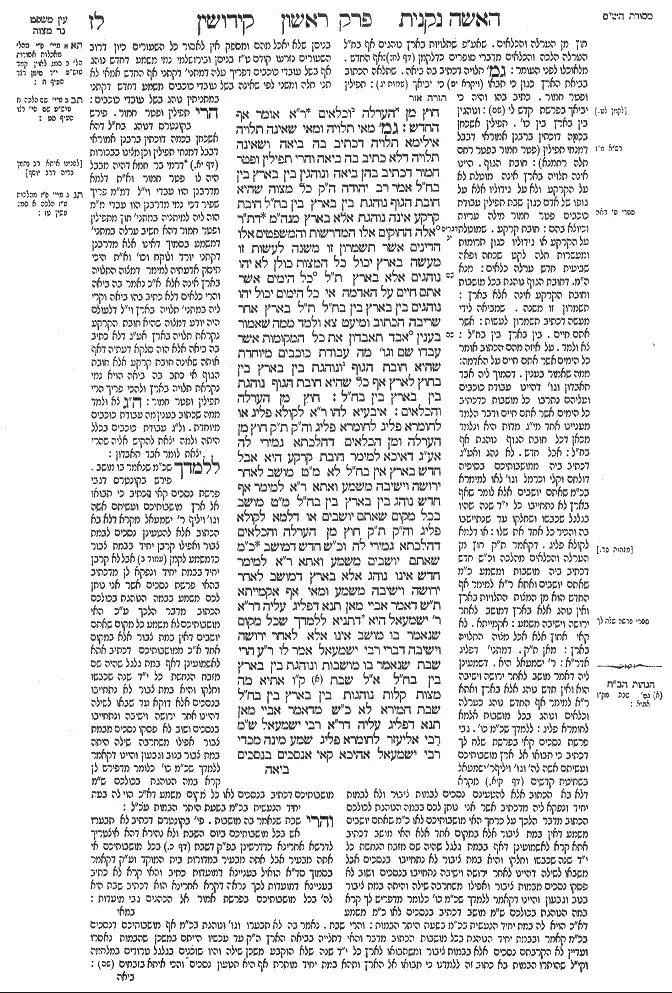
Kiddushin 37a - Guemara
חוץ מן הערלה וכלאים ר"א אומר אף החדש גמ׳ מאי תלויה ומאי שאינה תלויה אילימא תלויה דכתיב בה ביאה ושאינה תלויה דלא כתיב בה ביאה והרי תפילין ופטר חמור דכתיב בהן ביאה ונוהגין בין בארץ בין בח"ל אמר רב יהודה ה"ק כל מצוה שהיא חובת הגוף נוהגת בין בארץ בין בח"ל חובת קרקע אינה נוהגת אלא בארץ מנה"מ דת"ר (דברים יב, א) אלה החוקים אלו המדרשות והמשפטים אלו הדינים אשר תשמרון זו משנה לעשות זו מעשה בארץ יכול כל המצות כולן לא יהו נוהגים אלא בארץ ת"ל (דברים יב, א) כל הימים אשר אתם חיים על האדמה אי כל הימים יכול יהו נוהגים בין בארץ בין בח"ל ת"ל בארץ אחר שריבה הכתוב ומיעט צא ולמד ממה שאמור בענין (דברים יב, ב) אבד תאבדון את כל המקומות אשר עבדו שם וגו' מה עבודת כוכבים מיוחדת שהיא חובת הגוף ונוהגת בין בארץ בין בחוץ לארץ אף כל שהיא חובת הגוף נוהגת בין בארץ בין בח"ל חוץ מן הערלה והכלאים איבעיא להו ר"א לקולא פליג או לחומרא פליג לחומרא פליג וה"ק ת"ק חוץ מן הערלה ומן הכלאים דהלכתא גמירי לה אע"ג דאיכא למימר חובת קרקע היא אבל חדש בארץ אין בח"ל לא מ"ט מושב לאחר ירושה וישיבה משמע ואתא ר"א למימר אף חדש נוהג בין בארץ בין בח"ל מ"ט מושב בכל מקום שאתם יושבים או דלמא לקולא פליג וה"ק ת"ק חוץ מן הערלה והכלאים דהלכתא גמירי לה וכ"ש חדש דמושב כ"מ שאתם יושבים משמע ואתא ר"א למימר חדש אינו נוהג אלא בארץ דמושב לאחר ירושה וישיבה משמע ומאי אף אקמייתא ת"ש דאמר אביי מאן תנא דפליג עליה דר"א ר' ישמעאל היא דתניא ללמדך שכל מקום שנאמר בו מושב אינו אלא לאחר ירושה וישיבה דברי רבי ישמעאל אמר לו ר"ע הרי שבת שנאמר בו מושבות ונוהגת בין בארץ בין בח"ל א"ל שבת ק"ו אתיא מה מצות קלות נוהגות בין בארץ בין בח"ל שבת חמירא לא כ"ש מדאמר אביי מאן תנא דפליג עליה דר"א רבי ישמעאל ש"מ רבי אליעזר לחומרא פליג שמע מינה מכדי רבי ישמעאל אהיכא קאי אנסכים בנסכים
Comments from Rashi on Masechet Kiddushin Page 37a
חוץ מן הערלה והכלאים . שאע"פ שתלויות בארץ נוהגים אף בח"ל הערלה הלכה והכלאים מדברי סופרים כדלקמן (קידושין דף לח:): אף החדש . מלאוכלו לפני העומר: גמ' תלויה דכתיב בה ביאה . שתלאה הכתוב בביאת הארץ כגון כי תבאו (ויקרא יט) כי יביאך (שמות יג): גמ' תלויה דכתיב בה ביאה . שתלאה הכתוב בביאת הארץ כגון כי תבאו (ויקרא יט) כי יביאך (שמות יג): תפילין ופטר חמור . כתיב בהו והיה כי יביאך בפרשת קדש לי (שם): ונוהגין בין בארץ בין כו' . תפילין אשכחן בכמה דוכתין ברבנן אמוראי דבבל דמנחי תפילין (פטר חמור בפטר רחם תלה רחמנא): חובת הגוף . היינו אינה תלויה בארץ אינה מוטלת לא על הקרקע ולא על גידוליו אלא על גופו של אדם כגון שבת תפילין עבודת כוכבים פטר חמור מילה עריות וכיוצא בהם: חובת קרקע . שמוטלת על הקרקע או גידוליו כגון תרומות ומעשרות חלה לקט שכחה ופאה שביעית חדש ערלה כלאים: מנא ה"מ . דחובת הגוף נוהגת בכל מושבות וחובת הקרקע אינה אלא בארץ: תשמרון זו משנה . שמביאה לידי מעשה דכתיב תשמרון לעשות: אשר אתם חיים . בין בארץ בין בח"ל: צא ולמד . על איזה מהם הכתוב אומר כל הימים אשר אתם חיים על האדמה: ממה שאמור בענין . דסמוך ליה אבד תאבדון וגו' דהיינו עבודת כוכבים ועליהם נתרבו כל מושבות כדכתיב כל הימים אשר אתם חיים ודבר הלמד מעניינו אחד מי"ג מדות היא ונלמד מכאן דכל חובת הגוף נוהגת אף בח"ל: אבל חדש . לא נהג ואע"ג דכתיב ביה ממושבותיכם בסיפיה דולחם וקלי וכרמל וגו' לאו למימרא בכ"מ שאתם יושבים אלא לומר שאף בארץ לא נתחייבו כל י"ד שנה שהיו בגלגל שכבשו ושחלקו עד שנתיישבו בה והכיר כל אחד את שלו: או דלמא לקולא פליג . דקאמר ת"ק חוץ מן הערלה והכלאים מהלכה וכ"ש חדש דכתיב ביה מושבות ומשמע כ"מ שאתם יושבים ואתא ר"א למימר אף החדש הוא מן המצות התלויות בארץ ואין נוהג אלא בארץ דמושב לאחר ירושה וישיבה משמע: אקמייתא . לא קאי אחוץ אלא אכל מצוה התלויה בארץ: מאן ת"ק . דמתני' דפליג אדר"א: ר' ישמעאל היא . דשמעינן ליה דאמר מושב לאחר ירושה וישיבה הוא ואין חדש נוהג אלא בארץ ואתא ר"א למימר אף החדש נוהג כערלה וכלאים ונוהג בכל מושבות אלמא לחומרא פליג: ללמדך שכ"מ כו' . גבי פרשת נסכים קאי בפרשת שלח לך דכתיב כי תבואו אל ארץ מושבותיכם ועשיתם אשה לה' וגו' ויליף ר' ישמעאל בשחיטת קדשים (דף קיא.) מקרא דלא בא הכתוב אלא להטעינם נסכים לבמות ציבור ולא לבמות יחיד ונפקא ליה מדכתיב אשר אני נותן לכם בבמה הנוהגת לכולכם הכתוב מדבר הלכך על כרחך האי מושבותיכם לאו כ"מ שאתם יושבים משמע דאין במת ציבור אלא במקום אחד אלא האי מושב דכתיב אתא קרא לאשמועינן דאף בבמת גלגל שהיה שם מזבח הנחשת כל י"ד שנה שכבשו וחלקו והיא במת ציבור לא נתחייבו בנסכים אבל משבאו לשילה דהיינו לאחר ירושה וישיבה נתחייבו בנסכים ושוב לא פסקו נסכים מבמות ציבור ואפילו משחרבה שילה והיתה במת ציבור בנוב וגבעון והיינו דקאמר ללמדך שכ"מ כו' כלומר מדפריש לך קרא במה הנוהגת בכולכם ש"מ מושב דכתיב בנסכים לאו כ"מ משמע דא"כ הויא לה במת יחיד הנעשית בכ"מ בשעת היתר הבמות: והרי שבת . נאמר בה לא תבערו וגו' ונוהגת בכ"מ אף מושבותיכם דנסכים בכ"מ קאמר ובבמת יחיד הנוהגת בכל מושבות הכתוב מדבר והאי דתלייה בביאת הארץ ה"ק עד עכשיו הייתם במשכן שהבמות נאסרו ועדיין לא הקרבתם נסכים אלא בבמות ציבור ומשתבואו לארץ כל י"ד שנה שלא הוקבע משכן שילה והיו שוכנים בגלגל טרודים במלחמה וקי"ל שהותרו הבמות בא כתוב זה ללמדנו כי תבואו אל הארץ ותהא במת יחיד מותרת אף היא תטעון נסכים והכי איתא בזבחים (שם):
Comments from Tosafot - Kiddushin 37a
כל מצוה התלויה בארץ כו' חוץ מן הערלה והכלאים. בירושלמי פריך אמאי לא תני לה חלה ומשני לפי שאינה בעיסה של עובדי כוכבים ולא מיירי מתני' אלא בדברים הנוהגים בישראל ובעובדי כוכבים וקשה אמאי לא פריך נמי התם אמאי לא תני תרומה ומעשר כדפריך מחלה ואין לומר לפי שאינם אלא מדרבנן דהא חלה נמי אינה בח"ל אלא מדרבנן ואפ"ה בעי אמאי לא תני חלה ולא משני לפי שהיא מדרבנן וי"ל דלהכי בעי מחלה לפי שגזרו על חלה בכל מקום אבל על תרומה ומעשר לא גזרו במקומות הרחוקים מא"י אלא דוקא אעיירות הסמוכות לארץ והיינו טעמא דגזרו על החלה בכל מקום טפי מתרומה ומעשר לפי שהחלה דומה יותר לחובת הגוף שהרי החיוב בא ע"י גלגול עיסה שהאדם עושה והלכך דין הוא שינהוג בכ"מ אפילו בח"ל אבל תרומה ומעשר אינן מוטלות אלא על מי שיש לו קרקע ודמי טפי לחובת הארץ עי"ל דהיינו טעמא דלא בעי מתרומה ומעשר משום דתני בירושלמי רבותינו שבח"ל היו מפרישין תרומה ומעשר עד שבאו הרובים וביטלום ובעי מאי רובים מתורגמניא ויש ליתן טעם דלפיכך בטלו תרומה ומעשר לפי שעכשיו בח"ל אין הקרקעות שלנו שהרי משועבדות הן למלך ואנו נותנים מהם מס למלך אם כן אין להם דין קרקע להפריש תרומה ומעשר ואם תאמר בא"י נמי משועבדות הן למלך ואפ"ה מפרישין תרומה ומעשר וי"ל דאין קנין לעובד כוכבים בא"י להפקיע מיד מעשר ומן הירושלמי שהבאתי יש להוכיח דערלה וכלאים נוהגים בשל עובדי כוכבים וכן משמע בפרק אין מעמידין (ע"ז דף לה:) דקאמר התם מפני מה גבינות העובדי כוכבים אסורין מפני שמעמידין אותם בשרף של ערלה ומיירי בערלה של עובדי כוכבים דדוחק הוא לומר דמיירי בערלה של ישראל וכן משמע לקמן (קידושין דף לח:) דקאמר ספק ערלה בח"ל יורד ולוקח ובלבד שלא יראנו לוקט ועל כרחך מיירי בערלה דעובד כוכבים דאי בערלה דישראל הלא אסור למכור דדמי ערלה אסורין וקשה דהא אמרינן במסכת [ר"ה (דף ט:) לענין] ערלה אחד הנוטע ואחד המבריך ואחד המרכיב יש בהם משום ערלה ואם כן איך אנו נהנים מן הכרמים שהעובדי כוכבים מבריכין אותן בכל שנה ואף על פי שאין אנו יודעין ודאי שמבריכין כולם הוה לנו לילך אחר הרוב ואומר רבינו שמשון ששאל בעובדי אדמה ואמרו לו שאינן חותכין הזמורה מן הסדן ואם כן הוא יונק עוד מן הזקנה ואמר התם (ירושלמי פ"ק דערלה) המבריך בזמן שיונק מן הזקנה פטור מן הערלה ואם סיפק חייב והוא ניכר היטב כשיונק מן הזקנה וכשאינו יונק מן הזקנה כשהזמורה יונקת מן הזקנה עליהן נוטין [לצד אחר] וכשפוסק עליהן נוטין לצד [זקנה] וסימניך דהאי מאן דאכיל מחבריה בהית לאיסתכולי ביה ונראה דחדש נוהג בזמן הזה ולכך יש ליזהר שאם אדם יודע בודאי שהשעורים נזרעו אחר זמן הקרבת העומר דהיינו אחר י"ו בניסן שלא יאכל מהם ומספק אין לאסור כל השעורים כיון דרוב השעורים נזרעו קודם ט"ז בניסן ובירושלמי נמי משמע דחדש נוהג אף בשל עובדי כוכבים דפריך עלה דמתני' דקתני אף החדש אמאי לא תני חלה ומשני לפי שאינה בשל עובדי כוכבים משמע דחדש דקתני במתניתין נוהג בשל עובדי כוכבים: הרי תפילין ופטר חמור . פירש בקונטרס דנוהג בח"ל דהא אשכחן בכמה דוכתין ברבנן אמוראי דבבל דמנחי תפילין וכן מצינו בבכורות (דף יא.) דרמי בר חמא דהיה מבבל היה לו פטר חמור וא"ת דלמא מדרבנן הוו עבדי וי"ל דמ"מ פריך שפיר דכי נמי מדרבנן הוו עבדי מ"מ הוה ליה למיתניה במתני' חוץ מתפילין ופטר חמור דהא חשיב ערלה במתני' דמשמע בסמוך דאינו אלא מדרבנן דקתני יורד ולוקח וכו' וא"ת היכי תיסק אדעתיה למימר דמצוה התלויה בארץ אינה אלא א"כ נאמר בה ביאה והרי כלאים דלא כתיב בהו ביאה וקרי ליה במתני' תלויה בארץ וי"ל דלעולם היה יודע דמצוה שהיא חובת הקרקע נקראת תלויה בארץ אע"ג דלא כתיב בה ביאה אלא הוה סלקא דעתיה דאף אותה שאינה חובת קרקע אלא חובת הגוף אי כתב בה ביאה הויא נמי נקראת תלויה בארץ ולהכי פריך הרי תפילין ופטר חמור: ה"ג צא ולמד ממה שכתוב בענין מה עבודת כוכבים מיוחדת. ול"ג עבודת כוכבים בכלל היתה ולמה יצאת להקיש אליה שהרי יצאת לומר אבד תאבדון: ללמדך שכ"מ שנאמר בו מושב . פירש בקונטרס דגבי פרשת נסכים קאי דכתיב כי תבואו אל ארץ מושבותיכם ועשיתם אשה וגו' ויליף ר' ישמעאל מקרא דלא בא הכתוב אלא להטעינן נסכים לבמת צבור ואפילו קרבן יחיד בבמת צבור כדמשמע לקמן (עמוד ב) אבל לא קרבן יחיד בבמת יחיד ונפקא לן מדכתיב בהאי פרשת נסכים אשר אני נותן לכם משמע בבמה הנוהגת בכולכם הכתוב מדבר הלכך ע"כ האי מושבותיכם לא משמע כל מקום שאתם יושבים דאין במת צבור אלא במקום אחד א"כ ממושבותיכם דכתיב אתא לאשמועינן דאף במת גלגל שהיה שם מזבח הנחשת כל י"ד שנה שכבשו וחלקו והיא במת צבור לא נתחייבו בנסכים אלא דוקא עד שבאו לשילה דהיינו אחר ירושה וישיבה ונתחייבו בנסכים ושוב לא פסקו נסכים מבמת צבור אפילו משחרבה שילה היתה במת צבור בנוב וגבעון והיינו דקאמר ללמדך שכ"מ כו' כלומר מדפירש לן קרא במה הנוהגת בכולכם ש"מ מושבותיכם דכתיב בנסכים לאו כל מקום משמע דא"כ הוי לה במת יחיד הנעשית בכ"מ בשעת היתר הבמות עכ"ל: והרי שבת שנאמר בה מושבות . פי' בקונטרס דכתיב לא תבערו אש בכל מושבותיכם ביום השבת ולא נהירא דהא איצטריך לדרשא אחרינא כדדרשינן בפ"ק דשבת (דף כ.) בכל מושבותיכם אי אתה מבעיר אבל אתה מבעיר במדורות בית המוקד וע"ק דקאמר בסמוך סד"א הואיל בעניינא דמועדות כתיב והאי קרא לא כתיב בעניינא דמועדות לכך נראה דקרא אחרינא הוא דכתיב שבת היא לה' בכל מושבותיכם בפרשת אמור אל הכהנים גבי מועדות:
Kiddushin 37a - Mishnah translated into english
This is apart from the mitzvot of orla and diverse kinds, which apply even outside of Eretz Yisrael. Rabbi Eliezer says: This is the halakha even with regard to the prohibition to eat from the new crop before the omer offering has been brought on the sixteenth of Nisan.
GEMARA: The Gemara asks: What is meant by mitzvot that are dependent on the land, and what is meant by mitzvot that are not dependent on the land? If we say that a mitzva is called dependent in a case where it is written in a verse with regard to it: Coming to Eretz Yisrael, and a mitzva that is not dependent on the land is one concerning which the verb: Coming, or the verb: Bringing, is not written in a verse with regard to it, that would lead to a difficulty: But aren’t there the mitzvot of donning phylacteries and the redemption of the firstborn donkey, in which the verse states: Bringing, in the passage: “And it shall be when the Lord shall bring you to the land of the Canaanite…And every firstborn of a donkey you shall redeem with a lamb…And it shall be for a sign upon your hand, and for frontlets between your eyes” (Exodus 13:11–16), and yet those mitzvot apply both in Eretz Yisrael and outside of Eretz Yisrael.
Rav Yehuda said that this is what the mishna is saying: Any mitzva that is an obligation of the body, i.e., an obligation upon the person, applies both in Eretz Yisrael and outside of Eretz Yisrael. Conversely, an obligation of the land, that is, a mitzva that applies specifically to the earth and its growths, applies only in Eretz Yisrael.
The Gemara asks: From where are these matters derived? The Gemara answers: This is as the Sages taught in a baraita: The verse states: “These are the statutes and the ordinances that you shall observe to do in the land that the Lord, the God of your fathers, has given you to possess it, all the days that you live upon the earth” (Deuteronomy 12:1). This verse is interpreted as follows: The phrase “these are the statutes” means that these are the expositions that the Sages learn from verses. With regard to the phrase “and the ordinances,” these are monetary laws. With regard to “that you shall observe,” this is referring to the study of matters that must be observed for one to perform them. And as for the phrase “to do,” this is referring to action, the actual performance of mitzvot.
The baraita continues: From the phrase “in the land [ba’aretz],” one might have thought that all mitzvot apply only in Eretz Yisrael. Therefore, the verse also states “all the days that you live upon the earth,” i.e., wherever you live. Furthermore, if the Merciful One had written only the phrase “all the days,” one might have thought that all mitzvot should apply both in Eretz Yisrael and outside of Eretz Yisrael. Therefore, the verse also states “in the land.”
The baraita continues: Once the verse includes areas outside of Eretz Yisrael and also excludes areas outside of Eretz Yisrael, how is it determined which mitzvot apply outside the land and which do not? The baraita answers: Go and learn from what is stated with regard to a different issue that appears in the next verse: “You shall destroy all the places where the nations that you are to dispossess served their gods” (Deuteronomy 12:2). Just as the prohibition of idol worship is distinct in that it is an obligation of the body, and it applies both in Eretz Yisrael and outside of Eretz Yisrael, so too, any mitzva that is an obligation of the body applies both in Eretz Yisrael and outside of Eretz Yisrael. Conversely, mitzvot that are an obligation connected to the land apply only in Eretz Yisrael.
§ The mishna teaches that all mitzvot that are dependent on the land apply only in Eretz Yisrael, apart from orla and the prohibition of diverse kinds. Rabbi Eliezer says: This is the halakha even with regard to the prohibition to eat from the new crop. A dilemma was raised before them: Does Rabbi Eliezer disagree with the first tanna with the intent to rule more leniently or does he disagree with the first tanna with the intent to rule more stringently?
The Gemara elaborates: It is possible that Rabbi Eliezer disagrees with the first tanna with the intent to rule more stringently, and this is what the first tanna is saying: All mitzvot that are dependent on the land apply only in Eretz Yisrael, apart from orla and diverse kinds, as we learned this halakha through a tradition transmitted to Moses from Sinai. Although one could say that each of them is an obligation of the land and should apply only in Eretz Yisrael, nevertheless they are obligatory outside of Eretz Yisrael as well. But the prohibition of the new crop, which is an obligation of the land, yes, it applies in Eretz Yisrael, but outside of Eretz Yisrael, no, it does not apply.
What is the reason of the first tanna? In the verse that states with regard to the new crop: “In all your dwellings” (Leviticus 23:14), the term dwelling does not mean that this halakha applies wherever Jews live. Rather, it means that the mitzva is applicable only in Eretz Yisrael, as this phrase indicates a time after inheritance and settlement of Eretz Yisrael by the Jewish people, when they are actually dwelling in the land, not when they are in the process of conquering it. This is the opinion of the first tanna.
And Rabbi Eliezer comes to say: Even the prohibition with regard to the new crop applies both in Eretz Yisrael and outside of Eretz Yisrael. What is the reason for his opinion? He explains that the term dwelling means wherever you dwell. This is one possible way to understand the dispute, according to which the opinion of Rabbi Eliezer is more stringent than that of the first tanna.
Or perhaps Rabbi Eliezer disagrees with the first tanna with the intent to rule more leniently, and this is what the first tanna is saying: All mitzvot that are dependent on the land apply only in Eretz Yisrael, apart from orla and diverse kinds, as we learned this halakha through tradition, and all the more so apart from the new crop, which applies outside of Eretz Yisrael, as the term dwelling indicates wherever you dwell. This is the opinion of the first tanna.
And Rabbi Eliezer comes to say: The prohibition of the new crop applies only in Eretz Yisrael, as the term dwelling indicates a time after inheritance and settlement of Eretz Yisrael by the Jewish people. The Gemara asks: And accordingly, what is the meaning of the word: Even, with which Rabbi Eliezer begins his statement? It is not referring to orla and diverse kinds, which apply outside of Eretz Yisrael, but to the first clause, which states that a mitzva that is dependent on the land applies only in Eretz Yisrael. Rabbi Eliezer adds that this principle includes the new crop as well.
Having presented the two ways in which one can explain the opinion of Rabbi Eliezer, the Gemara attempts to prove which is correct and suggests: Come and hear a proof from that which Abaye said: Who is the tanna who disagrees with Rabbi Eliezer? It is Rabbi Yishmael. As it is taught in a baraita with regard to the mitzva of bringing libations with offerings: This serves to teach you that wherever the term dwelling is stated, the mitzva in question applies only after the inheritance and settlement of Eretz Yisrael. This is the statement of Rabbi Yishmael.
Rabbi Akiva said to him: But there is the case of Shabbat, in which it is stated: “It is a Shabbat to the Lord in all your dwellings” (Leviticus 23:3), and this mitzva applies both in Eretz Yisrael and outside of Eretz Yisrael. Rabbi Yishmael said to Rabbi Akiva: Shabbat is derived through the following a fortiori inference: If less stringent mitzvot apply both in Eretz Yisrael and outside of Eretz Yisrael, is it not all the more so reasonable that Shabbat, which is a stringent mitzva, should apply everywhere?
The Gemara explains the proof. From the fact that Abaye said: Who is the tanna who disagrees with Rabbi Eliezer, it is Rabbi Yishmael, and Rabbi Yishmael says that the term dwelling means that the mitzva applies after Eretz Yisrael has been entirely settled, one can conclude from it that Rabbi Eliezer disagrees with the first tanna with the intent to rule more stringently, as he evidently maintains that the term dwelling means wherever Jews are located. The Gemara affirms: Conclude from that baraita that it is so.
The Gemara asks an incidental question with regard to Rabbi Yishmael’s opinion. Now, where does Rabbi Yishmael stand, i.e., to which specific mitzva is he referring? He is referring to the obligation to bring libations, from which he learns that all mitzvot that feature the term dwelling apply only after Eretz Yisrael had been conquered and settled. With regard to libations
Traduction : The William Davidson digital edition of the Koren Noé Talmud, with commentary by Rabbi Adin Even-Israel Steinsaltz.