 Talmud Bavli
The learning on the whole site is dedicated : L'ilui Nishmat Jacques Isaac Ben Amram Loubaton
The learning on the whole site is dedicated : L'ilui Nishmat Chemouel Eliezer ben Batcheva
The learning on the whole site is dedicated : L'ilui Nishmat יוסף בן מושה
Kiddushin 70a : Youtube
Daf TubeYoutube
2 video classes :
Kiddushin Page 70a
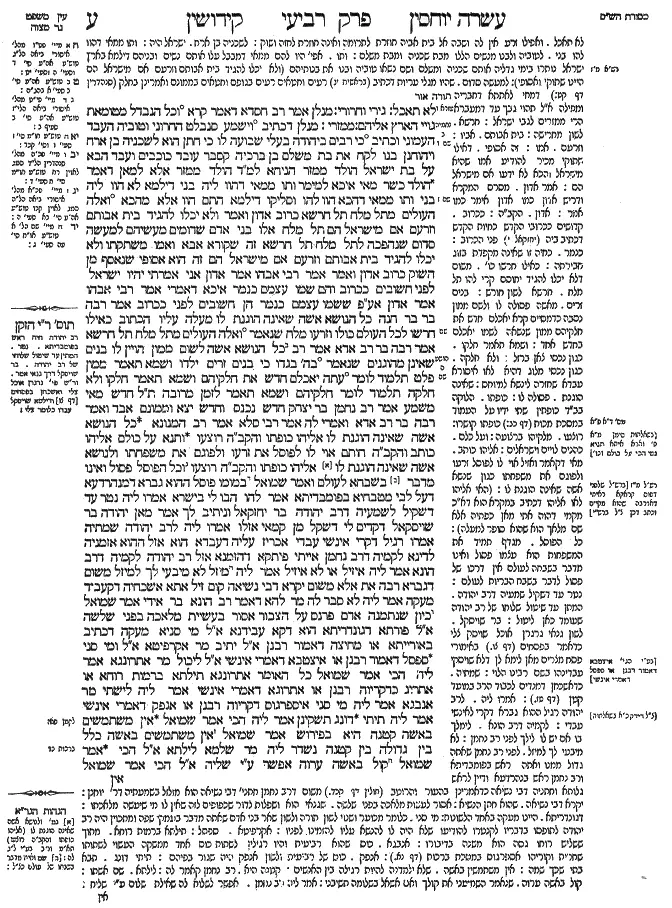
Kiddushin 70a - Guemara
לא תאכל גירי וחרורי מנלן אמר רב חסדא דאמר קרא (עזרא ו, כא) וכל הנבדל מטומאת גויי הארץ אליהם ממזרי מנלן דכתיב (נחמיה ב, י) וישמע סנבלט החרוני וטוביה העבד העמוני וכתיב (נחמיה ו, יח) כי רבים ביהודה בעלי שבועה לו כי חתן הוא לשכניה בן ארח ויהוחנן בנו לקח את בת משלם בן ברכיה קסבר עובד כוכבים ועבד הבא על בת ישראל הולד ממזר הניחא למ"ד הולד ממזר אלא למאן דאמר הולד כשר מאי איכא למימר ותו ממאי דהוו ליה בני דילמא לא הוו ליה בני ותו ממאי דהכא הוו להו וסליקו דילמא התם הוו אלא מהכא (נחמיה ז, סא) ואלה העולים מתל מלח תל חרשא כרוב אדון ואמר ולא יכלו להגיד בית אבותם וזרעם אם מישראל הם תל מלח אלו בני אדם שדומים מעשיהם למעשה סדום שנהפכה לתל מלח תל חרשא זה שקורא אבא ואמו משתקתו ולא יכלו להגיד בית אבותם וזרעם אם מישראל הם זה הוא אסופי שנאסף מן השוק כרוב אדון ואמר אמר רבי אבהו אמר אדון אני אמרתי יהיו ישראל לפני חשובים ככרוב והם שמו עצמם כנמר איכא דאמרי אמר רבי אבהו אמר אדון אע"פ ששמו עצמם כנמר הן חשובים לפני ככרוב אמר רבה בר בר חנה כל הנושא אשה שאינה הוגנת לו מעלה עליו הכתוב כאילו חרשו לכל העולם כולו וזרעו מלח שנאמר (נחמיה ז, סא) ואלה העולים מתל מלח תל חרשא אמר רבה בר רב אדא אמר רב כל הנושא אשה לשום ממון הויין לו בנים שאינן מהוגנים שנאמר (הושע ה, ז) בה' בגדו כי בנים זרים ילדו ושמא תאמר ממון פלט תלמוד לומר (הושע ה, ז) עתה יאכלם חדש את חלקיהם ושמא תאמר חלקו ולא חלקה תלמוד לומר חלקיהם ושמא תאמר לזמן מרובה ת"ל חדש מאי משמע אמר רב נחמן בר יצחק חדש נכנס וחדש יצא וממונם אבד ואמר רבה בר רב אדא ואמרי לה אמר רבי סלא אמר רב המנונא כל הנושא אשה שאינה הוגנת לו אליהו כופתו והקב"ה רוצעו ותנא על כולם אליהו כותב והקב"ה חותם אוי לו לפוסל את זרעו ולפוגם את משפחתו ולנושא אשה שאינה הוגנת לו אליהו כופתו והקב"ה רוצעו וכל הפוסל פסול ואינו מדבר בשבחא לעולם ואמר שמואל במומו פוסל ההוא גברא דמנהרדעא דעל לבי מטבחיא בפומבדיתא אמר להו הבו לי בישרא אמרו ליה נטר עד דשקיל לשמעיה דרב יהודה בר יחזקאל וניתיב לך אמר מאן יהודה בר שויסקאל דקדים לי דשקל מן קמאי אזלו אמרו ליה לרב יהודה שמתיה אמרו רגיל דקרי אינשי עבדי אכריז עליה דעבדא הוא אזל ההוא אזמניה לדינא לקמיה דרב נחמן אייתי פיתקא דהזמנא אזל רב יהודה לקמיה דרב הונא אמר ליה איזיל או לא איזיל אמר ליה מיזל לא מיבעי לך למיזל משום דגברא רבה את אלא משום יקרא דבי נשיאה קום זיל אתא אשכחיה דקעביד מעקה אמר ליה לא סבר לה מר להא דאמר רב הונא בר אידי אמר שמואל כיון שנתמנה אדם פרנס על הצבור אסור בעשיית מלאכה בפני שלשה א"ל פורתא דגונדריתא הוא דקא עבידנא א"ל מי סניא מעקה דכתיב באורייתא או מחיצה דאמור רבנן א"ל יתיב מר אקרפיטא א"ל ומי סני ספסל דאמור רבנן או איצטבא דאמרי אינשי א"ל ליכול מר אתרונגא אמר ליה הכי אמר שמואל כל האומר אתרונגא תילתא ברמות רוחא או אתרוג כדקריוה רבנן או אתרוגא דאמרי אינשי אמר ליה לישתי מר אנבגא אמר ליה מי סני איספרגוס דקריוה רבנן או אנפק דאמרי אינשי אמר ליה תיתי דונג תשקינן אמר ליה הכי אמר שמואל אין משתמשים באשה קטנה היא בפירוש אמר שמואל אין משתמשים באשה כלל בין גדולה בין קטנה נשדר ליה מר שלמא לילתא א"ל הכי אמר שמואל קול באשה ערוה אפשר ע"י שליח א"ל הכי אמר שמואל
Comments from Rashi on Masechet Kiddushin Page 70a
לא תאכל . ואפילו זרע אין לה ושבה אל בית אביה חוזרת לתרומה ואינה חוזרת לחזה ושוק: לשכניה בן ארח . ישראל היה: ותו ממאי דהוו להו בני . לטוביה ולבנו מנשים הללו מבת שכניה ומבת משלם: ותו ממאי דהוו להו בני . לטוביה ולבנו מנשים הללו מבת שכניה ומבת משלם: ותו . אפי' היו להם ממאי דמבבל עלו אותם נשים ובניהם דילמא בארץ ישראל נותרו בימי גדליה אותם שכניה ומשלם ושם נשאו טוביה ובנו את בנותיהם (ולא יכלו להגיד בית אבותם וזרעם אם מישראל הם היינו שתוקי ואסופי): למעשה סדום . שהיו מגלי עריות דכתיב (בראשית יג) רעים וחטאים רעים בגופם וחטאים בממונם ואמרינן בחלק (סנהדרין דף קט:) דמחי לאתתא דחבריה ומפילה א"ל תהוי גבך עד דמעברא הרי ממזרים לגבי ישראל: חרשא . לשון מחרישה: בית אבותם . אביו: וזרעם . אמו: זה אסופי . דאילו שתוקי מכיר להודיע אמו שהיא מישראל והכא לא ידעו אם מישראל הם: אמר אדון . מסרס המקרא ודריש אדון כמו אדון אימר כמו אמר: אדון . הקב"ה: ככרוב . קדושים ככרובי הקדש כחיות הקדש דכתיב ביה (יחזקאל י) פני הכרוב: כנמר . כחיה זו שאינה מקפדת בזוג חבירתה: כאילו חרשו כו' . משום דלא יכלו להגיד יחוסם קרי להו תל מלח חרשא לשון חורש: בנים זרים . מאשה פסולה לו ולשם ממון נסבה כדמסיים קרא יאכלם חדש את חלקיהם ממון שנשאה לשמו יאכלם בחדש אחד: ושמא תאמר חלקו . כגון נכסי צאן ברזל: ולא חלקה . כגון נכסי מלוג דהיא לאו איסורא עבדא שחזרה לינשא למיוחס: שאינה הוגנת . פסולה לו: כופתו . הלוקה בב"ד כופתין שתי ידיו על העמוד במסכת מכות (דף כב:) כופתו קושרו: רוצעו . מלקיהו ברצועה: ועל כלם . כהנים לויים וישראלים: אליהו כותב . מאי דקאמר ואזיל אוי לו לפוסל זרעו ולפוגם את משפחתו כגון שנשא אשה שאינה הוגנת לו: (האי אליהו לאו אליהו דכתיב במקרא הוא דא"כ מקמי דהוה אתי מאן כפתיה אלא שם מלאך הוא שהוא סופר למעלה): כל הפוסל . מגדף תמיד את המשפחות הוא עצמו פסול ואינו מדבר בשבחה לעולם אין דרכו של פסול לדבר בשבח הבריות לעולם: נטר עד דשקיל שמעיה דרב יהודה . המתן עד שיטול שלוחו של רב יהודה שעומד כאן ליטול: בר שויסקל . לשון גנאי גרגרן אוכל שויסק צלי כדאמר בפסחים (דף צו.) באימורי פסח מצרים מאן לימא לן דלא שויסקי עבדינהו בשם רבינו הלוי: שמתיה . כדאשכחן דמנדים לכבוד הרב במועד קטן (דף טז.): אמרו ליה . לרב יהודה רגיל ההוא גברא דקרי לאינשי עבדי: לקמיה דרב הונא . לימלך בו אם יש לו לילך לפני רב נחמן: לא מיבעי לך למיזל . לפני רב נחמן שאתה גדול ממנו ואתה ראש בפומבדיתא ורב נחמן ראש בנהרדעא ודיין לראש גלותא וחתניה דבי נשיאה כדאמרינן בהעור והרוטב (חולין דף קכד.) משום דרב נחמן חתני' דבי נשיאה הוא מזלזל בשמעתיה דר' יוחנן: יקרא דבי נשיאה . שהוא חתן הנשיא: אסור לעשות מלאכה בפני שלשה . שגנאי הוא ושפלות לדור שכפופים לזה שאין לו מי שיעשה מלאכתו: דגונדריתא . היינו מעקה באחד הלשונות: מי סני . כלומר מכוער ושנוי לשון תורה ולשון שאר בני אדם שאתה מדבר בעמקי שפה ומתכוין היה רב יהודה לתופסו בדבריו לקנטרו להודיעו שלא היה לו להנשא עליו להזמינו לפניו: אקרפיטא . ספסל: תילתא ברמות רוחא . מתוך ששליש רוחו גסה הוא משנה בדיבורו: אנבגא . כוס שהוא רביעית והיו רגילין לשתות כוס אחד ממשקה העשוי לשתותו שחרית וקוריהו אספרגוס במסכת ברכות (דף נא.): אנפק . כוס של רביעית ולשון אנפק היה שגור בפיהם: תיתי דונג . תבא בתי שכך שמה: אין משתמשין באשה . שלא ילמדנה להיות רגילה בין האנשים: קטנה היא . רב נחמן קאמר לה: לילתא . שם אשתו: קול באשה ערוה . שנאמר השמיעני את קולך ואם אשאל בשלומה תשיבני: אמר ליה רב נחמן . אפשר לשלוח לה שאילת שלום ע"י שליח:
Kiddushin 70a - Mishnah translated into english
she may not eat.
§ The mishna teaches that converts and emancipated slaves ascended from Babylonia. The Gemara asks: From where do we derive this? Rav Ḥisda says: As the verse states with regard to the eating of the Paschal offering upon the return to Eretz Yisrael: “And the children of Israel who had come back from the exile ate, and all such as had separated themselves to them from the impurity of the nations of the land to seek the Lord, the God of Israel, did eat” (Ezra 6:21), indicating that converts and emancipated slaves who had abandoned “the impurity of the nations of the land,” i.e., idolatry, joined Ezra.
The mishna taught that mamzerim were among those who ascended from Babylonia. The Gemara asks: From where do we derive this? The Gemara answers: As it is written: “And Sanballat the Horonite and Tobiah the servant, the Ammonite, heard” (Nehemiah 2:19), and elsewhere it is written with regard to Tobiah the Ammonite: “For there were many in Judah sworn to him because he was the son-in-law of Shecaniah the son of Arah; and his son Jehohanan had taken the daughter of Meshullam the son of Berechiah” (Nehemiah 6:18). The Gemara proceeds to explain: This tanna holds that in the case of a gentile or a slave who engaged in sexual intercourse with a Jewish woman, the offspring is a mamzer. Since Tobiah the Ammonite, a gentile, married a Jewish woman, as did his son, there were clearly mamzerim among those who ascended.
The Gemara asks: This works out well according to the one who says that in that case the offspring is a mamzer. But according to the one who says that the lineage of the offspring is unflawed and has the status of the mother, what can be said? And furthermore, from where is it clear that Jehohanan had offspring from this wife? Perhaps he did not have offspring, and it is possible that there were no mamzerim. And furthermore, even if they did have offspring, from where is it clear that they had offspring here, in Babylonia, who then ascended to Eretz Yisrael? Perhaps they were there, in Eretz Yisrael, all the time, as they may have been one of the families that was not exiled to Babylonia, and therefore they cannot be used as the proof that mamzerim ascended from Babylonia.
Rather, the proof that mamzerim were among those who ascended from Babylonia is from here: “And these were they that ascended from Tel Melah, Tel Harsha, Cherub, Addon, and Immer; but they could not tell their fathers’ houses, nor their offspring, whether they were of Israel” (Nehemiah 7:61). The Gemara explains that these names are to be interpreted as follows: “Tel Melah”; these are people whose licentious actions were similar to the act of Sodom, which was turned into a mound of salt [tel melaḥ]. “Tel Harsha”; this is referring to one who calls a man father, and his mother silences him, as the word ḥarsha is similar to maḥarishto, meaning: Silences him. In any event, the statement that there were those who acted licentiously, as did the people of Sodom, means that there were mamzerim among them.
The Gemara continues with its explication of the verse: “But they could not tell their fathers’ houses, nor their offspring, whether they were of Israel”; this is referring to a foundling who is gathered from the marketplace. Such a person does not even know if he is Jewish, as he has no knowledge of his parents. With regard to the names “Cherub, Addon, and Immer,” Rabbi Abbahu says that these terms should be expounded as follows: The Master [Adon], God, said: I said that the Jewish people shall be as important before Me as a cherub, but they made themselves impudent as a leopard [namer]. There are those who say a different version: Rabbi Abbahu said: The Master [Adon] said that although they made themselves as a leopard [namer], they are as important before Me as a cherub.
§ Explicating the same verse, Rabba bar bar Ḥana says: In the case of anyone who marries a woman who is not suited for him to marry due to her lineage, the verse ascribes him blame as though he plowed [ḥarash] all of the entire world and sowed it with salt [melaḥ], as it is stated with regard to those of flawed lineage who ascended from Babylonia: “And these were they that ascended from Tel Melah, Tel Harsha.”
Rabba bar Rav Adda says that Rav says: In the case of anyone who marries a woman of flawed lineage only for the sake of money, he will have offspring who will act inappropriately, as it is stated: “They have dealt treacherously against the Lord, for they have begotten strange children; now shall the new moon devour them with their portions” (Hosea 5:7).
Rabba bar Rav Adda explains the verse: And lest you say that at least the money that they received as dowry was spared, although they suffer from the acts of their offspring, the verse states: “Now shall the new moon devour them with their portions,” meaning their property shall be consumed in a single month. And lest you say his portion will be lost but not the portion of his wife, the verse states “their portions” in the plural. And lest you say this will occur after a long time, but in the interim he will benefit from the money, the verse states: “The new moon.” The Gemara asks: From where may it be inferred that their money will be lost immediately? Rav Naḥman bar Yitzḥak said: A month comes and a month goes, and their money is already lost. In any event, the fact that the punishment they receive is the loss of their portions indicates that the sin in this case was marrying for the sake of money.
And Rabba bar Rav Adda says, and some say Rabbi Salla says that Rav Hamnuna says: In the case of anyone who marries a woman who is not suited for him to marry due to her lineage, Elijah binds him in the manner that those liable to receive lashes are bound, and the Holy One, Blessed be He, straps him. And a Sage taught: Concerning all of them, Elijah writes and the Holy One, Blessed be He, signs the following: Woe to he who disqualifies his offspring, and who brings a flaw to his family lineage, and who marries a woman who is not halakhically suited for him to marry. Elijah binds him and the Holy One, Blessed be He, straps him.
He further said: And anyone who disqualifies others by stating that their lineage is flawed, that is a sign that he himself is of flawed lineage. Another indication that one’s lineage is flawed is that he never speaks in praise of others. And Shmuel says: If one habitually claims that others are flawed, he disqualifies himself with his own flaw. The flaw he accuses them of having is in fact the one that he has.
§ The Gemara recounts a related incident: There was a certain man from Neharde’a who entered a butcher shop in Pumbedita. He said to them: Give me meat. They said to him: Wait until the servant of Rav Yehuda bar Yeḥezkel has taken his meat, and then we will give it to you. The man said to them in anger: Who is this Yehuda bar Sheviske’el, a derogatory name for a glutton for meat, that he should precede me, that he should take before me? They went and told Rav Yehuda what the man had said. Rav Yehuda excommunicated him, in accordance with the halakha of one who disparages a Torah scholar. They also said to him that the same man was in the habit of calling people slaves. Rav Yehuda proclaimed about him that he is a slave and may not marry a Jew.
The Gemara continues the story: That man went and summoned Rav Yehuda to judgment before Rav Naḥman, who was a judge in Neharde’a. When the summons arrived in Pumbedita, Rav Yehuda went before Rav Huna to seek his council. Rav Yehuda said to him: Should I go or should I not go? Rav Huna said to him: As for the obligation to go, you are not required to go, since you are a great man and therefore are not under the jurisdiction of Rav Naḥman’s court. But due to the honor of the Exilarch’s house, as Rav Naḥman was the son-in-law of the Exilarch, get up and go.
Rav Yehuda arrived in Neharde’a and found Rav Naḥman constructing a parapet. Rav Yehuda said to Rav Naḥman: Does the Master not hold in accordance with that halakha that Rav Huna bar Idi says that Shmuel says: Once a person has been appointed a leader of the community, he is prohibited from performing labor before three people, so that he not belittle the honor of his position? Rav Naḥman said to him: It is merely a little fence [gundarita] that I am constructing. Rav Yehuda said to him: Is the term ma’akeh, which is written in the Torah, or the corresponding term meḥitza, which the Sages said, distasteful to you? Why do you use a term that is used by neither the Torah nor the Sages?
During their meeting, Rav Naḥman said to him: Let the Master sit on the bench [karfita]. Rav Yehuda said to him: Is the term safsal, which the Sages said, or the word itzteva, which common people say, distasteful to you? Why are you using uncommon terms? Rav Naḥman then said to him: Let the Master eat a citron [etronga]. Rav Yehuda said to him: This is what Shmuel said: Anyone who says etronga demonstrates one-third of a haughtiness of spirit. Why? He should either say etrog, as the Sages called it, or etroga, as common people say in Aramaic. Saying etronga is a sign of snobbery, as it was employed by the aristocratic class. He subsequently said to him: Let the Master drink a cup [anbaga] of wine. Rav Yehuda said to him: Is the term ispargus, as the Sages called it, or anpak, as common people say, distasteful to you?
Later on, Rav Naḥman said to him: Let my daughter Donag come and pour us drinks. Rav Yehuda said to him: This is what Shmuel says: One may not make use of a woman for a service such as this. Rav Naḥman replied: She is a minor. Rav Yehuda retorted: Shmuel explicitly says: One may not make use of a woman at all, whether she is an adult or a minor.
Later on, Rav Naḥman suggested: Let the Master send greetings of peace to my wife Yalta. Rav Yehuda said to him: This is what Shmuel says: A woman’s voice is considered nakedness, and one may not speak with her. Rav Naḥman responded: It is possible to send your regards with a messenger. Rav Yehuda said to him: This is what Shmuel says:
Traduction : The William Davidson digital edition of the Koren Noé Talmud, with commentary by Rabbi Adin Even-Israel Steinsaltz.