 Talmud Bavli
The learning on the whole site is dedicated : L'ilui Nishmat Nissim ben Barukh Malka
The learning on the whole site is dedicated : L'ilui Nishmat Rav Chlomo Ben Jamilla
The learning on the whole site is dedicated : L'ilui Nishmat Ledicia bat David Banoun
Kiddushin 47a : Youtube
Daf TubeYoutube
2 video classes :
Kiddushin Page 47a
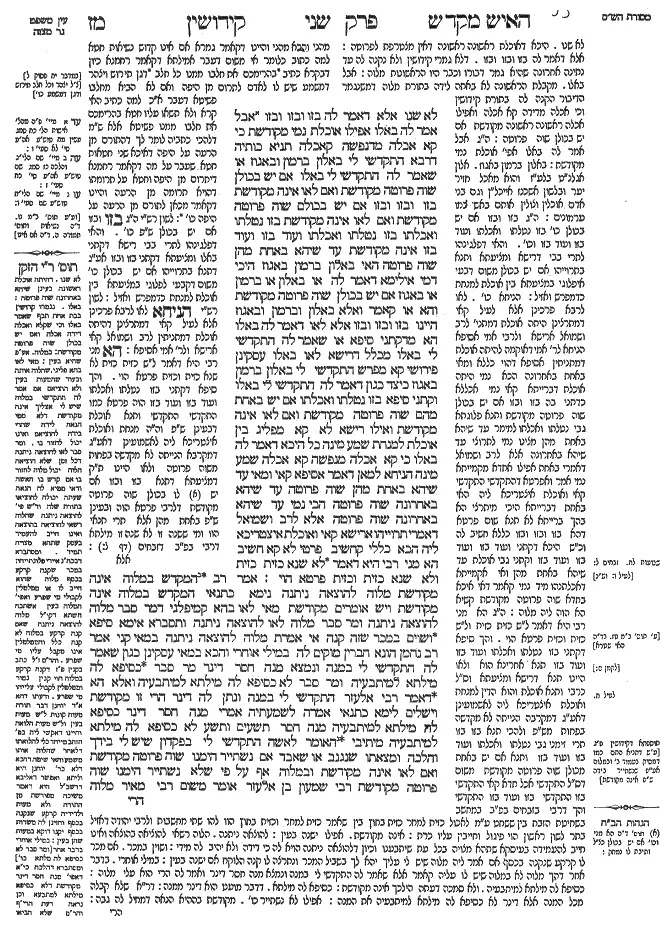
Kiddushin 47a - Guemara
לא שנו אלא דאמר לה בזו ובזו ובזו אבל אמר לה באלו אפילו אוכלת נמי מקודשת כי קא אכלה מדנפשה קאכלה תניא כותיה דרבא התקדשי לי באלון ברמון ובאגוז או שאמר לה התקדשי לי באלו אם יש בכולן שוה פרוטה מקודשת ואם לאו אינה מקודשת בזו ובזו ובזו אם יש בכולם שוה פרוטה מקודשת ואם לאו אינה מקודשת בזו נטלתו ואכלתו בזו נטלתו ואכלתו ועוד בזו ועוד בזו אינה מקודשת עד שיהא באחת מהן שוה פרוטה האי באלון ברמון באגוז היכי דמי אילימא דאמר לה או באלון או ברמון או באגוז אם יש בכולן שוה פרוטה מקודשת והא או קאמר ואלא באלון וברמון ובאגוז היינו בזו ובזו ובזו אלא לאו דאמר לה באלו הא מדקתני סיפא או שאמר לה התקדשי לי באלו מכלל דרישא לאו באלו עסקינן פירושי קא מפרש התקדשי לי באלון ברמון באגוז כיצד כגון דאמר לה התקדשי לי באלו וקתני סיפא בזו נטלתו ואכלתו אם יש באחת מהם שוה פרוטה מקודשת ואם לאו אינה מקודשת ואילו רישא לא קא מפליג בין אוכלת למנחת שמע מינה כל היכא דאמר לה באלו כי קא אכלה מנפשה קא אכלה שמע מינה הניחא למאן דאמר אסיפא קאי ומאי עד שיהא באחת מהן שוה פרוטה עד שיהא באחרונה שוה פרוטה הכי נמי עד שיהא באחרונה שוה פרוטה אלא לרב ושמואל דאמרי תרוייהו ארישא קאי ואוכלת איצטריכא ליה הכא כללי קחשיב פרטי לא קא חשיב הא מני רבי היא דאמר לא שנא כזית כזית ולא שנא כזית וכזית פרטא הוי אמר רב המקדש במלוה אינה מקודשת מלוה להוצאה ניתנה נימא כתנאי המקדש במלוה אינה מקודשת ויש אומרים מקודשת מאי לאו בהא קמיפלגי דמר סבר מלוה להוצאה ניתנה ומר סבר מלוה לאו להוצאה ניתנה ותסברא אימא סיפא ושוים במכר שזה קנה אי אמרת מלוה להוצאה ניתנה במאי קני אמר רב נחמן הונא חברין מוקים לה במילי אוחרי והכא במאי עסקינן כגון שאמר לה התקדשי לי במנה ונמצא מנה חסר דינר מר סבר כסיפא לה מילתא למיתבעיה ומר סבר לא כסיפא לה מילתא למיתבעיה ואלא הא דאמר רבי אלעזר התקדשי לי במנה ונתן לה דינר הרי זו מקודשת וישלים לימא כתנאי אמרה לשמעתיה אמרי מנה חסר דינר כסיפא לה מילתא למיתבעיה מנה חסר תשעים ותשע לא כסיפא לה מילתא למיתבעיה מיתיבי האומר לאשה התקדשי לי בפקדון שיש לי בידך והלכה ומצאתו שנגנב או שאבד אם נשתייר הימנו שוה פרוטה מקודשת ואם לאו אינה מקודשת ובמלוה אף על פי שלא נשתייר הימנו שוה פרוטה מקודשת רבי שמעון בן אלעזר אומר משום רבי מאיר מלוה
Comments from Rashi on Masechet Kiddushin Page 47a
לא שנו . היכא דאוכלת ראשונה ראשונה דאין מצטרפת לפרוטה: אלא דאמר לה בזו ובזו ובזו . דלא גמרי קידושין ולא נקנה לה עד נתינה אחרונה שהיא גמר דבורו וכבר היו הראשונות מלוה: אבל באלו . מקבלת הראשונה לא באתה לידה בתורת מלוה דמשנגמר הדיבור הקנה לה בתורת קידושין וכי אכלה מדידה קא אכלה ואפילו אכלה ראשונה ראשונה מקודשת אם יש בכולן שוה פרוטה: הניחא כו' . לאו לרבא פרכינן אלא לעיל קאי דמתרצינן היתה אוכלת דמתני' לרב ושמואל ארישא ולרבי אמי אסיפא הניחא לר' אמי דאוקמה להיתה אוכלת דמתניתין אסיפא דהוי כללא ומאי באחת באחרונה הכא נמי היתה אוכלת דברייתא קאי נמי אכללא כדתני בה בזו ובזו אם יש בכולן שוה פרוטה מקודשת ותנא פלוגתא גבי נטלתו ואכלתו למימר עד שיהא באחת מהן מצינו נמי לתרוצי עד שיהא באחרונה אלא לרב ושמואל דאמרי באחת אפילו אחדא מקמייתא נמי אמר ואפרטא דהתקדשי התקדשי קאי ואוכלת איצטריכא ליה האי באחת דברייתא היכי מיתרצי הא בהך ברייתא לא תנא שום פרטא דהא בזו ובזו ובזו כללא חשיב לה וכ"ש היכא דקתני ועוד בזו ועוד בזו ועוד בזו וקתני גבי אוכלת עד שיהא באחת מהן ואי אקמייתא דאכלתנהו מיד נמי קאמר דאי איכא בחדא שוה פרוטה מקודשת קשיא הא הוה ליה מלוה: ה"ג הא מני רבי היא דאמר ל"ש כזית כזית ול"ש כזית וכזית פרטא הוי. והך סיפא דקתני בזו נטלתו ואכלתו ועוד בזו ועוד בזו תנא אחרינא הוא ולאו היינו תנא דרישא ומציעתא וס"ל כרבי ותנא אוכלת והוא הדין למנחת ואוכלת איצטריכא ליה לאשמועינן דאע"ג דמקרבה הנייתה לא מקדשה בפחות מש"פ ולהכי תנא בזו בזו תרי זימני גבי נטלתו ואכלתו ועוד בזו ועוד בזו ותנא אם יש באחת מכולן שוה פרוטה מקודשת משום דס"ל התקדשי אכל חדא קאי התקדשי בזו התקדשי בזו ועוד בזו התקדשי והך דרבי בזבחים בפ"ב במחשב בשחיטת הזבח בין ששחט ע"מ לאכול כזית למחר כזית בחוץ בין שאמר כזית למחר וכזית בחוץ הוו להו שתי מחשבות ולרבי יהודה דאזיל בתר לשון ראשון הוי פיגול וחייבין עליו כרת: באלון ברמון באגוז . אלון אגלנ"ט (גלנ"ט: בלוט [הלעז משמש הן ליחיד והן לרבים]) בלע"ז והוא מאכל חזיר יער ובלשון אשכנז אייכל"ן (אייכ"ל: בלוט (בגרמנית) [אינו מצוי בכתבי היד, וברור שאינו מאת רש"י]) וגם בני אדם אוכלין וצולין אותם באש כמו ערמונים: אינה מקודשת . אפילו ישנה בעין: ה"ג בזו ובזו אם יש בכולן כו' בזו נטלתו ואכלתו ועוד בזו ועוד בזו וכו'. והאי דפלגינהו לתרי בבי דרישא ומציעתא ותנא בתרוייהו אם יש בכולן משום דבעי איפלוגי במציעתא בין אוכלת למנחת כדמפרש ואזיל: הניחא כו' . לאו לרבא פרכינן אלא לעיל קאי דמתרצינן היתה אוכלת דמתני' לרב ושמואל ארישא ולרבי אמי אסיפא הניחא לר' אמי דאוקמה להיתה אוכלת דמתניתין אסיפא דהוי כללא ומאי באחת באחרונה הכא נמי היתה אוכלת דברייתא קאי נמי אכללא כדתני בה בזו ובזו אם יש בכולן שוה פרוטה מקודשת ותנא פלוגתא גבי נטלתו ואכלתו למימר עד שיהא באחת מהן מצינו נמי לתרוצי עד שיהא באחרונה אלא לרב ושמואל דאמרי באחת אפילו אחדא מקמייתא נמי אמר ואפרטא דהתקדשי התקדשי קאי ואוכלת איצטריכא ליה האי באחת דברייתא היכי מיתרצי הא בהך ברייתא לא תנא שום פרטא דהא בזו ובזו ובזו כללא חשיב לה וכ"ש היכא דקתני ועוד בזו ועוד בזו ועוד בזו וקתני גבי אוכלת עד שיהא באחת מהן ואי אקמייתא דאכלתנהו מיד נמי קאמר דאי איכא בחדא שוה פרוטה מקודשת קשיא הא הוה ליה מלוה: ה"ג הא מני רבי היא דאמר ל"ש כזית כזית ול"ש כזית וכזית פרטא הוי. והך סיפא דקתני בזו נטלתו ואכלתו ועוד בזו ועוד בזו תנא אחרינא הוא ולאו היינו תנא דרישא ומציעתא וס"ל כרבי ותנא אוכלת והוא הדין למנחת ואוכלת איצטריכא ליה לאשמועינן דאע"ג דמקרבה הנייתה לא מקדשה בפחות מש"פ ולהכי תנא בזו בזו תרי זימני גבי נטלתו ואכלתו ועוד בזו ועוד בזו ותנא אם יש באחת מכולן שוה פרוטה מקודשת משום דס"ל התקדשי אכל חדא קאי התקדשי בזו התקדשי בזו ועוד בזו התקדשי והך דרבי בזבחים בפ"ב במחשב בשחיטת הזבח בין ששחט ע"מ לאכול כזית למחר כזית בחוץ בין שאמר כזית למחר וכזית בחוץ הוו להו שתי מחשבות ולרבי יהודה דאזיל בתר לשון ראשון הוי פיגול וחייבין עליו כרת: אינה מקודשת . אפילו ישנה בעין: להוצאה ניתנה . הלוה רשאי להוציאה בהוצאה ואינו חייב להעמידה בעיסקא שתהא מצויה בכל עת שיתבענו וכיון דלהוצאה ניתנה הויא לה כי דידה ולא יהיב לה מידי: ושוין במכר . אם מכר לו קרקע שנקנה בכסף אם אמר ליה מלוה שיש לי עליך יהא לך בשביל המכר ונתרצה לו קנה הלוקח אם ישנה בעין: במילי אוחרי . בדבר אחר דהך מלוה לא במלוה שיש לו עליה קאמר אלא שאמר לה התקדשי לי במנה ונמצא מנה חסר דינר ואמר לה הרי הוא עלי מלוה: כסיפא לה מילתא למיתבעיה . ולא סמכה דעתה הילכך אינה מקודשת: כסיפא לה מילתא . דדבר מועט הוא דינר ממנה: דר"א . שלא קבלה מכל המנה אלא דינר לא כסיפא לה מילתא למיתבעיה את המנה: אפילו לא נשתייר כו' . מקודשת בההיא הנאה דמחיל לה גבה:
Comments from Tosafot - Kiddushin 47a
לשון רש"י ה"ג בזו ובזו אם יש בכולן ש"פ כו' . והאי דפלגינהו לתרי בבי רישא דקתני באלו ומציעתא דקתני בזו ובזו אע"ג דתנא בתרוייהו אם יש בכולן כו' משום דקבעי לפלוגי במציעתא בין אוכלת למנחת כדמפרש ואזיל: לשון רש"י הניחא לאו לרבא פרכינן אלא לעיל קאי דמתרצינן דהיתה אוכלת דמתניתין לרב ושמואל קאי ארישא ולר' אמי אסיפא: הא מני רבי היא דאמר ל"ש כזית כזית לא שנא כזית וכזית פרטא הוי. והך סיפא דקתני בזו נטלתו ואכלתו ועוד בזו ועוד בזו הוה פרטא כמו התקדשי התקדשי ותנא אוכלת דבעינן ש"פ וה"ה מנחת ואוכלת איצטריכא ליה לאשמועינן דאע"ג דמקרבא הנייתה לא מקדשה בפחות משוה פרוטה ולאו היינו ת"ק דמציעתא דתנא בזו ובזו אם יש לו בכולן שוה פרוטה מקודשת דלרבי פרטא הוה ובעינן ש"פ באחת מהן אלא תרי תנאי הוו ומי ששנה זו לא שנה זו מילתא דרבי בפ"ב דזבחים (דף ל:):
Kiddushin 47a - Mishnah translated into english
The mishna taught that if she ate the dates one by one their value is not added together only if he said to her that she is betrothed: With this one, and with this one, and with this one, which indicates that she is not betrothed until she has received them all. But if he said to her that he is betrothing her: With these, i.e., with all of them together, even if she is eating them one by one she is also betrothed if their combined value is one peruta. The reason is that when she eats, she eats of her own food. Once she has accepted the dates as money for betrothal, they become her own property and she is betrothed.
The Gemara comments: It is taught in a baraita in accordance with the opinion of Rava: If one said to a woman: Be betrothed to me with the fruit of an oak tree, i.e., an acorn, with a pomegranate, and with a nut, or if he said to her: Be betrothed to me with these, if combined they are worth one peruta, she is betrothed. But if not, she is not betrothed. If he said to her: Be betrothed to me with this one, and with this one, and with this one, if combined they are worth one peruta, she is betrothed. But if not, she is not betrothed. If he said to her: Be betrothed to me with this one, and she took it and ate it; with this one, and she took it and ate it; and also with this one and also with this one, she is not betrothed unless one of them is worth one peruta. This concludes the baraita.
The Gemara proceeds to prove Rava’s ruling from the baraita. What are the circumstances in this first case, where he said: With the fruit of an oak tree, with a pomegranate, with a nut? If we say that he said to her: Either with the fruit of an oak tree, or with a pomegranate, or with a nut, why is the halakha that if combined they are worth one peruta she is betrothed? But didn’t he say: Or, which indicates that she is betrothed with only one of them, and that one item should need to be worth one peruta? But rather, if we say that he said to her: With the fruit of an oak tree, and with a pomegranate, and with a nut together, that is the same as saying: With this one, and with this one, and with this one. That halakha is stated in the subsequent clause of the baraita, and would be redundant. Rather, is it not referring to a case where he said to her: Be betrothed to me with these? But from the fact that the latter clause teaches: Or if he said to her: Be betrothed to me with these, it may be inferred that in the first clause we are not dealing with a situation where he said: These.
The Gemara continues with the explication of the baraita: Rather, it is to be understood as an initial, general statement, which the tanna is then explaining, as follows: If one says to a woman: Be betrothed to me with the fruit of an oak tree, with a pomegranate, with a nut; the baraita pauses and explains the circumstances of the case: How so? For example, when he gave her these three items and said to her: Be betrothed to me with these.
The Gemara continues with its proof: And the latter clause of the baraita teaches a second possibility: If he said to her that she is betrothed: With this one, and she took it and ate it, then if one of them is worth one peruta, she is betrothed. And if not, she is not betrothed.
While in contrast to this, in the first clause of the baraita the tanna does not distinguish between a woman who is eating the items and one who is placing them in her possession. In either case, she is betrothed. You can conclude from the baraita that any case where he said to her: With these, if they were worth one peruta combined, then when she is eating them she is eating of her own food. It is not considered a loan. The Gemara affirms: Conclude from the baraita that Rava’s statement is correct.
The Gemara asks: This works out well according to the one, i.e., Rabbi Ami, who says that the case of the woman eating the dates one by one is referring to the latter clause of the mishna, where he said: Be betrothed to me with this and with that, and who explained: What is the meaning of: She is not betrothed unless one of them is worth one peruta? Unless the last one is worth one peruta. So too, the baraita can be explained: Unless the last one is worth one peruta.
But according to Rav and Shmuel, who both say that the case of the woman eating the dates one by one is referring to the first clause of the mishna, how would they explain the statement of the baraita? In the first clause of the mishna, one said: Be betrothed to me with this, be betrothed to me with that, and if one of them is worth one peruta she is betrothed. And Rav and Shmuel explained that it was necessary for the tanna to mention the case of a woman who is eating to teach that despite her immediate benefit, one of the dates must be worth one peruta for her to be betrothed. The phrase: Unless one of them is worth one peruta, indicates that one alone must be worth one peruta. But here the baraita lists only groupings; it does not list individual items. The baraita states a case where he said to her: Be betrothed to me, only once, followed by a statement that the three items should serve as the betrothal money. Why, then, does one of them need to be worth one peruta?
The Gemara answers: In accordance with whose opinion is this halakha of the baraita taught? It is that of Rabbi Yehuda HaNasi, who says with regard to the laws of piggul, which is an offering that was sacrificed with the intent to consume an olive-bulk of it after its appointed time or outside the boundaries of where it must be consumed: There is no difference whether he says that he intends to consume: An olive-bulk after its time, an olive-bulk outside its boundaries, i.e., without employing the word: And; or whether he said that he intends to consume an olive-bulk after its time and an olive-bulk outside its boundaries, i.e., employing the word: And. Both expressions are considered individual statements, since he is treating each statement separately, and in neither case does he intend to combine the two amounts. According to Rabbi Yehuda HaNasi, when one says: With this and with this, each statement is distinct. Consequently, although she derives immediate benefit by eating the dates she receives, she is betrothed only if one of them is worth one peruta on its own.
§ Rav says: With regard to one who betroths a woman with a loan, she is not betrothed, since a loan is given to be spent. Consequently, from the moment the money is lent it no longer belongs to the lender, and he cannot betroth a woman with it. The Gemara suggests: Let us say that this is subject to a dispute between tanna’im, as it was taught in a baraita: With regard to one who betroths a woman with a loan, she is not betrothed, and some say she is betrothed. What, is it not that they disagree with regard to this: One Sage holds that a loan is given to be spent, and one Sage holds that a loan is not given to be spent?
The Gemara questions this suggestion: And how can you understand it that way? Say the latter clause of that same baraita: And they agree with regard to the case of a sale that he acquires it. Although they disagree as to whether one can betroth a woman with a loan he has given her, they agree that a lender can purchase an item from the debtor in exchange for forgiving the money he has lent him. If you say that a loan is given to be spent, with what has he acquired it? There is no money with which to effect an acquisition. No proof can be derived from this baraita, which cannot be understood as stated.
Rav Naḥman says: Our colleague Rav Huna interprets the baraita as referring to other matters and not as referring to a straightforward case of a loan. And with what are we dealing here? A case where he said to her: Be betrothed to me with one hundred dinars, and it was found to be one hundred dinars less one dinar, the missing dinar is considered to be a loan that he has taken from her. One Sage, who said the woman is not betrothed, holds that the matter is embarrassing for her, preventing her from claiming the final dinar from him, and since he has failed to fulfill his statement she is not betrothed. And one Sage, who said that she is betrothed, holds that the matter is not embarrassing for her and is not preventing her from claiming the final dinar. He is therefore considered to have fulfilled his statement and borrowed one dinar from her, which he will repay in due course, but she is nevertheless betrothed.
The Gemara asks: But rather, with regard to that which Rabbi Elazar says: If one said to a woman: Be betrothed to me with one hundred dinars, and he gave her one dinar, she is betrothed and he must later finish giving the full sum; let us say that his statement is parallel to a dispute between tanna’im. The Sages say to distinguish between the cases: Where he gave her one hundred dinars less a dinar, the matter is embarrassing for her, preventing her from claiming the final dinar from him, since he has given her almost the entire sum. But if he gave her one hundred dinars less ninety-nine, the matter is not embarrassing for her and is not preventing her from claiming the rest of the dinars. Therefore, all would agree that she is betrothed in the latter case.
The Gemara raises an objection to the statement of Rav from a baraita: In the case of one who says to a woman: Be betrothed to me with the deposit that I have in your possession, and she went and found that the deposit had been stolen or that it had been lost, if the value of one peruta of it remains she is betrothed with that amount. And if not, she is not betrothed, since there is nothing to effect the betrothal. But if he said to her that he is betrothing her with a loan that he had given her, she is betrothed, even though the value of one peruta of it does not remain. Rabbi Shimon ben Elazar says in the name of Rabbi Meir: A loan
Traduction : The William Davidson digital edition of the Koren Noé Talmud, with commentary by Rabbi Adin Even-Israel Steinsaltz.