 Talmud Bavli
The learning on the whole site is dedicated : L'ilui Nishmat Margalit bat Ledicia
The learning on the whole site is dedicated : L'ilui Nishmat Amram ben Itshak Loubaton
The learning on the whole site is dedicated : L'ilui Nishmat Avraham Ben Simha
Kiddushin 64a : Youtube
Daf TubeYoutube
2 video classes :
Kiddushin Page 64a
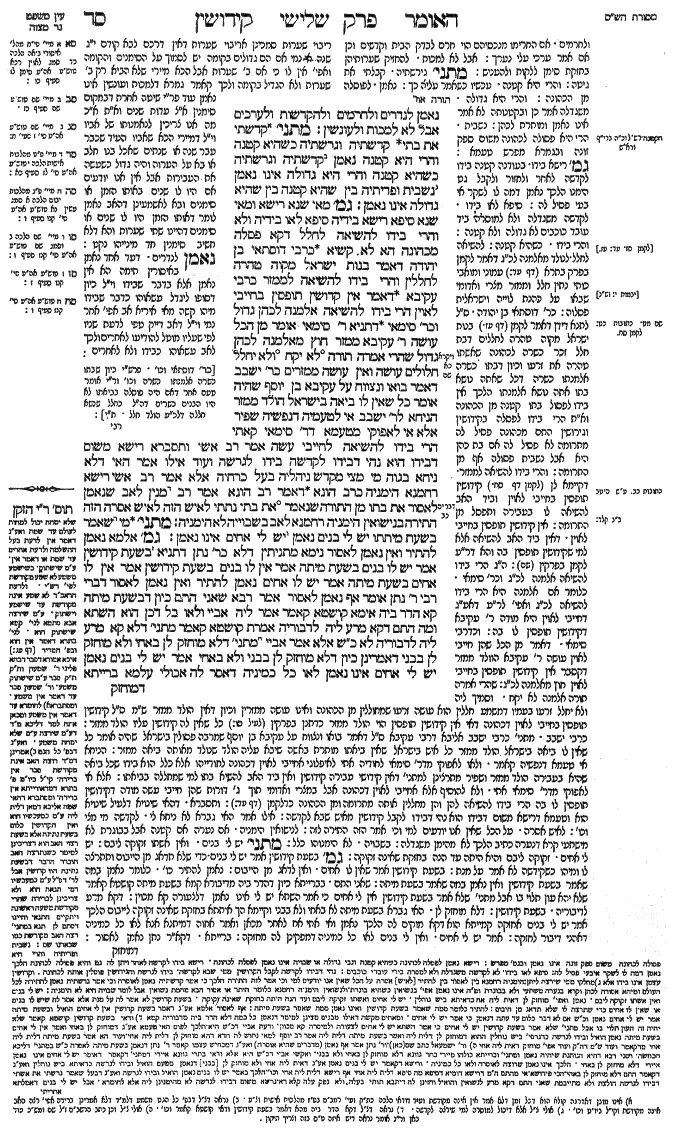
Kiddushin 64a - Guemara
נאמן לנדרים ולחרמים ולהקדשות ולערכים אבל לא למכות ולעונשין מתני׳ קדשתי את בתי קדשתיה וגרשתיה כשהיא קטנה והרי היא קטנה נאמן קדשתיה וגרשתיה כשהיא קטנה והרי היא גדולה אינו נאמן נשבית ופדיתיה בין שהיא קטנה בין שהיא גדולה אינו נאמן גמ׳ מאי שנא רישא ומאי שנא סיפא רישא בידיה סיפא לאו בידיה ולא והרי בידו להשיאה לחלל דקא פסלה מכהונה הא לא קשיא כרבי דוסתאי בן יהודה דאמר בנות ישראל מקוה טהרה לחללין והרי בידו להשיאה לממזר כרבי עקיבא דאמר אין קדושין תופסין בחייבי לאוין הרי בידו להשיאה אלמנה לכהן גדול וכר' סימאי דתניא ר' סימאי אומר מן הכל עושה ר' עקיבא ממזר חוץ מאלמנה לכהן גדול שהרי אמרה תורה (ויקרא כא, ז) לא יקח (ויקרא כא, ו) ולא יחלל חלולים עושה ואין עושה ממזרים כר' ישבב דאמר בואו ונצווח על עקיבא בן יוסף שהיה אומר כל שאין לו ביאה בישראל הולד ממזר הניחא לר' ישבב אי לטעמיה דנפשיה שפיר אלא אי לאפוקי מטעמא דר' סימאי קאתי הרי בידו להשיאה לחייבי עשה אמר רב אשי ותסברא רישא משום דבידו הוא נהי דבידו לקדשה בידו לגרשה ועוד אילו אמר האי דלא ניחא בגוה מי מצי מקדש ניהליה בעל כרחיה אלא אמר רב אשי רישא רחמנא הימניה כרב הונא דאמר רב הונא אמר רב מנין לאב שנאמן לאסור את בתו מן התורה שנאמר (דברים כב, טז) את בתי נתתי לאיש הזה לאיש אסרה הזה התירה בנישואין הימניה רחמנא לאב בשבוייה לא הימניה מתני׳ מי שאמר בשעת מיתתו יש לי בנים נאמן יש לי אחים אינו נאמן גמ׳ אלמא נאמן להתיר ואין נאמן לאסור נימא מתניתין דלא כר' נתן דתניא בשעת קידושין אמר יש לו בנים בשעת מיתה אמר אין לו בנים בשעת קידושין אמר אין לו אחים בשעת מיתה אמר יש לו אחים נאמן להתיר ואין נאמן לאסור דברי רבי ר' נתן אומר אף נאמן לאסור אמר רבא שאני התם כיון דבשעת מיתה קא הדר ביה אימא קושטא קאמר אמר ליה אביי ולאו כל דכן הוא השתא ומה התם דקא מרע ליה לדבוריה אמרת קושטא קאמר מתני' דלא קא מרע ליה לדבוריה לא כ"ש אלא אמר אביי מתני' דלא מוחזק לן באחי ולא מוחזק לן בבני דאמרינן כיון דלא מוחזק לן בבני ולא באחי אמר יש לי בנים נאמן יש לי אחים אינו נאמן לאו כל כמיניה דאסר לה אכולי עלמא ברייתא
Comments from Rashi on Masechet Kiddushin Page 64a
ולחרמים . אם החרימו מנכסיהם הוי חרם לבדק הבית וקדשים וכן אם אמר ערכי עלי נערך: אבל לא למכות . להחזיק שערותיהן בחזקת סימן ללקות ולהעניש: מתני' גירשתיה . קבלתי את גיטה: והרי היא קטנה . עכשיו כשאמר עליה כך: נאמן . לפוסלה מן הכהונה: והרי היא גדולה . משגדלה אמר כן ובקטנותה לא אמר אינו נאמן ומותרת לכהן: נשבית . הרי היא פסולה לכהונה משום ספק זונה ובגמרא מפרש טעמא: גמ' רישא בידו . בעודנה קטנה בידו לקדשה לאחר ולחזור ולקבל גט הימנו הלכך נאמן דמה לו לשקר אי בעי פסיל לה: גמ' רישא בידו . בעודנה קטנה בידו לקדשה לאחר ולחזור ולקבל גט הימנו הלכך נאמן דמה לו לשקר אי בעי פסיל לה: סיפא לאו בידו . לקדשה משגדלה ולא למוסרה ביד עובד כוכבים לא גדולה ולא קטנה: והרי בידו . כשהיא קטנה: להשיאה לחלל . לנולד מאלמנה לכ"ג דאמר לקמן בפרק בתרא (קידושין דף עד:) עמוני ומואבי כותי נתין חלל וממזר מצרי ואדומי שבאו על כהנת לוייה וישראלית פסלוה: כר' דוסתאי בן יהודה . ס"ל לתנא דידן דאמר לקמן (קידושין דף עז.) בנות ישראל מקוה טהרה לחללים דבת חלל זכר כשרה לכהונה שאשתו טהרה את זרעו וכיון דבתו כשרה אלמנתו כשרה דכל שאתה נושא בתו אתה נושא אלמנתו הלכך אין בידו לפסול בתו קטנה מן הכהונה וא"ת הרי בידו לפסלה בקידושין וגירושין התם מכהונה פסיל לה מתרומה לא פסיל לה אם בת כהן היא אבל נשבית פסולה אף מן התרומה: שהרי אמרה תורה אלמנה לא יקח . וסמיך ליה ולא יחלל זרעו בעמיו דמשמע חללין הוא עושה זרעו שמחוללין מן הכהונה ואינו עושה ממזרין וכיון דאין הולד ממזר ש"מ ס"ל קידושין תופסין בחייבי לאוין דכהונה דאי אין קידושין תופסין הוי הולד ממזר כדתנן בפרקין (לעיל קידושין סו:) כל שאין לה קידושין עליו הולד ממזר: הניחא אי טעמא דנפשיה קאמר . ולאו לאפוקי מדר' סימאי לחודיה אתי לאיפלוגי אחייבי לאוין דכהונה לחודייהו אלא כלל הוא בידו שכל ביאה שהיא בעבירה הולד ממזר ושפיר מתרצינן למתני' דאין קידושי עבירה קידושין ואין ביד האב להשיא בתו למי שמחללה בביאתו: אילו אמר האי גברא לא ניחא לי . לקדשה מי מצי וכו': והרי בידו להשיאה לממזר . דקיימא לן (לקמן קידושין דף סח.) קידושין תופסין בחייבי לאוין וביד האב להשיאה לו בעבירה ותפסל מן התרומה: אין קידושין תופסין בחייבי לאוין . דאין ביד האב להשיאה אלא למי שקידושין תופסין בה והא דר"ע לקמן בפרקין (שם): ה"ג הרי בידו להשיאה אלמנה לכ"ג וכר' סימאי . כלומר אם אלמנה היא הרי בידו להשיאה לכ"ג ואפי' לר"ע דאע"ג דחייבי לאוין היא מודה ר' עקיבא דקידושין תופסין לו בה: וכדרבי סימאי . דאמר מן הכל שהן חייבי לאוין עושה ר' עקיבא הוולד ממזר דקסבר אין קידושין תופסין בחייבי לאוין חוץ מאלמנה לכ"ג: שהרי אמרה תורה אלמנה לא יקח . וסמיך ליה ולא יחלל זרעו בעמיו דמשמע חללין הוא עושה זרעו שמחוללין מן הכהונה ואינו עושה ממזרין וכיון דאין הולד ממזר ש"מ ס"ל קידושין תופסין בחייבי לאוין דכהונה דאי אין קידושין תופסין הוי הולד ממזר כדתנן בפרקין (לעיל קידושין סו:) כל שאין לה קידושין עליו הולד ממזר: כרבי ישבב . מתני' כרבי ישבב אליבא דרבי עקיבא ס"ל דאמר בואו ונצווח על עקיבא בן יוסף שמרבה פסולין בישראל שהיה אומר כל שאין לו ביאה בישראל הולד ממזר כל איש בישראל שאין ביאתו מותרת באשה שיבא עליה הולד שנולד מאותה ביאה ממזר: הניחא אי טעמא דנפשיה קאמר . ולאו לאפוקי מדר' סימאי לחודיה אתי לאיפלוגי אחייבי לאוין דכהונה לחודייהו אלא כלל הוא בידו שכל ביאה שהיא בעבירה הולד ממזר ושפיר מתרצינן למתני' דאין קידושי עבירה קידושין ואין ביד האב להשיא בתו למי שמחללה בביאתו: אלא אי לאפוקי מדר' סימאי אתי . ולא להוסיף אלא אחייבי לאוין דכהונה אבל במצרי ואדומי תוך ג' דורות שהן חייבי עשה מודה דקידושין תופסין לו בה הרי בידו להשיאה להן והן מחללין אותה מתרומה ומן הכהונה כדלקמן (קידושין דף עד:): ותסברא . דהאי שינויא דלעיל שינויא הוא וטעמא דרישא משום דבידו הוא נהי דבידו לקבל קידושין מאיש שבא לקדשה: אילו אמר האי גברא לא ניחא לי . לקדשה מי מצי וכו': לאיש אסרה . על הכל שאין אנו יודעים למי וכי אמר הזה התירה לזה: לנישואין הימניה . אם נערה אם קטנה אבל בבוגרת לא מישתעי קרא דנערה כתיב הלכך לא מהימן משגדלה: בשבויה . לא הימנוהו כלל: מתני' יש לי בנים . ואין אשתו זקוקה ליבם: יש לי אחים . זקוקה ליבם והיא היתה עד הנה בחזקת שאינה זקוקה: גמ' בשעת קידושין אמר יש לי בנים . כדי שלא תדאג מן הייבום ותתרצה לו ומיהו כשקידשה לא אמר על מנת: גמ' בשעת קידושין אמר יש לי בנים . כדי שלא תדאג מן הייבום ותתרצה לו ומיהו כשקידשה לא אמר על מנת: בשעת קידושין אמר שאין לו אחים . ואין לדאג מן הייבום: נאמן להתיר כו' . כלומר נאמן במה שאמר בשעת קידושין ואין נאמן במה שאמר בשעת מיתה: שאני התם . בברייתא כיון דהדר ביה מדיבורא קמא בשעת מיתה קושטא קאמר שלא יהא עון תלוי בו אבל מתני' שלא אמר בשעת קידושין אין לי אחים כי אמר השתא יש לי אינו נאמן דלצעורה קא מכוין: דקא מרע לדיבוריה . בשעת קידושין: דלא מוחזק לן . האי גברא בשעת מיתה לא באחי ולא בבני וקיימא הך איתתא בחזקת שאינה זקוקה לייבום הלכך אמר יש לי בנים אחזקה קמייתא הוא דקא מוקים לה הלכך נאמן ואי אתי אח לאחר מכאן ואמר אחוה דמיתנא אנא לאו כל כמיניה דאהני דיבור לחזקה: אמר יש לי אחים . ואין לי בנים לאו כל כמיניה דמפקינן לה מחזקה: ברייתא . דקא"ר נתן נאמן לאסור:
Comments from Tosafot - Kiddushin 64a
נאמן לנדרים . דעד אחד נאמן באיסורין תימה הא אין נאמן אלא בדבר שבידו וי"ל כיון דסופו ליגדל עשאוהו כדבר שבידו מיהו קשה מאי איריא אב אפי' אחר נמי וי"ל דאב דייק טפי לדעת שניו לפי שעליו מוטל להודיעו לאחרים ולכך לאב עשאוהו כבידו ולא לאחרים: [כר' דוסתאי וכו' . פרש"י כיון שבתו כשרה אלמנתו כשרה וכו' ור"י אומר טעם אחר דאם היה פוסלה בביאתו לא היו הבנים כשרים דה"ל כחלל שנשא חללה דלכ"ע הולד חלל. ת"י]:
Kiddushin 64a - Mishnah translated into english
the father is deemed credible concerning the ages of his children with regard to vows, i.e., any vow they make is valid; and with regard to dedications, i.e., if they consecrate an item by saying it should be dedicated to God; and with regard to consecrations and with regard to valuations, i.e., vows to donate to the Temple treasury the fixed valuation of oneself or others. In all these cases their vows are valid. But the father is not deemed credible with regard to lashes of the court, or with regard to other corporal punishments for transgressions they have committed, as the testimony of one witness, especially that of a family member, is insufficient for this purpose.
MISHNA: If a father says: I betrothed my minor daughter to someone, or: I betrothed her to someone and accepted her divorce when she was a minor girl, and she is still a minor girl at the time of this statement, he is deemed credible to render her forbidden to all other men as a married woman, or to a priest as a divorced woman. But if he says: I betrothed her to someone and accepted her divorce when she was a minor, and she is an adult woman at the time of his declaration, his statement is not deemed credible. Likewise, if he says: She was taken captive and I redeemed her, he is not deemed credible to disqualify her from marrying a priest whether she was a minor girl or an adult woman.
GEMARA: The Gemara asks: What is different in the first clause of the mishna and what is different in the latter clause? Why is the father deemed credible when she is a minor but not when she is an adult or to testify that she was taken captive? The Gemara answers: In the first clause it is still in his power to betroth her, and therefore he is deemed credible when he says that he did so earlier. By contrast, in the latter clause it is not in his power to betroth her, as one cannot betroth his adult daughter. Likewise, as it is not permitted for him to disqualify her by handing her over to a gentile, either when she is a minor or when she is an adult, he is not deemed credible when he says that she was taken captive.
The Gemara asks: But does a father not have the power to disqualify his daughter? But it is in his power to marry off his minor daughter to a ḥalal, i.e., the son of a priest who married a woman prohibited to him, which thereby disqualifies her from marrying into the priesthood. The father should therefore be deemed credible when he claims that she was taken captive.
The Gemara responds: This is not difficult, as one can say that the mishna is in accordance with the opinion of Rabbi Dostai ben Yehuda, who says: The daughters of Israelites are a ritual bath of purity for individuals of ḥalal status. In other words, an Israelite woman who marries a ḥalal purifies their children, i.e., renders their children fit, in that any daughter born to them is qualified to marry a priest. Similarly, the woman herself does not become disqualified by her intercourse with the ḥalal, and she may marry a priest if her husband dies. If so, a father does not have the power to disqualify his daughter from marrying into the priesthood.
The Gemara challenges: But it is in the father’s power to marry her off to a mamzer, thereby disqualifying her from the priesthood. The Gemara answers: This tanna holds in accordance with the opinion of Rabbi Akiva, who says: Betrothal does not take effect even with those women with whom one is only liable for violating a prohibition of engaging in intercourse and not a more severe prohibition that would render one liable for karet or capital punishment, so betrothal does not take effect with a mamzer.
The Gemara further challenges: But it is in the father’s power to marry her off as a widow to a High Priest, and this is in accordance with the opinion of Rabbi Simai, as it is taught in a baraita that Rabbi Simai says: In all cases Rabbi Akiva deems the child a mamzer, i.e., he considers the offspring of all forbidden acts of intercourse to be mamzerim, apart from a widow to a High Priest, as the Torah stated with regard to a High Priest: “A widow…shall he not take…and he shall not profane [yeḥallel] his seed” (Leviticus 21:14–15). From this verse it is derived: He renders his children ḥalalim by means of this relationship, but he does not render them mamzerim. Since this act of intercourse does not produce mamzerim, Rabbi Akiva agrees that betrothal is effective in this case.
The Gemara answers: The tanna of the mishna holds in accordance with the opinion of Rabbi Yeshevav, who says: Come, let us shout at Akiva ben Yosef, who would say: In every case where a Jew may not engage in intercourse with a particular woman, and he does so, the offspring that results from this union is a mamzer. This indicates that according to Rabbi Akiva all acts of forbidden intercourse produce mamzerim. Consequently, betrothal is of no effect in the case of any prohibition, including a widow to a High Priest, which means that a father cannot disqualify his daughter from the priesthood.
The Gemara asks: This mishna can work out well even according to the opinion of Rabbi Yeshevav if he states a reasoning of his own, i.e., he states an independent statement critical of Rabbi Akiva’s ruling that the child of any illicit union is a mamzer. Then, the ruling of the mishna is well, as it is a categorical statement that applies to all illicit unions. But if he comes to exclude the reason of Rabbi Simai, i.e., he means to take issue with the ruling of Rabbi Akiva in the specific case mentioned by Rabbi Simai, that of a widow to a High Priest, then Rabbi Yeshevav too concedes that according to the opinion of Rabbi Akiva, betrothal does take effect in a case where a positive mitzva is violated by the betrothal. Accordingly, it is in the father’s power to marry her to those with whom intercourse renders them liable for the violation of positive mitzvot, as Rabbi Akiva’s principle does not include cases of this kind.
Rav Ashi says: And how can you understand it that way? Can it be that the reason for the halakha in the first clause of the mishna is because it is in his power? Although it is in his power to betroth her, is it in his power to divorce her? And furthermore, if this one, the prospective husband, says that it is not satisfactory for him to betroth her, can her father betroth her to him against his will? A father cannot betroth his daughter to whomever he chooses without taking the man’s wishes into account.
Rather, Rav Ashi says: In the first clause of the mishna, the reason is that the Merciful One believes him, in accordance with the opinion of Rav Huna, as Rav Huna says that Rav says: From where is it derived that a father is deemed credible to render his daughter forbidden as a betrothed woman by Torah law? As it is stated: “I gave my daughter to this man [la’ish hazzeh]” (Deuteronomy 22:16). When the father said that he married her to “the man [la’ish],” he rendered her forbidden to all men. When he then said “this [hazzeh],” he rendered her permitted to this specific man, her husband.
Rav Ashi explains the ruling of the mishna: The Merciful One deems the father credible with regard to marriage, whereas He does not deem him credible with regard to a captive. The Torah did not grant a father any special credibility with regard to the claim that his daughter was taken captive.
MISHNA: With regard to one who said at the time of his death: I have children, in which case his wife does not require levirate marriage after his death, he is deemed credible. But if he said on his deathbed: I have brothers, indicating that it is prohibited for her to marry anyone else until one of his brothers performs ḥalitza with her after his death, he is not deemed credible.
GEMARA: Apparently, one can infer from the mishna that a husband is deemed credible to render his wife permitted but he is not deemed credible to render her forbidden. The Gemara suggests: Shall we say that the mishna is not in accordance with the opinion of Rabbi Natan?
As it is taught in a baraita: If someone said at the time of his betrothal that he has children, but at the time of his death he said that he does not have children; or if he said at the time of betrothal that he does not have brothers, and at the time of death he said he has brothers, in both cases he is deemed credible to render her permitted, i.e., to release her from the obligation of levirate marriage on the basis of his first statement, but he is not deemed credible to render her forbidden based on his last claim. This is the statement of Rabbi Yehuda HaNasi. Rabbi Natan says: He is deemed credible even to render her forbidden.
Rava says: There, in the baraita, it is different, since at the time of his death he retracted his initial statement. Therefore, one can say that it is likely that he spoke the truth. In general, however, he is not deemed credible to render her forbidden. Abaye said to him: And isn’t it all the more so that he should be deemed credible in this case? Abaye elaborates: Now consider, if there, where he weakens his previous statement, as he now says the opposite of his earlier claim, nevertheless you say that he spoke the truth, in the case of the mishna, where he does not weaken his earlier statement, as he had issued no prior claim about having or lacking children or brothers, is it not all the more so that he should be deemed credible?
Rather, Abaye said: The mishna is referring to a case where we do not have a presumptive status with regard to possible brothers of his, and likewise we do not have a presumptive status with regard to his children. The court has no prior knowledge as to whether the dying man has brothers or children. As we say: Since we do not have presumptive status with regard to either children or brothers, if he said: I have children, he is deemed credible, whereas if he said: I have brothers, he is not deemed credible. Why? It is not in his power to render her forbidden to everyone, counter to the presumption that he has no brothers. By contrast, the baraita is referring to
Traduction : The William Davidson digital edition of the Koren Noé Talmud, with commentary by Rabbi Adin Even-Israel Steinsaltz.