 Talmud Bavli
The learning on the whole site is dedicated : L'ilui Nishmat אסתר בת חיים
The learning on the whole site is dedicated : L'ilui Nishmat Rav Chlomo Ben Jamilla
The learning on the whole site is dedicated : L'ilui Nishmat Amram ben Itshak Loubaton
Kiddushin 58a : Youtube
Daf TubeYoutube
2 video classes :
Kiddushin Page 58a
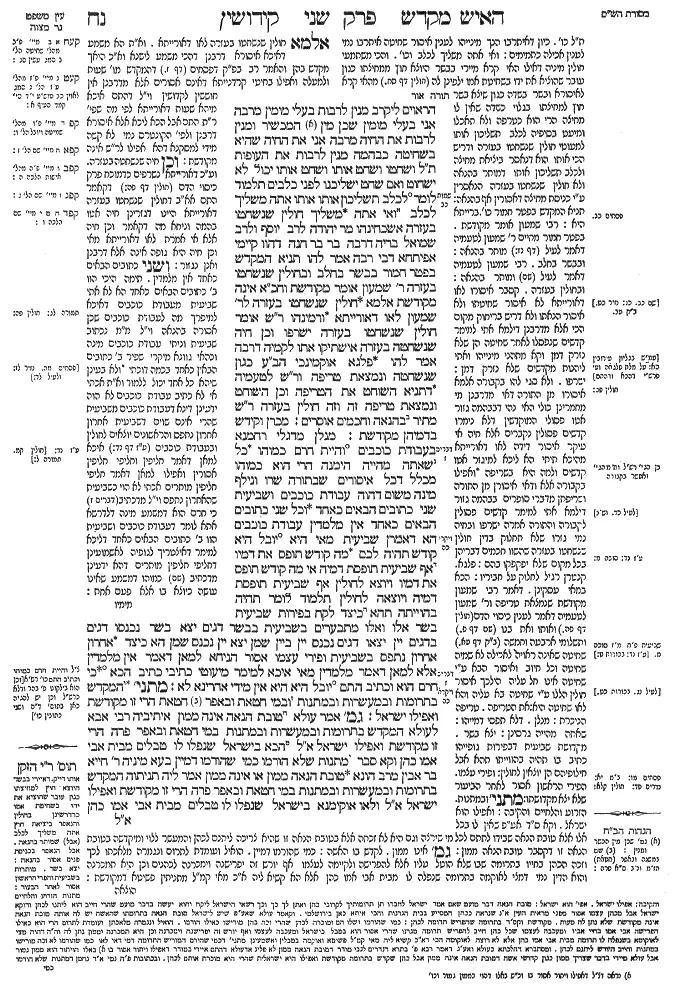
Kiddushin 58a - Guemara
הראוים ליקרב מנין לרבות בעלי מומין מרבה אני בעלי מומין שכן מין המכשיר ומנין לרבות את החיה מרבה אני את החיה שהיא בשחיטה כבהמה מנין לרבות את העופות ת"ל ושחטו ושחט אותו ושחט אותו יכול לא ישחוט ואם שחט ישליכנו לפני כלבים תלמוד לומר (שמות כב, ל) לכלב תשליכון אותו אותו אתה משליך לכלב ואי אתה משליך חולין שנשחטו בעזרה אשכחינהו מר יהודה לרב יוסף ולרב שמואל בריה דרבה בר בר חנה דהוו קיימי אפיתחא דבי רבה אמר להו תניא המקדש בפטר חמור בבשר בחלב ובחולין שנשחטו בעזרה ר' שמעון אומר מקודשת וחכ"א אינה מקודשת אלמא חולין שנשחטו בעזרה לר' שמעון לאו דאורייתא ורמינהו ר"ש אומר חולין שנשחטו בעזרה ישרפו וכן חיה שנשחטה בעזרה אישתיקו אתו לקמיה דרבה אמר להו פלגא אוקמינכי הב"ע כגון שנשחטה ונמצאת טריפה ור"ש לטעמיה דתניא השוחט את הטריפה וכן השוחט ונמצאת טריפה זה וזה חולין בעזרה ר"ש מתיר בהנאה וחכמים אוסרים מכרן וקידש בדמיהן מקודשת מנלן מדגלי רחמנא בעבודת כוכבים (דברים ז, כו) והיית חרם כמוהו כל שאתה מהייה הימנה הרי הוא כמוהו מכלל דכל איסורים שבתורה שרו ונילף מינה משום דהוה עבודת כוכבים ושביעית שני כתובים הבאים כאחד וכל שני כתובים הבאים כאחד אין מלמדין עבודת כוכבים הא דאמרן שביעית מאי היא (ויקרא כה, יב) יובל היא קודש תהיה לכם מה קודש תופס את דמיו אף שביעית תופסת דמיה אי מה קודש תופס את דמיו ויוצא לחולין אף שביעית תופסת דמיה ויוצאה לחולין תלמוד לומר תהיה בהוייתה תהא כיצד לקח בפירות שביעית בשר אלו ואלו מתבערים בשביעית בבשר דגים יצא בשר נכנסו דגים בדגים יין יצאו דגים נכנס יין ביין שמן יצא יין נכנס שמן הא כיצד אחרון אחרון נתפס בשביעית ופירי עצמו אסור הניחא למאן דאמר אין מלמדין אלא למאן דאמר מלמדין מאי איכא למימר מיעוטי כתיבי כתיב הכא (דברים ז, כו) כי חרם הוא וכתיב התם (ויקרא כה, יא) יובל היא היא אין מידי אחרינא לא מתני׳ המקדש בתרומות ובמעשרות ובמתנות ובמי חטאת ובאפר חטאת הרי זו מקודשת ואפילו ישראל גמ׳ אמר עולא טובת הנאה אינה ממון איתיביה רבי אבא לעולא המקדש בתרומות ובמעשרות ובמתנות במי חטאת ובאפר פרה הרי זו מקודשת ואפילו ישראל א"ל הכא בישראל שנפלו לו טבלים מבית אבי אמו כהן וקא סבר מתנות שלא הורמו כמי שהורמו דמיין בעא מיניה ר' חייא בר אבין מרב הונא טובת הנאה ממון או אינה ממון אמר ליה תניתוה המקדש בתרומות ובמעשרות ובמתנות במי חטאת ובאפר פרה הרי זו מקודשת ואפילו ישראל א"ל ולאו אוקימנא בישראל שנפלו לו טבלים מבית אבי אמו כהן
Comments from Rashi on Masechet Kiddushin Page 58a
ת"ל כו' . כיון דאיתרבו הנך מינייהו לענין איסור שחיטה איתרבו נמי לענין אכילה כתמימים: ואי אתה משליך לכלב וכו' . והכי משתמעי חולין מיניה דאילו האי קרא מיירי בבשר היוצא חוץ ממחיצתו כגון עובר שהוציא את ידו בשחיטת אמו ילפינן לה (חולין דף סח.) מהאי קרא לאיסורא ובשר בשדה כגון שיצא בשר חוץ למחיצתו בגלוי כשדה שאין לו מחיצה הרי הוא כטרפה ולא תאכלו ומיעט בסיפיה לכלב תשליכון אותו למעוטי חולין שנשחטו בעזרה ודריש הכי אותו הוא דנאסר ביציאת מחיצה ולכלב תשליכון אותו דמותר בהנאה ולא חולין שנשחטו בעזרה הנאסרין ע"י כניסת מחיצה דאסורין אף בהנאה: תניא המקדש בפטר חמור כו' . ברייתא היא: רבי שמעון אומר מקודשת . בפטר חמור מחיים ר' שמעון לטעמיה דאמר לעיל (קידושין דף נז:) מותר בהנאה: ובבשר בחלב . רבי שמעון לטעמיה דאמר לעיל (שם) ומותר בהנאה: רבי שמעון אומר מקודשת . בפטר חמור מחיים ר' שמעון לטעמיה דאמר לעיל (קידושין דף נז:) מותר בהנאה: ובחולין בעזרה . קסבר איסורו לאו דאורייתא לא איסור שחיטתו ולא איסור הנאתו ולא דריש בריחוק מקום הכי אלא מדרבנן דילמא אתי למימר קדשים שנפסלו לאחר שחיטה הן שלא נזרק דמן וקא מתהני מינייהו ואתי ליהנות מקדשים שלא נזרק דמן: ישרפו . ולא סגי להו בקבורה אלמא איסורו מן התורה דאי מדרבנן מי מחמרינן כולי האי נהי דבבהמה גזור אטו פסולי המוקדשין דלא נימרו קדשים פסולין נקברים אלא חיה אי עיקר איסור דידה לאו דאורייתא מהיכא תיתי הא ליכא למיגזר אטו קדשים ולמה היא בשריפה ואפילו בקבורה אלא ודאי איסורן מן התורה ושריפתן מדברי סופרים בבהמה גזור דילמא אתי למימר קדשים פסולין לקבורה והתורה אמרה ישרפו ובחיה נמי גזרו שלא תחלוק בדין חולין שנשחטו בעזרה שהשוו חכמים דבריהן בכל מקום שלא יפקפקו בהם: פלגא . קנטרן רגיל לחלוק על חביריו: הכא במאי עסקינן . דאמר רבי שמעון מקודשת שנמצאת טריפה ור' שמעון לטעמיה דאמר לענין כיסוי הדם (חולין דף פה.) ואותו ואת בנו (שם דף פ.) ותשלומי ארבעה וחמשה (ב"ק דף עא.) שחיטה שאינה ראויה לאכילה לא שמיה שחיטה וכל חיוב ואיסור הבא ע"י שחיטה אינו חל עליה הילכך איסור חולין הללו ע"י שחיטה בא עליה והא לאו שחיטה היא: ובחולין בעזרה . קסבר איסורו לאו דאורייתא לא איסור שחיטתו ולא איסור הנאתו ולא דריש בריחוק מקום הכי אלא מדרבנן דילמא אתי למימר קדשים שנפסלו לאחר שחיטה הן שלא נזרק דמן וקא מתהני מינייהו ואתי ליהנות מקדשים שלא נזרק דמן: את הטריפה . טריפה הניכרת: מנלן . דלא תפסי דמייהו: שאתה מהייה גרסינן: יצא בשר . מקדושת שביעית דבפירות גופייהו כתיב בו תהיה בהווייתו תהא אבל חילופיהם הן יוצאין לחולין: ופירי עצמו . הפירי הראשון אסור לאחר הביעור שלא יצא מקדושתו: מתני' ובמתנות . הזרוע והלחיים והקיבה: ואפילו הוא ישראל . וקא ס"ד אע"פ שאין לו בכל אלו אלא טובת הנאה שבידו לתתם לכל מי שירצה וגם היא לא זכתה אלא בטובת הנאה זו שהיא צריכה ליתנם לכהן והמעשר ללוי ומיקדשה בטובת הנאה זו דקסבר טובת הנאה ממון: גמ' אינו ממון . לקדש בו האשה: גמ' אינו ממון . לקדש בו האשה: כמי שהורמו דמיין . הואיל ועומדת לתרום ונגמרה מלאכתו לכך וזכה הכהן בחייו בתרומה שבו שלא הוטל עליו אלא להפרישה ולקיימה לעצמו אף יורש זה יפרישנה וימכרנה לכהנים וכן היא תמכרנה והוא הדין נמי דמצי לאוקמה בתרומה שנפלה לו מבית אבי אמו כהן אלא הא קשיא ליה א"כ מאי קמ"ל מתניתין פשיטא דמקודשת:
Comments from Tosafot - Kiddushin 58a
אלמא חולין שנשחטו בעזרה לאו דאורייתא . וא"ת הא משמע דאיכא איסורא דרבנן דהכי משמע לישנא וא"כ היאך מקדש בהן והאמר רב בפ"ק דפסחים (דף ז.) דהמקדש מו' שעות ולמעלה ואפילו בחיטי קרדנייתא דאינם אסורים אלא מדרבנן אין חוששין לקדושין וי"ל דהתם איכא מיהא שעות דאורייתא לפי מה שפי' ר"ת התם אבל הכא ליכא אלא איסורא דרבנן ולפי' הקונטרס נמי לא קשה מידי למסקנא דהא אפילו לר"ש אינה מקודשת: וכן חיה שנשחטה בעזרה . וע"כ דאורייתא נשרפים כדמוכח פרק כיסוי הדם (חולין דף פה:) דקאמר התם אא"ב דחולין שנשחטו בעזרה דאורייתא היינו דגזרינן חיה אטו בהמה וניחא מה דקאמר וכן חיה אלא אי אמרת לאו דאורייתא מאי וכן חיה היא גופה אינה אלא דרבנן ואנן נגזור: ושני כתובים הבאים כאחד אין מלמדין . תימה היכי הוו ב' כתובים הבאים כאחד הא לא אתי שביעית מעבודת כוכבים דאיכא למיפרך מה לעבודת כוכבים שכן אסורה בהנאה וי"ל מ"מ נכתוב שביעית וניתי עבודת כוכבים מינה וכהאי גוונא מיקרי שפיר ב' כתובים הבאין כאחד בכמה דוכתי ולא בעינן שיהא כל אחד יכול ללמוד וא"ת אכתי אי לא כתיב עבודת כוכבים לא הוה ידעינן דינא דעבודת כוכבים משביעית שהרי אינם שוים דשביעית אחרון אחרון נתפס והראשונים יוצאים לחולין ובעבודת כוכבים (ע"ז דף נד:) איכא למאן דאמר חליפין וחליפי חליפין אסורין ואפילו למאן דאמר חליפי חליפין מותרים אכתי לא הוי כשביעית שהאחרון נתפס וי"ל מדכתיב (דברים ז) כי חרם הוא דמשמע מינה דלדרשא אתא לומר דעבודת כוכבים ושביעית הוו ב' כתובים הבאים כאחד דליכא למימר דאיצטריך לגופיה לאשמועינן דחליפי חליפין מותרים דהא ידעינן מדכתיב (שם) כמוהו דמשמע שאינו עושה כיוצא בו אלא פעם אחת:
Kiddushin 58a - Mishnah translated into english
which are fit to be sacrificed. From where do I know to include blemished animals in this prohibition? I include blemished animals since they are at least of the type that is fit to be sacrificed. And from where do I know to include the undomesticated animal in this prohibition? I include the undomesticated animal since it is rendered fit for consumption by means of slaughtering, like a domesticated animal. From where do I know to include birds, as the Torah does not mention slaughter with regard to birds, in this prohibition? The verse states: “And he slaughters it,” “and he shall slaughter it,” as well as “and he shall slaughter it,” employing the additional term “it” each time. These three verses teach that one may not eat from a non-sacred animal that was slaughtered in the Temple courtyard
The baraita continues: One might have thought that he may not slaughter a non-sacred animal in the Temple courtyard ab initio, but if he did slaughter it, he may cast it before the dogs, i.e., derive benefit from it. The verse states: “Therefore you shall not eat any flesh that is torn of beasts in the field; you shall cast it to the dogs” (Exodus 22:30), which teaches that although one is prohibited from eating the meat of a tereifa, one may derive benefit from it. The word “it” serves to emphasize and exclude: You may cast it, i.e., a tereifa, to the dogs, but you may not cast non-sacred animals that have been slaughtered in the Temple courtyard, as it is prohibited to derive any benefit from them.
The Gemara relates: Mar Yehuda found Rav Yosef and Rav Shmuel, son of Rabba bar bar Ḥana, standing at the entrance of Rabba’s study hall. He said to them: It is taught in a baraita: With regard to one who betroths a woman with a firstborn donkey, with meat cooked in milk, or with non-sacred animals slaughtered in the Temple courtyard, Rabbi Shimon says she is betrothed, and the Rabbis say she is not betrothed. Apparently, according to Rabbi Shimon, the prohibition against deriving benefit from non-sacred animals slaughtered in the Temple courtyard is not by Torah law, which is why the betrothal takes effect.
And Mar Yehuda raises a contradiction against this inference from a different baraita: Rabbi Shimon says: Non-sacred, domesticated, animals slaughtered in the Temple courtyard must be burned, as well as a non-sacred undomesticated animal slaughtered in the Temple courtyard. This indicates that it is prohibited to derive benefit from them. They were silent and had no answer.
They came before Rabba and told him about this difficulty. He said to them: A quarrelsome person has put you up to asking this question. With what are we dealing here in the first baraita? We are dealing with a case where it was slaughtered and found to be a tereifa, and Rabbi Shimon conforms to his standard line of reasoning that an act of slaughter which does not render the animal permitted to be eaten is not called slaughter, so the animal does not have the status of a non-sacred animal slaughtered in the Temple courtyard.
As it is taught in a baraita (Tosefta, Ḥullin 2:4): With regard to one who slaughters a known tereifa, as well as one who slaughters an animal and it was found to be a tereifa, and this and that were non-sacred animals slaughtered in the Temple courtyard, Rabbi Shimon permits one to derive benefit from them, as explained previously. And the Rabbis prohibit one from deriving benefit from them, since they do not distinguish between an act of slaughter that does render the animal permitted to be eaten and one that does not. It is only in a case where the man betrothed her with a tereifa that was slaughtered in the Temple courtyard that Rabbi Shimon says she is betrothed, but not when the animal was not a tereifa.
§ The mishna teaches that if one sold any of the items from which one is prohibited to derive benefit and betrothed a woman with the money received from their sale, she is betrothed. With regard to the possibility of deriving benefit from money received in exchange for items from which benefit is forbidden, the Gemara asks: From where do we derive that this is permitted? The Gemara answers: It is from the fact that the Merciful One reveals in the Torah with regard to an object of idol worship: “And you shall be banned like it” (Deuteronomy 7:26), which teaches that anything that you cause to come from it, i.e., in exchange for it, is like it. It can be understood by inference that with regard to all the other prohibitions of the Torah, monies received for items from which benefit is forbidden are permitted.
The Gemara suggests: But let us derive a general principle concerning other prohibitions from the case of idolatry. The Gemara answers: This derivation is not applied, because an object of idol worship and produce of the Sabbatical Year are two verses that come as one, i.e., to teach the same matter, since both prohibitions also extend to the money obtained for them, and any two verses that come as one do not teach their common aspect to apply to other cases.
The Gemara clarifies: The source indicating that this is true of an object of idol worship is what we said. What is the source indicating that this halakha applies to produce of the Sabbatical Year? The verse states: “It is a Jubilee, it shall be holy to you” (Leviticus 25:12), from which it is derived: Just as consecrated property transfers its sanctity to the money with which it is redeemed, so too, produce of the Sabbatical Year, which has the same status as the Jubilee Year, transfers its sanctity to the money with which it is redeemed. Consequently, money used to acquire the produce of the Sabbatical Year will be subject to the same halakhot as the produce itself.
If so, one could also say that just as with consecrated property, it transfers its sanctity to the money with which it is redeemed and becomes desacralized, so too, produce of the Sabbatical Year should transfer its sanctity to the money with which it is redeemed and becomes desacralized. Nevertheless, the verse states: “Shall be,” meaning: As it is, so it shall be, indicating that the Sabbatical-Year produce does not become desacralized.
The Gemara explains: How so? If one purchased meat with produce of the Sabbatical Year, both these and those, i.e., the meat and the produce, are disposed of in the Sabbatical Year. The sanctity of the Sabbatical Year takes effect with regard to the meat as well. It is treated like the produce, and must be disposed of when the obligation to dispose of the Sabbatical-Year produce goes into effect. If he then purchases fish with this meat, the meat loses its consecrated status, and the fish assumes the consecrated state. If he then purchases wine with these fish, the fish loses its consecrated status and the wine assumes the consecrated state. If he then purchases oil with the wine, the wine loses has its consecrated status and the oil assumes the consecrated state. How so? The final item purchased has the sanctity of the Sabbatical Year transferred to it, and the Sabbatical-Year produce itself remains forbidden.
The Gemara asks: This works out well according to the one who says that any two verses that come as one do not teach their common aspect to apply to other cases. But according to the one who says that they do teach their common aspect to apply to other cases, what can be said? Why is it not learned from these examples that money received from the sale of an item from which benefit is forbidden, is likewise forbidden? The Gemara answers: Expressions of restriction are written in both cases. Here, with regard to idol worship, it is written: “For it is banned” (Deuteronomy 7:26), which indicates only that it is banned, i.e., has its prohibition extend to money received from its sale, while other prohibited items are not. And there, with regard to produce of the Sabbatical Year, it is written: “It is a Jubilee” (Leviticus 25:12), which teaches that with regard to “it,” yes, this halakha applies; but this halakha does not apply to anything else.
MISHNA: With regard to one who betroths a woman with terumot, or with tithes, or with the foreleg, cheeks, and stomach of an animal, which are given as gifts to priests, or with the water of purification, which is sprinkled on an impure person during the purification rite for impurity imparted by a corpse, or with the ashes of purification, which were mixed with the water sprinkled on an impure person during the purification rite for impurity imparted by a corpse, in all of these cases she is betrothed, and this is so even if the man betrothing her is an Israelite, not a priest or a Levite.
GEMARA: Ulla says: The benefit of discretion, i.e., the benefit accrued from the option of giving teruma and tithes to whichever priest or Levite one chooses, does not have monetary value. Rabbi Abba raised an objection to Ulla from the mishna: With regard to one who betroths a woman with terumot, or with tithes, or with gifts, with the water of purification, or with the ashes of the red heifer, she is betrothed, and this is so even if the man betrothing her is an Israelite. This indicates that although an Israelite cannot consume the priestly gifts, he may nevertheless betroth a woman with them, since he possesses the option to give them to the priest or Levite of his choice. That benefit has monetary value, and it is that value that he uses to betroth a woman, who can then give them to whichever priest or Levite she chooses.
Ulla said to him: You have misunderstood the case of the mishna, since here the case is with an Israelite who came into possession of untithed produce as an inheritance from the household of his mother’s father, who was a priest, and the tanna of the mishna holds that gifts that have not been separated are considered as though they have been separated. The untithed produce is not viewed as one entity, but rather is viewed as a mixture of regular produce, teruma, and tithes. This teruma belonged to his grandfather, who was a priest. Since he has inherited this teruma, he has ownership rights to it in addition to the benefit of discretion. While he cannot consume this produce because he is an Israelite, he can sell it to a priest and keep the money. Since it has actual value, it can be used to betroth a woman.
With regard to this issue, Rabbi Ḥiyya bar Avin inquired of Rav Huna: Does the benefit of discretion have monetary value, or does it not have monetary value? Rav Huna said to him: You learned it in the mishna: With regard to one who betroths a woman with terumot, or with tithes, or with gifts, or with the water of purification, or with the ashes of the red heifer, she is betrothed, and this is so even if the man betrothing her is an Israelite. This indicates that the benefit of discretion has monetary value. Rabbi Ḥiyya bar Avin said to him: But didn’t we establish it, in accordance with the opinion of Ulla, as referring to an Israelite who came into possession of untithed produce as an inheritance from the household of his mother’s father, who was a priest?
Traduction : The William Davidson digital edition of the Koren Noé Talmud, with commentary by Rabbi Adin Even-Israel Steinsaltz.