 Talmud Bavli
The learning on the whole site is dedicated : L'ilui Nishmat Jamila bat Chlomo Abensour
The learning on the whole site is dedicated : L'ilui Nishmat Avraham Ben Simha
The learning on the whole site is dedicated : L'ilui Nishmat Rav Chlomo Ben Jamilla
Kiddushin 57a : Youtube
Daf TubeYoutube
2 video classes :
Kiddushin Page 57a
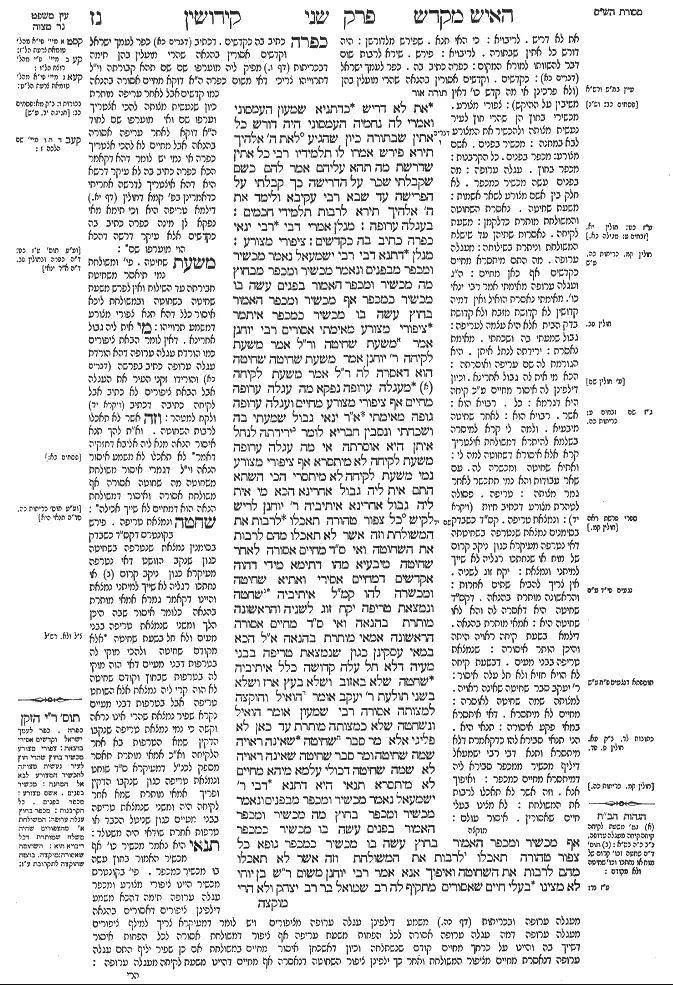
Kiddushin 57a - Guemara
את לא דריש כדתניא שמעון העמסוני ואמרי לה נחמיה העמסוני היה דורש כל אתין שבתורה כיון שהגיע (דברים ו, יג) לאת ה' אלהיך תירא פירש אמרו לו תלמידיו רבי כל אתין שדרשת מה תהא עליהם אמר להם כשם שקבלתי שכר על הדרישה כך קבלתי על הפרישה עד שבא רבי עקיבא ולימד את ה' אלהיך תירא לרבות תלמידי חכמים בעגלה ערופה מנלן אמרי דבי רבי ינאי כפרה כתיב בה כקדשים ציפורי מצורע מנלן דתנא דבי רבי ישמעאל נאמר מכשיר ומכפר מבפנים ונאמר מכשיר ומכפר מבחוץ מה מכשיר ומכפר האמור בפנים עשה בו מכשיר כמכפר אף מכשיר ומכפר האמור בחוץ עשה בו מכשיר כמכפר איתמר ציפורי מצורע מאימתי אסורים רבי יוחנן אמר משעת שחיטה ור"ל אמר משעת לקיחה ר' יוחנן אמר משעת שחיטה שחיטה הוא דאסרה לה ר"ל אמר משעת לקיחה מעגלה ערופה נפקא מה עגלה ערופה מחיים אף ציפורי מצורע מחיים ועגלה ערופה גופה מאימתי א"ר ינאי גבול שמעתי בה ושכחתי ונסבין חבריא לומר ירידתה לנחל איתן היא אוסרתה אי מה עגלה ערופה משעת לקיחה לא מיתסרא אף ציפורי מצורע נמי משעת לקיחה לא מיתסרי הכי השתא התם אית ליה גבול אחרינא הכא מי אית ליה גבול אחרינא איתיביה ר' יוחנן לריש לקיש (דברים יד, יא) כל צפור טהורה תאכלו לרבות את המשולחת וזה אשר לא תאכלו מהם לרבות את השחוטה ואי ס"ד מחיים אסורה לאחר שחיטה מיבעיא מהו דתימא מידי דהוה אקדשים דמחיים אסירי ואתיא שחיטה ומכשרה להו קמ"ל איתיביה שחטה ונמצאת טריפה יקח זוג לשניה והראשונה מותרת בהנאה ואי ס"ד מחיים אסורה הראשונה אמאי מותרת בהנאה א"ל הכא במאי עסקינן כגון שנמצאת טריפה בבני מעיה דלא חל עלה קדושה כלל איתיביה שחטה שלא באזוב ושלא בעץ ארז ושלא בשני תולעת ר' יעקב אומר הואיל והוקצה למצותה אסורה רבי שמעון אומר הואיל ונשחטה שלא כמצותה מותרת עד כאן לא פליגי אלא מר סבר שחיטה שאינה ראויה שמה שחיטה ומר סבר שחיטה שאינה ראויה לא שמה שחיטה דכולי עלמא מיהא מחיים לא מיתסרא תנאי היא דתנא דבי ר' ישמעאל נאמר מכשיר ומכפר מבפנים ונאמר מכשיר ומכפר בחוץ מה מכשיר ומכפר האמור בפנים עשה בו מכשיר כמכפר אף מכשיר ומכפר האמור בחוץ עשה בו מכשיר כמכפר גופא כל צפור טהורה תאכלו לרבות את המשולחת וזה אשר לא תאכלו מהם לרבות את השחוטה ואיפוך אנא אמר רבי יוחנן משום ר"ש בן יוחי לא מצינו בעלי חיים שאסורים מתקיף לה רב שמואל בר רב יצחק ולא הרי
Comments from Rashi on Masechet Kiddushin Page 57a
את לא דריש . לריבויא: כי האי תנא . שפירש מלדורשן: היה דורש כל אתין שבתורה . לריבויא: פירש . שירא לרבות שום דבר להשוותו למורא המקום: ה"ג ועגלה ערופה מאימתי אמר רבי ינאי כו' . מאימתי נאסרת הואיל ואין דמיה קדושין לא קדושת מזבח ולא קדושת בדק הבית אלא היא עצמה לעריפה: כפרה כתיב בה . כפר לעמך ישראל (דברים כא): כקדשים . וקדשים אסורין בהנאה שהרי מועלין בהן (ולא פרכינן אי מה קדש כו' דאין משיבין על ההיקש): צפורי מצורע . מכשירי בחוץ הן שהרי חוץ לעיר נעשית מצותה ולהכשיר את המצורע לבא במחנה: מכשיר בפנים . אשם מצורע: מכפר בפנים . כל הקרבנות: מכפר בחוץ . עגלה ערופה: מה בפנים עשה מכשיר כמכפר . לא חלק בין אשם מצורע לשאר אשמות: משעת שחיטה . נאסרת השחוטה והמשולחת מותרת כדלקמן: משעת לקיחה . נאסרות שתיהן עד שישלח המשולחת וניתרת בשילוחה: מעגלה ערופה . מה התם מיתסרא מחיים כקדשים אף כאן מחיים: ה"ג ועגלה ערופה מאימתי אמר רבי ינאי כו' . מאימתי נאסרת הואיל ואין דמיה קדושין לא קדושת מזבח ולא קדושת בדק הבית אלא היא עצמה לעריפה: גבול שמעתי בה ושכחתי . מאימת נאסרת: ירידתה לנחל איתן . היא הגורמת לה שם עריפה ואוסרתה: הכא מי אית לה גבול אחרינא . וכיון דילפינן לה איסור מחיים ע"כ קיחה היא דגרמא: כל . רבויא הוא: אשר . רבויא הוא: לאחר שחיטה מיבעיא . ולמה לי קרא למיסרה בשלמא להיתרא דמשולחת איצטריך קרא אלא איסורא דשחוטה למה לי: ואתיא שחיטה ומכשרה לה . עם שאר עבודות והא נמי תתכשר לאחר גמר מצותה: טריפה . פסולה לטהרת מצורע דכתיב חיות (ויקרא יד): ונמצאת טריפה . קס"ד כשבדק בסימנים נמצאת שנטרפה בשחיטתה דאי נטרפה מעיקרא כגון ניקב קרום של מוח או שנחתכו רגליה לא שייך למיתני ונמצאת: יקח זוג לשניה . אין צריך להביא שתים אחרות: והראשונה מותרת בהנאה . דקס"ד שחיטה היא דאסרה לה והא לאו שחיטה היא: אמאי מותרת בהנאה . דילמא בשעת קיחה ראויה היתה והיכן הותר איסורה: שנמצאת טריפה בבני מעים . דבשעת קיחה לא הויא חזיא ולא חל עלה איסור: ר' יעקב סבר שחיטה שאינה ראויה . למצותה שמה שחיטה לאוסרה: מחיים לא מיתסרא . דאי איתסרא במאי פקע איסורה: תנאי היא . הני תנאי סבירא להו כדקאמרת דלא מיתסרא ותנא דבי רבי ישמעאל דיליף מכשיר ממכפר סבירא ליה דמיתסרא מחיים כמכפר: מכפר בחוץ . עגלה ערופה: מה בפנים עשה מכשיר כמכפר . לא חלק בין אשם מצורע לשאר אשמות: ואיפוך אנא . וזה אשר לא תאכלו לרבות את המשולחת: לא מצינו בעלי חיים שאסורין . איסור עולם:
Comments from Tosafot - Kiddushin 57a
כפרה כתיב בה כקדשים . דכתיב (דברים כא) כפר לעמך ישראל וקדשים אסורין בהנאה שהרי מועלין בהן תימה דבכריתות (דף ו.) מפיק ליה מוערפו שם שם תהא קבורתה וי"ל דתרוייהו צריכי דאי משום כפרה ה"א דוקא מחיים אסורה בהנאה כמו קדשים אבל לאחר עריפה מותרת כיון שנעשית מצותה להכי אצטריך וערפו שם ואי מוערפו שם לחוד ה"א דוקא לאחר עריפה אסורה בהנאה אבל מחיים לא להכי אצטריך כפרה אי נמי יש לומר דהא דקאמר הכא כפרה כתיב בה לא עיקר דרשא היא דהא איצטריך לדרשה אחריתי כדאמרינן בפ' קמא דחולין (דף יא.) דילמא טריפה היא וכי תימא מאי נפקא לן מינה כפרה כתיב בה כקדשים אלא עיקר דרשה דהכא הוי מוערפו שם.: משעת שחיטה . פי' ומשולחת נמי תיאסר משחיטת חבירתה עד השילוח ואין לפרש משעת שחיטה בשחוטה ובמשולחת ליכא איסור כלל דהא תנא צפורי מצורע דמשמע תרוייהו: מי אית ליה גבול אחרינא . דאין לומר הבאת ציפורים כמו הורדת עגלה ערופה דהא הורדת עגלה ערופה כתיב בפרשה (דברים כא) והורידו זקני העיר את העגלה אבל הבאת ציפורים לא כתיב אבל לקיחה כתיבה דכתיב (ויקרא יד) ולקח למטהר: וזה אשר לא תאכלו לרבות השחוטה . וא"ת להך תנא איסור הנאה מנא ליה אליבא דחזקיה דאמר לא תאכלו לא משמע איסור הנאה וי"ל דגמרי איסור משולחת משחוטה מה שחוטה אסורה אף משולחת אסורה ואיסור דמשולחת הנאה הוא דמחיים לא שייך אכילה: שחטה ונמצאת טריפה . פירש בקונטרס דקס"ד כשבדק בסימנין נמצאת שנטרפה בשחיטה כגון שנקב הוושט דאי נטרפה מעיקרא כגון ניקב קרום או נחתכו רגליה לא שייך למיתני נמצאת והיינו דקאמר גמרא אמאי מותרת בהנאה כלומר איסור שבה היכן הלך ומשני שנמצאת טריפה בבני מעים ולא חל בשעת שחיטה אלא מקודם שחיטה ולהכי מוקי לה בטרפות דבני מעיים דאי הוה מוקי לה בטרפות שבחוץ וקודם שחיטה לא הוה קרי ליה נמצאת אלא השוחט טריפה אבל בטרפות דבני מעיים נקרא שפיר נמצאת שהרי אינו נראה וקשה כי נמי נמצאת טריפה שנקבו הדקין שמא הטרפות בא אחר הלקיחה וא"כ אמאי מותרת תאסר מספק לכנ"ל דמעיקרא ס"ד שוחט ונמצאת טריפה כגון שנקבו הדקין ופריך אמאי מותרת שמא אחר לקיחה היה ומשני שנמצאת טריפה בבני מעיים כגון שניטל הכבד או טרפות אחרת שודאי היה משנולד: תנאי היא נאמר מכשיר כו' אף מכשיר האמור בחוץ עשה בו מכשיר כמכפר. פי' בקונטרס מכשיר היינו ציפורי מצורע ומכפר עגלה ערופה תימה דהכא משמע דילפינן ציפורים דאסורים בהנאה מעגלה ערופה ובכריתות (דף כה.) משמע דילפינן עגלה ערופה מציפורים ויש לומר דמעיקרא צריך למילף ציפורים מעגלה ערופה דמה עגלה ערופה אסורה לכל הפחות משעת עריפה אף ציפור דמשולחת אסורה לכל הפחות איסור דשייך בה והיינו על כרחך מחיים קודם שנשתלחה וכיון דאשכחן איסור מחיים במשולחת אם כן שפיר יליף התם עגלה ערופה דנאסרת מחיים מציפור המשולחת ואחר כך ילפינן ציפור השחוטה דנאסרה אף מחיים דהיינו משעת לקיחה מעגלה ערופה:
Kiddushin 57a - Mishnah translated into english
The Gemara answers: This Sage does not interpret the word “et” as a means to derive new halakhot. He considers the word “et” to be an ordinary part of the sentence structure and not a source for exegetical exposition. As it is taught in a baraita: Shimon HaAmasoni, and some say that it was Neḥemya HaAmasoni, would interpret all occurrences of the word “et” in the Torah, deriving additional halakhot with regard to the particular subject matter. Once he reached the verse: “You shall fear the Lord your God” (Deuteronomy 6:13), which is written with the added word “et,” he withdrew from this method of exposition, as whose fear could be an extension of the fear of God?
His students said to him: Our teacher, what will be with all the occurrences of the word “et” that you interpreted until now? He said to them: Just as I received reward for the exposition, so I received reward for my withdrawal from using this method of exposition. The word “et” in this verse was not explained until Rabbi Akiva came and expounded: “You shall fear the Lord your God”: The word “et” serves to include Torah scholars, i.e., that one is commanded to fear them just as one fears God. In any event, Shimon HaAmasoni no longer derived additional halakhot from the word et.
§ The mishna teaches that if a man betroths a woman with a heifer whose neck is broken, she is not betrothed. The Gemara clarifies: From where do we derive that one is prohibited from deriving benefit from a heifer whose neck is broken? The school of Rabbi Yannai said: An expression of atonement was written with regard to it. The verse: “Atone for Your people Israel” (Deuteronomy 21:8), was written with regard to a heifer whose neck was broken, as was also written with regard to sacrificial animals. Therefore, one is prohibited from deriving benefit from it, just as one may not benefit from an offering.
§ The mishna teaches that if a man betroths a woman with the leper’s birds, she is not betrothed. The Gemara clarifies: From where do we derive that one is prohibited from deriving benefit from a leper’s birds? As the school of Rabbi Yishmael taught: A mitzva that enables is stated in the verses with regard to a leper, and the Torah also discusses a mitzva that atones, both of which are performed inside the Temple. Here, a mitzva that enables is a reference to the leper’s guilt-offering, which enables him to partake of offerings; and a mitzva that atones is a reference to all other offerings. And a mitzva that enables is stated in the verses with regard to a leper, and the Torah also discusses a mitzva that atones, both of which are performed outside the Temple. Here, a mitzva that enables is a reference to the leper’s birds, which permit him to reenter the camp; and a mitzva that atones is a reference to the heifer whose neck is broken, which atones for the inhabitants of the city nearest to an unsolved murder.
Just as in the case of the enabling and atoning rites stated in the Torah that are performed inside the Temple the Torah made the item of the enabling rite, i.e., the leper’s guilt-offering, from which one is prohibited from deriving benefit, like the item of the atoning rite, i.e., offerings in general, so too, in the case of the enabling and atoning rites stated in the Torah that are performed outside the Temple the Torah made the item of the enabling rite, i.e., the leper’s birds, from which one is prohibited from deriving benefit, like the item of the atoning rite, i.e., the heifer whose neck is broken.
It was stated that the amora’im disputed the following issue: From when is one prohibited from deriving benefit from the leper’s birds? Rabbi Yoḥanan says: From the moment of their slaughter; and Reish Lakish says: From the moment they are taken and designated to be a leper’s birds. The Gemara explains their respective opinions: Rabbi Yoḥanan says: From the moment of their slaughter, because it is the slaughter that prohibits them, since they are not consecrated beforehand. Reish Lakish says: From the moment they are taken, since this halakha is derived from the heifer whose neck is broken. Just as one is prohibited from deriving benefit from a heifer whose neck is broken during its lifetime, so too, one is prohibited from deriving benefit from the leper’s birds during their lifetime.
The Gemara asks: And with regard to it, the heifer whose neck is broken, itself, from when is it a forbidden item? Rabbi Yannai said: I heard the boundary, i.e., stage, beyond which it is forbidden, but I have forgotten what it is. But the group of scholars were inclined to say that its descent to a hard valley, where its neck is broken, is the action that renders it forbidden. The Gemara asks: If so, just as with a heifer whose neck is broken, it is not forbidden from the moment it is taken but only afterward, so too, the leper’s birds should also not be forbidden from the moment they are taken. The Gemara rejects this: How can these cases be compared? There, in the case of the heifer, it has another boundary that can render it forbidden, namely its descent to the valley; here, in the case of the leper’s birds, does it have another boundary? It is taken and immediately slaughtered.
Rabbi Yoḥanan raised an objection to Reish Lakish from a baraita: The verse states: “Of all clean birds you may eat” (Deuteronomy 14:11). The superfluous word “all” is stated to include one of the leper’s birds, which is sent away to freedom, while the words: “But these are they of which you shall not eat” (Deuteronomy 14:12), are stated to include in the prohibition the other, slaughtered bird. Rabbi Yoḥanan asks: And if it enters your mind to say that the bird is forbidden from when it is alive, is a verse necessary to teach that it is forbidden after its slaughter? The Gemara answers: The verse is necessary, lest you say: Just as it is in the case of sacrificial animals, where one is prohibited from deriving benefit from them when they are alive, and the act of slaughter comes and renders them fit to be eaten, so too with regard to the bird. The verse teaches us that with regard to the leper’s bird this is not the case, and it remains forbidden even after it has been slaughtered.
Rabbi Yoḥanan raised another objection to Reish Lakish: The mishna (Nega’im 14:5) teaches that if one slaughtered one of the leper’s birds and it was found to be a bird with a condition that would have caused it to die within twelve months [tereifa], a partner is taken for the second, i.e., remaining, bird, while with regard to the first bird, i.e., the tereifa, one is permitted to derive benefit from it. And if it enters your mind that the bird is forbidden from when it is alive, why is one permitted to derive benefit from the first one, if the prohibition took effect before it was slaughtered? Reish Lakish said to him: With what are we dealing here? We are dealing with a case where the slaughtered bird was found to be a tereifa in its inner organs, so that the consecration did not take effect at all, as the bird was not fit to be used for this purpose.
Rabbi Yoḥanan raised another objection to Reish Lakish from a baraita (Tosefta, Nega’im 8:8): If he slaughtered the bird without bringing a hyssop, or without bringing cedar wood, or without bringing a scarlet thread, which were all used in the rite, Rabbi Ya’akov says: Since the bird was set aside for its mitzva, it is forbidden anyway. Rabbi Shimon says: Since it was not slaughtered in accordance with its mitzva, it is permitted.
Rabbi Yoḥanan infers from this: They disagree only with regard to this issue, that one Sage, Rabbi Ya’akov, holds that an act of slaughter that is not fit for accomplishing its full ritual purpose is nevertheless considered an act of slaughter, and the bird is therefore forbidden; and one Sage, Rabbi Shimon, holds that an act of slaughter that is not fit for accomplishing its full ritual purpose is not considered an act of slaughter at all, and therefore one is permitted to derive benefit from the bird. But everyone agrees at least that one is not prohibited from deriving benefit from it when it is alive, but only after it has been slaughtered.
Reish Lakish replied: I concede that this baraita does not accord with my opinion, but this issue is a dispute between the tanna’im. As the school of Rabbi Yishmael taught: A mitzva that enables is stated in the verses with regard to a leper, and the Torah also discusses a mitzva that atones, both of which are performed inside the Temple. And a mitzva that enables is stated in the verses with regard to a leper, and the Torah also discusses a mitzva that atones, both of which are performed outside the Temple.
The baraita continues: Just as in the case of the enabling and atoning rites stated in the Torah that are performed inside the Temple the Torah made the item of the enabling rite like the item of the atoning rite, so too, in the case of the enabling and atoning rites stated in the Torah that are performed outside the Temple, the Torah made the item of the enabling rite like the item of the atoning rite. The baraita of the school of Rabbi Yishmael compares the leper’s birds to a heifer whose neck is broken, and therefore would also prohibit one from deriving benefit from the birds before they are slaughtered. The opinion of Reish Lakish is therefore in accordance with that baraita.
With regard to the matter itself, the baraita teaches: The verse states: “Of all clean birds you may eat” (Deuteronomy 14:11). The superfluous word “all” is stated to include one of the leper’s birds, which is sent away to freedom, while the words: “But these are they of which you shall not eat” (Deuteronomy 14:12), are stated to include in the prohibition the other, slaughtered bird.
The Gemara questions this interpretation: And I will reverse the exposition, and say that one may derive benefit from the slaughtered bird and not from the one that was sent away. Rabbi Yoḥanan says in the name of Rabbi Shimon ben Yoḥai: The reason to expound the verse as the baraita does is that we have not found kosher living creatures that are permanently forbidden with regard to eating. Therefore, it stands to reason that the slaughtered bird is forbidden, not the living one. Rav Shmuel bar Rav Yitzḥak objects to this explanation: But haven’t we found kosher living animals that are permanently forbidden? But there are
Traduction : The William Davidson digital edition of the Koren Noé Talmud, with commentary by Rabbi Adin Even-Israel Steinsaltz.