 Talmud Bavli
The learning on the whole site is dedicated : L'ilui Nishmat Jacques Isaac Ben Amram Loubaton
The learning on the whole site is dedicated : L'ilui Nishmat Margalit bat Ledicia
The learning on the whole site is dedicated : For the success of Elyahou ben H'anna & family
Kiddushin 74a : Youtube
Daf TubeYoutube
2 video classes :
Kiddushin Page 74a
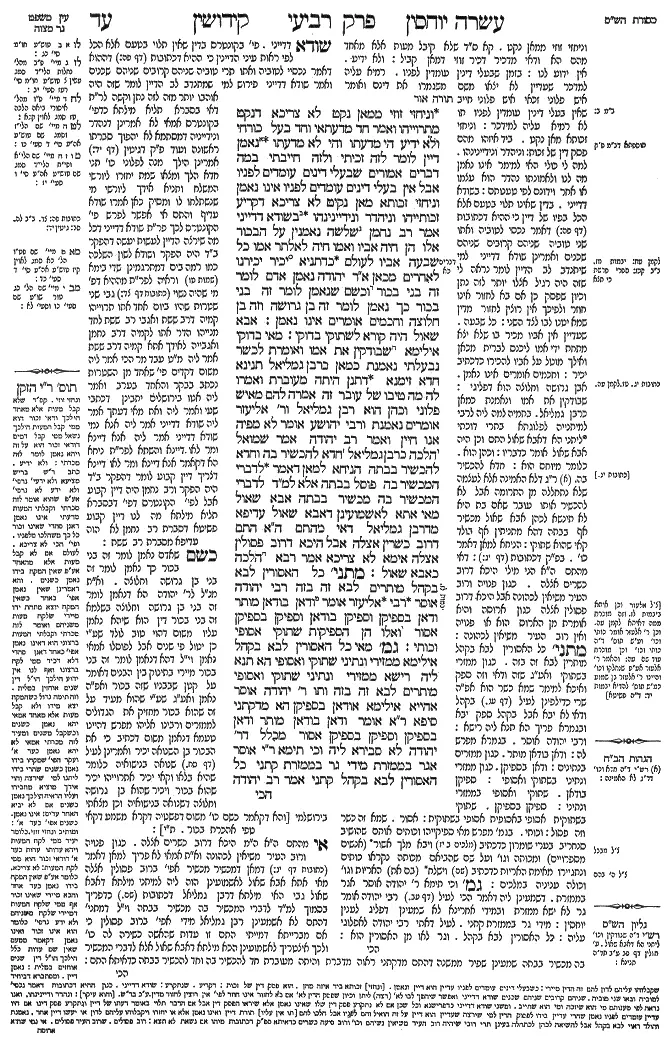
Kiddushin 74a - Guemara
וניחזי זוזי ממאן נקט לא צריכא דנקט מתרוייהו ואמר חד מדעתאי וחד בעל כורחי ולא ידיע הי מדעתו והי לא מדעתו נאמן דיין לומר לזה זכיתי ולזה חייבתי במה דברים אמורים שבעלי דינים עומדים לפניו אבל אין בעלי דינים עומדים לפניו אינו נאמן וניחזי זכותא מאן נקיט לא צריכא דקריע זכותייהו וניהדר ונידיינינהו בשודא דדייני אמר רב נחמן שלשה נאמנין על הבכור אלו הן חיה אביו ואמו חיה לאלתר אמו כל שבעה אביו לעולם כדתניא (דברים כא, יז) יכיר יכירנו לאחרים מכאן א"ר יהודה נאמן אדם לומר זה בני בכור וכשם שנאמן לומר זה בני בכור כך נאמן לומר זה בן גרושה וזה בן חלוצה וחכמים אומרים אינו נאמן אבא שאול היה קורא לשתוקי בדוקי מאי בדוקי אילימא שבודקין את אמו ואומרת לכשר נבעלתי נאמנת כמאן כרבן גמליאל תנינא חדא זימנא דתנן היתה מעוברת ואמרו לה מה טיבו של עובר זה אמרה להם מאיש פלוני וכהן הוא רבן גמליאל ור' אליעזר אומרים נאמנת ורבי יהושע אומר לא מפיה אנו חיין ואמר רב יהודה אמר שמואל הלכה כרבן גמליאל חדא להכשיר בה וחדא להכשיר בבתה הניחא למאן דאמר לדברי המכשיר בה פוסל בבתה אלא למ"ד לדברי המכשיר בה מכשיר בבתה אבא שאול מאי אתא לאשמועינן דאבא שאול עדיפא מדרבן גמליאל דאי מהתם ה"א התם דרוב כשרין אצלה אבל היכא דרוב פסולין אצלה אימא לא צריכא אמר רבא הלכה כאבא שאול מתני׳ כל האסורין לבא בקהל מותרים לבא זה בזה רבי יהודה אוסר רבי אליעזר אומר ודאן בודאן מותר ודאן בספיקן וספיקן בודאן וספיקן בספיקן אסור ואלו הן הספיקות שתוקי אסופי וכותי גמ׳ מאי כל האסורין לבא בקהל אילימא ממזירי ונתיני שתוקי ואסופי הא תנא ליה רישא ממזירי ונתיני שתוקי ואסופי מותרים לבא זה בזה ותו ר' יהודה אוסר אהייא אילימא אודאן בספיקן הא מדקתני סיפא ר"א אומר ודאן בודאן מותר ודאן בספיקן וספיקן בספיקן אסור מכלל דר' יהודה לא סבירא ליה וכי תימא ר"י אוסר אגר בממזרת מידי גר בממזרת קתני כל האסורין לבא בקהל קתני אמר רב יהודה
Comments from Rashi on Masechet Kiddushin Page 74a
וניחזי זוזי ממאן נקט . קא ס"ד שלא קיבל מעות אלא מאחד מהם הא ודאי מדכיר דכיר זוזי דמאן קביל: ולא ידיע . אין ידוע לנו: בזמן שבעלי דינין עומדין לפניו . רמיא עליה למדכר שעדיין לא יצאו משם משגמרו את דינם ואומר איש פלוני זכאי איש פלוני חייב שאין בעלי דינין עומדין לפניו תו לא רמיא עליה למידכר: וניחזי זכותא מאן נקט . ביד איזהו מהם פסק דין של זכות: וניהדר ונידיינינהו . למה לי כולי האי למימר אינו נאמן מה לנו ולאמונתו נהדר הוא עצמו או אחר וידונם לפי טענותם: בשודא דדייני . בדין שאינו תלוי בטעם אלא הכל בפיו של דיין כי ההיא דכתובות (דף פה:) דאמר נכסי לטוביה ואתו שני טוביה שניהם קרובים שניהם שכנים ואמרינן שודא דדייני למי שיתנדב לב הדיין לומר נראה לי שזה היה רגיל אצלו יותר לזה נתן וכיון שפסק כן אם בא לחזור אינו חוזר ולפיכך אין רוצין לחזור מדין שמא יטנו לבו לצד השני: כל שבעה . שעדיין אין אביו מכיר בו שלא יצא מתחת ידי אמו ליכנס לברית מכאן ואילך מוטל על אביו להכירו כדכתיב יכיר: וחכמים אומרים אינו נאמן . אבן גרושה וחלוצה הוא דפליגי: שבודקין את אמו ונאמנת כמאן כרבן גמליאל . בתמיה למה ליה לרבי למיתנייה לפלוגתא בתרי דוכתי ליתני הא דאבא שאול התם וכן היה אבא שאול אומר כדבריו: וכהן הוא . כלומר מיוחס הוא: שבודקין את אמו ונאמנת כמאן כרבן גמליאל . בתמיה למה ליה לרבי למיתנייה לפלוגתא בתרי דוכתי ליתני הא דאבא שאול התם וכן היה אבא שאול אומר כדבריו: חדא להכשיר בה . ר"ג דלא האמינה אלא לעצמה שלא נתחללה מן התרומה אבל לא להכשיר אותו עובר שאם בת היא לא תינשא לכהן אבא שאול מכשיר אף בבתה דהא מתניתין אף בולד קאי שהוא שתוקי: הניחא למאן דאמר כו' . בפ"ק דכתובות (דף יג:): דאי מהתם ה"א הני מילי היכא דרוב כשרים אצלה . כגון פנויה ורוב העיר משיאין לכהונה אבל היכא דרוב פסולין אצלה כגון ארוסה והיא אומרת מן הארוס הוא או פנויה ואין רוב העיר משיאין לכהונה: מתני' כל האסורין לבא בקהל מותרין לבא זה בזה . כגון ממזרי בשתוקי ואע"ג שזה ודאי וזה ספק ואיכא למימר שמא כשר הוא אפ"ה שרי כדילפינן לעיל (קידושין דף עג.) בקהל ודאי לא יבא אבל בקהל ספק יבא ובגמרא פריך הא תנא ליה רישא: ורבי יהודה אוסר . בגמרא מפרש לה: ודאן בודאן מותר . כגון ממזרים בנתינים: ודאן בספיקן . כגון ממזרי ונתיני בשתוקי ואסופי: ספיקן בודאן . שתוקי ואסופי בממזרי ונתיני: ספיקן בספיקן . שתוקי בשתוקית אסופי באסופית אסופי בשתוקית: אסור . שמא זה כשר וזה פסול: וכותי . בגמ' מפרש מאי ספיקייהו וכותים אותם שהושיב סנחריב בערי שומרון כדכתיב (מלכים ב יז) ויבא מלך אשור (אנשים מספרויים) ומכותה וגו' ועל שם שהביאם מכותה נקראו כותים ונתגיירו מאימת האריות כדכתיב (שם) וישלח (בם את) האריות וגו' וכולה עניניה במלכים: גמ' וכי תימא ר' יהודה אוסר אגר בממזרת . דשמעינן ליה דאמר הכי לעיל (קידושין דף עב.) רבי יהודה אומר גר לא ישא ממזרת ובמידי אחרינא לא שמעינן דפליג לענין יוחסין: גמ' וכי תימא ר' יהודה אוסר אגר בממזרת . דשמעינן ליה דאמר הכי לעיל (קידושין דף עב.) רבי יהודה אומר גר לא ישא ממזרת ובמידי אחרינא לא שמעינן דפליג לענין יוחסין: מידי גר בממזרת קתני . לעיל דאתי רבי יהודה לאפלוגי עליה: כל האסורין לבא בקהל . וגר לאו מן האסורין הוא:
Comments from Tosafot - Kiddushin 74a
שודא דדייני . פי' בקונטרס בדין שאין תלוי בטעם אלא הכל לפי ראות עיני הדיינין כי ההיא דכתובות (דף פה:) דההוא דאמר נכסיי לטוביה ואתו תרי טוביה שניהם קרובים שניהם שכנים ואמר שודא דדייני פירוש למי שמתנדב לב הדיין לומר שזה היה אוהבו יותר מזה לזה נתן וקשה לר"ת דאי בסברא תליא מילתא כדפי' בקונטרס אמאי לא אמרינן דנהדר ונידייניה דמסתמא לא יהפוך סברתו ראשונה ועוד פ"ק דגיטין (דף יד:) אמרינן הילך מנה לפלוני כו' תני חדא הלך ומצאו שמת יחזרו ליורשי המשלח ותניא אידך ליורשי מי שנשתלחו לו ומסיק כאן אמרו שודא עדיף והתם אי אפשר לפרש פי' הקונטרס לכך פר"ת שודא דדייני דכל מה שירצה הדיין לעשות יעשה דהפקר ב"ד היה הפקר ושודא לשון השלכה כמו רמה בים דמתרגמינן שדי בימא (שמות טו) וראיה לפר"ת מההיא דפ' מי שהיה נשוי (כתובות דף צד:) גבי שני שטרות שהיו ביום אחד אתו תרוייהו קמיה דרב ששת ואגבי רב ששת לחד מנייהו הדר אתו לקמיה דרב נחמן ואגבייה לאידך אתא קמיה דרב ששת אמר ליה מ"ט עבד מר הכי אמר ליה משום דקדים פי' שאחד מן השטרות נכתב בבקר והאחד בערב ואמר ליה אטו בירושלים יתבינן דכתבי שעי ואמר ליה ואת מאי דעתך אמר ליה שודא דדייני אמר ליה אנא נמי שודא דדייני אמר ליה אנא דיינא ומר לאו דיינא והשתא לפר"ת ניחא הא דקאמר אנא דיינא ומר לאו דיינא דצריך דיין קבוע לומר דהפקר ב"ד היה הפקר ורב נחמן היה דיין קבוע אבל לפי' הקונטרס דפי' דבסברא תליא מילתא מה לנו דיין קבוע פשיטא דסברת רב נחמן לא הוה עדיפא מסברת רב ששת: כשם שאדם נאמן לומר זה בני בכור כך נאמן לומר זה בני בן גרושה וחלוצה. וא"ת מנ"ל לר' יהודה הא דנאמן לומר זה בני בן גרושה וחלוצה בשלמא זה בני בכור דין הוא שיהא נאמן עליו משום דהוי טוב לולד שע"י כן יטול פי שנים אבל לפוסלו אמאי נאמן וי"ל דהא דנאמן לומר זה בני בכור מיירי בתינוק בין הבנים דאומר על קטן שבבניו שזה בכור ואפ"ה נאמן ואע"ג שע"י שהוא מעיד על זה שהוא בכור מחזיק את הגדולים לממזרים ורבינו אליהו מפרש דהיינו טעמא דנאמן משום דכתיב כי את הבכור בן השנואה יכיר ואמרינן לעיל (קידושין דף סח.) שנואה בנישואיה כלומר שהיא בלאו וקאי יכיר אתרוייהו יכיר שהוא בכור ויכיר שהוא בן גרושה וחלוצה דשנואה בנישואיה וכן מצאתי בירושלמי [והא דקאמר כשם כו' משום דפשטיה דקרא משמע דקאי טפי אהכרת בכור. ת"י]: אי מהתם ה"א ה"מ היכא דרוב כשרים אצלה . כגון פנויה ורוב העיר משיאין לכהונה וא"ת אמאי לא פריך למאן דאמר (כתובות דף יג:) דמאן דמכשיר מכשיר אפי' ברוב פסולין אצלה מאי אתא אבא שאול לאשמועינן הוה ליה למיתני מילתא דאבא שאול גבי האי מילתא דרבן גמליאל דכתובות (שם.) כדפריך בסמוך למ"ד לדברי המכשיר בה מכשיר בבתה וי"ל דמתני' דהתם לא אשמעינן רבן גמליאל מידי אפי' ברוב פסולין כי אם מברייתא דמייתי התם זו עדות שהאשה כשירה לה כו' ולכך איצטריך לאשמועינן הכא מילתא דאבא שאול אלא לדברי המכשיר בה מכשיר בבתה שמעינן שפיר ממשנה דהתם מדקתני ראוה מדברת והיתה מעוברת חד להכשיר בה וחד להכשיר בבתה כדאיתא התם:
Kiddushin 74a - Mishnah translated into english
The Gemara asks: And let us see from whom he took the money, as it will be obvious that he is the one who bought it. The Gemara answers: No, it is necessary to teach this halakha in a case where the seller took money from both of them, and he then said: One payment I accepted willingly, and one payment was given to me against my will, and it is not known which person gave him money in accordance with his will and which did so against his will. In that case, if the item is no longer in the seller’s possession, he is not deemed credible to testify to whom he sold it.
The Gemara cites the continuation of the baraita: Similarly, a judge is deemed credible to say: I found this person victorious in a civil case, and I found this one obligated to pay. In what case is this statement said? When the litigants are still standing before him. But if the litigants are not standing before him but have left, he is not deemed credible. The Gemara asks: And let us see who holds the writ of a favorable verdict. Why is there a need to rely on the statement of the judge?
The Gemara answers: No, it is necessary to teach this halakha in a case where their writs of a favorable verdict have been torn up and cannot be examined. The Gemara asks: If so, then let him return and judge them again, and presumably the same verdict will be issued. The Gemara answers: It was a case of the judges’ discretion [shuda dedayyanei]. In certain cases, the verdict depends on the decision of the judges based solely on their sense of which litigant deserves to win. There is no guarantee that they will make the same decision the second time around.
The Gemara continues to discuss the credibility of various people with regard to a firstborn. Rav Naḥman says: Three are deemed credible with regard to stating that a child is a firstborn, and they are: A midwife, his father, and his mother. A midwife is deemed credible only immediately; his mother is deemed credible all of the first seven days after his birth; his father is deemed credible forever. As it is taught in a baraita: Expounding the verse: “But he shall acknowledge the firstborn” (Deuteronomy 21:17), the Sages said: The father shall acknowledge him to others. In other words, he is deemed credible to tell others that this is his firstborn.
From here, Rabbi Yehuda said: A person is deemed credible to say: This is my firstborn son. And just as he is deemed credible to say: This is my firstborn son, so too, if he is a priest he is deemed credible to say about his son: This is a son of a divorced woman, or: This is a son of a ḥalutza. And the Rabbis say: As far as these latter claims are concerned, he is not deemed credible. He is deemed credible to state only which son is his firstborn.
§ The mishna teaches that Abba Shaul would call a shetuki by the label of beduki. The Gemara asks: What is the meaning of beduki? If we say that they examine [bodekin] his mother, and if she says: I engaged in sexual intercourse with a man of unflawed lineage, in which case she is deemed credible, then with whose opinion does this halakha accord? With that of Rabban Gamliel. But we already learned this on another occasion, as we learned in a mishna (Ketubot 13a): If an unmarried woman was pregnant, and they said to her: What is the status of this fetus, and she said to them: It is from so-and-so, and he is a priest, then Rabban Gamliel and Rabbi Eliezer say: She is deemed credible, and Rabbi Yehoshua says: We don’t live from, i.e., we don’t rely on, the words of her mouth, and she is not trusted. And Rav Yehuda says that Shmuel says: The halakha is in accordance with the opinion of Rabban Gamliel. What, then, did Abba Shaul add beyond what was taught in that mishna?
The Gemara answers: Abba Shaul’s statement that the woman is deemed credible when she states that the father of the child was of unflawed lineage is nevertheless necessary. One halakha was stated in order to render her fit to marry a priest, and one halakha was stated to render her daughter fit to marry a priest as well. The Gemara asks: This works out well according to the one who says: According to the statement of the one who deems her fit to marry a priest, he nevertheless deems her daughter unfit, as her credibility does not extend to her daughter, who never had a presumptive status of unflawed lineage. Abba Shaul therefore presents a novel ruling, that if she claims to have engaged in intercourse with a man of unflawed lineage, she is deemed credible even with regard to the status of her daughter.
But according to the one who says: According to the statement of the one who deems her fit to marry a priest, he deems her daughter fit to do so as well, what is Abba Shaul coming to teach us?
The Gemara answers: The statement of Abba Shaul is preferable and is more far-reaching than that of Rabban Gamliel, as, if the halakha were learned only from there, the case of an unmarried woman, I would say: There it is a case when most are fit with regard to her, as it is permitted for most people to engage in intercourse with a single woman. But in a circumstance where most are unfit with regard to her, e.g., if she was betrothed and claimed that the man betrothed to her was the father, you might say this: She is not deemed credible when she claims to have engaged in intercourse with a man that would result in the child being of unflawed lineage, as only a small minority of people, i.e., her betrothed, would not render the child unfit, while the rest of the people in the world would render him unfit. Therefore, Abba Shaul’s halakha was necessary in order to include that case. Rava says: The halakha is in accordance with the statement of Abba Shaul.
MISHNA: All those for whom it is prohibited to enter into the congregation, i.e., to marry a Jew of unflawed lineage, are permitted to marry into each other’s families. Rabbi Yehuda prohibits them from marrying anyone other than those who share their specific flaw.
Rabbi Eliezer says: It is permitted for those with definite flaws to marry with those with definite flaws. For example, it is permitted for mamzerim and Gibeonites to marry each other. By contrast, it is prohibited for those with definite flaws, such as mamzerim, to marry with those whose flaws result from an uncertainty, such as a child of unknown paternity [shetuki] and a foundling; and it is prohibited for those whose flaws result from an uncertainty to marry with those with definite flaws; and it is prohibited for those whose flaws result from an uncertainty to marry with those whose flaws result from an uncertainty, such as a shetuki and a female shetuki. And these are the ones whose flaws result from an uncertainty: A shetuki, a foundling, and a Samaritan.
GEMARA: What is the meaning of: All those for whom it is prohibited to enter into the congregation? If we say mamzerim and Gibeonites, shetukim, and foundlings, wasn’t it already taught in the first clause of the first mishna of the chapter that with regard to mamzerim and Gibeonites, shetukim, and foundlings, it is permitted for men and women in these categories to marry into each other’s families?
And furthermore, to which case in the mishna here is it referring when it states: Rabbi Yehuda prohibits them? If we say it is referring to those with definite flaws marrying with those whose flaws result from an uncertainty, and it is teaching that Rabbi Yehuda prohibits them from marrying each other, this is difficult. But from the fact that it teaches in the latter clause that Rabbi Eliezer says: It is permitted for those with definite flaws to marry with those with definite flaws; by contrast, it is prohibited for those with definite flaws to marry with those whose flaws result from an uncertainty, and it is prohibited for those whose flaws result from an uncertainty to marry with those with definite flaws, and it is prohibited for those whose flaws result from an uncertainty to marry with those whose flaws result from an uncertainty; then by inference, it is clear that Rabbi Yehuda does not maintain this opinion.
And if you would say that when Rabbi Yehuda prohibits those with flawed lineage from marrying each other, he is referring to the prohibition against a convert marrying with a mamzeret, does the mishna teach the halakha of a convert marrying with a mamzeret? It teaches: All those for whom it is prohibited to enter into the congregation, which does not include a convert.
Rav Yehuda says:
Traduction : The William Davidson digital edition of the Koren Noé Talmud, with commentary by Rabbi Adin Even-Israel Steinsaltz.