 Talmud Bavli
The learning on the whole site is dedicated : L'ilui Nishmat Jacques Isaac Ben Amram Loubaton
The learning on the whole site is dedicated : L'ilui Nishmat Reuven ben Rivka SEBBAG
The learning on the whole site is dedicated : L'ilui Nishmat רינה בת לדיסיה
Kiddushin 68a : Youtube
Daf TubeYoutube
2 video classes :
Kiddushin Page 68a
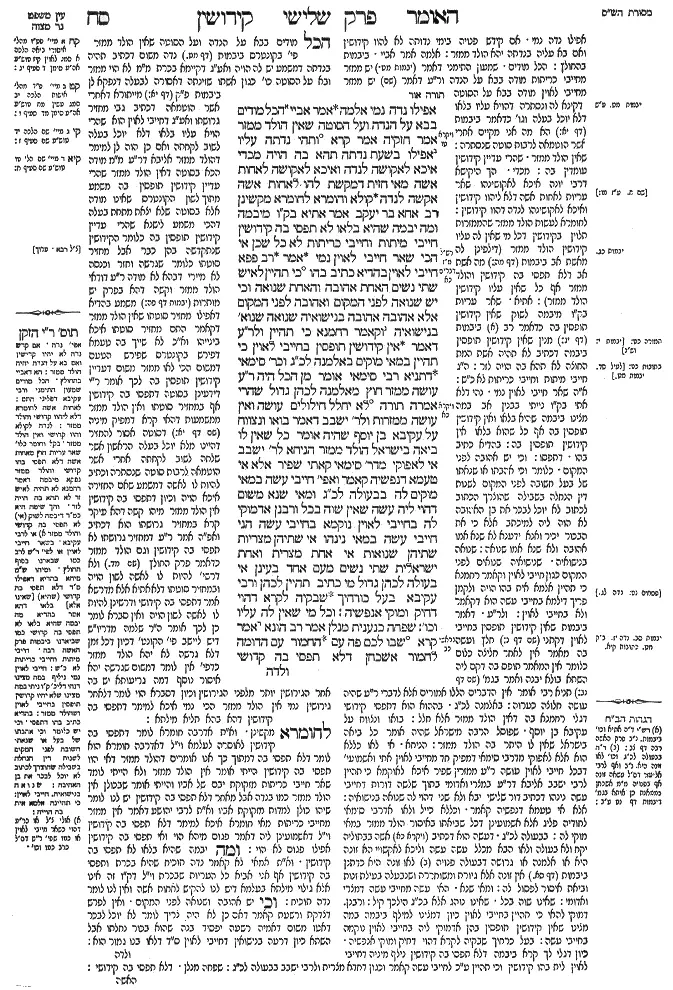
Kiddushin 68a - Guemara
אפילו נדה נמי אלמה אמר אביי הכל מודים בבא על הנדה ועל הסוטה שאין הולד ממזר אמר חזקיה אמר קרא (ויקרא טו, כד) ותהי נדתה עליו אפילו בשעת נדתה תהא בה הויה מכדי איכא לאקושה לנדה ואיכא לאקושה לאחות אשה מאי חזית דמקשת להו לאחות אשה אקשה לנדה קולא וחומרא לחומרא מקשינן רב אחא בר יעקב אמר אתיא בק"ו מיבמה ומה יבמה שהיא בלאו לא תפסי בה קידושין חייבי מיתות וחייבי כריתות לא כל שכן אי הכי שאר חייבי לאוין נמי אמר רב פפא חייבי לאוין בהדיא כתיב בהו (דברים כא, טו) כי תהיין לאיש שתי נשים האחת אהובה והאחת שנואה וכי יש שנואה לפני המקום ואהובה לפני המקום אלא אהובה אהובה בנישואיה שנואה שנוא' בנישואיה וקאמר רחמנא כי תהיין ולר"ע דאמר אין קידושין תופסין בחייבי לאוין כי תהיין במאי מוקים באלמנה לכ"ג וכר' סימאי דתניא רבי סימאי אומר מן הכל היה ר"ע עושה ממזר חוץ מאלמנה לכהן גדול שהרי אמרה תורה (ויקרא כא, ו) לא יחלל חילולים עושה ואין עושה ממזרות ולר' ישבב דאמר בואו ונצווח על עקיבא בן יוסף שהיה אומר כל שאין לו ביאה בישראל הולד ממזר הניחא לר' ישבב אי לאפוקי מדר' סימאי קאתי שפיר אלא אי טעמא דנפשיה קאמר ואפי' חייבי עשה במאי מוקים לה בבעולה לכ"ג ומאי שנא משום דהוי ליה עשה שאין שוה בכל ורבנן אדמוקי לה בחייבי לאוין נוקמא בחייבי עשה הני חייבי עשה במאי נינהו אי שתיהן מצריות שתיהן שנואות אי אחת מצרית ואחת ישראלית שתי נשים מעם אחד בעינן אי בעולה לכהן גדול מי כתיב תהיין לכהן ורבי עקיבא בעל כורחיך שבקיה לקרא דהוי דחיק ומוקי אנפשיה וכל מי שאין לה עליו וכו' שפחה כנענית מנלן אמר רב הונא אמר קרא (בראשית כב, ה) שבו לכם פה עם החמור עם הדומה לחמור אשכחן דלא תפסי בה קדושי
Comments from Rashi on Masechet Kiddushin Page 68a
אפילו נדה נמי . אם קידש פנויה בימי נדותה לא להוו קידושין ואם בא עליה בנדתה יהא הולד ממזר: אלמה אמר אביי . ביבמות בהחולץ: הכל מודים . שמעון התימני דאמר (יבמות מט.) יש ממזר מחייבי כריתות מודה בבא על הנדה ור"ע דאמר (שם) יש ממזר מחייבי לאוין מודה בבא על הסוטה דקינא לה ונסתרה דהויא עליו בלאו דלא יוכל בעלה וגו' כדאמר ביבמות (דף יא:) הא מה אני מקיים אחרי אשר הוטמאה לרבות סוטה שנסתרה: שאין הולד ממזר . שהרי עדיין קידושין עומדין בה: מכדי . הך היקישא דרבי יונה איכא לאקושינהו שאר עריות לאחות אשה דלא ליהוו קידושין ואיכא לאקושינהו לנדה דהוו קידושין: לחומרא . לעשות הולד ממזר שהממזרות תלוין בקידושין דכל מי שאין לה עליו קידושין הולד ממזר (דילפינן לה מאשת אב ביבמות (דף מה:) מה אשת אב דלא תפסי בה קידושין והולד ממזר אף כל שאין עליו קידושין הולד ממזר): אתיא . שאר עריות בק"ו מיבמה לשוק שאין קידושין תופסין בה כדאמר רב ביבמות (דף יג:) מנין שאין קידושין תופסין ביבמה דכתיב לא תהיה אשת המת החוצה לא תהא בה הויה לזר: ה"ג חייבי מיתות וחייבי כריתות לא כ"ש: א"ה שאר חייבי לאוין נמי . נהי דלא אתי בק"ו נייתי בבנין אב במה מצינו ביבמה שהיא בלאו ואין קידושין תופסין בה אף כל שהוא בלאו אין קידושין תופסין בה: בהדיא כתיב בהו . דתפסו: וכי יש אהובה לפני המקום . כלומר וכי אהבתו או שנאתו של בעל חשובה לפני המקום לשנות דין הנחלה בשבילה שהוצרך הכתוב לכתוב לא יוכל לבכר את בן האהובה לא הוה ליה למיכתב אלא כי את הבכור יכיר ואנא ידענא לא שנא אמו אהובה ולא שנא אמו שנואה: שנואה בנישואיה . שנישואיה שנואים לפני המקום כגון חייבי לאוין וקאמר רחמנא כי תהיין אלמא אית בהו הויה ולקמן פריך דילמא בחייבי עשה הוא דקאמר ולא בחייבי לאוין: ולר"ע . דאמר ביבמות שאין קידושין תופסין בחייבי לאוין דקתני (שם דף נ:) חלץ ועשה בה מאמר אין לאחר חליצה כלום כלומר אין המאמר תופס בה דקם ליה השתא בולא יבנה ואמר בגמ' (שם דף נב:) תניא רבי אומר אין הדברים הללו אמורים אלא לדברי ר"ע שהיה עושה חלוצה כערוה: באלמנה לכ"ג . בההוא הוא דתפסי קידושי דגלי רחמנא בה דאין הולד ממזר אלא חלל: בואו ונצווח על עקיבא בן יוסף . שפוסל הרבה מישראל שהיה אומר כל ביאה בישראל שאין לו היתר בה הולד ממזר: הניחא . אי לאו כללא הוא אלא לאפוקי מדרבי סימאי דמפיק חד מחייבי לאוין אתי ואשמועי' דבכל חייבי לאוין עושה ר"ע ממזרין שפיר איכא לאוקמא כי תהיין לרבי ישבב אליבא דר"ע במצרי ואדומי בתוך שלשה דורות דחייבי עשה נינהו דכתיב דור שלישי יבא ולא שני דהוי לה שנואה בנישואיה: אלא אי טעמא דנפשיה קאמר . וכללא כייל ולאו אדרבי סימאי לחודיה פליג אלא אשמועינן דכל שביאתו באיסור הולד ממזר במאי מוקי לה: בבעולה לכ"ג . דעשה הוא דכתיב (ויקרא כא) אשה בבתוליה יקח ולא בעולה ולאו הבא מכלל עשה עשה וליכא לאקשויי הא זונה היא או אלמנה או גרושה דבעולה פנויה לאו זונה היא כדתנן ביבמות (דף סא.) אין זונה אלא גיורת ומשוחררת ושנבעלה בעילת זנות וביאת איסור לפסול לה: ומאי שנא . האי עשה מחייבי עשה דמצרי ואדומי: שאינו שוה בכל . שאינו נוהג אלא בכ"ג הילכך קיל: ורבנן . דמוקי להאי כי תהיין בחייבי לאוין כיון דמצינו למילף ביבמה במה מצינו שאין קידושין תופסין בהן אדמוקי ליה בחייבי לאוין נוקמה בחייבי עשה: בעל כרחיך שבקיה לקרא דהוי דחיק ומוקי אנפשיה . כיון דגלי לך קרא ביבמה דלא תפסי בה קידושין נילף מיניה דחייבי לאוין לית בהו קידושין וכי תהיין ע"כ לחייבי עשה קאמר וכגון דחדא מצרית ולרבי ישבב בבעולה לכ"ג: שפחה מנלן . דלא תפסי בה קידושי:
Comments from Tosafot - Kiddushin 68a
הכל מודים בבא על הנדה ועל הסוטה שאין הולד ממזר פי' בקונטרס ביבמות (דף מט .) נדה משום דכתיב תהיה בנדתה דמשמע יש לה הויה ואע"ג דקיימא בכרת מ"מ לא הוי ממזר ובא על הסוטה כו' כגון אשתו שזינתה דאסורה לבעלה דנפקא לן ביבמות פ"ק (דף יא:) מייתורא דאחרי אשר הוטמאה דכתיב גבי מחזיר גרושתו ואע"ג דחייבי לאוין הוא שהרי הויא עליו בלאו דלא יוכל בעלה לשוב לקחתה ואם כן הוה לן למימר דהולד ממזר אליבא דר"ע מ"מ מודה הכא בסוטה דאין הולד ממזר שהרי עדיין קידושין תופסין בה משמע מתוך לשון הקונטרס שאינו מודה אלא בסוטה שלא יצאת מתחת בעלה דהכי משמע לישנא שהרי עדיין קידושין תופסין בה כלומר הקידושין שנתקדשה בהן כבר אבל מחזיר סוטתו כלומר שגרשה וחזר וכנסה לא מיירי דבהא לא מודה ר"ע דודאי הולד ממזר וקשה דהא בפרק יש מותרות (יבמות דף פה:) משמע בהדיא דאפילו מחזיר סוטתו שאין הולד ממזר דקאמר התם מחזיר סוטתו איכא בינייהו וא"כ לא שייך בה טעמא דפירש בקונטרס שפירש הטעם דמשום הכי לאו ממזר משום דעדיין קידושין תופסין בה לכך אומר ר"י דידעינן בסוטה דתפסי בה קידושין אף במחזיר סוטתו ואין הולד ממזר ממשמעות דהאי קרא דמפיק מיניה (שם דף יא:) דסוטה אסור להחזיר דהיינו מלא יוכל בעלה הראשון אשר שלחה לשוב לקחתה אחרי אשר הוטמאה לרבות סוטה שנסתרה וכתיב להיות לו לאשה דמשמע שאם החזירה איכא הויה וכיון דתפסי בה קידושין אין הולד ממזר מיהו קשה דהא עיקר קרא במחזיר גרושתו הוא דכתיב ואפ"ה אמר ר"ע דמחזיר גרושתו לא תפסי בה קידושין וגם הולד ממזר כדאמר פרק החולץ (שם מד.) ולא דרשי' להיות לו לאשה לשון הויה ובמחזיר סוטתו דלא אתיא אלא מדרשא אמר דתפסי בה קידושי ודרשינן להיות לו לאשה לשון הויה ואין סברא לומר כן לכך אומר ה"ר שלמה מדריו"ש דיש ליישב פי' הקונט' דכיון דכל זמן דלא גרשה לא יהא הולד ממזר כדפי' אין לומר דמשום שגרשה יהא איסור נוסף דמה גריעותא יש בה אחר הגירושין יותר מלפני הגירושין וכיון דסברא הוי לומר דלאחר גירושין נמי אין הולד ממזר הכי נמי איכא למימר דתפסי בה קידושין דהא בהא תליא מילתא: לחומרא מקשינן . וא"ת אדרבה חומרא לומר דתפסי בה קידושין לאוסרה לעלמא וי"ל דאדרבה חומרא הוא לומר דלא תפסי בה דמתוך כך אנו אומרים דהולד ממזר דאי הוו תפסי בה קידושין הייתי אומר אין הולד ממזר ולא הייתי לומד שאר חייבי כריתות מזקוקת יבם של אביו והייתי אומר שבכולן אין הולד ממזר כמו בנדה אבל מאחר דלא תפסי בה קידושין יש לנו לומר שיהו כולן למדות מזקוקת אביו וא"ת לרבי יהושע דאמר אין ממזר מחייבי כריתות מאי חומרא איכא למימר דלא תפסי בה קידושין וי"ל דאשמועינן ליה דאמר פגום מיהא הוי ואי תפסי בה קידושין אפילו פגום לא הוי: ומה יבמה שהיא בלאו לא תפסי בה קידושין . וא"ת אמאי לא קאמר נדה תוכיח שהיא בכרת ותפסי בה קידושין אף אני אביא כל העריות שבכרת וי"ל דק"ו זה אינו אלא גילוי מילתא בעלמא דיש לנו להקיש לאחות אשה ואין לנו לומר נדה תוכיח: וכי יש אהובה ושנואה לפני המקום . ואין לפרש דצדקת ורשעת קאמר דאם כן לא היה צריך לומר לא יוכל לבכר דאטו משום דאמיה רשעה יפסיד בנה שהוא בכור נחלתו אבל השתא כיון דרעה בנישואין דחייבי לאוין ס"ד דלאו בנו גמור הוא:
Kiddushin 68a - Mishnah translated into english
then even if he betrothed a menstruating woman as well, his betrothal should not be effective and the offspring should be a mamzer, as a menstruating woman is included in the list in that chapter of those with whom sexual intercourse is forbidden. If so, why did Abaye say: All concede with regard to one who engages in intercourse with a menstruating woman or with a sota, a woman forbidden to her husband on suspicion of being unfaithful to him, that the offspring is not a mamzer? Ḥizkiyya said: In the case of a menstruating woman, the verse states: “And her impurity be [ut’hi] upon him” (Leviticus 15:24), from which it is derived that even at the time of her impurity, the type of becoming [havaya] stated with regard to betrothal (see Deuteronomy 24:2) should apply to her. The Gemara is interpreting the connection between the words ut’hi and havaya, as both share the same Hebrew root.
The Gemara asks: After all, there is the possibility of juxtaposing all other forbidden relatives to a menstruating woman, and there is also the possibility of juxtaposing them to a wife’s sister. What did you see that you juxtaposed them to a wife’s sister? Why not juxtapose them instead to a menstruating woman? The Gemara answers: When there is an option of juxtaposing a case in a manner that leads to a leniency, or juxtaposing it to a halakha that entails a stringency, we juxtapose it in a fashion that leads to a stringency.
Rav Aḥa bar Ya’akov said that there is a different source for the halakha that betrothal is ineffective with forbidden relatives: This principle is derived by means of an a fortiori inference from the case of a yevama: Just as a yevama, before she is released from the yavam through ḥalitza, is forbidden by a mere prohibition, which entails lashes, and yet betrothal is not effective with her, with regard to those people with whom sexual intercourse renders one liable to receive the death penalty or liable to be punished with karet, is it not all the more so the case that betrothal should not be effective in these cases? The Gemara asks: If so, meaning that this is the source, one should also derive that betrothal is ineffective with any other people with whom one is only liable for violating a prohibition of engaging in intercourse, by means of the same analogy.
Rav Pappa says: It is written explicitly in the Torah that a man can betroth women with whom he is liable for violating ordinary prohibitions of intercourse. The Torah states in a different context: “If a man has two wives, the one beloved and the one hated” (Deuteronomy 21:15). Rav Pappa asks rhetorically: But is there one who is hated before the Omnipresent and one who is beloved before the Omnipresent? Rather, “beloved” means beloved in her marriage, i.e., her marriage is permitted; “hated” means hated in her marriage, i.e., her marriage involves the violation of a prohibition. And despite the fact that the latter marriage is between a man and a woman who are forbidden to one another, their union still has the status of a marriage, as the Merciful One states: “If a man has two wives,” i.e., he is married to both of them.
The Gemara asks: And according to the opinion of Rabbi Akiva, who says: Betrothal does not take effect even with those women with whom one is only liable for violating a prohibition of engaging in intercourse, with regard to what case does he establish the verse: “If a man has two wives”? The Gemara answers: He explains that this verse is referring to a widow married to a High Priest, and this is in accordance with the opinion of Rabbi Simai.
As it is taught in a baraita that Rabbi Simai says: From all relationships that involve prohibitions, Rabbi Akiva would render the offspring a mamzer, except for the marriage of a widow to a High Priest, as the Torah said: “And he shall not profane [yeḥallel]” (Leviticus 21:15), which teaches that he renders them profane [ḥillulim], i.e., his children from this marriage are ḥalalim, but he does not render them labeled with mamzer status.
The Gemara asks: And what can be said according to the opinion of Rabbi Yeshevav, who says: Come, let us shout at Akiva ben Yosef, who would say: In every case where a Jew may not engage in intercourse with a particular woman, and he does so, the offspring that results from this union is a mamzer, even the child of a widow and a High Priest? This works out well even according to the opinion of Rabbi Yeshevav if he comes to exclude the reason of Rabbi Simai, i.e., if he means to take issue with the ruling of Rabbi Akiva in the specific case mentioned by Rabbi Simai, that of a widow married to a High Priest, then Rabbi Yeshevav too concedes that according to the opinion of Rabbi Akiva, betrothal does take effect in a case where a positive mitzva is violated by the betrothal. Accordingly, one can establish the phrase “and the one hated” (Deuteronomy 21:15) as referring to those whose marriage entailed the violation of a positive mitzva.
But if he states a reasoning of his own, i.e., he states an independent statement critical of Rabbi Akiva’s ruling that the child of any illicit union is a mamzer, and it is a categorical statement that applies to all illicit unions, even those liable for violating a positive mitzva, i.e., Rabbi Akiva holds that even the offspring of this relationship is a mamzer, with regard to what case does he interpret the “hated” woman of the above verse?
The Gemara answers: Rabbi Yeshevav would say that the verse is referring to a non-virgin married to a High Priest, as there is a positive mitzva that a High Priest should marry a virgin. The Gemara asks: And in what way is this case different from the previous ones? If Rabbi Yeshevav holds that a child born of any act of intercourse prohibited by a positive mitzva is a mamzer, the marriage of a non-virgin to a High Priest likewise involves the violation of a positive mitzva. The Gemara answers: Because it is a positive mitzva that is not equally applicable to all, and since this command applies only to a High Priest and not to other Jews, its violation is considered less severe than that of other positive mitzvot.
The Gemara asks: And with regard to the Rabbis, who disagree with Rabbi Akiva’s opinion, rather than establishing the verse: “If a man has two wives, the one beloved and the one hated” (Deuteronomy 21:15), as referring to those who are liable for violating prohibitions, let them establish it as referring to those liable for violating a positive mitzva. In other words, betrothal should not be effective if it involves the violation of a prohibition. And as for the “hated” woman whose marriage is nevertheless valid, mentioned in that verse, this is referring to one whose engaging in sexual intercourse violates a positive mitzva.
The Gemara responds: These cases where they are liable for violating a positive mitzva, what are they? If you say that both wives are Egyptian converts, they are both hated, as both marriages are prohibited. If you claim that one is an Egyptian woman and the other a Jewish woman of unflawed lineage, this cannot be the case, as we require “two wives” from the same nation, since the Torah equates the two women. If the hated one is a non-virgin married to a High Priest, this too is problematic, as, is it written: If a priest has two wives? The verse merely says: “If a man has two wives.” Consequently, the verse cannot be interpreted as referring to those who are liable for violating a positive mitzva.
The Gemara asks: But according to the opinion of Rabbi Akiva, that betrothal that involves a prohibition does not take effect, this verse can be referring only to a non-virgin who marries a High Priest, or marriage to a female Egyptian convert, which involve the violation of positive mitzvot. Can the verse really be interpreted as concerning such unlikely cases? The Gemara answers: You are forced to leave this verse aside, as it establishes itself as dealing with a difficult case. In other words, as Rabbi Akiva claims that betrothal is ineffective if any prohibition is involved, he has no choice but to explain the verse that says: “If a man has two wives,” in this forced manner.
§ The mishna teaches: And in any case where a woman cannot join in betrothal with him or with others, the offspring is like her. This ruling refers specifically to a Canaanite maidservant or a gentile woman. The Gemara asks: From where do we derive that betrothal with a Canaanite maidservant is ineffective? Rav Huna says: The verse states that Abraham commanded his slaves: “You abide here with [im] the donkey” (Genesis 22:5), which alludes to the fact that his slaves belong to a nation [am] similar to a donkey; just as betrothal is ineffective with animals, it is likewise ineffective with Canaanite maidservants. The Gemara comments: We have found that betrothal is ineffective with a Canaanite maidservant;
Traduction : The William Davidson digital edition of the Koren Noé Talmud, with commentary by Rabbi Adin Even-Israel Steinsaltz.