 Talmud Bavli
The learning on the whole site is dedicated : L'ilui Nishmat Yaakov ben Myriam
The learning on the whole site is dedicated : L'ilui Nishmat Yechayahou ben Moche
The learning on the whole site is dedicated : L'ilui Nishmat יוסף בן מושה
Kiddushin 50a : Youtube
Daf TubeYoutube
2 video classes :
Kiddushin Page 50a
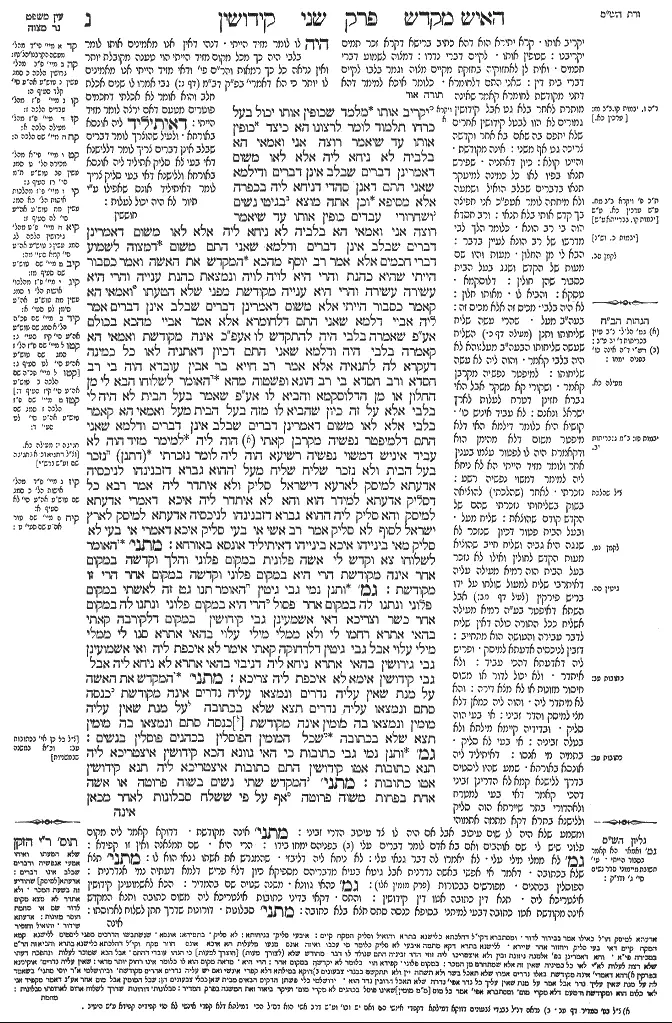
Kiddushin 50a - Guemara
(ויקרא א, ג) יקריב אותו מלמד שכופין אותו יכול בעל כרחו תלמוד לומר לרצונו הא כיצד כופין אותו עד שיאמר רוצה אני ואמאי הא בלביה לא ניחא ליה אלא לאו משום דאמרינן דברים שבלב אינן דברים ודילמא שאני התם דאנן סהדי דניחא ליה בכפרה אלא מסיפא וכן אתה מוצא בגיטי נשים ושחרורי עבדים כופין אותו עד שיאמר רוצה אני ואמאי הא בלביה לא ניחא ליה אלא לאו משום דאמרינן דברים שבלב אינן דברים ודלמא שאני התם משום דמצוה לשמוע דברי חכמים אלא אמר רב יוסף מהכא המקדש את האשה ואמר כסבור הייתי שהיא כהנת והרי היא לויה לויה ונמצאת כהנת ענייה והרי היא עשירה עשירה והרי היא ענייה מקודשת מפני שלא הטעתו ואמאי הא קאמר כסבור הייתי אלא משום דאמרינן דברים שבלב אינן דברים אמר ליה אביי דלמא שאני התם דלחומרא אלא אמר אביי מהכא בכולם אע"פ שאמרה בלבי היה להתקדש לו אעפ"כ אינה מקודשת ואמאי הא קאמרה בלבי היה ודלמא שאני התם דכיון דאתניה לאו כל כמינה דעקרא לה לתנאיה אלא אמר רב חייא בר אבין עובדא הוה בי רב חסדא ורב חסדא בי רב הונא ופשטוה מהא האומר לשלוחו הבא לי מן החלון או מן הדלוסקמא והביא לו אע"פ שאמר בעל הבית לא היה לי בלבי אלא על זה כיון שהביא לו מזה בעל הבית מעל ואמאי הא קאמר בלבי אלא לאו משום דאמרינן דברים שבלב אינן דברים ודלמא שאני התם דלמיפטר נפשיה מקרבן קאתי הוה ליה למימר מזיד הוה לא עביד איניש דמשוי נפשיה רשיעא הוה ליה לומר נזכרתי (דתנן) נזכר בעל הבית ולא נזכר שליח שליח מעל ההוא גברא דזבנינהו לניכסיה אדעתא למיסק לארעא דישראל סליק ולא איתדר ליה אמר רבא כל דסליק אדעתא למידר הוא והא לא איתדר ליה איכא דאמרי אדעתא למיסק והא סליק ליה ההוא גברא דזבנינהו לניכסיה אדעתא למיסק לארץ ישראל לסוף לא סליק אמר רב אשי אי בעי סליק איכא דאמרי אי בעי לא סליק מאי בינייהו איכא בינייהו דאיתיליד אונסא באורחא מתני׳ האומר לשלוחו צא וקדש לי אשה פלונית במקום פלוני והלך וקדשה במקום אחר אינה מקודשת הרי היא במקום פלוני וקדשה במקום אחר הרי זו מקודשת גמ׳ ותנן נמי גבי גיטין האומר תנו גט זה לאשתי במקום פלוני ונתנו לה במקום אחר פסול הרי היא במקום פלוני ונתנו לה במקום אחר כשר וצריכא דאי אשמעינן גבי קידושין במקום דלקורבה קאתי בהאי אתרא רחמו לי ולא ממלי מילי עלוי בהאי אתרא סנו לי ממלי מילי עלוי אבל גבי גיטין דלרחוקה קאתי אימר לא איכפת ליה ואי אשמועינן גבי גירושין בהאי אתרא ניחא ליה דניבזי בהאי אתרא לא ניחא ליה אבל גבי קידושין אימא לא איכפת ליה צריכא מתני׳ המקדש את האשה על מנת שאין עליה נדרים ונמצאו עליה נדרים אינה מקודשת כנסה סתם ונמצאו עליה נדרים תצא שלא בכתובה על מנת שאין עליה מומין ונמצאו בה מומין אינה מקודשת כנסה סתם ונמצאו בה מומין תצא שלא בכתובה שכל המומין הפוסלין בכהנים פוסלין בנשים גמ׳ ותנן נמי גבי כתובות כי האי גוונא הכא קידושין איצטריכא ליה תנא כתובות אטו קידושין התם כתובות איצטריכא ליה תנא קידושין אטו כתובות מתני׳ המקדש שתי נשים בשוה פרוטה או אשה אחת בפחות משוה פרוטה אף על פי ששלח סבלונות לאחר מכאן
Comments from Rashi on Masechet Kiddushin Page 50a
יקריב אותו . קרא יתירא הוא דהא כתיב ברישא דקרא זכר תמים יקריבנו: שכופין אותו . לקיים דברי נדרו: דמצוה לשמוע דברי חכמים . ואית לן לאחזוקיה בחזקת מקיים מצוה וגמר בלבו לקיים דברי בית דין: שאני התם דלחומרא . כלומר איכא למימר דהא דתני מקודשת לחומרא קאמר שאינה מותרת לאחר בלא גט אבל קידושין גמורים לא הוו לבטל קידושין אחרים שלא יתפס בה שאם בא אחר וקדשה צריכה גט אף משני: אינה מקודשת . והיינו קולא: כיון דאתניה . שפירש תנאו בפיו לאו כל כמינה למיעקר תנאו בדברים שבלב הואיל ושמעה ולא מיחתה לומר אעפ"כ אני חפיצה בך קדש אותי בלא תנאי: ורב חסדא הוה בי רב הונא . כלומר הלך לבי מדרשו של רב הונא לעיין בדבר: הבא לי מן החלון . מעות והיו שם מעות של הקדש ושגג בעל הבית כסבור שהן חולין: דלוסקמא . טסקא (טשק"א: שק) : והביא לו . מאותו חלון: לא היה בלבי . מכיס זה אלא מכיס זה: בעה"ב מעל . שהרי עשה שליח שליחותו ותנן (מעילה דף כ.) השליח שעשה שליחותו הבעה"ב מעל: והא לא היה בלבי קאמר . והוה ליה לא עשה שליחותו: למיפטר נפשיה מקרבן קאמר . ושקורי קא משקר אבל האי גברא חזינן דטרח לעלות לארץ ישראל ונאנס: לא עביד איניש כו' . קושיא היא כלומר דילמא האי דלא מיפטר משום דלא מהימן הוא ודקאמרת היה לו לפטור עצמו בענין אחר ולומר מזיד הייתי הא לא ניחא ליה למימר דמשוי נפשיה רשע: נזכרתי . לאחר (שהלכתי) להוציאה בשוק בשליחותי נזכרתי שהם של הקדש קודם שהוצאת: שליח מעל . ובעל הבית פטור דכיון שנזכר לא שגגה היא גביה ושליח חייב שהוציא מעות הקדש לחולין ואילו לא נזכר בעל הבית הוה רמיא מעילה עליה דאיתרבי שליח למעול שולחו על ידו בריש פירקין (לעיל קידושין דף מב:) אבל השתא דאיפטר בע"ה רמיא מעילה אשליח ככל התורה כולה דאין שליח לדבר עבירה והעושה הוא מתחייב: דזבין לניכסיה אדעתא למיסק . ופריש ליה דאדעתא דהכי עביד: ולא איתדר . ולא יכול לדור או משום חיסור מזונות או לא מצא דירה: והא לא מיתדר ליה . והוה ליה כמאן דלא מצי למיסק והדר זביני: אי בעי הוה סליק . ובדידיה קיימא מילתא ולא בטלה זביניה: אי בעי לא סליק . בתמיה מי אנסו: דאיתיליד ליה אונסא באורחא . שמע שהיו ליסטים בדרך ללישנא קמא לא הדרינן זביני דהכי קאמר דאי בעי למטרח ולאהדורי בתר שיירתא הוה סליק וללישנא בתרא דקא מתמה אתמוהי ומשמע שלא היה לו שום עיכוב אבל אם היה לו צד עיכוב הדרי זביני: מתני' אינה מקודשת . דדוקא קאמר ליה מקום פלוני שיש לי שם אוהבים ואם בא אדם לומר דברים עלי בפניהם ימחו בידו: הרי היא . שם תמצאנה ואין זו קפידא: גמ' לא ממלי מילי עלי . לא יאמרו לה דבר גנאי עלי: הכא לאשמועינן קידושין איצטריכא ליה . תנא דין כתובה אטו דין קידושין: גמ' לא ממלי מילי עלי . לא יאמרו לה דבר גנאי עלי: לא ניחא ליה דליבזי . שהמגרש את אשתו גנאי הוא לו: מתני' תצא שלא בכתובה . דאמר אי אפשי באשה נדרנית אבל גיטא בעיא מדבריהם מספיקא כיון דלא פריש דלמא דעתיה נמי אנדרנית: מתני' תצא שלא בכתובה . דאמר אי אפשי באשה נדרנית אבל גיטא בעיא מדבריהם מספיקא כיון דלא פריש דלמא דעתיה נמי אנדרנית: הפוסלין בכהנים . מפורשים בבכורות (פרק מומין אלו): גמ' כהאי גוונא . משנה שנויה שם בהמדיר: הכא לאשמועינן קידושין איצטריכא ליה . תנא דין כתובה אטו דין קידושין: והתם . דקאי בדיני כתובות איצטריכא ליה משום כתובה ותנא המקדש אינה מקודשת אטו כתובה דבעי למיתני בסיפא כנסה סתם תצא בלא כתובה: מתני' סבלונות . דורונות שדרך חתן לשלוח לארוסתו:
Comments from Tosafot - Kiddushin 50a
היה לו לומר מזיד הייתי . דנהי דאין אנו מאמינים אותו לומר בלבי היה כך מכל מקום מזיד הייתי הוי טענה מקובלת יותר ואין נראה כל כך רמאות והר"ם פי' ודאי מזיד הייתי אנו מאמינים לו יותר כי הא דאמרי' בפ"ק דב"מ (דף ג:) גבי אמרו לו שנים אכלת חלב והוא אומר לא אכלתי דחכמים פוטרים מטעם דאם ירצה לומר מזיד הייתי: דאיתיליד ליה אונסא באורחא . ולעיל שהוצרך לומר דברים שבלב אינן דברים צריך לומר דללישנא דאי בעי לא סליק אתיליד ליה אונסא באורחא וללישנא דאי בעי סליק צריך לומר דאיתיליד אונס שאפילו ע"י תיור לא היה יכול לעלות:
Kiddushin 50a - Mishnah translated into english
With regard to one who pledges to bring a burnt-offering, the verse states: “If his offering be a burnt-offering of the herd, he shall offer it a male without blemish; he shall bring it to the door of the Tent of Meeting, according to his will, before the Lord” (Leviticus 1:3). The seemingly superfluous words “he shall offer it” teaches that they coerce him to bring the offering. I might have thought that it can be offered entirely against his will, by taking it from his possession and sacrificing it; therefore, the verse states: “According to his will.”
How can these texts be reconciled? They coerce him until he says: I want to bring the offering. The Gemara asks: But why should this be effective; but in his heart it is not satisfactory for him to bring the offering, and it is not according to his will. Rather, is it not because we say: Unspoken matters that remain in the heart are not significant matters, and his intention is rendered irrelevant by his explicit statement? The Gemara rejects this: But perhaps there it is different, since it is clear to us that it is satisfactory for him to achieve atonement, despite his earlier statement to the contrary.
Rather, the Gemara derives a proof from the latter clause of that same baraita: And similarly, you find with bills of divorce of women and bills of manumission of slaves that when the court rules that a man must divorce his wife or free his slave and he does not want to, they coerce him until he says: I want to divorce my wife, or: I want to free my slave. But why should this be effective; but in his heart it is not satisfactory for him to divorce her or to free him. Rather, is it not because we say that unspoken matters that remain in the heart are not significant matters? The Gemara rejects this proof as well: But perhaps there it is different, because it is a mitzva to listen to the statements of the Sages, and the assumption is that when he is required to divorce his wife or free his slave, his true desire is to perform the mitzva.
Rather, Rav Yosef says: The proof is from here (64a): In the case of one who betroths a woman and he said: I thought that she was the daughter of a priest, and she is in fact the daughter of a Levite; or I thought she was the daughter of a Levite, and she is found to be the daughter of a priest; I thought she was poor, and she is wealthy; or I thought she was wealthy, and she is poor, she is betrothed despite his mistaken assumption, because she did not mislead him. But why is she betrothed; but he said: I thought that she had a different characteristic, and he betrothed her with that in mind? Rather, it is because we say that unspoken matters that remain in the heart are not significant matters. Abaye said to him: Perhaps it is different there, since the ruling there is that she requires a bill of divorce only as a stringency, and they are not definitively betrothed.
Rather, Abaye said that the proof is from here, from the mishna: And in all these cases, despite the fact that she later stated: I intended to become betrothed to him nevertheless, she is not betrothed. But why should her betrothal not take effect at all; but she said: I intended to become betrothed? This clause of the mishna teaches that unspoken matters that remain in the heart are not significant. The Gemara rejects this proof: But perhaps it is different there, as, since he stipulated explicitly that a certain condition was true, it is not in her power to uproot his condition through thoughts alone.
Rather, Rav Ḥiyya bar Avin says: There was an incident of this kind in Rav Ḥisda’s study hall, and Rav Ḥisda brought the case to Rav Huna’s study hall, and they resolved it from this mishna (Me’ila 21a): In the case of one who says to his agent: Bring me such and such an item from the window ledge or from the box [hadeluskema], forgetting that the item in question was consecrated property and any use of it would constitute misuse of consecrated property, and the agent brought it to him, then although at that point the owner said: My intention was that you bring the item only from this other place, once he brought the item to him from that place that he had mentioned, once the agent uses it the owner is liable for having misused consecrated property. But why should he be responsible; but he said: My intention was for the other place, so the agent did not fulfill his mission. Rather, is it not because we say that unspoken matters that remain in the heart are not significant matters?
The Gemara rejects this: But perhaps it is different there, since it is suspected that he is coming to exempt himself from bringing an offering for his misuse by claiming that he intended a different item. Since there is cause to question the truth of his statement that he had intended that the agent bring the item from the other place, his claim is not accepted. This cannot serve as a proof that in general, unspoken matters that remain in the heart are not significant.
The Gemara responds: If all he wanted to do was exempt himself from the obligation to bring an offering, he could have said that the misuse was intentional, as one who misuses consecrated property intentionally is not obligated to bring an offering. Therefore, there is no cause to question the truth of his statement that he had intended that the agent bring the item from the other place. The Gemara counters: It is not common for a person to place himself in the category of a wicked person by claiming to have committed a transgression intentionally. Therefore, once again, there is cause to question the truth of his statement that he had intended that the agent bring the item from the other place.
The Gemara continues to ask: To exempt himself from the obligation to bring an offering, he could have said: After the agent left I remembered that it was consecrated property. Such a claim would also have rendered him exempt, as we learned in that same mishna (Me’ila 21a): If one sent an agent to bring a particular item, and the owner remembered that it was consecrated and the agent did not remember but proceeded to fulfill his agency, it is the agent who has misused consecrated property and is liable to bring an offering, not the one who designated him, since the latter remembered and canceled the agency. There is no cause to question the truth of his statement that he had intended that the agent bring the item from the other place. Therefore, the fact that this statement is not accepted can serve as a proof that in general, unspoken matters that remain in the heart are not significant.
The Gemara relates: There was a certain man who sold his property with the intention of ascending to Eretz Yisrael and explicitly stated this intention to the buyer. He ascended to Eretz Yisrael but he was not able to settle there. Upon his return to Babylonia, he sought to nullify the sale. Rava said: Whoever ascends to Eretz Yisrael does so with the intention of settling there, and as he was not able to settle there he can nullify the sale. There are those who say a different version, that Rava said the opposite: He intended to ascend to Eretz Yisrael, and he ascended, so he cannot nullify the sale.
The Gemara relates a similar incident: There was a certain man who sold his property with the intention of ascending to Eretz Yisrael, but ultimately he did not ascend there. Rav Ashi said: If he had wanted to do so, he could have ascended. Since the matter depended upon him, there are no grounds for nullifying the sale. There are those who say Rav Ashi said as follows: If he had wanted to do so, couldn’t he have ascended? Since nothing prevented him from leaving, the sale is not nullified. The Gemara asks: What is the difference between the two versions of Rav Ashi’s statement? The Gemara answers: There is a difference between them in a case when circumstances beyond his control occurred along the way, preventing him from going. According to the first version of the statement of Rav Ashi, the sale is upheld; but according to the second version, where Rav Ashi responded in the form of a question, the implication is that if there actually had been something that prevented him from ascending, the sale would be nullified.
MISHNA: In the case of one who says to his agent: Go and betroth for me so-and-so in such and such a place, and the agent went and betrothed her in a different place, she is not betrothed, since he instructed that the betrothal take place in a particular location. But if he said: Go and betroth the woman for me, she is in such and such a place; and the agent betrothed her in a different place, she is betrothed, since he did not mean that the agent should betroth her specifically there, but was merely telling him where to find her.
GEMARA: The Gemara comments: And we also learned in a mishna with regard to bills of divorce (Gittin 65a): With regard to one who says to his agents: Give this bill of divorce to my wife in such and such a place, and they gave it to her in another place, the divorce is invalid. If he said to them: She is in such and such a place, and they gave it to her in another place, it is valid.
The Gemara comments: And it is necessary to state this halakha with regard to both betrothal and divorce, because had the tanna taught us only with regard to betrothal, you might say: In a case when he is coming to draw her near to him through betrothal, he thinks: They love me in this place and will not say negative remarks about me, but they hate me in that place and will say negative remarks about me. Therefore, he told the agent to perform the betrothal in a certain place and is particular that it take place only there. But with regard to bills of divorce, when he is coming to distance her from him, you might say he does not care where the divorce itself is performed. The tanna therefore informs us that this is not the case.
And conversely, if the tanna had taught us only with regard to divorce, I would have said that he is particular only in the case of divorce, because in this place it is acceptable for him to degrade himself through divorce, whereas in that place it is not acceptable for him to do so; but with regard to betrothal, which involves no degradation, you might say he does not care where he betroths her. Therefore, it is necessary to state the halakha in both cases.
MISHNA: In the case of one who betroths a woman on the condition that there are no vows incumbent upon her to fulfill, and it was found that there were vows incumbent upon her to fulfill, she is not betrothed, since his condition was not fulfilled. If he married her without specification, and it was found that there were vows incumbent upon her to fulfill, the marriage takes effect. Nevertheless, he has the right to divorce her, and she is divorced without receiving payment of her marriage contract, as it is assumed that he would not have married her had he known that she was limited by her vows.
Similarly, if he betrothed her on the condition that there are no blemishes upon her, and she was discovered to have blemishes, she is not betrothed. In a case where he married her without specification and she was discovered to have blemishes, he has the right to divorce her, and she is divorced without receiving payment of her marriage contract. As to what is defined as a blemish, the rule is that all the blemishes that disqualify priests from performing the Temple service, as detailed in tractate Bekhorot, also disqualify women from receiving their marriage contract in case of divorce.
GEMARA: The Gemara comments: And we also learned a mishna like this with regard to the halakhot of marriage contracts, as the same mishna appears in tractate Ketubot (72b). The Gemara explains: Here it was necessary for the tanna to mention this halakha with regard to betrothal, and he taught the halakha of marriage contracts due to teaching the halakha of betrothal; there it was necessary for the tanna to mention this halakha with regard to marriage contracts, and he taught the halakha of betrothal due to teaching the halakha of marriage contracts.
MISHNA: In the case of one who betroths two women together with an item worth one peruta, so that the value of each woman’s share was not worth one peruta, or who betroths one woman with an item worth less than one peruta, despite the fact that he later sent the traditional gifts [sivlonot] of a groom to the bride,
Traduction : The William Davidson digital edition of the Koren Noé Talmud, with commentary by Rabbi Adin Even-Israel Steinsaltz.