 Talmud Bavli
The learning on the whole site is dedicated : L'ilui Nishmat Jamila bat Chlomo Abensour
The learning on the whole site is dedicated : L'ilui Nishmat Chemouel Eliezer ben Batcheva
The learning on the whole site is dedicated : L'ilui Nishmat Yaakov ben Myriam
Kiddushin 69a : Youtube
Daf TubeYoutube
2 video classes :
Kiddushin Page 69a
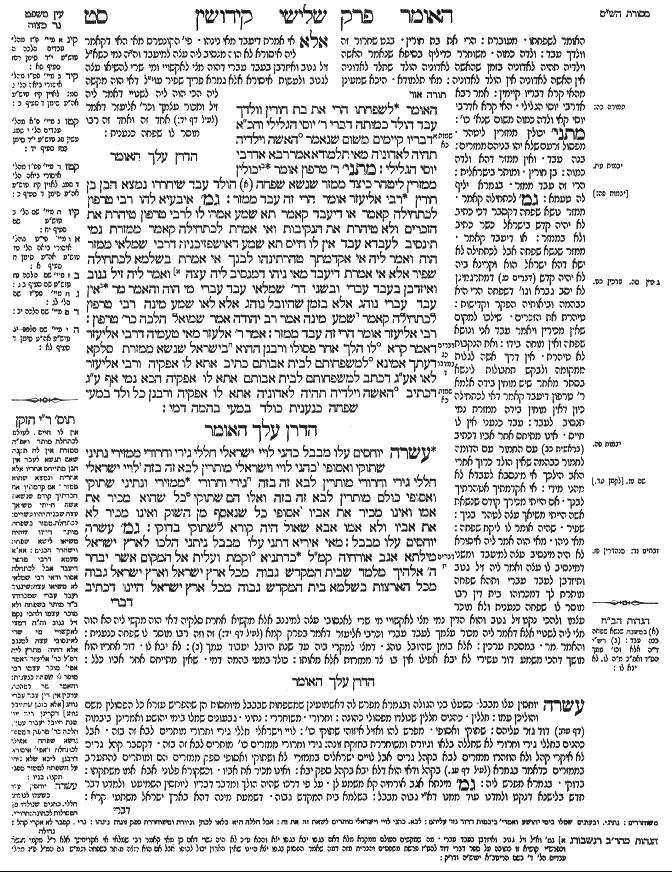
Kiddushin 69a - Guemara
האומר לשפחתו הרי את בת חורין וולדך עבד הולד כמותה דברי ר' יוסי הגלילי וחכ"א דבריו קיימים משום שנאמר (שמות כא, ד) האשה וילדיה תהיה לאדוניה מאי תלמודא אמר רבא אדרבי יוסי הגלילי מתני׳ ר' טרפון אומר יכולין ממזרין ליטהר כיצד ממזר שנשא שפחה הולד עבד שיחררו נמצא הבן בן חורין רבי אליעזר אומר הרי זה עבד ממזר גמ׳ איבעיא להו רבי טרפון לכתחילה קאמר או דיעבד קאמר תא שמע אמרו לו לרבי טרפון טיהרת את הזכרים ולא טיהרת את הנקיבות ואי אמרת לכתחילה קאמר ממזרת נמי תינסיב לעבדא עבד אין לו חייס תא שמע דאושפזיכניה דרבי שמלאי ממזר הוה ואמר ליה אי אקדמתך טהרתינהו לבנך אי אמרת בשלמא לכתחילה שפיר אלא אי אמרת דיעבד מאי ניהו דמנסיב ליה עצה ואמר ליה זיל גנוב ואיזדבן בעבד עברי ובשני דר' שמלאי עבד עברי מי הוה והאמר מר אין עבד עברי נוהג אלא בזמן שהיובל נוהג אלא לאו שמע מינה רבי טרפון לכתחילה קאמר שמע מינה אמר רב יהודה אמר שמואל הלכה כר' טרפון רבי אליעזר אומר הרי זה עבד ממזר אמר ר' אלעזר מאי טעמיה דרבי אליעזר דאמר קרא (דברים כג, ג) לו הלך אחר פסולו ורבנן ההוא בישראל שנשא ממזרת סלקא דעתך אמינא (במדבר ד, ב) למשפחותם לבית אבותם כתיב אתא לו אפקיה ורבי אליעזר לאו אע"ג דכתב למשפחותם לבית אבותם אתא לו אפקיה הכא נמי אף ע"ג דכתיב (שמות כא, ד) האשה וילדיה תהיה לאדוניה אתא לו אפקיה ורבנן כל ולד במעי שפחה כנענית כולד במעי בהמה דמי
הדרן עלך האומר
מתני׳ עשרה יוחסים עלו מבבל כהני לויי ישראלי חללי גירי וחרורי ממזירי נתיני שתוקי ואסופי כהני לויי וישראלי מותרין לבא זה בזה לויי ישראלי חללי גירי וחרורי מותרין לבא זה בזה גירי וחרורי ממזירי ונתיני שתוקי ואסופי כולם מותרין לבא זה בזה ואלו הם שתוקי כל שהוא מכיר את אמו ואינו מכיר את אביו אסופי כל שנאסף מן השוק ואינו מכיר לא את אביו ולא אמו אבא שאול היה קורא לשתוקי בדוקי גמ׳ עשרה יוחסים עלו מבבל מאי איריא דתני עלו מבבל ניתני הלכו לארץ ישראל מילתא אגב אורחיה קמ"ל כדתניא (דברים יז, ח) וקמת ועלית אל המקום אשר יבחר ה' אלהיך מלמד שבית המקדש גבוה מכל ארץ ישראל וארץ ישראל גבוה מכל הארצות בשלמא בית המקדש גבוה מכל ארץ ישראל היינו דכתיב
Comments from Rashi on Masechet Kiddushin Page 69a
האומר לשפחתו . מעוברת: הרי את בת חורין . בגט שחרור זה וולדך עבד: ולדה כמוה . משוחרר כדיליף בסיפא שנאמר האשה וילדיה תהיה לאדוניה בזמן שהאשה לאדוניה הולד שתלד לאדוניה אין האשה לאדוניה אין הולד לאדוניה: מאי תלמודא . היכא שמעינן מהאי קרא דבריו קיימין: אמר רבא אדרבי יוסי הגלילי . האי קרא אדרבי יוסי קאי ולדה כמוה משום שנא' כו': מתני' יכולין ממזרין ליטהר . מפסול זרעם שלא יהו בניהם ממזרים: מתני' עשרה יוחסין עלו מבבל . כשעלו בני הגולה ובגמרא מפרש לה דאשמועינן שמשפחות שבבבל מיוחסות הן שהפריש עזרא כל הפסולין משם והוליכן עמו: מתני' יכולין ממזרין ליטהר . מפסול זרעם שלא יהו בניהם ממזרים: בנה עבד . ואין ממזר דהא ולדה כמוה: בן חורין . ומותר בישראלית: הרי זה עבד ממזר . בגמרא יליף לה טעמא: גמ' לכתחילה קאמר . ממזר נושא שפחה דקסבר דכי כתיב לא יהיה קדש בישראל כשר כתיב ולא בממזר: גמ' לכתחילה קאמר . ממזר נושא שפחה דקסבר דכי כתיב לא יהיה קדש בישראל כשר כתיב ולא בממזר: או דיעבד קאמר . ממזר שנשא שפחה אבל לכתחילה לא ישא דהא ישראל הוא וקרינא ביה לא יהיה קדש (דברים כג) דמתרגמינן לא יסב גברא וגו' דשפחה הרי היא כבהמה וביאותיה הפקר וקדישות: טיהרת את הזכרים . שילכו למקום שאין מכירין ויאמר עבד אני ונושא שפחה ואין מוחה בידו: ואת הנקבות לא טיהרת . אין דרך אשה לגלות ממקומה ולבקש תחבולות לינשא בסתר מאחר שיש מוחין בידה אלמא ר' טרפון דיעבד קאמר דאי לכתחילה כיון דאין מוחין בידה ממזרת נמי תנסיב לעבד: עבד כנעני אין לו חייס . אינו מתיחס אחר אביו דכתיב (בראשית כב) עם החמור עם הדומה לחמור כבהמה שאין הולד כרוך אחרי האב הילכך אי מינסבא לעבדא לא מהני מידי: אי אקדמתיך אטהרתיך לבנך . אם הייתי מכירך קודם שנשאת אשה הייתי משיאך עצה לטהר בניך: שפיר . שהיה אומר לו ליקח שפחה: מאי ניהו . מאי הוה אמר ליה איסורא לא היה מינסיב עצה למיעבד ומשני דמינסיב לו עצה ואמר ליה זיל גנוב ותיזדבן לעבד עברי ותהא שפחה מותרת לך דמכרוהו בית דין רבו מוסר לו שפחה כנענית ולא מוכר עצמו ולהכי נקט זיל גנוב והוא הדין נמי מצי לאקשויי מי שרי לאנסובי עצה למיגנב אלא מקשיא אחרת סלקיה דאי הוה מקשי ליה הא הוה מצי ליה לשנויי אלא דאמר ליה מכור עצמך לעבד עברי וכרבי אליעזר דאמר בפרק קמא (לעיל קידושין דף יד:) זה וזה רבו מוסר לו שפחה כנענית: והאמר מר . במסכת ערכין: אלא בזמן שהיובל נוהג . דמצי למקרי ביה עד שנת היובל יעבוד עמך: לא יבא לו . דור אחריו הוא מושך דהכי משמע דור עשירי לא יבא אפילו אין בו צד ממזרות אלא מאותו: לא יבא לו . דור אחריו הוא מושך דהכי משמע דור עשירי לא יבא אפילו אין בו צד ממזרות אלא מאותו: כולד במעי בהמה דמי . שאין מתייחס אחר אביו כלל: מתני' עשרה יוחסין עלו מבבל . כשעלו בני הגולה ובגמרא מפרש לה דאשמועינן שמשפחות שבבבל מיוחסות הן שהפריש עזרא כל הפסולין משם והוליכן עמו: חללין . כהנים חללין שנולדו מפסולי כהונה: וחרורי . משוחררי: נתיני . גבעונים שמלו בימי יהושע ואמרינן ביבמות (דף עח:) דוד גזר עליהם: שתוקי ואסופי . מפרש להו ואזיל איזוהי שתוקי כו': לויי וישראלי חללי גירי וחרורי מותרים לבא זה בזה . אבל כהנים בחללי גירי וחרורי לא שחללה בלאו וגיורת ומשוחררת בחזקת זונה: גירי וחרורי ממזרים כו' מותרים לבא זה בזה . דקסבר קהל גרים לא איקרי קהל ולא הוזהרו ממזרים לבא בקהל גרים אבל לויים ישראלים בממזרי לא ושתוקי ואסופי ספק ממזרים הם ומותרים להתערב בממזרים כדאמר בגמרא (לקמן קידושין דף עג.) בקהל ודאי הוא דלא יבא בקהל ספק יבא: ואינו מכיר את אביו . וכשקורא פלוני אבא אמו משתקתו: בדוקי . בגמרא מפרש ליה: גמ' מילתא אגב אורחיה קא משמע לן . על פי דרכו שהיה הולך ומדבר דבריו ליוחסין השמיענו ולמדנו דבר חדש בלישנא דנקט ולמדנו עוד ממנו דא"י גבוה מבבל: גמ' מילתא אגב אורחיה קא משמע לן . על פי דרכו שהיה הולך ומדבר דבריו ליוחסין השמיענו ולמדנו דבר חדש בלישנא דנקט ולמדנו עוד ממנו דא"י גבוה מבבל: בשלמא בית המקדש גבוה . דשמעת מינה דהא בארץ ישראל משתעי קרא:
Comments from Tosafot - Kiddushin 69a
אלא אי אמרת דיעבד מאי נינהו . פי' הקונטרס מאי האי דקאמר ליה איסורא לא הוה מנסיב ליה עצה למיעבד וה"ה נמי כשא"ל זיל גנוב ואיזדבן בעבד עברי דהוה מצי לאקשויי ומי שרי להשיאו עצה לגנוב ולעשות איסורא אלא גמרא פריך שפיר עוי"ל דאי הוה מקשה ליה הכי הוה ליה לשנויי דאמר ליה זיל ומכור עצמך וכר' אליעזר דאמר (לעיל קידושין דף יד:) אחד זה ואחד זה רבו מוסר לו שפחה כנענית:
Kiddushin 69a - Mishnah translated into english
With regard to one who says to his pregnant Canaanite maidservant: You are hereby a free woman but your offspring shall remain a slave, the offspring is emancipated like her. This is the statement of Rabbi Yosei HaGelili. And the Rabbis say: The master’s statement is upheld, because it is stated: “The wife and her children shall be her master’s” (Exodus 21:4).
The Gemara expresses surprise at this ruling: What is the biblical derivation here? How do the Rabbis learn from here that the child of an emancipated maidservant remains a slave in this case? Rava said: The proof from the verse beginning with: “The wife and her children,” is not the source of the opinion of the Rabbis. Rather, this is referring to the statement of Rabbi Yosei HaGelili, who claims that the children follow their mother, as indicated by this verse. Consequently, if she is emancipated, her offspring do not retain the status of slaves.
MISHNA: Rabbi Tarfon says: Mamzerim can be purified, so that their offspring will not be mamzerim. How so? With regard to a mamzer who married a Canaanite maidservant, their offspring is a slave. If his master subsequently emancipates him, that son is found to be a freeman, rather than a mamzer. Rabbi Eliezer says: This method is not effective, as this son is a mamzer slave.
GEMARA: A dilemma was raised before the Sages: Did Rabbi Tarfon state his halakha ab initio, i.e., a mamzer is permitted to marry a maidservant, or did he state it only after the fact, but he does not permit a mamzer to marry a maidservant ab initio? The Gemara answers: Come and hear proof from a baraita: The other Sages said to Rabbi Tarfon: You have thereby purified the male offspring of a mamzer, but you have not purified the female children of mamzerim, as your solution does not apply to them.
The Gemara explains the apparent proof from this baraita. And if you say that Rabbi Tarfon stated his halakha ab initio and permitted a mamzer to marry a Canaanite maidservant, a mamzeret should also be allowed to marry a Canaanite slave and her child can then be emancipated as well. The Gemara answers: A slave has no lineage. Even if she were to marry a slave, their child would not be considered his, but would be a Jewish mamzer like her. Consequently, this source provides no proof with regard to the Gemara’s question.
The Gemara further suggests: Come and hear, as Rabbi Simlai’s host was a mamzer, and Rabbi Simlai said to him: Had I found out about your status earlier, before you married and had children, I would have purified your sons by advising you to marry a Canaanite maidservant, as suggested by Rabbi Tarfon. The Gemara explains the proof: Granted, if you say that Rabbi Tarfon spoke ab initio, it is well that Rabbi Simlai would suggest this. But if you say that he meant only that this method is effective after the fact, what was the advice that Rabbi Simlai would have given his host?
The Gemara answers that Rabbi Simlai would have advised him by saying: Go steal, and be sold as a Hebrew slave, which would mean you could marry a Canaanite maidservant and your offspring would be slaves. The Gemara asks: But in the days of Rabbi Simlai, was the halakha of a Hebrew slave observed in practice? But didn’t the Master say: The halakha of a Hebrew slave is practiced only when the Jubilee Year is practiced, and Rabbi Simlai lived many years after the observance of the Jubilee Year ceased. Rather, isn’t it correct to conclude from it that Rabbi Tarfon spoke ab initio, i.e., it is permitted for a mamzer to marry a Canaanite maidservant? The Gemara affirms: Indeed, conclude from the baraita that this is the case. Rav Yehuda says that Shmuel says: The halakha is in accordance with the opinion of Rabbi Tarfon.
§ The mishna teaches that Rabbi Eliezer says: This son is a mamzer slave. Rabbi Elazar said: What is the reason of Rabbi Eliezer? As the verse states with regard to a mamzer: “Even to the tenth generation none of his shall enter the assembly of the Lord” (Deuteronomy 23:3), which indicates that in the case of the child of a mamzer and a Canaanite maidservant, one follows his parent with the flawed lineage, and the child is a mamzer.
The Gemara asks: And how do the Rabbis, i.e., Rabbi Tarfon, respond to this claim? Rabbi Tarfon maintains that this verse is referring to a Jew of unflawed lineage who married a mamzeret. It might enter your mind to say that as it is written: “By their families, by their fathers’ houses” (Numbers 4:2), the child should follow his father’s lineage rather than that of his mother. Therefore, the term “of his” in the previously cited verse comes to exclude him from his father’s lineage, as it indicates that his lineage follows his mother when she is a mamzeret.
And how does Rabbi Eliezer respond to this claim? Is it not the case that even though the Torah wrote: “By their families, by their fathers’ houses,” nevertheless, the term “of his” comes and excludes him? Here too, although it is written: “The wife and her children shall be her master’s” (Exodus 21:4), from which it is derived that the child of a Canaanite maidservant is like her, nevertheless the term “of his” comes and excludes him. And how do the Rabbis, Rabbi Tarfon, respond to this claim? They say: Any offspring in the womb of a Canaanite maidservant is considered like the offspring in an animal’s womb. Consequently, her children do not inherit the father’s status, even if his is the flawed lineage.
May we return to you, chapter “the one who says”
MISHNA: There were ten categories of lineage, with varying restrictions on marriage, among the Jews who ascended from Babylonia to Eretz Yisrael with Ezra before the building of the Second Temple. They are as follows: Priests; Levites; Israelites; priests disqualified due to flawed lineage [ḥalalim]; converts, and emancipated slaves; mamzerim; Gibeonites, i.e., the descendants of the Gibeonites who converted in the time of Joshua; children of unknown paternity [shetuki]; and foundlings.
The mishna proceeds to detail their halakhot: With regard to priests, Levites, and Israelites, it is permitted for men and women in these categories to marry one another. With regard to Levites who are not priests, Israelites, ḥalalim, converts, and emancipated slaves, it is permitted for men and women in these categories to marry one another.
With regard to converts, and emancipated slaves, mamzerim, and Gibeonites, children of unknown paternity [shetuki], and foundlings, it is permitted for all of the men and women in these categories to marry one another. And these are the last two categories: A shetuki is any person who knows the identity of his mother but does not know the identity of his father. A foundling is anyone who was collected from the marketplace and doesn’t know the identity of his parents, neither that of his father nor that of his mother. These two categories are people whose status is uncertain; they may be mamzerim. Abba Shaul would call a shetuki by the label of beduki.
GEMARA: The mishna teaches: There were ten categories of lineage among the Jews who ascended from Babylonia. The Gemara asks: Why does the tanna specifically teach the phrase: Ascended from Babylonia? Why was it important for the tanna to specify their place of origin? Let him teach that they went to Eretz Yisrael. The Gemara answers: He teaches us a matter in passing, as it is taught in a baraita: The verse states: “And you shall arise and go up to the place that the Lord, your God, shall choose” (Deuteronomy 17:8). This teaches that the Temple is higher than all of Eretz Yisrael, which is why the verse speaks of ascending from the cities of Eretz Yisrael to the Temple. And it teaches that Eretz Yisrael is higher than all of the lands.
The Gemara asks: Granted, the Temple is higher than all of Eretz Yisrael. This is derived from that which is written:
Traduction : The William Davidson digital edition of the Koren Noé Talmud, with commentary by Rabbi Adin Even-Israel Steinsaltz.