 Talmud Bavli
The learning on the whole site is dedicated : L'ilui Nishmat Amram ben Itshak Loubaton
The learning on the whole site is dedicated : L'ilui Nishmat Yechayahou ben Moche
The learning on the whole site is dedicated : L'ilui Nishmat Rav Chlomo Ben Jamilla
Kiddushin 17a : Youtube
Daf TubeYoutube
2 video classes :
Kiddushin Page 17a
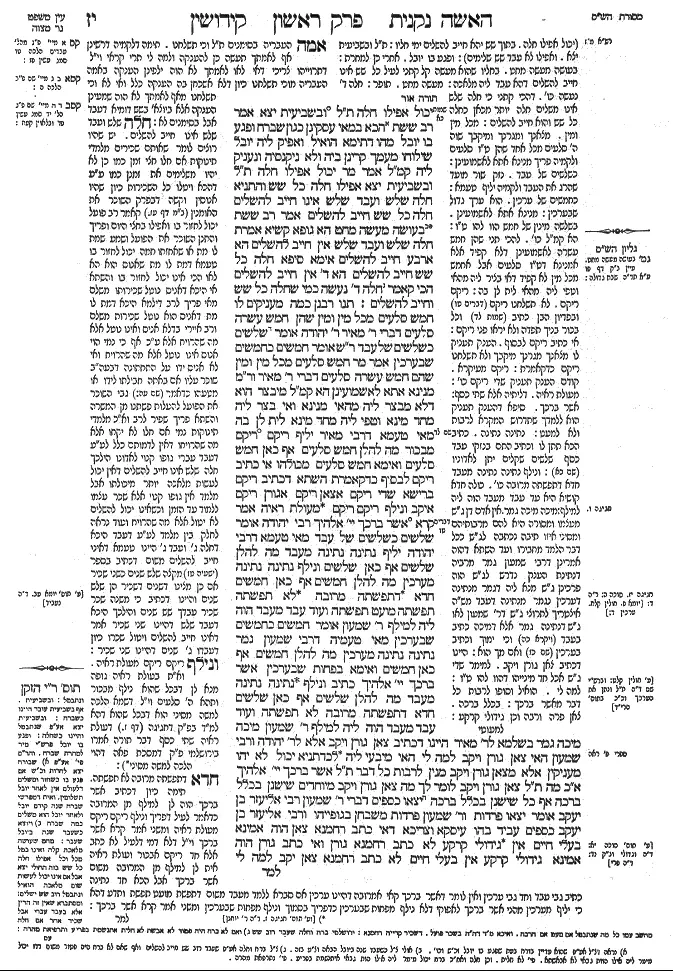
Kiddushin 17a - Guemara
יכול אפילו חלה ת"ל (שמות כא, ב) ובשביעית יצא אמר רב ששת הכא במאי עסקינן כגון שברח ופגע בו יובל מהו דתימא הואיל ואפיק ליה יובל שילוחו מעמך קרינן ביה ולא ניקנסיה ונעניק ליה קמ"ל אמר מר יכול אפילו חלה ת"ל ובשביעית יצא אפילו חלה כל שש והתניא חלה שלש ועבד שלש אינו חייב להשלים חלה כל שש חייב להשלים אמר רב ששת בעושה מעשה מחט הא גופא קשיא אמרת חלה שלש ועבד שלש אין חייב להשלים הא ארבע חייב להשלים אימא סיפא חלה כל שש חייב להשלים הא ד' אין חייב להשלים הכי קאמר חלה ד' נעשה כמי שחלה כל שש וחייב להשלים :
תנו רבנן כמה מעניקים לו חמש סלעים מכל מין ומין שהן חמש עשרה סלעים דברי ר' מאיר ר' יהודה אומר שלשים כשלשים של עבד ר"ש אומר חמשים כחמשים שבערכין אמר מר חמש סלעים מכל מין ומין שהם חמש עשרה סלעים דברי ר' מאיר ור"מ מנינא אתא לאשמועינן הא קמ"ל מיבצר הוא דלא מבצר ליה מהאי מנינא ואי בצר ליה מחד מינא וטפי ליה מחד מינא לית לן בה מאי טעמא דרבי מאיר יליף ריקם (שמות לד, כ) ריקם מבכור מה להלן חמש סלעים אף כאן חמש סלעים ואימא חמש סלעים מכולהו אי כתיב ריקם לבסוף כדקאמרת השתא דכתיב ריקם ברישא שדי ריקם אצאן ריקם אגורן ריקם איקב ונילף ריקם ריקם מעולת ראיה אמר קרא (דברים טו, יד) אשר ברכך יי' אלהיך רבי יהודה אומר שלשים כשלשים של עבד מאי טעמא דרבי יהודה יליף נתינה נתינה מעבד מה להלן שלשים אף כאן שלשים ונילף נתינה נתינה מערכין מה להלן חמשים אף כאן חמשים חדא דתפשתה מרובה לא תפשתה תפשתה מועט תפשתה ועוד עבד מעבד הוה ליה למילף ר' שמעון אומר חמשים כחמשים שבערכין מאי טעמיה דרבי שמעון גמר נתינה נתינה מערכין מה להלן חמשים אף כאן חמשים ואימא בפחות שבערכין אשר ברכך יי' אלהיך כתיב ונילף נתינה נתינה מעבד מה להלן שלשים אף כאן שלשים חדא דתפשתה מרובה לא תפשתה ועוד עבד מעבד הוה ליה למילף ר' שמעון מיכה מיכה גמר בשלמא לר' מאיר היינו דכתיב צאן גורן ויקב אלא לר' יהודה ורבי שמעון האי צאן גורן ויקב למה לי האי מיבעי ליה לכדתניא יכול לא יהו מעניקין אלא מצאן גורן ויקב מנין לרבות כל דבר ת"ל אשר ברכך יי' אלהיך א"כ מה ת"ל צאן גורן ויקב לומר לך מה צאן גורן ויקב מיוחדים שישנן בכלל ברכה אף כל שישנן בכלל ברכה יצאו כספים דברי ר' שמעון רבי אליעזר בן יעקב אומר יצאו פרדות ור' שמעון פרדות משבחן בגופייהו ורבי אליעזר בן יעקב כספים עביד בהו עיסקא וצריכא דאי כתב רחמנא צאן הוה אמינא בעלי חיים אין גידולי קרקע לא כתב רחמנא גורן ואי כתב גורן הוה אמינא גידולי קרקע אין בעלי חיים לא כתב רחמנא צאן יקב למה לי
Comments from Rashi on Masechet Kiddushin Page 17a
(יכול אפילו חלה. בתוך שש יהא חייב להשלים ימי חליו:) (ת"ל ובשביעית יצא. ואפילו לא עבד שש שלימים:) ופגע בו יובל . אחרי כן למחרת: (יכול אפילו חלה. בתוך שש יהא חייב להשלים ימי חליו: ת"ל ובשביעית יצא. ואפילו לא עבד שש שלימים): ופגע בו יובל . אחרי כן למחרת: בעושה מעשה מחט . בחליו שהוא מעשה קל קתני לעיל כל שש אינו חייב להשלים דהא עבד ליה מלאכה: מעשה מחט . תופר: חלה ד' נעשה כו' . דהכי קתני כי חלה שלש אינו משלים חלה יותר מכאן כחלה כל שש והוא חייב להשלים: מכל מין ומין . מצאנך ומגרנך ומיקבך שוה ה' סלעים מכל אחד שהן ט"ו סלעים ולקמיה פריך מנינא אתא לאשמועינן: כשלשים של עבד . נזק שור מועד שהרג את העבד ולקמיה יליף טעמא: כחמשים של ערכין . הוא ערך גדול שבערכין: מנינא אתא לאשמועינן . בשלשה מינין של חמש הוו להו ט"ו: הא קמ"ל כו' . להכי תני שהן חמש עשרה לאשמועינן דלא קפיד אלא אמנינא דט"ו סלעים אבל אחמש מכל מין לא קפיד דאי בציר ליה מהאי וטפי ליה מהאי לית לן בה: ריקם ריקם . לא תשלחנו ריקם (דברים טו) ובפדיון הבן כתיב (שמות לד) וכל בכור בניך תפדה ולא יראו פני ריקם: אי כתיב ריקם לבסוף . הענק תעניק לו מצאנך מגרנך מיקבך ולא תשלחנו ריקם כדקאמרת: ריקם מעיקרא . קודם הענק תעניק שדי ריקם כו': ריקם ריקם . לא תשלחנו ריקם (דברים טו) ובפדיון הבן כתיב (שמות לד) וכל בכור בניך תפדה ולא יראו פני ריקם: מעולת ראיה . דליתיה אלא שתי כסף: אשר ברכך . סיפא דהענק תעניק הוא ללמדך שתדרוש המקרא לרבות ולא למעט: נתינה נתינה . כתיב הכא תתן לו וכתיב התם בנזקי עבד כסף שלשים שקלים יתן לאדוניו (שם כא): ונילף נתינה נתינה מעבד חדא דתפשתה מרובה כו' . כולה חדא קושיא היא עד עבד מעבד הוה ליה למילף: מיכה מיכה גמר . אין אדם דן ג"ש מעצמו ומסורה היא להם מרבותיהם ומסיני איזו תיבה נכתבה לג"ש ככל דבר הלמד מחבירו ועד השתא דהוה אמרינן דרבי שמעון גמר מרביה דנתינת הענק נדרש לג"ש הוה פרכינן ג"ש מנא ליה דגמר מנתינה דערכין נגמר מנתינה דעבד מש"ה איצטריך לתרוצי ג"ש דר' שמעון לאו ג"ש דנתינה גמר אלא דמיכה כתיב בעבד (ויקרא כה) וכי ימוך וכתיב בערכין (שם כז) ואם מך הוא: היינו דכתיב צאן גורן ויקב . למימר שדי ג"ש אכל חד מינייהו דהוו להו ט"ו: למה לי . הואיל וסופו לרבות כל דבר מאשר ברכך: בכלל ברכה . צאן פרה ורבה וכן גידולי קרקע:
Comments from Tosafot - Kiddushin 17a
חלה שלש ועבד שלש אינו חייב להשלים . יש שהיו רוצים לומר שאותם שכירים מלמדי תינוקות אם חלו חצי זמן כמו כן לא יהיו משלימים את זמנן כמו ע"ע דהכא ויטלו כל השכירות כיון שהיו אנוסין וקשה דבפרק השוכר את האומנין (ב"מ דף עז.) קאמר רב פועל יכול לחזור בו ואפילו בחצי היום ופריך והתנן השוכר את הפועל ושמע שמת לו מת או שאחזתו חמה יכול לחזור בו טעמא דמת לו מת שאנוס הוא הא לאו הכי אינו יכול לחזור בו והשתא אי היכא דאניס נוטל שכירותו משלם מאי פריך לרב דילמא היכא דמת לו מת דאניס הוא נוטל שכירות משלם ורב איירי בדלא אניס ואינו נוטל אלא מה שהרויח אלא ע"כ אף כי נמי הוי אנוס אינו נוטל אלא מה שהרויח ואי לא אניס ידו על התחתונה דבעה"ב שוכר עליו אם באתה חבילתו לידו או מטעהו כדאמר (שם עה:) גבי השוכר את הפועל להעלות פשתנו מן המשרה והשתא פריך שפיר לרב וא"כ מלמדי תינוקות נמי אם חלו לא יקחו אלא מה שהרויחו דאין לדמותם כלל לע"ע דעבד עברי גופו קנוי לאדונו הילכך חלה שלש אינו חייב להשלים דאין יכול לעשות מלאכה יותר מיכולתו אבל מלמד אין גופו קנוי אלא שכר עצמו ללמוד עד הזמן וכשאינו יכול להשלים לא יטול אלא מה שהרויח ועוד נראה לחלק בין מלמד לע"ע דעבד היכא דחלה ג' ועבד ג' היינו טעמא דאינו חייב להשלים משום דכתיב בספר (ישעיהו טז) מקצה שלש שנים כשני שכיר אם כן מצינו דשנים דשכיר הן שלש שנים והיינו דכתיב כי משנה שכר שכיר עבדך שש שנים והילכך היכא דעבד שלש דהיינו שני שכיר אמר דאינו חייב להשלים ויטול שכרו כיון דעבדו ג' שנים דהיינו שני שכיר: ונילף ריקם ריקם מעולת ראיה . וא"ת בעולת ראיה גופה מנא לן דבכל שהוא נילף מבכור ותהא ה' סלעים וי"ל דשמא הלכה למשה מסיני הוא דבכל שהוא דהא למ"ד בפ"ק דחגיגה (דף ז.) דעולת ראיה שתי כסף דבר תורה אמרו בירושלמי פ"ק דמסכת פאה דהוי הלכה למשה מסיני: חדא דתפשתה מרובה לא תפשתה . תימה כיון דכתיב אשר ברכך הוה לן למילף מן המרובה כדאמר לעיל דפריך ונילף ריקם ריקם מעולת ראיה ומשני אמר קרא אשר ברכך וי"ל דלא דמי דלעיל לא כתב אלא חד ריקם אבכור ועולת ראיה אית לן למילף מן המרובה משום אשר ברכך אבל הכא חד נתינה כתיב גבי עבד וחד גבי ערכין ואין לומר דאשר ברכך קאי אמרובה דהיינו ערכין אם סברא ללמד מעבד משום דתפשת מועט תפשת ותדע דהא כי יליף מערכין מהני אשר ברכך לאפוקי דלא נילף מפחות שבערכין כדפריך בסמוך ונילף מפחות שבערכין ומשני אמר קרא אשר ברכך:
Kiddushin 17a - Mishnah translated into english
One might have thought that even a slave who became sick and is unable to work must work additional time to compensate for the time missed. Therefore, the verse states: “And in the seventh he shall go out” (Exodus 21:2), which indicates that he leaves his master in any case, even if he has not worked the full six years.
Rav Sheshet said: With what are we dealing here? This concerns a case where he fled and the Jubilee Year arrived immediately afterward, and therefore he did not complete the six years of servitude. The novelty of this halakha is as follows. Lest you say: Since the Jubilee Year released him, he is considered sent away by you, the master, and therefore we should not penalize him but grant him the severance gift, the baraita teaches us that once he flees he forfeits his right to the severance gift.
The Master said above: One might have thought that even a slave who became sick and was unable to work must work additional time to compensate for the time missed. Therefore, the verse states: “And in the seventh he shall go out” (Exodus 21:2). The Gemara asks: Is he excused from working additional time even if he was sick for all six years? But isn’t it taught in a baraita: If he was sick for three years and served for three years, he is not obligated to complete the six years of actual labor, but if he was sick for all six years he is obligated to complete the six years of actual labor. Rav Sheshet said: This is referring to a case where he is unable to perform strenuous labor but can execute minor tasks, such as performing needlework or sewing clothes. Since he can perform work of some kind, this slave is not required to work additional time to compensate for the time missed, even if he was ill for all six years.
The Gemara comments: This matter itself is difficult, as the baraita is apparently self-contradictory. On the one hand, you said that if he was sick for three years and he served for the other three years he is not obligated to complete the six years of actual labor. This indicates that if he was ill for four years he is obligated to complete the six years of labor. On the other hand, say the last clause of the baraita: If he was sick for all six years he is obligated to complete the six years of actual labor. That indicates that if he was ill for four years he is not obligated to complete the six years of actual labor. The Gemara answers that this is what the baraita is saying: If he was sick for four years he becomes as one who was sick for all six years, and therefore he is required to complete the six years of actual labor.
§ The Sages taught: How much does one grant a freed slave as a severance gift? It is five sela in value of each and every type mentioned in this verse: “And you shall grant severance to him out of your flock, and out of your threshing floor, and out of your winepress” (Deuteronomy 15:14), which is a total of fifteen sela. This is the statement of Rabbi Meir. Rabbi Yehuda says: He is given thirty sela in total, like the thirty shekels of the fine that is paid for a slave (see Exodus 21:32). Rabbi Shimon says: The master gives him fifty shekels, like the sum of valuations, in which fifty shekels is the largest designated amount for a man (see Leviticus 27:3).
The Master said above: The master gives five sela of each and every type, which is fifteen sela; this is the statement of Rabbi Meir. The Gemara asks: And does Rabbi Meir come to teach us to count? His novelty certainly cannot be that three fives equal fifteen. The Gemara answers that Rabbi Meir teaches us this: The master may not give less than this total number, but if he gives him less of one type and more of one other type, we have no problem with it, and he has fulfilled the mitzva.
The Gemara asks: What is the reasoning of Rabbi Meir? The Gemara explains: He derives a verbal analogy from “empty” stated with regard to the severance gift: “You shall not send him away empty” (Deuteronomy 15:13), and “empty” stated with regard to a firstborn: “All the firstborn of your sons you shall redeem; and none shall appear before Me empty” (Exodus 34:20). Just as there, in the case of the firstborn, one must give five sela, so too here, in the case of severance gifts, one must give five sela.
The Gemara asks: But one can say that he is obligated to give only five sela in total from all of the three types listed in the verse. The Gemara answers: If “empty” were written at the end of the verse, i.e., Deuteronomy 15:14, the halakha would be as you said. But now that “empty” is written before the verse, i.e., at the end of Deuteronomy 15:13, apply the phrase “Do not send him away empty” to “flock,” and apply “empty” to “threshing floor,” and likewise apply “empty” to “winepress.” Consequently, there must be five sela for each type.
The Gemara asks: And let us derive a verbal analogy between “empty” and “empty” from the case of the burnt-offering of appearance in the Temple brought on the pilgrimage Festivals, with regard to which it is said: “And they shall not appear before the Lord empty” (Deuteronomy 16:16). The burnt-offering of appearance has no fixed value. The Gemara answers that the verse states: “Of that with which the Lord your God has blessed you” (Deuteronomy 15:14), which indicates that one must give a respectable amount as a severance gift.
The baraita states that Rabbi Yehuda says that a freed slave is given thirty sela in total, like the thirty shekels of the fine that is paid for a slave. The Gemara asks: What is the reasoning of Rabbi Yehuda? The Gemara answers: He derives a verbal analogy between giving, as stated with regard to the severance gift, from the expression of giving stated in connection to a Canaanite slave gored by an ox: “He shall give to their master thirty shekels of silver” (Exodus 21:32). Just as there, he must pay thirty shekels for the slave, so too here, in the case of a severance gift, he must pay thirty.
The Gemara asks: But let him derive a similar verbal analogy between “giving” stated with regard to the severance gift and “giving” from valuations (see Leviticus 27:23): Just as there, in the case of valuations, it is fifty shekels for an adult male, so too here, it should be fifty.
The Gemara responds: One answer is, as people say, that if you grasped too much, you did not grasp anything; if you grasped a bit, you grasped something. In other words, if there are two possible sources from which to derive the sum of the severance gift, then without conclusive proof one may not presume that the Torah intended to teach the larger amount. Consequently, the master should be required to give only thirty shekels, not fifty. And furthermore, one should derive the halakha of a slave, i.e., the severance gift, from another case involving a slave, i.e., the thirty shekels paid when a Canaanite slave is gored by an ox, rather than derive the halakha of the severance gift from valuations, which apply to all people.
The baraita further teaches that Rabbi Shimon says: The master gives him fifty shekels, like the fifty shekels of valuations for an adult male. The Gemara asks: What is the reasoning of Rabbi Shimon? He derived a verbal analogy between “giving” and “giving” from valuations (Leviticus 27:23): Just as there, he pays fifty, so too here, he pays fifty. The Gemara asks: But one can say that as this verbal analogy is referring to valuations in general, he should pay the smallest of the valuations, which is merely three sela. The Gemara answers that it is written: “Of that with which the Lord your God has blessed you” (Deuteronomy 15:14), which indicates that one must give a respectable amount as a severance gift.
The Gemara asks: But let Rabbi Shimon derive, like Rabbi Yehuda, the verbal analogy between “giving” and “giving” from the verses discussing the goring of a Canaanite slave, teaching that just as there he pays thirty, so too here, he pays thirty? The Gemara adds that there are two reasons to prefer this derivation, as stated above: One reason is that if you grasped too much, you did not grasp anything; if you grasped a bit, you grasped something. And furthermore, one should derive the halakha of a slave from another case involving a slave. The Gemara answers: Rabbi Shimon derives a verbal analogy between poverty and poverty. With regard to valuations the Torah states: “But if he is too poor” (Leviticus 27:8), and concerning a Hebrew slave the verse says: “And if your brother grows poor” (Leviticus 25:39).
Having ascertained the source for each of the opinions in the baraita, the Gemara analyzes their opinions. The Gemara asks: Granted, with regard to the opinion of Rabbi Meir, this is as it is written “flock,” “threshing floor,” and “winepress,” as he derives from these three terms that the severance gift must be worth fifteen sela. But according to the opinions of Rabbi Yehuda and Rabbi Shimon, why do I need these terms “flock,” “threshing floor,” and “winepress,” in light of the fact that one may give his slave any product?
The Gemara answers: These terms are necessary for that which is taught in a baraita: One might have thought that one grants severance gifts only from the flock, the threshing floor, and the winepress; from where is it derived to include every matter? The verse states: “Of that with which the Lord your God has blessed you” (Deuteronomy 15:14). If so, what is the meaning when the verse states “flock,” “threshing floor,” and “winepress”? This serves to tell you that just as a flock, a threshing floor, and a winepress are unique in that they are included in the category of blessing, i.e., they grow and multiply, so too all items that are included in the category of blessing may be given as a severance gift. This excludes money, which does not increase on its own. This is the statement of Rabbi Shimon. Rabbi Eliezer ben Ya’akov says: This excludes mules, which cannot reproduce.
The Gemara asks: And Rabbi Shimon, why does he exclude money but not mules? The Gemara answers: With regard to mules, their bodies grow and enhance. Although they do not reproduce, they still grow. And Rabbi Eliezer ben Ya’akov, why doesn’t he exclude money? He maintains that one can conduct business with money and thereby profit from it. In this manner money can increase.
The Gemara notes: And it is necessary for the Torah to mention a flock, a threshing floor, and a winepress, as, if the Merciful One had written only “flock,” I would say that animals, yes, the master may give them to his slave upon his release, but that which grows from the ground, no, he may not give them. Therefore, the Merciful One writes “threshing floor.” And if the Torah had written only “threshing floor,” I would say that that which grows from the ground, yes, he may give them, but animals, no, he may not give them. Therefore, the Merciful One writes “flock.” The Gemara asks: Since threshing floor is stated, why do I need the mention of a winepress?
Traduction : The William Davidson digital edition of the Koren Noé Talmud, with commentary by Rabbi Adin Even-Israel Steinsaltz.