 Talmud Bavli
The learning on the whole site is dedicated : L'ilui Nishmat Yechayahou ben Moche
The learning on the whole site is dedicated : L'ilui Nishmat Chemouel Eliezer ben Batcheva
The learning on the whole site is dedicated : L'ilui Nishmat יוסף בן מושה
Kiddushin 25a : Youtube
Daf TubeYoutube
2 video classes :
Kiddushin Page 25a
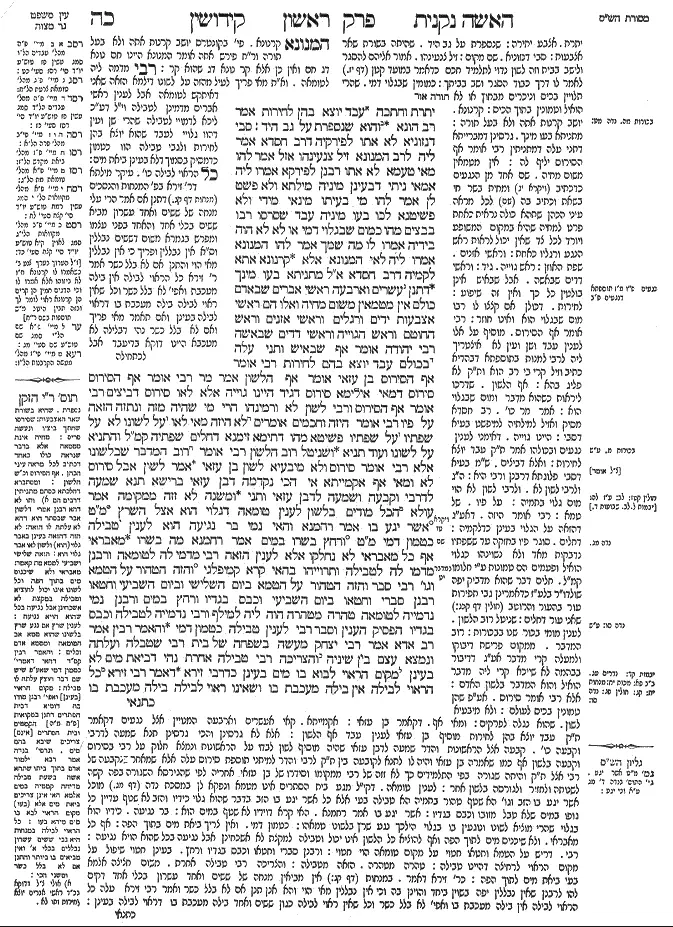
Kiddushin 25a - Guemara
יתרת וחתכה עבד יוצא בהן לחירות אמר רב הונא והוא שנספרת על גב היד:
סבי דנזוניא לא אתו לפירקיה דרב חסדא אמר ליה לרב המנונא זיל צנעינהו אזל אמר להו מאי טעמא לא אתו רבנן לפירקא אמרו ליה אמאי ניתי דבעינן מיניה מילתא ולא פשט לן אמר להו מי בעיתו מינאי מידי ולא פשיטנא לכו בעו מיניה עבד שסרסו רבו בבצים מהו כמום שבגלוי דמי או לא לא הוה בידיה אמרו לו מה שמך אמר להו המנונא אמרו ליה לאו המנונא אלא קרנונא אתא לקמיה דרב חסדא א"ל מתניתא בעו מינך דתנן עשרים וארבעה ראשי אברים שבאדם כולם אין מטמאין משום מחיה ואלו הם ראשי אצבעות ידים ורגלים וראשי אזנים וראש החוטם וראש הגוייה וראשי דדים שבאשה רבי יהודה אומר אף שבאיש ותני עלה בכולם עבד יוצא בהם לחירות רבי אומר אף הסירוס בן עזאי אומר אף הלשון אמר מר רבי אומר אף הסירוס סירוס דמאי אילימא סירוס דגיד היינו גוייה אלא לאו סירוס דביצים רבי אומר אף הסירוס ורבי לשון לא ורמינהו הרי מי שהיה מזה ונתזה הזאה על פיו רבי אומר היזה וחכמים אומרים לא היזה מאי לאו על לשונו לא על שפתיו על שפתיו פשיטא מהו דתימא זימנא דחלים שפתיה קמ"ל והתניא על לשונו ועוד תניא ושניטל רוב הלשון רבי אומר רוב המדבר שבלשונו אלא רבי אומר סירוס ולא מיבעיא לשון בן עזאי אמר לשון אבל סירוס לא ומאי אף אקמייתא אי הכי נקדמה דבן עזאי ברישא תנא שמעה לדרבי וקבעה ושמעה לדבן עזאי ותני ומשנה לא זזה ממקומה אמר עולא הכל מודים בלשון לענין טומאה דגלוי הוא אצל השרץ מ"ט (ויקרא טו, ה) אשר יגע בו אמר רחמנא והאי נמי בר נגיעה הוא לענין טבילה כטמון דמי מ"ט (ויקרא טו, יג) ורחץ בשרו במים אמר רחמנא מה בשרו מאבראי אף כל מאבראי לא נחלקו אלא לענין הזאה רבי מדמי לה לטומאה ורבנן מדמו לה לטבילה ותרוייהו בהאי קרא קמיפלגי (במדבר יט, יט) והזה הטהור על הטמא וגו' רבי סבר והזה הטהור על הטמא ביום השלישי וביום השביעי וחטאו רבנן סברי וחטאו ביום השביעי וכבס בגדיו ורחץ במים ורבנן נמי נדמייה לטומאה טהרה מטהרה הוה ליה למילף ורבי נדמייה לטבילה וכבס בגדיו הפסיק הענין וסבר רבי לענין טבילה כטמון דמי והאמר רבין אמר רב אדא אמר רבי יצחק מעשה בשפחה של בית רבי שטבלה ועלתה ונמצא עצם בין שיניה והצריכה רבי טבילה אחרת נהי דביאת מים לא בעינן מקום הראוי לבוא בו מים בעינן כדרבי זירא דאמר רבי זירא כל הראוי לבילה אין בילה מעכבת בו ושאינו ראוי לבילה בילה מעכבת בו
Comments from Rashi on Masechet Kiddushin Page 25a
יתרת . אצבע יתירה: שנספרת על גב היד . שהיתה בשורת שאר אצבעות: סבי דנזוניא . שם מקום: זיל צנעינהו . אמור אליהם להסגר ולישב בבית וזה לשון נדוי לתלמיד חכם כדאמר במועד קטן (דף יז.) לאמר לו דרך כבוד הסגר ושב בביתך: כמומין שבגלוי דמי . שהרי תלויין בכיס וניכרים מבחוץ או לא הואיל וטמונין בתוך הכיס: קרנונא . יושב קרנות אתה ולא בעל תורה: מתניתא בעו מינך . גרסינן דמברייתא דתני עלה דמתניתין רבי אומר אף הסירוס יליף לה: אין מטמאין משום מחיה . שם אחד מן הנגעים כדכתיב (ויקרא יג) ומחית בשר חי בשאת וכתיב בה (שם) לכל מראה עיני הכהן שתהא כולה נראית כאחת פרט למחיה שהיא במקום המשופע ויורד לכל צד שאין יכול לראות ראש הנגע ורגליו כאחת: וראשי אזנים . שפת האוזן: ראש גוייה . גיד: וראשי דדים שבאשה . אבל שבאיש אינן בולטין כל כך ואין זה שיפוע: לחירות . דכולן אם קצצו לו רבו מום שבגלוי הוא ואינו חוזר: רבי אומר היזה . דאע"ג דהזאה על הגלוי בעינן כדלקמיה: רבי אומר אף הסירוס . מוסיף על אלו לענין עבד ושן ועין לא איצטריך ליה לרבי למנות בתוספתא דבהדיא כתיב וזיל קרי בי רב הוא ות"ק לא פליג בהא: אף הלשון . שדרכו ליראות כשהוא מדבר ומום שבגלוי הוא: אמר מר כו' . רב חסדא מסיק ואזיל למילתיה למיפשט בעיא דסבי: היינו גוייה . דאימני לענין נגעים ובכולהו אמר ת"ק עבד יוצא לחירות: ואלא דביצים . ש"מ בעיא דסבי פלוגתא דרבנן ורבי היא: ה"ג ולרבי לשון לא . ולרבי לשון לא הוי מום גלוי בתמיה: על פיו . של טמא: רבי אומר היזה . דאע"ג דהזאה על הגלוי בעינן כדלקמיה: דחלים . סוגר פיו בחזקה עד ששפתיו נדבקות מאד ולא נשוינהו כגלוי הואיל ופעמים הם טמונות ע"י חלומו קמ"ל. חלים דבר שהוא מדביק יפה שולדו"ר (שולדי"ר: ללחוץ בחזקה) בלע"ז כדאמרינן גבי תפירות עור בהעור והרוטב (חולין דף קכג:) שאני עור דחלים: שניטל רוב הלשון . לענין מומי בכור שנו בבכורות: רוב המדבר . ממקום פרישת דיבוקו ולמעלה קרי מדבר אע"ג דדיבור בבהמה לא שייכא קרי ליה מדבר הואיל והוא המדבר בלשון האדם: אלא רבי אומר סירוס . אע"פ שהן טמונין בכיס לעולם: ולא מיבעיא לשון . שהוא נגלה לפרקים: ומאי אף . דקאמר בן עזאי: אקמייתא . קאי אעשרים וארבעה המנויין אצל נגעים דקאמר ת"ק עבד יוצא בהן לחירות מוסיף בן עזאי לענין עבד אף הלשון: אלא לא גרסינן והכי גרסינן תנא שמעה לדרבי וקבעה כו' . קבעה אצל הראשונות והדר שמעה לדבן עזאי שהיה מוסיף לשון לבדו על הראשונות ונמצא חלוק על רבי בסירוס וקבעה בלשון אף כמו שאמרה בן עזאי והיה לו לתנא לקובעה בין ת"ק לרבי והדר למיתני תוספת סירוס עלה אלא שמאחר שנקבעה של רבי אצל ת"ק והיתה שגורה בפי התלמידים כך לא זזה של רבי ממקומו וסידרו של בן עזאי אחריה לפי שהגירסא השגורה בפה קשה לשנותה ולחזור ולגורסה בלשון אחר: לענין טומאה . דקי"ל מגע בית הסתרים אינו מטמא ונפקא לן במסכת נדה (דף מג.) מוכל אשר יגע בו הזב וגו' הא שטף טהור בתמיה הא טבילה בעי אלא כל אשר יגע בו הזב בדבר שהוא גלוי כידיו והזב לא שטף עדיין כל גופו במים שלא טבל מזובו וכבס בגדיו: אשר יגע בו אמר רחמנא . האי קרא דוידיו לא שטף במים הוא: בר נגיעה . כידיו הוא בגלוי שהרי מוציא לשונו ונוגעין בו בגלוי הילכך נגע שרץ בלשונו טמאהו: כטמון דמי . ואין צריך ביאת מים בתוך הפה: אף כל מאבראי . ולא שיכניס מים לתוך הפה ואף להוציא כל הלשון אינו יכול וטבילה למקצת לא אשכחינן אבל נגיעה בכל שהוא הויא נגיעה: רבי . דריש על הטמא וחטאו חטוי על מקום טומאה הוי חטוי: רבי . דריש על הטמא וחטאו חטוי על מקום טומאה הוי חטוי: ורבנן סברי וחטאו וכבס בגדיו ורחץ . בעינן חטוי שיפול על מקום הראוי לרחיצה דהיינו טבילה: טהרה מטהרה . הזאה מטבילה: והצריכה רבי טבילה אחרת . משום חציצה אלמא בעי ביאת מים לתוך הפה: כר' זירא דאמר . במנחות (דף קג:) אין מביאין מנחה של ששים ואחד עשרון בכלי אחד דקים להו לרבנן שאין נבללין יפה בשוין ביחד והוינן בה וכי אין נבללין מאי הוי והא אנן תנן אם לא בלל כשר ואמר רבי זירא עלה כל הראוי לבילה אין בילה מעכבת בו ואפי' לא בלל כשר וכל שאין ראוי לבילה כגון ששים ואחד בילה מעכבת בו דראוי לבילה בעינן:
Comments from Tosafot - Kiddushin 25a
המנונא קרנונא . פי' בקונטרס יושב קרנות אתה ולא בעל תורה ור"ח פירש אתה אומר המנונא היינו חם נונא דג חם ואין כן אלא קר נונא דג שהוא קר: רבי מדמה ליה לטומאה . וא"ת מאי פריך לעיל מהזה על לשונו דילמא הזאה שאני דאיתקש לטומאה אבל לענין ראשי אברים מדמינן לטבילה וי"ל דע"כ ליכא לדמויי לטבילה שהרי שן ועין דהוו גלויי לעבד שהוא יוצא בהן לחירות ולגבי טבילה הוו כטמון כדמסיק בסמוך דלא בעינן ביאת מים: כל הראוי לבילה כו' . עיקר מילתא דר' זירא בפ' המנחות והנסכים (מנחות דף קג.) דתנן אם אמר הרי עלי מנחה של ששים ואחד עשרון מביא ששים בכלי אחד והאחד בפני עצמו ומפרש בגמרא משום דששים נבללין וס"א אין נבללין ופריך כי אין נבללין מאי הוי והתנן אם לא בלל כשר אמר ר' זירא כל הראוי לבילה אין בילה מעכבת ואפי' לא בלל כשר וכל שאין ראוי לבילה בילה מעכבת בו דראוי לבילה בעינן ואם תאמר מאי פריך ואם לא בלל כשר נהי דבלילה לא מעכבא היינו דוקא בדיעבד אבל לכתחילה מצוה לבלול ויש לומר דכיון דהאי גברא למנחה גדולה קמכוין אם איתא דבעלמא כשר בדיעבד בהאי גברא שהתנדב קרבן גדול שרי אף לכתחילה עוד יש לומר דאיכא נפקותא אליבא דמ"ד התם אפילו המתנדב מנחה גדולה אינו מביא אלא לוג אחד אם כן כשהתנדב ס"א עשרונים יצטרך להביא בשני כלים לפי שאין נבללים יפה ויצטרך להביא שני לוגים שמן והוא לא התנדב אלא לוג אחד והוי כמו ייתור שמנו דקיימא לן (מנחות יא.) דייתור שמנו פסול ואי הוה שרי בדיעבד בכלי אחד היה טוב להביא לכתחילה שלא יבא לידי ייתור שמן ומיהו קשה מ"ט דראוי אי שנה הכתוב בלילה לעכב ליבעי בלילה ממש ואי לא שנה אפילו ראוי לא ליבעי וי"ל דודאי שנה הכתוב בלול כמה פעמים אבל לא כתב בלשון צווי ובלילה משמע דאתא לאשמועינן דלא בעינן אלא ראוי וא"ת בטבילה מנ"ל דבעינן ראוי ויש לומר משום דכתיב ורחץ את כל בשרו דמשמע אפי' בית הסתרים וכתיב וידיו ודרשינן מה ידיו מאבראי אף כל מאבראי וממעטים בית הסתרים מ"מ כיון דאיכא כל דמרבינן אפי' בית הסתרים איכא למימר לכל הפחות להכי מרבי דבעינן ראוי לביאת מים:
Kiddushin 25a - Mishnah translated into english
an extra finger, i.e., six fingers on his hand, and the master severed it, the slave is emancipated by means of this injury. Rav Huna says: And this halakha applies when the finger can be counted along the back of the hand, i.e., the extra finger is on the same line as the others. If it protrudes from another spot, then it is not classified as a finger but a mere growth, and destroying it is not considered the removal of a limb.
§ The Gemara relates: The Elders of the city of Nezonya did not come to Rav Ḥisda’s lecture. Rav Ḥisda said to Rav Hamnuna: Go and ostracize them [tzaninhu] because they act disrespectfully toward the Sages. Rav Hamnuna went and said to the Elders of Nezonya: What is the reason that the rabbis did not come to the lecture? They said to him: Why should we come, as we asked him about a matter and he did not resolve it for us. We have nothing to learn from him. Rav Hamnuna said to them: Have you asked me anything that I did not resolve for you? Ask me your question.
They raised the following dilemma before him: With regard to a slave whose master castrates his testicles, what is the halakha? Is that considered an exposed blemish that is sufficient to emancipate him or not? An answer to their dilemma was not available to Rav Hamnuna. They said to him: What is your name? He said to them: Hamnuna. They said to him in jest: You should not be called Hamnuna, a good hot fish; rather, your name should be Karnuna, a cold fish that is no longer tasty.
After this encounter Rav Hamnuna came before Rav Ḥisda and told him what had happened. Rav Ḥisda said to him: They raised before you a dilemma that can be resolved from a baraita, which was cited in connection to a mishna, and you did not know how to answer them. As we learned in a mishna (Nega’im 6:7): There are twenty-four extremities in a person, none of which can become ritually impure due to unaffected skin. The Torah states that if a leprous spot contains some healthy flesh, the person is immediately rendered impure (Leviticus 13:14). The halakha of unaffected skin does not apply to the extremities because the priest must be able to see the entirety of the untainted area at once. Due to the shape of the twenty-four extremities, it is impossible to see the entirety of the area from a single vantage point. Consequently, the halakha of unaffected skin does not apply to them.
And these are the twenty-four extremities: The extremities of the fingers and toes, twenty in total, and the extremities of the ears, and the extremity of the nose, and the extremity of the penis, and the extremities of the nipples of a woman. Rabbi Yehuda says: Even the nipples of a man are included. And it is taught in that regard in a baraita: A slave is emancipated for injuries to all of them. The body parts listed with regard to leprosy are the same ones that, when injured, lead to the emancipation of a slave. Rabbi Yehuda HaNasi says: Also, the castration of a slave by his master entails his freedom. Ben Azzai says: The tongue is also considered an exposed body part, as it is exposed when one speaks. Consequently, if the master severs his slave’s tongue, the slave goes free.
The Master said above that Rabbi Yehuda HaNasi says: Also castration. The Gemara asks: Castration of what? If we say that it is referring to castration of the penis, i.e., that the master severed the slave’s penis, this is the same as the mishna that already mentioned a penis. What, then, does Rabbi Yehuda HaNasi add? Rather, is it not correct to say that Rabbi Yehuda HaNasi is referring to castration of the testicles? If so, this baraita resolves the dilemma raised by the Elders of Nezonya.
The Gemara further analyzes the baraita. Rabbi Yehuda HaNasi says: Also castration, but he does not include the tongue, unlike ben Azzai. The Gemara inquires: And according to Rabbi Yehuda HaNasi, is the tongue not considered exposed? And the Gemara raises a contradiction from the following: In a case where one was sprinkling the purification water of the red heifer on another person in order to purify him from ritual impurity imparted by a corpse, and a sprinkling of water landed on his mouth, Rabbi Yehuda HaNasi says: He has sprinkled, i.e., this is a valid form of sprinkling and the impure person is purified. And the Rabbis say: He has not sprinkled, i.e., this is an invalid form of sprinkling because water of purification must be sprinkled on exposed limbs.
The Gemara clarifies the difficulty from this baraita: What, is it not the case that this is referring to a situation where water was sprinkled on his tongue, which would indicate that Rabbi Yehuda HaNasi maintains that the tongue is an exposed limb? The Gemara rejects this suggestion: No, this is referring to one who had water sprinkled on his lips. The Gemara asks: If it was sprinkled on his lips, isn’t it obvious that he is ritually pure, as the lips are exposed? The Gemara answers: It is necessary to state this, lest you say that at times, he closes his lips tightly, and consequently they should be considered an unexposed part of the body. Therefore, the baraita teaches us that according to Rabbi Yehuda HaNasi one’s lips are considered exposed.
The Gemara further asks: But isn’t it taught explicitly in a baraita that if one had water sprinkled on his tongue he is ritually pure according to Rabbi Yehuda HaNasi? And it is further taught in a baraita dealing with the blemishes of priests and offerings that if most of his tongue was removed, this is a blemish; and Rabbi Yehuda HaNasi says: This is referring to a case where the part removed was most of the part of his tongue that he uses for speaking and pronouncing words, which is the tip of the tongue, not most of its length. This indicates that Rabbi Yehuda HaNasi maintains that if the tongue is removed, that is considered a blemish.
Rather, the baraita should be explained as follows. Rabbi Yehuda HaNasi says: Castration is included, and it is not necessary to say that if the slave’s tongue is removed he is emancipated, as the tongue is exposed. Ben Azzai says: The loss of his tongue emancipates him, but castration does not. And what is the meaning of the term: Also, in the baraita, which indicates that ben Azzai is adding to Rabbi Yehuda HaNasi’s statement? He is adding to the first statement of the first tanna, not to the immediately preceding ruling of Rabbi Yehuda HaNasi. The Gemara asks: If so, the statement of ben Azzai should be first, as he adds one item, i.e., the tongue, to the ruling of the first tanna, while Rabbi Yehuda HaNasi further adds the case of castration to ben Azzai’s opinion.
The Gemara answers: The baraita should have been formulated in this manner, but the tanna first heard the opinion of Rabbi Yehuda HaNasi and set it in his version of the baraita, and afterward he heard the opinion of ben Azzai and taught it at the end. And although it would be appropriate to change the order of the statements, he did not do so because a mishna does not move from its place. Once it has been taught in a certain manner, the tanna will not change the text of a mishna, in order to avoid confusion.
Ulla says: All concede with regard to a tongue that in the matter of ritual impurity it is considered exposed with respect to a dead creeping animal and other items that impart impurity. In other words, if an individual comes into contact with a source of ritual impurity with his tongue, he is rendered impure. What is the reason for this? The Merciful One states: “Whom he touches” (Leviticus 15:11), and this tongue can also touch. It is possible for one to touch objects with his tongue.
Similarly, all agree about a tongue with regard to the matter of immersion that the tongue is considered concealed, and therefore one need not open his mouth so that the water touches his tongue. For an immersion to be valid, the water must come into contact with the entire outside of one’s body. Ulla teaches that this does not include the tongue. What is the reason for this? The Merciful One states: “And he shall immerse his flesh in water” (Leviticus 15:13). Just as his flesh is on the outside, so too everything that requires immersion is on the outside, and this does not include what is ordinarily on the inside.
They disagreed only with regard to whether the tongue is considered exposed or concealed in the matter of sprinkling. Rabbi Yehuda HaNasi compares sprinkling to impurity, where the tongue is considered exposed, and the Rabbis compare it to immersion, where the tongue is considered concealed.
The Gemara comments: And the two of them disagree with regard to the meaning of this verse: “And the pure person shall sprinkle upon the impure person on the third day and on the seventh day, and he shall purify him on the seventh day and he shall wash his clothes and immerse in water and he shall become pure in the evening” (Numbers 19:19). Rabbi Yehuda HaNasi maintains that the verse should be read as: “And the pure person shall sprinkle upon the impure person on the third day and on the seventh day, and he shall purify him.” This indicates that sprinkling is compared to ritual impurity, which means that it is effective if the water lands on any part of the body that can become impure.
Conversely, the Rabbis maintain that one should read the phrase “and he shall purify him” with the last part of the verse, as follows: “And he shall purify him on the seventh day and he shall wash his clothes and immerse in water.” According to this reading, sprinkling is compared to immersion, which means that the water must be sprinkled on part of the body that requires immersion.
The Gemara asks: And with regard to the opinion of the Rabbis as well, let us compare sprinkling to impurity. The Gemara answers: One should derive purification from purification. Just as immersion is a method of purification, so too sprinkling is a method of purification, and therefore it is appropriate to compare these two cases. The Gemara asks from the other perspective: And with regard to the opinion of Rabbi Yehuda HaNasi, let us compare sprinkling to immersion. The Gemara answers that the phrase “and he shall wash his clothes” concludes the discussion of that matter, i.e., this expression indicates that a new clause begins from here, and therefore sprinkling should not be compared to immersion but to impurity, which is mentioned prior to it.
The Gemara asks: But does Rabbi Yehuda HaNasi maintain with regard to the matter of immersion that the tongue is considered concealed? But doesn’t Ravin say that Rav Adda says that Rabbi Yitzḥak says: There was an incident involving a maidservant of the household of Rabbi Yehuda HaNasi who immersed herself, and she ascended from her immersion and a bone was found between her teeth, and Rabbi Yehuda HaNasi required her to perform another immersion? This indicates that according to Rabbi Yehuda HaNasi one may not have a foreign object even inside one’s mouth during immersion. If so, the tongue should require immersion as well.
The Gemara answers: That is no proof, as it is granted that we do not require immersion in water, i.e., the water need not actually enter one’s mouth. But we require that the mouth be a place that is fit for water to enter. If there is a foreign object, the water cannot enter that spot.
This is in accordance with that statement of Rabbi Zeira. As Rabbi Zeira says with regard to meal-offerings: For any amount of flour suitable for mingling with oil in a meal-offering, mingling is not indispensable for it. Although it is a mitzva to mingle the flour and oil ab initio, if they were not mingled the meal-offering is still valid. But for any amount of flour not suitable for mingling, mingling is indispensable for it, and such a meal-offering is invalid. The principle is: Ab initio requirements prevent the fulfillment of a mitzva in situations where they are not merely absent but impossible. Here too, although there is no need for the water to actually enter the concealed spaces of the body, it is still necessary that these places be fit for immersion without the interposition of a foreign object.
Traduction : The William Davidson digital edition of the Koren Noé Talmud, with commentary by Rabbi Adin Even-Israel Steinsaltz.