 Talmud Bavli
The learning on the whole site is dedicated : L'ilui Nishmat Chemouel Eliezer ben Batcheva
The learning on the whole site is dedicated : L'ilui Nishmat Amram ben Itshak Loubaton
The learning on the whole site is dedicated : L'ilui Nishmat יוסף בן מושה
Shabbat 119b : Youtube
Daf TubeYoutube
2 video classes :
Shabbat Page 119b
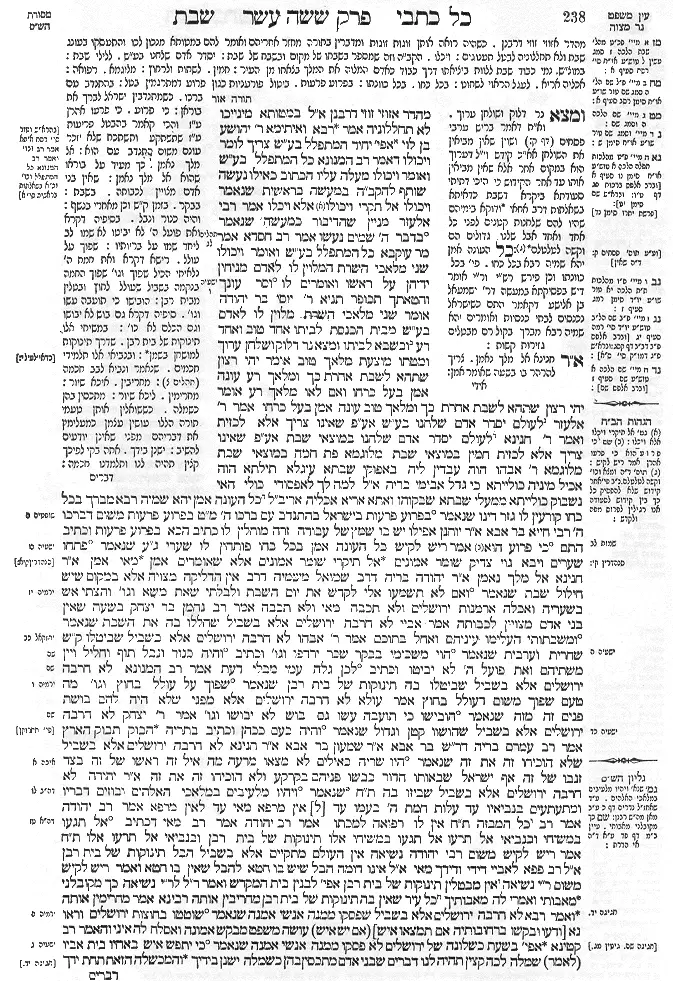
Shabbat 119b - Guemara
מהדר אזוזי זוזי דרבנן א"ל במטותא מינייכו לא תחללוניה אמר רבא ואיתימא ר' יהושע בן לוי אפי' יחיד המתפלל בע"ש צריך לומר ויכולו דאמר רב המנונא כל המתפלל בע"ש ואומר ויכולו מעלה עליו הכתוב כאילו נעשה שותף להקב"ה במעשה בראשית שנאמר ויכולו אל תקרי ויכולו אלא ויכלו אמר רבי אלעזר מניין שהדיבור כמעשה שנאמר (תהלים לג, ו) בדבר ה' שמים נעשו אמר רב חסדא אמר מר עוקבא כל המתפלל בע"ש ואומר ויכולו שני מלאכי השרת המלוין לו לאדם מניחין ידיהן על ראשו ואומרים לו (ישעיהו ו, ז) וסר עונך וחטאתך תכופר תניא ר' יוסי בר יהודה אומר שני מלאכי השרת מלוין לו לאדם בע"ש מבית הכנסת לביתו אחד טוב ואחד רע וכשבא לביתו ומצא נר דלוק ושלחן ערוך ומטתו מוצעת מלאך טוב אומר יהי רצון שתהא לשבת אחרת כך ומלאך רע עונה אמן בעל כרחו ואם לאו מלאך רע אומר יהי רצון שתהא לשבת אחרת כך ומלאך טוב עונה אמן בעל כרחו אמר ר' אלעזר לעולם יסדר אדם שלחנו בע"ש אע"פ שאינו צריך אלא לכזית ואמר ר' חנינא לעולם יסדר אדם שלחנו במוצאי שבת אע"פ שאינו צריך אלא לכזית חמין במוצאי שבת מלוגמא פת חמה במוצאי שבת מלוגמא ר' אבהו הוה עבדין ליה באפוקי שבתא עיגלא תילתא הוה אכיל מיניה כולייתא כי גדל אבימי בריה א"ל למה לך לאפסודי כולי האי נשבוק כולייתא ממעלי שבתא שבקוהו ואתא אריא אכליה אריב"ל כל העונה אמן יהא שמיה רבא מברך בכל כחו קורעין לו גזר דינו שנאמר (שופטים ה, ב) בפרוע פרעות בישראל בהתנדב עם ברכו ה' מ"ט בפרוע פרעות משום דברכו ה' רבי חייא בר אבא א"ר יוחנן אפילו יש בו שמץ של עבודה זרה מוחלין לו כתיב הכא בפרוע פרעות וכתיב התם (שמות לב, כה) כי פרוע הוא אמר ריש לקיש כל העונה אמן בכל כחו פותחין לו שערי ג"ע שנאמר (ישעיהו כו, ב) פתחו שערים ויבא גוי צדיק שומר אמונים אל תיקרי שומר אמונים אלא שאומרים אמן מאי אמן א"ר חנינא אל מלך נאמן א"ר יהודה בריה דרב שמואל משמיה דרב אין הדליקה מצויה אלא במקום שיש חילול שבת שנאמר (ירמיהו יז, כז) ואם לא תשמעו אלי לקדש את יום השבת ולבלתי שאת משא וגו' והצתי אש בשעריה ואכלה ארמנות ירושלים ולא תכבה מאי ולא תכבה אמר רב נחמן בר יצחק בשעה שאין בני אדם מצויין לכבותה אמר אביי לא חרבה ירושלים אלא בשביל שחללו בה את השבת שנאמר (יחזקאל כב, כו) ומשבתותי העלימו עיניהם ואחל בתוכם אמר ר' אבהו לא חרבה ירושלים אלא בשביל שביטלו ק"ש שחרית וערבית שנאמר (ישעיהו ה, יא) הוי משכימי בבקר שכר ירדפו וגו' וכתיב (ישעיהו ה, יב) והיה כנור ונבל תוף וחליל ויין משתיהם ואת פועל ה' לא יביטו וכתיב (ישעיהו ה, יג) לכן גלה עמי מבלי דעת אמר רב המנונא לא חרבה ירושלים אלא בשביל שביטלו בה תינוקות של בית רבן שנאמר (ירמיהו ו, יא) שפוך על עולל בחוץ וגו' מה טעם שפוך משום דעולל בחוץ אמר עולא לא חרבה ירושלים אלא מפני שלא היה להם בושת פנים זה מזה שנאמר (ירמיהו ו, טו) הובישו כי תועבה עשו גם בוש לא יבושו וגו' אמר ר' יצחק לא חרבה ירושלים אלא בשביל שהושוו קטן וגדול שנאמר (ישעיהו כד, ב) והיה כעם ככהן וכתיב בתריה הבוק תבוק הארץ אמר רב עמרם בריה דר"ש בר אבא א"ר שמעון בר אבא א"ר חנינא לא חרבה ירושלים אלא בשביל שלא הוכיחו זה את זה שנאמר (איכה א, ו) היו שריה כאילים לא מצאו מרעה מה איל זה ראשו של זה בצד זנבו של זה אף ישראל שבאותו הדור כבשו פניהם בקרקע ולא הוכיחו זה את זה א"ר יהודה לא חרבה ירושלים אלא בשביל שביזו בה ת"ח שנאמר (דברי הימים ב לו, טז) ויהיו מלעיבים במלאכי האלהים ובוזים דבריו ומתעתעים בנביאיו עד עלות חמת ה' בעמו עד [ל] אין מרפא מאי עד לאין מרפא אמר רב יהודה אמר רב כל המבזה ת"ח אין לו רפואה למכתו אמר רב יהודה אמר רב מאי דכתיב (דברי הימים א טז, כב) אל תגעו במשיחי ובנביאי אל תרעו אל תגעו במשיחי אלו תינוקות של בית רבן ובנביאי אל תרעו אלו ת"ח אמר ריש לקיש משום רבי יהודה נשיאה אין העולם מתקיים אלא בשביל הבל תינוקות של בית רבן א"ל רב פפא לאביי דידי ודידך מאי א"ל אינו דומה הבל שיש בו חטא להבל שאין בו חטא ואמר ריש לקיש משום ר"י נשיאה אין מבטלין תינוקות של בית רבן אפי' לבנין בית המקדש ואמר ר"ל לר"י נשיאה כך מקובלני מאבותי ואמרי לה מאבותיך כל עיר שאין בה תינוקות של בית רבן מחריבין אותה רבינא אמר מחרימין אותה ואמר רבא לא חרבה ירושלים אלא בשביל שפסקו ממנה אנשי אמנה שנאמר (ירמיהו ה, א) שוטטו בחוצות ירושלים וראו נא [ודעו ובקשו ברחובותיה אם תמצאו איש] (אם יש איש) עושה משפט מבקש אמונה ואסלח לה איני והאמר רב קטינא אפי' בשעת כשלונה של ירושלים לא פסקו ממנה אנשי אמנה שנאמר (ישעיהו ג, ו) כי יתפש איש באחיו בית אביו (לאמר) שמלה לכה קצין תהיה לנו דברים שבני אדם מתכסין בהן כשמלה ישנן בידיך והמכשלה הזאת תחת ידך
Comments from Rashi on Masechet Shabbat Page 119b
מהדר אזוזי זוזי דרבנן . כשהיה רואה אותן זוגות זוגות ומדברין בתורה מחזר אחריהם ואומר להם במטותא מנכון לכו והתעסקו בעונג שבת ולא תחללוניה לבטל תענוגים: ויכלו . הקב"ה וזה שמספר בשבחו של מקום ובשבח של שבת: יסדר אדם שלחנו בע"ש . ללילי שבת: במוצ"ש . נמי כבוד שבת ללוות ביציאתו דרך כבוד כאדם המלוה את המלך בצאתו מן העיר: חמין . לשתות ולרחוץ: מלוגמא . רפואה: אכליה אריא . לעגל הראוי לשחוט: בכל כחו . בכל כוונתו: בפרוע פרעות . ביטול פורעניות כגון פרוע דמתרגמין בטל: בהתנדב עם ברכו . כשמתנדבין ישראל לברך את בוראן: כי פרוע . כי פרעו אהרן ע"ז והכי קאמר בהבטל פריעות ע"ז שתשתקע ותשתכח שלא יזכר עונם משום התנדב עם הוא: אל מלך נאמן . כך מעיד על בוראו שהוא אל מלך נאמן: שאין בני אדם מצויין לכבותה . בשבת: בבקר . בזמן ק"ש וכן מאחרי בנשף: והיה כנור ונבל . בסיפיה דקרא ואת פועל ה' לא יביטו לא שמו לב ליחד שמו על בריותיו: שפוך על עולל . רישא דקרא ואת חמת ה' נלאיתי הכיל שפוך וגו' שפוך החמה בנקמה בשביל שעולל לחוץ ובטלין מבית רבן: הובישו כי תועבה עשו וגו' . סיפיה דקרא גם בוש לא יבושו וגם הכלם לא כו': במשיחי אלו תינוקות של בית רבן . שדרך תינוקות למושחן בשמן: ובנביאי אלו תלמידי חכמים . שנאמר ונביא לבב חכמה (תהלים צ): מחריבין . איכא שיור: מחרימין . ליכא שיור: מתכסין בהן כשמלה . כששואלין אותן טעמי תורה הללו עושין עצמן כמעלימין את דבריהם מפני שאינן יודעים להשיב: ישנן בידך . אתה בקי לפיכך קצין תהיה לנו ותלמדנו חכמה:
Comments from Tosafot - Shabbat 119b
א"ר חנינא אל מלך נאמן. צריך להרהר בו בשעה שאומר אמן: ומצא נר דלוק ושולחן ערוך . וא"ת דאמר בריש ערבי פסחים (דף ק:) ושוין שאין מביאין את השולחן אא"כ קידש וי"ל דערוך הוא במקום אחר אלא שאין מביאין אותו עד אחר הקידוש כי היכי דתיתי סעודתא ביקרא דשבת כדאיתא בשאלתות דרב אחאי ודוקא בימיהם שהיו להם שלחנות קטנים לפני כל אחד ואחד אבל שלנו גדולים הם וקשה לטלטלם: כל העונה אמן יהא שמיה רבא בכל כחו . פי' בכל כוונתו וכן פירש רש"י ור"י אומר דיש בפסיקתא במעשה דר' ישמעאל בן אלישע דקאמר התם כשישראל נכנסים לבתי כנסיות ואומרים יהא שמיה רבא מברך בקול רם מבטלים גזירות קשות: א"ר חנינא אל מלך נאמן . צריך להרהר בו בשעה שאומר אמן:
Shabbat 119b - Mishnah translated into english
would seek pairs of Sages engaged in conversation on Shabbat and said to them: Please do not desecrate Shabbat by failing to delight in Shabbat.
Rava said, and some say it was Rabbi Yehoshua ben Levi who said: Even an individual who prays on Shabbat evening must recite the passage: “And the heavens and the earth were finished [vaykhullu]” (Genesis 2:1–3), as Rav Hamnuna said: Anyone who prays on Shabbat evening and recites the passage of vaykhullu, the verse ascribed him credit as if he became a partner with the Holy One, Blessed be He, in the act of Creation. As it is stated: “And the heavens and the earth were finished [vaykhullu].” Do not read it as: Were finished [vaykhullu]; rather, as: They finished [vaykhallu]. It is considered as though the Holy One, Blessed be He, and the individual who says this become partners and completed the work together. Rabbi Elazar said: From where is it derived that speech is like action? As it is stated: “By the word of God the heavens were made, and all of their hosts by the breath of His mouth” (Psalms 33:6).
Rav Ḥisda said that Mar Ukva said: One who prays on Shabbat evening and recites vaykhullu, the two ministering angels who accompany the person at all times place their hands on his head and say to him: “And your iniquity has passed, and your sin has been atoned” (Isaiah 6:7). It was taught in a baraita: Rabbi Yosei bar Yehuda says: Two ministering angels accompany a person on Shabbat evening from the synagogue to his home, one good angel and one evil angel. And when he reaches his home and finds a lamp burning and a table set and his bed made, the good angel says: May it be Your will that it shall be like this for another Shabbat. And the evil angel answers against his will: Amen. And if the person’s home is not prepared for Shabbat in that manner, the evil angel says: May it be Your will that it shall be so for another Shabbat, and the good angel answers against his will: Amen.
Rabbi Elazar said: A person should always set his table on Shabbat eve with all the preparations for an important feast, even if he only needs the table set for an olive-bulk of food. And Rabbi Ḥanina said: A person should always set his table at the conclusion of Shabbat, Saturday night, for a feast in deference to the Shabbat that passed, even if he only needs the table set for an olive-bulk of food. And with regard to the meal at the conclusion of Shabbat, they said: Hot water after Shabbat is a remedy [melugma], warm bread at the conclusion of Shabbat is a remedy. The Gemara relates: They would prepare for Rabbi Abbahu at the conclusion of Shabbat a third-born calf, and he would eat one kidney from it. When his son Avimi grew up, he said to his father: Why do you waste so much? Let us leave a kidney over from Shabbat eve, and you will not need to slaughter an entire calf for that purpose. Indeed, they left the calf and did not slaughter it, and a lion came and ate it. This teaches that one should not be miserly when it comes to honoring Shabbat.
Apropos the reward for honoring Shabbat, the Gemara cites statements about the reward for answering amen. Rabbi Yehoshua ben Levi said that anyone who answers: Amen, may His great name be blessed, wholeheartedly, with all his might, they rip his sentence, as it is stated: “When punishments are annulled in Israel, when the people offer themselves, bless the Lord” (Judges 5:2). What is the reason for when punishments are annulled? Because the Jewish people blessed God. When one recites: Amen, may His great name be blessed, and blesses God, his punishment is annulled. Rabbi Ḥiyya bar Abba said that Rabbi Yoḥanan said: Even if one has within him a trace of idolatry, when he answers amen he is forgiven. It is written here, in the verse above: “When punishments [pera’ot] are annulled.” And it is written there, with regard to the sin of the Golden Calf: “And Moses saw that the nation was wild [paru’a], for Aaron had let them loose for anyone who might rise against them” (Exodus 32:25). Even one with the wildness of idolatry is forgiven. Reish Lakish said: One who answers amen with all his strength, they open the gates of the Garden of Eden before him, as it is stated: “Open the gates, and a righteous nation shall come who keeps the faith” (Isaiah 26:2). Do not read: Who keeps [shomer] the faith [emunim], but rather: Who say [she’omerim] amen. What is the allusion of the word amen? Rabbi Ḥanina said: It is an acronym of the words: God, faithful King [El Melekh ne’eman].
Rav Yehuda, son of Rav Shmuel, said in the name of Rav: Fire is only found in a place where there is desecration of Shabbat, as it is stated: “And if you do not heed Me to sanctify the day of Shabbat, and to refrain from carrying burdens and come to the gates of Jerusalem on the day of Shabbat, and I will light a fire in its gates and it will consume the palaces of Jerusalem and it will not be extinguished” (Jeremiah 17:27). The Gemara asks: What is the meaning of: And it will not be extinguished? Rav Naḥman bar Yitzḥak said: Fire will break out at a time when people are not found to extinguish it. Abaye said: Jerusalem was destroyed only because people desecrated the Shabbat in it, as it is stated: “And from My Shabbatot they averted their eyes, and I was profaned among them” (Ezekiel 22:26). Several punishments were decreed to befall Jerusalem as punishment for this transgression.
The Gemara suggests additional reasons for the destruction of Jerusalem.
Rabbi Abbahu said: Jerusalem was destroyed only because its citizens intentionally omitted recitation of Shema morning and evening, as it is stated: “Woe to those who rise early in the morning and pursue the drink and are aflame from wine until late in the evening” (Isaiah 5:11). And it is written in the continuation of that passage: “And their drinking parties have lyre and lute, drum and flute and wine, and they do not look upon the actions of God, and they do not see His hands’ creations” (Isaiah 5:12). This means that in the morning and evening, when the Jews should have been reciting Shema, they were drinking wine and liquor. And it is written in that passage: “Therefore My nation is being exiled for its ignorance; its honor will die of hunger and its multitudes will be parched with thirst” (Isaiah 5:13).
Rav Hamnuna said: Jerusalem was destroyed only because schoolchildren there were interrupted from studying Torah, as it is stated: “And I am filled with the wrath of God, I cannot contain it, pour it onto the infants in the street and onto the gathering of youths together, for men and women alike will be captured, the elderly along with those of advanced years” (Jeremiah 6:11). Rav Hamnuna explains: What is the reason that the wrath is poured? It is because infants are outside in the streets and are not studying Torah.
Ulla said: Jerusalem was destroyed only because people had no shame before each other, as it is stated: “They acted shamefully; they have performed abominations, yet they neither were ashamed nor did they know humiliation. Therefore, they will fall among the fallen, they will fail at the time that I punish them, said God” (Jeremiah 6:15).
Rabbi Yitzḥak said: Jerusalem was destroyed only because its small and the great citizens were equated. They did not properly value the prominent leaders of their generation, as it is stated: “And the common people were like the priest, the slave like his master, the maidservant like her mistress, the buyer like the seller, the lender like the borrower, the creditor like the one indebted to him” (Isaiah 24:2). And it is written afterward: “The land shall be utterly desolate and completely plundered, for God has said this” (Isaiah 24:3).
Rav Amram, son of Rabbi Shimon bar Abba, said that Rabbi Shimon bar Abba said that Rabbi Ḥanina said: Jerusalem was destroyed only because the people did not rebuke one another, as it is stated: “Her ministers were like stags that found no pasture, and they walked without strength before their pursuer” (Lamentations 1:6). Just as this stag turns its head toward the other’s tail when it grazes, and each one feeds on its own, so too, the Jewish people in that generation lowered their faces to the ground and did not rebuke one another.
Rabbi Yehuda said: Jerusalem was destroyed only because they disparaged the Torah scholars in it, as it is stated: “And they mocked the messengers of God and disdained His words and taunted His prophets, until the wrath of God arose against His people, until it could not be healed” (II Chronicles 36:16). What is the meaning of: Until it could not be healed? Rav Yehuda said that Rav said: It means that anyone who disparages Torah scholars cannot be healed from his wound.
Rav Yehuda said that Rav said: What is the meaning of that which is written: “Do not touch My anointed ones and do My prophets no harm” (I Chronicles 16:22)? “Do not touch My anointed ones,” these are the schoolchildren, who are as precious and important as kings and priests (Maharsha); “and do not harm My prophets,” these are Torah scholars. Reish Lakish said in the name of Rabbi Yehuda Nesia: The world only exists because of the breath, i.e., reciting Torah, of schoolchildren. Rav Pappa said to Abaye: My Torah study and yours, what is its status? Why is the Torah study of adults worth less? He said to him: The breath of adults, which is tainted by sin, is not similar to the breath of children, which is not tainted by sin. And Reish Lakish said in the name of Rabbi Yehuda Nesia: One may not interrupt schoolchildren from studying Torah, even in order to build the Temple. And Reish Lakish said to Rabbi Yehuda Nesia: I have received from my ancestors, and some say that he said to him: I have received from your ancestors as follows: Any city in which there are no schoolchildren studying Torah, they destroy it. Ravina said: They leave it desolate.
And Rava said: Jerusalem was destroyed only because there were no more trustworthy people there, as it is stated: “Roam about the streets of Jerusalem and see, and search its plazas, if you can find a person, who acts justly, who seeks integrity, that I should forgive it” (Jeremiah 5:1). The Gemara asks: Is that so? Didn’t Rav Ketina say: Even at the time of Jerusalem’s failure, trustworthy people did not cease there, as it is stated: “For a man will grab his brother of his father’s house and say: You have a garment. Come be a chief over us and let this ruin be under your care” (Isaiah 3:6)? Things that people use to cover up like a garment, secrets, are in your hands and you know about them. Therefore, you should be a leader of the community. And that which is stated: “And let this ruin be under your care,” meaning:
Traduction : The William Davidson digital edition of the Koren Noé Talmud, with commentary by Rabbi Adin Even-Israel Steinsaltz.