 Talmud Bavli
Shabbat 117b : Youtube
Daf TubeYoutube
2 video classes :
Shabbat Page 117b
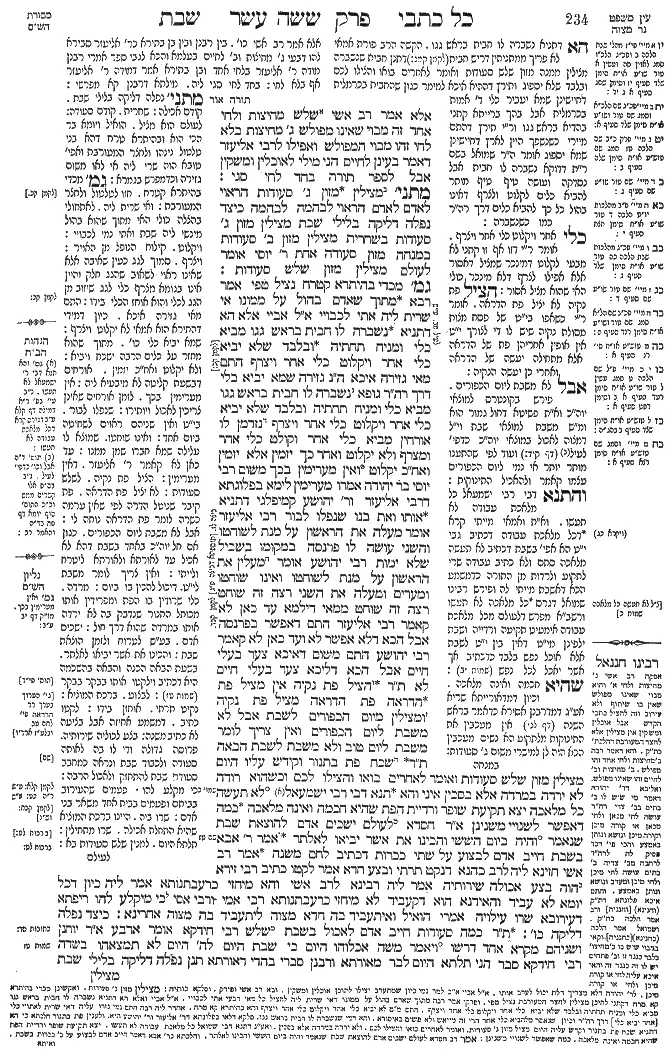
Shabbat 117b - Guemara
אלא אמר רב אשי שלש מחיצות ולחי אחד זה מבוי שאינו מפולש ג' מחיצות בלא לחי זהו מבוי המפולש ואפילו לרבי אליעזר דאמר בעינן לחיים הני מילי לאוכלין ומשקין אבל לספר תורה בחד לחי סגי:
מתני׳ מצילין מזון ג' סעודות הראוי לאדם לאדם הראוי לבהמה לבהמה כיצד נפלה דליקה בלילי שבת מצילין מזון ג' סעודות בשחרית מצילין מזון ב' סעודות במנחה מזון סעודה אחת ר' יוסי אומר לעולם מצילין מזון שלש סעודות:
גמ׳ מכדי בהיתרא קטרח נציל טפי אמר רבא מתוך שאדם בהול על ממונו אי שרית ליה אתי לכבויי א"ל אביי אלא הא דתניא נשברה לו חבית בראש גגו מביא כלי ומניח תחתיה ובלבד שלא יביא כלי אחר ויקלוט כלי אחר ויצרף התם מאי גזירה איכא ה"נ גזירה שמא יביא כלי דרך רה"ר גופא נשברה לו חבית בראש גגו מביא כלי ומניח תחתיה ובלבד שלא יביא כלי אחר ויקלוט כלי אחר ויצרף נזדמן לו אורחין מביא כלי אחר וקולט כלי אחר ומצרף ולא יקלוט ואחר כך יזמין אלא יזמין ואח"כ יקלוט ואין מערימין בכך משום רבי יוסי בר יהודה אמרו מערימין לימא בפלוגתא דרבי אליעזר ור' יהושע קמיפלגי דתניא אותו ואת בנו שנפלו לבור רבי אליעזר אומר מעלה את הראשון על מנת לשוחטו והשני עושה לו פרנסה במקומו בשביל שלא ימות רבי יהושע אומר מעלין את הראשון על מנת לשוחטו ואינו שוחטו ומערים ומעלה את השני רצה זה שוחט רצה זה שוחט ממאי דילמא עד כאן לא קאמר רבי אליעזר התם דאפשר בפרנסה אבל הכא דלא אפשר לא ועד כאן לא קאמר רבי יהושע התם משום דאיכא צער בעלי חיים אבל הכא דליכא צער בעלי חיים לא ת"ר הציל פת נקיה אין מציל פת הדראה פת הדראה מציל פת נקיה ומצילין מיום הכפורים לשבת אבל לא משבת ליום הכפורים ואין צריך לומר משבת ליום טוב ולא משבת לשבת הבאה ת"ר שכח פת בתנור וקידש עליו היום מצילין מזון שלש סעודות ואומר לאחרים בואו והצילו לכם וכשהוא רודה לא ירדה במרדה אלא בסכין איני והא תנא דבי רבי ישמעאל (שמות כ, ט) לא תעשה כל מלאכה יצא תקיעת שופר ורדיית הפת שהיא חכמה ואינה מלאכה כמה דאפשר לשנויי משנינן א"ר חסדא לעולם ישכים אדם להוצאת שבת שנאמר (שמות טז, ה) והיה ביום הששי והכינו את אשר יביאו לאלתר אמר ר' אבא בשבת חייב אדם לבצוע על שתי ככרות דכתיב לחם משנה אמר רב אשי חזינא ליה לרב כהנא דנקט תרתי ובצע חדא אמר לקטו כתיב רבי זירא הוה בצע אכולה שירותיה אמר ליה רבינא לרב אשי והא מיחזי כרעבתנותא אמר ליה כיון דכל יומא לא עביד והאידנא הוא דקעביד לא מיחזי כרעבתנותא רבי אמי ורבי אסי כי מיקלע להו ריפתא דעירובא שרו עילויה אמרי הואיל ואיתעביד בה חדא מצוה ליתעביד בה מצוה אחרינא:
כיצד נפלה דליקה כו':
ת"ר כמה סעודות חייב אדם לאכול בשבת שלש רבי חידקא אומר ארבע א"ר יוחנן ושניהם מקרא אחד דרשו (שמות טז, כה) ויאמר משה אכלוהו היום כי שבת היום לה' היום לא תמצאהו בשדה רבי חידקא סבר הני תלתא היום לבר מאורתא ורבנן סברי בהדי דאורתא תנן נפלה דליקה בלילי שבת
Comments from Rashi on Masechet Shabbat Page 117b
אלא אמר רב אשי כו' . בין רבנן ובין בן בתירא כר' אליעזר סבירא להו דבעי ג' מחיצות וב' לחיים בעלמא והכא לגבי ספר אמרי רבנן מודה ר' אליעזר בלחי אחד ובן בתירא אמר דמודה ר' אליעזר אף בלא לחי: בחד לחי סגי ליה . מילתא דרבנן קא מפרשי: מתני' נפלה דליקה בלילי שבת . קודם אכילה: שחרית . קודם סעודה: לעולם הוא מציל . הואיל ויומא בר הכי הוא ובהיתרא טרח דהא בני טלטול נינהו ולחצר המעורבת ואפי' טובא הוה שרי ליה אי לאו משום גזירה וכדמפרש בגמרא: גמ' מכדי בהיתרא קטרח . חזו לטלטול ולחצר המעורבת: ואי שרית ליה . לאתחולי בהצלה כולי האי מתוך שהוא בהול מינשי ליה שבת ואתי נמי לכבויי: ויקלוט . קילוח הנופל מן האויר: ויצרף . סמוך לגג כעין שאיבה אלא שאינו ראוי לשאוב שהגג חלק והיין אינו בגומא מצרף כלי לגג שיזוב מן הגג לכלי והוא אוחז הכלי בידו: התם מאי גזירה איכא . כיון דמידי דהתירא הוא אמאי לא יקלוט ויצרף: שמא יביא כלי כו' . מתוך שהוא מחזר על כלים הרבה ישכח ויביא: ולא יקלוט ואח"כ יזמין . אורחים דבשעת קליטה לא מיבעיא ליה: אין מערימין בכך . לזמן אורחים שאינן צריכין לאכול ויותירו: שנפלו לבור . בי"ט ואין שניהם ראוים לשחיטה ביום אחד: ואינו שוחטו . שמוצא לו עלילה שמא חברו שמן ממנו: עד כאן לא קאמר ר' אליעזר . דאין מערימין: הציל פת נקיה . לשלש סעודות: לא יציל פת הדראה . פת קיבר שניטל הדרה לפי שאין ערמה כשרה לומר פת הדראה נוחה לי: אבל לא משבת ליום הכפורים . כגון אם חל יוה"כ באחד בשבת דהא לא אכיל עד לאורתא ולאורתא ליטרח ולייתי: ואין צריך לומר משבת לי"ט . דיכול להכין בו ביום: מרדה . כלי שרודין בו הפת ומפרידין אותו מכותל התנור שנדבק בה לא ירדה אותו במרדה שהוא דרך חול: ישכים אדם . בע"ש לטרוח ולזמן הוצאת שבת: והכינו את אשר יביאו לאלתר . בשעת הבאה הכנה והבאה בהשכמה היא דכתיב וילקטו אותו בבקר בבקר (שמות טז): לבצוע . ברכת המוציא: נקיט תרתי . אוחזן בידו: לקטו כתיב . דמשמע אחיזה אבל בציעה לא כתיב משנה: בצע לכוליה שירותיה . פרוסה גדולה ודי לו בה לאותה סעודה ולכבוד שבת ונראה כמחבב סעודת שבת להתחזק ולאכול הרבה: כי מקלע להו . פעמים שהעירוב בביתם ופעמים בבית אחד משאר בני אדם: שרו ביה . היינו ברכת המוציא שהיא התחלת אכילה. שרו מתחילין: תלתא היום . למנין שלש סעודות בא:
Comments from Tosafot - Shabbat 117b
הא דתניא נשברה לו חבית בראש גגו . הקשה הרב פורת אמאי לא פריך ממתניתין דריש חבית (לקמן שבת קמג:) דתנן חבית שנשברה מצילין ממנה מזון שלש סעודות ואומר לאחרים בואו והצילו לכם ובלבד שלא יספוג ותירץ דההיא איכא למימר כגון שהחבית בכרמלית דחיישינן שמא יעביר כלי ד' אמות בכרמלית אבל בהך ברייתא קתני בהדיא בראש גגו ור"י תירץ דהתם מיירי כשנשפך היין לארץ דחיישינן שמא יספוג אומר ה"ר שמואל בשם ר"ת דדוקא נשברה לו חבית אבל נסדקה ועושה טיף טיף מותר להביא כלים לקלוט ולצרף דאינו בהול כל כך להביא כלים דרך רה"ר כמו כשנשברה: כלי אחר ויקלוט כלי אחר ויצרף . אומר ר"י דזו אף זו קתני לא מבעי לקלוט דמינכר שמציל דאסור אלא אפילו לצרף דלא מינכר כולי האי שהוא מציל אסור: הציל פת נקיה לא יציל פת הדראה . אומר ר"י כשאפו בי"ט של פסח מצות מסולת נקיה שיש לו די לצורך י"ט אין אופין אחריהן פת של הדראה אלא מתחילה יעשה של הדראה ואחרי כן יעשה הנקיה: אבל לא משבת ליום הכפורים . פירש בקונטרס למוצאי יוה"כ וא"ת פשיטא דחול גמור הוא ומ"ש משבת למוצאי שבת וי"ל דמצוה לאכול במוצאי יוה"כ כדפי' לעיל (שבת דף קיד:) ועוד לפי שהתענו מותר יותר אי נמי ליום הכפורים עצמו קאמר ולהאכיל התינוקות: והתנא דבי רבי ישמעאל כל מלאכת עבודה לא תעשו . וא"ת ואמאי מייתי קרא דכל מלאכת עבודה דכתיב גבי י"ט הא אפי' בשבת דכתיב לא תעשה מלאכה סתם ולא כתיב עבודה שרי לתקוע ולרדות מן התורה כדמשמע הכא דאשבת מייתי לה ופירש רבינו שמואל דגרס כל מלאכה לא תעשו ורשב"א מפרש דלעולם מכל מלאכת עבודה אימעיט תקיעה ורדייה ושבת ילפינן מי"ט דאין בין י"ט לשבת אלא אוכל נפש בלבד כדכתיב אך אשר יאכל לכל נפש (שמות יב): שהיא חכמה ואינה מלאכה . וכיון דמדאורייתא שריא אע"ג דמדרבנן אסירא כדאמר בראש השנה (דף לג.) אין מעכבין את התינוקות מלתקוע הא נשים מעכבין הכא הוה לן למישרי משום ג' סעודות:
Shabbat 117b - Mishnah translated into english
Rather, Rav Ashi said: The Sages in the mishna disagree with regard to the opinion of Rabbi Eliezer: Three walls and one post is an alley that is closed; three walls without a post at all is an open alley. And even according to Rabbi Eliezer, who said we need two posts, one post being insufficient, those words were stated to permit one to move food and drinks, but for the purpose of moving a Torah scroll, one post is sufficient.
MISHNA: One may rescue food for three meals from a fire on Shabbat. One may rescue food that is suitable for a person for a person; and one may rescue food that is suitable for an animal for an animal. How so? If a fire ignited on Friday night before the Shabbat evening meal, one may rescue food for three meals. If a fire ignited in the morning, after the Shabbat evening meal has been eaten and before the meal of Shabbat day, one may only rescue food for two meals. If a fire ignited in the afternoon, one may rescue food for one meal. Rabbi Yosei says: One may always rescue food for three meals, which is the measure that the Sages permitted without distinguishing between the times of day.
GEMARA: The Gemara asks: Now, since one is exerting himself to move permitted objects, let us rescue more. Why was he allowed to rescue food for only three meals? Rava said: Since a person is agitated about his property, if you permit him to move more, he will come to extinguish the fire. Abaye said to him: Rather, that which was taught in a baraita: If one’s barrel broke atop one’s roof on Shabbat, he may bring a vessel and place it under the barrel to salvage its contents, and this is permitted provided that he does not bring another vessel and place it on the ground to catch the liquid that flows out of the barrel. Similarly, one may not bring another vessel and attach the vessel next to the roof so that the liquid from the barrel will pour into it. There, what decree applies to prohibit saving it in any other way? Rava said to him: Here, too, it is a decree issued due to the concern lest one bring the additional vessel through the public domain, which is prohibited.
Apropos this baraita, the Gemara discusses the matter itself: If one’s barrel broke atop one’s roof on Shabbat, he may bring a vessel and place it under the barrel to salvage its contents, and this is permitted provided that he does not bring another vessel and place it on the ground to catch the liquid, another vessel and attach the vessel next to the roof. If guests happen to come to him and he needs more to drink, he may bring another vessel and catch the liquid, and he may bring another vessel and attach it. And one may not catch the liquid and then invite guests; rather, one must first invite guests, and afterward catch the liquid. Until he invites guests, there is no need for the beverage, and he will be catching the liquid in a prohibited manner. And one may not employ artifice in this by inviting guests expressly for the purpose of rescuing his wine. In the name of Rabbi Yosei bar Yehuda, they said: One may even employ artifice.
The Gemara suggests: Let us say that Rabbi Yosei bar Yehuda and the Rabbis disagree in the dispute between Rabbi Eliezer and Rabbi Yehoshua, as it was taught in a baraita: With regard to it and its offspring that fell into a pit on a Festival, Rabbi Eliezer says: One may raise the first in order to slaughter it, and then slaughter it; and with regard to the second one, one may provide it sustenance in its place in the pit so that it will not die. Rabbi Yehoshua says: One may raise the first in order to slaughter it, and then reconsider and not slaughter it, and one may employ artifice and say that he reconsidered and wants to slaughter the other, and raise the second. If he so desires, he slaughters this one; if he so desires, he slaughters that one.
The Gemara rejects this: From what does that conclusion ensue? Perhaps Rabbi Eliezer only stated that he may not raise the second animal there, in a case where it is possible to save the animal by feeding it in the pit; however, here, in the case of the barrel, where it is impossible to save it by feeding it in the pit, no, he would permit doing so. Perhaps even he agrees that it is permitted to employ artifice in this case. And similarly, perhaps Rabbi Yehoshua only said there that one may employ artifice because there is an issue of the suffering of living beings, but here, where there is no issue of the suffering of living beings, perhaps he did not permit employing artifice.
The Sages taught in the Tosefta: If one rescued sufficient fine bread for his needs, he may not then rescue coarse bread [hadra’a], bread made from flour and bran. However, if one rescued coarse bread, he may then rescue fine bread. And one may rescue bread on Yom Kippur for the purpose of Shabbat; however, one may not rescue bread on Shabbat for the purpose of Yom Kippur. And, needless to say, one may not rescue bread on Shabbat for the purpose of a Festival, and one may not rescue bread on Shabbat for the purpose of the next Shabbat.
And the Sages taught: If one forgot bread in the oven and did not remove it until the day of Shabbat was sanctified, he may rescue enough food for three meals from the oven. And, one may say to others: Come and rescue bread for yourselves. And when one removes the bread from the oven, he may not remove it in the usual manner with a baker’s paddle, but he removes it in an unusual manner, e.g., with a knife. The Gemara asks: Is that so? Didn’t the school of Rabbi Yishmael teach that it is stated: “And the seventh day is Shabbat for the Lord, your God, you shall not perform any labor” (Exodus 20:10), and the emphasis on the word labor excludes blowing the shofar and removing bread, which is a skill and not a labor, and which therefore is not prohibited on Shabbat. If by Torah law removing bread on Shabbat is permitted, why may one not remove it in the usual manner? The Gemara answers: Nevertheless, as much as it is possible to alter the manner in which one removes bread from the oven one alters, to emphasize that the day is Shabbat.
Rav Ḥisda said: A person should always rise early on Friday in order to prepare all of the expenditures for Shabbat, as it is written with regard to the collection of the manna: “And it shall be on the sixth day, and they will prepare that which they have brought” (Exodus 16:5), indicating that the children of Israel would begin preparing the food for Shabbat immediately upon collecting the manna in the morning. Apropos manna, the Gemara mentions other matters derived from it. Rabbi Abba said: On Shabbat a person is obligated to break bread in his meal over two loaves of bread, as it is written: “And it happened on the sixth day, they collected double the bread, two omer for each one” (Exodus 16:22).
Rav Ashi said: I saw that Rav Kahana took two loaves in his hand and broke one, not both at once. He said in explanation that it is written: “They collected double the bread,” meaning that one collects and holds two loaves together, but need not break both. Rabbi Zeira would break off a piece that would suffice for his entire meal. Ravina said to Rav Ashi: Doesn’t that appear like gluttony? Rav Ashi said to him: Since on every other day he does not do this and now he is doing so, it does not appear like gluttony. Rabbi Ami and Rabbi Asi, when the bread from the eiruv would happen to become available to them, they would begin and recite the blessing over it. They said in explanation: Since one mitzva was performed with it, let an additional mitzva be performed with it.
We learned in the mishna that one may rescue food for three meals on Shabbat. How so? If a fire ignited before the meal on Shabbat evening, one rescues food for three meals; if a fire ignited Shabbat morning, he rescues food for two meals; if a fire ignited in the afternoon, he rescues food for one meal. With regard to meals on Shabbat, the Sages taught in a baraita: How many meals is a person obligated to eat on Shabbat? Three. Rabbi Ḥidka says: Four. Rabbi Yoḥanan said: And both of them derived their opinions from one verse: “And Moses said: Eat it today, for today is Shabbat for God, today you will not find it in the field” (Exodus 16:25). Rabbi Ḥidka holds: These three mentions of the word today allude to the number of meals on Shabbat besides the evening meal, as Moses spoke on Shabbat morning. And the Rabbis hold that these three mentions include the evening meal. We learned in the mishna: If a fire ignited on Shabbat evening,
Traduction : The William Davidson digital edition of the Koren Noé Talmud, with commentary by Rabbi Adin Even-Israel Steinsaltz.