 Talmud Bavli
Hullin 91b : Youtube
Rabbi Dr. Moshe WeisblumYoutube
1 video class :
Hullin Page 91b
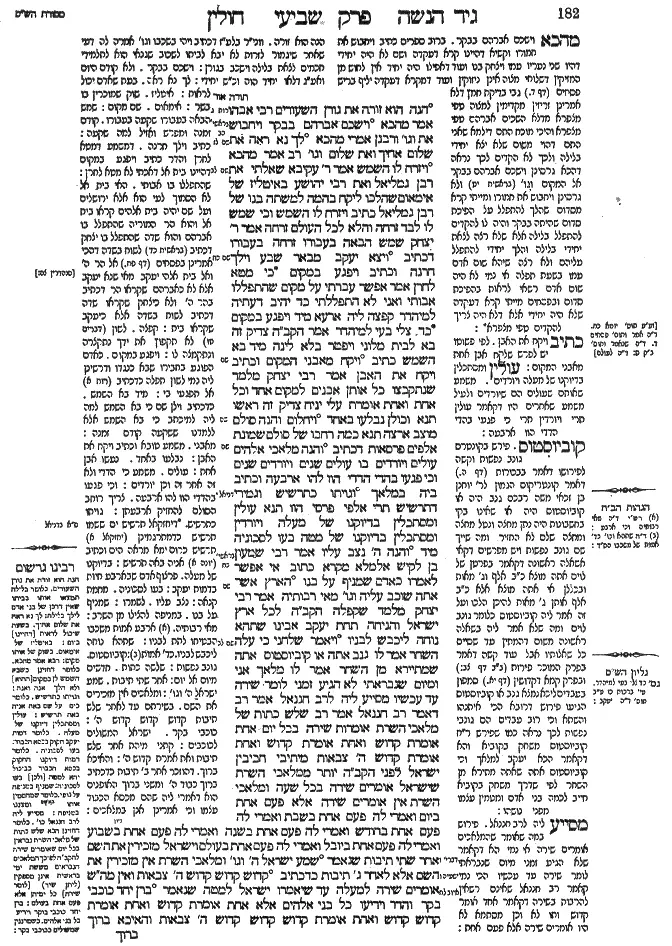
Hullin 91b - Guemara
הנה הוא זורה את גורן השעורים רבי אבהו אמר מהכא (בראשית כב, ג) וישכם אברהם בבקר ויחבוש את וגו' ורבנן אמרי מהכא (בראשית לז, יד) לך נא ראה את שלום אחיך ואת שלום וגו' רב אמר מהכא (בראשית לב, לב) ויזרח לו השמש אמר ר' עקיבא שאלתי את רבן גמליאל ואת רבי יהושע באיטליז של אימאום שהלכו ליקח בהמה למשתה בנו של רבן גמליאל כתיב ויזרח לו השמש וכי שמש לו לבד זרחה והלא לכל העולם זרחה אמר ר' יצחק שמש הבאה בעבורו זרחה בעבורו דכתיב (בראשית כח, י) ויצא יעקב מבאר שבע וילך חרנה וכתיב ויפגע במקום כי מטא לחרן אמר אפשר עברתי על מקום שהתפללו אבותי ואני לא התפללתי כד יהיב דעתיה למיהדר קפצה ליה ארעא מיד ויפגע במקום כד צלי בעי למיהדר אמר הקב"ה צדיק זה בא לבית מלוני ויפטר בלא לינה מיד בא השמש כתיב (בראשית כח, יא) ויקח מאבני המקום וכתיב ויקח את האבן אמר רבי יצחק מלמד שנתקבצו כל אותן אבנים למקום אחד וכל אחת ואחת אומרת עלי יניח צדיק זה ראשו תנא וכולן נבלעו באחד (בראשית כח, יב) ויחלום והנה סולם מוצב ארצה תנא כמה רחבו של סולם שמונת אלפים פרסאות דכתיב (בראשית כח, יב) והנה מלאכי אלהים עולים ויורדים בו עולים שנים ויורדים שנים וכי פגעו בהדי הדדי הוו להו ארבעה וכתיב ביה במלאך (דניאל י, ו) וגויתו כתרשיש וגמירי דתרשיש תרי אלפי פרסי הוו תנא עולין ומסתכלין בדיוקנו של מעלה ויורדין ומסתכלין בדיוקנו של מטה בעו לסכוניה מיד (בראשית כח, יג) והנה ה' נצב עליו אמר רבי שמעון בן לקיש אלמלא מקרא כתוב אי אפשר לאמרו כאדם שמניף על בנו (בראשית כח, יג) הארץ אשר אתה שוכב עליה וגו' מאי רבותיה אמר רבי יצחק מלמד שקפלה הקב"ה לכל ארץ ישראל והניחה תחת יעקב אבינו שתהא נוחה ליכבש לבניו (בראשית כח, א) ויאמר שלחני כי עלה השחר אמר לו גנב אתה או קוביוסטוס אתה שמתיירא מן השחר אמר לו מלאך אני ומיום שנבראתי לא הגיע זמני לומר שירה עד עכשיו מסייע ליה לרב חננאל אמר רב דאמר רב חננאל אמר רב שלש כתות של מלאכי השרת אומרות שירה בכל יום אחת אומרת קדוש ואחת אומרת קדוש ואחת אומרת קדוש ה' צבאות מיתיבי חביבין ישראל לפני הקב"ה יותר ממלאכי השרת שישראל אומרים שירה בכל שעה ומלאכי השרת אין אומרים שירה אלא פעם אחת ביום ואמרי לה פעם אחת בשבת ואמרי לה פעם אחת בחודש ואמרי לה פעם אחת בשנה ואמרי לה פעם אחת בשבוע ואמרי לה פעם אחת ביובל ואמרי לה פעם אחת בעולם וישראל מזכירין את השם אחר שתי תיבות שנאמר (דברים ו, ד) שמע ישראל ה' וגו' ומלאכי השרת אין מזכירין את השם אלא לאחר ג' תיבות כדכתיב (ישעיהו ו, ג) קדוש קדוש קדוש ה' צבאות ואין מה"ש אומרים שירה למעלה עד שיאמרו ישראל למטה שנאמר (איוב לח, ז) ברן יחד כוכבי בקר והדר ויריעו כל בני אלהים אלא אחת אומרת קדוש ואחת אומרת קדוש קדוש ואחת אומרת קדוש קדוש קדוש ה' צבאות והאיכא ברוך
Comments from Rashi on Masechet Hullin Page 91b
הנה הוא זורה . ווני"ר בלע"ז. דכתיב ויהי בשכבו וגו' אמרה לה דעי שאחר שיגמור לזרות לא יבא לביתו לשכוב שגנאי הוא לתלמידי חכמים לצאת בלילה וישכב בגורן: וישכם בבקר . ולא קודם היום ואע"ג דלאו יחיד הוה וכ"ש יחידי: לך נא ראה . בעת שאדם יכול לראות: איטליז . שוק שמוכרין בו בשר: אימאום . שם מקום: שמש הבאה בעבורו . שקעה בעבורו קודם זמנה. ומפרש ואזיל למה שקעה: כתיב וילך חרנה . דמשמע דמטא לחרן והדר כתיב ויפגע במקום דהיינו בית אל דאכתי לא מטא לחרן: שהתפללו בו אבותי . האי בית אל לא הסמוך לעי הוא אלא ירושלים ועל שם יהיה בית אלהים קראו בית אל והוא הר המוריה שהתפלל בו אברהם והוא שדה שהתפלל בו יצחק דכתיב (בראשית כד) לשוח בשדה דהכי אמרינן בפסחים (דף פח.) אל הר ה' ואל בית אלהי יעקב מאי שנא יעקב אלא לא כאברהם שקראו הר דכתיב בהר ה' ולא כיצחק שקראו שדה דכתיב לשוח בשדה אלא כיעקב שקראו בית: קפצה . לשון (דברים טו) לא תקפוץ את ידך. נתקצרה ונתקמצה לו: ויפגע במקום . כאדם הפוגע בחבירו שבא כנגדו ודרשינן ליה נמי לשון תפלה כדכתיב (רות א) אל תפגעי בי: מיד בא השמש . כדכתיב וילן שם כי בא השמש למה ליה למיכתב כי בא השמש אלא ללמדנו ששקעה קודם זמנה: מאבני . משמע טובא וכתיב ויקח את האבן: נבלעו באחד . נעשו אבן אחת: עולים . משמע כי הדדי ולא זה אחר זה וכן יורדים: וכי פגעו בהדדי הוו להו ארבעה . צריך רוחב הסולם להחזיק ארבעתן: גויתו כתרשיש . דיחזקאל תרשיש ים ששמו תרשיש כדמתרגמינן (יחזקאל א) תרשיש כרום ימא מראה הים וכתיב (יונה א) אניה באה תרשיש: בדיוקנו של מעלה . פרצוף אדם שבארבע חיות בדמות יעקב: בעו לסכוניה . מחמת קנאה: נצב עליו . לשמרו: שמניף על בנו . במניפה להצילו מן השרב: מאי רבותיה . ארבע אמות משכבו הבטיחו לתת לבניו: שתהא נוחה ליכבש לבניו . כד' אמות: קוביוסטוס . גונב נפשות: שלשה כתות . חדשים מיום אל יום: אחר שתי תיבות . שמע ישראל ה' וגו': ומלאכים אין מזכירים את השם . בשירתם עד לאחר שלש תיבות קדוש קדוש קדוש ה': כוכבי בקר . ישראל המשולים לכוכבים:
קתני מיהת אחר שלש תיבות ואת אמרת קדוש ה': והאיכא ברוך . דהוזכר אחר ב' תיבות כדכתיב ברוך כבוד ה'. ומשני ברוך האופנים הוא דאמרי ליה שהם מכסא הכבוד עצמו וכי אמרינן אנן במלאכים:
Comments from Tosafot - Hullin 91b
מהכא וישכם אברהם בבקר . ברוב ספרים כתיב ויחבוש את חמורו וקשיא דהיינו קרא דעקדה ושם לא היה יחידי דהיו שני נעריו עמו ויצחק בנו ועוד דאפילו היה יחיד אין לחוש מן המזיקין דשלוחי מצוה אינן ניזוקין ועוד דמקרא דעקדה יליף בריש פסחים (דף ד.) גבי בדיקת חמץ דלא אמרינן זריזין מקדימין למצוה טפי מצפרא מדלא השכים אברהם טפי מצפרא והיכי מוכח התם דילמא שאני התם דהוי משום שלא יצא יחידי בלילה ולכך לא הקדים לכך נראה דהכא גרסינן וישכם אברהם בבקר אל המקום וגו' (בראשית יט) ולא גרסינן ויחבוש את חמורו ומייתי קרא מסדום שהלך להתפלל על הפיכת סדום שהיתה בבקר והיה לו להקדים להתפלל בלילה אלא שלא רצה לצאת יחידי בלילה והלך יחידי להתפלל עליהם ולא רצה שיהא שום אדם עמו בשעת תפלה אי נמי לא היה שום אדם רשאי לראות בהפיכת סדום ובפסחים מייתי קרא דעקדה שלא היה יחידי אלא דלא היה צריך להקדים טפי מצפרא: כתיב ויקח את האבן . לפי פשוטו יש לפרש שלקח אבן אחת מאבני המקום: עולין ומסתכלין בדיוקנו של מעלה ויורדים . משמע שאותם שעולים הם שיורדים ולעיל משמע שאחרים היו דקאמר עולין תרי ויורדין תרי כי פגעי בהדי הדדי הוו ארבעה: קוביוסטוס . פירש בקונטרס גונב נפשות וקשה לפירושו דאמר בבכורות (דף ה.) דאמר קונטריקוס הגמון לר' יוחנן בן זכאי משה רבכם גנב היה או קוביוסטוס היה או שאינו בקי בחשבונות היה נתן מחצה ונטל מחצה ומחצה שלם לא החזיר ומה שייך שם גונב נפשות ויש מפרשים דקאי אשאלה ראשונה דקאמר בפרטן של לוים אתה מוצא כ"ב אלף וג' מאות ובכללן אי אתה מוצא אלא כ"ב אלף אותן ג' מאות להיכן הלכו ועל זה אמר ליה קוביוסטוס כלומר גונב לוים ומה שלא אמר ליה בשאלה ראשונה משום דהמתין עד שסיים כל שאלותיו אבל עוד קשה דאמר בפרק המוכר פירות (ב"ב דף צב:) ובפרק קמא דקדושין (דף יא.) סמפון בעבדים ליכא נמצא גנב או קוביוסטוס הגיעו פירוש דרובא הכי איתנהו והשתא וכי רוב עבדים הם גונבי נפשות לכך נראה כמו שפירש ר"ח קוביוסטוס משחק בקוביא והא דקאמר הכא יעקב למלאך וכי קוביוסטוס אתה שאתה מתירא מן השחר לפי שדרך משחק בקוביא חייב לכמה בני אדם ומטמין עצמו מפני נושהו: מסייע ליה לרב חננאל . פירוש במה שאומר שהמלאכים אומרים שירה אי נמי הא דקאמר שלא הגיע זמני מיום שנבראתי לומר שירה עד עכשיו הכי נמי קאמר רב חננאל שאינם רשאין להרבות בשירה דקאמר אחד אומר קדוש ותו לא וכן מסתמא לא היו אומרים שירה אלא פעם אחת:
Hullin 91b - Mishnah translated into english
“And now is there not Boaz our kinsman, whose maidens you were with? Behold, he winnows barley tonight in the threshing floor…and it shall be, when he lies down, that you shall mark the place where he shall lie” (Ruth 3:2–3). This teaches that the reason Boaz did not return home from the threshing floor was that a Torah scholar should not go out alone at night.
Rabbi Abbahu said that the source is from here: “And Abraham rose early in the morning, and saddled his donkey, and took two of his young men with him and Isaac his son; and he split the wood for the burnt offering, and rose up, and went to the place that God had told him” (Genesis 22:3). The fact that Abraham waited until morning and did not set off at night, even though others were traveling with him, indicates that a Torah scholar should not go out at night at all, and certainly not alone.
And the Rabbis say that the source is from here, the verse that describes when Jacob sent Joseph to his brothers: “And he said to him: Go now, see whether it is well with you brothers and well with the flock; and bring me back word. So he sent him out of the valley of Hebron, and he came to Shechem” (Genesis 37:14). The verse indicates that Jacob sent Joseph at a time when he could see his brothers, i.e., during the day. This shows that a Torah scholar should not go out alone at night.
Rav said that the source is from here: “And the sun rose for him as he passed over Peniel, and he limped upon his thigh” (Genesis 32:32). This indicates that Jacob remained where he was all night and left in the morning, because a Torah scholar should not go out alone at night.
The Gemara cites an incident involving the final verse cited above. Rabbi Akiva says: I asked the following question of Rabban Gamliel and Rabbi Yehoshua in the meat market [be’itliz] of the town Emmaus, where they went to purchase an animal for the wedding feast of Rabban Gamliel’s son: It is written in the verse: “And the sun shone for him when he passed Peniel, and he limped upon his thigh” (Genesis 32:32). But did the sun shine only for him? Didn’t it shine for the entire world?
Rabbi Yitzḥak says: The verse means that the sun, which set early exclusively for him, also shone early exclusively for him in order to rectify the disparity created by the premature sunset. The Gemara explains when the sun set early for him: As it is written: “And Jacob went out from Beersheba and went toward Haran” (Genesis 28:10). And it is written thereafter: “And he encountered the place, and he slept there, because the sun had set” (Genesis 28:11). When Jacob arrived at Haran, he said: Is it possible that I passed a place where my fathers prayed and I did not pray there? When he set his mind to return, the land contracted for him. Immediately the verse states: “And he encountered the place,” indicating that he arrived there miraculously.
When he had finished praying and he wanted to return to Haran, the Holy One, Blessed be He, said: This righteous man came to my lodging place and he will depart without remaining overnight? Immediately, the sun set before its proper time so that Jacob would stay overnight in that place.
The Gemara cites another exposition of Rabbi Yitzḥak to explain an apparent contradiction between two verses pertaining to this incident. It is written: “And he took of the stones of the place, and placed them under his head, and lay down in that place to sleep” (Genesis 28:11). And it is written: “And Jacob rose up early in the morning, and he took the stone that he had placed under his head, and set it up for a pillar, and poured oil upon the top of it” (Genesis 28:18). The first verse indicates that Jacob took several stones, whereas the latter verse indicates that he took only one stone. Rabbi Yitzḥak says: This teaches that all those stones gathered to one place and each one said: Let this righteous man place his head upon me. And it was taught: And all of them were absorbed into one large rock.
The Gemara expounds other verses pertaining to the same incident. The verse states: “And he dreamed, and behold a ladder set up on the earth, and the top of it reached to heaven; and behold the angels of God ascending and descending on it” (Genesis 28:12). It was taught: How wide was the ladder? It was eight thousand parasangs [parsaot], as it is written: “And behold the angels of God ascending and descending on it.” The word “ascending [olim],” written in plural, indicates that there were two angels ascending simultaneously. Likewise, the term “and descending [veyordim],” also in the plural, indicates that two angels were descending simultaneously. And when they met one another they were a total of four in one place, so the ladder must have been wide enough to accommodate four angels.
And it is written in a verse with regard to an angel: “His body was like Tarshish” (Daniel 10:6). And it is learned as a tradition that the city of Tarshish was two thousand parasangs. Consequently, in order to accommodate four angels, the ladder must have been eight thousand parasangs wide.
It was taught that the angels were ascending and gazing at the image of [bidyokeno] Jacob above, engraved on the Throne of Glory, and descending and gazing at his image below. The angels subsequently became jealous of Jacob, and wanted to endanger his life. Immediately Jacob received divine protection, as the verse states: “And behold, the Lord stood over him” (Genesis 28:13). Rabbi Shimon ben Lakish says: Were it not written in a verse it would be impossible to utter it, in deference to God, since it describes God as standing over Jacob to protect him from the angels like a man who waves a fan over his son to cool him down.
The Gemara explains another verse from Jacob’s dream. “And behold, the Lord stood over him and said: I am the Lord, the God of Abraham your father and the God of Isaac. The land upon which you lie, to you will I give it, and to your seed” (Genesis 28:13). The Gemara asks: What is the greatness of this promise, i.e., why is it expressed in this way despite the fact that in a literal sense Jacob was lying on a very small amount of land? Rabbi Yitzḥak says: This teaches that the Holy One, Blessed be He, folded up the entirety of Eretz Yisrael and placed it under Jacob, our patriarch, so that it would be easy for his children to conquer.
The Gemara returns to the verses that describe Jacob wrestling with the angel. “And he said: Let me go, for the dawn has risen. And he said: I will not let you go until you bless me” (Genesis 32:27). Jacob said to the angel: Are you a thief, or are you a gambler [kuveyustus], who is afraid of dawn? The angel said to him: I am an angel, and from the day I was created my time to recite a song before God has not arrived, until now. Now I must ascend so that I can sing songs of praise to God.
The Gemara comments: This supports the opinion of Rav Ḥananel when he related what Rav said. As Rav Ḥananel said that Rav said: Three groups of ministering angels recite a song every day from the verse “Holy, holy, holy is the Lord”; one says: “Holy,” and another one says: “Holy,” and another one says: “Holy is the Lord of hosts; the whole earth is full of His glory” (Isaiah 6:3).
The Gemara raises an objection from the following baraita: The Jewish people are more dear to the Holy One, Blessed be He, than the ministering angels, as the Jewish people may recite a song of praise to God at any time, but ministering angels recite a song of praise only one time per day. And some say that the ministering angels recite a song of praise one time per week. And some say that they recite a song of praise one time per month. And some say that they recite a song of praise one time per year. And some say that they recite a song of praise one time in every seven years. And some say that they recite a song of praise one time per Jubilee. And some say that they recite a song of praise one time in the entire history of the world.
And furthermore, the Jewish people mention the name of God after two words, as it is stated: “Hear, Israel: The Lord our God, the Lord is one” (Deuteronomy 6:4). But the ministering angels mention the name of God only after three words, as it is written: “And one called unto another, and said: “Holy, holy, holy is the Lord of hosts; the whole earth is full of His glory” (Isaiah 6:3).
And the ministering angels do not recite their song above until the Jewish people recite their song below, on earth, as it is stated: “When the morning stars sang together” (Job 38:7), referring to the Jewish people, who are compared to stars; and only then does the verse state: “And all the sons of God shouted for joy,” which is a reference to the angels. This baraita teaches that the angels mention the name of God only after three words, i.e., after saying the word “holy” three times, whereas according to what Rav Ḥananel stated that Rav said, the third group of angels says the word “holy” once and then immediately mentions the name of God.
The Gemara emends Rav Ḥananel’s statement citing Rav: Rather, Rav said that one group of ministering angels says: “Holy,” and another one says: “Holy, holy,” and another one says: “Holy, holy, holy is the Lord of hosts.” The Gemara challenges the statement of the baraita that the angels mention the name of God only after three words: But there is the verse: “Then a spirit lifted me up, and I heard behind me the voice of a great rushing: Blessed be the glory of the Lord from His place” (Ezekiel 3:12). In this praise, “Blessed be the glory of the Lord,” the word “Lord” appears as the third Hebrew word, apparently uttered by the ministering angels.
Traduction : The William Davidson digital edition of the Koren Noé Talmud, with commentary by Rabbi Adin Even-Israel Steinsaltz.