 Talmud Bavli
The learning on the whole site is dedicated : L'ilui Nishmat Margalit bat Ledicia
The learning on the whole site is dedicated : L'ilui Nishmat Reuven ben Rivka SEBBAG
The learning on the whole site is dedicated : L'ilui Nishmat Yechayahou ben Moche
Hullin 104b : Youtube
Rabbi Dr. Moshe WeisblumYoutube
1 video class :
Hullin Page 104b
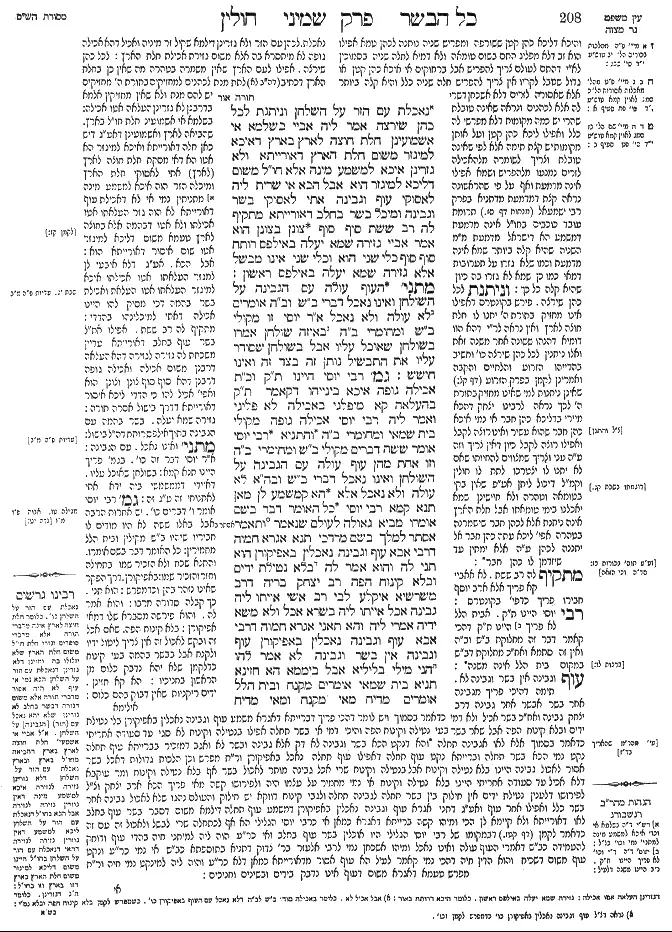
Hullin 104b - Guemara
נאכלת עם הזר על השלחן וניתנת לכל כהן שירצה אמר ליה אביי בשלמא אי אשמועינן חלת חוצה לארץ בארץ דאיכא למיגזר משום חלת הארץ דאורייתא ולא גזרינן איכא למשמע מינה אלא חו"ל משום דליכא למיגזר הוא אבל הכא אי שרית ליה לאסוקי עוף וגבינה אתי לאסוקי בשר וגבינה ומיכל בשר בחלב דאורייתא מתקיף לה רב ששת סוף סוף צונן בצונן הוא אמר אביי גזירה שמא יעלה באילפס רותח סוף סוף כלי שני הוא וכלי שני אינו מבשל אלא גזירה שמא יעלה באילפס ראשון:
מתני׳ העוף עולה עם הגבינה על השולחן ואינו נאכל דברי ב"ש וב"ה אומרים לא עולה ולא נאכל א"ר יוסי זו מקולי ב"ש ומחומרי ב"ה באיזה שולחן אמרו בשולחן שאוכל עליו אבל בשולחן שסודר עליו את התבשיל נותן זה בצד זה ואינו חושש:
גמ׳ רבי יוסי היינו ת"ק וכ"ת אכילה גופה איכא בינייהו דקאמר ת"ק בהעלאה קא מיפלגי באכילה לא פליגי ואמר ליה רבי יוסי אכילה גופה מקולי בית שמאי ומחומרי ב"ה והתניא רבי יוסי אומר ששה דברים מקולי ב"ש ומחומרי ב"ה וזו אחת מהן עוף עולה עם הגבינה על השולחן ואינו נאכל דברי ב"ש ובה"א לא עולה ולא נאכל אלא הא קמשמע לן מאן תנא קמא רבי יוסי כל האומר דבר בשם אומרו מביא גאולה לעולם שנאמר (אסתר ב, כב) ותאמר אסתר למלך בשם מרדכי תנא אגרא חמוה דרבי אבא עוף וגבינה נאכלין באפיקורן הוא תני לה והוא אמר לה בלא נטילת ידים ובלא קינוח הפה רב יצחק בריה דרב משרשיא איקלע לבי רב אשי אייתו ליה גבינה אכל אייתו ליה בשרא אכל ולא משא ידיה אמרי ליה והא תאני אגרא חמוה דרבי אבא עוף וגבינה נאכלין באפיקורן עוף וגבינה אין בשר וגבינה לא אמר להו הני מילי בליליא אבל ביממא הא חזינא תניא בית שמאי אומרים מקנח ובית הלל אומרים מדיח מאי מקנח ומאי מדיח
Comments from Rashi on Masechet Hullin Page 104b
נאכלת . לכהן עם הזר ולא גזרינן דילמא שקיל זר מיניה ואכיל דהא אכילה גופה לא מיתסרא בה אלא משום גזירת אכילת חלת הארץ: לכל כהן שירצה . אפילו לעם הארץ שאין משמרה בטהרה מה שאין כן בחלת הארץ דכתיב (דברי הימים ב לא) לתת מנת לכהנים למחזיקים בתורת ה' מחזיקים יש להם מנת ולא שאין מחזיקין. אלמא בדרבנן לא גזרינן העלאה אטו אכילה: בשלמא אי אשמועינן תלת חו"ל בארץ . שהביאה לארץ ואשמועינן דאע"ג דיש כאן חלה דאורייתא ואיכא למיגזר הא אטו הא דאי מסקת חלת חוצה לארץ (לארץ) אתי לאסוקי חלת הארץ ומיכלה הזר הוה איכא למשמע מינה מתניתין נמי אי לא דאכילת עוף דאורייתא לא הוה גזר העלאתו אטו אכילתו ולא אטו דבהמה אלא בחוצה לארץ טעמא משום דליכא למיגזר אטו שום איסור דאורייתא הוא: אבל הכא . אע"ג דלא איבעי לן למגזר העלאתו אטו אכילתו איכא למיגזר העלאתו אטו העלאת ואכילת בשר בהמה דכי מסיק להו היינו אכילה דאתי למיכלינהו בהדדי: מתקיף לה רב ששת . אפילו את"ל בשר עוף בחלב דאורייתא עדיין משכחת לה גזירה לגזירה דהא העלאה דרבנן משום אכילה ואכילה גופה דרבנן דהא סוף סוף צונן וצונן הוא ואפי' אכיל להו כי הדדי ליכא איסור דאורייתא דדרך בישול אסרה תורה: גזירה שמא יעלה . בשר בהמה עם הגבינה בתוך אילפס רותח דה"ל בישול: מתני' ואינו נאכל . עם הגבינה: א"ר יוסי דבר זה כו' . בגמ' פריך היינו תנא קמא: בשולחן שאוכל עליו . דאיידי דממשמשי ביה ידא אתי לאתנוחי זה ע"ג זה: גמ' רבי יוסי אומר ו' דברים כו' . יש אחרות הרבה אבל באלו ששה לא היו מודים לו חביריו שיהיו ב"ש מקילין ובית הלל מחמירין: כל האומר דבר בשם אומרו . והתנא שכח ולא הזכיר שמו בתחילה וחזר והזכיר שמו: באפיקורן . דרך הפקר שאינו נזהר בהן וכדמפרש: הוא תני . כך קבלה סדורה מרבו: והוא אמר לה . והוא פירשה מסברא שלו דמאי אפיקורן: בלא קינוח הפה . שאם אכל זה ובקש לאכול זה אין צריך ליטול ידיו ולקנח. אבל בבשר בהמה בעי קינוח כדלקמן שלא יהא נדבק כלום מן הראשון בחניכיו: הא קא חזינן . ידים ריקניות שאין דבוק בהם כלום:
Comments from Tosafot - Hullin 104b
וניתנת לכל כהן שירצה . פירש בקונטרס דאפילו אינו מחזיק בתורת ה' יתנו לו חלת חוצה לארץ ואין נראה לר"י דהא הוו דומיא דהנהו ששונה אחר משנה זאת ואלו ניתנין לכל כהן שירצה כו' וחשיב בהדייהו הזרוע והלחיים והקבה ואמרינן לקמן בפרק הזרוע (חולין דף קל:) שאינן ניתנות למי שאינו מחזיק בתורת ה' לכך נראה לרבינו יצחק דהכא מיירי בדליכא כהן חבר אי נמי איכא כהן חבר שהוא עשיר ואינו רוצה לקבל ואפילו רוצה לקבל כיון דאין צריך וזה ע"ה עני וצריך שמצווים להחיותו שאם לא יתנו לו יצטרכו לתת לו חולין וקמ"ל דיכול ליתן אע"פ שאין בקי בטומאה וטהרה ולא חיישינן שמא יאכלנו בימי טומאתו אבל חלת הארץ אינה ניתנת אלא לכהן חבר שישמרנה בטהרה אפי' ליכא עתה כהן חבר אל יתננה לכהן ע"ה אלא ימתין עד שיזדמן לו כהן חבר: מתקיף לה רב ששת . לא אאביי קא פריך אלא ארב יוסף חבירו פריך כדפי' בקונטרס: רבי יוסי היינו ת"ק . אבית הלל לא פריך היינו ת"ק דהכי קאמר דבר זה מחלוקת ב"ש וב"ה ואין זה סתמא ואח"כ מחלוקת דב"ש במקום בית הלל אינה משנה: עוף וגבינה אין בשר וגבינה לא . תימה דהיכי פריך מגבינה אחר בשר אבשר אחר גבינה דרב יצחק גבינה ואח"כ בשר אכיל ולא דמי כדאמר בסמוך ויש לומר דהכי פריך דברייתא דאגרא משמע עוף וגבינה נאכלין באפיקורן בלי נטילת ידים ובלא קינוח הפה אבל שאר בשר בעי נטילה וקינוח הפה והיכי דמי אי בשר תחלה אפילו בנטילה וקינוח לא סגי עד סעודה אחריתי כדאמר בסמוך אלא לאו אגבינה תחלה והא דנקט הכא בשר וגבינה לא דק אלא. גבינה ובשר לא ואגב דמזכיר בברייתא עוף תחלה נקט נמי הכא בשר תחלה וברייתא נקט עוף תחלה דאפילו עוף תחלה נאכל באפיקורן ור"ת מפרש וכן הלכות גדולות דאכל בשר אסור לאכול גבינה היינו בלא נטילה וקינוח אבל בנטילה וקינוח שרי אכל גבינה מותר לאכול בשר אף בלא נטילה וקינוח ומר עוקבא דלא אכיל עד סעודה אחריתי היינו בלא נטילה וקינוח אי נמי מחמיר על עצמו היה ולפירושו קשה מאי פריך הכא ארב יצחק וצ"ל לפירושו דלענין נטילת ידים אין חילוק בין בשר תחלה לגבינה תחלה ולגבי קינוח דווקא יש חילוק והעולם נהגו שלא לאכול גבינה אחר בשר כלל ואפילו אחר עוף ואע"ג דתני אגרא עוף וגבינה נאכלין באפיקורן דמשמע עוף תחלה דילמא משום דסבר בשר עוף בחלב לאו דאורייתא ולא קיימא לן הכי ומיהו קשה ברייתא דאגרא כמאן אי כרבי יוסי הגלילי הא אף לכתחלה שרי לבשל ולאכול זה עם זה כדאמר לקמן (חולין דף קטז.) דבמקומו של רבי יוסי הגלילי היו אוכלין בשר עוף בחלב ואי כר"ע הוה ליה למיתני חיה בהדי עוף ודוחק להעמידה כב"ש דאמרי העוף עולה ואינו נאכל ומיהו אשכחן נמי לרבי אלעזר בר' צדוק דתניא בתוספתא כב"ש אי נמי כר"ע ונקט עוף משום דשכיח והוא הדין חיה דהכי נמי קאמר לעיל הא עוף אסור מדאורייתא כמאן דלא כר"ע והוה ליה למינקט נמי חיה ור"ת מפרש טעמא דאגרא משום דעוף אינו נדבק בידים ובשינים וחניכים:
Hullin 104b - Mishnah translated into english
may be eaten with a non-priest present at the same table. The Sages did not issue a decree prohibiting this lest the non-priest partake of the ḥalla, as the separation of ḥalla outside of Eretz Yisrael is itself a rabbinic decree. This proves that the Sages do not issue one decree to prevent violation of another decree. And similarly, ḥalla from outside of Eretz Yisrael may be given to any priest that one wishes, even an uneducated priest who would not guard its state of ritual purity. This is in contrast to ḥalla from Eretz Yisrael, which may be given only to priests who observe the halakhot of ritual purity.
Abaye said to Rav Yosef: Granted, your inference would be valid if the mishna in tractate Ḥalla had taught us this with regard to ḥalla from outside of Eretz Yisrael that had been brought into Eretz Yisrael. As in that case, there could be reason to decree against eating it while a non-priest is at the same table, despite the fact that the non-priest eating it is prohibited only by rabbinic law, due to the concern that one might come to eat ḥalla from Eretz Yisrael, which is prohibited to the non-priest by Torah law, at the same table as a non-priest; and yet we do not decree against this practice. If so, there would be grounds to learn from this mishna that the Sages do not issue one decree to prevent violation of another decree.
But the mishna actually teaches this halakha with regard to ḥalla from outside of Eretz Yisrael that remains there. It therefore proves nothing about compound decrees, as it can be claimed that the practice is permitted only because there is no reason to decree. Since by Torah law the obligation of ḥalla does not apply outside of Eretz Yisrael, there is no chance that such behavior will lead to transgression of Torah law. But here, if you permit one to place the meat of birds and cheese on the same table, some might come to place the meat of domesticated animals and cheese on a single table and to eat this meat cooked in milk, thereby transgressing a prohibition by Torah law.
Rav Sheshet objects to the premise of Rav Yosef’s inference: Even if one were to posit that the meat of birds in milk is prohibited by Torah law, ultimately this is still a decree issued due to another decree, as it is a case of cold food in another cold food, consumption of which is itself prohibited by rabbinic law. Abaye said: It is a rabbinic decree, lest one place the meat with cheese in a boiling stewpot, which is a manner of cooking and therefore prohibited by Torah law.
The Gemara counters: Ultimately, even a stewpot is only a secondary vessel, i.e., not the vessel that was on the fire, and as a rule, a secondary vessel does not cook. Rather, one must say that it is a rabbinic decree, lest one place the meat with cheese in a stewpot that is a primary vessel, i.e., that was on the fire. This is certainly cooking meat in milk, and it is prohibited by Torah law.
MISHNA: The meat of birds may be placed with cheese on one table but may not be eaten together with it; this is the statement of Beit Shammai. And Beit Hillel say: It may neither be placed on one table nor be eaten with cheese. Rabbi Yosei said: This is one of the disputes involving leniencies of Beit Shammai and stringencies of Beit Hillel.
The mishna elaborates: With regard to which table are these halakhot stated? It is with regard to a table upon which one eats. But on a table upon which one prepares the cooked food, one may place this meat alongside that cheese or vice versa, and need not be concerned that perhaps they will be mixed and one will come to eat them together.
GEMARA: The Gemara challenges: The opinion of Rabbi Yosei is identical to that of the first tanna. And if you would say that there is a difference between them with regard to the permissibility of eating itself, as the first tanna says that Beit Shammai and Beit Hillel disagree with regard to placing meat of birds with cheese on one table, which indicates that with regard to eating they do not disagree, and Rabbi Yosei said in response to this that they also disagree with regard to the permissibility of eating meat of birds in milk, and this is itself one of the disputes involving leniencies of Beit Shammai and stringencies of Beit Hillel, one can refute this claim.
The refutation is as follows: Isn’t it taught in a baraita that Rabbi Yosei says that six matters are included as the disputes involving leniencies of Beit Shammai and stringencies of Beit Hillel, and this is one of them: The meat of birds is placed with cheese on one table, but it may not be eaten together with it; this is the statement of Beit Shammai. And Beit Hillel say: It may neither be placed on one table nor be eaten with cheese. Evidently, Rabbi Yosei agrees that even according to Beit Shammai the meat of birds may not be eaten with cheese.
Rather, this is what the mishna teaches us: Who is the first tanna? It is Rabbi Yosei. The identification is important, since whoever reports a statement in the name of the one who said it brings redemption to the world. As it is stated with respect to the incident of Bigthan and Teresh: “And Esther reported it to the king in the name of Mordecai” (Esther 2:22), and Mordecai was later rewarded for saving the king’s life, paving the way for the miraculous salvation.
§ The Gemara continues discussing the consumption of poultry cooked in milk. The Sage Agra, the father-in-law of Rabbi Abba, taught: The meat of birds and cheese may be eaten freely [apikoren], i.e., there is no need to be strict in this matter. The Gemara notes: He, Agra, teaches it and he says it, i.e., explains his statement: The meat of birds and cheese may be eaten without washing one’s hands and without wiping the mouth between the consumption of each.
The Gemara relates: Rav Yitzḥak, son of Rav Mesharshiyya, happened to come to the house of Rav Ashi. They brought him cheese, and he ate it. Next they brought him meat, and he ate it without first washing his hands. The members of Rav Ashi’s household said to him: But didn’t Agra, the father-in-law of Rabbi Abba, teach only that the meat of birds and cheese may be eaten freely? One can infer that with regard to the meat of birds and cheese, yes, one may eat them without washing one’s hands in between, but with regard to the meat of domesticated animals and cheese, no, one may not.
Rav Yitzḥak said to them: This statement of Agra applies only if one eats them at night, as one cannot see whether some of the food of the previous dish still remains on his hands, and he must therefore wash them. But if one eats by day, I can see that no food remains on his hands, and consequently there is no need to wash them.
It is taught in a baraita: Beit Shammai say: Between the consumption of meat and milk one must wipe out his mouth, and Beit Hillel say that he must rinse his mouth. The Gemara asks: What is the meaning of the word: Wipe [mekane’aḥ], and what is the meaning of the word: Rinse [mediaḥ]?
Traduction : The William Davidson digital edition of the Koren Noé Talmud, with commentary by Rabbi Adin Even-Israel Steinsaltz.