 Talmud Bavli
The learning on the whole site is dedicated : L'ilui Nishmat Jamila bat Chlomo Abensour
The learning on the whole site is dedicated : L'ilui Nishmat Nissim ben Barukh Malka
The learning on the whole site is dedicated : L'ilui Nishmat Yechayahou ben Moche
Bava Metzia 26b : Youtube
Daf TubeYoutube
1 video class :
Bava Metzia Page 26b
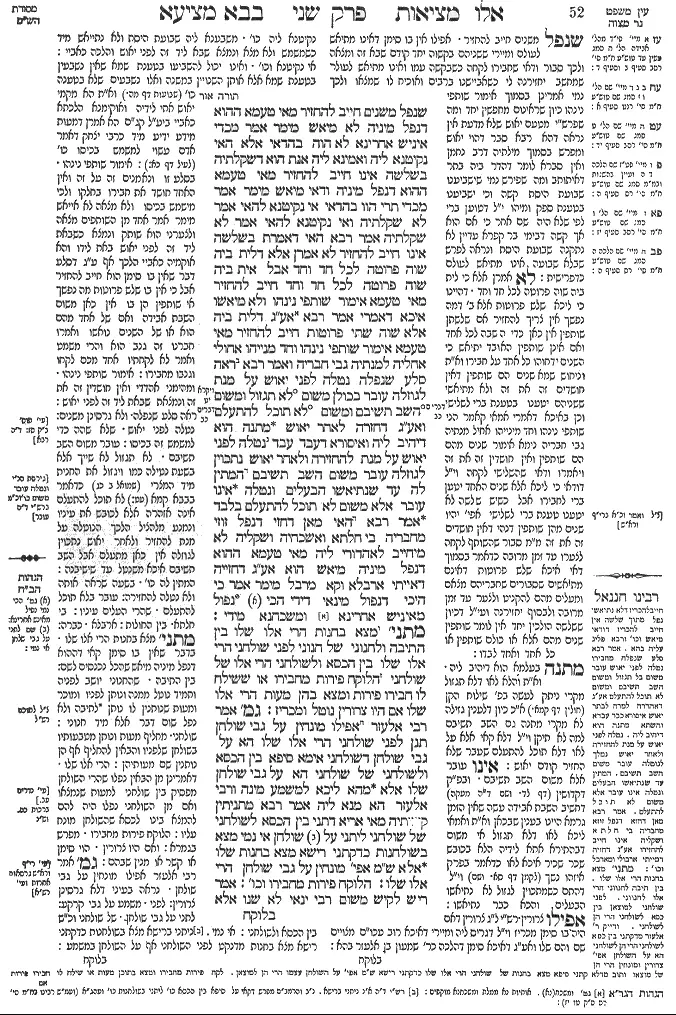
Bava Metzia 26b - Guemara
שנפל משנים חייב להחזיר מאי טעמא ההוא דנפל מיניה לא מיאש מימר אמר מכדי איניש אחרינא לא הוה בהדאי אלא האי נקיטנא ליה ואמינא ליה אנת הוא דשקלתיה בשלשה אינו חייב להחזיר מאי טעמא ההוא דנפל מיניה ודאי מיאש מימר אמר מכדי תרי הוו בהדאי אי נקיטנא להאי אמר לא שקלתיה ואי נקיטנא להאי אמר לא שקלתיה אמר רבא האי דאמרת בשלשה אינו חייב להחזיר לא אמרן אלא דלית ביה שוה פרוטה לכל חד וחד אבל אית ביה שוה פרוטה לכל חד וחד חייב להחזיר מאי טעמא אימור שותפי נינהו ולא מיאשו איכא דאמרי אמר רבא אע"ג דלית ביה אלא שוה שתי פרוטות חייב להחזיר מאי טעמא אימור שותפי נינהו וחד מנייהו אחולי אחליה למנתיה גבי חבריה ואמר רבא ראה סלע שנפלה נטלה לפני יאוש על מנת לגוזלה עובר בכולן משום (ויקרא יט, יג) לא תגזול ומשום (דברים כב, א) השב תשיבם ומשום (דברים כב, ג) לא תוכל להתעלם ואע"ג דחזרה לאחר יאוש מתנה הוא דיהיב ליה ואיסורא דעבד עבד נטלה לפני יאוש על מנת להחזירה ולאחר יאוש נתכוין לגוזלה עובר משום השב תשיבם המתין לה עד שנתיאשו הבעלים ונטלה אינו עובר אלא משום לא תוכל להתעלם בלבד אמר רבא האי מאן דחזי דנפל זוזי מחבריה בי חלתא ואשכחיה ושקליה לא מיחייב לאהדורי ליה מאי טעמא ההוא דנפל מיניה מיאש הוא אע"ג דחזייה דאייתי ארבלא וקא מרבל מימר אמר כי היכי דנפול מינאי דידי הכי נפול מאיניש אחרינא ומשכחנא מידי:
מתני׳ מצא בחנות הרי אלו שלו בין התיבה ולחנוני של חנוני לפני שולחני הרי אלו שלו בין הכסא ולשולחני הרי אלו של שולחני הלוקח פירות מחבירו או ששילח לו חבירו פירות ומצא בהן מעות הרי אלו שלו אם היו צרורין נוטל ומכריז:
גמ׳ אמר רבי אלעזר אפילו מונחין על גבי שולחן תנן לפני שולחני הרי אלו שלו הא על גבי שולחן דשולחני אימא סיפא בין הכסא ולשולחני של שולחני הא על גבי שולחן שלו אלא מהא ליכא למשמע מינה ורבי אלעזר הא מנא ליה אמר רבא מתניתין קשיתיה מאי אריא דתני בין הכסא לשולחני של שולחני ליתני על שולחן אי נמי מצא בשולחנות כדקתני רישא מצא בחנות שלו אלא ש"מ אפי' מונחין על גבי שולחן הרי אלו שלו:
הלוקח פירות מחבירו וכו':
אמר ריש לקיש משום רבי ינאי לא שנו אלא
Comments from Rashi on Masechet Bava Metzia Page 26b
נקיטנא ליה כו' . משבענא ליה שבועת היסת ולא נתייאש מיד כשמשמש ולא מצא ונמצא שבא ליד זה לפני יאוש והלכה כאביי: אי נקיטנא וכו' . ואינו יכול להשביעו בטענת שמא שאין נשבעין בטענת שמא אלא אותן השנויין במשנה ואלו נשבעים שלא בטענה כו' (שבועות דף מה.) וא"ת הא מקמי יאוש אתי לידיה ואוקימנא הלכתא כאביי ביע"ל קג"ם הא אמרן דמעות מידע ידיע מיד כרבי יצחק דאמר אדם עשוי למשמש בכיסו כו' (לעיל בבא מציעא דף כא:): אימור שותפי נינהו . בסלע זו ונאמנים זה על זה ואין האחד חושד את חבירו בחלקו ולכי מישמש בכיסו ולא מצאה לא אייאש מימר אמר אחד מן השותפים מצאה ולצערני הוא שותק ונמצא כשבאת ליד זה לפני יאוש באת לידו והא אוקמיה כאביי הלכך אע"ג דסלע דבר שאין בו סימן הוא חייב להחזיר אבל כי אין בו שלש פרוטות מה נפשך אי שותפין הן בו אין כאן משום השבת אבידה ואם של אחד מהם הוא או של השנים נואשו ואמרו חברנו זה גנב הוא והרי משמט ואמר לא לקחתיו אחד מכם לקחו וגנבו מחבירו: אימור שותפי נינהו . ומהימני אהדדי ואין חושדין זה את זה ונמצאת שבאת ליד זה לפני יאוש: ראה סלע שנפלה . ולא גרסינן משנים: נטלה לפני יאוש . שלא שהה כדי למשמש זה בכיסו: עובר משום השב תשיבם . לא תגזול לא שייך אלא בשעת נטילה כמו ויגזול את החנית מיד המצרי (שמואל ב כג) כדאמר בבבא קמא (עט.) לא תוכל להתעלם אינה אזהרה אלא לכובש את עיניו ונמנע מלהציל הלכך הנוטלה על מנת להחזיר ולאחר יאוש נתכוין לגוזלה אין כאן מתעלם אבל השב תשיבם איכא משנטל עד שישיבנה: המתין לה כו' . בשעה שראה אותה ולא נטלה להחזירה: עובר בלא תוכל להתעלם . שהרי העלים עיניו: בי חלתא . בין החולות: ארבלא . כברה: מתני' מצא בחנות הרי אלו שלו . בדבר שאין בו סימן קאי דההוא דנפל מיניה מיאש שהכל נכנסים לשם: בין התיבה . שהחנוני יושב לפניה ותמיד נוטל ממנה ונותן לפניו ומוכר ומעות שנותנין לו נותן לתיבה ולא נפל שום דבר אלא מיד חנוני: שולחני . מחליף מעות ונותן מטבעותיו בשולחן שלפניו והבאין להחליף אף הן נותנין שם מעותיהן: הרי אלו שלו . דאמרינן מן הבאין נפלו שהרי השולחן מפסיק בין שולחני למעות שנמצאו ואם מן השולחני נפלו היה להם להמצא בינו לכסא שהשולחן מונח עליו: הלוקח פירות מחבירו . מפרש בגמרא: ואם היו צרורין . הוי סימן או קשר או מנין שבהם: גמ' אמר רבי אלעזר אפילו מונחין על גבי שולחן . נראה בעיני דלא גרסינן צרורין: לפני . משמע על גבי קרקע: לתני על גבי שולחן . של שולחני וכ"ש בין הכסא ולשולחני: אי נמי . ניתני ברישא מצא בשולחנות כדקתני רישא מצא בחנות מדנקט לפני השולחני אף על השולחן במשמע:
Comments from Tosafot - Bava Metzia 26b
שנפל משנים חייב להחזיר . אפילו אין בו סימן דאינו מתיאש לעולם ומיירי ששניהם בקשוה יחד קודם שבא זה ומצאה ולכך סבור ודאי שחבירו לקחה כשבקשה עמו ואינו מתיאש לעולם שמחשב יחזירנה לי כשאביישנו ברבים ואוכיח לו שמצאו ולכך נמי אמרינן בסמוך אימור שותפי נינהו כיון שראינום מחפשין יחד ומה שפרש"י מטעם יאוש שלא מדעת אין נראה דהא רבא סבר דהוי יאוש ומפרש בסמוך מילתיה דרב נחמן ואין סברא לומר דהדר ביה בתר דאיתותב ומה שפירש נמי שישביענו שבועת היסת קשה וכי ישביענו בטענת ספק ומיהו י"ל דטוען ברי לפי שלא היה שם אחר כי אם הוא אך קשה דבימי בר קפרא עדיין לא נתקנה שבועת היסת ונראה לפרש שבלא שבועה אינו מתיאש לעולם כדפרישית: לא אמרן אלא כי לית ביה שוה פרוטה לכל חד וחד . דהיינו כי ליכא שלש פרוטות אלא ב' דמה נפשך אין צריך להחזיר אם שלשתן שותפין אין כאן כדי השבה לכל אחד ואם אינן שותפין האובד יתיאש כי השנים ידחוהו כל אחד על חבירו וא"ת וניחוש שמא שנים הם שותפין דאין חושדים זה את זה ולא מתיאשי ששניהם יטענו בטענת ברי לשלישי וכן באיכא דאמרי אמאי קאמר הני שותפי נינהו וחד מינייהו אחיל מנתיה גבי חבריה נימא אימור שנים מהם הם שותפין ואין חושדין זה את זה ויאמרו ודאי שהשלישי לקחה וי"ל דודאי כי ליכא אלא שנים האחד יטען ברי לחבירו אבל כשיש שלשה לא יטענו טענת ברי לשלישי אפי' יהיו שנים מהן שותפין דנהי דאין חושדים זה את זה מ"מ סבור שהשותף לקחה לצערו עד זמן מרובה כדאמר בסמוך דאי איכא שלש פרוטות דאינם מתיאשים שסבורים שחבריהם מצאם ומעלים מהם להקניט ולצער עד זמן מרובה ולבסוף יחזירנה ועי"ל דכיון ששלשה הולכין יחד אין לומר שותפין שנים מהם אלא או כולם שותפין או כל אחד ואחד לבדו: מתנה בעלמא הוא דיהיב ליה . וא"ת והלא לאו דלא תגזול מקרי ניתק לעשה בפ' שילוח הקן (חולין דף קמא.) א"כ כיון דלענין גזילה לא מקרי מתנה גם השב תשיבם למה לא תיקן וי"ל דלא קאי אלא על לאו דלא תוכל להתעלם שעבר שלא החזיר קודם יאוש: אינו עובר אלא משום השב תשיבם . ובפ"ק דקדושין (דף לד. ושם ד"ה מעקה) דחשיב השבת אבידה עשה שאין הזמן גרמא היינו בענין שבכאן וא"ת ואמאי ליכא לאו דלא תגזול אי משום דבהתירא אתא לידיה הלא בכובש שכר שכיר איכא לאו כדאמר בפרק איזהו נשך (לקמן בבא מציעא דף סא. ושם) וי"ל דהתם כשמתכוין לגזול לא נתיאשו הבעלים והכא כבר נתיאשו: אפילו צרורין . רש"י ל"ג צרורין דאם היה בו סימן מכריז וי"ל דגריס ליה ומיירי דאיכא רוב עכו"ם מצויים שם והם שלו ואע"ג דאיכא סימן דהלכה כר' שמעון בן אלעזר בהא:
Bava Metzia 26b - Mishnah translated into english
that fell from one of two people, he is obligated to return it. What is the reason? The person from whom the sela fell does not despair of recovering it. He says: After all, no other person was with me, only this one who was with me, as he is unaware that the sela was found by a third party. He therefore thinks: I will seize him and say to him: It is you who took it.
In a case where the coin fell from one of three people, the finder is not obligated to return it. What is the reason? The person from whom the sela fell certainly despairs of recovering it. He says: After all, two other people were with me. If I seize this one, he will say: I did not take it. And if I seize that one, he will say: I did not take it. Since he cannot make a definitive claim, he despairs of recovering his coin.
Based on the fact that by Torah law, one must return a lost item to its owner only if it is worth one peruta, Rava said: With regard to that which you said, that in a case where the coin fell from one of three people the finder is not obligated to return it, we said this only in a case where the total value of the lost coin, when divided by three, does not amount to the value of one peruta for each and every one of them; but if it amounts to the value of one peruta for each and every one of them, he is obligated to return it. What is the reason? Say that perhaps they are partners, i.e., they own the coin jointly; consequently, they do not despair, as each assumes that one of the other two found it and is holding it for the three of them.
There are those who say that Rava said: Even if its total value is only two perutot, which is insufficient to provide each of the three partners with one peruta, one is obligated to return it. What is the reason? Say that perhaps they are partners and one relinquishes his share to another. In that case, the remaining two partners each have a one peruta share, rendering the finder liable to return it.
§ And Rava says: In a case where one saw a sela coin that fell from another, if he took the coin in order to steal it, before the despair of the owner, he violates all of the following mitzvot: He is liable due to the prohibition: “You shall not…rob” (Leviticus 19:13); and due to the positive mitzva, stated with regard to found items, of: “You shall return them to your brother” (Deuteronomy 22:1), and due to the prohibition, stated with regard to one who finds an item: “You may not disregard” (Deuteronomy 22:3). And even if he returned it after the despair of the owner, it is merely a gift that he gave him; and the transgression that he performed, he performed, and he remains in violation of these mitzvot.
Rava continues: If he took the coin in order to return it, before the despair of the owner, and then, after the despair of the owner, he intended to steal it; he violates a commandment, due to his failure to fulfill the positive mitzva of: “You shall return them to your brother.” He does not violate the prohibition: “You shall not…rob,” because at the time he took the coin he did not intend to keep it. And he does not violate the prohibition: “You may not disregard,” because he did not disregard the lost item. He took it with the intention of returning it.
If he waited until the owner despaired of recovering the lost item and only then took it, he violates a commandment, but only due to his failure to fulfill the positive mitzva of: “You may not disregard,” as he took no action to return the lost item to its owner.
Rava says: In the case of this person who saw that a dinar coin fell from another into the sand, and then he found it and took it, he is not obligated to return it to its owner. What is the reason? The reason is that the one from whom the money fell despairs of finding it. Even if the finder sees that the owner brought a sifter and is sifting through the sand, ostensibly indicating that he did not despair of finding his coin, perhaps the owner is saying: Just as a coin fell from me in the sand, so too, a coin fell from another person and I will find some item to offset my loss.
MISHNA: If one found items without a distinguishing mark in a store, those items belong to him, as, since the store is frequented by the multitudes, the owner despairs of its recovery. If the items were found between the storekeeper’s counter and the storekeeper, the items belong to the storekeeper; since his customers do not typically have access to that area, presumably the items are his. If one found coins before a money changer, those coins belong to him. If the coins were found between the money changer’s chair and the money changer, those coins belong to the money changer, because his clients do not typically have access to that area.
In the case of one who purchases produce from another or in a case where another sent him produce as a gift, and he found coins intermingled with the produce, those coins belong to him. If the coins were bundled, this serves as a distinguishing mark and the finder takes the coins and proclaims his find.
GEMARA: The mishna teaches that if one found coins before a money changer, those coins belong to him. Rabbi Elazar says: Even if the coins were found placed upon the table itself they belong to the finder.
The Gemara challenges: We learned in the mishna: If one found coins before a money changer, those coins belong to him; this indicates by inference that if they were found upon the table, the coins belong to the money changer. The Gemara responds: Say the latter clause of the mishna: If the coins were found between the money changer’s chair and the money changer, those coins belong to the money changer; this indicates by inference that if they were found upon the table, the coins belong to the finder. The Gemara concludes: Rather, due to the contradictory inferences from the first and the latter clauses, no inference is to be learned from this mishna.
The Gemara asks: And Rabbi Elazar himself, from where does he derive this halakha that coins found on the table belong to the finder, given that apparently one cannot infer this ruling from the mishna? Rava said: The mishna is difficult for him: Why did the tanna teach specifically that when the coins are found between the money changer’s chair and the money changer, those coins belong to the money changer? Let the tanna teach instead: If the coins were found on the table, or: If the coins were found in the money-changing establishment, as it is taught in the first clause of the mishna: If one found items without a distinguishing mark in a store, those items belong to him. Rather, learn from it that since the money changer typically places his money in his drawer, even if the coins were found placed upon the table itself these coins belong to him.
§ The mishna teaches: In the case of one who purchases produce from another, and he found coins intermingled with the produce, those coins belong to him. Reish Lakish says in the name of Rabbi Yannai: The Sages taught this only
Traduction : The William Davidson digital edition of the Koren Noé Talmud, with commentary by Rabbi Adin Even-Israel Steinsaltz.