 Talmud Bavli
The learning on the whole site is dedicated : L'ilui Nishmat יוסף בן מושה
The learning on the whole site is dedicated : L'ilui Nishmat Jamila bat Chlomo Abensour
The learning on the whole site is dedicated : L'ilui Nishmat אסתר בת חיים
Bava Metzia 29b : Youtube
Daf TubeYoutube
1 video class :
Bava Metzia Page 29b
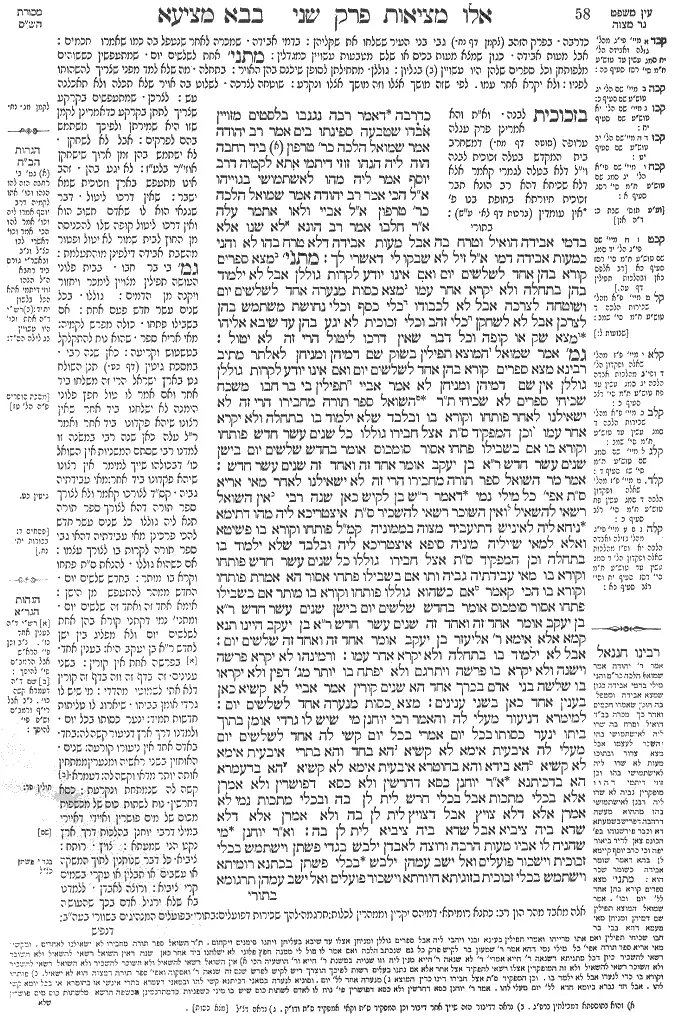
Bava Metzia 29b - Guemara
כדרבה דאמר רבה נגנבו בלסטים מזויין אבדו שטבעה ספינתו בים אמר רב יהודה אמר שמואל הלכה כר' טרפון ביד רחבה הוה ליה הנהו זוזי דיתמי אתא לקמיה דרב יוסף אמר ליה מהו לאשתמושי בגוייהו א"ל הכי אמר רב יהודה אמר שמואל הלכה כר' טרפון א"ל אביי ולאו אתמר עלה א"ר חלבו אמר רב הונא לא שנו אלא בדמי אבידה הואיל וטרח בה אבל מעות אבידה דלא טרח בהו לא והני כמעות אבידה דמו א"ל זיל לא שבקו לי דאשרי לך:
מתני׳ מצא ספרים קורא בהן אחד לשלשים יום ואם אינו יודע לקרות גוללן אבל לא ילמוד בהן בתחלה ולא יקרא אחר עמו מצא כסות מנערה אחד לשלשים יום ושוטחה לצרכה אבל לא לכבודו כלי כסף וכלי נחושת משתמש בהן לצרכן אבל לא לשחקן כלי זהב וכלי זכוכית לא יגע בהן עד שיבא אליהו מצא שק או קופה וכל דבר שאין דרכו ליטול הרי זה לא יטול:
גמ׳ אמר שמואל המוצא תפילין בשוק שם דמיהן ומניחן לאלתר מתיב רבינא מצא ספרים קורא בהן אחד לשלשים יום ואם אינו יודע לקרות גוללן גוללן אין שם דמיהן ומניחן לא אמר אביי תפילין בי בר חבו משכח שכיחי ספרים לא שכיחי ת"ר השואל ספר תורה מחבירו הרי זה לא ישאילנו לאחר פותחו וקורא בו ובלבד שלא ילמוד בו בתחלה ולא יקרא אחר עמו וכן המפקיד ס"ת אצל חבירו גוללו כל שנים עשר חדש פותחו וקורא בו אם בשבילו פתחו אסור סומכוס אומר בחדש שלשים יום בישן שנים עשר חדש ר"א בן יעקב אומר אחד זה ואחד זה שנים עשר חדש:
אמר מר השואל ספר תורה מחבירו הרי זה לא ישאילנו לאחר מאי אריא ס"ת אפי' כל מילי נמי דאמר ר"ש בן לקיש כאן שנה רבי אין השואל רשאי להשאיל ואין השוכר רשאי להשכיר ס"ת איצטריכא ליה מהו דתימא ניחא ליה לאיניש דתיעביד מצוה בממוניה קמ"ל פותחו וקורא בו פשיטא ואלא למאי שייליה מיניה סיפא איצטריכא ליה ובלבד שלא ילמוד בו בתחלה וכן המפקיד ס"ת אצל חבירו גוללו כל שנים עשר חדש פותחו וקורא בו מאי עבידתיה גביה ותו אם בשבילו פתחו אסור הא אמרת פותחו וקורא בו הכי קאמר אם כשהוא גוללו פותחו וקורא בו מותר אם בשבילו פתחו אסור סומכוס אומר בחדש שלשים יום בישן שנים עשר חדש ר"א בן יעקב אומר אחד זה ואחד זה שנים עשר חדש ר"א בן יעקב היינו תנא קמא אלא אימא ר' אליעזר בן יעקב אומר אחד זה ואחד זה שלשים יום:
אבל לא ילמוד בו בתחלה ולא יקרא אחר עמו:
ורמינהו לא יקרא פרשה וישנה ולא יקרא בו פרשה ויתרגם ולא יפתח בו יותר מג' דפין ולא יקראו בו שלשה בני אדם בכרך אחד הא שנים קורין אמר אביי לא קשיא כאן בענין אחד כאן בשני ענינים:
מצא כסות מנערה אחד לשלשים יום:
למימרא דניעור מעלי לה והאמר רבי יוחנן מי שיש לו גרדי אומן בתוך ביתו ינער כסותו בכל יום אמרי בכל יום קשי לה אחד לשלשים יום מעלי לה איבעית אימא לא קשיא הא בחד והא בתרי איבעית אימא לא קשיא הא בידא והא בחוטרא איבעית אימא לא קשיא הא בדעמרא הא בדכיתנא א"ר יוחנן כסא דחרשין ולא כסא דפושרין ולא אמרן אלא בכלי מתכות אבל בכלי חרש לית לן בה ובכלי מתכות נמי לא אמרן אלא דלא צויץ אבל דצויץ לית לן בה ולא אמרן אלא דלא שדא ביה ציביא אבל שדא ביה ציביא לית לן בה:
וא"ר יוחנן מי שהניח לו אביו מעות הרבה ורוצה לאבדן ילבש בגדי פשתן וישתמש בכלי זכוכית וישכור פועלים ואל ישב עמהן ילבש בכלי פשתן בכתנא רומיתא וישתמש בכלי זכוכית בזוגיתא חיורתא וישכור פועלים ואל ישב עמהן תרגומא
Comments from Rashi on Masechet Bava Metzia Page 29b
כדרבה . בפרק הזהב (לקמן בבא מציעא דף נח.) גבי בני העיר ששלחו את שקליהן: בדמי אבידה . שמכרה לאחר שנטפל בה כמו שאמרו חכמים: אבל מעות אבידה . כגון שמצא מעות בכיס או שלש מטבעות עשויין כמגדלין: מתני' אחת לשלשים יום . שמתעפשין כששוהים מלפותחן וכל ספרים שלהן היו עשויין בגליון: גוללן . מתחילתן לסופן שיכנס בהן האויר: בתחלה . מה שלא למד מפני שצריך להשהותו לפניו: ולא יקרא אחר עמו . לפי שזה מושך אצלו וזה מושך אצלו ונקרע: שוטחה לצרכה . לשלוט בה אויר שלא תכלה ולא תאכלנה עש: לצרכן . שמתעפשים בקרקע שצריך לתתן בקרקע כדאמרינן לקמן שזו היא שמירתן ולפיכך משתמש בהם לפרקים: אבל לא לשחקן . לא ישתמש בהן זמן ארוך שישחקן אוזי"ר בלע"ז: לא יגע בהן . זהב אינו מתעפש בארץ וזכוכית שמא ישבר: שאין דרכו ליטול . דבר שגנאי הוא לו שאדם חשוב הוא ואין דרכו ליטול קופה שלו להכניסה מן החוץ לבית שמור לא יטול ופטור מהשבת אבידה דילפינן מוהתעלמת: גמ' בי בר חבו . בבית פלוני העושה תפילין מצויין לימכר ויחזור ויקנה מן הדמים: גוללו . בכל שנים עשר חדש פעם אחת: אם בשבילו פתחו . כולה מפרש לקמיה: מאי אריא ספר . שהוא נוח להתקלקל בטשטוש וקריעה: כאן שנה רבי . במסכת גיטין (דף כט.) תנן השולח גט בארץ ישראל הרי זה משלחו ביד אחר ואם אמר לו טול חפץ פלוני הימנה לא ישלחנו ביד אחר שאין רצונו שיהא פקדונו ביד אחר ואמר ר"ל עלה כאן שנה רבי במשנה זו למדנו רבי שסתם המשניות אין השואל כו' דבכולהו שייך למימר אין רצונו שיהא פקדונו ביד אחר: מאי עבידתיה גביה . קס"ד לצורכו קאמר ולא לצורך ספר תורה דהא לצורך ספר תורה תנא ליה גוללו כל שנים עשר חדש להכי פרכינן מאי עבידתיה דהאי גבי ספר תורה לקרות בו לצורך עצמו: אם כשהוא גוללו . להנאת ס"ת פתחו וקרא בו מותר: בחדש שלשים יום . החדש ממהר להתעפש מן הישן: אימא אחד זה ואחד זה שלשים יום . ומתני' נמי דקתני קורא בהן אחת לשלשים יום ולא מפליג בין ישן לחדש ר"א בן יעקב היא: בענין אחד . בפרשה אחת אין קורין: בשני ענינים . זה בדף זה וזה בדף זה קורין דלא אתי לשמוטי מהדדי: מי שיש לו גרדי אומן בביתו . שיארוג לו טליתות חדשות תמיד: ינער כסותו בכל יום . ולמדנו דרך ארץ דניעור קשה לה: בחד . באדם אחד אין ניעורו קורעה: שנים . האוחזין בשני ראשיה ומנערין ממתחין אותה יותר מדאי וקשה לה: דעמרא . קשה לה שנמתחת ונקרעת: כסא דחרשין . נוח לשתות כוס של מכשפות מכוס של מים פושרין ואיידי דאיירי במילי דרבי יוחנן בהלכות דרך ארץ נקט הני שמעתא: צויץ . רותח: ציביא . כל דבר שנותנין לתוך המשקה או עשבים או תבלין או עקרי בשמים קרי ציביא: ורוצה לאבדן . ללמדנו בא שלא ירגיל אדם בכך שהעושה אלה מאבד מהר הון רב: כתנא רומיתא . דמיהם יקרין וממהרין לכלות: תרגמה . להך שכירות דפועלים:
Comments from Tosafot - Bava Metzia 29b
בזכוכית לבנה . וא"ת והא אמרינן פרק עגלה ערופה (סוטה דף מח.) דמשחרב בית המקדש בטלה זכוכית לבנה וי"ל דלא בטלה לגמרי קאמר אלא דלא שכיחא דהא רב הונא תבר זכוכית חיורתא בחופת בנו פ' אין עומדין (ברכות דף לא. ע"ש):
Bava Metzia 29b - Mishnah translated into english
The Gemara answers that the statement in the mishna: Therefore, if the money is lost, he is liable to pay restitution for it, can be explained in accordance with the statement of Rabba, as Rabba says concerning another mishna (58a): When the tanna says that they were stolen, the reference is to a case where the item was stolen by armed bandits; when he says that they were lost, the reference is to a case where the agent’s ship sank at sea.
Rav Yehuda says that Shmuel says: The halakha is in accordance with the opinion of Rabbi Tarfon, who said that it is permitted for the finder to use the money. The Gemara relates: There were these dinars that belonged to orphans that were in the possession of Raḥava. Raḥava came before Rav Yosef and said to him: What is the halakha; is it permitted for me to use these dinars? Rav Yosef said to him: This is what Rav Yehuda says that Shmuel says: The halakha is in accordance with the opinion of Rabbi Tarfon.
Abaye said to Rav Yosef: Wasn’t it stated concerning this halakha that Rabbi Ḥelbo says that Rav Huna says: The Sages taught this halakha, that it is permitted to use the money, only in a case of money received from the sale of a lost item that one found and that is no longer financially viable for one to tend to it. This is permitted, since he exerted himself and tended to it. But in the case of lost coins, where he did not exert himself in order to tend to them, it is not permitted for him to use them. And the case of these dinars in Raḥava’s possession is similar to a case of lost coins. Rav Yosef accepted Abaye’s objection and said to Raḥava: Go; as they did not allow me to permit the use of the dinars for you.
MISHNA: If one found scrolls, he reads them once in thirty days in order to ventilate them and prevent mold. And if he does not know how to read, he rolls and unrolls them in order to ventilate them. But he shall not study passages in them for the first time, as he would leave the scroll exposed to the air for a lengthy period, thereby causing damage. And another person shall not read the scroll with him, as each might pull it closer to improve his vantage point, which could cause the scroll to tear.
If one found a garment, he shakes it once in thirty days, and he spreads it out for its sake, to ventilate it, but he may not use it as a decoration for his own prestige.
If one found silver vessels or copper vessels, he may use them for their own sake to prevent tarnish and rust, but he may not use them to the extent that he will erode them. If he finds gold vessels or glass vessels, which are not ruined by neglect, he may not touch them until Elijah will come and identify the owner.
If a person found a sack or a basket or any other item that it is not his typical manner to take and carry because it is beneath his dignity, he shall not take it, as one need not demean himself in order to return a lost item.
GEMARA: Shmuel says: One who finds phylacteries in the marketplace and is in need of phylacteries assesses their value and immediately places the money aside for the owner.
Ravina raises an objection from the mishna: If one found scrolls, he reads them once in thirty days; and if he does not know how to read, he rolls and unrolls them. Ravina infers: To roll and unroll them, yes, he may do so, but assess their value and place the money aside, no, he may not. Abaye said: There is a difference between phylacteries and scrolls. Phylacteries are available at the house of bar Ḥavu, where they are produced in large quantities, but scrolls are not available, as Torah scrolls are not easily obtained.
§ The Sages taught in a baraita: In the case of one who borrows a Torah scroll from another, that person may not lend it to another, i.e., a third person. He may open it and read it, provided that he does not study passages in it for the first time, lest the scroll be exposed for a lengthy period of time and sustain damage. And another person shall not read the scroll with him, lest the scroll tear.
And likewise, in the case of one who deposits a Torah scroll with another, the bailee rolls it every twelve months, and he may open it and read it. If it is for himself that he opened it, it is prohibited. Sumakhos says: In the case of a new Torah scroll, one rolls it every thirty days because the ink is not yet dry and must be more frequently ventilated. By contrast, in the case of an old Torah scroll, one rolls it every twelve months. Rabbi Eliezer ben Ya’akov says: In the case of both this new Torah scroll, and the case of that old Torah scroll, one rolls it every twelve months.
The Gemara analyzes the baraita: The Master said: In the case of one who borrows a Torah scroll from another, that person may not lend it to another, i.e., a third person. The Gemara asks: Why did the tanna teach this halakha specifically with regard to a Torah scroll? This is the halakha with regard to any item as well, as Rabbi Shimon ben Lakish says: Here in a mishna (Gittin 29a), Rabbi Yehuda HaNasi taught: A borrower is not allowed to lend the item that he borrowed to someone else, and a renter is not allowed to rent out the item that he rented to someone else.
The Gemara answers: It was necessary for the tanna to mention the halakha specifically with regard to a Torah scroll, lest you say that a person is amenable to having a mitzva performed with his property and would consequently not mind if his Torah scroll was lent to another. Therefore, the tanna teaches us that the borrower may not lend even a Torah scroll.
The baraita continues: He may open it and read it. The Gemara asks: Isn’t that obvious? And rather, for what purpose did he borrow the Torah scroll from him, if not to read it? The Gemara answers: It was necessary to teach the last clause: Provided that he does not study passages in it for the first time.
The baraita continues: And likewise, in the case of one who deposits a Torah scroll with another, the bailee rolls it every twelve months, and he may open it and read it. The Gemara asks: What is the bailee doing with it? As a paid bailee, he has no right to read it. And furthermore, whereas the tanna teaches: If it is for himself that he opened it, it is prohibited, didn’t you say in the previous passage: He may open it and read it? The Gemara answers: This is what the tanna is saying: If, when he is rolling the Torah scroll to ventilate it, he opens it and reads it, it is permitted. If it is for himself that he opened it, it is prohibited.
The baraita continues: Sumakhos says: In the case of a new Torah scroll, one rolls it every thirty days because the ink is not yet dry and must be more frequently ventilated. By contrast, in the case of an old Torah scroll, one rolls it every twelve months. Rabbi Eliezer ben Ya’akov says: In both the case of this new Torah scroll and the case of that old Torah scroll, one rolls it every twelve months. The Gemara asks: What is the dispute here; it appears that the statement of Rabbi Eliezer ben Ya’akov is identical to the statement of the first tanna, who stated without qualification that one rolls a Torah scroll every twelve months. The Gemara answers: Rather say that Rabbi Eliezer ben Ya’akov says: Both in the case of this new Torah scroll and the case of that old Torah scroll, one rolls it every thirty days.
§ The Gemara resumes its analysis of the mishna, which teaches with regard to borrowed scrolls: But he shall not study passages in them for the first time and another person shall not read the scroll with him. The Gemara raises a contradiction from a baraita (Tosefta 2:31): If one borrows a scroll, he shall not read a passage and review it, and he shall not read a passage in it and translate the passage, and he shall not open it more than three columns at a time, and three people shall not read in it together from one volume. The Gemara infers: But two people may read it together, contrary to the ruling in the mishna.
Abaye said: It is not difficult. Here, where it is inferred from the baraita that two may read one scroll together, it is referring to a case where they are reading one matter and each is aware of the progress of the other. There, in the mishna, where the ruling is that two may not read one scroll together, it is referring to a case where they are reading two different matters, as each is oblivious to the progress of the other and may pull the scroll closer to improve his vantage point.
§ The mishna teaches: If one found a garment, he shakes it once in thirty days. The Gemara asks: Is this to say that shaking a garment is beneficial for it? But doesn’t Rabbi Yoḥanan say: Only one who has access to a skilled weaver [gardi] in his house may shake his garment every day, as the weaver can replace the damaged garments with new ones. The Sages say: Shaking a garment every day is harmful to it, but shaking it once in thirty days is beneficial for it.
If you wish, say instead: It is not difficult. In this mishna, where the ruling is that shaking a garment is beneficial, the reference is to a case where one person shakes the garment. And that statement of Rabbi Yoḥanan, who rules that shaking the garment causes damage, is referring to a case where two people shake the garment.
If you wish, say instead: It is not difficult. In this mishna, where the ruling is that shaking a garment is beneficial, the reference is to a case where one shakes the garment by hand. And that statement of Rabbi Yoḥanan, who rules that shaking the garment causes damage, is referring to a case where one shakes the garment with a stick.
If you wish, say instead: It is not difficult. In this mishna, where the ruling is that shaking a garment is beneficial, the reference is to a case where one shakes a garment made of wool. And that statement of Rabbi Yoḥanan, who rules that shaking the garment causes damage, is referring to a case where one shakes a garment made of linen.
The Gemara cites additional statements by Rabbi Yoḥanan providing practical advice. Rabbi Yoḥanan says: It is preferable to drink from a cup of witches and not to drink from a cup of lukewarm water, which is extremely unhealthy. Rabbi Yoḥanan qualifies his statement: We said this only with regard to lukewarm water in metal vessels, but in earthenware vessels we have no problem with it. And even in metal vessels, we said this only in a case where the water had not been boiled, but if the water had been boiled we have no problem with it. And we said that lukewarm water is unhealthy only in a case where one did not cast flavorings into the water, but if he cast flavorings into the water we have no problem with it.
And Rabbi Yoḥanan says: In the case of one whose father bequeathed him a great deal of money and he seeks to lose it, he should wear linen garments, and should use glass vessels, and should hire laborers and not sit with them to supervise. The Gemara elaborates: He should wear linen garments; this is stated with regard to Roman linen, which becomes tattered quickly. He should use glass vessels; this is stated with regard to expensive white glass. And he should hire laborers and not sit with them; the explanation is
Traduction : The William Davidson digital edition of the Koren Noé Talmud, with commentary by Rabbi Adin Even-Israel Steinsaltz.