 Talmud Bavli
The learning on the whole site is dedicated : L'ilui Nishmat רינה בת לדיסיה
The learning on the whole site is dedicated : L'ilui Nishmat Jamila bat Chlomo Abensour
The learning on the whole site is dedicated : L'ilui Nishmat Chemouel Eliezer ben Batcheva
Bava Metzia 24b : Youtube
Daf TubeYoutube
1 video class :
Bava Metzia Page 24b
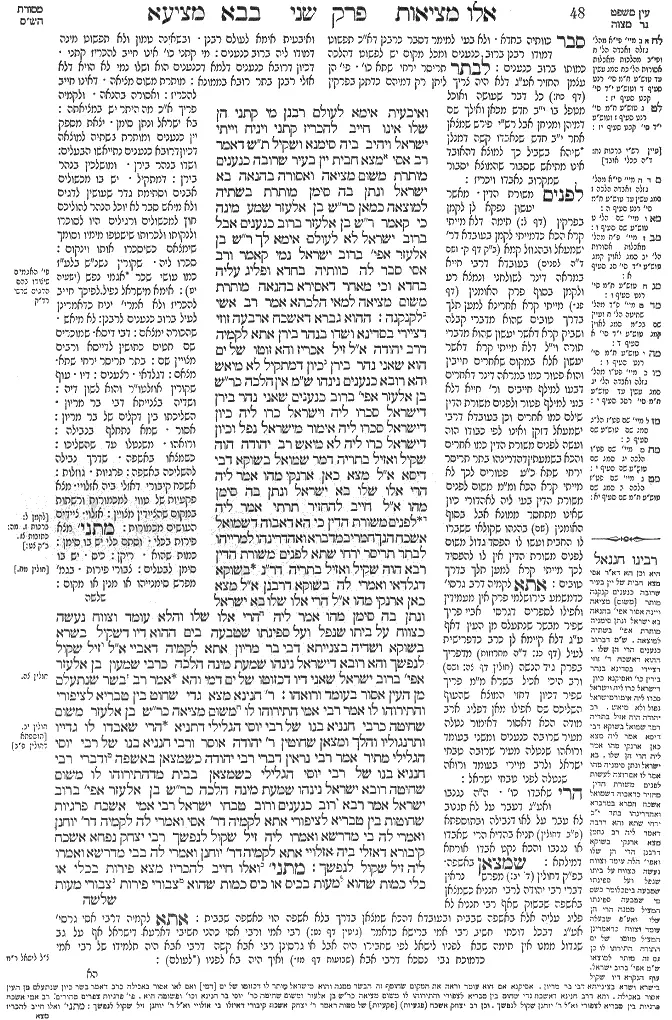
Bava Metzia 24b - Guemara
ואיבעית אימא לעולם רבנן מי קתני הן שלו אינו חייב להכריז קתני ויניח וייתי ישראל ויהיב ביה סימנא ושקיל ת"ש דאמר רב אסי מצא חבית יין בעיר שרובה כנענים מותרת משום מציאה ואסורה בהנאה בא ישראל ונתן בה סימן מותרת בשתיה למוצאה כמאן כר"ש בן אלעזר שמע מינה כי קאמר ר"ש בן אלעזר ברוב כנענים אבל ברוב ישראל לא לעולם אימא לך ר"ש בן אלעזר אפי' ברוב ישראל נמי קאמר ורב אסי סבר לה כוותיה בחדא ופליג עליה בחדא וכי מאחר דאסירא בהנאה מותרת משום מציאה למאי הלכתא אמר רב אשי לקנקנה:
ההוא גברא דאשכח ארבעה זוזי דציירי בסדינא ושדו בנהר בירן אתא לקמיה דרב יהודה א"ל זיל אכריז והא זוטו של ים הוא שאני נהר בירן כיון דמתקיל לא מיאש והא רובא כנענים נינהו ש"מ אין הלכה כר"ש בן אלעזר אפי' ברוב כנענים שאני נהר בירן דישראל סכרו ליה וישראל כרו ליה כיון דישראל סכרו ליה אימור מישראל נפל וכיון דישראל כרו ליה לא מיאש רב יהודה הוה שקיל ואזיל בתריה דמר שמואל בשוקא דבי דיסא א"ל מצא כאן ארנקי מהו אמר ליה הרי אלו שלו בא ישראל ונתן בה סימן מהו א"ל חייב להחזיר תרתי אמר ליה לפנים משורת הדין כי הא דאבוה דשמואל אשכח הנך חמרי במדברא ואהדרינהו למרייהו לבתר תריסר ירחי שתא לפנים משורת הדין רבא הוה שקיל ואזיל בתריה דר"נ בשוקא דגלדאי ואמרי לה בשוקא דרבנן א"ל מצא כאן ארנקי מהו א"ל הרי אלו שלו בא ישראל ונתן בה סימן מהו אמר ליה הרי אלו שלו והלא עומד וצווח נעשה כצווח על ביתו שנפל ועל ספינתו שטבעה בים ההוא דיו דשקיל בשרא בשוקא ושדיה בצנייתא דבי בר מריון אתא לקמיה דאביי א"ל זיל שקול לנפשך והא רובא דישראל נינהו שמעת מינה הלכה כרבי שמעון בן אלעזר אפי' ברוב ישראל שאני דיו דכזוטו של ים דמי והא אמר רב בשר שנתעלם מן העין אסור בעומד ורואהו:
ר' חנינא מצא גדי שחוט בין טבריא לציפורי והתירוהו לו אמר רבי אמי התירוהו לו משום מציאה כר"ש בן אלעזר משום שחיטה כרבי חנניא בנו של רבי יוסי הגלילי דתניא הרי שאבדו לו גדייו ותרנגוליו והלך ומצאן שחוטין ר' יהודה אוסר ורבי חנניא בנו של רבי יוסי הגלילי מתיר אמר רבי נראין דברי רבי יהודה כשמצאן באשפה ודברי רבי חנניא בנו של רבי יוסי הגלילי כשמצאן בבית מדהתירוהו לו משום שחיטה רובא ישראל נינהו שמעת מינה הלכה כר"ש בן אלעזר אפי' ברוב ישראל אמר רבא רוב כנענים ורוב טבחי ישראל רבי אמי אשכח פרגיות שחוטות בין טבריא לציפורי אתא לקמיה דר' אסי ואמרי לה לקמיה דר' יוחנן ואמרי לה בי מדרשא ואמרו ליה זיל שקול לנפשך רבי יצחק נפחא אשכח קיבורא דאזלי ביה אזלויי אתא לקמיה דר' יוחנן ואמרי לה בבי מדרשא ואמרו ליה זיל שקול לנפשך:
מתני׳ ואלו חייב להכריז מצא פירות בכלי או כלי כמות שהוא מעות בכיס או כיס כמות שהוא צבורי פירות צבורי מעות
Comments from Rashi on Masechet Bava Metzia Page 24b
ואיבעית אימא לעולם רבנן . ובשאינה טמון ולא תפשוט מינה דמודו ליה ברוב כנענים: מי קתני כו' אינו חייב להכריז קתני . דכיון דרובא כנענים דלמא דכנענים הוא ושלו נמי לא הויא דלא אזלי רבנן בתר רובא בממונא: מותרת משום מציאה . דאינו חייב להכריז: ואסורה בהנאה . ולקמיה פריך א"כ מה היתר יש במציאתה: בא ישראל ונתן סימן . יצאת מספק יין כנענים ומותרת בשתיה למוצאה דכיון דרובא כנענים נתייאשו הבעלים: ושדו בנהר בירן . ומושלכין בנהר בירן: דמתקיל . יש בו מכשולים אבנים וסתימת גדר שעושין לדגים ולא מיאש סבר לא יוכל הנהר להוליכם חוץ למכשולים ורגילים היו לסוכרו ולנקותו ולכרותו שישטפו מימיו וסומך שימצאם כשיסכרו אותו וינקום: סכרו ליה . שקורין נשנ"ש בלע"ז כמו עושי שכר אגמי נפש (ישעיהו יט): אימא מישראל נפיל . לפיכך חייב להכריז ולא אמרינן יניח כדאמרינן לעיל ברוב כנענים לרבנן: לא מיאש . שהכורה ימצאם: דבי דיסא . שמוכרים שם חטים כתושין לדייסא ורבים מצויין שם: בתר תריסר ירחי שתא . מצאם: דגלדאי . רצענים: דיו . עוף שקורין אוזלטו"ר והוא לשון דיה: ושדיה בצנייתא דבי בר מריון . השליכתו בין דקלים של בר מריון: אסור . שמא נתחלף בנבילה: ורואהו . משנטלו עד שהשליכו: כשמצאו באשפה . שדרך נבילה להשליכה באשפה: פרגיות . גוזלות: אשכח קיבורי דאזלי ביה אזלויי . מצא פקעיות של טווי למכמורות ורשתות במקום שהציידין מצויין: אזלוי . ציידים העושים מכמורות: מתני' מצא פירות בכלי . וסתם כלי יש בו סימן: כמות שהוא . ריקן: כיס . יש בו סימן לבעלים: צבורי פירות . בגמ' מפרש סימנייהו או מנין או מקום:
Comments from Tosafot - Bava Metzia 24b
סבר כוותיה בחדא . ולא בעי למימר דסבר כרבנן דא"כ תפשוט דמודו רבנן ברוב כנענים ומכל מקום יש לפשוט דהלכה כמותו ברוב כנענים: לבתר תריסר ירחי שתא כו' . פי' הן עצמן החזיר אע"ג דלא היה צריך ליתן רק דמיהם כדתנן בפרקין (דף כח:) כל דבר שעושה ואוכל מטפל בו י"ב חדש מכאן ואילך שם דמיהן ומניחן אבל רש"י פירש שמצאן אחר י"ב חדש שנאבדו קשה דמנלן . שיהא בשביל כך למוצא דהאובד אינו מתיאש שסבור שהמוצא יסבור שמקרוב נאבדו ויכריז: לפנים משורת הדין . מאשר יעשון נפקא לן לקמן בפרקין (בבא מציעא דף ל:) תימה דלא מייתי קרא הכא כדמייתי לקמן בעובדא דר' ישמעאל ובהגוזל קמא (ב"ק דף ק. ושם ד"ה לפנים) בעובדא דרבי חייא במראה דינר לשולחני ונמצא רע ולקמן בסוף פרק האומנין (בבא מציעא דף פג.) מייתי קרא אחרינא למען תלך בדרך טובים שהוא מדברי קבלה ושביק קרא דאשר יעשון שהוא מדברי תורה וי"ל דלא מייתי קרא דאשר יעשון אלא במקום שאחרים חייבין והוא פטור כמו במראה דינר דאחרים דבעו למילף חייבים ור' חייא דלא בעי למילף פטור ולפנים משורת הדין שילם כמו אחרים וכן בעובדא דרבי ישמעאל דזקן ואינו לפי כבודו הוה ועשה לפנים משורת הדין כמו אחרים והכא בשמעתין דהדרינהו בתר תריסר ירחי שתא כ"ע פטורים לכך לא מייתי קרא הכא ומ"מ משום לפנים משורת הדין בעי ליה לאהדורי כיון שאינו מתחסר ממונא אבל בסוף האומנין (שם) בהנהו שקולאי ששברו לו החבית ועשו לו הפסד גדול משום לפנים משורת הדין אין לו להפסיד לכך מייתי קרא למען תלך בדרך טובים: אתא לקמיה דרב גרסי' כדמשמע בירושלמי פרק אין מעמידין ואפילו לספרים דגרסי אביי פריך שפיר מבשר שנתעלם מן העין דאף ע"ג דלא קיימא לן כרב כדפרישית לעיל (בבא מציעא דף כג: ד"ה מחרוזות) מדפריך בפרק גיד הנשה (חולין דף צה: ושם) ורב היכי אכיל בשרא מ"מ פריך שפיר דכיון דחזי המוצא שהעוף השליכם שם אפילו מאן דפליג ארב מודה הכא דאסור דאימור נטלה מעיר שרובה כנענים ומשני בעומד ורואהו שנטלה מעיר שרובה טבחי ישראל ולרב מיירי בעומד ורואה שנטלה לפני טבחי ישראל: הרי שאבדו כו' . ה"ה נגנבו ואע"ג דעבר על לא תגנוב לא עבר על לאו דנבילה ובתוספתא (פ"ב דחולין) תניא בהדיא הרי שאבדו או נגנבו והכא נקט אבדו אורחא דמילתא: שמצאן באשפה . בפ"ק דחולין (ד' יב:) מפרש נראין דברי רבי יהודה לרבי חנניא כשמצאן באשפה שבשוק שאף רבי חנניא לא פליג עליה אלא באשפה שבבית ובעובדא דהכא שמצאן בדרך בלא אשפה הוי כאשפה שבבית: אתא לקמיה דרבי אסי גרסי' אע"ג דבכל דוכתי חשיב רבי אמי ברישא כדאמר (גיטין דף נט:) רבי אמי ורבי אסי כהני חשיבי דארעא דישראל אף על גב שגדול ממנו אין תימה שבא לפניו לישאל לפי שחבירו היה אבל אי גרסינן רבי אבא קשה דרבי אבא היה תלמידו של רבי אמי כדמוכח גבי נסכא דרבי אבא (שבועות דף מז.) ואיך היה בא לפניו (לעולם):
Bava Metzia 24b - Mishnah translated into english
And if you wish, say instead that actually the mishna is in accordance with the opinion of the Rabbis. Is it taught in the mishna that the items are his? It is taught that he is not obligated to proclaim his find. He may not keep them, but he shall place the items in his possession and a Jew will come and provide a distinguishing mark to describe the items and take them.
Come and hear a proof from that which Rav Asi says: If one found a barrel of wine in a city whose population has a majority of gentiles, keeping the barrel is permitted in terms of the halakhot of finding lost items because it presumably belonged to a gentile, and deriving benefit from the wine is prohibited, as it is presumed to be wine of a gentile. If a Jew came and provided a distinguishing mark to describe it, drinking the wine is permitted for its finder, as it proved to be the wine of a Jew. Nevertheless, it belongs to the finder, because the owner despaired of recovering a barrel misplaced in a public area.
The Gemara explains the proof: In accordance with whose opinion is this statement of Rav Asi? It is in accordance with the opinion of Rabbi Shimon ben Elazar. Conclude from it that when Rabbi Shimon ben Elazar stated his opinion, it was only with regard to a place where there is a majority of gentiles; but in a place where there is a majority of Jews, the owner does not despair of recovering his lost item. The Gemara rejects the proof: Actually, I will say to you that even with regard to a place where there is a majority of Jews, Rabbi Shimon ben Elazar also stated his opinion, and Rav Asi holds in accordance with the opinion of Rabbi Shimon ben Elazar in one case, that of a place where there is a majority of gentiles, and disagrees with him in one case, that of a place where there is a majority of Jews.
The Gemara clarifies: And once it was established that deriving benefit from the wine is prohibited, then with regard to the fact that it is permitted in terms of the halakhot of finding lost items, for what matter is that halakha relevant? Rav Ashi said: It is relevant with regard to deriving benefit from its container, which is permitted.
The Gemara relates: There was a certain man who found four dinars that were bound in a cloth and cast into the Biran River. He came before Rav Yehuda and asked how to proceed. Rav Yehuda said: Go proclaim your finding. The Gemara asks: But isn’t it a case of an item lost in the tide of the sea that should therefore belong to the finder? The Gemara answers: The Biran River is different. Since it contains obstacles, the owner does not despair of recovering the lost item. The Gemara asks: But isn’t it a place where the majority of the population is gentiles? Conclude from it that the halakha is not in accordance with the opinion of Rabbi Shimon ben Elazar even in a place where there is a majority of gentiles. The Gemara answers: The Biran River is different, as Jews dammed it and Jews dredge it. Since Jews dammed it, say that the coins fell from a Jew, and since Jews dredge it, the owner of the coins does not despair of recovering them.
The Gemara relates: Rav Yehuda was moving along behind Mar Shmuel in the market where pounded grain was sold. Rav Yehuda said to Shmuel: If one found a purse [arnakei] here, what is the halakha? Shmuel said to him that the halakha is as the mishna states: These belong to him. Rav Yehuda asked him: If a Jew came and provided a distinguishing mark to describe it, what is the halakha? Shmuel said to him: The finder is obligated to return it. Rav Yehuda asked: These are two contradictory rulings. Shmuel said to him: By law, it belongs to him. When I said the finder is obligated to return it if he learns the identity of the owner, that was beyond the letter of the law. This is like that incident where Shmuel’s father found these donkeys in the desert and returned them to their owner after the passage of twelve months of the year, as he acted beyond the letter of the law.
The Gemara relates: Rava was moving along behind Rav Naḥman in the tanner’s market, and some say in the marketplace frequented by the Sages. Rava said to Rav Naḥman: If one found a purse here, what is the halakha? Rav Naḥman said to him that the halakha is as the mishna states: These belong to him. Rava asked him: If a Jew came and provided a distinguishing mark to describe it, what is the halakha? Rav Naḥman said to him that in this case as well, the halakha is as the mishna states: These belong to him. Rava asked: But isn’t the owner justifiably standing and screaming that the purse belongs to him? Rav Naḥman said to him: He becomes as one who screams to no avail about his house that collapsed or about his ship that sank in the sea.
The Gemara relates: There was a certain kite that took meat in the marketplace and cast it among the palm trees of the house of bar Maryon. The one who found the meat came before Abaye to ask how to proceed. Abaye said to him: Go take it for yourself. The Gemara asks: But isn’t the marketplace of kosher meat a place where there is a majority of Jews? Conclude from it that the halakha is in accordance with the opinion of Rabbi Shimon ben Elazar even in a place where there is a majority of Jews. The Gemara answers: A kite is different, as an item taken by a kite is similar to a lost item swept away in the tide of the sea. The Gemara raises another issue: But doesn’t Rav say: Meat that was obscured from sight and unsupervised for a period of time is forbidden, as its source is unknown? The Gemara answers: This is a case where the finder stands and sees the meat from the moment that it was taken by the kite until it was cast among the trees.
The Gemara relates: Rabbi Ḥanina found a slaughtered young goat between Tiberias and Tzippori and the Sages permitted it to him. Rabbi Ami said: The Sages permitted it to him in terms of the halakhot of finding lost items in accordance with the opinion of Rabbi Shimon ben Elazar, and they permitted it to him in terms of the halakhot of the slaughter of kosher animals, in accordance with the opinion of Rabbi Ḥananya, son of Rabbi Yosei HaGelili. As it is taught in a baraita: In a case where one’s young goats and roosters were lost, and the owner went and found them slaughtered, Rabbi Yehuda deems the meat forbidden, and Rabbi Ḥananya, son of Rabbi Yosei HaGelili, deems it permitted.
Rabbi Yehuda HaNasi says: The statement of Rabbi Yehuda appears to be correct in a case where he found the slaughtered animals in a garbage dump, as the concern is that they were thrown away because the slaughter was unfit. And the statement of Rabbi Ḥananya, son of Rabbi Yosei HaGelili, appears correct in a case where he found them in the house. The Gemara infers: From the fact that the Sages permitted the meat to him in terms of the halakhot of slaughter, apparently, this place is one where there is a majority of Jews. Conclude from it that the halakha is in accordance with the opinion of Rabbi Shimon ben Elazar even in a place where there is a majority of Jews. Rava said: It is a place where there is a majority of gentiles but the majority of slaughterers are Jews.
The Gemara relates: Rabbi Ami found slaughtered fledglings between Tiberias and Tzippori. He came before Rabbi Asi to ask how to proceed, and some say he came before Rabbi Yoḥanan, and some say he came to the study hall. And they said to him: Go take it for yourself. Rabbi Yitzḥak Nappaḥa found a skein of thread from which a net was woven. He came before Rabbi Yoḥanan to ask how to proceed, and some say he came to the study hall. And they said to him: Go take it for yourself, because he found it in a place frequented by the multitudes.
MISHNA: And for these found items, one is obligated to proclaim his find: If one found produce inside a vessel, or a vessel by itself; coins inside a pouch, or a pouch by itself; piles of produce; piles of coins,
Traduction : The William Davidson digital edition of the Koren Noé Talmud, with commentary by Rabbi Adin Even-Israel Steinsaltz.