 Talmud Bavli
The learning on the whole site is dedicated : L'ilui Nishmat Yaakov ben Myriam
The learning on the whole site is dedicated : L'ilui Nishmat יוסף בן מושה
The learning on the whole site is dedicated : L'ilui Nishmat אליעזר בן רחל
Kiddushin 48b : Youtube
Daf TubeYoutube
2 video classes :
Kiddushin Page 48b
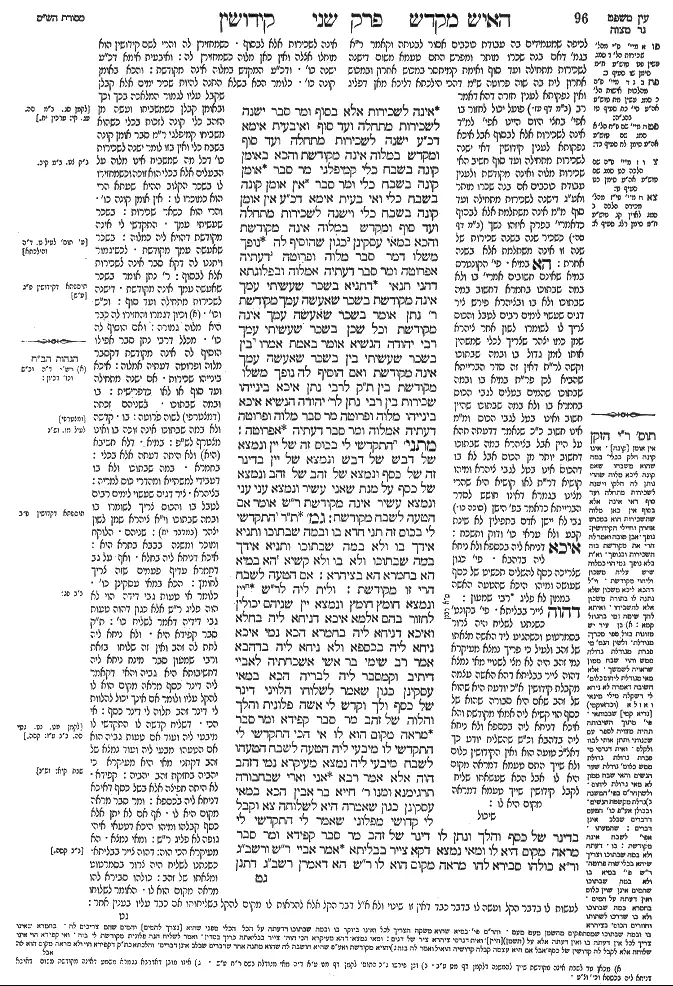
Kiddushin 48b - Guemara
אינה לשכירות אלא בסוף ומר סבר ישנה לשכירות מתחלה ועד סוף ואיבעית אימא דכ"ע ישנה לשכירות מתחלה ועד סוף ומקדש במלוה אינה מקודשת והכא באומן קונה בשבח כלי קמיפלגי מר סבר אומן קונה בשבח כלי ומר סבר אין אומן קונה בשבח כלי ואי בעית אימא דכ"ע אין אומן קונה בשבח כלי וישנה לשכירות מתחלה ועד סוף ומקדש במלוה אינה מקודשת והכא במאי עסקינן כגון שהוסיף לה נופך משלו דמר סבר מלוה ופרוטה דעתיה אפרוטה ומר סבר דעתיה אמלוה ובפלוגתא דהני תנאי דתניא בשכר שעשיתי עמך אינה מקודשת בשכר שאעשה עמך מקודשת ר' נתן אומר בשכר שאעשה עמך אינה מקודשת וכל שכן בשכר שעשיתי עמך רבי יהודה הנשיא אומר באמת אמרו בין בשכר שעשיתי בין בשכר שאעשה עמך אינה מקודשת ואם הוסיף לה נופך משלו מקודשת בין ת"ק לרבי נתן איכא בינייהו שכירות בין רבי נתן לר' יהודה הנשיא איכא בינייהו מלוה ופרוטה מר סבר מלוה ופרוטה דעתיה אמלוה ומר סבר דעתיה אפרוטה מתני׳ התקדשי לי בכוס זה של יין ונמצא של דבש של דבש ונמצא של יין בדינר זה של כסף ונמצא של זהב של זהב ונמצא של כסף על מנת שאני עשיר ונמצא עני עני ונמצא עשיר אינה מקודשת ר"ש אומר אם הטעה לשבח מקודשת גמ׳ ת"ר התקדשי לי בכוס זה תני חדא בו ובמה שבתוכו ותניא אידך בו ולא במה שבתוכו ותניא אידך במה שבתוכו ולא בו ולא קשיא הא במיא הא בחמרא הא בציהרא אם הטעה לשבח הרי זו מקודשת ולית ליה לר"ש יין ונמצא חומץ חומץ ונמצא יין שניהם יכולין לחזור בהם אלמא איכא דניחא ליה בחלא ואיכא דניחא ליה בחמרא הכא נמי איכא ניחא ליה בכספא ולא ניחא ליה בדהבא אמר רב שימי בר אשי אשכחתיה לאביי דיתיב וקמסבר ליה לבריה הכא במאי עסקינן כגון שאמר לשלוחו הלויני דינר של כסף ולך וקדש לי אשה פלונית והלך והלוה של זהב מר סבר קפידא ומר סבר מראה מקום הוא לו אי הכי התקדשי לי התקדשי לו מיבעי ליה הטעה לשבח הטעהו לשבח מיבעי ליה נמצא מעיקרא נמי דזהב הוה אלא אמר רבא אני וארי שבחבורה תרגימנא ומנו ר' חייא בר אבין הכא במאי עסקינן כגון שאמרה היא לשלוחה צא וקבל לי קדושי מפלוני שאמר לי התקדשי לי בדינר של כסף והלך ונתן לו דינר של זהב מר סבר קפידא ומר סבר מראה מקום היא לו ומאי נמצא דקא צייר בבליתא אמר אביי ר"ש ורשב"ג ור"א כולהו סבירא להו מראה מקום הוא לו ר"ש הא דאמרן רשב"ג דתנן
Comments from Rashi on Masechet Kiddushin Page 48b
אינה לשכירות אלא לבסוף . כשמחזירן לה והרי לשם קידושין הוא מוחלו אצלה ואין כאן מלוה כשמחזירן לה: ואיבעית אימא דכ"ע ישנה כו' . ודכ"ע המקדש במלוה אינה מקודשת: והכא באומן קונה כו' . כלומר הכא בשלא התנה להיות שכיר ימים אלא קבלן שקבל עליו לגמור המלאכה בכך וכך ובאומן קבלן כשמשביחו ועשה מן הזהב כלי קונה לזכות בכלי כשהוא משביחו קמיפלגי ר"מ סבר אומן קונה בשבח כלי ואין בזו לומר ישנה לשכירות כו' דכל מה שמשביח אינו מלוה על הבעלים אלא בכלי הוא זוכה וכשמחזירו לו בשכר הקצוב ההיא שעתא הרי הוא כמוכרו לו: אין אומן קונה כו' . והרי הוא כשאר שכירות: בשכר שעשיתי עמך . התקדשי לי אינה מקודשת דהויא ליה כמלוה: בשכר שאעשה עמך מקודשת . לכשיגמור ויתננו לה דקא סבר אינה לשכירות אלא לבסוף: ר' נתן אומר בשכר שאעשה עמך אינה מקודשת . דישנה לשכירות מתחילה ועד סוף: וכ"ש וכו' . וכיון דגמרו והחזירו לה כבר היא מלוה גמורה: ואם הוסיף לה כו' . מכלל דרבי נתן סבר אפילו הוסיף לה אינה מקודשת דקסבר מלוה ופרוטה דעתיה אמלוה: איכא בינייהו שכירות . אם ישנה מתחילה ועד סוף או לאו כדפרישית: ת"ק סבר קפידא היא . ולא ניחא ליה לתת לה זהב ואין זה שלוחו בזאת ורבי שמעון סבר מינח ניחא ליה דחשיבותא היא גביה והאי דקאמר ליה דינר כסף מראה מקום הוא לו להקל עליו ולומר אם אינך יכול להלוות לי דינר זהב תלוה לי דינר כסף: בו ובמה שבתוכו . בשניהם זכתה (דמצטרפי) לשוה פרוטה: בו . קדשה ולא במה שבתוכו אינה זוכה בו ואינו מצטרף לש"פ: בו . קדשה ולא במה שבתוכו אינה זוכה בו ואינו מצטרף לש"פ: במיא . דלא חשיבא (היא) ולא היתה דעתה אלא בכלי: בחמרא . במה שבתוכו ולא בו דעבידי למשתייא ומהדרי כוס למריה: בציהרא . ציר דגים שעשוי לימים רבים לטבל בו והכוס צריך לשומרו בו ובמה שבתוכו וי"א ציהרא שמן לשון יצהר (במדבר יח): שניהם . הלוקח ומוכר ומשנה בבבא בתרא היא: איכא דניחא ליה בחלא . ואף על גב דחמרא עדיף פעמים שזה צריך לחומץ: הכא במאי עסקינן כו' . כלומר אי טעות גבי דידה הוי לא הוה פליג ר"ש אלא כגון דהוה טעות גבי דידיה דאמר לשליח כו': ת"ק סבר קפידא היא . ולא ניחא ליה לתת לה זהב ואין זה שלוחו בזאת ורבי שמעון סבר מינח ניחא ליה דחשיבותא היא גביה והאי דקאמר ליה דינר כסף מראה מקום הוא לו להקל עליו ולומר אם אינך יכול להלוות לי דינר זהב תלוה לי דינר כסף: אי הכי . דשליח קדשה לו התקדשי לו מיבעי ליה ועוד אם טעות גביה הוא אם הטעהו מבעי ליה ועוד נמצא של זהב דקתני מאי היא מעיקרא כי יהביה בחזקת זהב יהביה: קפידא . לא היתה חפיצה אלא בשל כסף דאיכא דניחא ליה בכספא: ומר סבר מראה מקום היא לו . אף אם לא יתן אלא כסף קבלהו ומיהו היכא דטעאי איהי גופה לא פליג ר"ש: ומאי נמצא . הא מעיקרא הכי הוה: דהוה צייר בבליתא . כשנתנו לשליח היה צרור בסמרטוט ומצאתו של זהב: כולהו סבירא להו מראה מקום הוא לו . האומר לשלוחו לעשות לו בדבר הקל ועשה לו בדבר כבד דאין זו שינוי ולא א"ל דבר הקל אלא להראות לו מקום להקל בשליחותו אם כבד עליו בענין אחר:
Comments from Tosafot - Kiddushin 48b
הא במיא . פי' הקונטרס במיא שאינם חשובים אמרי' בו ולא במה שבתוכו בחמרא דחשוב במה שבתוכו ולא בו ובציהרא פירש ציר דגים שעשוי לימים רבים לטבל והכוס צריך לו לשומרו לשון אחר ציהרא שמן כמו יצהר שצריך לכלי שמשהין אותו לזמן גדול בו ובמה שבתוכו וקשה לר"ת דאין זה סדר הברייתא שהביא לכן פר"ת במיא בו ובמה שבתוכו שהמים בטלים לגבי הכוס בחמרא בו ולא במה שבתוכו שהיין חשוב ואינו בטל לגבי הכוס ומ"מ אינו חשוב כ"כ שנאמר דדעתה תהא על היין אבל בציהרא במה שבתוכו דחשוב יותר מן הכוס אבל לא בו דהכוס אינו בטל לגבי ציהרא ומיהו קושיא דר"ת לאו קושיא היא שהרי מצינו בגמרא דאינו חושש לסדר הברייתא כדאמר בפ' הישן (סוכה כו.) גבי לא יישן אדם בתפילין לא שינת קבע ולא עראי כו' ודוק ותשכח: איכא דניחא ליה בכספא ולא ניחא ליה בדהבא . פי' כגון שצריכה כסף להשלים תכשיט של כסף שעושה ומיהו היכא שהטעה האשה בממון לא פליג. רבי שמעון: דהוה צייר בבליתא . פי' בקונט' כשנתנו לשליח היה צרור בסמרטוט וכשהגיע ליד האשה מצאתו של זהב ולעיל כי פריך נמצא מעיקרא נמי זהב היה לא מצי לשנויי מאי נמצא דהוה צייר בבליתא דהא האשה עצמה מקבלת קידושין א"כ יודעת היא שהוא של זהב שאם היא סבורה שהוא של כסף הוי קשיא ליה אמאי מקודשת והא איכא דניחא ליה בכספא ולא ניחא ליה בדהבא וכ"ש שהשליח יודע כך דאל"כ טועה הוא ואין הקידושין כלום ולא שייך התם טעמא דמראה מקום היא לו אבל הכא שעשאתו שליח לקבל קידושין שייך טעמא דמראה מקום היא לו:
Kiddushin 48b - Mishnah translated into english
The obligation to pay a wage is incurred only at the end of the labor, when he returns the item to her. Since it is at this stage that he forgives the money due him and converts it to money for betrothal, it was never considered to be a loan. And one Sage, i.e., the Rabbis, holds: The obligation to pay a wage is incurred continuously from the beginning of the period he was hired to its end, at which point the debt is viewed as a loan that has accumulated throughout the period of hire.
And if you wish, say instead that everyone agrees that the obligation to pay a wage is incurred continuously from the beginning of the period he was hired to its end. And they also agree that in the case of one who betroths a woman with a loan, she is not betrothed. And here the case is not discussing a hired worker but a contractor, who is entitled to payment only upon completion of the job, and they disagree with regard to the question of whether or not a craftsman acquires ownership rights through enhancement of the vessel. Is it viewed that the contractor has acquired the item by improving it, and he is then selling it back to the one who hired him? Or is he merely being paid for his labor? One Sage, Rabbi Meir, holds: A craftsman acquires ownership rights through enhancement of the vessel, and since he partly owns the jewelry he can betroth a woman with it. And one Sage, i.e., the Rabbis, holds: A craftsman does not acquire ownership rights through enhancement of the vessel.
And if you wish, say instead that everyone agrees that a craftsman does not acquire ownership rights through enhancement of the vessel, and also that the obligation to pay a wage is incurred continuously from the beginning of the period he was hired to its end. And everyone also agrees that in the case of one who betroths a woman with a loan, she is not betrothed. And with what are we dealing here? A case where he added a jewel [nofekh] of his own for her, as one Sage, Rabbi Meir, holds that if a man betroths a woman with a loan and one peruta, his mind is focused on the peruta. And one Sage, i.e., the Rabbis, holds that his mind is focused on the loan. Here too, the question is whether her intention is to become betrothed with the payment for the work, which is a loan, or with the jewel he added.
And they disagree in the dispute between these tanna’im. As it is taught in a baraita (Tosefta 3:4): If one says to a woman: Be betrothed to me with the payment for that which I have worked for you, she is not betrothed because it is a loan, since she already owes him the money. But if he said: Be betrothed to me with the payment for that which I will work for you, she is betrothed, as at the moment he becomes entitled to the money it is considered as though he gives it to her for her betrothal. Rabbi Natan says: If he says: With the payment for that which I will work for you, she is not betrothed, as Rabbi Natan holds that the obligation to pay a wage is incurred continuously from the beginning of the period he was hired to its end, which means that by the end of the job it is a loan. And this is all the more so if he says: With the payment for that which I have worked for you.
The baraita cites a third opinion: Rabbi Yehuda HaNasi says: Actually, they said that the halakha is that whether he said: With the payment for that which I have worked for you, or: With the payment for that which I will work for you, she is not betrothed. But if he added a nofekh of his own for her, she is betrothed.
The Gemara clarifies the dispute: The difference between the first tanna and Rabbi Natan concerns a wage: Is the obligation incurred continuously or only at the end? The difference between Rabbi Natan and Rabbi Yehuda HaNasi is the issue of a loan and one peruta. One Sage, Rabbi Natan, holds that if a man betroths a woman with a loan and one peruta his mind is focused on the loan, and his jewel is disregarded. And one Sage, Rabbi Yehuda HaNasi, holds that his mind is focused on the peruta, and she is betrothed with the jewel.
MISHNA: If a man said to a woman: Be betrothed to me with this cup of wine, and it was found to be a cup of honey; or if he said: With this cup of honey, and it was found to be a cup of wine; or if he said: With this dinar made of silver, and it was found to be made of gold; or if he said: With this dinar made of gold, and it was found to be made of silver; or if he said: On the condition that I am wealthy, and he was found to be poor; or if he said: On the condition that I am poor, and he was found to be wealthy, she is not betrothed in any of these cases. Rabbi Shimon says: If he misled her to her advantage by giving her something better than what he stated, or if his status was greater than he claimed, she is betrothed.
GEMARA: The Sages taught: With regard to one who says to a woman: Be betrothed to me with this cup, without further specification, it is taught in one baraita (Tosefta 2:3) that the betrothal is effected with the cup and also with its contents. And it is taught in another baraita that the betrothal is effected with the cup but not with its contents. And it is taught in yet another baraita that the betrothal is effected with its contents but not with it. The Gemara comments: And this is not difficult: The baraitot do not contradict one another since this one is stated with regard to a cup of water, this one is stated with regard to a cup of wine, and this one is stated with regard to a cup of oil.
§ The mishna teaches that Rabbi Shimon says: If he misled her to her advantage, she is betrothed. The Gemara asks: But doesn’t Rabbi Shimon accept the statement of the mishna (Bava Batra 83a) that if one sells wine and it was found to be vinegar, or if he sold vinegar and it was found to be wine, both the buyer and the seller can retract from the sale? Although wine is more valuable than vinegar, the seller is not considered to have defrauded the buyer, in which case only the buyer could retract. Apparently, this is because there is one for whom it is preferable to have vinegar and there is one for whom it is preferable to have wine. Consequently, receiving wine instead of vinegar is not objectively better. If so, here too, there is one for whom it is preferable to have silver and it is not preferable for him to have gold. Why does Rabbi Shimon say that she is betrothed if he gave her gold instead of silver?
Rav Shimi bar Ashi says: I found Abaye sitting and explaining this mishna to his son: With what are we dealing here? With a case where one said to his agent: Lend me a dinar made of silver and go and betroth for me such and such a woman with it, and he went and lent him a dinar made of gold and betrothed her with that. One Sage, the first tanna, holds that he is particular in his requirement that a silver dinar be used, and consequently she is not betrothed. And one Sage, Rabbi Shimon, holds that he is merely indicating his position to him. He stated silver only as a guideline, but does not care if it is gold.
The Gemara raises a difficulty: If so, if the case involves an agent, why does the mishna state: Be betrothed to me? The mishna should have stated: Be betrothed to him. Furthermore, why does it say: He misled her to her advantage? The mishna should have stated: He misled him to his advantage, as the agent did not mislead the woman but the one who designated him. Similarly, there is a difficulty with regard to the wording: If it was found to be made of gold, as according to this explanation, from the outset, when the agent gave it to the woman, it was also known to be made of gold. This fact was not discovered later.
Rather, Rava says: I and the lion of the group explained it, and the Gemara interjects: And who is the lion of the group? It is Rabbi Ḥiyya bar Avin: With what are we dealing here? With a case where she said to her agent: Go and accept my betrothal for me from so-and-so, who said to me: Be betrothed to me with a dinar made of silver, and the prospective husband went and gave the agent a dinar made of gold. One Sage, the first tanna, holds that she is particular about becoming betrothed with a silver dinar rather than a gold one. And one Sage, Rabbi Shimon, holds that she is merely indicating her position to him but does not care what the agent receives from the man. And what is the meaning of: It was found, as it was evident from the outset that it was gold? The mishna is referring to a case where the coin was wrapped in a cloth, and the agent was unaware that he was receiving a different dinar from what she had requested.
Abaye said: With regard to Rabbi Shimon, and Rabban Shimon ben Gamliel, and Rabbi Elazar, they all hold that when one instructs an agent in such a manner he is merely indicating his position to him, as opposed to expressing an insistence on certain details. If the agent makes insignificant changes to the instructions the agency is still fulfilled. Rabbi Shimon holds this, as seen in this mishna that we just said. Rabban Shimon ben Gamliel holds this, as we learned in a mishna (Bava Batra 160a):
Traduction : The William Davidson digital edition of the Koren Noé Talmud, with commentary by Rabbi Adin Even-Israel Steinsaltz.