 Talmud Bavli
The learning on the whole site is dedicated : L'ilui Nishmat Avraham Ben Simha
The learning on the whole site is dedicated : L'ilui Nishmat Jacques Isaac Ben Amram Loubaton
The learning on the whole site is dedicated : L'ilui Nishmat Nissim ben Barukh Malka
Kiddushin 4b : Youtube
Daf TubeYoutube
2 video classes :
Kiddushin Page 4b
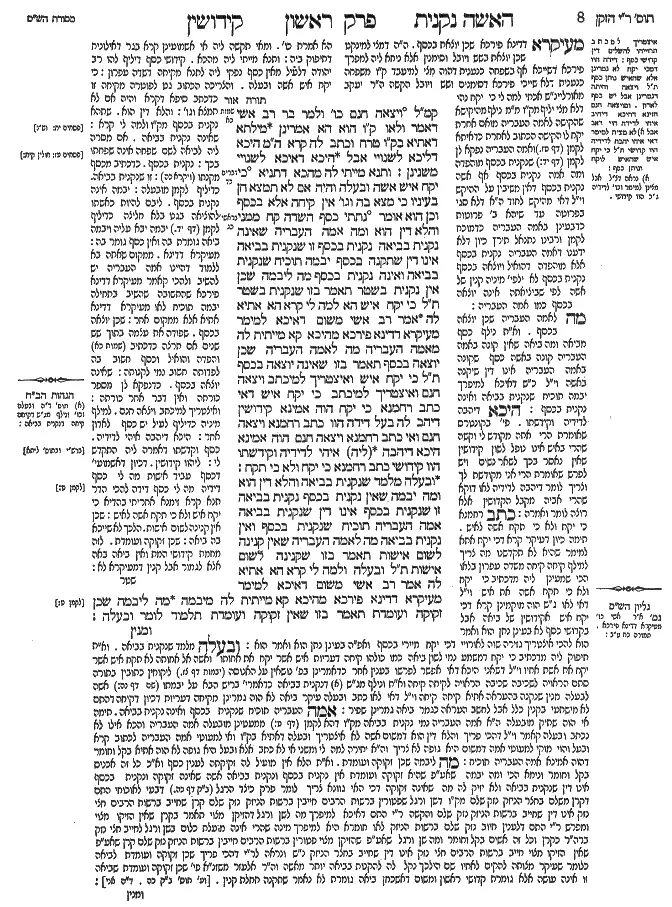
Kiddushin 4b - Guemara
קמ"ל (שמות כא, יא) ויצאה חנם כו' ולמר בר רב אשי דאמר ולאו ק"ו הוא הא אמרינן מילתא דאתיא בק"ו טרח וכתב לה קרא ה"מ היכא דליכא לשנויי אבל היכא דאיכא לשנויי משנינן :
ותנא מייתי לה מהכא דתניא (דברים כד, א) כי יקח איש אשה ובעלה והיה אם לא תמצא חן בעיניו כי מצא בה וגו' אין קיחה אלא בכסף וכן הוא אומר (בראשית כג, יג) נתתי כסף השדה קח ממני והלא דין הוא ומה אמה העבריה שאינה נקנית בביאה נקנית בכסף זו שנקנית בביאה אינו דין שתקנה בכסף יבמה תוכיח שנקנית בביאה ואינה נקנית בכסף מה ליבמה שכן אין נקנית בשטר תאמר בזו שנקנית בשטר ת"ל כי יקח איש הא למה לי קרא הא אתיא לה אמר רב אשי משום דאיכא למימר מעיקרא דדינא פירכא מהיכא קא מייתית לה מאמה העבריה מה לאמה העבריה שכן יוצאה בכסף תאמר בזו שאינה יוצאה בכסף ת"ל כי יקח איש ואיצטריך למיכתב ויצאה חנם ואיצטריך למיכתב כי יקח איש דאי כתב רחמנא כי יקח הוה אמינא קידושין דיהב לה בעל דידה הוו כתב רחמנא ויצאה חנם ואי כתב רחמנא ויצאה חנם הוה אמינא היכא דיהבה (ליה) איהי לדידיה וקידשתו הוו קידושי כתב רחמנא כי יקח ולא כי תקח :
ובעלה מלמד שנקנית בביאה והלא דין הוא ומה יבמה שאין נקנית בכסף נקנית בביאה זו שנקנית בכסף אינו דין שנקנית בביאה אמה העבריה תוכיח שנקנית בכסף ואין נקנית בביאה מה לאמה העבריה שאין קנינה לשום אישות תאמר בזו שקנינה לשום אישות ת"ל ובעלה ולמה לי קרא הא אתיא לה אמר רב אשי משום דאיכא למימר מעיקרא דדינא פירכא מהיכא קא מייתית לה מיבמה מה ליבמה שכן זקוקה ועומדת תאמר בזו שאין זקוקה ועומדת תלמוד לומר ובעלה :
Comments from Rashi on Masechet Kiddushin Page 4b
הא אמרת כו' . ומאי תקשה ליה אי אשמועינן קרא בגר דאילונית דתיפוק ביה: ותנא מייתי ליה מהכא . קידושי כסף דיליף להו רב יהודה דלעיל מאין כסף נפקי ליה לתנא מקיחה דשדה עפרון: כי יקח איש אשה ובעלה . והצריכה הכתוב גט לפוטרה מקיחה זו כדכתב סיפא דקרא והיה אם לא תמצא וגו': והלא דין הוא . שתהא נקנית בכסף מק"ו ולמה לי קרא: שאינה נקנית בביאה . אם מסרה ליה לביאה לשם שפחה אינה שפחתו בכך: נקנית בכסף . כדכתיב מכסף מקנתו (ויקרא כה): זו שנקנית בביאה . כדיליף לקמן מובעלה: יבמה אינה נקנית בכסף . ליבם להיות כאשתו להוציאה בגט בלא חליצה כדיליף לקמן (קידושין דף יד.) יבמה יבא עליה ויבמה ביאה גומרת בה ואין כסף גומר בה: מעיקרא דדינא . ממקום שאתה בא ללמוד דהיינו אמה העבריה יש להשיב ולהכי קאמר מעיקרא דדינא פירכא שהתשובה שהשיב בתחילה יבמה תוכיח לאו מעיקרא דדינא אתיא אלא ממקום אחר: שכן יוצאה בכסף . שפודה את עצמה בתוך שש שנים אם תרצה כדכתיב (שמות כא) והפדה והואיל וכסף חשוב בה לפדותה חשוב נמי לקנותה: שאינה יוצאה בכסף . כדנפקא לן מספר כורתה ואין דבר אחר כורתה: ואיצטריך למיכתב ויצאה חנם . למילף מיניה כדיליף לעיל יש כסף לאדון אחר: היכא דיהבה איהי לדידיה . כסף וקדשתו דאמרה ליה התקדש לי: ליהוו קידושין . דכיון דאשמועי' דכסף עביד אישות מה לי כסף דידיה מה לי כסף דידה להכי הדר תנא קרא זימנא אחריתי בהדיא כי יקח איש ולא כי תקח אשה לאיש: שכן אין קנינה לשום אישות . הלכך לא שייכא בה ביאה: שכן זקוקה ועומדת . לזה מחמת קידושי המת ואין ביאה באה אלא לגמור אבל קנין דמעיקרא לא:
Comments from Tosafot - Kiddushin 4b
מעיקרא דדינא פירכא שכן יוצאת בכסף . ה"ה דמצי למינקט שכן יוצאת בשש ויובל וסימנין אלא ניחא ליה למפרך פירכא דשייכא אף בשפחה כנענית דהוה מצי למיעבד ק"ו משפחה כנענית דלא שייכי פירכא דסימנים ושש ויובל הקשה ה"ר יעקב מאורליינ"ש אכתי למה לי כי יקח נהי דלא מצי יליף מק"ו מ"מ נילף מהיקישא שהקישה לאמה העבריה מואם אחרת יקח לו הקישה הכתוב לאחרת כדאיתא לקמן (קידושין דף טז.) ואמה העבריה נפקא לן לקמן (קידושין דף יד:) שנקנית בכסף מוהפדה ומה אמה נקנית בכסף אף אשה נקנית בכסף דאין משיבין על ההיקש וי"ל דאי מהיקש לחוד ה"א דלא סגי בפרוטה עד שיהא ב' פרוטות כדבעינן באמה העבריה כדמוכח לקמן ורבינו נתנאל תירץ כיון דלא ידענו דאמה העבריה נקנית בכסף אלא מוהפדה דהואיל ויוצאה בכסף נקנית בכסף לא ילפי' מיניה קנין של אשה לפי שביציאתה אינה יוצאה בכסף כמו אמה העבריה: מה לאמה העבריה שכן יוצאה בכסף . וא"ת נילף כסף מביאה ומה ביאה שאין קונה באמה העבריה קונה באשה כסף שקונה באמה העבריה אינו דין שיקנה באשה וי"ל כ"ש דאיכא למיפרך יבמה תוכיח שנקנית בביאה ואינה נקנית בכסף: היכא דיהבה לדידיה וקידשתו . פי' בקונטרס שאומרת הרי אתה מקודש לי וקשה שהרי באיש אינו נופל לשון קידושין שאין נאסר בכך לשאר נשים ויש לפרש שאומרת הרי אני מקודשת לך וצריך לומר דיהבה לדידיה לאו דוקא שהרי אביה מקבל הקדושין אלא רוצה לומר ואמרה: כתב רחמנא כי יקח ולא כי תקח אשה לאיש . תימה כיון דעיקר קרא דכי יקח אתא למימר שהיא לא תקדשנו מה צריך למילף קיחה קיחה משדה עפרון בלאו הכי שמעינן ליה מדכתיב כי יקח ולא כי תקח אשה את איש וי"ל דאי לאו ג"ש הוה מוקמינן קרא דכי יקח איש אקידושין של ביאה אבל בקדושי כסף לא בעינן נתן הוא ואמר הוא להכי איצטריך גזירה שוה לאורויי דכי יקח מיירי בכסף ואפ"ה בעינן נתן הוא ואמר הוא: ובעלה מלמד שנקנית בביאה . וא"ת תיפוק ליה מדכתיב כי יקח דמשמע נמי לשון ביאה כמו כולהו קיחה דעריות איש אשר יקח את אחותו ואשה אל אחותה לא תקח איש אשר יקח את אשת אחיו וי"ל דשאני היכא דאי אפשר לפרשו בענין אחר כדאמרינן בפ' נושאין על האנוסה (יבמות דף צז.) ליקוחין כתובין בתורה סתם הראויה לשכיבה שכיבה הראויה לקיחה קיחה וא"ת ונילף מג"ש דנקנית בביאה כדאמרי' בריש הבא על יבמתו (שם דף נה:) אשה לבעלה מנין שנקנה בהעראה אתיא קיחה קיחה וי"ל דאי לאו כתב ובעלה עיקר ביאה לא הוה גמרינן מקיחה דעריות דכיון דקיחה דהתם לא מישתעי בקנין כלל אבל לחשב העראה כגמר ביאה גמרינן שפיר: אמה העבריה תוכיח שנקנית בכסף ואינה נקנית בביאה . תימה אי הוה שתיק מובעלה ה"א אמה העבריה נמי נקנית בביאה מק"ו דהא לקמן (קידושין דף ט:) ממעטינן מובעלה אמה העבריה והכא אילו לא נכתב ובעלה קאמר וי"ל דהכי פריך והלא דין הוא דמשום אשה לא איצטריך ובעלה דאתיא בק"ו ואי למעוטי אמה העבריה לכתוב קרא ובעל והוי מוקי למעוטי אמה דמשום היא גופה לא צריך וה"א יתירה למה לי ומשני אי לא כתב אלא ובעל היא גופה לא הוה אתיא בקל וחומר דהוה אמינא אמה העבריה תוכיח: מעיקרא דדינא פירכא שכן יוצאת בכסף . ה"ה דמצי למינקט שכן יוצאת בשש ויובל וסימנין אלא ניחא ליה למפרך פירכא דשייכא אף בשפחה כנענית דהוה מצי למיעבד ק"ו משפחה כנענית דלא שייכי פירכא דסימנים ושש ויובל הקשה ה"ר יעקב מאורליינ"ש אכתי למה לי כי יקח נהי דלא מצי יליף מק"ו מ"מ נילף מהיקישא שהקישה לאמה העבריה מואם אחרת יקח לו הקישה הכתוב לאחרת כדאיתא לקמן (קידושין דף טז.) ואמה העבריה נפקא לן לקמן (קידושין דף יד:) שנקנית בכסף מוהפדה ומה אמה נקנית בכסף אף אשה נקנית בכסף דאין משיבין על ההיקש וי"ל דאי מהיקש לחוד ה"א דלא סגי בפרוטה עד שיהא ב' פרוטות כדבעינן באמה העבריה כדמוכח לקמן ורבינו נתנאל תירץ כיון דלא ידענו דאמה העבריה נקנית בכסף אלא מוהפדה דהואיל ויוצאה בכסף נקנית בכסף לא ילפי' מיניה קנין של אשה לפי שביציאתה אינה יוצאה בכסף כמו אמה העבריה: מה ליבמה שכן זקוקה ועומדת . וא"ת הלא אין מועיל לה זקיקתה לענין כסף וא"כ כל זה אכניס בקל וחומר ונימא הכי ומה יבמה שאע"פ שהיא זקוקה ועומדת אין נקנית בכסף ונקנית בביאה אשה שאינה זקוקה ונקנית בכסף אינו דין שנקנית בביאה ולא יזיק לה מה שאינה זקוקה דכי האי גוונא צריך לומר פרק כיצד הרגל (ב"ק דף כה.) דבעי לאוכוחי התם דקרן משלם בחצר הניזק נזק שלם מק"ו דשן ורגל שפטורין ברשות הרבים חייבין ברשות הניזק נזק שלם קרן שחייב ברשות הרבים חצי נזק אינו דין שחייב ברשות הניזק נזק שלם והקשה ר"י התם דאיכא למיפרך מה לשן ורגל דהזיקן מצוי תאמר בקרן שאין הזיקו מצוי ומפרש ר"י התם דלענין חיוב נזק שלם ברשות הניזק לאו חומרא היא למיפרך מינה שהרי אינה מועלת כלום בשן ורגל לחייב חצי נזק ברה"ר כקרן וכל זה אשים בקל וחומר ומה שן ורגל שאע"פ שהזיקן מצוי פטורין ברשות הרבים חייבין ברשות הניזק נזק שלם קרן שאע"פ שאין הזיקו מצוי חייב ברשות הרבים חצי נזק אינו דין שחייב בחצר הניזק נ"ש ונראה לר"י דהכי פריך שכן זקוקה ועומדת לביאה כלומר שעיקר מצותה להקים לאחיו שם הילכך נקל לה להקנות בביאה יותר מאשה וה"ר אלעזר משזנ"א פי' שכן זקוקה ועומדת שביאה זו אינה עושה אלא גומרת קדושי ראשון ומשום דאשכחן ביאה גומרת לא נאמר שתקנה תחלת קנין. [וע' תוס' ב"ק כה. ד"ה אני]:
Kiddushin 4b - Mishnah translated into english
Therefore the superfluous phrase: “Then shall she go out for nothing, without money” (Exodus 21:11), teaches us that even an ailonit can be sold as a Hebrew maidservant and is released upon reaching adulthood.
The Gemara asks: And according to the opinion of Mar bar Rav Ashi, who said: But is it not an a fortiori inference that adulthood releases a woman from her master’s authority, how does he respond to the fact that we say in general, with regard to a matter that can be derived through an a fortiori inference, the verse nevertheless takes the trouble and writes it explicitly? The Gemara answers: That matter applies only where there is no other way to resolve the difficulty of why a halakha is written when it could be derived through an a fortiori inference. But when there is another, more substantial way to resolve the difficulty, one resolves it in that manner.
§ The Gemara notes: And a tanna cites the halakha that a woman can be betrothed with money from here, a different source. As it is taught in a baraita that when the verse states: “When a man takes a woman and engages in sexual intercourse with her, and it comes to pass, if she finds no favor in his eyes, because he has found some unseemly matter in her, and he writes her a scroll of severance” (Deuteronomy 24:1), in this verse, the term taking is only with money. And so it says: “I will give money for the field; take it from me” (Genesis 23:13).
The Gemara asks: But is there any need for this derivation? Could this not be derived through an a fortiori inference, as follows: And if a Hebrew maidservant, who cannot be acquired as a maidservant through intercourse, nevertheless can be acquired through money, is it not logical that this woman, who can be acquired through intercourse for the purpose of betrothal, can likewise be acquired through money?
Nevertheless, this a fortiori inference can be refuted. A yevama proves otherwise, as she is acquired by the yavam through intercourse, and yet she cannot be acquired through money. The Gemara rejects this refutation: What is unique about a yevama is that she cannot be acquired through a document. Will you say that the same applies to this woman, who can be acquired through a document for the purpose of betrothal, and consequently the acquisition of money applies to her as well?
The Gemara reiterates its question. The verse states: “When a man takes a woman.” Why do I need a verse for this purpose? It was already derived through this a fortiori inference, as the proposed refutation of this inference was rejected. Rav Ashi said: It is needed because one can say that the refutation of the a fortiori inference is present from the outset, i.e., there is a difficulty with the comparison between a woman and a Hebrew maidservant.
Rav Ashi elaborates: From where do you derive that a woman can be betrothed with money? It is derived through an a fortiori inference from the case of a Hebrew maidservant. This derivation can be refuted. What is unique about a Hebrew maidservant is that she can be released with money, i.e., she pays her master her value as a maidservant and she is then freed, and therefore she can likewise be acquired through money. Will you say the same with regard to this woman, who cannot be released, i.e., divorced, through money? Since this a fortiori inference is rejected, one must rely on the source cited in the baraita, that the verse states: “When a man takes.”
After mentioning an additional proof for the option of betrothal with money, the Gemara comments: And it was necessary for the Torah to write, with regard to a Hebrew maidservant: “Then shall she go out for nothing,” and it was also necessary to write: “When a man takes a woman.” As, if the Merciful One had written only: “When he takes,” I would say: The betrothal money that the husband gives her is invariably hers. Therefore, the Merciful One writes: “Then shall she go out for nothing,” to teach that when she is not an adult her father has the right to her betrothal money.
And conversely, had the Merciful One written only: “Then shall she go out for nothing,” I would say that in a case where she gave him money and betrothed him, it is a valid betrothal, as this verse does not specify who gives the money to whom. Therefore, the Merciful One writes: “When he takes,” and not: When she takes, to teach that only a man may betroth a woman, not vice versa.
The baraita continues to interpret the verse. The phrase: “And engages in sexual intercourse with her” (Deuteronomy 24:1), teaches that a woman can be acquired through intercourse. Why is it necessary for the verse to state this explicitly? Could this not be derived through an a fortiori inference: And if a yevama, who cannot be acquired through money, can be acquired through intercourse, is it not logical that this woman, who can be acquired through money, as derived above, can also be acquired through intercourse?
The Gemara counters: The case of a Hebrew maidservant proves otherwise, as she is acquired through money and yet she cannot be acquired through intercourse. The Gemara dismisses this refutation: What is distinct about a Hebrew maidservant is that her acquisition is not for the sake of marriage, as she is acquired as a servant. Will you say the same with regard to this woman, whose acquisition is for the sake of marriage? Therefore, it is logical that a woman can be acquired through sexual intercourse.
The Gemara reiterates its question. The verse states: “And engages in sexual intercourse with her.” But why do I need a verse for this purpose? It was already derived through the above a fortiori inference. Rav Ashi said: It is needed because it is possible to say that the refutation of the a fortiori inference is present from the outset. From where do you derive that intercourse is a mode of acquisition? From the case of a yevama.
One could say: What is unique about a yevama is that she is bound to the yavam and stands waiting for him to act, and for this reason sexual intercourse is sufficient to render her his wife. Will you say the same with regard to this woman, who is not bound and is not standing waiting for anyone? It is therefore possible that intercourse is not enough to acquire a woman in ordinary circumstances. Consequently, the a fortiori inference does not bear close scrutiny. For this reason an additional proof is required, that the verse states: “And engages in sexual intercourse with her.”
Traduction : The William Davidson digital edition of the Koren Noé Talmud, with commentary by Rabbi Adin Even-Israel Steinsaltz.