 Talmud Bavli
The learning on the whole site is dedicated : L'ilui Nishmat רינה בת לדיסיה
The learning on the whole site is dedicated : For the success of Elyahou ben H'anna & family
The learning on the whole site is dedicated : L'ilui Nishmat Avraham Ben Simha
Shabbat 54b : Youtube
Daf TubeYoutube
3 video classes :
Shabbat Page 54b
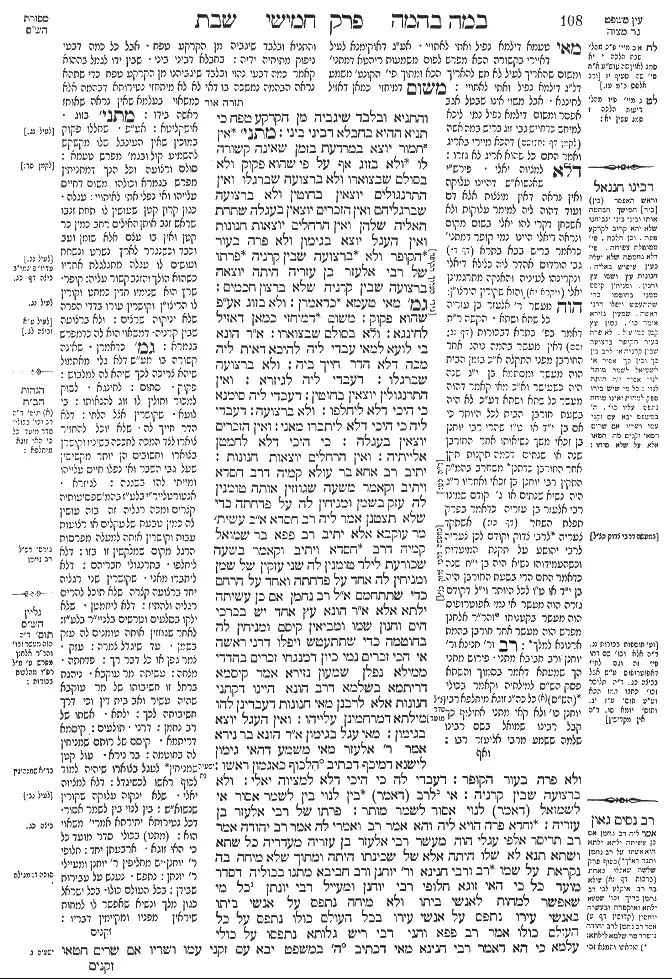
Shabbat 54b - Guemara
והתניא ובלבד שיגביה מן הקרקע טפח כי תניא ההיא בחבלא דביני ביני:
מתני׳ אין חמור יוצא במרדעת בזמן שאינה קשורה לו ולא בזוג אף על פי שהוא פקוק ולא בסולם שבצוארו ולא ברצועה שברגלו ואין התרנגולים יוצאין בחוטין ולא ברצועה שברגליהם ואין הזכרים יוצאין בעגלה שתחת האליה שלהן ואין הרחלים יוצאות חנונות ואין העגל יוצא בגימון ולא פרה בעור הקופר ולא ברצועה שבין קרניה פרתו של רבי אלעזר בן עזריה היתה יוצאה ברצועה שבין קרניה שלא ברצון חכמים:
גמ׳ מאי טעמא כדאמרן:
ולא בזוג אע"פ שהוא פקוק:
משום דמיחזי כמאן דאזיל לחינגא:
ולא בסולם שבצוארו:
א"ר הונא בי לועא למאי עבדי ליה להיכא דאית ליה מכה דלא הדר חייך ביה:
ולא ברצועה שברגלו:
דעבדי ליה לגיזרא:
ואין התרנגולין יוצאין בחוטין:
דעבדי ליה סימנא כי היכי דלא ליחלפו:
ולא ברצועה:
דעבדי ליה כי היכי דלא ליתברו מאני:
ואין הזכרים יוצאין בעגלה:
כי היכי דלא לחמטן אלייתיה:
ואין הרחלים יוצאות חנונות:
יתיב רב אחא בר עולא קמיה דרב חסדא ויתיב וקאמר משעה שגוזזין אותה טומנין לה עזק בשמן ומניחין לה על פדחתה כדי שלא תצטנן אמר ליה רב חסדא א"כ עשית' מר עוקבא אלא יתיב רב פפא בר שמואל קמיה דרב חסדא ויתיב וקאמר בשעה שכורעת לילד טומנין לה שני עזקין של שמן ומניחין לה אחד על פדחתה ואחד על הרחם כדי שתתחמם א"ל רב נחמן אם כן עשיתה ילתא אלא א"ר הונא עץ אחד יש בכרכי הים וחנון שמו ומביאין קיסם ומניחין לה בחוטמה כדי שתתעטש ויפלו דרני ראשה אי הכי זכרים נמי כיון דמנגחי זכרים בהדדי ממילא נפלן שמעון נזירא אמר קיסמא דריתמא בשלמא דרב הונא היינו דקתני חנונות אלא לרבנן מאי חנונות דעבדינן להו מילתא דמרחמינן עלייהו:
ואין העגל יוצא בגימון:
מאי עגל בגימון א"ר הונא בר נירא אמר ר' אלעזר מאי משמע דהאי גימון לישנא דמיכף דכתיב (ישעיהו נח, ה) הלכוף כאגמון ראשו:
ולא פרה בעור הקופר:
דעבדי לה כי היכי דלא למציוה יאלי:
ולא ברצועה שבין קרניה:
אי לרב (דאמר) בין לנוי בין לשמר אסור אי לשמואל (דאמר) לנוי אסור לשמר מותר:
פרתו של רבי אלעזר בן עזריה:
וחדא פרה הויא ליה והא אמר רב ואמרי לה אמר רב יהודה אמר רב תריסר אלפי עגלי הוה מעשר רבי אלעזר בן עזריה מעדריה כל שתא ושתא תנא לא שלו היתה אלא של שכינתו היתה ומתוך שלא מיחה בה נקראת על שמו רב ורבי חנינא ור' יוחנן ורב חביבא מתנו בכוליה דסדר מועד כל כי האי זוגא חלופי רבי יוחנן ומעייל רבי יונתן כל מי שאפשר למחות לאנשי ביתו ולא מיחה נתפס על אנשי ביתו באנשי עירו נתפס על אנשי עירו בכל העולם כולו נתפס על כל העולם כולו אמר רב פפא והני דבי ריש גלותא נתפסו על כולי עלמא כי הא דאמר רבי חנינא מאי דכתיב (ישעיהו ג, יד) ה' במשפט יבא עם זקני עמו ושריו אם שרים חטאו
Comments from Rashi on Masechet Shabbat Page 54b
והתניא ובלבד שיגביה מן הקרקע טפח . אבל כל כמה דבעי ניפוק מתותיה ידיה: בחבלא דביני ביני . שבין ידו לגמל בההוא קאמר כמה דבעי נהוי ובלבד שיגביהנו מן הקרקע טפח כדי שתהא נראה הבהמה נמשכה בו דאי לא לא מיתחזי נטירותא דבהמה אלא כמשאוי בעלמא שאין נראה שאוחז ראשה בידו: מתני' בזוג . אישקליט"א: אע"פ . שחללו פקוק במוכין שאין העינבל שלו מקשקש להשמיע קול ובגמ' מפרש טעמא: סולם ורצועה וכל הנך דמתניתין מפרש בגמרא וכולהו משום דחייס עלייהו ואי נפלי אתי לאיתויי: עגלה . כגון קרון קטן שעושין לו תחת זנבו שראש זנב אותן האילים רחב כמין כר קטן ואין בו עצם אלא שומן ועב וכבד וכשנגרר לארץ נשרט ונשחת ועושים לו עגלה מתגלגלת אחריו כשהוא הולך והזנב קשור עליה: קופר . שרץ הוא שנימיו חדין כמחט וקורין לו הריצו"ן וקושרין עורו בדדי הפרה שלא יניקוה שרצים: ולא ברצועה שבין קרניה . דמשאוי הוא לה כדמפרש בגמרא: גמ' כדאמרן . שאינה קשורה בו מע"ש דלא גלי מאתמול שיהא צריכה לכך שיהא לה למלבוש: פקוק . סתום: לחינגא . לשוק למכור ותולין לו זוג להנאותו: בי לועא . שקושרין אצל הלחי: דלא הדר חייך לה . שלא יוכל להחזיר צוארו לצד המכה לחככה בשיניו וקושרן בצוארו וחשובים הן יותר מקשישין שעל גבי השבר ואי נפלו חייס עלייהו ומייתי להו בשגגה: לגיזרא . אנטורטלייר"י בלעז בהמ' שפסיעותיה קצרים ומכה רגליה זה בזה עושין לה כמין טבעת של עקלים או רצועות עבות וקושרין אותה למעלה מפרסות הרגל מקום שמנקשין זו בזו: דלא ליחלפו . בתרנגולי חבריהם: דלא ליתברו מאני . שקושרין שני רגליה יחד ברצועה קצרה שלא תוכל להרים רגליה ולהתיז: דלא ליחמטן . שלא ילקו בסלעים וטרשים בלניי"ר בלע"ז: לאחר שגוזזין אותה טומנים לה עזק בשמן . עד שיגדל צמרה: עזק . צמר גפן או כל דבר רך: פדחתה . מצחה: עשיתה מר עוקבא . ניהגת ברחל זו חשיבותו של מר עוקבא שהיה עשיר ואב בית דין וכי דרך חשיבותה לכך: ילתא . אשתו של רב נחמן: דרני . תולעים: קיסמא דריתמא . קיסם של רותם שמניחין לה בחוטמה: בר נירא . עול קטן שמניחין לעגל בצוארו שיהיה למוד לכוף ראשו לכשיגדל: דלא למציוה יאלי . שלא ינקוה עלוקה שקורין שנשוא"ש: בין לנוי בין לשמר אסור . דכל נטירותא יתירתא אמרי' משאוי הוא: (מתנו) בכולי סדר מועד כל כי האי זוגא . ארבעתן יחד: חלופי ר' יוחנן . יש מחליפין ר' יוחנן ומעיילי ר' יונתן: נתפש . נענש על עבירות שבידן: בכל העולם כולו . בכל ישראל כגון מלך ונשיא שאפשר לו למחות שיראין מפניו ומקיימין דבריו:
Comments from Tosafot - Shabbat 54b
מאי טעמא דילמא נפיל ואתי לאתויי . אע"ג דאוקימנא לעיל דאיירי בקשורה הכא מפרש לפום משמעות ריהטא דמתני' ומשום שהאריך לעיל לא חש להאריך הכא ומתוך פי' הקונט' משמע דל"ג דילמא נפיל ואתי לאתויי: משום דמיחזי כמאן דאזיל לחינגא . אבל משוי אינו שבטל אגב אפסר ומשום דילמא נפיל נמי ליכא למיחש כדחייש גבי זוג בריש במה אשה (לקמן שבת דף נח: ושם) דהכא מיירי באריג ואמר התם כל שהוא אריג לא גזרו: דלא למציוה יאלי . פירש"י שאנשוא"ש דהיינו עלוקה ואין נראה דאין מוצצות אלא דם ועוד דהוה ליה למימר עלוקות ולא אשכחן דקרי להו יאלי בשום מקום ונראה דיאלי היינו נמי קופר דמתני' כדאמר בריש בבא בתרא (דך ד.) גבי הורדוס אהדר ליה כלילא דיאלי ונקרינהו לעיניה והאנקה מתרגמינן יאלי (ויקרא יא) והוא שקורין הירצו"ן: הוה מעשר ר' אלעזר בן עזריה כל שתא ושתא . הקשה ר"ת דאמר בפ' בתרא דבכורות (דף נג: ושם) דאין מעשר בהמה נוהג אחר החורבן מפני התקלה א"כ בזמן הבית הוה מעשר ומסתמא בן י"ג שנה היה כשעישר וא"כ מאי קאמר דהוה מעשר כל שתא ושתא דע"כ לא היה בשעת חורבן הבית לכל היותר כי אם בן י"ד או ט"ו שהרי רבי יוחנן בן זכאי משך נשיאותו אחר החורבן שנה או שנתים דכמה תקנות תקן אחר החורבן כדתנן משחרב בהמ"ק התקין רבי יוחנן בן זכאי ואחריו ר"ג היה נשיא שנתים או ג' קודם שמינו רבי אלעזר בן עזריה כדאמר בפרק תפלת השחר (דף כז:) אשתקד צעריה לרבי צדוק וקודם לכן צעריה לרבי יהושע על תקנת המועדות וכשהעמידוהו נשיא היה בן י"ח שנה כדאמר התם הרי בשעת החורבן היה בן י"ד או ט"ו לכל היותר וי"ל דקודם גזרה הוה מעשר אי נמי אפוטרופוס הוה מעשר בקטנותו והר"ר אלחנן מפרש הוה מעשר אחר חורבן בהמת ארנונא למלך: רב ור' חנינא ור' יוחנן ורב חביבא מתני . פירוש מתני הך שמעתא דאמר בסמוך והשתא פסק הש"ס למילתיה וקאמר בכולי (הש"ס) כל כה"ג זוגא מיחלפא רבי יוחנן כו' ולא קאי מתני אחילוף כך קבל רבינו שמואל בשם רבינו שלמה ששמע מרבי אליעזר רבו:
Shabbat 54b - Mishnah translated into english
The Gemara raises an objection: Wasn’t it taught in a baraita: This is only permitted provided that he raises the rope one handbreadth from the ground? Apparently, there is no restriction with regard to the length of rope that may hang below the person’s hand. The Gemara answers: When this baraita was taught, it was taught with regard to the length of rope between the camel and the person holding it. That part of the rope may not sag to the ground; rather, it must be raised at least one handbreadth so that it is clear that the rope is attached to the camel.
MISHNA: This mishna lists additional objects with which an animal may not go out into the public domain on Shabbat: A donkey may neither go out with the saddlecloth when it is not tied to its back, nor with a bell even if it is plugged to prevent it from ringing, nor with a ladder that is around its neck, nor with a strap that is around its leg.
And the roosters may not go out with strings and not with a strap on their feet, which are tied there as a sign of ownership. And the rams may not go out with a small wagon under their tails, as it was common practice to put a small wagon under the tails of grown sheep so that the tail would not be injured by dragging on the ground.
And ewes may not go out ḥanunot, nor may a calf go out with a gimon, nor may a cow go out with the skin of a hedgehog [kupar], nor with a strap between its horns. The mishna relates that Rabbi Elazar ben Azarya’s cow would go out on Shabbat with a strap between its horns, contrary to the will of the Sages.
GEMARA: We learned in the mishna that a donkey may not go out on Shabbat with a saddlecloth if it was not tied to its back. The Gemara explains: What is the reason? As we stated above, there is room for concern that when not secured, the saddlecloth is liable to fall off the animal’s back, and its owner may come to retrieve the saddlecloth in the public domain.
We also learned in the mishna: A donkey may not go out with a bell even if it is plugged to prevent it from ringing. The reason is that the animal’s owner appears like one going to the market, who adorns his donkey with bells in honor of market day.
It was also taught in the mishna: Nor with a ladder that is around its neck. Rav Huna said: This refers to a device tied to the jaw. For what purpose does the owner do so to the animal? For a circumstance in which the animal has a wound, so that it does not chafe it again and exacerbate the wound.
The mishna continues: Nor with a strap that is around its leg. The Gemara explains: What purpose does this strap serve? The owner does so to the animal to protect its strides. If its legs are slightly bent so that they knock against each other when the animal walks, a strap is tied there to prevent injury.
We learned further in the mishna: And the roosters may not go out with strings. For what purpose does the owner place the strings? He does so to the roosters as a sign indicating to whom they belong, so that they will not be confused with other roosters.
The mishna continues: Nor with a strap on their feet. The Gemara explains that the owner does so to the roosters so that they will not break vessels. When their legs are tied, they jump around less and cause less damage. The mishna teaches: Rams may not go out with a small wagon under their tails. The Gemara explains that these wagons were placed there in order that their tails will not be injured.
The mishna teaches: And ewes may not go out ḥanunot. The Gemara relates that Rav Aḥa bar Ulla sat before Rav Ḥisda and he sat and he said: From when they shear the wool off the animal, they soak a soft swatch of wool or some other material in oil and place it on the animal’s forehead so that it will not catch cold until its wool grows back. Ḥanunot refers to animals with those swatches. Rav Ḥisda said to him: If so, you turned the animal into the Exilarch, Mar Ukva. That is treatment fit for him, not for a shorn sheep.
Rather, Rav Pappa bar Shmuel sat before Rav Ḥisda, and he sat and he said: At the time that the animal crouches to give birth, those tending to the animal soak two swatches of wool in oil, and place one on the animal’s forehead and the other on its womb so that it will be warmed. Ḥanunot refers to animals with those swatches. Rav Naḥman said to him: If so, you turned the animal into Yalta, my wife, who descended from the house of the Exilarch. That is treatment fit for her, not for an animal.
Rather, Rav Huna said: There is a certain tree in the cities on the sea shore, and ḥanun is its name. Those tending to the animal bring a wood chip from the tree and place it in the animal’s nose so that it will sneeze and the worms on its head will fall. The Gemara asks: If so, not only ewes but also rams should be given this treatment. The Gemara answers: Since the rams butt heads with each other, the worms fall in any event. Shimon the Nazirite said: Ḥanunot is referring to animals into whose nose the chip of a broom tree would be placed.
The Gemara asks: Granted, according to the explanation of Rav Huna that it is the chip taken from the ḥanun tree, that is why the mishna teaches the halakha employing the term ḥanunot. However, according to the explanations proposed by the other Sages, what is the reason that the mishna employed the term ḥanunot? The Gemara explains: Because we do something to the animals that indicates that we have mercy on them; hanunot in the sense of merciful.
We learned in the mishna: And a calf may not go out on Shabbat with a gimon. The Gemara asks: What is the meaning of: A calf with a gimon? Rav Huna said: A small yoke is placed on the calf in order to train it from an early age to bear a yoke. Rabbi Elazar said: From where is it inferred that this term gimon is a term of bending? As it is written: “Is it to bow down his head like a bulrush [agmon]” (Isaiah 58:5). There is an etymological similarity between the words gimon and agmon.
The mishna continues: And a cow may not go out on Shabbat with the skin of a hedgehog placed over its udder. The Gemara explains that the owner does this to the cow so that creeping animals will not suckle from it.
It was also taught in the mishna: And not with a strap that is between its horns. The Gemara notes: If this is explained according to the opinion of Rav, whether the strap was intended as an ornament or whether it was intended to secure the animal, it is prohibited for the cow to go out into the public domain with it. If this is explained according to the opinion of Shmuel, if the strap was intended as an ornament, it is prohibited; if it was intended to secure the animal, it is permitted.
The mishna relates that the cow of Rabbi Elazar ben Azarya would go out on Shabbat with a strap between its horns, contrary to the will of the Sages. The Gemara asks: Did Rabbi Elazar ben Azarya have only one cow? Didn’t Rav say, and some say that Rav Yehuda said that Rav said: Rabbi Elazar ben Azarya would tithe from his herds 12,000 calves each and every year? There were 120, 000 calves born in his herds annually. There is no way, then, to speak of the cow of Rabbi Elazar ben Azarya.
The Gemara answers: It was taught in the Tosefta: The cow was not his; rather, it was his neighbor’s. And because he did not protest her conduct and tell her that doing so is prohibited the cow was called by his name to his discredit, as if it were his.
It was related that Rav, and Rabbi Ḥanina, and Rabbi Yoḥanan, and Rav Ḥaviva taught the statement cited below. The Gemara comments: Throughout the order of Moed, wherever this pair of Sages is mentioned, exchange Rabbi Yoḥanan and insert Rabbi Yonatan in his place. In any event, they said: Anyone who had the capability to effectively protest the sinful conduct of the members of his household and did not protest, he himself is apprehended for the sins of the members of his household and punished. If he is in a position to protest the sinful conduct of the people of his town, and he fails to do so, he is apprehended for the sins of the people of his town. If he is in a position to protest the sinful conduct of the whole world, and he fails to do so, he is apprehended for the sins of the whole world.
Rav Pappa said: And the members of the household of the Exilarch were apprehended and punished for the sins of the whole world. Because their authority extends across the entire Jewish world, it is in their hands to ensure that nobody commit a transgression. As indicated by that which Rabbi Ḥanina said: What is the meaning of that which is written: “The Lord will enter into judgment with the Elders of His people and its princes, saying: It is you who have eaten up the vineyard; the robbery of the poor is in your houses” (Isaiah 3:14)? The question arises: If the princes sinned by committing robbery,
Traduction : The William Davidson digital edition of the Koren Noé Talmud, with commentary by Rabbi Adin Even-Israel Steinsaltz.