 Talmud Bavli
The learning on the whole site is dedicated : L'ilui Nishmat יוסף בן מושה
The learning on the whole site is dedicated : For the success of Elyahou ben H'anna & family
The learning on the whole site is dedicated : L'ilui Nishmat Jacques Isaac Ben Amram Loubaton
Shabbat 51b : Youtube
Daf TubeYoutube
3 video classes :
Shabbat Page 51b
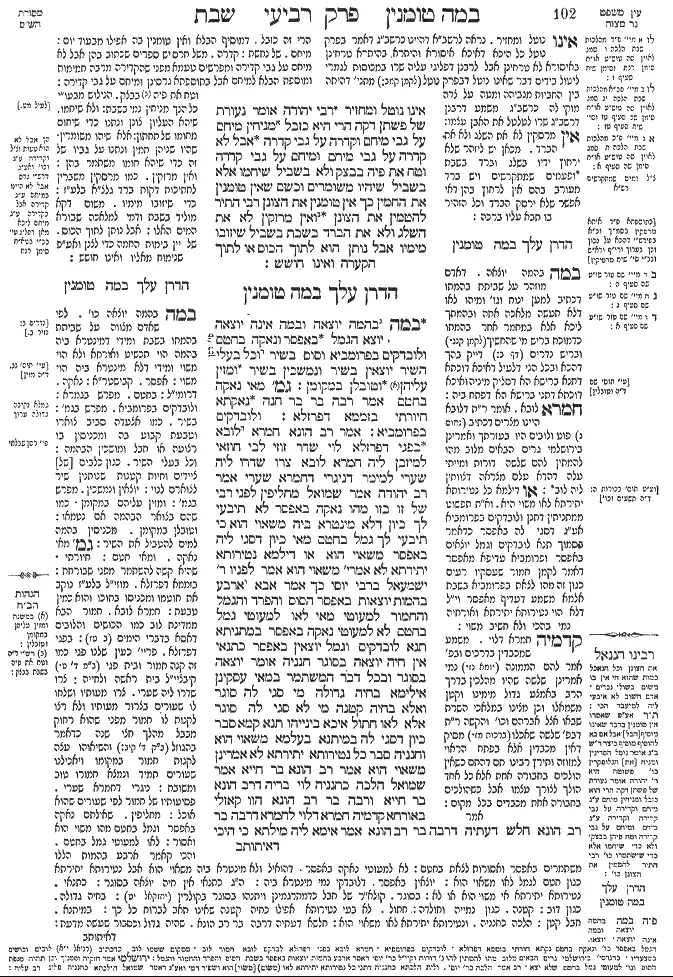
Shabbat 51b - Guemara
אינו נוטל ומחזיר. רבי יהודה אומר נעורת של פשתן דקה הרי היא כזבל מניחין מיחם על גבי מיחם וקדרה על גבי קדרה אבל לא קדרה על גבי מיחם ומיחם על גבי קדרה וטח את פיה בבצק ולא בשביל שיחמו אלא בשביל שיהיו משומרים וכשם שאין טומנין את החמין כך אין טומנין את הצונן רבי התיר להטמין את הצונן ואין מרזקין לא את השלג ולא את הברד בשבת בשביל שיזובו מימיו אבל נותן הוא לתוך הכוס או לתוך הקערה ואינו חושש:
הדרן עלך במה טומנין
מתני׳ במה בהמה יוצאה ובמה אינה יוצאה יוצא הגמל באפסר ונאקה בחטם ולובדקים בפרומביא וסוס בשיר וכל בעלי השיר יוצאין בשיר ונמשכין בשיר. ומזין עליהן וטובלן במקומן:
גמ׳ מאי נאקה בחטם אמר רבה בר בר חנה נאקתא חיורתי בזממא דפרזלא:
ולובדקים בפרומביא:
אמר רב הונא חמרא לובא בפגי דפרזלא לוי שדר זוזי לבי חוזאי למיזבן ליה חמרא לובא צרו שדרו ליה שערי למימר דניגרי דחמרא שערי אמר רב יהודה אמר שמואל מחליפין לפני רבי של זו בזו מהו נאקה באפסר לא תיבעי לך כיון דלא מינטרא ביה משאוי הוא כי תיבעי לך גמל בחטם מאי כיון דסגי ליה באפסר משאוי הוא או דילמא נטירותא יתירתא לא אמרי' משאוי הוא אמר לפניו ר' ישמעאל ברבי יוסי כך אמר אבא ארבע בהמות יוצאות באפסר הסוס והפרד והגמל והחמור למעוטי מאי לאו למעוטי גמל בחטם לא למעוטי נאקה. באפסר במתניתא תנא לובדקים וגמל יוצאין באפסר כתנאי אין חיה יוצאה בסוגר חנניה אומר יוצאה בסוגר ובכל דבר המשתמר במאי עסקינן אילימא בחיה גדולה מי סגי לה סוגר ואלא בחיה קטנה מי לא סגי לה סוגר אלא לאו חתול איכא בינייהו תנא קמא סבר כיון דסגי לה במיתנא בעלמא משאוי הוא וחנניה סבר כל נטירותא יתירתא לא אמרינן משאוי הוא אמר רב הונא בר חייא אמר שמואל הלכה כחנניה לוי בריה דרב הונא בר חייא ורבה בר רב הונא הוו קאזלי באורחא קדמיה חמרא דלוי לחמרא דרבה בר רב הונא חלש דעתיה דרבה בר רב הונא אמר אימא ליה מילתא כי היכי
Comments from Rashi on Masechet Shabbat Page 51b
הרי זה כזבל . דמוסיף הבלא ואין טומנין בה אפילו מבעוד יום: מיחם . של נחשת: קדרה . משל חרס יש ספרים שכתוב בהן אבל לא מיחם על גבי קדירה ומפרשים טעמא מפני שהקדירה מרבה חמימות ומוספת הבלא למיחם אבל בתוספתא גרסינן ומיחם על גבי קדירה: וטח את פיה בבצק . הנילוש מבעו"י כל הנך מניחין נמי בשבת: ולא שיחמו . שיהא העליון צונן ונתנו כדי שיחום מחומו של תחתון: אלא שיהו משומרין . שהיו שניהן חמין ונתנו על גביו של זה כדי שיהא חומו משתמר בהן: ואין מרזקין . כמו מרסקין משברין לחתיכות דקות ברד גלצ"א בלע"ז: כדי שיזובו מימיו . משום דקא מוליד בשבת ודמי למלאכה שבורא המים האלו: אבל נותן לתוך הכוס . של יין בימות החמה כדי לצנן ואע"פ שנימוח מאליו ואינו חושש: מתני' במה בהמה יוצאה כו' . לפי שהאדם מצווה על שביתת בהמתו בשבת ומידי דמינטרא ביה בהמה הוי תכשיט ואורחא ולא הוי משוי ומידי דלא מינטרא ביה הוי משוי: אפסר . קבישטר"א: נאקה . דרומי"ל: בחטם . מפרש בגמרא: ולובדקים בפרומביא . מפרש בגמ': בשיר . כמו אצעדה סביב צוארו וטבעת קבוע בה ומכניסין בו רצועה או חבל ומושכין הבהמה: וכל בעלי השיר . כגון כלבים ציידים וחיות קטנות שנותנין שיר לצוארם לנוי: יוצאין ונמשכין . מפרש בגמ': ומזין עליהם במקומן . כמו שהם בצואר הבהמה אם נטמאו: וטובלן במקומן . מכניסין בהמה למים להטביל את השיר: גמ' מאי נאקה . ומאי חטם: חיורתי . שהיא קשה להשתמר מפני שבורחת: בזממא דפרזלא . מוזי"ל בלע"ז נוקב את חוטמו ומכניסו בתוכו והוא כמין טבעת: בפגי דפרזלא . פריי' כעין שלנו פגי כמו זה קנה חמור ובית פגי (ב"מ ד' ט) קיבציי"ל בית ראשה ולחייה: חמרא לובא . חמור הבא ממדינת לוב כמו הכושים והלובים דאסא בדברי הימים (ב טז): צרו שדרו ליה שערי . צרו מעותיו ושלחו לו שעורים בצרור מעותיו ולא רצו לקנות לו חמור מפני שהוא רחוק מבבל מהלך חצי שנה כדאמר בהגוזל (ב"ק ד' קיב:) והשיאוהו עצה לקנות חמור במקומו ויאכילנו שעורים תמיד ונמצא חמורו טוב ומשובח: ניגרי דחמרא שערי . פסיעותיו של חמור לפי שעורים שהוא אוכל: מחליפין . שאילתם נאקה באפסר וגמל בחטם מהו משוי הוא ואסור: לאו למעוטי גמל בחטם . והכי קאמר ארבע בהמות הללו משתמרים באפסר ואסורות לצאת בחטם: לא למעוטי נאקה באפסר . דהואיל ולא מינטרא ביה משאוי הוא אבל נטירותא יתירתא כגון חטם לגמל לאו משאוי הוא: יוצאין באפסר . דלובדקי נמי מינטרא ביה: ה"ג כתנאי אין חיה יוצאה בסוגר: כתנאי . נטירותא יתירתא אי משוי הוא או לא: בסוגר . קולא"ר של חבל כדמתרגמינן ויתנהו בסוגר בקולרין (יחזקאל יט): בחיה גדולה . כגון דוב: קטנה . כגון נמייה וחולדה: חתול . לא בעי נטירותא אפילו כחיה קטנה שאינו תאב לברוח כל כך: במיתנא . חבל קטן: הלכה כחנניה . ונטירותא יתירתא לאו משאוי הוא: חלשא דעתיה דרבה בר רב הונא . שהיה גדול וכסבור שעשה מדעת:
Comments from Tosafot - Shabbat 51b
אינו נוטל ומחזיר . נראה לרשב"א דהיינו כרשב"ג דאמר בפרק נוטל כל היכא דאיכא איסורא והיתרא בהיתרא טרחינן באיסורא לא טרחינן אבל לרבנן דפליגי עליה שרו במכוסות לגמרי ליטול בידים דבר שאינו ניטל דבפרק נוטל (לקמן שבת קמב:) מתני' דהיתה בין החביות מגביהה ומטה על צדה מוקי לה כרשב"ג משמע דרבנן דרשב"ג שרו לטלטל את האבן עצמו: אין מרסקין לא את השלג ולא את הברד . מכאן יש ליזהר שלא ירחוץ ידיו בשלג וברד בשבת ופעמים שמתקרשים ויש ברד מעורב בהם אין לרחוץ בהן דאי אפשר שלא ירסק הברד וכל הזהיר בו תבא עליו ברכה: מתני' במה בהמה יוצאה . דאדם מוזהר על שביתת בהמתו דכתיב למען ינוח וגו' ומיהו לאו דלא תעשה מלאכה אתה ובהמתך ליכא אלא במחמר אחר בהמתו כדמוכח בריש מי שהחשיך (לקמן שבת קנג.) ובריש נדרים (דף ב:) דייק בהך דהכא ובכל הני דלעיל דאיכא דוכתא דתנא ברישא הא דסליק מיניה ואיכא דוכתא דתני ברישא הא דפתח ביה: חמרא לובא . אומר ר"ת דלובא היינו מצרים דכתיב (נחום ג, ט) פוט ולובים היו בעזרתך ואמרינן בירושלמי גריס הבאים מלוב מהו להמתין להם שלשה דורות ומייתי עלה דהדא עלם מצראה דצווחין ליה לוב: או דילמא כל נטירותא יתירתא לאו משוי היא . וא"ת תפשוט ממתניתין דתנן ולובדקים בפרומביא אע"ג דסגי לה באפסר כדאמר בסמוך תנא לובדקים וגמל יוצאים באפסר ופרומביא עדיפא מאפסר דאמר לקמן חמור שעסקיו רעים כגון זה מהו לצאת בפרומביא בשבת אלמא משמע דעדיף מאפסר וי"ל דלא הוי נטירותא יתירתא ואורחיה נמי בהכי ולא חשיב משוי: קדמיה חמרא דלוי . משמע שמכבדין בדרכים ובפ' אמר להם הממונה (יומא לז.) נמי אמרינן שלשה שהיו מהלכין בדרך הרב באמצע גדול מימינו וקטן משמאלו וכן מצינו במלאכי השרת שבאו אצל אברהם וכו' והקשה ר"ת דבפ' שלשה שאכלו (ברכות מז.) מסיק דאין מכבדין אלא בפתח הראוי למזוזה ותירץ רבינו תם דהתם כשאין הולכים בחבורה אחת אלא כל אחד הולך לצורך עצמו אבל כשהולכים בחבורה אחת מכבדים בכל מקום:
Shabbat 51b - Mishnah translated into english
he may not remove the pot and then return it to its place.
Rabbi Yehuda says: The chaff of fine flax is like manure. Therefore, one may not insulate food in it even on Shabbat eve.
One may place a copper urn upon a copper urn, and one may place an earthenware pot upon an earthenware pot because the lower utensil will not heat the upper one. However, one may not place an earthenware pot upon a copper urn, or a copper urn upon an earthenware pot, as in that case there is concern that the upper utensil will be heated by the lower one. And one may seal the mouth of a pot with dough. All of the above may not be undertaken in order to heat the water, but only so that its heat will be maintained and it will not cool down.
And just as one may not insulate hot food to keep it warm, so too, one may not insulate cold food to keep it cold. Rabbi Yehuda HaNasi permitted insulating cold food on Shabbat.
And one may neither crush snow nor hail on Shabbat so that its water will flow and he will be able to drink it. That act involves creation of a new entity, water from ice, on Shabbat, which is prohibited. However, he may place the snow or the hail into a cup or a dish and allow it to melt on its own, and he need not be concerned.
Due to the mitzva to rest one’s animals on Shabbat, one’s animal may not go out into the public domain bearing a burden. However, an object designated to protect the animal or to prevent it from fleeing is not considered a burden; therefore, an animal bearing objects that serve that purpose may go out into the public domain.
MISHNA: The mishna asks: With what may an animal go out into the public domain on Shabbat and with what may it not go out? A camel may go out on Shabbat with an afsar, and a naka may go out with a ḥatam, and a luvdekim may go out with a perumbiya. All these terms will be defined in the Gemara. And a horse may go out with a chain around its neck.
And, in general, all animals that typically have a chain around their necks when they go out to the public domain may go out with a chain on Shabbat and may be pulled by the chain.
If these chains contracted ritual impurity, one may sprinkle waters of purification on them and immerse them in their place on the animal, and they need not first be removed.
GEMARA: Several terms in the mishna were not clear to the Sages, and the Gemara asks: What is the meaning of naka with a ḥatam? Rabba bar bar Ḥana said: A white female camel (ge’onim) with an iron nose ring. And what is the meaning of luvdekim with a perumbiya? Rav Huna said: A Libyan donkey with an iron halter.
Having mentioned a Libyan donkey, the Gemara relates that Levi once sent money to Bei Ḥozai to procure for himself a Libyan donkey, which is reputed to be of superior quality. They bound his money, returned it, and sent him barley, to say that the strides of a donkey depend on the barley that it eats. If one provides his donkey with better feed, its performance will be as good as that of a Libyan donkey.
Rav Yehuda said that Shmuel said: The students switched the details in the mishna before Rabbi Yehuda HaNasi and asked: What is the halakha with regard to this animal going out into the public domain with that which is permitted for that animal? For example, may a white female camel go out with a bit or a camel with an iron nose ring?
The Gemara explains: The case of a white female camel going out with a bit should not be a dilemma for you; since it is not sufficiently secured by a bit, it is regarded as a burden with which the animal may not go out. The case where there should be a dilemma for you is that of a camel going out to the public domain with a nose ring. What is the halakha in that case? The Gemara explains the dilemma: Is the halakha that since a bit alone suffices to secure a camel, an iron nose ring is considered a burden? Or, is the halakha perhaps that with regard to a device that provides excessive security we do not say that it is a burden?
Rabbi Yishmael, son of Rabbi Yosei, said before Rabbi Yehuda HaNasi that so said father, Rabbi Yosei: Four animals may go out with a bit: The horse, and the mule, and the camel, and the donkey. What does this list come to exclude? Is it not coming to exclude a camel going out with a nose ring? Apparently, the dilemma is resolved. The camel may go out only with a bit. The Gemara rejects this proof: No, the list comes to exclude a white female camel going out with a bit.
It was taught in a baraita: A Libyan donkey and a camel may go out with a bit. The Gemara notes that the question whether or not an animal may go out into the public domain with excessive security is parallel to a dispute between the tanna’im, as it was taught in a baraita: A non-domesticated animal may not go out with a collar. Ḥananya says: It may go out with a collar and with anything that secures it.
The Gemara clarifies the case: With what are we dealing here? If you say that we are dealing with a large non-domesticated animal, does a collar suffice for it? Since it does not sufficiently secure the animal, it is considered a burden, and it is prohibited for the animal to go out with it on Shabbat. Rather, it must be dealing with a small non-domesticated animal. In that case, doesn’t a collar suffice for it? Why then does the anonymous first tanna hold that the animal may not go out with it?
Rather, is it not that the practical difference between their opinions is with regard to a cat? The anonymous first tanna of the baraita holds that since a small rope suffices for the cat, a collar is considered a burden with which the cat may not go out into the public domain. And Ḥananya holds that with regard to a device that provides excessive security, we do not say that it is a burden. The tanna’im disagree whether or not a device that provides excessive security is considered a burden. The Gemara concludes: Rav Huna bar Ḥiyya said that Shmuel said: The halakha is in accordance with the opinion of Ḥananya. A device that provides excessive security is not considered a burden.
The Gemara relates that Levi, son of Rav Huna bar Ḥiyya, and Rabba bar Rav Huna were once going together on a road. Levi’s donkey on its own initiative went ahead of the donkey of Rabba bar Rav Huna. Rabba bar Rav Huna was offended because he was the greater Torah scholar, and he thought that Levi went first to assert that he considered himself the greater scholar. Levi said to himself: I will say something to him, so that
Traduction : The William Davidson digital edition of the Koren Noé Talmud, with commentary by Rabbi Adin Even-Israel Steinsaltz.