 Talmud Bavli
The learning on the whole site is dedicated : L'ilui Nishmat Margalit bat Ledicia
The learning on the whole site is dedicated : L'ilui Nishmat Jacques Isaac Ben Amram Loubaton
The learning on the whole site is dedicated : L'ilui Nishmat רינה בת לדיסיה
Shabbat 126b : Youtube
Daf TubeYoutube
2 video classes :
Shabbat Page 126b
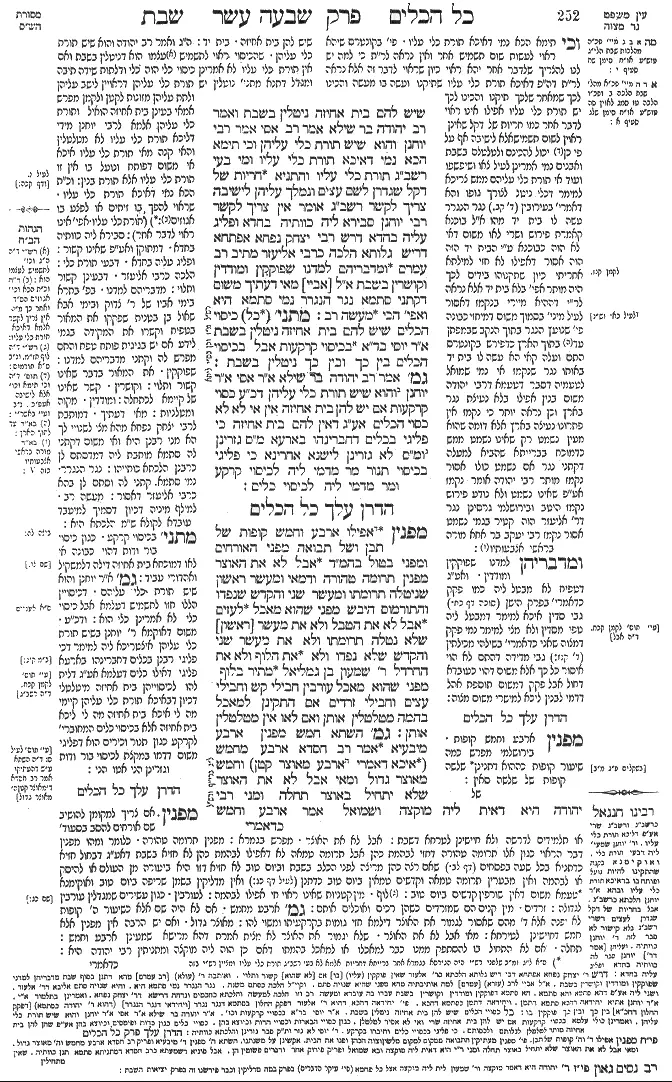
Shabbat 126b - Guemara
שיש להם בית אחיזה ניטלין בשבת ואמר רב יהודה בר שילא אמר רב אסי אמר רבי יוחנן והוא שיש תורת כלי עליהן וכי תימא הכא נמי דאיכא תורת כלי עליו ומי בעי רשב"ג תורת כלי עליו והתניא חריות של דקל שגדרן לשם עצים ונמלך עליהן לישיבה צריך לקשר רשב"ג אומר אין צריך לקשר רבי יוחנן סבירא ליה כוותיה בחדא ופליג עליה בחדא דרש רבי יצחק נפחא אפתחא דריש גלותא הלכה כרבי אליעזר מתיב רב עמרם ומדבריהם למדנו שפוקקין ומודדין וקושרין בשבת א"ל [אביי] מאי דעתיך משום דקתני סתמא נגר הנגרר נמי סתמא היא ואפי' הכי מעשה רב:
מתני׳ (כל) כיסוי הכלים שיש להם בית אחיזה ניטלין בשבת א"ר יוסי בד"א בכיסוי קרקעות אבל בכיסוי הכלים בין כך ובין כך ניטלין בשבת:
גמ׳ אמר רב יהודה בר שילא א"ר אסי א"ר יוחנן והוא שיש תורת כלי עליהן דכ"ע כסוי קרקעות אם יש להן בית אחיזה אין אי לא לא כסוי הכלים אע"ג דאין להם בית אחיזה כי פליגי בכלים דחברינהו בארעא מ"ס גזרינן ומ"ס לא גזרינן לישנא אחרינא כי פליגי בכיסוי תנור מר מדמי ליה לכיסוי קרקע ומר מדמי ליה לכיסוי כלים:
הדרן עלך כל הכלים
מתני׳ מפנין אפילו ארבע וחמש קופות של תבן ושל תבואה מפני האורחים ומפני בטול בהמ"ד אבל לא את האוצר מפנין תרומה טהורה ודמאי ומעשר ראשון שניטלה תרומתו ומעשר שני והקדש שנפדו והתורמוס היבש מפני שהוא מאכל לעזים אבל לא את הטבל ולא את מעשר [ראשון] שלא נטלה תרומתו ולא את מעשר שני והקדש שלא נפדו ולא את הלוף ולא את החרדל ר' שמעון בן גמליאל מתיר בלוף מפני שהוא מאכל עורבין חבילי קש וחבילי עצים וחבילי זרדים אם התקינן למאכל בהמה מטלטלין אותן ואם לאו אין מטלטלין אותן גמ׳ השתא חמש מפנין ארבע מיבעיא אמר רב חסדא ארבע מחמש (איכא דאמרי ארבע מאוצר קטן) וחמש מאוצר גדול ומאי אבל לא את האוצר שלא יתחיל באוצר תחלה ומני רבי יהודה היא דאית ליה מוקצה ושמואל אמר ארבע וחמש
Comments from Rashi on Masechet Shabbat Page 126b
שיש להן בית אחיזה . בית יד: ה"ג ואמר רב יהודה והוא שיש תורת כלי עליהן . שהכיסוי ראוי לתשמיש עצמו הוא דניטלין בשבת ואם אין תורת כלי עליו לא אמרינן כיסוי כלי הוה כלי ודלתות שידה תיבה ומגדל דתנא מתני' נוטלין יש תורת כלי עליהן דראויין לישב עליהן ולתת עליהן מזונות לקטן ולקמן מפרש אמאי בעינן בית אחיזה הואיל ותורת כלי עליהן אלמא לרבי יוחנן מידי דליכא תורת כלי עליו לא מטלטלין והאי קנה מאי תורת כלי עליו איכא אי משום דפותח ונועל בו אין זו תורת כלי עליו אלא תורת בנין: וכ"ת הכא נמי דאיכא תורת כלי עליו . שראוי להפך בו זיתים או לפצע בו אגוזים: (תורת כלי עליו . אפי' אינו ראוי לדבר אחר): סבירא ליה כוותיה בחדא . דמתוקן ואע"פ שאינו קשור ופליג עליה בחדא . דבעי תורת כלי: הלכה כרבי אליעזר . דבעינן קשור ותלוי: מדבריהם למדנו . בפ' בתרא בימי אביו של ר' צדוק ובימי אבא שאול בן בטנית שפקקו את המאור בטפיח וקשרו את המקידה בגמי לידע אם יש בגיגית פותח טפח והתם מפרש לה וקתני מדבריהם למדנו: שפוקקין . את המאור בדבר שאינו קשור ותלוי: וקושרין . קשר שאינו של קיימא לכתחלה: ומודדין . מקוה ומטלניות: מאי דעתיך . דמותבת לרבי יצחק נפחא מהא מצי לשנויי לך הא מני רבנן היא ואי משום דקתני לה סתמא מותבת ליה דמדסתם לן כרבנן הלכתא כותייהו: נגר הנגרר נמי סתמא . קתני לה וסתם לן בהא כרבי אליעזר דאסור: מעשה רב . למילף מיניה דכיון דסמיך למיעבד עובדא לקולא ש"מ הלכתא היא: מתני' בכיסוי קרקע . כגון כיסוי בור ודות דהוי כבונה אי לאו דמוכחא בית אחיזה דילה דלמשקיל ואהדורי עביד: גמ' א"ר יוחנן והוא שיש תורת כלי עליהם . דכיסויין הללו חזו לתשמיש דעלמא אבל כיסוי כלי לא אמרינן כלי הוא: ודכ"ע . משום דאוקמא ר' יוחנן בשיש תורת כלי עליהן איצטריכא ליה למימר דכי פליגי רבנן בכלים דחברינהו בארעא פליגי דאילו כלים דעלמא אע"ג דלית להו לכיסוייהן בית אחיזה מיטלטלי דכיון דבאיכא תורת כלי עליהן קיימי מה לי איכא בית אחיזה מה לי ליכא בית אחיזה אלא בכיסוי כלים המחוברי' לקרקע כגון תנור וכירים הוא דפליגי משום דדמו במקצת לכיסוי בור ודות וגזרינן הני אטו הני: מתני' מפנין . אם צריך למקומן להושיב שם אורחים להסב בסעוד' או תלמידים לדרשה ולא חיישינן לטרחא דשבת: אבל לא את האוצר . מפרש בגמרא: לעורבין . כגון עשירים שמגדלין עורבין לגדולה: מפנין תרומה טהורה . כלומר ומהו מפנין דבר הראוי כגון אלו תרומה טהורה דחזי לבהמת כהן אבל תרומה טמאה לא דאפילו לבהמת כהן לא חזיא בשבת דאע"ג דבחול חזיא כדתניא בכל שעה בפסחים (דף לב.) שאם רצה כהן מריצה לפני הכלב בשבת וביום טוב לא חזיא דזו היא ביעורה מן העולם או להיסק או לבהמה ואין מבערין תרומה טמאה וקדשים טמאין ביום טוב כדתנן (לעיל שבת דף כג.) ואין מדליקין בשמן שריפה ביום טוב ואוקימנא טעמא משום דאין שורפין קדשים ביום טוב: לוף . מין קטניות שאינו ראוי חי אפילו לבהמה: לעורבין . כגון עשירים שמגדלין עורבין לגדולה: זרדים . מין קנים הם שמזרדים כשהן רכים ואוכלים אותם: גמ' ארבע מחמש . אם לא היה שם אלא כשיעור ה' קופות לא יפנה אלא ד' מהם שאסור לגמור את האוצר דילמא חזי גומות בקרקעיתו ומשוי להו: מאוצר גדול . ואם יש הרבה אין מפנין אלא חמש דחיישינן לטירחא: מאי אבל לא את האוצר . שלא יגמור את האוצר לא מצית אמרת דהא מרישא שמעינן ארבע וחמש: תחלה . אם לא התחיל בו להסתפק ממנו כבר למאכלו או למאכל בהמתו דאם כן הוה ליה מוקצה ומתניתין רבי יהודה היא:
Comments from Tosafot - Shabbat 126b
וכי תימא הכא נמי דאיכא תורת כלי עליו . פי' בקונטרס שיהא ראוי לעשות שום תשמיש אחר ואין נראה לר"ת כי למה יש לנו להצריך שלדבר אחר יהא ראוי כיון שראוי לדבר זה אלא נראה לר"ת דה"פ דאיכא תורת כלי עליו שתיקנו ועשה בו מעשה והכינו לכך שמאחר שלכך תיקנו והכינו לכך יש תורת כלי עליו אפילו אינו ראוי לדבר אחר כמו חריות של דקל שאינן ראוין לשום תשמיש אלא לישיבה אף על פי כן יכול להכינם ולטלטלם בשבת ואבנים נמי אמרינן לעיל צאו ושיפשפו ועוד אי תורת כלי עליהם ממש צריכא למימר דכלי ניטל לצורך גופו והא דאמרי' בעירובין (ד' קב.) נגר הנגרר עשה לו בית יד מהו א"ל בוכנא קאמרת פירוש ושרי לאו משום דאי לא הוה כבוכנא ע"י הבית יד הזה הוה אסור דאפילו לא חזי למילתא אחריתי כיון שתקנוהו בידים לכך היה מותר אפי' בלא בית יד אלא נראה לר"י דההיא מיירי בנקמז דאסור לעיל מיני' בסמוך משום דמיחזי כבונה פי' שנועץ הנגר בתוך הנקב שבמפתן עד בתוך הארץ כדפירש בקונטרס התם ועלה קאי הא עשה לו בית יד באותו נגר שנקמז אי נמי שמואל לטעמיה דסבר דטעמא דרבי יהודה משום בנין אפילו בלא נעיצת נגר בארץ וכן נראה יותר כי נקמז אין פתרונו נעיצה בארץ אלא דומה שהוא מעין נשמט רק שאינו נשמט ממש כדמוכח בברייתא שהביא למעלה דקתני נגר אם נשמט כולו אסור נקמז מותר רבי יהודה אומר נקמז אע"פ שאינו נשמט ולא נודע פירוש נקמז היטב ובירושלמי גרסינן נגר דר' אליעזר הוה קטיר בגמי נשמט אסור נקמז רבי יעקב בר אחא מורה בראשי אצבעותיו: ומדבריהן למדנו שפוקקין ומודדין . ואע"ג דטפיח לא מבטל ליה כמו פקק כדאמרי' בפרק הישן (סוכה דף כח.) גבי סדין איכא למימר דמבטל ליה טפי מסדין ולא מצי למימר נמי פקק דמצוה שאני כדאמרי' בשילהי מכילתין (ד' קנז:) גבי מדידה דהתם לא הוי איסור כל כך אלא משום דהוי כעובדא דחול אבל פקק דמשום תוספת אהל דדמי לבנין ליכא למישרי משום מצוה: מתני' מפנין ארבע וחמש קופות . בירושלמי מפרש כמה שיעור קופות כההוא דתנינן שלשה קופות של שלשה סאין:
Shabbat 126b - Mishnah translated into english
that have a handle may be moved on Shabbat. And Rav Yehuda bar Sheila said that Rav Asi said that Rabbi Yoḥanan said: And that is specifically when the status of a vessel applies to them, i.e., when the cover itself is suited for use as a vessel. This is contrary to the opinion of Rabban Shimon ben Gamliel, who holds that preparation alone is sufficient.
And if you say: Here, too, Rabban Shimon ben Gamliel is referring to a case where the status of a vessel applies to the reed, does Rabban Shimon ben Gamliel require that the status of a vessel apply to it? Wasn’t it taught in a baraita: With regard to hard branches of a palm tree that one cut for firewood or for construction and then he reconsidered their designation and decided to use them for sitting, he must tie the branches together on Shabbat eve so that they will not be set-aside. Rabban Shimon ben Gamliel says: He need not tie them together, and nevertheless, it is permitted to move them. Rabban Shimon ben Gamliel does not require that one render it a vessel. Thought is sufficient.
The Gemara answers: Rabbi Yoḥanan holds in accordance with the opinion of Rabban Shimon ben Gamliel in one matter and disagrees with him in one matter.
Rabbi Yitzḥak taught at the entrance of the house of the Exilarch: The halakha is in accordance with the opinion of Rabbi Eliezer in the matter of a window shutter. Rav Amram raised an objection from that we learned explicitly in a mishna: And from their statements and their actions, we derived that one may seal a window, and measure, and tie a knot on Shabbat. Apparently, one may shutter the window under any circumstances, not only when the shutter was prepared for use, as Rabbi Eliezer said.
Abaye said to Rav Amram: What is your opinion, that the proof is decisive because it was taught in the mishna unattributed and the halakha is in accordance with an unattributed mishna? The mishna with regard to a bolt that is dragged is also an unattributed mishna. The halakha should be in accordance with that mishna as well. The Gemara concludes: And even so, an action is greater. Even though the two mishnayot are of equal weight, since one of them not only cites an unattributed opinion but also relates an incident where the Sages shuttered a window, that source is decisive.
MISHNA: All covers of vessels that have a handle may be moved on Shabbat. Rabbi Yosei said: In what case is this statement said? In the case of a cover for the ground, i.e., the cover of a pit; however, with regard to covers of vessels, both in this case and in that case, even if they do not have handles, they may be moved on Shabbat.
GEMARA: Rav Yehuda bar Sheila said that Rabbi Asi said that Rabbi Yoḥanan said: And this applies specifically when the status of a vessel applies to them and they are suited for some use. The Gemara adds: Everyone holds that with regard to a cover for the ground, if it has a handle, yes, it is permitted to move it, and if not, no, it is prohibited to move it; with regard to a cover of a vessel, even if it does not have a handle, it is permitted to move it.
When they disagree in the mishna, it is with regard to vessels that one attached to the ground. This Sage, the first tanna, holds that we issue a decree according to which it is prohibited to move the cover of a vessel attached to the ground due to the concern that one will move a cover for the ground itself, and that Sage, Rabbi Yosei, holds that we do not issue a decree.
Another version of this statement: When they disagree in the mishna, it is with regard to the cover of an oven; this Sage likens it to a cover for the ground, and this Sage likens it to a cover of a vessel.
MISHNA: On Shabbat, one may move even four or five baskets of straw and baskets of produce, due to the guests, who require that place to sit, and due to suspension of Torah study in the study hall, where space is required to seat the students. However, one may not move these items to create space in the storeroom.
One may move ritually pure teruma, although it may only be eaten by a priest; and doubtfully tithed produce [demai], which may not be eaten until tithes are separated from it due to concern that an am ha’aretz did not separate its tithes; and first tithe whose teruma of the tithe has already been taken and given to priests; and second tithe and consecrated items that were redeemed; and even dry lupine, which is not fit for consumption by a person, because it is goat food.
However, one may neither move untithed produce, nor first tithe whose teruma has not been taken, nor second tithe and consecrated items that were not redeemed, nor raw arum and raw mustard, as all of these items are not fit for consumption and are therefore set aside. Rabban Shimon ben Gamliel permits moving in the case of arum because it is food for ravens.
With regard to bundles of straw, and bundles of wood, and bundles of twigs, if one prepared them on Shabbat eve for animal food, one may move them. And if not, one may not move them.
GEMARA: The Gemara asks: Now that the mishna stated that one may move five baskets, is mentioning four baskets necessary?
Rav Ḥisda said: The mishna means that one may move four out of five baskets, but not all of them. Some say: It is permitted to move four baskets from a small storeroom and five baskets from a large storeroom.
The Gemara asks: And what then is the meaning of: However, one may not move these items to create space in the storeroom? It means that one may not use the storeroom for the first time. If he has never taken supplies from this storeroom, he may not begin moving baskets from it. And whose opinion is cited in this mishna? It is the opinion of Rabbi Yehuda, who is of the opinion that this constitutes a prohibition of set-aside. The contents of a storeroom that was never used are set-aside.
And Shmuel says: The difficulty in the mishna should be explained as a figure of speech: Four and five,
Traduction : The William Davidson digital edition of the Koren Noé Talmud, with commentary by Rabbi Adin Even-Israel Steinsaltz.