 Talmud Bavli
Shabbat 111b : Youtube
Daf TubeYoutube
2 video classes :
Shabbat Page 111b
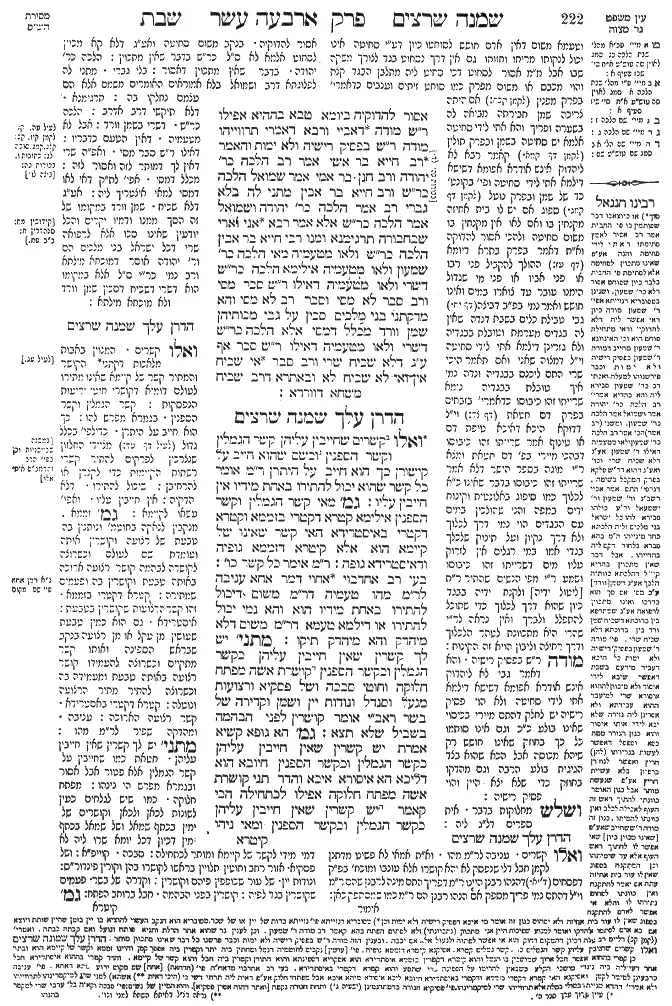
Shabbat 111b - Guemara
אסור להדוקיה ביומא טבא בההיא אפילו ר"ש מודה דאביי ורבא דאמרי תרווייהו מודה ר"ש בפסיק רישיה ולא ימות והאמר רב חייא בר אשי אמר רב הלכה כר' יהודה ורב חנן בר אמי אמר שמואל הלכה כר"ש ורב חייא בר אבין מתני לה בלא גברי רב אמר הלכה כר' יהודה ושמואל אמר הלכה כר"ש אלא אמר רבא אני וארי שבחבורה תרגימנא ומנו רבי חייא בר אבין הלכה כר"ש ולאו מטעמיה מאי הלכה כר' שמעון ולאו מטעמיה אילימא הלכה כר"ש דשרי ולאו מטעמיה דאילו ר"ש סבר מסי ורב סבר לא מסי וסבר רב לא מסי והא מדקתני בני מלכים סכין על גבי מכותיהן שמן וורד מכלל דמסי אלא הלכה כר"ש דשרי ולאו מטעמיה דאילו ר"ש סבר אף ע"ג דלא שכיח שרי ורב סבר אי שכיח אין ואי לא שכיח לא ובאתרא דרב שכיח משחא דוורדא:
הדרן עלך שמנה שרצים
מתני׳ ואלו קשרים שחייבין עליהן קשר הגמלין וקשר הספנין וכשם שהוא חייב על קישורן כך הוא חייב על היתרן ר"מ אומר כל קשר שהוא יכול להתירו באחת מידיו אין חייבין עליו:
גמ׳ מאי קשר הגמלין וקשר הספנין אילימא קטרא דקטרי בזממא וקטרא דקטרי באיסטרידא האי קשר שאינו של קיימא הוא אלא קיטרא דזממא גופיה ודאיסטרידא גופה:
ר"מ אומר כל קשר כו':
בעי רב אחדבוי אחוי דמר אחא עניבה לר"מ מהו טעמיה דר"מ משום דיכול להתירו באחת מידיו הוא והא נמי יכול להתירו או דילמא טעמא דר"מ משום דלא מיהדק והא מיהדק תיקו:
מתני׳ יש לך קשרין שאין חייבין עליהן כקשר הגמלין וכקשר הספנין קושרת אשה מפתח חלוקה וחוטי סבכה ושל פסקיא ורצועות מנעל וסנדל ונודות יין ושמן וקדירה של בשר ראב"י אומר קושרין לפני הבהמה בשביל שלא תצא:
גמ׳ הא גופא קשיא אמרת יש קשרין שאין חייבין עליהן כקשר הגמלין וכקשר הספנין חיובא הוא דליכא הא איסורא איכא והדר תני קושרת אשה מפתח חלוקה אפילו לכתחילה הכי קאמר יש קשרין שאין חייבין עליהן כקשר הגמלין וכקשר הספנין ומאי ניהו
Comments from Rashi on Masechet Shabbat Page 111b
אסור להדוקיה . בנקב משום סחיטה ואע"ג דלא קא מכוין לסחוט אלמא לא ס"ל כר"ש בדבר שאין מתכוין: הלכה כר' יהודה . בדבר שאין מתכוין דאסור: בלי גברי . מתני לה לפלוגתא דרב ושמואל בלא אמוראים האומרים משמם אלא הם עצמם נחלקו בה: תרגימנא . דלא תיקשי דרב אדרב: הלכה כר"ש . דשרי בשמן וורד: אבל לא מטעמיה . דאין הטעם כדבריו: דאילו ר"ש סבר מסי . ואפ"ה שרי דאין לך דמותר לזה ואסור לזה: מכלל דמסי . אפי' לת"ק דאי לאו דמסי למאי איצטריך ליה: אע"ג דלא שכיח . שמן וורד במקומו של זה הסך ממנו ודמיו יקרים והכל יודעין שאינו סכו אלא לרפואה שרי דכל ישראל בני מלכים הם ור' יהודה אוסר דמוכחא מילתא ורב נמי כר"י ס"ל אלא במקומו הוא דשרי דשכיח דסכין שמן וורד ולא מוכחא מילתא: מתני' ואלו קשרים . המנוין באבות מלאכות דקתני הקושר והמתיר קשר של קיימא שאינו מתירו לעולם דומיא דקושרי חוטי יריעות הנפסקות: קשר הגמלין וקשר הספנין . בגמרא מפרש להו: כך הוא חייב על היתרן . כדילפי' בכלל גדול (לעיל שבת דף עד:) מציידי החלזון שנצרכין לפרקים להתיר קשרי רשתות הקיימות כדי לקצרן או להרחיבן: שיכול להתירו . דלא הדקיה: אין חייבין עליו . ואפי' עשאו לקיימא: גמ' זממא . מנקבין לנאקה בחוטמ' ונותנין בה טבעת של רצועה וקושרין אותה ועומדת שם לעולם וכשרוצה לקושרה לבהמה קושר רצועה ארוכה באותה טבעת וקושרין בה ופעמים שמתירה: קטרא דקטרי בזממא . זהו קשר הרצועות שקושרין בטבעת: איסטרידא . גם הוא כמין טבעת שעושין מן עקל או מן רצועה בנקב שבראש הספינה ואותו קשר מתקיים וכשרוצה להעמידו קושר רצועה באותה טבעת ומעמידה בה וכשרוצה להתיר מתיר הרצועה ונוטלה: קטרא דקטרי באסטרידא . קשר רצועה הארוכה: עניבה . ומהדקה שפיר לר"מ מהו: מתני' יש לך קשרין שאין חייבין עליהן . חטאת כמו שחייבין על קשר הגמלין אלא פטור אבל אסור ובגמרא מפרש הי נינהו: מפתח חלוקה . כמו שיש לגלחים כעין לשונות לכאן ולכאן וקושרים של ימין בכתף שמאל ושל שמאל בכתף ימין דכיון דכל יומא שרו ליה לא דמי מידי לקשר של קיימא ומותר לכתחילה: סבכה . קוייפ"א: ושל פסקיא . אזור רחב וחוטין תלויין בראשו לקושרו בהן וקורין פינדור"ס: ונודות יין . של עור שכופפין פיהם וקושרין: וקדרה של בשר . פעמים שקושרין בגד לפיה: קושרין בפני הבהמה . חבל ברוחב הפתח:
Comments from Tosafot - Shabbat 111b
מודה ר"ש בפסיק רישיה . והא דאמר גבי לא ליהדוק אינש אודרא אפומא דשישא דילמא אתי לידי סחיטה ולא הוי פסיק רישיה יש לחלק דהתם מיירי בכיסוי שאינו בולע כ"כ וגם אינו סותמו כל כך בחוזק שאינו חושש רק שיהא מכוסה אבל הכא שהוא בצד הגיגית בולע הרבה וגם מהדקו בחוזק כדי שלא יצא היין והוי פסיק רישיה: ושלש מחלוקות בדבר . אית ספרים דל"ג ליה: מתני' ואלו קשרים. עניבה לר"מ מהו . וא"ת אמאי לא פשיטא מדתנן לקמן חבל דלי שנפסק לא יהא קושרו אלא עונבו ומוכח' בפ"ק דפסחים (ד' יא.) דהנהו רבנן היינו ר"מ דפריך התם מינה לרבנן שהם ר"מ וי"ל דהתם נמי פריך מספק אם הנהו רבנן הם ר"מ כמו שמסתפק כאן:
Shabbat 111b - Mishnah translated into english
it is prohibited to insert it tightly on a Festival due to the prohibited labor of wringing. Doesn’t Rabbi Shimon permit performing an unintentional act from which a prohibited labor may ensue? The Gemara answers: In that case, even Rabbi Shimon concedes that it is prohibited, as it was Abaye and Rava who both said: Rabbi Shimon concedes in instances categorized as: Cut off its head and it shall not die. This category refers to situations where the ensuing prohibited labor is inevitable. In those kinds of cases, one is liable even according to Rabbi Shimon. Since stuffing a cloth into a barrel will inevitably lead to wringing wine from it, Rabbi Shimon concedes that doing so is forbidden.
The Gemara asks again: Didn’t Rav Ḥiyya bar Ashi say that Rav said explicitly: The halakha is in accordance with the opinion of Rabbi Yehuda, and Rav Ḥanan bar Ami said that Shmuel said: The halakha is in accordance with the opinion of Rabbi Shimon. And Rav Ḥiyya bar Avin taught the same tradition without mentioning the names of the men who cited the statements, but cited it directly: Rav said: The halakha is in accordance with the opinion of Rabbi Yehuda, and Shmuel said: The halakha is in accordance with the opinion of Rabbi Shimon. Rather, Rava said: I and the lion of the group explained this. And the Gemara asks: And who is the lion of the group? It is Rabbi Ḥiyya bar Avin. He and Rava explained: The halakha is indeed in accordance with the opinion of Rabbi Shimon, but not for his reason.
The Gemara explains: What exactly is the meaning of the statement: The halakha is in accordance with the opinion of Rabbi Shimon, but not for his reason? If we say the halakha is in accordance with the opinion of Rabbi Shimon, who permits smearing rose oil, but not for his reason, because Rabbi Shimon holds that rose oil heals, and Rav holds that it does not heal, which is why he permits smearing it on Shabbat, then does Rav hold that rose oil does not heal? From the fact that it is taught: Princes smear rose [vered] oil on their wounds; by inference, it heals. Rather, it means: The halakha is in accordance with the opinion of Rabbi Shimon, who permits rose oil, but not for his reason. As Rabbi Shimon holds that although rose oil is uncommon and expensive, and anyone who sees one smearing it realizes that it is for medicinal purposes, nevertheless, it is permitted. And Rav holds that if rose oil is common in a given place, yes, one may smear it on himself; however, if it is not common there, it is not permitted. And in Rav’s place, roses were common, and that is why he permitted smearing with rose oil on Shabbat. However, in a place where rose oil is uncommon, he concedes to the Rabbis, who prohibited doing so.
MISHNA: And these are knots for which one is liable to bring a sin-offering if one tied them on Shabbat: A camel driver’s knot and a sailor’s knot, both of which are meant to be permanent. And just as one is liable to bring a sin-offering for tying these knots, so too, he is liable to bring a sin-offering for untying them. Rabbi Meir says a principle: For tying any knot that one can untie with one of his hands, one is not liable to bring a sin-offering, because a loose knot of that sort is not considered permanent even if that was his intention.
GEMARA: The Gemara asks: What are a camel driver’s knot and a sailor’s knot? If you say that these are a knot that one uses to tie a strap to the camel’s nose ring in order to pull it and a knot that one uses to tie a rope to the ring [isterida] fixed to the bow of a ship when the ship is docked, then these knots are not meant to be permanent, as they are periodically untied. Rather, a camel driver’s knot is the knot that fixes the nose ring itself in the camel’s nose, and the sailor’s knot is the knot that fixes the ring itself to the ship. These knots are never untied and are permanent.
We learned in the mishna that Rabbi Meir says a principle: For tying any knot that one can untie with one of his hands, one is not liable for tying it. Rav Aḥadvoy, brother of Mar Aḥa, raised a dilemma: With regard to tying a bow, what is the ruling according to Rabbi Meir? Is it permitted to tie it tightly on Shabbat or not? The dilemma is: Is the reason for the opinion of Rabbi Meir merely that because one can untie the knot with one of his hands it is not considered a permanent knot, and this bow too, he can untie it with one of his hands and therefore he would not be liable for tying on Shabbat? Or perhaps the reason for the opinion of Rabbi Meir is because typically a knot that can be untied with one hand is not particularly tight, and this bow is tight and therefore it is prohibited to tie it on Shabbat. This dilemma is not resolved, and the Gemara concludes: Let it stand unresolved.
MISHNA: You have knots for which one is not liable to bring a sin-offering as one is liable for tying a camel driver’s knot and a sailor’s knot; however, it is nevertheless prohibited to tie them. A woman may tie closed the opening of her robe with straps, as well as the strings of her hairnet and the laces of her girdle, i.e., a wide belt tied with laces. One may also tie the straps of a shoe or a sandal, as well as the spouts of wine or oil jugs. One may also tie a garment over a pot of meat. Rabbi Eliezer ben Ya’akov says: One may tie a rope across an entrance before an animal so that it will not go out.
GEMARA: The Gemara asks: This matter itself is difficult, as there is an internal contradiction in the mishna. On the one hand, you said that there are knots for which one is not liable to bring a sin-offering as he is for tying a camel driver’s knot and a sailor’s knot, which would seem to indicate that although there is no Torah liability, there is a rabbinic prohibition. And then it was taught that a woman may tie the opening of her robe, indicating that doing so is permitted even ab initio. The Gemara answers that this is what the mishna is saying: There are knots for which one is not liable to bring a sin-offering for tying them on Shabbat as he is for tying a camel driver’s knot and a sailor’s knot. And which are these?
Traduction : The William Davidson digital edition of the Koren Noé Talmud, with commentary by Rabbi Adin Even-Israel Steinsaltz.