 Talmud Bavli
Hullin 117b : Youtube
Rabbi Dr. Moshe WeisblumYoutube
1 video class :
Hullin Page 117b
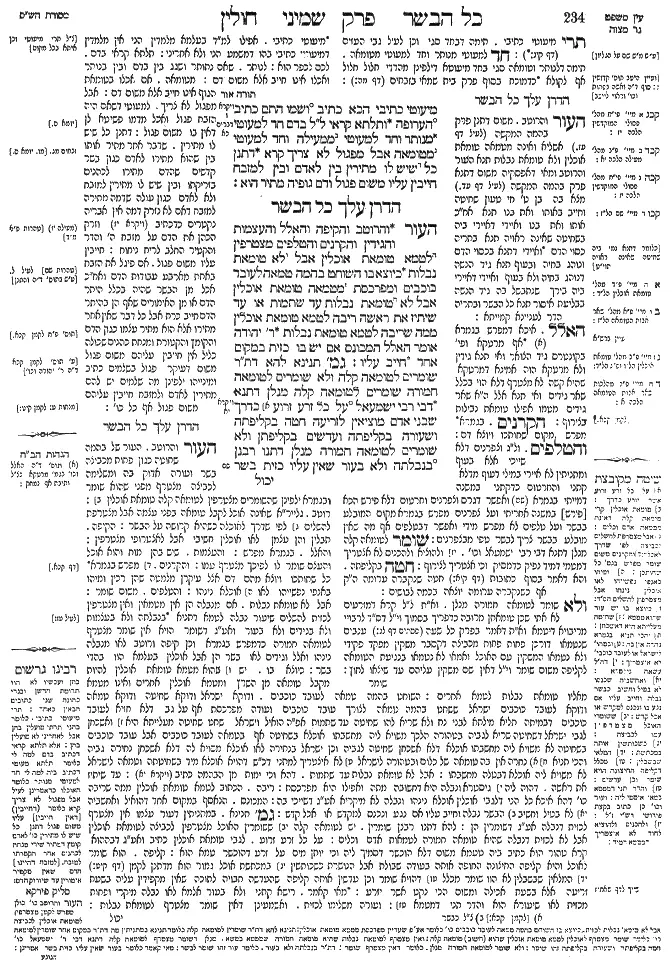
Hullin 117b - Guemara
מיעוטי כתיבי הכא כתיב (ויקרא ו, ג) ושמו התם כתיב (דברים כא, ו) הערופה ותלתא קראי ל"ל בדם חד למעוטי מנותר וחד למעוטי ממעילה וחד למעוטי מטומאה אבל מפגול לא צריך קרא דתנן כל שיש לו מתירין בין לאדם ובין למזבח חייבין עליו משום פגול ודם גופיה מתיר הוא:
הדרן עלך כל הבשר
מתני׳ העור והרוטב והקיפה והאלל והעצמות והגידין והקרנים והטלפים מצטרפין לטמא טומאת אוכלין אבל לא טומאת נבלות כיוצא בו השוחט בהמה טמאה לעובד כוכבים ומפרכסת מטמאה טומאת אוכלין אבל לא טומאת נבלות עד שתמות או עד שיתיז את ראשה ריבה לטמא טומאת אוכלין ממה שריבה לטמא טומאת נבלות ר' יהודה אומר האלל המכונס אם יש בו כזית במקום אחד חייב עליו:
גמ׳ תנינא להא דת"ר שומרים לטומאה קלה ולא שומרים לטומאה חמורה שומרים לטומאה קלה מנלן דתנא דבי רבי ישמעאל (ויקרא יא, לז) על כל זרע זרוע כדרך שבני אדם מוציאין לזריעה חטה בקליפתה ושעורה בקליפתה ועדשים בקליפתן ולא שומרים לטומאה חמורה מנלן דתנו רבנן (ויקרא יא, לט) בנבלתה ולא בעור שאין עליו כזית בשר
Comments from Rashi on Masechet Hullin Page 117b
מיעוטי כתיבי . אפילו למ"ד בעלמא מלמדין הני אין מלמדין דמיעוטי כתיבי בהו דמשמע הני ולא אחריני: תלתא קראי בדם . לכם לכפר הוא: לנותר . שאם נתותר ושגג בין בדם ובין בנותר ואכלו אינו חייב אלא משום דם: מטומאה . אם אכלו בטומאת הגוף אינו חייב אלא משום דם: אבל מפגול לא צריך . למעוטי דשאם היה הזבח פגול ואכל מדמו פשיטא לן דאין בו משום פגול: דתנן כל שיש לו מתירין . שדבר אחר מתיר אותו בין שהוא מתירו לאדם כגון בשר קדשים שהדם מתירו לכהנים בזריקתו ובין שיש לו מתירין למזבח ולא לאדם כגון עולה שדמה מתירה למזבח דאם לא נזרק דמה אין אבריה נקטרים כדכתיב (ויקרא יז) וזרק הכהן את הדם על מזבח ה' והדר והקטיר החלב לריח ניחוח: חייבין עליו משום פגול . אם פיגל את הזבח באחת מארבע עבודות הדם ואח"כ אכל מן הבשר שהיה בכלל היתר הדם או מן האימורים שאף הן בהיתר הדם חייב כרת אבל כל דבר שאין אחר מתירו אלא הוא מתיר עצמו כגון הדם והקומץ והקטורת ומנחת כהנים שכולה כליל אין חייבין עליהם משום פגול משום דעיקר פגול בשלמים כתיב ומינייהו ילפינן מה שלמים יש להם מתירין לאדם ולמזבח חייבין עליהם משום פגול אף כל כו': מתני' העור והרוטב . העור של בהמה שחוטה כגון פחות מכביצה בשר ועורה אדוק בה ומשלימה לכביצה מצטרף מפני שהוא שומר ובגמרא ילפינן שהשומרים מצטרפין לטומאה קלה טומאת אוכלין: רוטב . גלייר"א שאינה אוכל לקבל טומאה בפני עצמה אבל מצטרפת להשלים לפי שדרך לאוכלה כשהיא קרושה על הבשר: הקיפה . תבלין והן עצמן לאו אוכלין חשיבי אבל לאצטרופי מצטרפין: והאלל . בגמרא מפרש: והעצמות . שיש בהן מוח והוא אוכל והעצם שומר לו לפיכך מצטרף עמו: והקרנים . מפרש בגמרא כל שחותכו ויוצא מהם דם אצל עיקרן מלמטה שהן רכין ומיהו באנפי נפשייהו לאו אוכלא נינהו: והטלפים . משום שומר: אבל לא טומאת נבלות . אם מנבלה הן אין מטמאין ואין מצטרפין לכזית להשלים שיעור נבלה לטמא דתניא בנבלתה ולא בעצמות ולא בגידים ולא בעור ואע"ג דשומר הויא אין שומר מצטרף לטומאה חמורה כדמפרש בגמרא וכן קיפה ורוטב לאו מנבלה נינהו ואלל וגידים לאו בשר הן אבל אוכלין בעלמא הוו בהדי בשר: כיוצא בו . יש שהוא מטמא טומאת אוכלין להיות מקבל טומאה מן השרץ ומטמא אוכלין אחרים ואינו מטמא מאליו טומאת נבלות לטמא אחרים: השוחט בהמה טמאה לעובד כוכבים . ודוקא ישראל ודוקא שחיטה ודוקא טמאה ודוקא לעובד כוכבים ישראל ששחט בהמה טמאה לצורך עובד כוכבים ועודה מפרכסת אף על גב דלא חזיא לעובד כוכבים דבמיתה תליא מילתא לבני נח ולא שריא להו שחיטה עד שתמות אפ"ה הואיל וישראל שחט שחיטה מעלייתא היא ואשכחן לגבי ישראל דשחיטה שריא לגביה בטהורה הלכך משויא ליה מחשבתו אוכלא בשחיטה אף בטמאה לעובד כוכבים אבל עובד כוכבים בשחיטה לא משויא ליה מחשבתו אוכלא דלא אשכחן שחיטה לגביה וכן ישראל בנחירה לאו אוכלא משויא לה דלא אשכחן נחירה גביה והכי תניא נחרה אין בה טומאה של כלום ובטהורה לישראל לא איצטריך למתני דכ"ש דהויא אוכלא מיד בשחיטתה וטמאה לישראל לא משויא ליה אוכלא דבטלה מחשבתו: אבל לא טומאת נבלות עד שתמות . דהא וכי ימות מן הבהמה כתיב (ויקרא יא): עד שיתיז את ראשה . דהוה ליה גיסטרא ונבלה היא דחשובה מתה ואפילו היא מפרכסת: ריבה . הכתוב לטמא טומאת אוכלין ממה שריבה כו' דהא איכא כל הני דלגבי אוכלין אוכלא נינהו ונבלה לא מיקריא אע"ג דשייכי בה: המכונס . הנאסף במקום אחד דהואיל ואחשביה לא בטיל וחשיב הבשר נבלה וחייב עליו אם נגע ונכנס למקדש או אכל קדש: גמ' תנינא . במתניתין דעור עצמו אין מצטרף לכזית דנבלה אע"ג דשומרין הן: להא דתנו רבנן שומרין . יש לטומאה קלה ששומרין האוכל מצטרפין לכביצה לטומאת אוכלין אבל לא לכזית דנבלה שהיא טומאה חמורה לטמאות אדם וכלים: על כל זרע זרוע . לגבי טומאת אוכלין כתיב ואע"ג דבההוא קרא טהור הוא כתיב ביה טעמא משום דלא הוכשר דסמיך ליה וכי יותן מים על זרע דהוכשר טמא הוא: קליפה . הוא שומר לאוכל והיא קליפה החיצונה החופה אותה בעודה שבולת אבל הנושרת כשכותשין במכתשת אוכל גמור הוא מדתנן לקמן (חולין דף קיט:) המלאין שבשבלין לא הוו שומר מכלל דהויא שומר וכן עדשין אותה קליפה שהעדשה חבויה לתוכה שאין מקפידין עליה בשעת זריעה אלא בשעת אכילה ומשום הכי נקט אשר יזרע:
Comments from Tosafot - Hullin 117b
תרי מיעוטי כתיבי . תימה דבחד סגי וכן לעיל גבי העזים (דף קיג:): חד למעוטי מנותר וחד למעוטי מטומאה . תימה דלנותר וטומאה סגי בחד מיעוטא דילפינן מהדדי חלול חלול אף לקולא כדמוכח בסוף פרק בית שמאי בזבחים (דף מה:): מתני' העור והרוטב . משום דתנן פרק בהמה המקשה (לעיל חולין דף עז.) אשליא ואינה מטמאה טומאת אוכלין ולא טומאת נבלות תנא העור והרוטב ומאי דאפסקיה משום דתנא פרק בהמה המקשה (לעיל חולין דף עד.) מצא בה בן ט' חי טעון שחיטה וחייב באותו ואת בנו תנא אח"כ אותו ואת בנו ואיידי דאיירי ביה בשחיטה שאינה ראויה תנא בתריה כסוי הדם ואיידי דתנא בכסוי הדם ונוהג בחיה ובעוף תנא גיד הנשה דנוהג בחיה ולא בעוף ואיידי דאיירי ביה בירך שנתבשל בה גיד הנשה בבליעת איסור תנא כל הבשר ובתריה הדר לעניינא קמייתא: האלל . איכא דמפרש בגמרא אף מרטקא ופי' בקונטרס גיד הצואר ואי תנא גידין ולא מרטקא הוה אמינא דמרטקא שהיא קשה לא מצטרף דלא הוי בכלל שאר גידים ואי תנא אלל ה"א שאר גידים מטמו אפילו טומאת נבילות בצירוף: הקרנים . בגמרא מפרש מקום שחותכו ויוצא דם: והטלפים . ול"ג וצפרנים דלא שייכי אלא בעוף ומתניתין לא איירי במילי דעוף מדלא קתני והחרטום כדקתני במשנה דמייתי בגמרא (שם) ואפשר דגרס וצפרנים וחרטום דלא פירש הכא [פירש] במשנה אחריתי ועל צפרנים מפרש בגמרא מקום המובלע בבשר ועל טלפים לא מפרש מידי ואפשר דבטלפים אף מה שאין מובלע בבשר צריך לבשר טפי מבצפרנים: שומר לטומאה קלה מנלן דתנא דבי רבי ישמעאל וכו' . ולהוציא ולהכניס לא אצטריך דמטמי דמיד נפיק כדמסיק וכי אצטריך לצירוף: חטה בקליפתה . והא דאמר בסוף כתובות (דף קיא:) חטה שנקברה ערומה ה"ק אף כשנקברה ערומה יוצאה בכמה לבושים: ולא שומר לטומאה חמורה מנלן . וא"ת ל"ל קרא דמזרעים לא אתי שכן טומאתן מרובה כדפריך בסמוך וי"ל דס"ד לרבויי מריבויא דיטמא וא"ת דאמר בפרק כל שעה (פסחים דף לג:) ענבים שנטמאו דורכן פחות פחות מכביצה דקסבר משקין מפקד פקידי ולא נטמאו המשקין עם האוכל ואמאי לא נטמאו בנגיעת הטומאה לקליפה משום שומר וי"ל דאין שם משקין עליהם עד שיצאו לחוץ:
Hullin 117b - Mishnah translated into english
exclusions are written in these two cases, which indicate that this halakha applies to them alone. Here, with regard to the removal of ashes, it is written: “And he shall put it” (Leviticus 6:3), indicating that this halakha applies to “it,” and nothing else. There, with regard to the heifer whose neck is broken, it is written: “Whose neck was broken” (Deuteronomy 21:6). This superfluous description teaches that the halakha that the prohibition of misuse of consecrated property is in effect even after the performance of a mitzva applies solely to this case and should not be extended to others.
The Gemara returns to the three phrases from Leviticus 17:11 cited above as teaching that the blood of offerings is not subject to the prohibition of misuse of consecrated property: And why do I need all three verses stated with regard to blood?
The Gemara answers: One term serves to exclude blood from the prohibition of notar. If one consumed the blood of such an offering, he is not liable for consuming notar as one who consumed the flesh would be. Rather, he is liable for violating only the prohibition against consuming blood. And one term serves to exclude blood from the prohibition against misuse of consecrated property, and one other term serves to exclude it from the prohibition of consumption of offerings in a state of ritual impurity. If one consumed this blood in a state of ritual impurity, he is liable only for consuming blood, but not for consuming consecrated food while ritually impure.
But no verse is required to exclude this blood from the halakha of piggul, an offering sacrificed with intention to consume it beyond its designated time, consumption of which is punishable by karet, as this exception is already derived from another source. As we learned in a mishna (Zevaḥim 43a): Concerning any item that has permitting factors, either with regard to consumption by a person or with regard to burning on the altar, one is liable for eating it due to violation of the prohibition of piggul. But the permitting factor itself is not subject to piggul, and the blood of an offering is itself a permitting factor, as consumption of the offering by a person or by the altar is only permitted after the blood has been sprinkled on the altar. Therefore, the blood is not subject to the prohibition of piggul.
MISHNA: All foods that became ritually impure through contact with a source of impurity transmit impurity to other food and liquids only if the impure foods measure an egg-bulk. In that regard, the Sages ruled that even if a piece of meat itself is less than an egg-bulk, the attached hide, even if it is not fit for consumption, joins together with the meat to constitute an egg-bulk. And the same is true of the congealed gravy attached to the meat, although it is not eaten; and likewise the spices added to flavor the meat, although they are not eaten; and the meat residue attached to the hide after flaying; and the bones; and the tendons; and the lower section of the horns, which remains attached to the flesh when the rest of the horn is removed; and the upper section of the hooves, which remains attached to the flesh when the rest of the hoof is removed.
All these items join together with the meat to constitute the requisite egg-bulk to impart the impurity of food. Although if any of them was an egg-bulk they would not impart impurity of food, when attached to the meat they complete the measure. But they do not join together to constitute the measure of an olive-bulk required to impart the impurity of animal carcasses.
Similarly, there is another item that imparts impurity of food but not impurity of animal carcasses: In the case of one who slaughters a non-kosher animal for a gentile and the animal is still twitching and comes into contact with a source of impurity, the animal becomes impure with impurity of food and imparts impurity of food to other food, but does not impart impurity of animal carcasses until it dies, or until one severs its head. The mishna summarizes: The Torah included certain items to impart impurity of food beyond those which it included to impart impurity of animal carcasses.
Rabbi Yehuda says: With regard to the meat residue attached to the hide after flaying that was collected, if there is an olive-bulk of it in one place it imparts impurity of an animal carcass, and one who contracts impurity from it and then eats consecrated foods or enters the Temple is liable to receive karet. By collecting it in one place, the person indicates that he considers it as meat.
GEMARA: The mishna teaches that the attached hide joins together with the meat to constitute the requisite egg-bulk to impart the impurity of food even though it is not fit for consumption. This is because the hide acts as a protective cover for the meat. But it does not join to constitute the measure of an olive-bulk required to impart the impurity of animal carcasses. The Gemara notes: We learn in the mishna that which the Sages taught explicitly in a baraita: An appendage that serves as protection joins together with food with regard to a light level of impurity, such as the impurity of food, which can be transmitted only to food but not to people or vessels. But protection attached to food does not join together with food with regard to a severe level of impurity, such as the impurity of an animal carcass, which can be transmitted even to people and vessels.
The Gemara asks: From where do we derive that protection joins together with food with regard to a light level of impurity? The Gemara answers that it is derived from a verse, as the school of Rabbi Yishmael taught: With regard to the halakhot of imparting impurity of food, the verse states: “And if anything falls from their carcass upon any sowing seed that is sown, it is pure. But if water is put upon the seed, and any of the carcass falls on it, it is impure for you” (Leviticus 11:37–38). The phrase “upon any sowing seed” indicates that the entire seed is susceptible to impurity when it is in a state where it is typical for people to take it out to the field for sowing: This applies to wheat in its shell, and barley in its shell, and lentils in their shells. This demonstrates that shells and other components that protect the food are considered part of the food with regard to a light level of impurity.
The Gemara asks: From where do we derive that protection does not join together with the food with regard to a severe level of impurity? The Gemara answers that it is as the Sages taught in a baraita: With regard to the impurity of a carcass, the verse states: “And if any animal of which you may eat dies, one who touches its carcass shall be impure until the evening” (Leviticus 11:39). This indicates that only one who touches the flesh of the carcass becomes impure, but one who touches the hide of the carcass upon which there is not an olive-bulk of flesh does not become impure.
Traduction : The William Davidson digital edition of the Koren Noé Talmud, with commentary by Rabbi Adin Even-Israel Steinsaltz.