 Talmud Bavli
The learning on the whole site is dedicated : L'ilui Nishmat Jamila bat Chlomo Abensour
The learning on the whole site is dedicated : L'ilui Nishmat Yechayahou ben Moche
The learning on the whole site is dedicated : L'ilui Nishmat אליעזר בן רחל
Bava Metzia 83b : Youtube
Daf TubeYoutube
1 video class :
Bava Metzia Page 83b
Bava Metzia 83b - Guemara
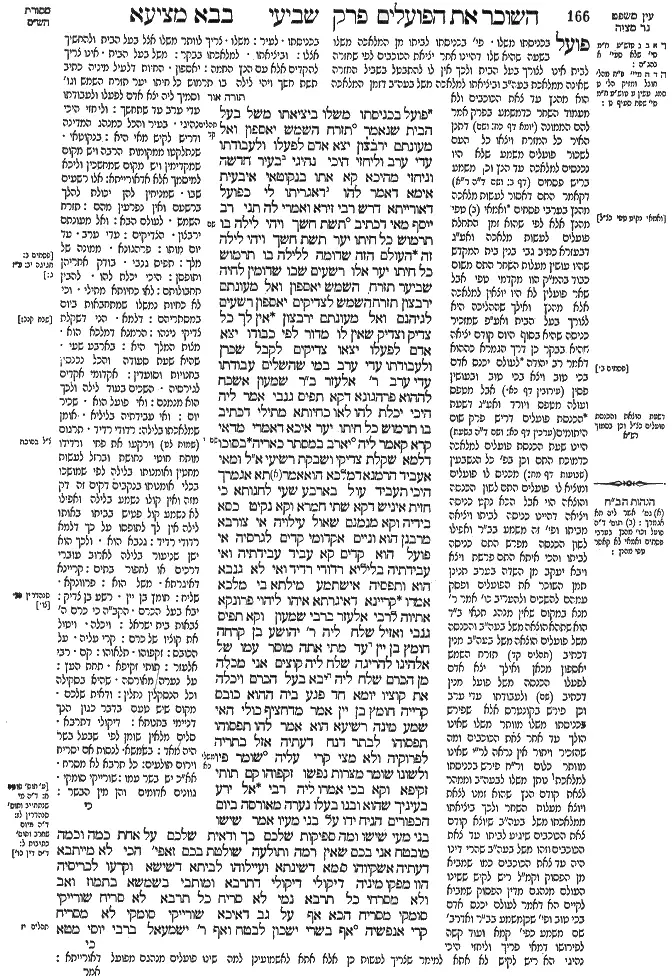
פועל בכניסתו משלו ביציאתו משל בעל הבית שנאמר (תהלים קד, כב) תזרח השמש יאספון ואל מעונתם ירבצון יצא אדם לפעלו ולעבודתו עדי ערב וליחזי היכי נהיגי בעיר חדשה וניחזי מהיכא קא אתו בנקוטאי איבעית אימא דאמר להו דאגריתו לי כפועל דאורייתא דרש רבי זירא ואמרי לה תני רב יוסף מאי דכתיב (תהלים קד, כ) תשת חשך ויהי לילה בו תרמוש כל חיתו יער תשת חשך ויהי לילה זה העולם הזה שדומה ללילה בו תרמוש כל חיתו יער אלו רשעים שבו שדומין לחיה שביער תזרח השמש יאספון ואל מעונתם ירבצון תזרח השמש לצדיקים יאספון רשעים לגיהנם ואל מעונתם ירבצון אין לך כל צדיק וצדיק שאין לו מדור לפי כבודו יצא אדם לפעלו יצאו צדיקים לקבל שכרן ולעבודתו עדי ערב במי שהשלים עבודתו עדי ערב ר' אלעזר ב"ר שמעון אשכח לההוא פרהגונא דקא תפיס גנבי אמר ליה היכי יכלת להו לאו כחיותא מתילי דכתיב בו תרמוש כל חיתו יער איכא דאמרי מהאי קרא קאמר ליה (תהלים י, ט) יארב במסתר כאריה בסוכו דלמא שקלת צדיקי ושבקת רשיעי א"ל ומאי אעביד הרמנא דמלכא הוא אמר תא אגמרך היכי תעביד עול בארבע שעי לחנותא כי חזית איניש דקא שתי חמרא וקא נקיט כסא בידיה וקא מנמנם שאול עילויה אי צורבא מרבנן הוא וניים אקדומי קדים לגרסיה אי פועל הוא קדים קא עביד עבידתיה ואי עבידתיה בליליא רדודי רדיד ואי לא גנבא הוא ותפסיה אישתמע מילתא בי מלכא אמרו קריינא דאיגרתא איהו ליהוי פרונקא אתיוה לרבי אלעזר ברבי שמעון וקא תפיס גנבי ואזיל שלח ליה ר' יהושע בן קרחה חומץ בן יין עד מתי אתה מוסר עמו של אלהינו להריגה שלח ליה קוצים אני מכלה מן הכרם שלח ליה יבא בעל הכרם ויכלה את קוציו יומא חד פגע ביה ההוא כובס קרייה חומץ בן יין אמר מדחציף כולי האי שמע מינה רשיעא הוא אמר להו תפסוהו תפסוהו לבתר דנח דעתיה אזל בתריה לפרוקיה ולא מצי קרי עליה (משלי כא, כג) שומר פיו ולשונו שומר מצרות נפשו זקפוהו קם תותי זקיפא וקא בכי אמרו ליה רבי אל ירע בעיניך שהוא ובנו בעלו נערה מאורסה ביום הכפורים הניח ידו על בני מעיו אמר שישו בני מעי שישו ומה ספיקות שלכם כך ודאית שלכם על אחת כמה וכמה מובטח אני בכם שאין רמה ותולעה שולטת בכם ואפי' הכי לא מייתבא דעתיה אשקיוהו סמא דשינתא ועיילוהו לביתא דשישא וקרעו לכריסיה הוו מפקו מיניה דיקולי דיקולי דתרבא ומותבי בשמשא בתמוז ואב ולא מסרחי כל תרבא נמי לא סריח כל תרבא לא סריח שורייקי סומקי מסריח הכא אף על גב דאיכא שורייקי סומקי לא מסריח קרי אנפשיה (תהלים טז, ט) אף בשרי ישכון לבטח ואף ר' ישמעאל ברבי יוסי מטא
Comments from Rashi on Masechet Bava Metzia Page 83b
בכניסתו . לעיר: משלו . צריך לוותר משלו אצל בעל הבית ולהחשיך אצלו: וביציאתו . למלאכתו בבוקר: משל בעל הבית . אינו צריך להקדים אלא עם הנץ החמה: יאספון . החיות דלעיל מיניה כתיב תשת חושך ויהי לילה בו תרמוש כל חיתו יער תזרח השמש וגו' וסמיך ליה יצא אדם לפעלו ולעבודתו עדי ערב עד שתחשך: וליחזי היכי נהיגי . בעיר והכל כמנהג המדינה ודריש לקיש מאי היא: בנקוטאי . שנתלקטו במקומות הרבה ויש מקום שמקדימין ויש מקום שמחשכין וליכא למיסמך אלא אדאורייתא: אלו רשעים שבו . שמניחין להן יכולת להלך ברשעם ואין נפרעין מהם: תזרח השמש . לעולם הבא: ואל מעונותם ירבצון . הצדיקים: עדי ערב . עד יום מותו: פרהגונא . ממונה של מלך: תפיס גנבי . בודק אחריהן ותופסן: היכי יכלת להו . להבין תחבולותם: לאו כחיותא מתילי . וכי לא כחיות נמשלו שמתחבאות ביום במסתריהם: דלמא . הני דשקלת צדיקי נינהו: הרמנא דמלכא הוא . מצות המלך היא: בארבע שעי . שהיא שעת סעודה והכל נכנסין בחנויות וסועדין: אקדומי אקדים לגירסיה . השכים בעוד לילה ולכך הוא מנמנם: ואי פועל הוא . שכיר יום: ואי עבידתיה בליליא . אומן שמלאכתו בלילה: רדודי רדיד . תרגום (שמות לט) וירקעו את פחי. ורדידו מותח חוטי נחושת וברזל לעשות מחטין ואומנותו בלילה לפי שמושכו בכלי אומנותו בנקבים דקים זה דק מזה ואין קולו נשמע בלילה ואפילו לא נשמע קול פטיש בביתו באותו לילה אין לך לתופסו על כך דלמא רדודי רדיד: גנבא הוא . ולכך הוא ישן שניעור בלילה לארוב עוברי דרכים או לחפור בתים: קריינא דאיגרתא . משל הוא: פרוונקא . שליח: חומץ בן יין . רשע בן צדיק: יבא בעל הכרם . הקב"ה כי כרם ה' צבאות בית ישראל: ויכלה . ויטול את קוציו של כרם: קרי עליה . על הכובס: זקפוהו . תלאוהו: קם . רבי אלעזר: תותי זקיפא . תחת העץ: על נערה מאורסה . שהיא בסקילה וכל הנסקלין נתלין: ודאית שלכם . מקום שיש טעם בדבר כגון הנך דניימי בחנותא: דיקולי דתרבא . סלים מלאים שומן לפי שבעל בשר היה מאוד: בשמשא . לנסות אם יסריח וירום תולעים: כל תרבא לא מסרח . אא"כ יש בשר עמו: שורייקי סומקי . גוונים אדומים והן מין הבשר:
Comments from Tosafot - Bava Metzia 83b
פועל בכניסתו משלו . פי' בכניסתו לביתו מן המלאכה משלו בשעה שהיא שלו דהיינו אחר יציאת הכוכבים לפי שחזרה לבית אינו לצורך בעל הבית ולכך אין לו להתבטל בשביל החזרה שאינה ממלאכת בעה"ב וביציאתו למלאכה משל בעה"ב דזמן המלאכה הוא מהנץ עד צאת הכוכבים ולא מעמוד השחר כדמשמע בפרק אמר להם הממונה (יומא דף כח: ושם) דתנן האיר כל המזרח ויצאו כל העם לשכור פועלים משמע שלא היו נכנסים למלאכה עד הנץ וכן משמע בריש פסחים (דף ב: ושם ד"ה ר"א) דקאמר התם דאסור לעשות מלאכה מהנץ בערבי פסחים ואמאי טפי מהנץ אלא לפי שהוא זמן התחלת פועלים לעשות מלאכה ואע"ג דבעזרא כתיב גבי בנין בית המקדש שהיו עושין מעלות השחר התם משום כבוד בהמ"ק הוו מקדמי טפי אבל שאר פועלין לא היו יוצאין למלאכה אלא מהנץ ואילך שההליכה היא לצורך בעל הבית ואע"פ שמזכיר כניסה שהיא בסוף היום קודם יציאה שהיא בבקר כן דרך הגמרא כההוא דאמר רב יהודה לעולם יכנס אדם בכי טוב ויצא בכי טוב ובעושין פסין (עירובין דף כא.) אבל מטפס ועולה מטפס ויורד ואע"ג דשעת הכנסת פועלים דריש פרק שום היתומים (ערכין דף כא: ושם ד"ה בשעת) היינו שעת הכנסת פועלים למלאכה כדמוכח התם וכן בפ' כל הנשבעין (שבועות דף מח:) מכניס לו פועלים ומוציא לו פועלים התם לשון הכנסה והוצאה הוי אבל הכא נקט כניסה ויציאה דהיינו כניסה לביתו ויציאה מביתו ופי' זה משמע בב"ר ואפילו לשון הכנסה מפרש התם כניסה לביתו והכי איתא התם פרשת ויצא ויבא יעקב מן השדה בערב תנינן תמן השוכר את הפועלים ופסק עמהם להשכים ולהעריב כו' אמר ר' מנא במקום שאין מנהג תנאי ב"ד הוא שתהא הוצאה משל בעה"ב והכנסה משל פועלים הוצאה משל בעה"ב מנין דכתיב (תהלים קד) תזרח השמש יאספון מכאן ואילך יצא אדם לפעלו הכנסה משל פועל מנין דכתיב (שם) ולעבודתו עדי ערב וכן פירש בקונטרס אלא שפירש בכניסתו משלו מוותר משלו שאינו הולך עד אחר צאת הכוכבים ומה שהזכיר ויתור אין נראה לר"י שאינו מוותר כלום ור"ח פירש בכניסתו למלאכתו נותן משלו לבעה"ב וממהר לצאת קודם הנץ שהוא זמנו לצאת ויוצא מעלות השחר ולכך ביציאתו ממלאכתו משל בעה"ב שיוצא קודם צאת הכוכבים שיגיע לביתו עד צאת הכוכבים וזהו משל בעה"ב שהרי דינו היה עד צאת הכוכבים כמו שמביא מן הפסוק וקמ"ל ריש לקיש ששינו העולם מנהגם מדין הפסוק שמביא לקיים הא דאמר לעולם יכנס אדם בכי טוב ופי' שכן משמע בב"ר ואדרב' שם משמע כפי' קמא ועוד קשה לפירושו דמאי פריך וליחזי היכי נהיגי הא ריש לקיש לא אתא למימר שצריך לעשות כן אלא אתא לאשמועינן למה שינו פועלים מנהגם מפועל דאורייתא:
Bava Metzia 83b - Mishnah translated into english
A laborer’s entrance into the city from the field at the end of a day’s work is at his own expense, i.e., he must work until the very end of the day before returning home, and he is not paid for his travel time. In contrast, his departure to work is at his employer’s expense, i.e., he may travel after sunrise, which is time that he is paid for. The source for this is as it is stated: “The sun rises; they slink away and couch in their dens; man goes forth to his work and to his labor until the evening” (Psalms 104:22–23). This verse indicates that people set out to work only from sunrise, but they work until the very end of the day.
The Gemara asks: But if employment practices are in accordance with regional custom, how can a source be cited from a verse? Let us see how they are accustomed to working in that place. The Gemara answers: The statement of Reish Lakish is with regard to a new city, which does not yet have an accepted practice. The Gemara asks: Even so, let us see from which city the laborers originally came, and let them follow the customs of that city. The Gemara answers: This is a case of an eclectic group of laborers, who came from many different cities. The Gemara offers an alternative answer: If you wish, say instead that the employer said to the laborer: I am hiring you as a laborer by Torah law. According to this explanation, Reish Lakish is detailing the halakha by Torah law.
With regard to the aforementioned psalm, the Gemara notes: Rabbi Zeira interpreted a verse homiletically, and some say that Rav Yosef taught in a baraita: What is the meaning of that which is written: “You make darkness and it is night, in which all the beasts of the forest creep forth” (Psalms 104:20)? “You make darkness and it is night”; this is referring to this world, which resembles nighttime. “In which all the beasts of the forest creep forth”; these are the wicked in this world, who resemble a beast of the forest, as the wicked have great influence in this world.
With regard to the World-to-Come, the verse states: “The sun rises; they slink away and couch in their dens” (Psalms 104:22). “The sun rises” for the righteous, and “they slink away,” i.e., the wicked go to Gehenna. As for the phrase: “And couch in their dens,” it is interpreted as follows: You will not have a single righteous person who will not have his own residence in the World-to-Come, as befitting his dignity. With regard to the phrase: “Man goes forth to his work,” it indicates that the righteous go forth to receive their reward. Finally, the phrase: “And to his labor until the evening” (Psalms 104:22), teaches that the verse is referring to one who has completed his labor by the evening, i.e., before the evening of his lifetime, his death.
The Gemara relates a story that involves rising early. Rabbi Elazar, son of Rabbi Shimon, found a certain officer [parhagavna] whose responsibility was to arrest thieves. He said to the officer: How are you able to arrest them? Aren’t they likened to beasts, as it is written: “You make darkness and it is night, in which all the beasts of the forest creep forth” (Psalms 104:20)? There are those who say that he said to him a proof from this verse: “He lies in wait in a secret place as a lion in his lair, he lies in wait to catch the poor; he catches the poor when he draws him up in his net” (Psalms 10:9). Since the wicked are so devious, perhaps you apprehend the righteous and leave the wicked alone?
The officer said to him: But what should I do? It is the king’s edict [harmana] that I must arrest thieves, and I am performing my job to the best of my ability. Rabbi Elazar, son of Rabbi Shimon, said to him: Come and I will instruct you how you should do it. At the fourth hour of the day enter the tavern. When you see someone drinking wine, holding his cup in his hand, and dozing, inquire about his background.
If he is a Torah scholar and is dozing, assume that he rose early in the morning for his studies. If he is a daytime laborer, assume that he rose early and performed his work. And if his work is at night and no one heard him working, it is possible that this is because he draws copper wires, which is a form of labor that does not produce noise. And if he is none of these, he is a thief, and you should arrest him, as it can be assumed that he was awake the previous night because he was stealing, and that is why he is now dozing off.
This matter of the advice of Rabbi Elazar, son of Rabbi Shimon, was heard in the king’s palace. The king’s ministers said: Let the reader of the letter be its messenger [parvanka], i.e., since Rabbi Elazar, son of Rabbi Shimon, offered this advice, he should be the one to implement it. They brought Rabbi Elazar, son of Rabbi Shimon, to the authorities who appointed him to this task, and he proceeded to arrest thieves. Rabbi Yehoshua ben Korḥa sent Rabbi Elazar, son of Rabbi Shimon, the following message: You are vinegar, son of wine, i.e., you are wicked in comparison to your father, the righteous Rabbi Shimon, just as vinegar is spoiled wine. Until when will you inform on the nation of our God to be sentenced to execution by a gentile king’s court?
Rabbi Elazar, son of Rabbi Shimon, sent a message back to him: I am merely eradicating thorns from the vineyard, i.e., I am removing the wicked from the Jewish people. Rabbi Yehoshua ben Korḥa sent back to him: Let the Owner of the vineyard, i.e., God, come and eradicate His own thorns. It is not your place to do this. The Gemara relates: One day, a certain laundryman met Rabbi Elazar, son of Rabbi Shimon, and called him vinegar, son of wine. Rabbi Elazar, son of Rabbi Shimon, said: From the fact that this man acted so insolently by vilifying a Torah scholar, one can conclude that he is a wicked person. He told the authorities: Arrest that man. They arrested him and condemned him to death.
After his mind settled, i.e., when his anger abated, Rabbi Elazar, son of Rabbi Shimon, regretted his hasty decision. He went after the laundryman in order to ransom him and save him from execution, but he was unable to do so. He read the verse about him: “Whoever keeps his mouth and his tongue, keeps his soul from troubles” (Proverbs 21:23), i.e., had the laundryman not issued his derogatory comment he would have been spared this fate. Ultimately, they hanged the laundryman. Rabbi Elazar, son of Rabbi Shimon, stood beneath the gallows and wept. Those who were present said to him: Our teacher, let it not be bad in your eyes that you caused his death, as this laundryman was a wholly wicked person; you should know that he and his son both engaged in intercourse with a betrothed young woman on Yom Kippur.
Upon hearing this, Rabbi Elazar, son of Rabbi Shimon, placed his hand upon his belly, over his innards, and said: Rejoice, my innards, rejoice! If your mere suspicions are so accurate, all the more so your certainties must be correct. If the condemnation of this man based upon the suspicions raised by his insolence proved to be correct, the identification of thieves in accordance with logical reasoning must certainly be accurate. I am assured about you, my innards, that worm and maggot will not affect you, which is a sign of a completely righteous person.
Nevertheless, his mind was not calmed. He decided to test himself. He arranged for people to give him a sedative to drink, and they brought him into a house of marble, where surgeries were performed, and cut open his belly. They removed baskets upon baskets of fat from it, placed them in the hot sun in the summer months of Tammuz and Av, and the fat did not putrefy. In this manner, Rabbi Elazar, son of Rabbi Shimon, received proof that his decisions were correct and that he was a wholly righteous individual.
The Gemara questions what the proof was: This is not sufficient proof, as all fat that is not attached to flesh does not putrefy. The Gemara answers: True, all fat not attached to flesh does not putrefy, but the red veins within the fat do putrefy. Here, by contrast, although there were red veins in the fat, they did not putrefy, which is a sign of his righteousness. Rabbi Elazar, son of Rabbi Shimon, read the verses about himself: “I have set the Lord always before me…therefore my heart is glad, and my glory rejoices; my flesh also dwells in safety” (Psalms 16:8–9).
The Gemara relates: And a similar incident also occurred to Rabbi Yishmael, son of Rabbi Yosei, i.e., he too was appointed head officer.
Traduction : The William Davidson digital edition of the Koren Noé Talmud, with commentary by Rabbi Adin Even-Israel Steinsaltz.