 Talmud Bavli
The learning on the whole site is dedicated : L'ilui Nishmat Chemouel Eliezer ben Batcheva
The learning on the whole site is dedicated : For the success of Elyahou ben H'anna & family
The learning on the whole site is dedicated : L'ilui Nishmat אסתר בת חיים
Bava Kamma 36b : Youtube
Daf TubeYoutube
2 video classes :
Bava Kamma Page 36b
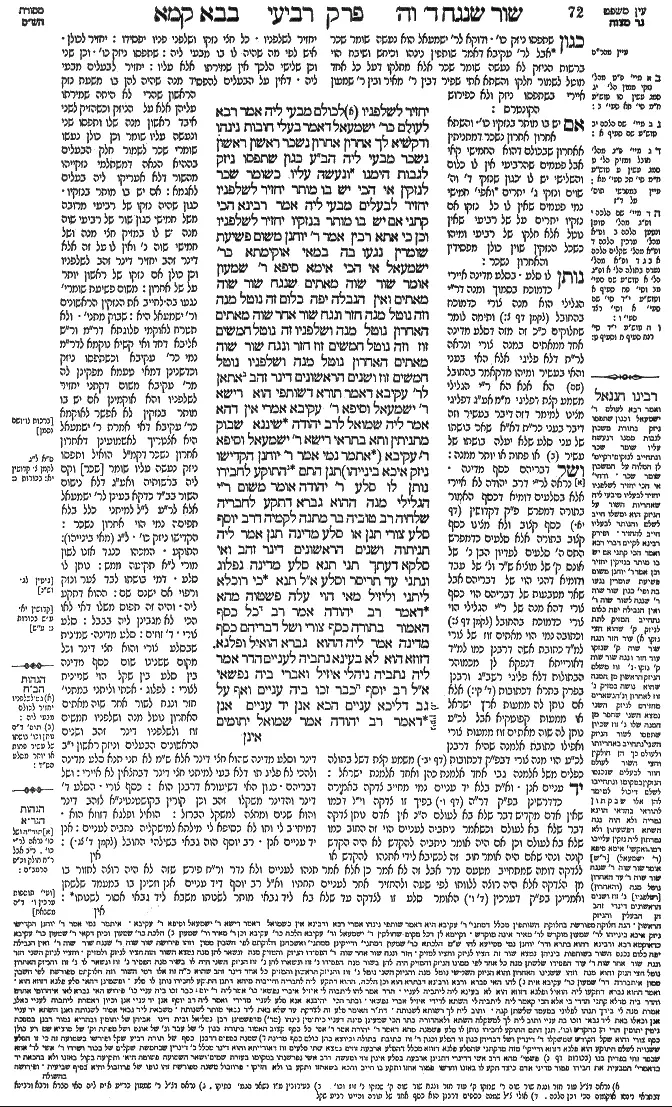
Bava Kamma 36b - Guemara
יחזיר לשלפניו לכולם מבעי ליה אמר רבא לעולם כר' ישמעאל דאמר בעלי חובות נינהו ודקשיא לך אחרון אחרון נשכר ראשון ראשון נשכר מבעי ליה הב"ע כגון שתפסו ניזק לגבות הימנו ונעשה עליו כשומר שכר לנזקין אי הכי יש בו מותר יחזיר לשלפניו יחזיר לבעלים מבעי ליה אמר רבינא הכי קתני אם יש בו מותר בנזקיו יחזיר לשלפניו וכן כי אתא רבין אמר ר' יוחנן משום פשיעת שומרין נגעו בה במאי אוקימתא כר' ישמעאל אי הכי אימא סיפא ר' שמעון אומר שור שוה מאתים שנגח שור שוה מאתים ואין הנבלה יפה כלום זה נוטל מנה וזה נוטל מנה חזר ונגח שור אחר שוה מאתים האחרון נוטל מנה ושלפניו זה נוטל חמשים זוז וזה נוטל חמשים זוז חזר ונגח שור שוה מאתים האחרון נוטל מנה ושלפניו נוטל חמשים זוז ושנים הראשונים דינר זהב אתאן לר' עקיבא דאמר תורא דשותפי הוא רישא ר' ישמעאל וסיפא ר' עקיבא אמרי אין דהא אמר ליה שמואל לרב יהודה שיננא שבוק מתניתין ותא בתראי רישא ר' ישמעאל וסיפא ר' עקיבא (אתמר נמי אמר ר' יוחנן הקדישו ניזק איכא בינייהו) תנן התם התוקע לחבירו נותן לו סלע ר' יהודה אומר משום ר"י הגלילי מנה ההוא גברא דתקע לחבריה שלחיה רב טוביה בר מתנה לקמיה דרב יוסף סלע צורי תנן או סלע מדינה תנן אמר ליה תניתוה ושנים הראשונים דינר זהב ואי סלקא דעתך תני תנא סלע מדינה נפלוג ונתני עד תריסר וסלע א"ל תנא כי רוכלא ליתני וליזיל מאי הוי עלה פשטוה מהא דאמר רב יהודה אמר רב כל כסף האמור בתורה כסף צורי ושל דבריהם כסף מדינה אמר ליה ההוא גברא הואיל ופלגא דזוזא הוא לא בעינא נתביה לעניים הדר אמר ליה נתביה ניהלי איזיל ואברי ביה נפשאי א"ל רב יוסף כבר זכו ביה עניים ואף על גב דליכא עניים הכא אנן יד עניים אנן דאמר רב יהודה אמר שמואל יתומים
Comments from Rashi on Masechet Bava Kamma Page 36b
יחזיר לשלפניו . כל חצי נזקו ושלפני פניו יפסידו: יחזיר לכולן . איש לפי מה שהיה לו בו מבעי ליה: שתפסו ניזק כו' . וכן שני וכן שלישי הלכך אין שמירתו אלא עליו: יחזיר לבעלים מבעי ליה . דאין על הבעלים להפסיד מנה שהיה להן בו משעת נזק הראשון שהרי לא היתה שמירתו עליהן אלא על הניזק וכשהזיק לשני איבד ראשון מנה שלו ותפסו שני ונעשה עליו שומר וכן כולן נעשו שומרי שכר לשמור חלק הבעלים בההיא הנאה דמשתלמי נזקייהו מהשור דלא אעריקו ליה בעלים לאגמא: אם יש בו מותר בנזקיו . כגון שהיה נזקו של רביעי מרובה משל חמישי כגון שור של רביעי שוה מנה יש לו במזיק חצי מנה ושל חמישי שוה נ' ואין לו על זה אלא דינר זהב יחזיר דינר זהב לשלפניו וכן כולם אם נזקו של ראשון יותר על של אחרון: משום פשיעת שומרי' נגעו בה . לחייב את הנזקין הראשונים ור' ישמעאל היא: שבוק מתני' . ולא תטרח לאוקמי פלוגתא דר"מ ור"ש אליבא דחד ואי קשיא נוקמא לדר"מ נמי כר' עקיבא וכשתפסו ניזק וכדשנינן דמאי טעמא מפקינן לה מר' עקיבא משום דקתני יחזיר לשלפניו והא אוקמינן אם יש בו מותר בנזקין לא אפשר לאוקמא כר' עקיבא דאי אמרת ר' ישמעאל היא אצטריך לאשמועינן דאחרון אחרון נשכר דקמ"ל הואיל ותפסו ניזק נעשה עליו שומר [שכר] וקם ליה ברשותיה ואע"ג דלא נישום השור בב"ד כדקא בעינן לר' ישמעאל אלא לר"ע ל"ל למיתני כלל בלא תפיסה נמי הוי אחרון נשכר: הקדישו ניזק כו' . ל"ג (מאי בינייהו): התוקע . המכהו כנגד אזנו לשון מורי. ל"א תקיעה ממש: נותן לו סלע . דמי בושתו לבד צער ונזק ורפוי אם ישנם שם: ההוא דתקע ליה . והיה זה תפוס משלו דאי לאו הכי לא מגבינן ליה בבבל: סלע צורי . ד' זוזים: סלע מדינה . שמינית שבסלע צורי והוא חצי דינר וכל מקום ששנינו שום כסף מדינה בין סלע בין שקל הוי שמינית לצורי: לפלוג . אכתי וליתני במתני' חזר ונגח לשור אחר שוה מאתים האחרון נוטל מנה ושלפניו חמשים זוז ולשלפניו דינר זהב ושנים הראשונים הבעלים וניזק ראשון י"ב דינר וסלע מדינה שהוא חצי דינר אלא ש"מ לא תני תנא סלע מדינה ולהכי לא פליג תו דלא בעי למיתני חצי דינר דבחצאין לא איירי: ושל דבריהם . כגון האי דשיעורא דרבנן הוא: כסף צורי . הסלע ד' דינר והדינר משקלו זהב וכן קורין בקושטנטינ"א לזהב דינר והוא שנים ומחצה למשקל הברזל: הואיל ופלגא דזוזא הוא . דמיחייב לי ותו לא כסיפא לי מילתא למישקליה נתביה לעניים: אנן יד עניים אנן . רב יוסף הוה גבאי בשילהי החובל (לקמן בבא קמא צ"ג.):
Comments from Tosafot - Bava Kamma 36b
כגון שתפסו ניזק כו' . ודוקא לר' ישמעאל הוא נעשה שומר שכר אבל לר' עקיבא דאמר שותפין נינהו וכיחש ושיבח הוי ברשות הניזק לא נעשה שומר שכר אלא מחלקו דעל כל אחד מוטל לשמור חלקו והשתא אתי שפיר דבין ר' מאיר ובין ר' שמעון איירי בשתפסו ניזק ולא כפירוש הקונטרס: אם יש בו מותר בנזקין כו' . והשתא אחרון אחרון נשכר דמתניתין אאחרון שבכולם דהוא החמישי קאי אבל פעמים שהרביעי אין לו כלום והשלישי יש לו כגון שנזקי ד' וה' שוים ונזקי ג' יתרים ואפי' חמישי נמי פעמים שאין לו כל נזקו אם נזקיו יתרים על של רביעי שאין נוטל אלא חלקו של רביעי ומיהו כשכל הנזקין שוין כולן מפסידין והאחרון נשכר: נותן לו סלע . בסלע מדינה איירי כדמוכח בסמוך ומנה דר"י הגלילי הוא מנה צורי כדמוכח בהחובל (לקמן בבא קמא דף צ:) ותימה לומר שחלוקים כ"כ זה מזה דסלע מדינה אחד ממאתים במנה צורי ונראה לר"ת דלא פליגי אלא האי בעני והאי בעשיר ומיהו מדקאמר בהחובל (שם) הא אנא הא ר"י הגלילי משמע קצת דפליגי מ"מ אע"ג דפליגי מצינו למימר דזה דיבר בעשיר וזה דיבר בעני כר"ת דא"א שאם בושתו של עני סלע שלא יעלה בושתו של עשיר או פחות או יותר ממנה: ושל דבריהם כסף מדינה . נראה לר"י דרב יהודה לא איירי אלא בסלעים דומיא דכסף האמור בתורה דמפרש פ"ק דקדושין (דף יא.) כסף קצוב ולא מצינו כסף קצוב בתורה אלא סלעים כדמפרש התם ה' סלעים לפדיון הבן ג' של אונס ק' של מוציא ש"ר ול' של עבד ודומיא דהני הוי של דבריהם אבל שאר מטבעות של דבריהם הוי כסף צורי דהא מנה של ר"י הגלילי הוי צורי כדמוכח בהחובל (לקמן בבא קמא דף צ:) וכתובה נמי הוי מאתים זוז של צורי למ"ד כתובת אשה דרבנן כמו למ"ד דאורייתא דנפקא לן מכמוהר הבתולות דלא פליגי רשב"ג ורבנן בפרק בתרא דכתובות (ד' קי:) אלא אם נותן לה ממעות ארץ ישראל או ממעות קפוטקיא אבל לכ"ע נותן לה שוה מאתים זוז ממעות צורי ואפילו כתובת אלמנה שהיא דרבנן לכ"ע הוי מנה צורי דבפ"ק דכתובות (דף יב.) משמע קצת דשל בתולה כפלים משל אלמנה גבי אחד אלמנת כהן ואחד אלמנת ישראל: יד עניים אנן . וא"ת בלא יד עניים נמי מחייב צדקה באמירה כדדרשינן בפ"ק דר"ה (דף ו.) בפיך זו צדקה וי"ל דכמו שאין אדם מקדיש דבר שלא בא לעולם ה"נ אין אדם נותן צדקה דבר שלא בא לעולם וכשאמר ניתביה לעניים הוי זה החוב כמו שלא בא לעולם וכן אם היה אומר ניתביה להקדש לא היה הקדש קונה ונהי שאם היה אומר חוב זה לכשיבא לידי אתנהו להקדש או לצדקה דומה שמתחייב מטעם נדר אבל זה לא אמר כן אלא אמר תנהו לעניים ולא נדר ור"ח פירש שזה לא היה רוצה לחזור בו מן הצדקה אלא היה רוצה ללוותו לפי שעה ולהחזיר אחר לעניים תחתיו וא"ל רב יוסף דיד עניים אנן וזכינן בו במעמד שלשתן ואמרינן בפ"ק דערכין (ד' ו.) האומר סלע זו לצדקה עד שלא בא ליד גבאי מותר לשנותו משבא ליד גבאי אסור לשנותו:
Bava Kamma 36b - Mishnah translated into english
he shall return it to the owner of the previous ox, the mishna should have ruled that the surplus shall be returned to all of them, i.e., all the prior injured parties, since they all share joint ownership of the belligerent ox.
Rava said: Actually, the mishna is in accordance with the opinion of Rabbi Yishmael, who says that all the injured parties are creditors. And as for the difficulty you pose, that instead of stating that the owner of the latest of the oxen gored in succession gains, the mishna should have stated that the owner of the earliest of the oxen gored in succession gains, that can be answered. With what are we dealing here? We are dealing with a case where the first injured party seized the ox to collect payment from it, and consequently became like a paid bailee with regard to damage it causes. Therefore, he is responsible for any subsequent attacks by the ox. Similarly, if the next injured party seizes the ox from the first as compensation, he becomes responsible for any subsequent attacks.
The Gemara asks: If so, instead of the mishna stating that if there is surplus value left in his ox after he pays that owner, he shall return it to the owner of the previous ox that was gored, it should have stated that he shall return it to its owner, since half the value of the belligerent ox belongs to its owner, who is not responsible for any later damage it causes.
Ravina said that this is what the mishna is teaching: If there is surplus value with regard to its damages, i.e., the latter injured party sustained less of a loss than the previous one, that injured party shall return this surplus value to the previous injured party.
Similarly, when Ravin came from Eretz Yisrael, he related that Rabbi Yoḥanan said: The mishna touched on this topic with regard to a bailee’s negligence.
The Gemara asks: In accordance with which opinion did you interpret the ruling in the mishna? Was it in accordance with the opinion of Rabbi Yishmael? If so, say the latter clause of the mishna: Rabbi Shimon says that the division of the compensation is as follows: With regard to an innocuous ox worth two hundred dinars that gored an ox worth two hundred dinars, thereby killing it, and the carcass is worthless, the injured party takes one hundred dinars from the proceeds of the sale of the belligerent ox, and the owner of the belligerent ox takes the remaining one hundred dinars.
If the ox, after goring the first ox but before compensation had been paid, again gored another ox worth two hundred dinars, and the carcass is worthless, the owner of the last ox that was gored takes one hundred dinars; and with regard to payment for the previous goring, the owner of this ox that was gored takes fifty dinars, which is half the remaining value of the belligerent ox after one hundred dinars were paid to the last injured party, and the owner of that belligerent ox takes the remaining fifty dinars. If the ox, after goring the first two oxen but before compensation had been paid, again gored another ox worth two hundred dinars, and the carcass is worthless, the last injured party takes one hundred dinars, the previous one takes fifty dinars, and the first two divide the remainder, each receiving one gold dinar, which is worth twenty-five silver dinars.
The Gemara continues: In the ruling of Rabbi Shimon, we arrive at the opinion of Rabbi Akiva, who says that the ox belongs to its owner and to the injured party, who are considered partners in the ownership of the ox. Is it possible that the first clause is in accordance with the opinion of Rabbi Yishmael and the latter clause is in accordance with the opinion of Rabbi Akiva?
The Sages said that yes, this is the case, as Shmuel said to Rav Yehuda: Shinnana, leave the presumption that the entire mishna follows one opinion and follow my interpretation: The first clause is in accordance with the opinion of Rabbi Yishmael and the latter clause is in accordance with the opinion of Rabbi Akiva.
It was also stated that Rabbi Yoḥanan says: The practical difference between the opinions of Rabbi Meir and Rabbi Shimon in the mishna is with regard to a case where the injured party consecrated the ox. If he is a partner in the ownership of the ox, his consecration takes effect; if he is considered merely a creditor, the consecration is ineffective. Evidently, Rabbi Yoḥanan also holds that the dispute in the mishna corresponds to the dispute between Rabbi Yishmael and Rabbi Akiva.
§ With regard to the gold dinar mentioned in the mishna, we learned in another mishna there (90a): One who slaps [hatokea] another is liable to give him a sela as a compensatory fine. Rabbi Yehuda says in the name of Rabbi Yosei HaGelili: He is liable to give him one hundred dinars.
The Gemara relates: There was a certain man who slapped another. Rav Toviya bar Mattana sent an enquiry before Rav Yosef, asking him whether the sela we learned about in the mishna is referring to a Tyrian sela, which is worth four dinars, or whether the sela we learned about in the mishna is referring to a provincial sela, worth only half of a dinar, or one-eighth of a Tyrian sela.
Rav Yosef said to him: You learned this in a mishna: And the first two divide the remainder, each receiving one gold dinar, worth twenty-five silver dinars. And if it enters your mind that the tanna teaches monetary sums using a provincial sela in order to calculate compensation, let him further divide the value that the first two litigants receive and teach a case where the belligerent ox gored an additional ox, so that their shares decrease until they reach twelve dinars and one sela apiece, which are twelve and a half dinars. The fact that he does not do so indicates that the mishna does not use a provincial sela, whose value is less than one dinar, and therefore a gold dinar cannot be divided in a manner that leaves each party with whole coins.
Rav Toviya bar Mattana said to him: This is not proof; should the tanna have continued teaching additional cases, exhausting all possibilities, like a peddler selling his wares, who advertises every item of his merchandise? The cases cited in the mishna suffice to illustrate the point.
What halakhic conclusion was reached about this matter? The Sages resolved it based on that which Rav Yehuda says that Rav says: All references to coinage mentioned in the Torah refer to Tyrian coinage, whereas all mentions of coinage in the statements of the Sages refer to provincial coinage. Therefore, a person who slaps another is fined a provincial sela, worth half of a dinar.
Following the verdict, that man who was slapped said to Rav Yosef: Since the fine is only half a dinar, I do not want it, as it is beneath me to collect such an amount. Instead, let him give it to the poor. Then he retracted his decision, and said to Rav Yosef: Let him give it to me, and I will go and sustain [ve’avri] myself with it.
Rav Yosef said to him: Since you already committed to give it to charity, the poor have already acquired it and it now belongs to them. And although there are no poor people here to acquire it, we, the court, are the hand, i.e., the legal extension, of the poor. We represent them, as Rav Yehuda says that Shmuel says: Orphans
Traduction : The William Davidson digital edition of the Koren Noé Talmud, with commentary by Rabbi Adin Even-Israel Steinsaltz.