 Talmud Bavli
Bava Kamma 24a : Youtube
Daf TubeYoutube
2 video classes :
Bava Kamma Page 24a
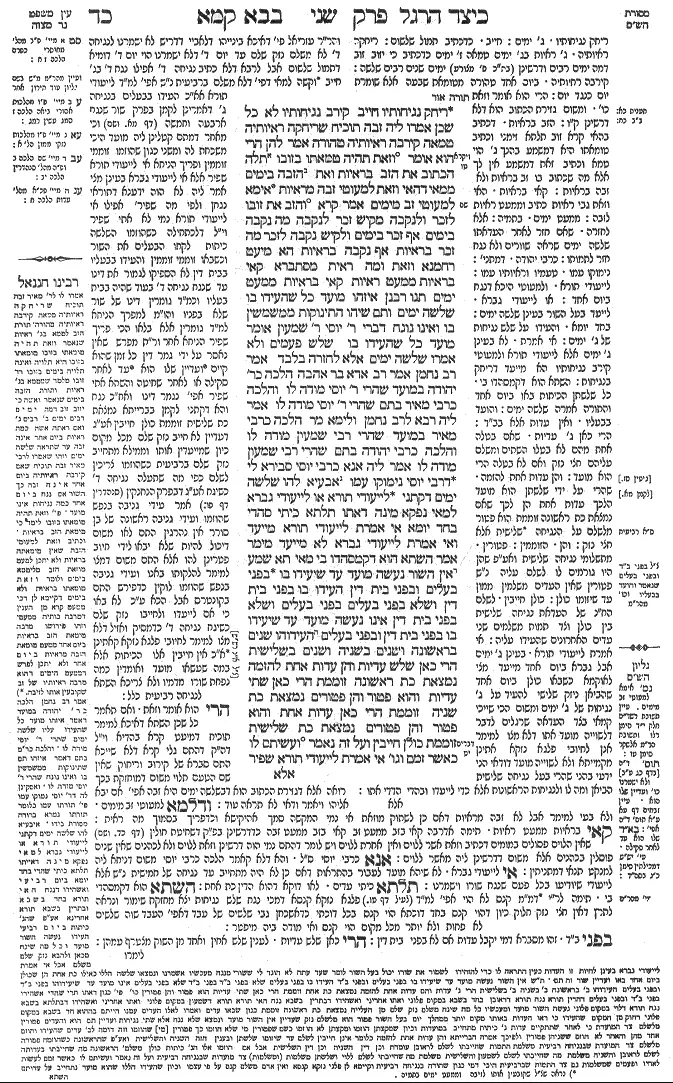
Bava Kamma 24a - Guemara
ריחק נגיחותיו חייב קירב נגיחותיו לא כל שכן אמרו ליה זבה תוכיח שריחקה ראיותיה טמאה קירבה ראיותיה טהורה אמר להן הרי הוא אומר (ויקרא טו, ג) וזאת תהיה טמאתו בזובו תלה הכתוב את הזב בראיות ואת הזבה בימים ממאי דהאי וזאת למעוטי זבה מראיות אימא למעוטי זב מימים אמר קרא (ויקרא טו, לג) והזב את זובו לזכר ולנקבה מקיש זכר לנקבה מה נקבה בימים אף זכר בימים ולקיש נקבה לזכר מה זכר בראיות אף נקבה בראיות הא מיעט רחמנא וזאת ומה ראית מסתברא קאי בראיות ממעט ראיות קאי בראיות ממעט ימים תנו רבנן איזהו מועד כל שהעידו בו שלשה ימים ותם שיהו התינוקות ממשמשין בו ואינו נוגח דברי ר' יוסי ר' שמעון אומר מועד כל שהעידו בו שלש פעמים ולא אמרו שלשה ימים אלא לחזרה בלבד אמר רב נחמן אמר רב אדא בר אהבה הלכה כר' יהודה במועד שהרי ר' יוסי מודה לו והלכה כרבי מאיר בתם שהרי ר' יוסי מודה לו אמר ליה רבא לרב נחמן ולימא מר הלכה כרבי מאיר במועד שהרי רבי שמעון מודה לו והלכה כרבי יהודה בתם שהרי רבי שמעון מודה לו אמר ליה אנא כרבי יוסי סבירא לי דרבי יוסי נימוקו עמו אבעיא להו שלשה ימים דקתני לייעודי תורא או לייעודי גברא למאי נפקא מינה דאתו תלתא כיתי סהדי בחד יומא אי אמרת לייעודי תורא מייעד ואי אמרת לייעודי גברא לא מייעד מימר אמר השתא הוא דקמסהדו בי מאי תא שמע אין השור נעשה מועד עד שיעידו בו בפני בעלים ובפני בית דין העידו בו בפני בית דין ושלא בפני בעלים בפני בעלים ושלא בפני בית דין אינו נעשה מועד עד שיעידו בו בפני בית דין ובפני בעלים העידוהו שנים בראשונה ושנים בשניה ושנים בשלישית הרי כאן שלש עדיות והן עדות אחת להזמה נמצאת כת ראשונה זוממת הרי כאן שתי עדיות והוא פטור והן פטורים נמצאת כת שניה זוממת הרי כאן עדות אחת והוא פטור והן פטורים נמצאת כת שלישית זוממת כולן חייבין ועל זה נאמר (דברים יט, יט) ועשיתם לו כאשר זמם וגו' אי אמרת לייעודי תורא שפיר
Comments from Rashi on Masechet Bava Kamma Page 24a
ריחק נגיחותיו . ג' ימים: חייב . כדכתיב תמול שלשום: ריחקה ראיותיה . ג' ראיות בג' ימים טמאה ז' ימים כדכתיב כי יזוב זוב דמה ימים רבים ודרשינן (בת"כ פ' מצורע) ימים שנים רבים שלשה: קירבה ראיותיה . ביום אחד טהורה מטומאת שבעה אלא שומרת יום כנגד יום: הרי הוא אומר וזאת כו' . ומשום גזירת הכתוב הוא דלא דרשינן ק"ו: הזב בראיות . דכתיב בהאי קרא זוב תלתא זימני וכתיב טומאתו היא דמשמע בהנך ג' הוי טמא וכתיב זאת דמשמע אין לך אלא מה שכתוב בו זב בראיות ולא זבה בראיות: קאי בראיות . האי וזאת גבי ראיות כתיב וממעט ראיות לזבה: ממעט ימים . בתמיה: אלא לחזרה . שאם חזר לאחר העדאתו שלשה ימים שראה שוורים ולא נגח חזר לתמותו: כרבי יהודה . דמתני': נימוקו עמו . טעמיו וראיותיו עמו: לייעודי תורא . ולמעוטי היכא דנגח ביום אחד: או לייעודי גברא . לייעד בעל השור בעינן שלשה ימים: בחד יומא . והעידו על שלש נגיחות של ג' ימים: אי אמרת . לא בעינן ג' ימים אלא לייעודי תורא ולמעוטי קירב נגיחותיו הא מייעד דריחק בנגיחות: השתא הוא דקמסהדו בי . כל שלשתן הכיתות באו ביום אחד והתורה אמרה שלשה ימים: והועד בבעליו . ואין עדות אלא בב"ד: הרי כאן ג' עדיות . שאם בטלה אחת מהם לא בטלו השתים ומשלם עליהם חצי נזק ואם לא בטלה הרי הוא מועד: והן עדות אחת להזמה . שהרי על ידי שלשתן הוא מועד הלכך עדות אחת הן לכך שאם נמצאת כת ראשונה זוממת הוא פטור מלשלם על הנגיחה שלישית אלא חצי נזק: והן . הזוממין: פטורין . מתשלומי נגיחה שלישית ואע"פ שהן היו גורמים לו לשלם עליה נ"ש פטורין שאין העדים משלמין ממון עד שיזומו כולן: כולן חייבין . לשלם הח"נ של העדאת נגיחה שלישית בין כולן וצד תמות משלמים שני עדים האחרונים שהעידו עליה: אי אמרת לייעוד תורא . בעינן ג' ימים אבל גברא ביום אחד מייעד מצי לאוקמא כשבאו כולן ביום אחד שהביאן ניזק שלישי להעיד על ג' נגיחות של ג' ימים ומשום הכי שייכי קמאי בצד העדאה שרגלים לדבר דלשוייה מועד אתו דלא מצו למימר אנן לחיובי פלגא נזקא אתינן מקמייתא ולא לשוייה מועד דודאי הני ידעי בהני שהרי בעל נגיחה שלישית הביאן ומה לו ולנגיחות הראשונות אלא כדי לייעדו ובהדי הדדי אתו:
Comments from Tosafot - Bava Kamma 24a
הרי הוא אומר וזאת . ואם תאמר כל שכן השתא דאיכא למימר תוכיח דמיעט קרא בהדיא וי"ל דה"ק דהתם גלי קרא דלא שייכא התם סברא של קירוב וריחוק שאין שם הטעם תלוי משום דמוחזקת בכך רואה אלא דגזירת הכתוב הוא דבשלשה ימים היא זבה אפי' אם יבא אליהו ויאמר ודאי לא תראה עוד: ודלמא למעוטי זב מימים . ולא בעי למימר אבל לא. זבה מראיות דאם כן לשתוק מוזאת אי נמי המקשה סמך אהיקישא וכדפריך בסמוך מה ראית: קאי בראיות ממעט ראיות . תימה אדרבה קאי בזב ממעט זב קאי בזב ממעט זבה כדדרשינן בפ"ק דשחיטת חולין (דף כד. ושם) ... ' שאין הלוים פסולים במומים דכתיב וזאת אשר ללוים ואין אחרת ללוים ויש לומר דהתם נמי הוה דרשינן וזאת ללוים ולא לכהנים שאין שנים פוסלין בכהנים אלא משום דדרשינן ליה מאשר ללוים: אנא כרבי יוסי ס"ל . והא דלא קאמר הלכה כרבי יוסי משום דניחא ליה למנקט תנאי דמתניתין: אי לייעודי גברא . לא שיהא מועד לעבור בהתראות דאם כן לא היה מתחייב עד נגיחה של חמישית נ"ש אלא לייעודי שיודיעו בכל פעם שנגח שורו וישמרנו: תלתא כיתי עדים . לאו דוקא דהוא הדין כת אחת: השתא הוא דקמסהדי בי . תימה לר"י דמ"מ קנס לא הוי אפי' למ"ד (לעיל בבא קמא דף טו.) פלגא נזקא קנסא דמכי נגח שלש נגיחות יצא מחזקת שימור ונראה לתרץ דאין חצי נזק חלוק כיון דהוי קנס בחד דוכתא הוי קנס בכל דוכתי כדאשכחן גבי שלשים של עבד דאפי' העבד שוה שלשים לא פחות ולא יותר מכל מקום הוי קנס ואי מודה ביה מיפטר: בפני ב"ד . זהו מסברא דמי יקבל עדות אם לא בפני בית דין: הרי כאן שלש עדיות . לענין שלש אחין ואחד מן השוק מצטרף עמהן:
Bava Kamma 24a - Mishnah translated into english
When the ox performs its gorings at intervals, its owner is liable; if it performs its gorings successively, is it not all the more so that its owner is liable? They said to Rabbi Meir: The halakha with regard to a woman who experiences a discharge of uterine blood after her menstrual period [zava] will prove that your a fortiori inference is invalid: If her sightings occur at intervals, i.e., if she sees a flow of uterine blood on three consecutive days, she becomes ritually impure; while if her sightings were consecutive, for example if all three occurred on the same day, she remains pure.
Rabbi Meir said to them: The case of the zava does not disprove my opinion, because the verse states in reference to the parallel halakha of a man who experiences a gonorrhea-like discharge [zav]: “And this shall be his ritual impurity when he has a discharge” (Leviticus 15:3). The word “this” emphasizes that in this matter the halakha requires following the instructions of the verse precisely as they were recorded, and in this case the verse associates the impurity of the zav with the number of sightings of discharges the man observed, and it associates the impurity of the zava with the number of days during which she experienced sightings of blood, as it says: “Many days” (Leviticus 15:25). By contrast, with regard to the goring ox, the a fortiori inference remains in place.
The Gemara asks about this interpretation: From where is it determined that this additional phrase: “And this,” serves to exclude a zava from having her status determined by individual sightings of blood, associating it instead with the number of days on which she experienced bleeding? Say instead that it serves to exclude the zav from having his status determined by sightings on separate days, indicating that he will be rendered a zav only if he experienced three discharges on a single day and not on separate days. The Gemara answers: The verse states elsewhere: “And one who has a discharge, whether it be a man or a woman” (Leviticus 15:33). The verse juxtaposes the ritual impurity of a male to that of a female to teach that just as the female’s ritual impurity is caused by sightings on multiple days, so too the ritual impurity of a male can be caused by sightings on multiple days.
The Gemara asks: The derivation from the verse could just as easily lead to the opposite conclusion. But let him compare the female to the male; just as a male becomes ritually impure based on the number of sightings, even if they all occur on the same day, so too should a female become ritually impure based on the number of sightings, even on the same day. The Gemara answers: But the Merciful One excluded this possibility by making use of the term “and this.”
The Gemara asks: And what did you see to make you exclude associating the ritual impurity of women with the number of sightings, rather than excluding associating the ritual impurity of men with the number of days? The Gemara answers: It stands to reason that this is so, as the context of the verse deals with sightings, and therefore an additional phrase serves to exclude sightings, but can you say that in a context where it deals with sightings it excludes days? The exclusionary term “and this” appears in the section discussing the halakhot of the zav, in the context of which it mentions sightings and not days, and therefore when it excludes something from these halakhot and limits them to specific cases, it will exclude it from being associated with sightings.
The Gemara returns to the subject of classifying an ox as innocuous or forewarned: The Sages taught in a baraita: Which type of ox is deemed forewarned? Any animal about which witnesses testified that it gored on three days is forewarned. And it reverts to its former innocuous status if children pet it and nevertheless it does not gore; this is the statement of Rabbi Yosei. Rabbi Shimon says: A forewarned ox is any ox about which witnesses testified that it gored three times, and the Sages spoke about three days only with regard to reversals, meaning that in order for an ox to revert to innocuous status, the ox must refrain from goring on three separate days. Each of these additional views on this subject combine aspects of both of the opinions mentioned in the mishna, those of Rabbi Yehuda and those of Rabbi Meir.
Rav Naḥman says that Rav Adda bar Ahava says: The halakha is in accordance with the opinion of Rabbi Yehuda concerning the criteria for deeming an animal forewarned, as Rabbi Yosei concedes to his opinion on this issue, and the halakha is in accordance with the opinion of Rabbi Meir concerning the criteria for reverting the status of an animal to innocuous, as Rabbi Yosei concedes to his opinion on that issue.
Rava said to Rav Naḥman: And let the Master say the reverse, that the halakha is in accordance with the opinion of Rabbi Meir concerning the criteria for deeming an animal forewarned, as Rabbi Shimon concedes to his opinion on this issue and the halakha is in accordance with the opinion of Rabbi Yehuda concerning the criteria for reverting the status of an ox to innocuous, as Rabbi Shimon concedes to his opinion on that issue. Rav Naḥman replied to Rava: I hold in accordance with the opinion of Rabbi Yosei, as Rabbi Yosei’s analysis [nimmuko] is with him, i.e., it is sound.
A dilemma was raised before the Sages: The three days that the mishna teaches in the context of Rabbi Yehuda’s opinion with regard to the testimony needed to assign the status of forewarned to an ox, are they needed in order to render the ox forewarned, or are they needed in order to forewarn the man who owns the ox, to inform him that he needs to take precautions to keep it from causing further harm?
The Gemara asks: What is the practical difference between the two possibilities? The Gemara answers: The practical difference is in a case where three groups of witnesses came to the court on one day, each testifying about a separate instance of goring caused by the ox on three separate days. If you say that their testimony serves to render the ox forewarned by determining that it gored on three separate days, then in this case the animal has been classified as forewarned on the basis of their testimony. But if you say that their testimony serves to forewarn the man, the ox has not been classified as forewarned on the basis of this testimony since the owner heard all of the testimony on a single day. This enables him to say: It is only now that they testified against me; and therefore his ox will not be deemed forewarned until he has been issued warnings over the course of three separate days. What, then, is the solution to the dilemma raised above?
The Gemara suggests: Come and hear a solution from a baraita (Tosefta 2:3): An ox does not become forewarned until witnesses testify against it in the presence of its owner and in the presence of a court. If they testified against it in the presence of a court but not in the presence of its owner, or in the presence of its owner but not in the presence of a court, it does not become forewarned until they testify against it in the presence of a court and in the presence of its owner.
Furthermore, if two witnesses testified against the ox concerning its first incident of goring, and two other witnesses testified against it concerning the second incident, and two other witnesses testified against it concerning the third incident, there are three separate testimonies here, but they are considered as one with regard to rendering their statements as conspiring testimony.
Therefore, if the first set of witnesses is determined to be conspiring witnesses, there are two testimonies remaining here that claim that the ox gored, and the owner must pay for half the cost of the damage in each case. But the owner of the ox is exempt from having to pay the full cost of the damage, and the conspiring witnesses are exempt from paying the owner what he would have had to pay were their testimony accepted and his ox deemed forewarned, as they testified only concerning the first incident of goring, and the ox would not have been deemed forewarned on the basis of this testimony alone. And similarly, if the second set of witnesses was also determined to be conspiring witnesses, there is one testimony remaining here that claims that the ox gored, the third. At this point too, the owner of the ox is exempt from having to pay the full cost of the damage and the conspiring witnesses are exempt from having to pay the owner the full cost of the damage.
If the third group of witnesses was also determined to be conspiring witnesses, all the witnesses become liable. The third group is liable to pay the owner of the animal the payment for half the cost of the damage they tried to make him pay for the third incident of goring, and all three groups must share in the payment of the other half of the damage for the final incident that they tried to charge him for by classifying his ox as forewarned. And concerning this it is stated: “And you shall do unto him as he had conspired to do unto his brother” (Deuteronomy 19:19).
The Gemara clarifies: If you say that the purpose of the testimony is to render the ox forewarned, the halakha presented in this baraita works out well, as according to this opinion it can be said that all of the witnesses came on the same day at the behest of the alleged victim of the third incident, and therefore they were all certainly aware of each other’s testimony. Consequently, the first set of witnesses shares in the responsibility for the testimony of the last group, as they are all co-witnesses in the effort to have the ox rendered forewarned.
Traduction : The William Davidson digital edition of the Koren Noé Talmud, with commentary by Rabbi Adin Even-Israel Steinsaltz.