 Talmud Bavli
Bava Kamma 18a : Youtube
Daf TubeYoutube
2 video classes :
Bava Kamma Page 18a
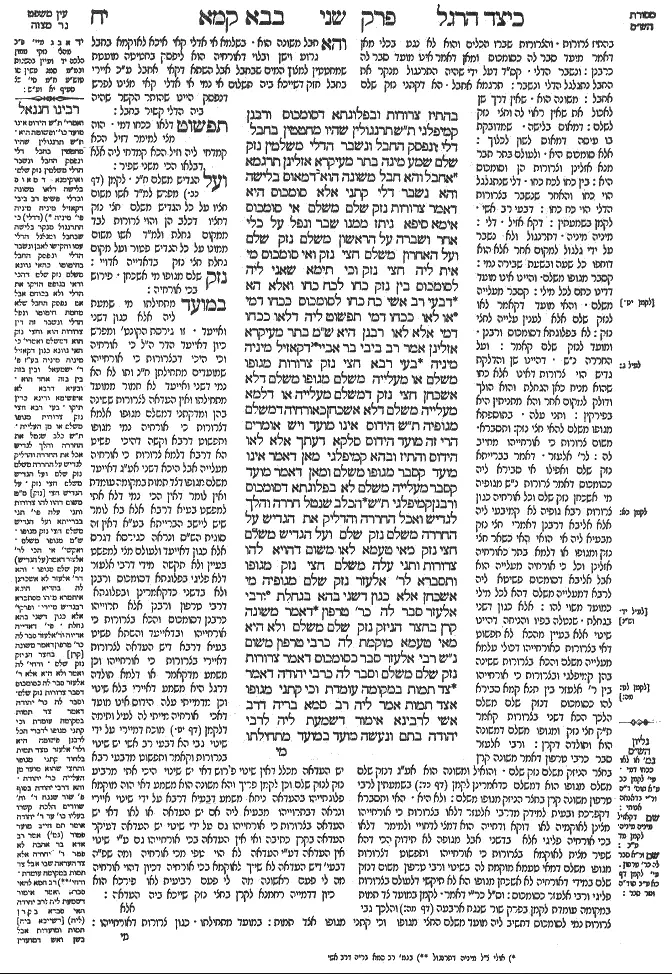
Bava Kamma 18a - Guemara
בהתיז צרורות ובפלוגתא דסומכוס ורבנן קמיפלגי ת"ש תרנגולין שהיו מחטטין בחבל דלי ונפסק החבל ונשבר הדלי משלמין נזק שלם שמע מינה בתר מעיקרא אזלינן תרגמא אחבל והא חבל משונה הוא דמאוס בלישה והא נשבר דלי קתני אלא סומכוס היא דאמר צרורות נזק שלם משלם אי סומכוס אימא סיפא ניתז ממנו שבר ונפל על כלי אחר ושברה על הראשון משלם נזק שלם ועל האחרון משלם חצי נזק ואי סומכוס מי אית ליה חצי נזק וכי תימא שאני ליה לסומכוס בין נזק כחו לכח כחו ואלא הא דבעי רב אשי כח כחו לסומכוס ככחו דמי או לאו ככחו דמי תפשוט ליה דלאו ככחו דמי אלא לאו רבנן היא ש"מ בתר מעיקרא אזלינן אמר רב ביבי בר אביי דקאזיל מיניה מיניה בעי רבא חצי נזק צרורות מגופו משלם או מעלייה משלם מגופו משלם דלא אשכחן חצי נזק דמשלם מעלייה או דלמא מעלייה משלם דלא אשכחן כאורחיה דמשלם מגופיה ת"ש הידוס אינו מועד ויש אומרים הרי זה מועד הידוס סלקא דעתך אלא לאו הידוס והתיז ובהא קמיפלגי מאן דאמר אינו מועד קסבר מגופו משלם ומאן דאמר מועד קסבר מעלייה משלם לא בפלוגתא דסומכוס ורבנן קמיפלגי ת"ש הכלב שנטל חררה והלך לגדיש ואכל החררה והדליק את הגדיש על החררה משלם נזק שלם ועל הגדיש משלם חצי נזק מאי טעמא לאו משום דהויא להו צרורות ותני עלה משלם חצי נזק מגופו ותסברא לר' אלעזר נזק שלם מגופיה מי אשכחן אלא כגון דשני בהא בגחלת ורבי אלעזר סבר לה כר' טרפון דאמר משונה קרן בחצר הניזק נזק שלם משלם ולא היא מאי טעמא מוקמת לה כרבי טרפון משום נ"ש רבי אלעזר סבר כסומכוס דאמר צרורות נזק שלם משלם וסבר לה כרבי יהודה דאמר צד תמות במקומה עומדת וכי קתני מגופו אצד תמות אמר ליה רב סמא בריה דרב אשי לרבינא אימור דשמעת ליה לרבי יהודה בתם ונעשה מועד במועד מתחילתו
Comments from Rashi on Masechet Bava Kamma Page 18a
בהתיז צרורות . והצרורות שברו הכלים והוא לא נגע בכלי מאן דאמר מועד סבר לה כסומכוס ומאן דאמר אינו מועד סבר לה כרבנן: ונשבר הדלי . קס"ד דעל ידי שהיה התרנגול מנקר את החבל נתגלגל הדלי ונשבר: תרגמא אחבל . הא דקתני נזק שלם אחבל: משונה הוא . שאין דרך שן לאכול את שאין ראוי לה וחצי נזק לשלם: דמאוס בלישה . שמדובקת בו עיסה דמאוס לשון לכלוך: אלא סומכוס היא . ולעולם בתר תבר מנא אזלינן וצרורות הן וסומכוס היא: בין כחו לכח כחו . דלי שנתגלגל הוי כחו והאחר שנשבר בצרורות הדלי הוי כח כחו: דבעי רב אשי . לקמן בשמעתין: דקא אזיל . דלי: מיניה מיניה . דתרנגול ולא נשבר על ידי גלגול למקום אחר אלא הוא דוחפו כל שעה ובשעת שבירה נמי: קסבר מגופו משלם . והיינו אינו מועד דדינו כתם לכל מילי: קסבר מעלייה משלם . והאי מועד דקאמר לאו לנזק שלם אלא לענין עלייה לחצי נזק: לא בפלוגתא דסומכוס ורבנן . ומועד לנזק שלם קאמר: ועל החררה נ"ש . דהיינו שן והדלקת גדיש הוי צרורות דאינו אלא כחו שהוא מניח כאן הגחלת והוא הולך ודולק למקום אחר והא מתניתין היא בפירקין: ותני עלה . בתוספתא מגופו משלם להאי חצי נזק: ותסברא . משום צרורות כי אורחייהו מחייב לה: לר' אלעזר . דאמר בברייתא נזק שלם ואפילו אי סבירא ליה כסומכוס דאמר צרורות נ"ש מגופיה מי אשכחן נזק שלם וכל אורחיה כגון צרורות רבא גופיה לא קמיבעי ליה אלא אליבא דרבנן דאמרי חצי נזק מבעיא ליה אי הואי האי כשאר חצי נזק ומגופו או דלמא בתר כאורחיה אזלינן וכל כי אורחיה מעלייה הוא אבל אליבא דסומכוס פשיטא ליה לרבא דמעלייה משלם דהא לכל מילי כמועד משוי להו: אלא כגון דשני בגחלת . שנטלה בפיו והניחה דהיינו שינוי אלא בעיין מהכא לא תפשוט דאי בצרורות כאורחייהו דכולי עלמא מעלייה משלם והכא בצרורות ששינה בהן קמיפלגי ובצרורות כי אורחייהו בין ר' אלעזר בין תנא קמא סבירא להו כסומכוס דנזק שלם משלם הלכך הכא דשני בצרורות קאמר ת"ק חצי נזק ומגופו משלם דמשונה הוא ותולדה דקרן: ורבי אלעזר סבר כרבי טרפון דאמר משונה קרן בחצר הניזק משלם נזק שלם. והואיל ומשונה הוא אע"ג דנזק שלם משלם מגופו הוא דמשלם כדאמרינן לקמן (בבא קמא דף כד:) בשמעתין לרבי טרפון משונה קרן בחצר הניזק מגופו משלם: ולא היא . האי ותסברא דקפרכת ובעית למידק מדרבי אלעזר דלאו בצרורות כי אורחייהו מצינן לאוקמיה לאו דוקא ודחייה הוא דמצי לדחויי ולמימר דלאו בכי אורחיה פליגי אלא בדשני אבל מגופה לא תידוק הכי דהא שפיר מצית לאוקמא בצרורות כי אורחייהו ותפשוט דצרורות מגופו משלם דמאי טעמא מוקמת לה בשינוי ורבי טרפון משום דנזק שלם במידי דאורחיה לא אשכחן מגופו הא לא תיקשי דלעולם בצרורות פליגי ורבי אלעזר כסומכוס: וס"ל כר"י דאמר . לקמן במועד צד תמות במקומה עומדת לקמן בפרק שור שנגח ארבעה (בבא קמא דף מה:) והלכך גבי צרורות נמי לסומכוס דחשיב ליה מועד משלם החצי מגופו וכי קתני מגופו אצד תמות: במועד מתחילתו . כגון צרורות דאורחייהו:
Comments from Tosafot - Bava Kamma 18a
והא חבל משונה הוא . בשלמא אי אדלי קאי איכא לאוקמא בחבל גרוע וישן ובלוי דאורחיה הוא ליפסק בחטיטה מועטת שמחטטין למצוץ המים שבחבל אבל השתא דקאי אחבל ע"כ איירי בחבל חזק דשייכא ביה תשלום אי נמי אי אדלי קאי מצינו לפרש דנפסק היינו שהותר הקשר שהיה ביה הדלי קשור בחבל: תפשוט דלאו ככחו דמי . הוה מצי למימר דזיל הכא קמדחי ליה וזיל הכא קמדחי ליה אלא דבלאו הכי משני שפיר: ועל הגדיש משלם ח"נ . לקמן (בבא קמא דף כב.) מפרש למ"ד אשו משום חציו על כל הגדיש משלם חצי נזק דחציו דכלב הן והוי צרורות לבד ממקום גחלת ולמ"ד אשו משום ממונו על כל הגדיש פטור ועל מקום גחלת חצי נזק בדאדייה אדויי: נזק שלם מגופו מי אשכחן . פירוש בכי אורחיה: במועד מתחילתו מי שמעת ליה אלא כגון דשני ואייעד . זו גירסת הקונט' ומפרש כיון דאייעד הדר ה"ל כי אורחיה וכי היכי דבצרורות כי אורחייהו שמועדים מתחילתן ח"נ ותו לא הא נמי דשני ואייעד לא חמור ממועד מתחילתו ואין העדאה לצרורות ששינה בהן ומדקתני דמשלם מגופו אלמא דצרורות כי אורחיה נמי מגופו ותפשוט דרבא וקשה דהיכי פשיט הא דרבא דלמא צרורות כי אורחיה מעלייה אבל היכא דשני אע"ג דאייעד משלם מגופו דצד תמות במקומה עומדת ואין לומר דאין הכי נמי דלא אתי למפשט בעיא דרבא אלא בא לומר שיש ליישב הברייתא בע"א דאין זה סוגית הש"ס ונראה כגירסא דגרס אלא כגון דאייעד ולעולם מצי למפשט בעיין ולא תקשה מידי דרבי אלעזר דלא פליגי בפלוגתא דסומכוס ורבנן ולא בדשני כדקאמרינן ובפלוגתא דרבי טרפון ורבנן אלא תרוייהו כרבנן דסומכוס והכא בצרורות כי אורחייהו ובדאייעד והשתא פשיט בעיא דרבא דיש העדאה לצרורות דאיירי בצרורות כי אורחייהו וכן משמע מדקאמר או דלמא תולדה דרגל היא משמע דאיירי בלא שינוי וכן מדמייתי עלה הידוס אינו מועד דאכי אורחיה מייתי לה לעיל ותימה דלקמן (בבא קמא דף יט.) מוכח דמיירי על ידי שינוי גבי הא דבעי רב אשי יש שינוי בצרורות וקאמר ותפשוט מדבעי רבא יש העדאה מכלל דאין שינוי פירוש דאי יש שינוי היכי אתי מרביע נזק לנזק שלם וכן לקמן פריך והא משונה הוא משמע דאי הוה מוקמא פלוגתייהו בהעדאה ניחא משמע דבעיא דרבא על ידי שינוי איירי ונראה דבתרוייהו מבעיא ליה אם יש העדאה או לאו דאי יש העדאה בצרורות כי אורחייהו גם על ידי שינוי יש העדאה דעיקר העדאה בקרן כתיבה ואי אין העדאה בכי אורחייהו גם ע"י שינוי אין העדאה דע"י העדאה לא הוי טפי מכי אורחיה ומה שפ"ה דבעי' דיש העדאה לא שייך לאוקמא בכי אורחיה דכיון דהוי אורחיה מה לי פעם ראשונה מה לי פעם רביעית לאו פירכא הוא כיון דדמייה רחמנא לקרן בחצי נזק שייכא ביה העדאה:
Bava Kamma 18a - Mishnah translated into english
The dispute concerns a case where the chicken propelled pebbles from underfoot as it was hopping, and it is with regard to the issue that is the subject of the dispute of Sumakhos and the Rabbis, cited earlier, that the tanna’im in the baraita disagree. One tanna holds that the owner pays the full cost of the damage for pebbles propelled by an animal in the course of its walking, and the other tanna holds that its owner pays half the cost of the damage.
The Gemara suggests: Come and hear an additional attempt to resolve the dilemma from a baraita: In a case where chickens were pecking at the rope tied to a bucket and the rope was severed and the bucket fell and broke, the owner of the chickens pays the full cost of the damage. Conclude from the baraita that we follow the initial action that ultimately led to the damage in determining liability for damage. The Gemara rejects this conclusion, and one cannot adduce proof from the baraita. Interpret instead that the reference in the baraita is to the damage caused to the rope, while the owner pays only half the cost of the damage for breaking the bucket.
The Gemara asks: But isn’t eating a rope atypical behavior for a chicken, and therefore it should be classified within the primary category of Goring, not the primary category of Eating? Why then must the owner of the chicken pay the full cost of the damage? The Gemara answers: The reference in the baraita is to a case where the rope was filthy [ma’us] with kneaded dough, and in those circumstances it is typical for a chicken to peck at it. The Gemara asks: But doesn’t the tanna teach in the baraita: And the bucket broke, indicating that the dispute is with regard to damage done to the bucket, not to the rope? The Gemara explains: Rather, this baraita is in accordance with the opinion of Sumakhos, who says: In the case of pebbles propelled by an animal, the owner pays the full cost of the damage.
The Gemara asks: If it is in accordance with the opinion of Sumakhos, say the latter clause of the baraita: If a shard was propelled from the bucket broken by a chicken and it fell upon another vessel and broke it, the owner of the chicken pays the full cost of the damage for the first vessel, and half the cost of the damage for the second one. And if the baraita is in accordance with the opinion of Sumakhos, is he of the opinion that one pays half the cost of the damage caused by pebbles?
And if you would say that there is a difference, according to Sumakhos, between damage resulting from a force generated by the animal’s action, e.g., pebbles, and damage caused by a force generated by a force generated by its action, e.g., damage caused by the shard of the bucket, and in the latter case Sumakhos concedes that the owner pays half the cost of the damage, that would result in a difficulty. The Gemara asks: But what of this dilemma raised by Rav Ashi: According to the opinion of Sumakhos, what is the halakha with regard to damage caused by a force generated by a force generated by the animal’s action? Is the status of that secondary force like that of damage caused by a force generated by its action, in which case the owner is liable, or is its status not like that of damage caused by a force generated by its action?
Why did Rav Ashi state his dilemma; why did he not resolve the dilemma and conclude that according to Sumakhos its status is not like that of damage caused by a force generated by its action? Since Rav Ashi does not resolve the dilemma based on this baraita, apparently, Sumakhos does not distinguish between the two types of force.
The Gemara suggests: Rather, is it not so that this baraita is in accordance with the opinion of the Rabbis, and conclude from the baraita that we follow the initial action that ultimately led to the damage when determining one’s liability for the damage. Therefore, an owner is liable for any damage resulting from his animal’s typical behavior, and he pays the full cost of the damage done to the bucket even if the damage took place in another location.
Rav Beivai bar Abaye said: There is no proof from the baraita, as it could be explained that the reference in the baraita is to a case where the bucket is continually propelled from the impetus of the chicken, who caused the bucket to break. That is why the ruling in the baraita is that the owner of the chicken pays the full cost of the damage. The dilemma with regard to the case where an animal treads upon a vessel that rolls away and breaks elsewhere remains unresolved.
§ Rava raises a dilemma: With regard to one’s liability to pay half the cost of the damage caused by pebbles inadvertently propelled by the foot of a walking animal, does the owner of the animal pay restitution exclusively from the body of the animal, just as one pays half the cost of the damage caused by an innocuous ox with regard to damage categorized under the primary category of Goring? Or does he pay restitution from his superior-quality land, as he does for other forms of damage? The Gemara elaborates: Does he pay restitution exclusively from the body of the animal, as we do not find any case where one pays half the cost of the damage from his superior-quality land? Or perhaps he pays restitution from his superior-quality land, as we do not find any case where an animal causes damage in its typical manner where the owner pays restitution exclusively from the body of his animal?
The Gemara suggests: Come and hear a resolution to this dilemma from a baraita: With regard to hopping, a chicken is not deemed forewarned. And some say that it is forewarned. The Gemara questions the formulation of the baraita: Does it enter your mind to raise the possibility that a chicken is not forewarned with regard to hopping? Hopping is the typical manner of movement for chickens. Rather, is it not that the reference in the baraita is to a case where the chicken was hopping and propelled pebbles that caused the damage?
And it is with regard to this matter that they disagree: The one who says that the chicken is not deemed forewarned holds that its owner pays restitution from the body of the animal, as is the halakha when an innocuous animal gores, while the one who says that the chicken is forewarned holds that he pays restitution from his superior-quality land, as is the halakha when a forewarned animal causes damage. According to this analysis, Rava’s dilemma is the subject of a tannaitic dispute.
The Gemara rejects this: No, perhaps the dispute in the baraita is with regard to the issue that is the subject of the dispute of Sumakhos and the Rabbis with regard to the legal status of damage caused by a force generated by the animal’s action. It is with regard to the similarity of damage caused by an action performed by an animal’s body to the case where the chicken was hopping and propelled pebbles that caused the damage that the tanna’im in the baraita disagree.
The Gemara suggests: Come and hear a resolution of this dilemma from a mishna (21b): If the dog took a loaf [ḥarara] that was baking on hot coals and went to a stack of grain to eat the loaf, and the dog ate the loaf and ignited the stack of grain with one of the coals attached to the loaf, the owner of the dog pays the full cost of the damage for the damage to the loaf, as it is classified in the primary category of Eating, and he pays half the cost of the damage for the damage to the stack of grain. Rabbi Elazar says: He pays the full cost of the damage for the damage to the stack of grain as well.
What is the reason that the first tanna holds that the owner pays half the cost of the damage caused to the stack of grain? Is it not due to the fact that it is analogous to propelling pebbles, as the coal fell from the loaf held in its mouth and ignited the grain? And it is taught in a baraita in that regard that when the first tanna said that he pays half the cost of the damage, he pays restitution exclusively from proceeds of the sale of the body of his animal. Apparently, half the cost of the damage caused by pebbles is paid from the body of the animal that caused the damage.
The Gemara rejects this explanation: And can you understand the baraita in that way? According to that understanding, with regard to Rabbi Elazar, who disagrees with the first tanna and holds that the owner of the dog pays the full cost of the damage caused to the grain, do we find anywhere that according to Rabbi Elazar one pays restitution exclusively from proceeds of the sale of the body of his animal?
Rather, the baraita can be explained in a case where the dog acted atypically with this coal with which he lit the stack of grain. Since the dog’s behavior was atypical, the damage is classified under the primary category of Goring, not under the category of Eating. And Rabbi Elazar holds in accordance with the opinion of Rabbi Tarfon, who says in a mishna (24b): The halakha of Goring in the courtyard of the injured party is atypical, as there, the owner of the ox pays the full cost of the damage, in contrast to half the cost of the damage that he pays when it transpires in the public domain. Nevertheless, since it was an innocuous animal that caused the damage, restitution is paid from its body.
The Gemara rejects that explanation: But that is not so. What is the reason that you interpreted that the baraita is in accordance with the opinion of Rabbi Tarfon? It is due to the difficulty presented by the halakha that he pays the full cost of the damage exclusively from proceeds of the sale of the body of the animal, which would not be so according to Rabbi Elazar.
The Gemara suggests: There is an alternative explanation. Rabbi Elazar holds in accordance with the opinion of Sumakhos, who says that one pays the full cost of the damage caused by pebbles, and he also holds in accordance with the opinion of Rabbi Yehuda, who says with regard to a forewarned ox: The aspect of innocuousness, which dictates that the owner pays half the cost of the damage from the body of the ox, remains intact. According to Rabbi Yehuda, the owner of a forewarned ox pays half the cost of the damage from the body of his ox and half the cost of the damage from his superior-quality land. And when the tanna of the baraita teaches that the owner pays restitution from the body of his animal, the reference is to the aspect of innocuousness, i.e., half the cost of the damage. He pays the other half from his superior-quality land as he would in the case of any forewarned animal.
Rav Samma, son of Rav Ashi, said to Ravina: Say that you heard that Rabbi Yehuda stated that the aspect of innocuousness remains intact with regard to damage categorized under the primary category of Goring, where the ox was initially innocuous and then became forewarned. In the case of propelled pebbles, which is a subcategory of Trampling, where the ox is forewarned from the outset,
Traduction : The William Davidson digital edition of the Koren Noé Talmud, with commentary by Rabbi Adin Even-Israel Steinsaltz.