 Talmud Bavli
Bava Kamma 12a : Youtube
Daf TubeYoutube
2 video classes :
Bava Kamma Page 12a
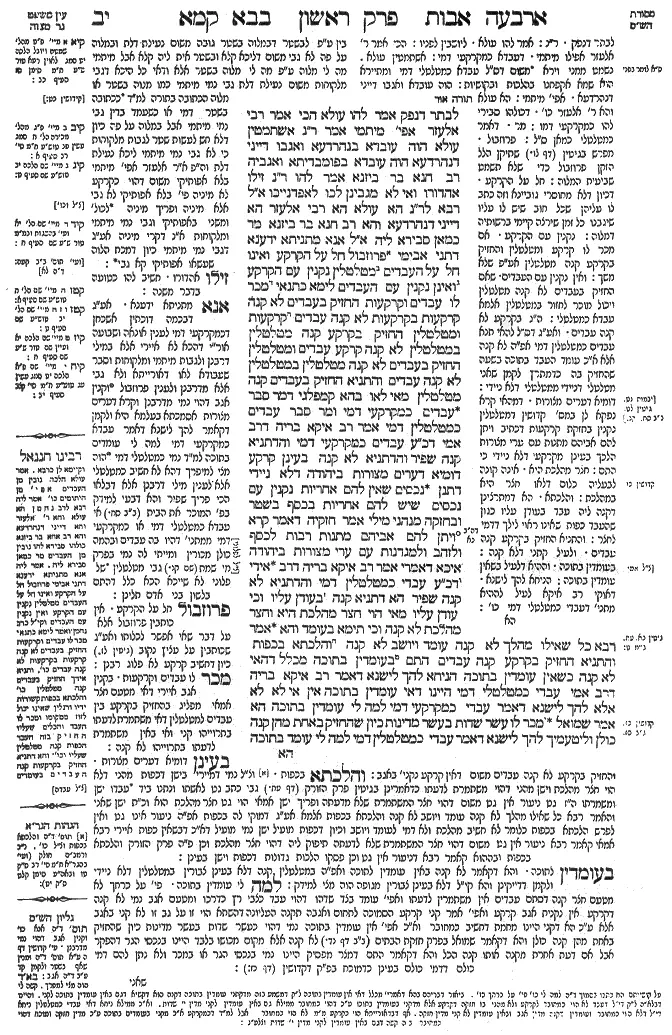
Bava Kamma 12a - Guemara
לבתר דנפק אמר להו עולא הכי אמר רבי אלעזר אפי' מיתמי אמר ר"נ אשתמטין עולא הוה עובדא בנהרדעא ואגבו דייני דנהרדעא הוה עובדא בפומבדיתא ואגביה רב חנא בר ביזנא אמר להו ר"נ זילו אהדורו ואי לא מגבינן לכו לאפדנייכו א"ל רבא לר"נ הא עולא הא רבי אלעזר הא דייני דנהרדעא והא רב חנא בר ביזנא מר כמאן סבירא ליה א"ל אנא מתניתא ידענא דתני אבימי פרוזבול חל על הקרקע ואינו חל על העבדים מטלטלין נקנין עם הקרקע ואינן נקנין עם העבדים לימא כתנאי מכר לו עבדים וקרקעות החזיק בעבדים לא קנה קרקעות בקרקעות לא קנה עבדים קרקעות ומטלטלין החזיק בקרקע קנה מטלטלין במטלטלין לא קנה קרקע עבדים ומטלטלין החזיק בעבדים לא קנה מטלטלין במטלטלין לא קנה עבדים והתניא החזיק בעבדים קנה מטלטלין מאי לאו בהא קמפלגי דמר סבר עבדים כמקרקעי דמי ומר סבר עבדים כמטלטלין דמי אמר רב איקא בריה דרב אמי דכ"ע עבדים כמקרקעי דמי והדתניא קנה שפיר והדתניא לא קנה בעינן קרקע דומיא דערים מצורות ביהודה דלא ניידי דתנן נכסים שאין להם אחריות נקנין עם נכסים שיש להם אחריות בכסף בשטר ובחזקה מנהני מילי אמר חזקיה דאמר קרא (דברי הימים ב כא, ג) ויתן להם אביהם מתנות רבות לכסף ולזהב ולמגדנות עם ערי מצורות ביהודה איכא דאמרי אמר רב איקא בריה דרב אידי דכ"ע עבדי כמטלטלין דמי והדתניא לא קנה שפיר הא דתניא קנה בעודן עליו וכי עודן עליו מאי הוי חצר מהלכת היא וחצר מהלכת לא קנה וכי תימא בעומד והא אמר רבא כל שאילו מהלך לא קנה עומד ויושב לא קנה והלכתא בכפות והתניא החזיק בקרקע קנה עבדים התם בעומדין בתוכה מכלל דהאי לא קנה כשאין עומדין בתוכה הניחא להך לישנא דאמר רב איקא בריה דרב אמי עבדי כמטלטלי דמי היינו דאי עומדין בתוכה אין אי לא לא אלא להך לישנא דאמר עבדי כמקרקעי דמי למה לי עומדין בתוכה הא אמר שמואל מכר לו עשר שדות בעשר מדינות כיון שהחזיק באחת מהן קנה כולן וליטעמיך להך לישנא דאמר עבדי כמטלטלין דמי למה לי עומד בתוכה
Comments from Rashi on Masechet Bava Kamma Page 12a
לבתר דנפק . ר"נ: אמר להו עולא ליושבין לפניו: הכי אמר ר' אלעזר אפילו מיתמי . דעבדא כמקרקעי דמי: אשתמטין עולא . נשמט ממני וירא משום דס"ל עבדא כמטלטלי דמי ומתיירא הוא שמא אקפחנו בהלכות ובקושיות: הוה עובדא ואגבו דייני דנהרדעא . אפי' מיתמי: הא עולא והא ר' אלעזר כו' . דכולהו סבירי להו כמקרקעי דמו: מר . דאמר כמטלטלי כמאן ס"ל: פרוזבול . מפרש בגיטין (דף לו.) שתיקן הלל הזקן פרוזבול כדי שלא תשמט שביעית המלוה: חל על הקרקע . דכיון דלא מחוסרי גוביינא וזה כתב לו עליהן שכל חוב שיש לו עליו שיגבנו כל זמן שירצה קיימי ברשותיה דמלוה: נקנין עם הקרקע . אם מכר לו קרקע ומטלטלין והחזיק בקרקע קנה מטלטלין אע"פ שלא משך: ואין נקנין עם העבדים . שאם החזיק בעבדים לא קנה מטלטלין ויכול מוכר לחזור במטלטלין אלמא עבדא כמטלטלי: ה"ג בקרקע לא קנה עבדים . ואע"ג דס"ל להאי תנא עבדים כמטלטלין דמי אפ"ה לא קנה אלא א"כ עומד העבד בתוכה בשעה שהחזיק בה כדמתרץ לקמן שאני מטלטלי דניידי ממטלטלי דלא ניידי: דומיא דערים מצורות . דמהאי קרא נפקא לן במס' קדושין דמטלטלין נקנין בחזקת קרקעות דכתיב ויתן להם אביהם מתנות עם ערי מצורות הלכך בעינן מקרקעי דלא ניידי כי התם: חצר מהלכת היא . אינה קונה לבעליה כלום דלאו חצר היא במהלכת: והלכתא . הא דמתרצינן דקנה ליה עבד בעודן עליו כגון שהעבד כפות שאינו ראוי לילך דדמי לחצר: והתניא החזיק בקרקע קנה עבדים . ולעיל קתני דלא קנה: בעומדין בתוכה . וההיא דלעיל בשאין עומדין בתוכה: הניחא להך לישנא . דאוקי רב איקא לעיל לההיא מתני' דעבדי כמטלטלי דמי כו':
Comments from Tosafot - Bava Kamma 12a
זילו אהדורו . חשיב להו כטועה בדבר משנה: אנא מתניתא ידענא . אע"ג דבכמה דוכתין אשכחן דכמקרקעי דמי לענין אונאה ושבועה אור"י דהכא לא איירי אלא במילי דרבנן ולגבות מיתמי ומלקוחות וסבר שעבודא לאו דאורייתא ולא גבי אלא מדרבנן ולענין פרוזבול וקנין אגב דהוי נמי מדרבנן וקרא דערים מצורות אסמכתא בעלמא היא ולקמן דקאמר להך לישנא דאמר עבדא כמקרקעי דמי למה לי עומדים בתוכה למ"ד נמי כמטלטלי דמי הוה מצי למיפרך דהא לא חשיב כמטלטלי אלא לענין מילי דרבנן אלא דבלאו הכי פריך שפיר והא דבעי למידק בפ' המוכר את הבית (ב"ב סח.) אי עבדא כמטלטלי דמי או כמקרקעי דמי ממתני' דהיו בה עבדים ובהמה כולן מכורין ומייתי לה נמי בפרק מי שמת (שם קנ.) גבי מטלטלין של פלוני לא שייכא הכא כלל דהתם בלשון בני אדם תלינן: פרוזבול חל על הקרקע . אין כותבין פרוזבול אלא על דבר שאי אפשר לכלותו ואע"ג שכותבין על עציץ נקוב (גיטין לז.) כיון דחשיב קרקע לא פלוג רבנן: מכר לו עבדים וקרקעות . בקנין אגב איירי דאי מטעם חצר אמאי מפליג בהחזיק בקרקע בין עבדים למטלטלין דאי משתמרת לדעתו בתרוייהו קני ואי באין משתמרת לדעתו בתרוייהו לא קנה: בעינן דומיא דערים מצורות . והחזיק בקרקע לא קנה עבדים משום דאין קרקע נקני' באגב: והלכתא בכפות . וצ"ל נמי דמיירי בישן דכפות מהני דלא הוי חצר מהלכת וישן מהני דהוי משתמרת לדעתו כדאמרינן בגיטין פרק הזורק (דף עח.) גבי כתב גט לאשתו ונתנו ביד. עבדו ישן ומשמרתו ה"ז גט ניעור אין גט משום דהוי חצר המשתמרת שלא מדעתה ופריך ישן אמאי הוי גט חצר מהלכת הוא וכ"ת ישן שאני והאמר רבא כל שאילו מהלך לא קנה עומד ויושב לא קנה והלכתא בכפות אלמא אע"ג דמוקי לה בכפות אפ"ה ניעור אינו גט ואין לפרש הלכתא בכפות כלומר לא חשיב מהלכת ולא דמי לעומד ויושב וכיון דכפות מועיל ישן נמי מועיל דא"כ דבשאין כפות איירי רבא אמאי קאמר רבא ניעור אין גט משום דהוי חצר המשתמרת שלא לדעתה תיפוק ליה דהוי חצר מהלכת וכן פ"ה פרק הזורק והלכתא בכפות ובההוא קאמר רבא דניעור אין גט וכן פסקו הלכות גדולות דכפות וישן בעינן: בעומדין לתוכה . והא דקאמר לא קנה באין עומדין לתוכה ואפ"ה במטלטלין קנה דלא בעינן צבורין במטלטלין דלא ניידי ולקמן דדייקינן והא קי"ל דלא בעינן צבורין מגופה הוה מצי למידק: למה לי עומדין בתוכה . פי' על כרחך לא מטעם חצר קנה דסתם עבדים אין משתמרין לדעתו ואפי' עומד בצד שדהו דהוי עבד כצבי רץ כדרכו ומטעם אגב נמי לא קנה דקרקע אין נקנית אגב קרקע ואפי' אמר קני קרקע הסמוכה לתחום ואגבה תקנה העליונה דהשתא הוי זו על גב זו לא קני באגב אלא ע"כ הא דקני היינו מחמת דחשיב כמחובר וא"כ אפי' אין עומדין בתוכה נמי דהוי כעשר שדות בעשר מדינות כיון שהחזיק באחת מהן קנה כולן והא דקאמר שמואל בפרק חזקת הבתים (ב"ב דף נד.) לא קנה אלא מקום מכושו בלבד היינו בנכסי הגר דהפקר אבל אם דעת אחרת מקנה אותו קנה הכל והא דקאמר התם דמצר מפסיק היינו נמי בנכסי הגר או במכר ולא נתן להם דמי כולם דדמי כולם בעינן כדמוכח בפ"ק דקדושין (דף כז:):
Bava Kamma 12a - Mishnah translated into english
The Gemara relates: After Rav Naḥman exited the study hall, Ulla said to the remaining Sages in the study hall: In truth, this is what Rabbi Elazar said: A slave can be collected as payment even when collecting from the debtor’s orphans. Generally, when collecting a debt from the debtor’s orphans the creditor can collect only from the land that they inherited from their father, which is liened to the debt. Rabbi Elazar rules that a creditor can also collect from the slaves they inherited, as he holds that in this regard, the legal status of slaves is like that of land. Ulla did not reveal this fact to Rav Naḥman, as he knew that Rav Naḥman disagreed and held that the legal status of slaves is like that of movable property. When he heard of Ulla’s revelation, Rav Naḥman said: Ulla evaded me, as had he told me Rabbi Elazar’s full opinion, I would have brought proofs against his opinion.
The Gemara relates: There was an incident in Neharde’a, and the judges of Neharde’a collected, on behalf of a creditor, slaves that orphans had inherited from the debtor. There was an incident in Pumbedita, and Rav Ḥana bar Bizna collected slaves from orphans as repayment for a debt. Rav Naḥman said to those judges: Go and return those slaves to the orphans, and if you do not do so, we will collect the value of the slaves from the proceeds of your own mansions in order to compensate the orphans for their loss, as you have made an elementary mistake in your ruling and therefore you are responsible to rectify it.
Rava said to Rav Naḥman: There is Ulla, there is Rabbi Elazar, there are the judges of Neharde’a, and there is Rav Ḥana bar Bizna, all of whom ruled based on the assumption that the legal status of slaves is like that of land. In accordance with whose opinion does the Master, i.e., you, Rav Naḥman, hold?
Rav Naḥman said to him: I know a baraita that supports my opinion, as Avimi teaches: A document that prevents the Sabbatical Year from abrogating an outstanding debt [prosbol] takes effect upon a debt assumed by one who owns land, but a prosbol does not take effect upon a debt assumed by one who owns slaves of the debtor. And movable property is acquired together with the land one acquires through the act of acquisition performed on the land, but movable property cannot be acquired together with the slaves that one acquires. Both halakhot assume that in these cases the legal status of slaves is not like that of land.
The Gemara suggests: Let us say that this issue is the subject of a dispute between tanna’im in the following baraitot.
One baraita teaches: If one sold slaves and land to a buyer and the buyer took possession of the slaves alone, he does not thereby acquire the land. If he took possession of the land alone, he does not thereby acquire the slaves. If one sold land and movable property to a buyer and the buyer took possession of the land alone, he thereby also acquires the movable property. If he took possession of the movable property alone, he does not thereby acquire the land. If one sold slaves and movable property to a buyer and the buyer took possession of the slaves alone, he does not thereby acquire the movable property. If he took possession of the movable property alone, he does not thereby acquire the slaves.
But isn’t it taught in another baraita: If the buyer took possession of the slaves alone, he thereby also acquires the movable property? This directly contradicts the ruling in the parallel clause of the previous baraita.
What, is it not the case that it is about this that they disagree, that one Sage, the tanna of the second baraita, holds that the legal status of slaves is like that of land, and the other Sage, the tanna of the first baraita, holds that the legal status of slaves is like that of movable property?
The Gemara rejects this: Rav Ika, son of Rav Ami, said: According to everyone, the legal status of slaves is generally like that of land, and therefore, that which is taught in the second baraita, that by taking possession of the slaves he also acquires the movable property, is properly understood. And that which is taught in the first baraita, that in such a case he does not acquire the movable property, the reason for this ruling is that the tanna of that baraita holds that in order for movable property to be acquired together with land, we require that he acquire land similar to “fortified cities in Judea” (II Chronicles 21:3), which do not move around. Slaves, even if their legal status is generally like that of land, do not fulfill this requirement.
The reason behind the need for land to be like the “fortified cities in Judea” is that the halakha that one can acquire movable property together with land is derived from this verse, as we learned in a mishna (Kiddushin 26a): Property that does not serve as a guarantee, i.e., movable property, is acquired together with property that does serve as a guarantee, i.e., land, be it through the buyer giving money to the seller, by the seller giving the buyer a bill of sale, or by the buyer performing an act of taking possession. The Gemara asks: From where is this matter derived? Ḥizkiyya said: As the verse states: “And their father gave them great gifts, of silver, and of gold, and of precious things, with fortified cities in Judea” (II Chronicles 21:3). The verse indicates that the acquisition of the movable property was done together with that of the cities of Judea.
There are those who say that Rav Ika stated a different answer: Rav Ika, son of Rav Ami, said: According to everyone, the legal status of slaves is generally like that of movable property, and therefore, that which is taught in the first baraita, that by taking possession of the slaves he does not also acquire the movable property, is properly understood. And that which is taught in the second baraita, that in such a case he acquires the movable property, applies to a case in which at the moment the slave was acquired, the movable property was still upon him, e.g., the slave was holding it, and it could therefore be acquired together with the slave. This is because one’s slave is considered like one’s courtyard, and any item that is placed within it is acquired for its owner.
The Gemara asks: But even if the movable property was still upon him, what of it? Even if one claims a slave is like a courtyard, he is a mobile courtyard, and a mobile courtyard does not acquire items placed upon it. And if you would say that the case is one where the slave is standing at the time of the transaction, that is still insufficient, as didn’t Rava say: Anything that does not acquire when moving also does not acquire when it is standing or sitting. The fact that the slave can move gives him the status of a mobile courtyard, regardless if he is currently moving or not.
The Gemara concludes: And the halakha is that where a slave is bound up and is unable to walk, his status is like that of an immobile courtyard, and his master will acquire anything that is placed upon him at that time.
The Gemara presents another contradiction to the first baraita cited above, which explicitly states that one cannot acquire slaves by taking possession of land: But isn’t it taught in another baraita: If he took possession of the land alone, he thereby also acquires the slaves?
The Gemara resolves the contradiction: There, in the baraita just cited, the case is one where the slaves are standing within the borders of the land that was acquired.
The Gemara notes: By inference, the ruling of this first baraita, which states that he does not acquire the slaves, is stated with regard to a case where they are not standing within the borders of the land that was acquired.
This works out well according to that second formulation of that which Rav Ika, son of Rav Ami, said, that the legal status of slaves is like that of movable property. This is the reason that if the slaves are standing within the borders of the land, yes, they are acquired together with the land, but if not, no, they are not acquired. The Gemara assumes that movable property is acquired together with land only if at the time of the acquisition it is placed upon the land.
But according to that first formulation of that which Rav Ika, son of Rav Ami, said, that the legal status of slaves is like that of land, why do I need the slaves to be standing within the borders of the land? As doesn’t Shmuel say: If someone sold him ten fields, located in ten different countries, once he takes possession of one of them, he has acquired all of them? If the legal status of slaves is like that of land, then the same principle should apply to them, and it should be unnecessary for them to be standing within the land’s borders.
The Gemara reconsiders: But even according to your reasoning, one can ask: According to the second formulation of that which Rav Ika, son of Rav Ami, said, that the legal status of slaves is like that of movable property, why do I need the slaves to be standing within the borders of the land?
Traduction : The William Davidson digital edition of the Koren Noé Talmud, with commentary by Rabbi Adin Even-Israel Steinsaltz.
Bava Kamma 12a : Significance
Next step
Finished studying Bava Kamma 12a? Carry on with the rest of the tractate.
Study Bava Kamma 12bFrequently asked questions: Bava Kamma 12a
Where is Bava Kamma 12a in tractate Bava Kamma?
Bava Kamma 12a is page 21 of 236 in tractate Bava Kamma (Seder Nezikin).
When is daf 12 of Bava Kamma studied in Daf Yomi?
Daf Yomi covers one daf a day, both sides. Daf 12 of Bava Kamma will be studied on April 17, 2031.
Is there a video class on Bava Kamma 12a?
Yes, by Daf Tube, Rabbi Dr. Moshe Weisblum. These classes were published on YouTube by their authors and are gathered on this site.
What is tractate Bava Kamma about?
The Masechet Baba Kama is the first tractate of the Seder Nezikin. The Baba Kama gemara is the study of laws relating to the general aspects and specific orders of tort liability without criminal intent. As well as criminal damage, whether it be theft, violence or burglary The Baba Kama tractate is a gemara which contains 10 chapters.
Your study is also dedicated to them
- L'ilui Nishmat רינה בת לדיסיה
- L'ilui Nishmat Nissim ben Barukh Malka
- L'ilui Nishmat Avraham Ben Simha