 Talmud Bavli
Bava Kamma 55a : Youtube
Daf TubeYoutube
2 video classes :
Bava Kamma Page 55a
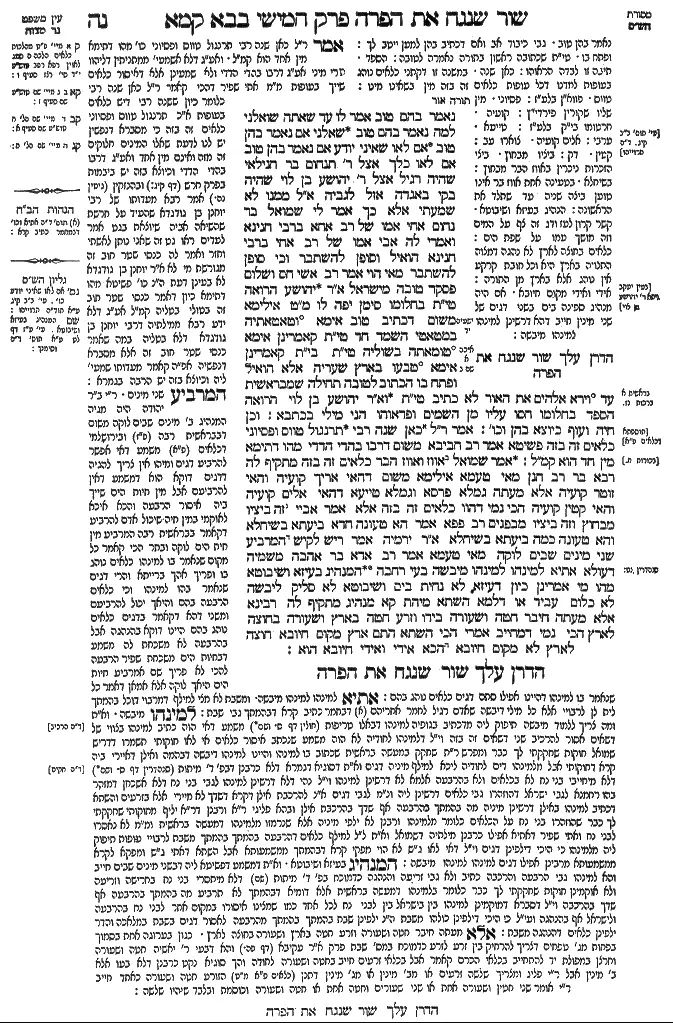
Bava Kamma 55a - Guemara
נאמר בהם טוב אמר לו עד שאתה שואלני למה נאמר בהם טוב שאלני אם נאמר בהן טוב אם לאו שאיני יודע אם נאמר בהן טוב אם לאו כלך אצל ר' תנחום בר חנילאי שהיה רגיל אצל ר' יהושע בן לוי שהיה בקי באגדה אזל לגביה א"ל ממנו לא שמעתי אלא כך אמר לי שמואל בר נחום אחי אמו של רב אחא ברבי חנינא ואמרי לה אבי אמו של רב אחי ברבי חנינא הואיל וסופן להשתבר וכי סופן להשתבר מאי הוי אמר רב אשי חס ושלום פסקה טובה מישראל א"ר יהושע הרואה טי"ת בחלומו סימן יפה לו מ"ט אילימא משום דכתיב טוב אימא (ישעיהו יד, כג) וטאטאתיה במטאטי השמד חד טי"ת קאמרינן אימא (איכה א, ט) טומאתה בשוליה טי"ת בי"ת קאמרינן אימא (איכה ב, ט) טבעו בארץ שעריה אלא הואיל ופתח בו הכתוב לטובה תחילה שמבראשית עד (בראשית א, ד) וירא אלהים את האור לא כתיב טי"ת וא"ר יהושע בן לוי הרואה הספד בחלומו חסו עליו מן השמים ופדאוהו הני מילי בכתבא:
וכן חיה ועוף כיוצא בהן וכו':
אמר ר"ל כאן שנה רבי תרנגול טווס ופסיוני כלאים זה בזה פשיטא אמר רב חביבא משום דרבו בהדי הדדי מהו דתימא מין חד הוא קמ"ל:
אמר שמואל אווז ואווז הבר כלאים זה בזה מתקיף לה רבא בר רב חנן מאי טעמא אילימא משום דהאי אריך קועיה והאי זוטר קועיה אלא מעתה גמלא פרסא וגמלא טייעא דהאי אלים קועיה והאי קטין קועיה הכי נמי דהוו כלאים זה בזה אלא אמר אביי זה ביציו מבחוץ וזה ביציו מבפנים רב פפא אמר הא טעונה חדא ביעתא בשיחלא והא טעונה כמה ביעתא בשיחלא א"ר ירמיה אמר ריש לקיש המרביע שני מינים שבים לוקה מאי טעמא אמר רב אדא בר אהבה משמיה דעולא אתיא למינהו למינהו מיבשה בעי רחבה המנהיג בעיזא ושיבוטא מהו מי אמרינן כיון דעיזא לא נחית בים ושיבוטא לא סליק ליבשה לא כלום עביד או דלמא השתא מיהת קא מנהיג מתקיף לה רבינא אלא מעתה חיבר חטה ושעורה בידו וזרע חטה בארץ ושעורה בחוצה לארץ הכי נמי דמחייב אמרי הכי השתא התם ארץ מקום חיובא חוצה לארץ לא מקום חיובא הכא אידי ואידי חיובא הוא:
הדרן עלך שור שנגח את הפרה
Comments from Rashi on Masechet Bava Kamma Page 55a
נאמר בהן טוב . גבי כיבוד אב ואם דכתיב בהן למען ייטב לך: ופתח בו . טי"ת שכתובה ראשון בתורה נאמרה לטובה: הספד . תיבה זו לבדה הראוהו: כאן שנה . במשנה זו דקתני כלאים נוהג בעופות למדנו דכל עופות כלאים זה בזה מין בשאינו מינו: טווס . פווא"ן בלע"ז: פסיוני . מין שליו שקורין פירדי"ץ: קועיה . חרטומו בי"ק בלע"ז: טייעא . ערבי: אלים קועיה . צוארו עב: קטין . דק: ביציו מבחוץ . ביצי הזכרות ניכרין באווז הבר מבחוץ: בשיחלא . בטעינה אחת אווז בר אינו טוען ביצה שניה עד שתלד את הראשונה: הנהיג בעיזא ושיבוטא . קשר קרון לעז ודג זה צף על המים וזה מושך עמו על שפת הים: אידי ואידי מקום חיובא . אם היה מנהיג ספינה בים בשני דגים של שני מינין חייב דהא דרשינן למינהו למינהו מיבשה:
Comments from Tosafot - Bava Kamma 55a
אמר ר"ל כאן שנה רבי תרנגול טווס ופסיוני כו' מהו דתימא מין אחד הוא קמ"ל . ואע"ג דלא אשמעי' ממתניתין דליהוו תרי מיני אע"ג דרבו בהדי הדדי ולא שמעינן אלא דאיסור כלאים שייך בעופות מ"מ אתי שפיר דהכי קאמר ר"ל כאן שנה רבי כלומר כיון ששנה רבי דיש כלאים בעופות א"כ תרנגול טווס ופסיוני כלאים זה בזה כי מסברא דנפשין יש לנו לדעת שאלו המינים חלוקים זה מזה ואינם מין אחד ואע"ג דרבו בהדי הדדי וכיוצא בזה יש ביבמות בפרק חרש (דף קיג:) ובהנזקין (גיטין נה.) אמר רבא מעדותו של רבי יוחנן בן גודגדא שהעיד על חרשת שהשיאה אביה שיוצאת בגט אמר לעדים ראו גט זה שאני נותן לאשתי וחזר ואמר לה כנסי שטר חוב זה מגורשת מי לא א"ר יוחנן בן גודגדא לא בעינן דעת ה"נ כו' פשיטא מהו דתימא כיון דאמר כנסי שטר חוב זה בטולי בטליה קמ"ל אע"ג דלא ידע רבא ממילתיה דרבי יוחנן בן גודגדא דלא בטליה במה שאמר כנסי שטר חוב זה אלא מסברא דנפשיה אפ"ה קאמר מעדותו שמעי' ליה וכיוצא בזה יש הרבה בגמרא: המרביע שני מינים . ר"י ב"ר יהודה היה מגיה המנהיג ב' מינים שבים לוקה משום דבבראשית רבה (פ"ז) ובירושלמי דכלאים (פ"א) משמע דאי אפשר להרביע דגים ומיהו אין צריך להגיה דדגים דוקא הוא דמשמע דאין להרביעם אבל מין חיות הים שייך ביה איסור הרבעה והכא איכא לאוקמי במין חיה שיכול אדם להרביע דקאמר בבראשית רבה המרביע מין חית הים לוקה ובתר הכי קאמר כל מקום שנאמר בו למינהו כלאים נוהג בו ופריך אהך ברייתא והרי דגים שנאמר בהו למינהו וכי כלאים הרבעה בהם והיאך יכול להרביעם ומשני דהא דקאמר בדגים כלאים נוהג בהם היינו דוקא בהנהגה אבל בהרבעה לא משכחת לה משמע דבחיות הים משכחת שפיר הרבעה להכי לא פריך שם אמרביע חיות הים היאך לוקה אלא אמאן דאמר כל שנאמר בו למינהו דהיינו אפילו סתם דגים כלאים נוהג בהם: אתיא למינהו למינהו מיבשה . ומשבת לא מצי למילף דמרבוי דוכל בהמתך לית לן לרבויי אלא כל מילי דיבשה שאדם רגיל לחמר אחריהם דבחמר כתיב קרא דבהמתך גבי שבת: למינהו מיבשה . וא"ת ומה צריך ללמוד מיבשה תיפוק ליה מדכתיב בגופיה למינהו דבאלו טריפות (חולין דף ס. ושם) משמע דאי הוה כתיב למינהו בצווי של דשאים אסור להרכיב שני דשאים זה בזה וי"ל דלמינהו לחודיה לא הוה משמע שנכתב איסור כלאים אי לאו חוקותי תשמרו דדריש שמואל חוקות שחקקתי לך כבר ומפרש ר"ת שחקק במעשה בראשית שכתוב בו למינהו והיינו למינהו דיבשה דבהמה ואילן דאיירי ביה קרא דחוקותי אבל מלמינהו דים לחודיה ליכא למילף מיניה דגים וא"ת דסוגיא דגמרא דלא כרבנן דבפ' ד' מיתות (סנהדרין דף ס. ושם) דלא מיחייבי בני נח לא בכלאים ולא בהרבעה אלמא לא דרשינן למינהו וי"ל נהי דלא דרשינן למינהו לגבי בני נח דלא אשכחן דמזהר בהו רחמנא לגבי ישראל דהוזהרו גבי כלאים דרשינן ליה ונ"מ לגבי דגים א"נ להרכבת אילן דקרא דשדך לא מיירי אלא בזרעים והשתא דכתיב למינהו באילן דרשינן מיניה מה בהמתך בהרבעה אף שדך בהרכבת אילן ובהא פליגי ר"א ורבנן דר"א יליף מחוקותי שחקקתי לך כבר שהוזהרו בני נח על הכלאים כלומר מלמינהו ורבנן לא ילפי מיניה אלא שנרמזו מלמינהו דמעשה בראשית ומ"מ לא נאסרו לבני נח ואתי שפיר דאתיא אפילו כרבנן מילתיה דשמואל וא"ת ל"ל למילף כלאים דהרבעה בהמתך בהמתך משבת לרבויי עופות תיפוק ליה מלמינהו כי היכי דילפינן דגים וי"ל דאי לאו ג"ש לא הוי מפקי קרא דבהמתך ממשמעותא אבל השתא דאתי ג"ש ומפקא לקרא ממשמעותא מרבינן אפילו דגים למינהו למינהו מיבשה: המנהיג בעיזא ושיבוטא . וא"ת דמשמע דפשיטא ליה דבשני מינים שבים חייב והא למינהו גבי הרבעה והרכבה כתיב ולא גבי זריעה והנהגה כדמוכח בפ' ד' מיתות (שם) דלא מיתסרי בני נח בחרישה וזריעה ולא אוקמינן חוקות שחקקתי לך כבר כלומר בלמינהו דמעשה בראשית אלא דומיא דבהמתך לא תרביע מה בהמתך בהרבעה אף שדך בהרכבה וי"ל דסברא דמוקמינן למינהו בין בישראל בין לבני נח לכל אחד כמו שמצינו איסורו במקום אחר לבני נח בהרבעה ולישראל אף בהנהגה ועי"ל כי היכי דילפינן כולהו משבת ה"נ ילפינן שבת בהמתך בהמתך מהרבעה לאסור דגים בשבת במלאכה והדר ילפינן כלאים דהנהגה משבת: אלא מעתה חיבר חטה ושעורה וזרע חטה בארץ ושעורה בחוצה לארץ . כגון בערוגה אחת בסמוך בפחות מג' טפחים דצריך להרחיק בין זרע לזרע כדמוכח במס' שבת פרק א"ר עקיבא (דף פה.) והא דבעי ר' יאשיה חטה ושעורה וחרצן במפולת יד להתחייב בכלאי הכרם קאמר אבל בכלאי זרעים חייב בחטה ושעורה לחודה והך סוגיא נקט כרבנן דלא בעו אלא ב' מינין אבל ר"י פליג ומצריך שלשה זרעים או מב' מינין או מג' מינין דתנן (כלאים פ"א מ"ט) הזורע חטה ושעורה כאחד חייב ר"י אומר שני חטין ושעורה אחת או שני שעורים וחטה אחת או חטה ושעורה וכוסמת ובלבד שיהיו שלשה:
Bava Kamma 55a - Mishnah translated into english
in the context of the mitzva to honor one’s parents, the word good is stated there: “In order that it shall be good for you” (Deuteronomy 5:16)? Rabbi Ḥiyya bar Abba said to him: Before you ask me why the word good is stated, ask me if the word good is actually stated there or not, since I am not sufficiently proficient in my knowledge of the biblical verses to remember the precise wording, and I do not know if the word good is stated there or not. Go to Rabbi Tanḥum bar Ḥanilai, who was commonly found at the academy of Rabbi Yehoshua ben Levi, who was an expert in aggada. Perhaps he heard something from him on this matter and can answer your question.
Rabbi Ḥanina ben Agil went to him and asked him. Rabbi Tanḥum said to him: I did not hear anything on this matter from Rabbi Yehoshua ben Levi himself. But this is what Shmuel bar Naḥum, the brother of the mother of Rav Aḥa, son of Rabbi Ḥanina, said to me, and some say it was the father of the mother of Rav Aḥai, son of Rabbi Ḥanina: It does not mention the word good in the first tablets, since they were ultimately destined to be broken after the Jews made the Golden Calf.
The Gemara asks: And even if it had mentioned the term good, and they were ultimately destined to break, what of it? Rav Ashi said: If this term had been mentioned in the first tablets, all good would have, God forbid, ceased from Israel once they were broken. Therefore, only the second version, which was written after the breaking of the tablets, contains the word good, so that there would always be good for the Jewish people.
Rabbi Yehoshua says: If one sees the letter tet in his dream, it is a good sign for him. The Gemara asks: What is the reason? If we say that it is because the word good [tov] is written in the Torah and begins with the letter tet, then one could say instead that it is an allusion to the verse: “And I will sweep it with the broom [vetetetiha bemate’ateh] of destruction” (Isaiah 14:23), which also contains the letter tet several times but is referring to punishment. The Gemara answers: We mean that when someone sees one tet in his dream, it is a good sign, but this latter verse contains several.
The Gemara asks: This latter statement is problematic, as even according to this explanation, one can say that a single letter tet alludes to the verse: “Her filthiness [tumatah] is in her skirts” (Lamentations 1:9), which begins with the letter tet. The Gemara answers: We mean that when one sees the letter tet together with the letter bet in his dream, it is a good sign for him, as the word tov is written with both. The Gemara asks further: According to this, say that it alludes to the verse: “Her gates are sunk [tave’u] into the ground” (Lamentations 2:9), which begins with the letter tet followed by the letter bet.
Rather, it is not merely because it is the first letter of the word good [tov] that it is considered a good omen. Since the Torah initially introduces the letter tet in a context of good, with the word good [tov] itself, it is a good omen. As from the word bereshit, the first word in the Torah, until the verse: “And God saw that the light was good [tov]” (Genesis 1:4), the letter tet is not written anywhere.
And Rabbi Yehoshua ben Levi says: If one sees a eulogy [hesped] in his dream, it is an allusion that in Heaven they had pity [ḥasu] on him and saved him [peda’uhu] from actually being eulogized. The Gemara notes: This statement applies specifically when he actually saw the word: Eulogy [hesped], in writing.
§ The mishna teaches: And similarly, undomesticated animals and birds are subject to the same halakhot as domesticated animals. Reish Lakish says: Here Rabbi Yehuda HaNasi taught a ruling from the Tosefta that illustrates the statement that birds and undomesticated animals are also subject to the prohibition of diverse kinds: A cock, a peacock [tavvas], and a pheasant [ufasyonei] are diverse kinds with respect to each other, since this halakha applies to birds as well.
The Gemara asks: Isn’t this obvious; what novelty is stated here? Rav Ḥaviva said: The novelty here is because they are reared together. Lest you say: Since they are reared together, they are essentially one species, and not considered diverse kinds. Therefore, it teaches us that they are actually separate species, and the halakhot of diverse kinds do apply to them.
Following the discussion of the prohibition of diverse kinds as it relates to birds, Shmuel says: The domestic goose and the wild goose are diverse kinds with respect to each other and are not one species. Rava bar Rav Ḥanan objects to this: What is the reason? If we say it is because the beak of this one is long and the beak of that one is short, if that is so, then with regard to a Persian camel and an Arabian camel, where the neck of this one is thick and the neck of that one is thin, they should indeed be considered diverse kinds with respect to one another. Clearly, though, the camels are in fact two variants of a single species.
Rather, Abaye says: That is not the reason, but rather another difference exists between the domestic goose and the wild goose, concerning the male: With regard to this type, i.e., the wild goose, its testicles are visible from the outside, and with regard to that one, i.e., the domestic goose, its testicles are inside. Rav Pappa said that another difference exists between them, concerning the female: This one, i.e., the wild goose, releases only one egg in its ovary and later releases another, and that one, i.e., the domestic goose, releases several eggs at once in its ovary. Consequently, they are not considered to be the same species.
In connection with the prohibition of diverse kinds, Rabbi Yirmeya says that Reish Lakish says: One who crossbreeds two species of creatures that live in the sea is flogged for transgressing the prohibition of crossbreeding diverse kinds. The Gemara asks: What is the reason, i.e., where is there an allusion to this in the Torah? Rav Adda bar Ahava said in the name of Ulla: It is derived from a verbal analogy between the term: “According to its species [leminehu]” (Genesis 1:21), referring to animals living on dry land, and the same term: “According to its species [leminehu]” (Genesis 1:25), referring to sea creatures. In the same way that the former may not be crossbred, similarly, the latter may not be crossbred.
The Sage Raḥava raises a dilemma: With regard to one who drives a wagon on the seashore with a goat and a shibbuta, a certain species of fish, together, pulled by the goat on land and the fish at sea, what is the halakha? Has he violated the prohibition against performing labor with diverse kinds, in the same way that one does when plowing with an ox and a donkey together, or not? The two sides of the question are as follows: Do we say that since the goat does not descend into the sea and the shibbuta does not ascend onto the land, they are not working together at all, and so he has not done anything forbidden? Or perhaps, since in any event, he is now driving the wagon with both of them, he thereby transgresses the prohibition?
Ravina objects to this: But if that is so that one is liable, then if a person joined wheat and barley together in his hand and sowed the wheat in Eretz Yisrael and the barley outside of Eretz Yisrael, where the prohibition of diverse kinds does not apply to seeds, so too he should be liable. Clearly, however, they are two distinct regions, and the seeds are not considered to be mixed together.
The Sages said in response to this objection: How can these cases be compared? There, in the case of planting diverse kinds of seeds, it is specifically Eretz Yisrael that is the location subject to this obligation, whereas outside of Eretz Yisrael is not a location subject to this obligation. Here, by contrast, in the case of the person driving a wagon, both this location, i.e., the land, and that location, i.e., the sea, are locations subject to this obligation. Consequently, if one works together two different species either on the land or in the sea, he is liable. Therefore, the question is a valid one.
Traduction : The William Davidson digital edition of the Koren Noé Talmud, with commentary by Rabbi Adin Even-Israel Steinsaltz.