 Talmud Bavli
Bava Kamma 110a : Youtube
Daf TubeYoutube
2 video classes :
Bava Kamma Page 110a
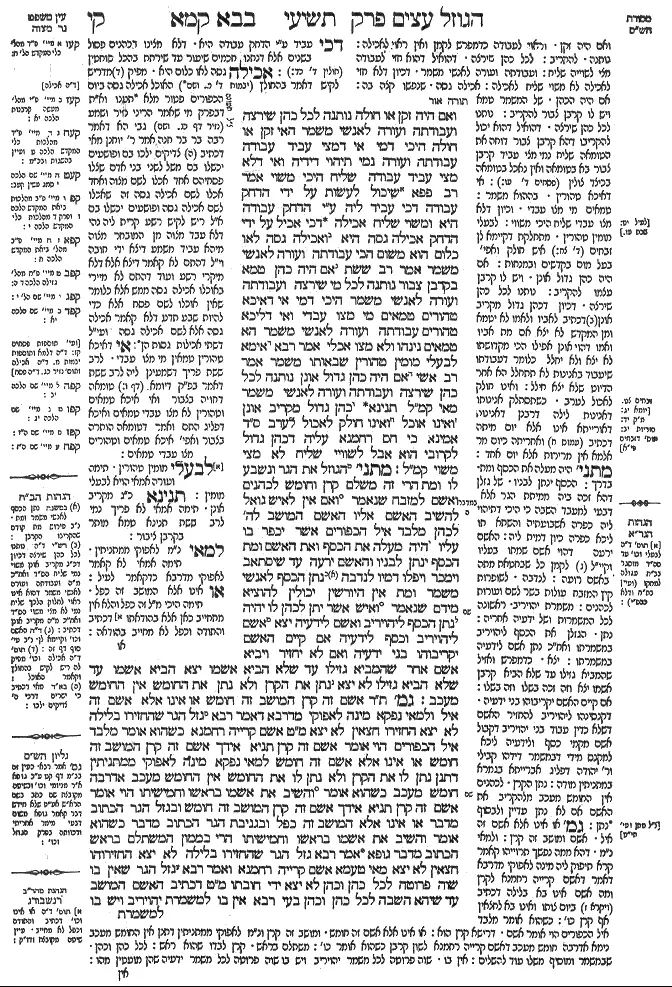
Bava Kamma 110a - Guemara
ואם היה זקן או חולה נותנה לכל כהן שירצה ועבודתה ועורה לאנשי משמר האי זקן או חולה היכי דמי אי דמצי עביד עבודה עבודתה ועורה נמי תיהוי דידיה ואי דלא מצי עביד עבודה שליח היכי משוי אמר רב פפא שיכול לעשות על ידי הדחק עבודה דכי עביד ליה ע"י הדחק עבודה היא ומשוי שליח אכילה דכי אכיל על ידי הדחק אכילה גסה היא ואכילה גסה לאו כלום הוא משום הכי עבודתה ועורה לאנשי משמר אמר רב ששת אם היה כהן טמא בקרבן צבור נותנה לכל מי שירצה ועבודתה ועורה לאנשי משמר היכי דמי אי דאיכא טהורים טמאים מי מצו עבדי ואי דליכא טהורים עבודתה ועורה לאנשי משמר הא טמאים נינהו ולא מצו אכלי אמר רבא אימא לבעלי מומין טהורין שבאותו משמר אמר רב אשי אם היה כהן גדול אונן נותנה לכל כהן שירצה ועבודתה ועורה לאנשי משמר מאי קמ"ל תנינא כהן גדול מקריב אונן ואינו אוכל ואינו חולק לאכול לערב ס"ד אמינא כי חס רחמנא עליה דכהן גדול לקרובי הוא אבל לשוויי שליח לא מצי משוי קמ"ל:
מתני׳ הגוזל את הגר ונשבע לו ומת הרי זה משלם קרן וחומש לכהנים ואשם למזבח שנאמר (במדבר ה, ח) ואם אין לאיש גואל להשיב האשם אליו האשם המושב לה' לכהן מלבד איל הכפורים אשר יכפר בו עליו היה מעלה את הכסף ואת האשם ומת הכסף ינתן לבניו והאשם ירעה עד שיסתאב וימכר ויפלו דמיו לנדבה נתן הכסף לאנשי משמר ומת אין היורשין יכולין להוציא מידם שנאמר (במדבר ה, י) ואיש אשר יתן לכהן לו יהיה נתן הכסף ליהויריב ואשם לידעיה יצא אשם ליהויריב וכסף לידעיה אם קיים האשם יקריבוהו בני ידעיה ואם לא יחזיר ויביא אשם אחר שהמביא גזילו עד שלא הביא אשמו יצא הביא אשמו עד שלא הביא גזילו לא יצא נתן את הקרן ולא נתן את החומש אין החומש מעכב:
גמ׳ ת"ר אשם זה קרן המושב זה חומש או אינו אלא אשם זה איל ולמאי נפקא מינה לאפוקי מדרבא דאמר רבא גזל הגר שהחזירו בלילה לא יצא החזירו חצאין לא יצא מ"ט אשם קרייה רחמנא כשהוא אומר מלבד איל הכפורים הוי אומר אשם זה קרן תניא אידך אשם זה קרן המושב זה חומש או אינו אלא אשם זה חומש למאי נפקא מינה לאפוקי ממתניתין דתנן נתן לו את הקרן ולא נתן לו את החומש אין החומש מעכב אדרבה חומש מעכב כשהוא אומר (במדבר ה, ז) והשיב את אשמו בראשו וחמישיתו הוי אומר אשם זה קרן תניא אידך אשם זה קרן המושב זה חומש ובגזל הגר הכתוב מדבר או אינו אלא המושב זה כפל ובגניבת הגר הכתוב מדבר כשהוא אומר והשיב את אשמו בראשו וחמישיתו הרי בממון המשתלם בראש הכתוב מדבר גופא אמר רבא גזל הגר שהחזירו בלילה לא יצא החזירוהו חצאין לא יצא מאי טעמא אשם קרייה רחמנא ואמר רבא גזל הגר שאין בו שוה פרוטה לכל כהן וכהן לא יצא ידי חובתו מ"ט דכתיב האשם המושב עד שיהא השבה לכל כהן וכהן בעי רבא אין בו למשמרת יהויריב ויש בו
Comments from Rashi on Masechet Bava Kamma Page 110a
ואם היה זקן . וראוי לעבודה כדמפרש לקמן ואין ראוי לאכילה: נותנה . להקריב: לכל כהן שירצה . דהואיל דהוא חזי לעבודה מצי לשוייה שליח: ועבודתה ועורה לאנשי משמר . דכיון דלא חזי לאכילה לא משוי שליח לאכילה: אכילה גסה . שנפשו קצה בה: אם היה הכהן . של המשמר טמא ויש לו קרבן צבור להקריב: אי דאיכא טהורין . בההוא משמר: טמאים מי מצו עבדי . וכיון דלא מצו עבדי שליח היכי משווי: לבעלי מומין טהורין . מתחלקת דקיימא לן זבחים (ד' צח:) איש חולק ואפי' בעל מום בקדשים ובמנחות: אם היה כהן גדול אונן . ויש לו קרבן עצמו להקריב: נותנו לכל כהן שירצה . דכיון דכהן גדול מקריב אונן דכתיב לאביו ולאמו לא יטמא ומן המקדש לא יצא אם מת אביו ואמו דהוי אונן אפילו הכי מקדושתו לא יצא ולא יחלל כלומר דעבודתו שיעבוד באנינות לא תתחלל הא אחר הדיוט שלא יצא חילל: ואינו חולק לאכול לערב . כשתסתלק אנינותו דאנינות לילה דרבנן דאנינות דאורייתא אינו אלא יום מיתה דכתיב (עמוס ח) ואחריתה כיום מר אלמא אין מרירות אלא יום אחד: מתני' היה מעלה את הכסף ומת . בדרך: הכסף ינתן לבניו . של גזלן דהא זכה ביה ממיתת הגר אלא דבעי למעבד השבה כי היכי דתיהוי ליה כפרה אשבועתיה והשתא תו ליכא כפרה כיון דמית ליה: האשם ירעה . דהוי אשם שמתו בעליו וקיי"ל לקמן כל שבחטאת מתה באשם רועה: לנדבה . לשופרות קיץ המזבח עולות בשר לשם ועורות לכהנים: אם קיים האשם יקריבוהו בני ידעיה . דקנסינהו ליהויריב להחזיר האשם דשלא כדין עבוד בני יהויריב דקבול אשם מקמי כסף ולידעיה ליכא למקנס מידי דבמשמר דידהו קבילי ור' יהודה דפליג אברייתא בגמרא במתניתין מודה: נתן הקרן . לכהנים אין החומש מעכב מלהקריב את האשם אם לא נתן עדיין ולבסוף נתן: גמ' או אינו אלא אשם זה איל . אשם ומושב זה קרן: ולמאי נ"מ . דהא ממה נפשך תרוייהו קאמר קרא תיפוק ליה מינה לאפוקי מדרבא דאמר דאשם קרייה רחמנא לקרן ומה אשם אינו בא בלילה דכתיב (ויקרא ז) ביום צותו ואינו בא לחצאין אף קרן כו': כשהוא אומר מלבד איל הכפורים הוי אומר אשם . דרישא קרן הוא: או אינו אלא אשם זה חומש . ומושב זה קרן ונ"מ לאפוקי ממתניתין דתנן אין החומש מעכב נימא אדרבה חומש מעכב דאשם קרייה רחמנא לשון קרבן כשהוא אומר כו': משתלם בראש . קרן לבדו שהוא ראש: לכל כהן וכהן . שבמשמר ומוסיף משלו עוד להשלים: אין בו . שוה פרוטה לכל משמר יהויריב ויש בו שוה פרוטה לכל משמר ידעיה שהן מועטין מהו: משמרת יהויריב . ראשונה לכל המשמרות ושל ידעיה אחריה:
Comments from Tosafot - Bava Kamma 110a
דכי עביד ע"י הדחק עבודה היא . דלא מצינו בכהנים פסול בשנים אלא דנתנו חכמים שיעור עד שירתת בהכל שוחטין (חולין ד' כד:): אכילה גסה לאו כלום היא . מפיק מדריש לקיש דאמר בהחולץ (יבמות ד' מ. ושם.) האוכל אכילה גסה ביום הכפורים פטור מלא תענו וא"ת דבפרק מי שאמר הריני נזיר ושמע (נזיר דף כג. ושם) גבי הא דאמר רבה בר בר חנה אמר ר' יוחנן מאי דכתיב צדיקים ילכו בם ופושעים יכשלו בם משל לשני בני אדם שצלו פסחיהם אחד אכלו לשם מצוה ואחד אכלו לשם אכילה גסה זה שאכלו לשם אכילה גסה ופושעים יכשלו בם א"ל ריש לקיש רשע קרית ליה נהי דלא עבד מצוה מן המובחר מצוה מיהא עביד משמע דיצא ידי חובה וי"ל דהתם לא קאמר דיצא אלא דלא מיקרי רשע ועוד דהתם לא מיירי באוכלו אכילה גסה ממש אלא כלומר שאין אוכלו לשם פסח אלא כדי להיות שבע תדע דלא קאמר אכילה גסה אלא לשם אכילה גסה ועי"ל דשתי אכילות גסות הן.: אי דאיכא טהורין טמאין מי מצו עבדי . לרב ששת פריך דשמעינן ליה לרב ששת דאמר בפ"ק דיומא (דף ו:) טומאה דחויה בצבור ואי איכא טמאים וטהורין לא מצו עבדי טמאים ואיכא דפליג התם ואמר דטומאה הותרה בצבור ואפי' איכא טמאים וטהורים מצו עבדי טמאים: לבעלי מומין טהורין . תימה ועורה אמאי הויא לבעלי מומין: תנינא כ"ג מקריב אונן . תימה אמאי לא פריך נמי לרב ששת תנינא טמא מותר בקרבן ציבור: למאי נ"מ לאפוקי ממתניתין . תימה אמאי לא קאמר לאפוקי מדרבא כדקאמר לעיל: או אינו אלא המושב זה כפל . תימה היכי מ"ל זה כפל והלא אין מתחייב כאן אלא בהודאתו דכתיב והתודה וכפל לא מחייב בהודאה:
Bava Kamma 110a - Mishnah translated into english
The baraita continues: And if he was old or sick, so that he cannot perform the Temple service or eat from the offering, he gives it to any priest he wishes to sacrifice it, even to one not on his priestly watch, and performance of its service and its hide are given to the members of the priestly watch.
The Gemara clarifies: What are the circumstances of this old or sick priest? If he is in a condition that he is able to perform the Temple service, then performance of its service and its hide should be his as well, as the priest that sacrificed it was acting as his agent. And if he is in a condition that he is not able to perform the Temple service, how can he appoint an agent? The baraita stated that he may give it to any priest he wishes, indicating that he chooses which priest he will appoint as his agent.
Rav Pappa said: The baraita is referring to a case where he is able to do it with difficulty. With regard to the Temple service, where the halakha is that if he performs it with difficulty it is still considered performance of the Temple service, he is therefore able to appoint an agent to do it for him. With regard to eating the offering, where the halakha says that if he eats it with difficulty it is excessive eating, and excessive eating is nothing, i.e., he does not thereby fulfill the mitzva to eat the sacrificial portion, he is not able to appoint an agent to eat it for him. Due to that reason, performance of its service and its hide are given to the members of the priestly watch.
Rav Sheshet says: If a priest of the priestly watch was ritually impure, then with regard to a communal offering he gives it to any priest he wishes, and performance of its service and its hide are given to the members of the priestly watch. The Gemara asks: What are the circumstances where this halakha applies? If there are ritually pure priests available, then can impure ones perform the Temple service, and by extension appoint an agent to perform it in their stead? And if there are no ritually pure priests there, as all members of the priestly watch are impure, is the performance of its service and its hide given to the members of the priestly watch? Even though communal offerings are sacrificed in such a circumstance, the priests are impure and are not able to eat the offering, even though they may sacrifice it.
Rava said in explanation: Say that they are given to blemished but ritually pure priests who are on that priestly watch. Even though blemished priests are disqualified from performing the Temple service and therefore the offering must be sacrificed by impure priests, the blemished priests are permitted to eat the sacrifice, as they are ritually pure.
Rav Ashi says: If a High Priest was an acute mourner, i.e., one whose immediate relative died on that day but had yet to be buried, and he had an offering to sacrifice on his own behalf, he gives the offering to any priest that he wishes to sacrifice it, and performance of its service and its hide are given to the members of the priestly watch. The Gemara asks: What is Rav Ashi’s statement teaching us? We already learned in a baraita (Tosefta, Zevaḥim 11:3): A High Priest may sacrifice an offering even when he is an acute mourner, but he does not eat it during that day while he is an acute mourner and does not receive a portion of the sacrifice to eat at night after his acute mourning is finished. It follows from this baraita that since he sacrifices it by himself he is able to appoint another priest in his stead, and since he may not eat it, it is given to the priestly watch to eat. What, then, was the novelty of Rav Ashi’s statement?
The Gemara answers: It might enter your mind to say that when the Merciful One had compassion on the High Priest, permitting him to continue serving in the Temple even while in a state of acute mourning, it was for him to sacrifice; but with regard to appointing an agent, he is not able to appoint one. Therefore, Rav Ashi teaches us that he is able to appoint an agent, since he himself is permitted to perform the Temple service.
MISHNA: With regard to one who robs a convert and takes a false oath denying having done so, and then the convert dies, the robber, in order to achieve repentance, pays the principal, i.e., the stolen item or, if it is no longer extant, its monetary value, and an additional one-fifth of its value to the priests, and presents a guilt-offering to the altar, as it is stated: “But if the man has no kinsman to whom restitution may be made for the guilt, the restitution for guilt that is made shall be the Lord’s, even the priest’s; besides the ram of the atonement, whereby atonement shall be made for him” (Numbers 5:8).
The mishna continues: If the robber was bringing the money and the guilt-offering up to Jerusalem and he died before paying the priests and bringing his offering, the money shall be given to the robber’s children, and the animal designated for the guilt-offering shall graze until it becomes blemished and consequently disqualified from being sacrificed. And the animal shall then be sold and the money received for it shall be allocated for communal gift offerings. If the robber gave the money to the members of the priestly watch and then died before they sacrificed his guilt-offering, the heirs cannot remove the money from the priests’ possession, as it is stated: “And every man’s hallowed things shall be his; whatsoever any man gives to the priest, it shall be his” (Numbers 5:10).
The mishna continues: If the robber gave the money to the priestly watch of Joiarib and then gave the guilt-offering to the priestly watch of Jedaiah, the following priestly watch, to sacrifice on his behalf, he has fulfilled his obligation. By contrast, if he first gave the guilt-offering to the priestly watch of Joiarib and then gave the money to the priestly watch of Jedaiah, if the animal designated for the guilt-offering is extant, then members of the priestly watch of Jedaiah, who received the money, should sacrifice it. But if it is no longer extant because the priestly watch of Joiarib had already sacrificed it, he should return and bring another guilt-offering; for one who brings his stolen item to the priests before he brings his guilt-offering has fulfilled his obligation, but one who brings his guilt-offering before he brings his stolen item has not fulfilled his obligation.
Although he cannot sacrifice the offering before paying the principal, if he gave the principal but did not yet give the additional one-fifth payment, the lack of having given the additional one-fifth payment does not preclude sacrificing the offering.
GEMARA: The Sages taught in explanation of the verse cited in the mishna: “But if the man has no kinsman…the restitution for guilt that is made shall be the Lord’s, even the priest’s” (Numbers 5:8): With regard to the word “guilt,” this is referring to the principal, i.e., the stolen item itself or its equivalent value; “the restitution…that is made,” this is referring to the additional one-fifth payment. Or perhaps this is not the proper interpretation of the verse. Rather, it should be interpreted: “Guilt,” this is referring to the ram of the guilt-offering.
Before continuing the baraita the Gemara interrupts to clarify: And for what purpose does the baraita distinguish between the two interpretations of guilt, as in any event, both the principal and the guilt-offering must be brought? The Gemara explains: To exclude that which Rava holds, as Rava says: With regard to the stolen item of a convert that the robber returned at night, the robber did not fulfill his obligation. And similarly, if he returned it to him in halves, he did not fulfill his obligation. What is the reason? The Merciful One labeled the stolen item with the term “guilt,” teaching that just as a guilt-offering cannot be offered at night or in halves, so too, the stolen item cannot be returned at night or in halves.
The baraita continues: When it says in that verse: “Besides the ram of the atonement” (Numbers 5:8), referring to the offering, you must say concerning the word “guilt” written earlier in the verse that this is referring to the principal.
It is taught in another baraita: With regard to the word “guilt,” this is referring to the principal; “the restitution…that is made,” this is referring to the additional one-fifth payment. Or perhaps this is not the proper interpretation of the verse. Rather, it should be interpreted: “Guilt,” this is referring to the additional one-fifth payment. Before continuing the baraita, the Gemara interrupts to clarify: For what purpose does the baraita distinguish between the two interpretations? The Gemara explains: To exclude that which the mishna teaches, as we learned in the mishna: If he gave him the principal but did not yet give him the additional one-fifth payment, the lack of having given the additional one-fifth payment does not preclude sacrificing the offering. If “guilt” is referring to the additional one-fifth payment, then, on the contrary, it would follow that the lack of having given the additional one-fifth payment precludes sacrificing the offering.
The baraita continues: When it says in the previous verse: “And he shall make restitution for his guilt in full, and add unto it the fifth part thereof” (Numbers 5:7), you must say concerning the word “guilt” that this is referring to the principal.
It is taught in another baraita: With regard to the word “guilt,” this is referring to the principal; “the restitution…that is made,” this is referring to the additional one-fifth payment, and the verse is speaking of robbery of a convert. Or perhaps this is not the proper interpretation of the verse. Rather, it should be interpreted: “The restitution…that is made,” this is referring to double payment that a thief must pay, and the verse is speaking of theft from a convert. When it says in the previous verse: “And he shall make restitution for his guilt in full, and add unto it the fifth part thereof” (Numbers 5:7), the verse is speaking of money that is paid exactly according to the principal, and not double payment.
§ Having quoted Rava’s statement, the Gemara returns to discuss the matter itself. Rava says: With regard to the stolen item of a convert that the robber returned at night, the robber did not fulfill his obligation. And similarly, if he returned it to him in halves, he did not fulfill his obligation. What is the reason? The Merciful One labeled the stolen item with the term “guilt,” teaching that just as a guilt-offering cannot be offered at night or in halves, so too, the stolen item cannot be returned at night or in halves.
And Rava says: With regard to the stolen item of a convert that does not have the value of one peruta for each and every priest on the priestly watch, the robber did not fulfill his obligation by giving it to the priestly watch. What is the reason? As it is written: “The restitution for guilt that is made,” meaning that the robber has not fulfilled his obligation to return the stolen item until there will be halakhically significant restitution made to each and every priest, minimally one peruta. If the stolen item was of less value than can be distributed with each priest in the watch receiving at least one peruta, the robber must add to the payment so that each priest receives one peruta.
Based on this halakha, Rava raises a dilemma: If the stolen item does not have the value of one peruta for each priest on the priestly watch of Joiarib, which had many priests, but it has
Traduction : The William Davidson digital edition of the Koren Noé Talmud, with commentary by Rabbi Adin Even-Israel Steinsaltz.