 Talmud Bavli
Bava Kamma 62a : Youtube
Daf TubeYoutube
2 video classes :
Bava Kamma Page 62a
Bava Kamma 62a - Guemara
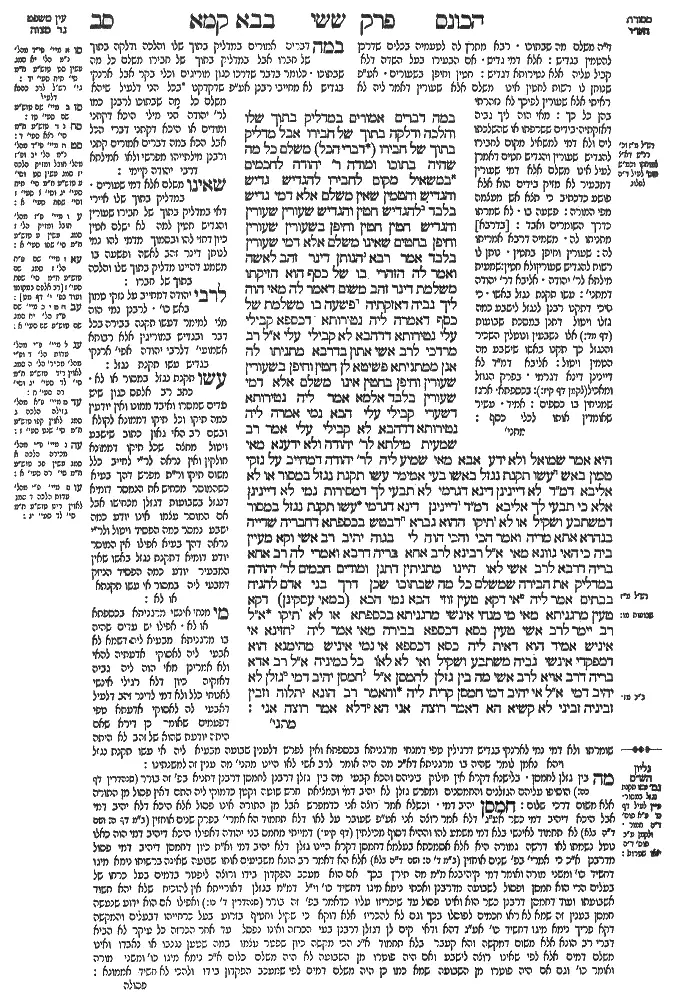
במה דברים אמורים במדליק בתוך שלו והלכה ודלקה בתוך של חבירו אבל מדליק בתוך של חבירו (דברי הכל) משלם כל מה שהיה בתוכו ומודה ר' יהודה לחכמים במשאיל מקום לחבירו להגדיש גדיש והגדיש והטמין שאין משלם אלא דמי גדיש בלבד להגדיש חטין והגדיש שעורין שעורין והגדיש חטין חטין וחיפן בשעורין שעורין וחיפן בחטים שאינו משלם אלא דמי שעורין בלבד אמר רבא הנותן דינר זהב לאשה ואמר לה הזהרי בו של כסף הוא הזיקתו משלמת דינר זהב משום דאמר לה מאי הוה ליך גביה דאזקתיה פשעה בו משלמת של כסף דאמרה ליה נטירותא דכספא קבילי עלי נטירותא דדהבא לא קבילי עלי א"ל רב מרדכי לרב אשי אתון בדרבא מתניתו לה אנן ממתניתא פשיטא לן חטין וחיפן בשעורין שעורין וחיפן בחטין אינו משלם אלא דמי שעורין בלבד אלמא אמר ליה נטירותא דשערי קבילי עלי הכא נמי אמרה ליה נטירותא דדהבא לא קבילי עלי אמר רב שמעית מילתא לר' יהודה ולא ידענא מאי היא אמר שמואל ולא ידע אבא מאי שמיע ליה לר' יהודה דמחייב על נזקי טמון באש עשו תקנת נגזל באשו בעי אמימר עשו תקנת נגזל במסור או לא אליבא דמ"ד לא דיינינן דינא דגרמי לא תבעי לך דמסירות נמי לא דיינינן אלא כי תבעי לך אליבא דמ"ד דיינינן דינא דגרמי עשו תקנת נגזל במסור דמשתבע ושקיל או לא תיקו ההוא גברא דבטש בכספתא דחבריה שדייה בנהרא אתא מריה ואמר הכי והכי הוה לי בגוה יתיב רב אשי וקא מעיין ביה כי האי גוונא מאי א"ל רבינא לרב אחא בריה דרבא ואמרי לה רב אחא בריה דרבא לרב אשי לאו היינו מתניתין דתנן ומודים חכמים לר' יהודה במדליק את הבירה שמשלם כל מה שבתוכו שכן דרך בני אדם להניח בבתים אמר ליה אי דקא טעין זוזי הכא נמי הכא (במאי עסקינן) דקא טעין מרגניתא מאי מי מנחי אינשי מרגניתא בכספתא או לא תיקו א"ל רב יימר לרב אשי טעין כסא דכספא בבירה מאי אמר ליה חזינא אי איניש אמיד הוא דאית ליה כסא דכספא אי נמי איניש מהימנא הוא דמפקדי אינשי גביה משתבע ושקיל ואי לא לאו כל כמיניה א"ל רב אדא בריה דרב אויא לרב אשי מה בין גזלן לחמסן א"ל חמסן יהיב דמי גזלן לא יהיב דמי א"ל אי יהיב דמי חמסן קרית ליה והאמר רב הונא תלוה וזבין זביניה זביני לא קשיא הא דאמר רוצה אני הא דלא אמר רוצה אני
Comments from Rashi on Masechet Bava Kamma Page 62a
ד"ה משלם מה שבתוכו . רבא מתרץ לה לטעמיה בכלים שדרכן להטמין בגדיש: אלא דמי גדיש . אם הבעירו בעל השדה דלא קביל עליה אלא נטירותא דגדיש: חטין וחיפן בשעורים . אע"פ שנותן לו רשות לחטין אינו משלם אלא שעורין דאמר ליה לא ראיתי אלא שעורין לפיכך לא נזהרתי בהן כל כך: מאי הוה ליך גביה דאזקתיה . בידים ששרפתו או שהשלכתו לים ולא דמי למשאיל מקום לחבירו להגדיש שעורין והגדיש חטים דאמרן לעיל אינו משלם אלא דמי שעורין דמבעיר לא מזיק בידים הוא אלא פושע כדכתיב כי תצא אש מעצמה מפי המורה: פשעה בו . לא שמרתו כדרך השומרים ואבד: [בדרבא] מתניתו לה . משמיה דרבא אמריתו לה: שעורין וחיפן בחטין . נותן לו רשות להגדיש שעורין ולא חטין: שמעית מילתא לר' יהודה . אליבא דר' יהודה דמתני': עשו תקנת נגזל באשו . כי היכי דתקנו רבנן לנגזל לישבע כמה גזלו ויטול דתנן במסכת שבועות (דף מד:) אלו נשבעין ונוטלין השכיר והנגזל כך תקנו באשו שישבע מה הטמין ויטול: אליבא דמ"ד לא דיינינן דינא דגרמי . בפרק הגוזל ומאכיל (לקמן בבא קמא דף קיז:): בכספתא . ארגז שמניחין בו כספים: ד"ה משלם מה שבתוכו . רבא מתרץ לה לטעמיה בכלים שדרכן להטמין בגדיש: אמיד . עשיר שאומדין אותו לכלי כסף:
Comments from Tosafot - Bava Kamma 62a
במה דברים אמורים במדליק בתוך שלו והלכה ודלקה בתוך של חברו אבל במדליק בתוך של חבירו משלם כל מה שבתוכו . כלומר בדבר שדרכו כגון מוריגים וכלי בקר אבל ארנקי בגדיש לא מחייבי רבנן אע"פ שדקדקנו בכל הני דלעיל שיהא משלם כל מה שבתוכו לרבנן כמו לר' יהודה הני מילי היכא דקתני ומודים או היכא דקתני דברי הכל אבל הכא במה דברים אמורים קתני ורבנן מילתייהו מפרשי ולאו אמילתא דרבי יהודה קיימי: שאינו משלם אלא דמי שעורים . במדליק בתוך שלו איירי דאי במדליק בתוך של חבירו שעורין והגדיש חטין למה לא ישלם חטין כיון דחזי להו ובסמוך מדמי להו נמי לנותן דינר זהב לאשה ופשעה בו משמע דהיינו מדליק בתוך שלו והלכה בתוך של חברו: לרבי יהודה דמחייב על נזקי טמון באש כו' . לרבנן נמי הוה מצי למימר דעשו תקנה בבירה בכל דבר ובגדיש במוריגין אלא רבותא אשמועי' דלרבי יהודה אפי' ארנקי בגדיש עשו תקנת נגזל: עשו תקנת נגזל במסור או לא . כתב רב אלפס כגון שיש עדים שמסרו ואיבד ממונו ואין יודעין כמה תיקו וכל תיקו דממונא לקולא ובשם רב האי גאון כתוב שישבע ויטול מחצה שכל תיקו דממונא חולקין ואין נראה לר"י לחייב כלל משום תיקו ור"ת מפרש דהך בעיא כשהמוסר מכחיש את הנמסר דומיא דנגזל בשבועות דגזלן מכחישו אבל אם המוסר עצמו אינו יודע כמה ישבע נמסר כמה הפסיד ויטול ולר"י נראה דהך בעיא אפילו אין המוסר יודע דומיא דתקנת נגזל באשו שאין המבעיר יודע כמה הפסיד הניזק דמבעי ליה במסור אי עשו תקנתא או לא: מי מנחי אינשי מרגניתא בכספתא או לא . אפילו יש עדים שהיה בו מרגניתא מבעיא ליה דשמא לא אבעי ליה לאסוקי אדעתיה להאי ולא אמרינן מאי הוה ליה גביה דאזקיה כיון דלא רגילי אינשי לאנוחי כלל ולא דמי לדינר זהב דלעיל דאבעי לה לאסוקי אדעתא טפי דפעמים שאומר כן דירא שאם היתה יודעת שהוא של זהב לא היתה שומרתו ולא דמי נמי לארנקי בגדיש דרגילין טפי דמנחי מרגניתא בכספתא ואין לפרש דלענין שבועה מבעיא ליה אי עשו תקנת נגזל ויהא נאמן לומר שהיה בו מרגניתא דא"כ מה היה אומר לרב אשי לאו היינו מתני' מה ענין זה למשנתינו: מה בין גזלן לחמסן . בלישנא דקרא אין חילוק ביניהם והכא קבעי מה בין גזלן דרבנן לחמסן דרבנן דתניא בפ' זה בורר (סנהדרין דף כה:) הוסיפו עליהם הגזלנים והחמסנים ומפרש גזלן לא יהיב דמי ובמציאת חרש שוטה וקטן כדמוקי ליה התם דאין פסול מן התורה אלא משום דרכי שלום: חמסן יהיב דמי . וכשלא אמר רוצה אני כדמפרש אבל מן התורה אינו פסול אלא היכא דלא יהיב דמי אבל היכא דיהיב דמי כשר אע"ג דלא אמר רוצה אני אע"פ שעובר על לאו דלא תחמוד הא אמרי' בפרק שנים אוחזין (ב"מ דף ה: ושם ד"ה בלא) לא תחמוד לאינשי בלא דמי משמע להו וההיא דסוף מכילתין (דף קיט.) דמייתי מחמס בני יהודה דאפילו היכא דיהיב דמי הוה כאלו נוטל נשמתו לאו דרשה גמורה היא אלא אסמכתא בעלמא דחמסן דקרא היינו גזלן דלא יהיב דמי וא"ת כיון דחמסן דיהיב דמי פסול מדרבנן א"כ כי אמרי' בפ' שנים אוחזין (ב"מ ד' ה: ושם ד"ה בלא) אלא הא דאמר רב הונא משביעים אותו שבועה שאינה ברשותו נימא מיגו דחשיד כו' ומשני מורה ואומר דמי קיהיבנא מ"מ מה תירץ בכך אם הוא מעכב הפקדון בידו ורוצה ליפטר בדמים בעל כרחו של בעלים הרי הוא חמסן ופסול לשבועה מדרבנן ואכתי נימא מיגו דחשיד כו' וי"ל דמ"מ בגזלן דאורייתא אין להוכיח שלא יהא חשוד אשבועתו ועוד דחמסן דרבנן כשר הוא ואינו פסול עד שיכריזו עליו כדאמר בפ' זה בורר (סנהדרין ד' כו:) ואפילו אם הוא ידוע שנעשה חמסן בענין זה שמא לא ראו חכמים לפוסלו בכך וגם לא להכריז אלא דוקא כי שקיל וחטיף בזרוע בעל כרחייהו דבעלים והמקשה דקא פריך נימא מיגו דחשיד כו' אע"ג דהא ודאי קים לן דגזלן דרבנן בעי הכרזה ואינו נפסל עד אחר הכרזה כל עיקר לא הביא דברי רב הונא אלא משום דמקשה והא קעבר בלא תחמוד א"נ הכי מקשה כיון שפטר עצמו במה שטען נגנבו או נאבדו ואינו משלם דמים אלא לפי שאינו רוצה לישבע ואם היה פוטרו מן השבועה לא היה משלם כלום א"כ נימא מיגו כו' ומשני מורה ואומר כו' וגם אם היה פוטרו מן השבועה שמא כמו כן היה משלם דמים לפי שמעכב הפקדון בידו ולהכי לא חשיד אממונא:
Bava Kamma 62a - Mishnah translated into english
In what case is this statement said? It is in a case where one kindled a fire on his premises and the fire spread and burned items in premises belonging to another. But with regard to one who kindles a fire on premises belonging to another that destroys a stack of wheat, all agree that he pays compensation for everything that was inside the stack.
And Rabbi Yehuda concedes to the Rabbis that in a case where one lends space to another in his field to stack grain, and this person stacked grain in the field and concealed items inside the stack, if the owner of the field causes the stack to be burned down, he pays compensation for the stack alone, since the other person did not have permission to conceal items inside his stack. Similarly, if one received permission to stack wheat in the field of another and he stacked barley; or conversely, if he received permission to stack barley and he stacked wheat; or similarly, if he stacked wheat and covered the stack with barley, or stacked barley and covered the stack with wheat, in all these cases, Rabbi Yehuda concedes that he pays compensation for the barley alone, which is less than the value of wheat.
§ Rava says: With regard to one who gives a gold dinar to a woman for safekeeping and says to her: Be careful with this dinar because it is made of silver, if she herself damaged the dinar, she must pay compensation for the value of a gold dinar. This is because he can say to her: What business did you have damaging it? If she was negligent and it was lost or stolen, she pays as compensation only the value of a silver dinar, since she can say to him: I undertook to safeguard only a silver dinar, but I did not undertake to safeguard a gold dinar.
Rav Mordekhai said to Rav Ashi: You teach this halakha as a statement of Rava, but for us this halakha is obvious from the baraita that taught: If one stacked wheat and covered the stack with barley, or stacked barley and covered the stack with wheat, the one responsible for the fire pays compensation for the barley alone. Evidently, the one who kindled the fire can say to the owner of the stack: I undertook to safeguard a stack of barley but not a stack of wheat. Here too, in the case of a golden dinar presented as a silver dinar, the woman can say to him: I did not undertake to safeguard a gold dinar.
§ Rav said: I heard a halakhic matter in connection with Rabbi Yehuda’s opinion in the mishna but I do not know what it is. Shmuel said: And does Abba, which was Rav’s name, really not know what he heard? This is the statement that he heard: According to the opinion of Rabbi Yehuda, who deems one liable for concealed articles damaged by a fire, the Sages applied the ordinance of a robbery victim to one whose concealed items are damaged by his fire. Just as the Sages instituted an ordinance that a robbery victim can take an oath as to what was stolen from him and the robber must repay him accordingly, similarly, according to Rabbi Yehuda the owner of the stack can take an oath that certain items were inside the stack, and the one responsible for the fire must pay compensation for them.
Ameimar asks: Did they apply this ordinance of a robbery victim in the case of an informer who causes another person’s property to be confiscated by the gentile authorities, or not? The question is clarified: According to the opinion of the one who says that we do not judge cases of liability for damage caused by indirect action, do not ask the question, as according to that opinion we also do not judge cases of liability for informers who cause indirect damage.
Rather, when you ask this question, it is in accordance with the opinion of the one who said that we judge cases of liability for damage caused by indirect action, and the question is: Did the Sages apply the ordinance of a robbery victim to one whose items were taken due to an informer, meaning that the victim can take an oath to support his claim with regard to what was taken and take this amount in compensation, or not? No conclusion was reached about this, and the dilemma shall stand unresolved.
An incident was related about a certain man who kicked a safe belonging to another, sending it flying into the river. The owner of the safe came to court and said: I had such and such inside it. Rav Ashi sat and was investigating the question: In a case like this, what is the halakha? Does the court believe the claimant or not?
Ravina said to Rav Aḥa, son of Rava, and some say that Rav Aḥa, son of Rava, said to Rav Ashi: Is this not identical to the case of the mishna, as we learned in the mishna: And the Rabbis concede to Rabbi Yehuda that if one sets fire to a building, he pays compensation for everything that was burned inside it, since it is the normal way of people to place items in houses? Similarly, it is the normal way of people to place money in a safe, and the court should rely on the claim of the victim.
Rav Ashi said to him: If the claimant were to claim that there were coins in the safe, this ruling would apply here also. But with what are we dealing here? We are dealing with a case where the claimant claims that there was a pearl [marganita] in the safe. What is the halakha? Do people typically place pearls in a safe, in which case he should be believed, or not? The dilemma shall stand unresolved.
Rav Yeimar said to Rav Ashi: If the one whose home was burned by the fire were to claim that he had, among other items, a silver goblet in the building, what is the halakha? Is he believed or not? Rav Ashi said to him: We view his situation. If he is a wealthy person, who would typically have a silver goblet, or alternatively, if he is a trustworthy person with whom people entrust valuable items, he can take an oath that this is what he had and take compensation according to his claim. But if he is not such a person, it is not in his power to be believed in such a claim.
§ Rav Adda, son of Rav Avya, said to Rav Ashi: Concerning two terms used to describe those who take another’s property against his will, a gazlan and a ḥamsan, what is the difference between them? Rav Ashi said to him: A ḥamsan gives money for the article that he takes from its owner, albeit against the owner’s will, whereas a gazlan does not give money.
Rav Adda was puzzled by this response and said to him: If he gives money, do you still call him a ḥamsan? Since he pays money for it, he acquires it lawfully, despite the fact that its owner did not sell it voluntarily. But doesn’t Rav Huna say: If one was strung up so that another could coerce him to sell a certain item, and he sold it, his sale is a valid sale. This indicates that a sale under duress is considered a valid sale. Rav Ashi answered: This is not difficult. This case, where the sale under duress is legally considered to be a sale, is referring to a case where he eventually says: I want to sell the item, despite having been forced. By contrast, in that case, where the sale is invalid, he did not say: I want to sell the item.
Traduction : The William Davidson digital edition of the Koren Noé Talmud, with commentary by Rabbi Adin Even-Israel Steinsaltz.