 Talmud Bavli
The learning on the whole site is dedicated : For the success of Elyahou ben H'anna & family
The learning on the whole site is dedicated : L'ilui Nishmat Yechayahou ben Moche
The learning on the whole site is dedicated : L'ilui Nishmat Reuven ben Rivka SEBBAG
Bava Kamma 37b : Youtube
Daf TubeYoutube
2 video classes :
Bava Kamma Page 37b
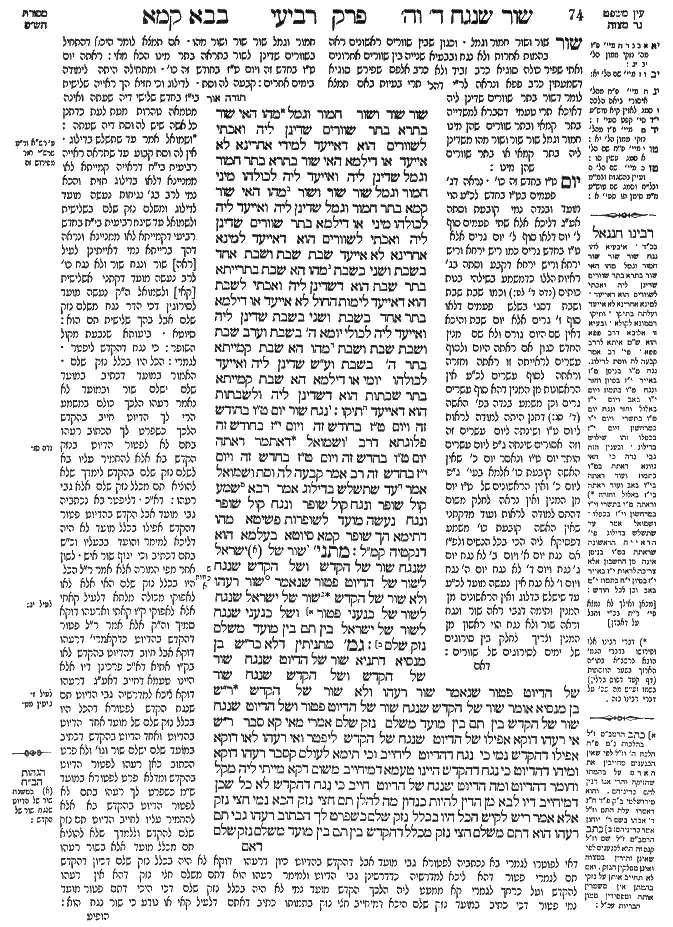
Bava Kamma 37b - Guemara
שור שור ושור חמור וגמל מהו האי שור בתרא בתר שוורים שדינן. ליה ואכתי לשוורים הוא דאייעד למידי אחרינא לא אייעד או דילמא האי שור בתרא בתר חמור וגמל שדינן ליה ואייעד ליה לכולהו מיני חמור וגמל שור שור ושור מהו האי שור קמא בתר חמור וגמל שדינן ליה ואייעד ליה לכולהו מיני או דילמא בתר שוורים שדינן ליה ואכתי לשוורים הוא דאייעד למינא אחרינא לא אייעד שבת שבת ושבת אחד בשבת ושני בשבת מהו הא שבת בתרייתא בתר שבת הוא דשדינן ליה ואכתי לשבת הוא דאייעד לימות החול לא אייעד או דילמא בתר אחד בשבת ושני בשבת שדינן ליה ואייעד ליה לכולי יומא ה' בשבת וערב שבת ושבת שבת ושבת מהו הא שבת קמייתא בתר ה' בשבת וע"ש שדינן ליה ואייעד לכולהו יומי או דילמא הא שבת קמייתא בתר שבתות הוא דשדינן ליה ולשבתות הוא דאייעד תיקו:
נגח שור יום ט"ו בחודש זה ויום ט"ז בחודש זה ויום י"ז בחודש זה פלוגתא דרב ושמואל דאתמר ראתה יום ט"ו בחדש זה ויום ט"ז בחדש זה ויום י"ז בחדש זה רב אמר קבעה לה וסת ושמואל אמר עד שתשלש בדילוג אמר רבא שמע קול שופר ונגח קול שופר ונגח קול שופר ונגח נעשה מועד לשופרות פשיטא מהו דתימא הך שופר קמא סיוטא בעלמא הוא דנקטיה קמ"ל:
מתני׳ שור של ישראל שנגח שור של הקדש ושל הקדש שנגח לשור של הדיוט פטור שנאמר (שמות כא, לה) שור רעהו ולא שור של הקדש שור של ישראל שנגח לשור של כנעני פטור ושל כנעני שנגח לשור של ישראל בין תם בין מועד משלם נזק שלם:
גמ׳ מתניתין דלא כר"ש בן מנסיא דתניא שור של הדיוט שנגח שור של הקדש ושל הקדש שנגח שור של הדיוט פטור שנאמר שור רעהו ולא שור של הקדש ר"ש בן מנסיא אומר שור של הקדש שנגח שור של הדיוט פטור ושל הדיוט שנגח שור של הקדש בין תם בין מועד משלם נזק שלם אמרי מאי קא סבר ר"ש אי רעהו דוקא אפילו של הדיוט שנגח של הקדש ליפטר ואי רעהו לאו דוקא אפילו דהקדש נמי כי נגח דהדיוט ליחייב וכי תימא לעולם קסבר רעהו דוקא ומיהו דהדיוט כי נגח דהקדש היינו טעמא דמיחייב משום דקא מייתי ליה מקל וחומר דהדיוט ומה הדיוט שנגח של הדיוט חייב כי נגח דהקדש לא כל שכן דמיחייב דיו לבא מן הדין להיות כנדון מה להלן תם חצי נזק הכא נמי חצי נזק אלא אמר ריש לקיש הכל היו בכלל נזק שלם כשפרט לך הכתוב רעהו גבי תם רעהו הוא דתם משלם חצי נזק מכלל דהקדש בין תם בין מועד משלם נזק שלם
Comments from Rashi on Masechet Bava Kamma Page 37b
חמור וגמל שור שור ושור מהו . אם תמצא לומר היכא דהתחיל בשוורים שדינן לשור בתראה בתר מינו הכא מאי: ראתה יום ט"ו בחדש זה ויום ט"ז בחודש זה כו' . ומתחילה היתה לימודה בימים אחרים: קבעה לה וסת . לדילוג וכי חזיא הך ראייה שלישית בי"ז בחדש שלישי דיה שעתה ואינה מטמאה טהרות מעת לעת כדתנן כל אשה שיש לה וסת דיה שעתה: ושמואל אמר עד שתשלש בדילוג . אין לה וסת קבוע עד שתראה ראייה רביעית בי"ח דראייה קמייתא לאו ממניינא דלאו בדילוג חזית והכא נמי לרב בג' נגיחות נעשה מועד לדילוג ומשלם נזק שלם בשלישית ולשמואל עד שיגח רביעית בי"ח בחדש רביעי דקמייתא לאו ממניינא ונראה דהך ברייתא נמי דאייתינן לעיל [ראה] שור ונגח שור ולא נגח כו' לרב נעשה מועד דקתני אשלישית [קאי] ולשמואל ה"ק נעשה מועד לסירוגין דכי הדר נגח משלם נזק שלם אבל בהך שלישית תם הוא: סיוטא . ביעותא שנבעת מקול השופר: כי נגח דהקדש ליפטר . לגמרי: הכל היו בכלל נזק שלם . האמור במועד דכתיב במועד שלם ישלם שור ובמועד לא נאמר רעהו הלכך כולם במשמע הרי לך הדיוט חייב בהקדש הלכך כשפרט לך הכתוב רעהו בתם לא לפטור הדיוט בנזק הקדש בא אלא להחמיר עליו בא לשלם נזק שלם בהקדש לימדך שלא להוציא תם מכלל נזק שלם אלא גבי רעהו:
Comments from Tosafot - Bava Kamma 37b
שור שור ושור חמור וגמל . וכגון שבין שוורים ראשונים ראה בהמות אחרות ולא נגח ובבעיא שנייה בין שוורים אחרונים ואתי שפיר כולה סוגיא כרב זביד ולא כרב אלפס שפירש סוגיא דשמעתין כרב פפא ונראה לר"י דהני תרי בעיות באם תמצא לומר דשור בתר שוורים שדינן ליה דאיכא תרי טעמי דסברא למשדייה בתר קמאי ובתר שוורים שהן מינו חמור וגמל שור שור ושור מהו משדינן ליה בתר קמאי או בתר שוורים שהן מינו: יום ט"ו בחדש זה כו' . נראה דג' פעמים בט"ו בחדש לכ"ע הוי מועד ובנדה נמי קובעת וסתה אע"ג דליכא אלא שתי פעמים סוף ל' יום דלאו סוף ל' יום גרים אלא ט"ו בחדש גרים כמו ריש ירחא וריש ירחא וריש ירחא דקבע וסתה בג' ראיות הללו כדמשמע בשילהי בנות כותים (נדה ד' לט:) וכמו שבת שבת ושבת דסגי בשלש פעמים דלאו סוף ז' גרים אלא יום שבת והיכא דאין שם היום גורם ולא שם מנין החדש כגון אם ראתה היום ולסוף עשרים לראייתה זו ראתה וחזרה וראתה לסוף עשרים לכ"ע אין הראשונות מן המנין דהא סוף עשרים גרים וכן משמע בנדה בפ' האשה (ד' סג:) דתנן היתה למודה לראות ליום ט"ו ושינתה ליום עשרים זה וזה אסורים שינתה ג"פ ליום עשרים הותר יום ט"ו ונאסר יום כ' שאין האשה קובעת כו' אלמא בעי' ג"פ ליום כ' ואין הראשונים של ט"ו יום מן המנין ואין נראה לחלק משום דהתם למודה לראות ועוד מדקתני שאין האשה קובעת כו' משמע דפסיקא ליה הכי בכל הנשים ולפ"ז אם נגח יום א' ויום ב' לא נגח יום ג' נגח ויום ד' לא נגח יום ה' נגח ויום ו' לא נגח אין נעשה מועד לכ"ע עד שישלש בדלוג ואין הראשונים מן המנין ותימה דגבי ראה שור ונגח וראה שור ולא נגח הוי ראשון מן המנין וצריך לחלק בין סירוגים של ימים לסירוגים של שוורים:
Bava Kamma 37b - Mishnah translated into english
an ox, another ox, and a third ox, and then a donkey and a camel, with regard to what is it considered forewarned?
The Gemara presents the possibilities: With regard to this last ox that was gored together with the donkey and the camel, do we place it together with the previously gored oxen, and accordingly the belligerent ox was still rendered forewarned only with regard to oxen, whereas with regard to other species it was not rendered forewarned? Or perhaps we place this last ox together with the donkey and the camel, and it was rendered forewarned with regard to all of the species it gored.
The Gemara adds a similar dilemma: If an ox gored a donkey and a camel, and then an ox, an ox, and another ox, what is the halakha? The Gemara presents the possibilities: With regard to this first ox that it gored, do we place it together with the camel and donkey, and the belligerent ox was accordingly rendered forewarned with regard to all species? Or perhaps we place it together with the two oxen that it gored afterward, and accordingly, it was still rendered forewarned only with regard to oxen, whereas it was not rendered forewarned with regard to other species.
Similarly, if it gored on Shabbat, on Shabbat, and on Shabbat, i.e., on three consecutive Shabbatot, and then on Sunday and on Monday, what is the halakha? With regard to this last Shabbat, do we place it together with the previous Shabbat, and the ox was still rendered forewarned only with regard to Shabbat, whereas with regard to weekdays it was not rendered forewarned? Or perhaps we place it together with the goring on Sunday and Monday, and it was thereby rendered forewarned with regard to all days of the week.
If an ox gored on Thursday, and Friday, and Shabbat, and then the next Shabbat and the next Shabbat after that, what is the halakha? With regard to this first Shabbat, do we place it together with Thursday and Friday, and thereby hold that the ox was rendered forewarned with regard to all days of the week? Or perhaps we place this first Shabbat together with the other Shabbatot, and the ox is rendered forewarned only with regard to Shabbatot?
These dilemmas shall stand unresolved.
§ If an ox gored on the fifteenth day of this month, and subsequently gored on the sixteenth day of the month after that, and then on the seventeenth day of the month after that, the halakha is subject to a dispute between Rav and Shmuel with regard to a parallel discussion concerning a woman whose menstrual cycle begins on a different day each month.
As it was stated: If a woman saw menstrual blood on the fifteenth day of this month, and on the sixteenth day of the month after that, and on the seventeenth day of the month after that, Rav says: She has thereby established her menstrual cycle [veset], i.e., a month and one day. And Shmuel says: Her menstrual cycle is not established until she skips a day three times. According to Shmuel, the cycle is established in this case not by the date per se, but rather by the pattern of one additional day every month. Only when this occurs for three consecutive months, i.e., when she menstruates in the fourth month, is this pattern established.
§ Rava said: If an ox heard the sound of a shofar and gored, and again heard the sound of a shofar and gored, and a third time heard the sound of a shofar and gored, it is rendered forewarned with regard to the sound of shofarot.
The Gemara asks: Isn’t this obvious? The Gemara answers: Lest you say that this first shofar merely startled [siyyuta] the ox, prompting it to gore, and that consequently it should not count for the purpose of rendering the ox forewarned, Rava teaches us that since the ox repeatedly gored upon hearing the sound of a shofar, this sound is considered a consistent impetus for its goring.
MISHNA: With regard to an ox of a Jew that gored a consecrated ox, and conversely, a consecrated ox that gored a non-sacred ox, i.e., an ox owned by a Jew, the owner of the ox is exempt from paying compensation, as it is stated: “And if one man’s ox hurts the ox of another” (Exodus 21:35). It is derived from the phrase “the ox of another” that one is liable only if it is a non-sacred ox, but not if it is a consecrated ox, which belongs to the Temple treasury, regardless of whether the latter was the ox that gored or the ox that was gored.
With regard to an ox of a Jew that gored the ox of a gentile, the owner of the belligerent ox is exempt from liability. But with regard to an ox of a gentile that gored the ox of a Jew, regardless of whether the goring ox was innocuous or forewarned, the owner of the ox pays the full cost of the damage.
GEMARA: The mishna is not in accordance with the opinion of Rabbi Shimon ben Menasya, as it is taught in a baraita: With regard to a non-sacred ox that gored a consecrated ox, or a consecrated ox that gored a non-sacred ox, the owner of the ox is exempt from liability, as it is stated: “The ox of another,” indicating: But not a consecrated ox. Rabbi Shimon ben Menasya says: With regard to a consecrated ox that gored a non-sacred ox, the Temple treasury is exempt from liability; but with regard to a non-sacred ox that gored a consecrated ox, whether it was innocuous or forewarned, the owner pays the full cost of the damage.
The Sages said: What does Rabbi Shimon ben Menasya hold? Why does he distinguish between a consecrated ox that gored a non-sacred ox and a non-sacred ox that gored a consecrated ox? If the phrase “of another” is meant in a precise manner, then even with regard to a non-sacred ox that gored a consecrated ox the owner of the belligerant ox should be exempt from liability, as the victim is not the ox of another, but belongs to the Temple treasury. And if the phrase “of another” is not meant in a precise manner, but rather, includes all oxen, then a consecrated ox that gored a non-sacred ox should render the Temple treasury liable as well.
And if you would say that actually Rabbi Shimon ben Menasya holds that “of another” is meant in a precise manner, and accordingly, if a consecrated ox gores a non-sacred ox the Temple treasury is exempt from liability; but nevertheless, when a non-sacred ox gores a consecrated ox, this is the reason its owner is liable: Because Rabbi Shimon ben Menasya infers it a fortiori from the case of a non-sacred ox, as follows: If in the case of a non-sacred ox that gores another non-sacred ox the owner of the belligerent ox is liable, is it not clear all the more so that when it gores a consecrated ox the owner of the ox is liable?
If this is Rabbi Shimon ben Menasya’s reasoning, then his ruling that the owner of the ox pays the Temple treasury the full cost of the damage, whether his ox was innocuous or forewarned, is problematic, as it is sufficient for the conclusion that emerges from an a fortiori inference to be like its source. In other words, a halakha derived by means of an a fortiori inference cannot be more stringent than the halakha of the source from which it is derived. Therefore, just as there, in a case where an individual’s innocuous non-sacred ox gores another non-sacred ox, the owner pays only half the cost of the damage, here too, if an innocuous non-sacred ox gores a consecrated ox, its owner should be liable to pay only half the cost of the damage.
Rather, Reish Lakish said that Rabbi Shimon ben Menasya’s reasoning is as follows: In principle, all cases of damage were included among those in which the owner pays the full cost of the damage. The halakha that in a case of an innocuous ox the owner pays only half the cost of the damage is an exception to the rule, and when the verse specified the term “of another” with regard to an innocuous ox, it intended that it is specifically when one’s innocuous ox gores the ox of another that the owner pays only half the cost of the damage. And by inference, if it gores a consecrated ox, whether the belligerent ox is innocuous or forewarned its owner pays the full cost of the damage.
Traduction : The William Davidson digital edition of the Koren Noé Talmud, with commentary by Rabbi Adin Even-Israel Steinsaltz.