 Talmud Bavli
Bava Kamma 83a : Youtube
Daf TubeYoutube
2 video classes :
Bava Kamma Page 83a
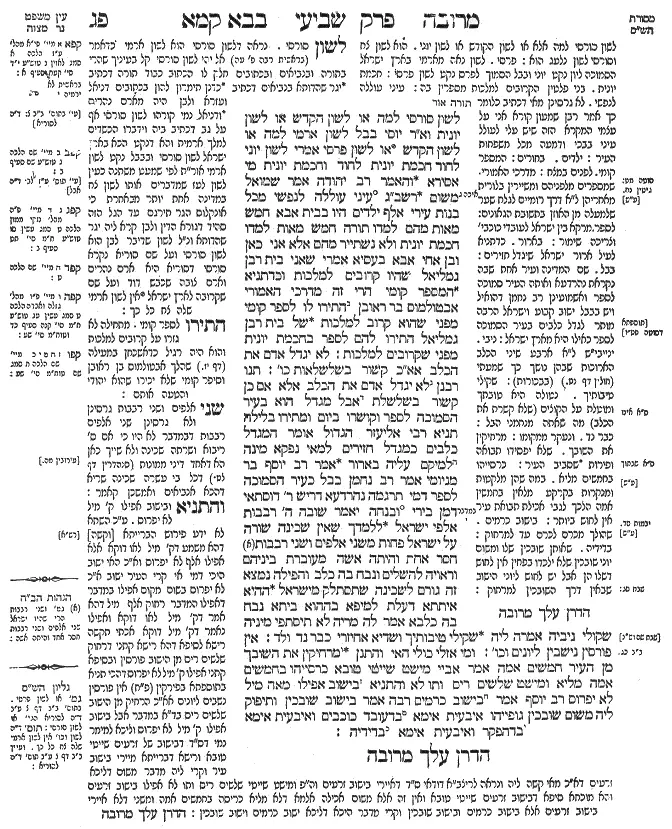
Bava Kamma 83a - Guemara
לשון סורסי למה או לשון הקדש או לשון יונית וא"ר יוסי בבל לשון ארמי למה או לשון הקדש או לשון פרסי אמרי לשון יוני לחוד חכמת יונית לחוד וחכמת יונית מי אסירא והאמר רב יהודה אמר שמואל משום רשב"ג (איכה ג, נא) עיני עוללה לנפשי מכל בנות עירי אלף ילדים היו בבית אבא חמש מאות מהם למדו תורה חמש מאות למדו חכמת יונית ולא נשתייר מהם אלא אני כאן ובן אחי אבא בעסיא אמרי שאני בית רבן גמליאל שהיו קרובים למלכות וכדתניא המספר קומי הרי זה מדרכי האמורי אבטולמוס בר ראובן התירו לו לספר קומי מפני שהוא קרוב למלכות של בית רבן גמליאל התירו להם לספר בחכמת יונית מפני שקרובים למלכות:
לא יגדל אדם את הכלב אא"כ קשור בשלשלאות כו':
תנו רבנן לא יגדל אדם את הכלב אלא אם כן קשור בשלשלת אבל מגדל הוא בעיר הסמוכה לספר וקושרו ביום ומתירו בלילה תניא רבי אליעזר הגדול אומר המגדל כלבים כמגדל חזירים למאי נפקא מינה למיקם עליה בארור אמר רב יוסף בר מניומי אמר רב נחמן בבל כעיר הסמוכה לספר דמי תרגמה נהרדעא דריש ר' דוסתאי דמן בירי (במדבר י, לו) ובנחה יאמר שובה ה' רבבות אלפי ישראל ללמדך שאין שכינה שורה על ישראל פחות משני אלפים ושני רבבות חסר אחת והיתה אשה מעוברת ביניהם וראויה להשלים ונבח בה כלב והפילה נמצא זה גורם לשכינה שתסתלק מישראל ההיא איתתא דעלת למיפא בההוא ביתא נבח בה כלבא אמר לה מריה לא תיסתפי מיניה שקולי ניביה אמרה ליה שקילי טיבותיך ושדיא אחיזרי כבר נד ולד:
אין פורסין נישבין ליונים וכו':
ומי אזלי כולי האי והתנן מרחיקין את השובך מן העיר חמשים אמה אמר אביי מישט שייטי טובא כרסייהו בחמשים אמה מליא ומישט שלשים ריס ותו לא והתניא בישוב אפילו מאה מיל לא יפרוס רב יוסף אמר בישוב כרמים רבה אמר בישוב שובכין ותיפוק ליה משום שובכין גופייהו איבעית אימא בדעובד כוכבים ואיבעית אימא בדהפקר ואיבעית אימא בדידיה:
הדרן עלך מרובה
Comments from Rashi on Masechet Bava Kamma Page 83a
לשון סורסי למה אלא או לשון הקודש או לשון יוני . הוא לשון צח וסורסי לשון נלעג הוא: פרסי . לשון נאה מארמי בארץ ישראל הסמוכה ליון נקט יוני ובבל הסמוך לפרס נקט לשון פרסי: חכמת יונית . בני פלטין הקרובים למלכות מספרין בה: עיני עוללה לנפשי . לא גרסינן מאי דכתיב כלומר כך אמר רבן שמעון קורא אני על עצמי המקרא הזה שיש עלי לעולל עיני בבכי ודמעה מכל משפחות העיר: ילדים . בחורים: המספר קומי . לפנים במצח: מדרכי האמורי . שמספרים מלפניהם ומשיירין בלורית מאחריהן ל"א דרך רומיים לגלח שער שלמעלה מן האוזן בתשובת הגאונים: לספר . מרקא בין ישראל לעובדי כוכבי' וצריכה שימור: בארור . כדתניא לעיל ארור ישראל שיגדל חזירים: בבל . שם המדינה ועיר אחת שבה נקראת נהרדעא ואותה העיר סמוכה לספר ואשמועינן רב נחמן דהואיל ויש בבבל ישוב קבוע וישראל הרבה מותר לגדל כלבים בעיר הסמוכה לספר כאילו היא מארץ ישראל: ניבי . ינייבי"ש ל"א ארבע שיני הכלב הארוכות שבהן נושך כך שמעתי (חולין דף נט.) (בבכורות): שקילי טיבותיך . נטולה היא טובתך ומוטלת על הקוצים (שלא קשרת את הכלב) מה שאתה מנחמני הבל: כבר נד . ונעקר ממקומו: מרחיקין את השובך . שלא יפסידו תבואה ופירות שסביב העיר: כרסייהו בחמשים מליא . במה שהן מלקטות ומנקרות בקרקע מלאין בחמשין אמה הלכך לגבי אכילת תבואת עיר אין לחוש ביותר: בישוב כרמים . שהולך מכרם לכרם עד למרחוק: בדידיה . שאותן שובכין שלו ומשום יוני שובכין שלא ילכדו בפחין אין לחוש דשלו הן אבל יש לחוש ליוני הישוב שבאין דרך השובכין למרחוק:
Comments from Tosafot - Bava Kamma 83a
לשון סורסי . נראה דלשון סורסי הוא לשון ארמי כדאמר (בראשית רבה פ' עה) אל יהי לשון סורסי קל בעיניך שהרי בתורה ובנביאים ובכתובים חלק לו הכתוב כבוד תורה דכתיב יגר שהדותא בנביאים דכתיב כדנן תימרון להון בכתובים דניאל ועזרא ולבן היה מארם נהרים ודניאל נמי קורהו לשון סורסי אף על גב דכתיב ביה וידברו הכשדים למלך ארמית והא דנקט הכא בארץ ישראל לשון סורסי ובבבל נקט לשון ארמי אור"ת לפי שמעט משתנה כעין לשון לעז שמדברים אותו לשון צח במדינה אחת יותר מבאחרת כי אונקלוס הגר תירגם עד הגל הזה סהיד דגורא הדין ולבן קרא ליה יגר שהדותא ונ"ל לשון שדיבר לבן הוא לשון סורסי ועל שם סוריא נקרא סורסי דסוריא היא ארם נהרים וארם צובה שכבש דוד ועל שם שקרובה לארץ ישראל אין לשון ארמי שלה צח כל כך: התירו לספר קומי . מתחילה לא גזרו על קרובים למלכות והוא היה רגיל כדאשכחן במעילה (דף יז.) שהלך אבטולמוס בן ראובן וסיפר קומי שלא יכירו שהוא יהודי והטעה אותם: שני אלפים ושני רבבות גרסינן ולא גרסינן שני אלפים רבבות דבמדבר לא היו כי אם ס' ריבוא ושרתה שכינה ולא שייך כאן הא דאחד דיני ממונות (סנהדרין דף לט.) דכל בי עשרה שכינה שריא דהכא אנביאים ואמשכן קאמ והתניא ובישוב אפילו ק' מיל לא יפרוס . ע"כ השתא לא ידע פירוש הברייתא [וקשה] דהא משמע דק' מיל לאו דוקא אלא אפילו אלף לא יפרוס וא"כ האי ישוב היכי דמי אי קרי העיר ישוב א"כ לא יפרוס בשום מקום אפילו במדבר דאפילו המדבר רחוק אלף מיל דהא אמר דק' מיל לאו דוקא ואפילו נאמר דק' מיל דוקא אכתי תקשה רישא לסיפא דהא רישא קתני דרחוק שלשים ריס מן הישוב פורסין ובסיפא קתני אפילו ק' מיל לא יפרוס דהכי תניא בתוספתא בפירקין (פ"ח) אין פורסין נשבים ליונים אא"כ הרחיק מן הישוב שלשים ריס בד"א במדבר אבל בישוב אפילו ק' מיל לא יפרוס וליכא למימר נמי דס"ד דבישוב של זרעים שייטי טובא ורישא דברייתא מיירי בישוב עיר וקרי ליה מדבר משום דליכא זרעים דא"כ מאי קשה ליה ונראה לריצב"א דודאי ס"ד דאיירי בישוב זרעים וה"פ ומישט שייטי שלשים ריס ותו לא אפילו בישוב זרעים והא מוכחא סיפא דבישוב זרעים שייטי טובא ואין זה אלא משום אכילה אלמא דלא מליא כריסה בחמשים אמה ומשני דלא איירי בישוב זרעים אלא בישוב כרמיה ובישוב שובכין וקרי מדבר היכא דליכא ישוב כרמים וישוב שובכין:
Bava Kamma 83a - Mishnah translated into english
why would one speak the Syriac [Sursi] language? One should speak either the sacred tongue, Hebrew, or the Greek language. And Rabbi Yosei said similarly: In Babylonia, why would one speak the Aramaic language? One should speak either the sacred tongue or the Persian language. At any rate, Rabbi Yehuda HaNasi’s statement indicates that there is nothing wrong with learning and speaking Greek. The Sages say in response: The Greek language is discrete, and Greek wisdom is discrete. In other words, these are two separate issues; only Greek wisdom is prohibited, not the Greek language.
The Gemara further pursues this line of inquiry: And is Greek wisdom itself actually prohibited? But doesn’t Rav Yehuda say that Shmuel says in the name of Rabban Shimon ben Gamliel: It is written: “My eye affected my soul, because of all the daughters of my city” (Lamentations 3:51). Rabban Shimon ben Gamliel applied this verse to a personal tragedy: There were a thousand children in the household of my father, Rabban Gamliel; five hundred of them studied the Torah, and five hundred of them studied Greek wisdom. All of them were killed by the Romans; and the only ones that remain of them are I, who is here, and the son of my father’s brother, who is in Asia Minor [Asya]. Rabban Shimon ben Gamliel’s statement indicates that it is permitted to study Greek wisdom.
The Sages say in response: The household of Rabban Gamliel is different, as they held close ties with the government. Since knowledge of Greek wisdom was crucial for the members of this family, the Sages exempted them from the general decree, as it is taught in a baraita: With regard to one who cuts his hair in the fashion of komi, a certain haircut favored by the Romans, this is considered one of the ways of the Amorites, i.e., a gentile practice prohibited by the Torah (Leviticus 18:3). Despite this, the Sages permitted Avtolmos bar Reuven to cut his hair in the fashion of komi, because he had close ties with the government. Likewise, they permitted the members of the household of Rabban Gamliel to discuss matters of Greek wisdom, because they had close ties with the government.
§ The mishna teaches: A person may not raise a dog unless it is tied with chains. The Sages taught in a baraita: A person may not raise a dog unless it is tied with a chain. But he may raise a dog in a city that is close to the border of the country, and in that case he should tie it during the day but may release it at night.
It is taught in a baraita that Rabbi Eliezer the Great says: One who raises dogs is like one who raises pigs. The Gemara asks: What is the practical significance of this statement? Since both are prohibited, what is the point of this comparison? The Gemara answers: The significance is with regard to determining when one is liable to be cursed for it. Rabbi Eliezer is saying that the same curse meted out to one who raises pigs also applies to one who raises dogs.
Rav Yosef bar Minyumi says that Rav Naḥman says: Babylonia is considered like a city close to the border, and therefore it is permitted to raise dogs there. The Gemara qualifies this statement, and in this context, Babylonia is interpreted as referring only to Neharde’a, a city that was close to the border.
With regard to raising dogs, Rabbi Dostai from Biri expounded: It is written in connection to the Ark of the Covenant: “And when it rested, he said: Return, O Lord, to the myriads of the thousands of Israel” (Numbers 10:36). This verse serves to teach you that the Divine Presence does not rest upon the Jewish people if they number fewer than two thousand and two myriads, where one myriad is equal to ten thousand. The plural form of “myriads” and “thousands” indicates at least two of each. If they are lacking one individual from this total, and there was a pregnant woman among them, who was fit to complete the number by giving birth, and a dog barked at her and she miscarried as a result of the fright, this owner of the dog is found to have caused the Divine Presence to depart from the Jewish people.
There was a certain woman who entered a certain building to bake. A dog barked at her. Its owner said to her: Do not be afraid of it; its canine teeth have been removed. She said to him: It is too late for your reassurances. Take your favors and throw them on the thorns! I have felt that the baby has already moved from its place in the womb and will not be born alive.
§ The mishna teaches: One may spread out traps for pigeons only if this was performed at a distance of at least thirty ris, which is eight thousand cubits, from any settled area, to ensure that privately owned pigeons are not caught in the traps. The Gemara asks: And do pigeons really travel that far from their established places? But didn’t we learn in a mishna (Bava Batra 23a): One must distance a dovecote fifty cubits from the city, so that the pigeons that settle in the cotes do not eat the crops that grow in the gardens of the city. This shows that the range of a pigeon is only fifty cubits, whereas four mil is eight thousand cubits. Abaye said: Pigeons fly much more than fifty cubits away from their cotes, but their stomachs become full from the food they find within fifty cubits, and therefore they do not eat any more beyond that range.
The Gemara asks: And with regard to flying, is their range only thirty ris and no more? But isn’t it taught in a baraita: In a settled area, one may not spread out a trap for pigeons even at a distance of one hundred mil from the settlement? This indicates that a privately owned pigeon might be trapped even one hundred mil away from a settled area. Why, then, does the mishna permit trapping beyond four mil? Rav Yosef said: The baraita is not talking about an ordinary city but about a settled area where vineyards are grown. Since the pigeons rest in the vineyards as they travel, they are able to traverse great distances. Rabba stated a different answer: The baraita is dealing with a settled area where there are many dovecotes in which they can rest from their flight.
The Gemara asks: If there are many dovecotes along the way, let the tanna derive the prohibition against setting pigeon traps due to the dovecotes themselves. Since the mishna teaches that it is prohibited to trap pigeons within four mil of privately owned dovecotes, it should be irrelevant that there is a city one hundred mil away. The Gemara answers: If you wish, say that the baraita is dealing with dovecotes that belong to a gentile, and the prohibition against trapping pigeons from private dovecotes applies only to birds owned by Jews. Or if you wish, say that the baraita is dealing with abandoned dovecotes that are ownerless. Or if you wish, say that it is referring to dovecotes that are his, i.e., they belong to the same individual who is setting the pigeon trap.
Traduction : The William Davidson digital edition of the Koren Noé Talmud, with commentary by Rabbi Adin Even-Israel Steinsaltz.