 Talmud Bavli
Bava Kamma 54a : Youtube
Daf TubeYoutube
2 video classes :
Bava Kamma Page 54a
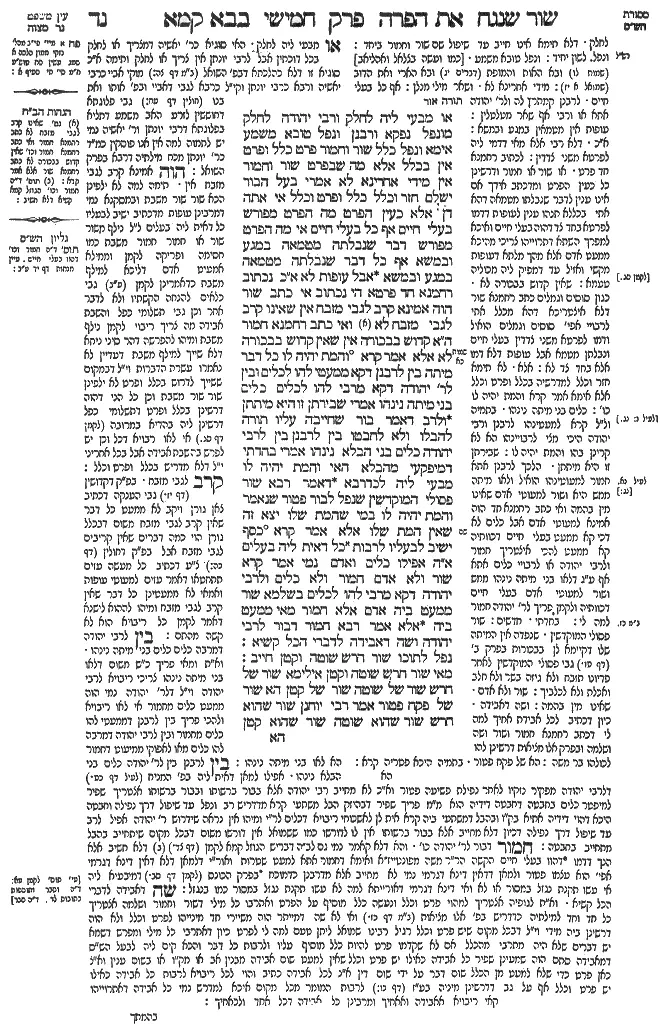
Bava Kamma 54a - Guemara
או מבעי ליה לחלק ורבי יהודה לחלק מונפל נפקא ורבנן ונפל טובא משמע אימא ונפל כלל שור וחמור פרט כלל ופרט אין בכלל אלא מה שבפרט שור וחמור אין מידי אחרינא לא אמרי בעל הבור ישלם חזר וכלל כלל ופרט וכלל אי אתה דן אלא כעין הפרט מה הפרט מפורש בעלי חיים אף כל בעלי חיים אי מה הפרט מפורש דבר שנבלתה מטמאה במגע ובמשא אף כל דבר שנבלתה מטמאה במגע ובמשא אבל עופות לא א"כ נכתוב רחמנא חד פרטא הי נכתוב אי כתב שור הוה אמינא קרב לגבי מזבח אין שאינו קרב לגבי מזבח לא ואי כתב רחמנא חמור ה"א קדוש בבכורה אין שאין קדוש בבכורה לא אלא אמר קרא (שמות כא, לד) והמת יהיה לו כל דבר מיתה בין לרבנן דקא ממעטי להו לכלים ובין לר' יהודה דקא מרבי להו לכלים כלים בני מיתה נינהו אמרי שבירתן זו היא מיתתן ולרב דאמר בור שחייבה עליו תורה להבלו ולא לחבטו בין לרבנן בין לרבי יהודה כלים בני הבלא נינהו אמרי בחדתי דמיפקעי מהבלא האי והמת יהיה לו מבעי ליה לכדרבא דאמר רבא שור פסולי המוקדשין שנפל לבור פטור שנאמר והמת יהיה לו במי שהמת שלו יצא זה שאין המת שלו אלא אמר קרא (שמות כא, לד) כסף ישיב לבעליו לרבות כל דאית ליה בעלים א"ה אפילו כלים ואדם נמי אמר קרא שור ולא אדם חמור ולא כלים ולרבי יהודה דקא מרבי להו לכלים בשלמא שור ממעט ביה אדם אלא חמור מאי ממעט ביה אלא אמר רבא חמור דבור לרבי יהודה ושה דאבידה לדברי הכל קשיא:
נפל לתוכו שור חרש שוטה וקטן חייב:
מאי שור חרש שוטה וקטן אילימא שור של חרש שור של שוטה שור של קטן הא שור של פקח פטור אמר רבי יוחנן שור שהוא חרש שור שהוא שוטה שור שהוא קטן
Comments from Rashi on Masechet Bava Kamma Page 54a
לחלק . דלא תימא אינו חייב עד שיפול שם שור וחמור ביחד: ונפל . לשון יחיד: ונפל טובא משמע . [כמו ועשה בצלאל ואהליאב] (שמות לו) ובא האות והמופת (דברים יג) ובא הארי ואת הדוב (שמואל א יז): מידי אחרינא לא . ושאר מילי מנלן: אף כל בעלי חיים . לרבנן קמתרץ לה ולר' יהודה אתא או ורבי אף שאר מטלטלין: עופות . אין מטמאין במגע ובמשא: א"כ . דלא רבי אלא מאי דדמי ליה לפרטא משני צדדין: לכתוב רחמנא חד פרט . או שור או חמור ודרשינן כל כעין הפרט ומדכתב אידך אם אינו ענין לדבר שנבלתו מטמאה דהא אתי בכללא תנהו ענין לעופות דדמו לפרטא בחד צד דהוה בעלי חיים ואיכא למפרך השתא דתרוייהו צריכי מהיכא ממעט אדם אלא מהך מלתא דעופות מקשי ואזיל עד דמפיק ליה מכוליה טעמא: שאין קדוש בבכורה לא . כגון סוסים וגמלים כתב רחמנא שור דלא איצטריכא דהא מכלל אתי לרבויי אפי' סוסים וגמלים הואיל ודמו לפרטא משני צדדין בעלי חיים ונבלתן מטמא אבל עופות דלא דמו אלא בחד צד לא: אלא . לא תימא חזר וכלל למדרשיה בכלל ופרט וכלל אלא אימא אמר קרא והמת יהיה לו כו': כלים בני מיתה נינהו . בתמיה ול"ל קרא למעטינהו לרבנן ורבי יהודה היכי מצי לרבויינהו הא לא קרינן בהו והמת יהיה לו: שבירתן זו היא מיתתן . הלכך לרבנן אתא חמור למעוטינהו הואיל ולאו מיתה ממש היא ושור למעוטי אדם שאינו מין בהמה ואי כתב רחמנא חד הוה אמינא למעוטי אדם אבל כלים לא דכי קא ממעט בעלי חיים דכוותיה קא ממעט להכי איצטריך חמור ולרבי יהודה או לרבויי כלים אתא אף ע"ג דלאו בני מיתה נינהו ממש ושור למעוטי אדם בעלי חיים דכוותיה ולקמן פריך לר' יהודה חמור למה לי: בחדתי . חדשים: שור פסולי המוקדשין . שנפדה אין המיתה שלו דקיימא לן בבכורות בפרק ב' (דף טו.) גבי פסולי המוקדשין לאחר פדיונו תזבח ולא גיזה בשר ולא חלב ואכלת ולא לכלביך: שור ולא אדם . שאינו מין בהמה: ושה דאבידה . כיון דכתיב לכל אבידת אחיך למה לי דכתב רחמנא חמור ושור ושה ושלמה ובפרק אלו מציאות דרשינן להו לכולהו בר משה: הא של פקח פטור . בתמיה היכא פטריה קרא:
Comments from Tosafot - Bava Kamma 54a
או מבעי ליה לחלק . האי סוגיא כר' יאשיה דמצריך או לחלק בכל דוכתין אבל לרבי יונתן אין צריך או לחלק ותימה א"כ סוגיא זו דלא כהלכתא דבפ' השואל (ב"מ דף צה:) מוקי אביי כרבי יאשיה ורבא כרבי יונתן וקי"ל כרבא לגבי דאביי ובפ' אותו ואת בנו (חולין דף עח:) גבי פלוגתא דחוששין לזרע האב משמע דתליא בפלוגתא דרבי יונתן ור' יאשיה נמי יש לתמוה למה אין אנו פוסקין כמ"ד כר' יונתן מכח מילתיה דרבא בפרק השואל: הוה אמינא קרב לגבי מזבח אין . תימה למה לא ילפינן הכא שור שור משבת ובמסקנא נמי דמרבינן עופות מדכתיב ישיב לבעליו כל דאית ליה בעלים ל"ל נילף משור שור או חמור חמור משבת כמו חסימה ופריקה לקמן וממילא אמעיט אדם דליכא למילף משבת כדאמרינן לקמן (בבא קמא נד ע"ב) גבי כלאים להנחה הקשתיו ולא לדבר אחר וכן גבי תשלומי כפל והשבת אבידה מה צריך ריבוי לקמן נילף משבת ומיהו להפרשה דהר סיני ניחא דלא שייך למילף משבת דעדיין לא נאמרו עשרת הדברות וי"ל דבמקום ששייך לדרוש בכלל ופרט לא ילפינן שור שור משבת וכן כל הני דהוה דרשינן בכלל ופרט דתשלומי כפל דרשינן ליה בהדיא במרובה (לקמן בבא קמא דף סג.) אי לאו רבויא דכל וכן יש לפרש בהשבת אבידה אבל בכל אחריני י"ל דלא מדריש בכלל ופרט וכלל: קרב לגבי מזבח . בפ"ק דקדושין (דף יז.) גבי הענקה דכתיב צאן גורן ויקב לא ממעט כל דבר שאין קרב לגבי מזבח משום דבכלל גורן הוי כמה דברים שאין קריבים לגבי מזבח אבל בפ"ק דחולין (דף כה:) צ"ע דכתיב כל מעשה עזים תתחטאו דאמר עזים למעוטי עופות ואמאי לא ממעטינן כל דבר שאין קרב לגבי מזבח ומיהו לההוא לישנא דאמר לקמן כל ריבויא הוא לא קשה מהתם: בין לרבי יהודה דמרבה כלים כלים בני מיתה נינהו . וא"ת ומאי פריך כ"ש משום דלאו בני מיתה נינהו צריכי ריבויא לרבי יהודה וי"ל דלר' יהודה נמי הוה ממעט כלים מחמור אי לאו ריבויא ולהכי פריך בין לרבנן דממעטי להו כלים מחמור ובין לרבי יהודה דמרבה להו כלים מאו לאפוקי ממיעוט דחמור הא לאו בני מיתה נינהו: בין לרבנן בין לר' יהודה כלים בני הבלא נינהו . אפילו למאן דאית ליה בפ' המניח (לעיל בבא קמא דף כט.) דלרבי יהודה מפקיר נזקיו לאחר נפילת פשיעה פטור וא"כ לא מחייב רבי יהודה אלא בבור ברשותו ובבור ברשותו אצטריך שפיר למיפטר כלים בחבטה דחבטה דידיה הוא מ"מ פריך שפיר דבהיזק הבל משתעי קרא מדדריש רב ונפל עד שיפול דרך נפילה וחבטה היכא דהוי דידיה אתיא בק"ו ובהבל דמשתעי ביה קרא אית לן לאשכוחי ריבויא דכלים לר"י ומיהו אין נראה שידרוש ר' יהודה אפילו לרב עד שיפול דרך נפילה דכיון דלא מחייב אלא בבור ברשותו אין לו לדורשו כמו ששמואל אין דורשו משום דבכל מקום שיתחייב בהבל מתחייב בחבטה: חמור דבור לר' יהודה כו' . והא דלא קאמר נמי גם לב"ה דבריש הגוזל קמא לקמן (בבא קמא דף צד.) דלא חשיב אלא הנך דדמו דהוו בעלי חיים הקשה הר"ר משה מפונטייז"א ואימא דחמור אתא למעט שטרות ואור"י דלמאן דלא דאין דינא דגרמי אפי' הוא עצמו פטור ולמאן דדאין דינא דגרמי נמי לא מחייב אלא מדרבנן כדמוכח. בפרק הכונס (לקמן בבא קמא דף סב.) דמיבעיא ליה אי עשו תקנת נגזל במסור או לא ואי דינא דגרמי דאורייתא למה לא עשו תקנת נגזל במסור כמו בנגזל: שה דאבידה לדברי הכל קשיא . וא"ת לגופיה אצטריך למהוי פרט וכלל ונעשה כלל מוסיף על הפרט ואתרבו כל מילי דשור וחמור ושלמה אצטריך כל חד וחד למילתיה כדדריש בפ' אלו מציאות (ב"מ דף כז.) ואי לא שה דמייתר הוה משיירי חד מינייהו לפרט וכלל ולא הוה דרשינן ביה מידי וי"ל דבכל מקום שיש פרט וכלל רגיל רבינו שמואל ליתן טעם למה לי לפרט כיון דאתרבי כל מילי ומפרש דשמא יש דברים שלא היה מתרבי מהכלל אם לא שקדמו פרט להיות כלל מוסיף עליו ולרבות כל דבר והכא קים ליה לבעל הש"ס דמאבידה סתם הוה שמעינן שפיר כל אבידה כאילו יש פרט וכלל שאין למעט שום אבידה מבנין אב או מק"ו או בשום ענין וא"צ כאן פרט כדי שלא למעט מן הכלל שום דבר על ידי שום דין א"נ לכל אבידה כתיב והוי לכל ריבויא לרבות כל אבידה כאילו יש פרט וכלל אף על גב דדרשינן מיניה בע"ז (דף כו:) לרבות המומר מכל מקום איכא למדרש נמי כל אבידה דאתרוייהו קאי ריבויא אאבידה ואאחיך ומרבינן כל אבידה דכל אחד ולכאחיך:
Bava Kamma 54a - Mishnah translated into english
The word “or” is necessary to separate the cases of the ox and donkey. This indicates that if either falls in individually, the owner of the pit is liable. And how does Rabbi Yehuda derive the halakha to separate the cases in the verse? He derives it from the use of the singular form of the verb: “And an ox or donkey fall [venafal],” indicating that he is liable if even one animal falls. And the Rabbis maintain that the term and fall can also indicate many animals, as the use of the singular form of a verb does not prove that the subject is necessarily singular.
The Gemara now challenges both opinions: Say that the term “and fall” is a generalization, whereas the phrase “an ox or a donkey” is a detail. According to the principles of halakhic exegesis, when the Torah presents a generalization and a detail, the generalization includes only what is contained in the detail. Therefore, an ox and a donkey are indeed included, but anything else is not included.
The Sages said in response: The following verse: “The owner of the pit shall pay” (Exodus 21:34), means that it then generalized again. The verses are structured according to the principle of halakhic exegesis of: A generalization, and a detail, and a generalization. According to this principle, you may deduce that the verses are referring only to items that are similar to the detail. In this case, just as the explicit detail is referring to animals, so too, all items included in the generalization must be animals.
The Gemara now challenges this answer: If so, just as the explicit detail, i.e., the ox and donkey, is referring to items whose carcass renders a person ritually impure by contact or by carrying, so too, all items, i.e., all animals, whose carcass renders a person ritually impure through contact or by carrying, should be included in the halakhot of damage classified as Pit. But birds, whose carcasses do not render a person impure through contact or by carrying, would not be included.
The Gemara answers: If so, let the Merciful One write only one detail, from which the exclusion of birds could be derived. The Gemara asks: Which detail should the Torah write? If it writes only an ox, I would say that an item that is sacrificed on the altar, such as an ox, indeed renders the owner of the pit liable, whereas an item that is not sacrificed on the altar does not render him liable. And if the Merciful One writes only a donkey, I would say: Those animals whose firstborn is sanctified, such as a donkey, as described in the Torah (Exodus 13:13), do indeed render their owners liable, but animals whose firstborn is not sanctified do not render them liable. Therefore, the Torah states both an ox and a donkey.
The original difficulty therefore resurfaces: Why is the verse not expounded as a generalization, a detail, and a generalization, thereby excluding birds? Rather, the previous method of deriving liability for a pit must be rejected, and instead it should be derived as follows: The verse states: “And the carcass shall be for him” (Exodus 21:34), from which it may be inferred that anything subject to death is included.
The Gemara asks: If this is the basis for liability for a pit, then both according to the Rabbis, who exclude vessels from liability based on another verse, and according to Rabbi Yehuda, who has amplified the halakha to include vessels, one could ask: Are vessels subject to death? Clearly, vessels cannot be subject to death. Why, then, is a separate source necessary to derive their halakhic status? The Sages said in reply: Vessels may also be considered subject to death in the sense that their shattering is tantamount to their death.
The Gemara continues to challenge this explanation: But according to Rav, who says: With regard to Pit, for which the Torah deems a person liable, it is only for damage caused by its lethal fumes, but not for damage caused by the impact of the fall, the following question may be raised both according to the Rabbis and according to Rabbi Yehuda: Are vessels capable of being broken by the lethal fumes, such that a verse is necessary to exclude them? The Sages said in reply: There is such a case concerning new vessels, which crack from the fumes.
The Gemara asks further: But isn’t this verse: “And the carcass shall be for him,” necessary for that which Rava ruled, as Rava says: With regard to a disqualified consecrated ox that fell into a pit, the owner of the pit is exempt, as it is stated: “And the carcass shall be for him.” It is referring to a person to whom the carcass belongs, thereby excluding this person, to whom the carcass does not belong. Once a halakha has already been derived from this verse, it cannot be used as the basis for deriving a second halakha.
Rather, the halakhot of liability for Pit must be derived from another source. The verse states concerning Pit: “He shall recompense money to its owners” (Exodus 21:34), thereby including any item that has an owner within the scope of liability. The Gemara challenges this answer: If so, then even vessels and people should be included as well, which presents a difficulty for all opinions.
The Gemara answers: This is why the verse states: “An ox,” but not a person; “a donkey,” but not vessels. The Gemara asks: And according to Rabbi Yehuda, who amplifies the scope of liability to include vessels, granted that the term “an ox” is necessary, as he excludes people based on it, for which he is not liable. But with regard to the term “a donkey,” what does he exclude based on it?
Rather, Rava said: The term “donkey” stated with regard to Pit, according to the opinion of Rabbi Yehuda, and the term “sheep” (Deuteronomy 22:1), stated with regard to a lost item, according to the opinion of everyone (see Bava Metzia 27a) are difficult. There is no explanation for why they are stated.
§ The mishna teaches: If a ḥeresh ox or a shoteh ox or a katan ox fell into the pit, the owner of the pit is liable. The Gemara clarifies: What is meant by the phrase: A ḥeresh ox or a shoteh ox or a katan ox? If we say that it means: An ox belonging to a deaf-mute [ḥeresh], an ox belonging to an imbecile [shoteh], or an ox belonging to a minor [katan], then it can be inferred that if it was an ox belonging to a halakhically competent adult, the owner of the pit would be exempt. What would be the reason for this exemption?
Rabbi Yoḥanan says: Instead, it should be interpreted as: An ox that is impaired by being deaf, or an ox that is an imbecile, or an ox that is very young.
Traduction : The William Davidson digital edition of the Koren Noé Talmud, with commentary by Rabbi Adin Even-Israel Steinsaltz.
Bava Kamma 54a : Significance
Next step
Finished studying Bava Kamma 54a? Carry on with the rest of the tractate.
Study Bava Kamma 54bFrequently asked questions: Bava Kamma 54a
Where is Bava Kamma 54a in tractate Bava Kamma?
Bava Kamma 54a is page 105 of 236 in tractate Bava Kamma (Seder Nezikin).
When is daf 54 of Bava Kamma studied in Daf Yomi?
Daf Yomi covers one daf a day, both sides. Daf 54 of Bava Kamma will be studied on May 29, 2031.
Is there a video class on Bava Kamma 54a?
Yes, by Daf Tube, Rabbi Dr. Moshe Weisblum. These classes were published on YouTube by their authors and are gathered on this site.
What is tractate Bava Kamma about?
The Masechet Baba Kama is the first tractate of the Seder Nezikin. The Baba Kama gemara is the study of laws relating to the general aspects and specific orders of tort liability without criminal intent. As well as criminal damage, whether it be theft, violence or burglary The Baba Kama tractate is a gemara which contains 10 chapters.
Your study is also dedicated to them
- L'ilui Nishmat רינה בת לדיסיה
- L'ilui Nishmat יוסף בן מושה
- L'ilui Nishmat Margalit bat Ledicia