 Talmud Bavli
The learning on the whole site is dedicated : L'ilui Nishmat Chemouel Eliezer ben Batcheva
The learning on the whole site is dedicated : L'ilui Nishmat Rav Chlomo Ben Jamilla
The learning on the whole site is dedicated : L'ilui Nishmat אליעזר בן רחל
Bava Kamma 6a : Youtube
Daf TubeYoutube
2 video classes :
Bava Kamma Page 6a
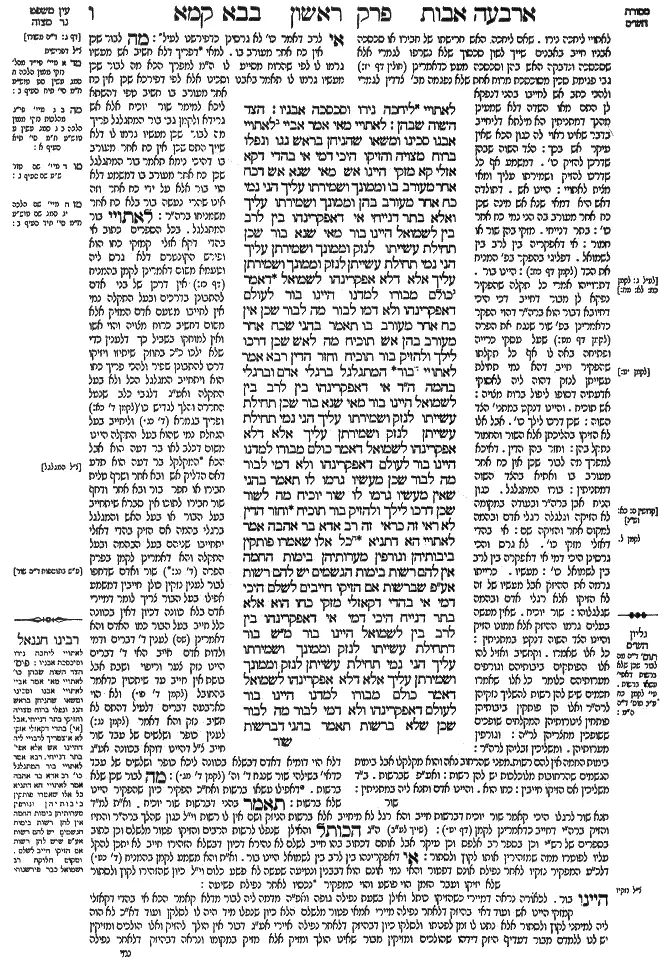
Bava Kamma 6a - Guemara
לאתויי ליחכה נירו וסכסכה אבניו הצד השוה שבהן לאתויי מאי אמר אביי לאתויי אבנו סכינו ומשאו שהניחן בראש גגו ונפלו ברוח מצויה והזיקו היכי דמי אי בהדי דקא אזלי קא מזקי היינו אש מאי שנא אש דכח אחר מעורב בו וממונך ושמירתו עליך הני נמי כח אחר מעורב בהן וממונך ושמירתו עליך ואלא בתר דנייחי אי דאפקרינהו בין לרב בין לשמואל היינו בור מאי שנא בור שכן תחילת עשייתו לנזק וממונך ושמירתן עליך הני נמי תחילת עשייתן לנזק וממונך ושמירתן עליך אלא דלא אפקרינהו לשמואל דאמר כולם מבורו למדנו היינו בור לעולם דאפקרינהו ולא דמו לבור מה לבור שכן אין כח אחר מעורב בו תאמר בהני שכח אחר מעורב בהן אש תוכיח מה לאש שכן דרכו לילך ולהזיק בור תוכיח וחזר הדין רבא אמר לאתויי בור המתגלגל ברגלי אדם וברגלי בהמה ה"ד אי דאפקרינהו בין לרב בין לשמואל היינו בור מאי שנא בור שכן תחילת עשייתו לנזק ושמירתו עליך הני נמי תחילת עשייתן לנזק ושמירתן עליך אלא דלא אפקרינהו לשמואל דאמר כולם מבורו למדנו היינו בור לעולם דאפקרינהו ולא דמי לבור מה לבור שכן מעשיו גרמו לו תאמר בהני שאין מעשיו גרמו לו שור יוכיח מה לשור שכן דרכו לילך ולהזיק בור תוכיח וחזר הדין לא ראי זה כראי זה רב אדא בר אהבה אמר לאתויי הא דתניא כל אלו שאמרו פותקין ביבותיהן וגורפין מערותיהן בימות החמה אין להם רשות בימות הגשמים יש להם רשות אע"פ שברשות אם הזיקו חייבים לשלם היכי דמי אי בהדי דקאזלי מזקי כחו הוא אלא בתר דנייח היכי דמי אי דאפקרינהו בין לרב בין לשמואל היינו בור מ"ש בור דתחילת עשייתו לנזק וממונך ושמירתו עליך הני נמי תחילת עשייתן לנזק וממונך ושמירתן עליך אלא דלא אפקרינהו לשמואל דאמר כולם מבורו למדנו היינו בור לעולם דאפקרינהו ולא דמי לבור מה לבור שכן שלא ברשות תאמר בהני דברשות
Comments from Rashi on Masechet Bava Kamma Page 6a
לאתויי ליחכה נירו . שאם ליחכה האש חרישתו של חבירו או סכסכה אבניו חייב באבנים שייך לשון סכסוך שלא נשרפו לגמרי אלא שסכסכה ונדבקה האש בהן וסכסכה מעט כדאמרינן (חולין דף יז:) גבי פגימת סכין מסוכסכת מרוח אחת שלא נפגמה מב' צדדין לגמרי . ולהכי כתב אש לחייבו בהני דנפקא לן התם מאו השדה דלא שמעינן מהנך דמתניתין הא מילתא דליחייב בדבר שאינו ראוי לה כגון הכא שאין עיקר אש בכך: הצד השוה שבהן שדרכן להזיק כו' . דמשמע אף כל שדרכו להזיק ושמירתו עליך ומאי מצית לאתויי: היינו אש . דתולדה דאש היא דמאי שנא אש מינה שכן כח אחר מעורב בה הני נמי כח אחר כו': בתר דנייחי . מזקי בהן שור או חמור: אי דאפקריה בין לרב בין לשמואל . דפליגי בהפקר בפ' המניח את הכד (לקמן בבא קמא דף כח:): היינו בור . דתרוייהו אמרי כל תקלה שהפקיר נפקא לן מבור דחייב דכי היכי דחיובא דבור הוא ברה"ר דהוי הפקר כדאמרינן בפ' שור שנגח את הפרה (לקמן בבא קמא דף מט:) שעל עסקי כרייה ופתיחה באה לו אף כל תקלתו שהפקיר חייב דהא נמי תחילת עשייתן לנזק דהוה ליה לאסוקי אדעתיה דסופו ליפול ברוח מצויה: אש תוכיח . והיינו דנקט במתני' הצד השוה: שכן דרכו לילך כו' . אבל אלו לא הזיקו בהליכתן אלא השור והחמור נתקל בהן: וחזר בהן הדין . דאיכא למפרך מה לבור שכן אין כח אחר מעורב בו ואתיא בהצד השוה דמתניתין: בורו המתגלגל . כגון הניח אבן ברה"ר ובעודה במקומה לא הזיקה וגלגלה רגלי אדם ובהמה למקום אחר והזיקה שם: מעשיו . כרייתו גרמה את ההיזק אבל מעשיו של זה לא הזיקו אלא רגלי אדם ובהמה שגלגלוהו: שור יוכיח . שאין מעשה בעלים גרמו ההיזק אלא ממונו הזיק והיינו הצד השוה דנקט במתניתין: כל אלו שאמרו . וקחשיב ואזיל להו אלו הפותקים ביבותיהם וגורפים מערותיהם כלומר כל אלו שאמרו חכמים שיש להן רשות להשליך נזקיהן לרה"ר ואלו הן פותקין ביבותיהן פותחין צינורותיהן המקלחים שופכים ששופכין מחצריהן לר"ה: וגורפין מערותיהן . ומשליכין זבליהן לרה"ר: בימות החמה אין להם רשות . מפני שהרחוב נאה והוא מקלקלו אבל בימות הגשמים שהרחובות מלוכלכות יש להן רשות: ואע"פ שברשות . ב"ד משליכין אם הזיקו חייבין: אי בהדי דאזלי מזקי כו' . לא גרס והכי גרסינן היכי דמי אי דאפקרה בין לרב בין לשמואל כו': כחו הוא . והיינו אדם ותנא ליה במתניתין:
Comments from Tosafot - Bava Kamma 6a
אי לרב דאמר כו' לא גרסינן כדפירשנו לעיל: מה לבור שכן אין כח אחר מעורב בו . למאי דפריך דלא חשיב אש מעשיו גרמו לו לפי שהרוח מסייע לו ה"מ למפרך הכא מה לבור שכן מעשיו גרמו לו תאמר באבנו וסכינו אלא לפי דפירכא שכן אין כח אחר מעורב בו חשיב טפי דהשתא ליכא למימר שור יוכיח אלא אש גרידא ולקמן גבי בור המתגלגל פריך מה לבור שכן מעשיו גרמו לו דלא שייך התם שכן אין כח אחר מעורב בו דהיכי נימא תאמר בור המתגלגל שכן כח אחר מעורב בו דמשמע דלא הוי בור אלא על ידי כח אחר וזה אינו שהרי נעשה בור בלא כח אחר משמניחו ברה"ר: לאתויי בור המתגלגל . בכל הספרים כתוב אי בהדי דקא אזלי קמזקי כחו הוא ופירש הקונטרס דלא גרס ליה וטעמא משום דאמרינן לקמן בהמניח (בבא קמא דף כז:) אין דרכן של בני אדם להתבונן בדרכים ובעל התקלה נמי אין לחייבו מטעם אדם המזיק אלא משום דחשיב כרוח מצויה והוי אשו ואין למוחקו בשביל כך דלענין כדי שלא ילכו כ"כ בחוזק שיתיזו ויזיקו דרכו להתבונן שפיר ולהכי פריך כחו הוא ויתחייב המגלגל הכל ולא בעל . התקלה ואע"ג דלגבי כלב שנטל החררה והלך לגדיש כו' (לקמן בבא קמא ד' כא:) ופריך בגמרא (ד' כג.) וליחייב בעל הגחלת נמי שהוא בעל התקלה היינו משום דכלב לאו בר דעה הוא אבל הכא המקלקל בר דעה הוא תדע דאם הדליק אש ובא אחר ושרף טלית חבירו או חפר בור ובא אחר ודחף שור חבירו לתוכו אין סברא שיתחייב בעל הבור או בעל האש והמגלגל ברגלי בהמה אם הזיק בהדי דאזלי יתחייבו שניהם בעל הבהמה ובעל התקלה והא דאמרינן לקמן בפרק הפרה (בבא קמא ד' נג:) שור ואדם שדחפו לבור לענין נזקין כולן חייבין דמשמע אפילו בעל הבור צריך לומר דמיירי אדם בלא כוונה דכיון דאין בכוונה כלל חייב בעל הבור כמו האדם והא דאמרינן (שם) לענין ד' דברים ודמי ולדות אדם חייב האי ד' דברים היינו נזק צער וריפוי ושבת אבל בושת אין חייב עד שיתכוין כדאמר בהחובל (לקמן בבא קמא ד' פו.) ולא הוי כארבעה דברים דלעיל דהתם לא חשיב נזק והא דאמר (לקמן בבא קמא נג:) לענין כופר ושלשים של עבד שור חייב צ"ל דהיינו דוקא בכוונה אע"ג דלא הוי דומיא דאדם דבשלא בכוונה ליכא כופר ושלשים של עבד כדאי' בשילהי שור שנגח ד' וה' (לקמן בבא קמא ד' מג.): מה לבור שכן שלא ברשות . דאפילו עשאו ברשות ואח"כ הפקיר כיון שהפקיר היינו שלא ברשות: תאמר בהני דברשות שור יוכיח וא"ת למ"ד . תנא שור לרגלו היכי קאמר שור יוכיח דברשות חייב והא רגל לא מיחייב אלא ברשות הניזק ושם אין לו רשות וי"ל כגון שהלך ברה"ר והתיז והזיק ברה"י דחייב כדאמרינן לקמן (בבא קמא דף יט.):
Bava Kamma 6a - Mishnah translated into english
The Gemara answers: It serves to add cases where the fire scorched another’s plowed field and cases in which it singed his stones. Even though the damaged object remains intact and is not consumed by the fire, one is still liable to pay for the damage caused.
§ The mishna teaches: The common denominator of the components in all these categories is that it is their typical manner to cause damage. The Gemara asks: In order to add what halakha is this statement cited in the mishna? Abaye said: The stating of the common denominator in the mishna serves to add that one is liable in a case of his stone, his knife, or his load, where he placed them on top of his roof, and they fell off the roof by means of a common wind and caused damage.
The Gemara asks: What are the circumstances in which one would be liable for the damage that was caused? If it is a case where those items cause damage as they are moving through the air propelled by the wind, that is a subcategory of Fire.
Therefore, one could claim: If so, what is different about Fire that defines it as a unique category? It is that another force is involved with it in causing damage, as it is the wind that causes the fire to spread and cause damage; and the entity propelled by the wind is your property, and responsibility for its safeguarding, to prevent it from causing damage, is incumbent upon you. In these cases, too, another force is involved with them in causing damage; and the objects are your property, and responsibility for their safeguarding, to prevent them from causing damage, is incumbent upon you. Perforce, there is no need for the common denominator in the mishna to teach the case of an object that causes damage when propelled off a roof by the wind. That case is included in the primary category of Fire that is explicitly mentioned in the mishna.
Rather, perhaps the common denominator serves to teach the halakha that one is liable when after those objects fall from the roof they come to rest on the ground, and they cause damage as an obstacle on which a person or an animal stumbles. The mishna teaches that the one who placed them on the roof is liable. The Gemara questions this explanation: What are the circumstances in which one is liable? If it is a case where one declared them ownerless, both according to Rav and according to Shmuel, this is a subcategory of Pit.
Therefore, one could claim: What is different about Pit that defines it as a unique category? It is that its initial formation, i.e., the digging of the pit, is done in a manner that can result in damage, and it is your property, and responsibility for its safeguarding, to prevent it from causing damage to others, is incumbent upon you. With regard to these items he had placed on the roof, too, their initial formation, i.e., when they are placed in the public domain, is done in a manner that can result in damage, and they are your property, and responsibility for their safeguarding, to prevent them from causing damage, is incumbent upon you. Perforce, there is no need for the common denominator in the mishna to teach the case where the objects fell from the roof, came to rest in the public domain, and were declared ownerless. That case is included in the primary category of Pit that is explicitly mentioned in the mishna.
Rather, perhaps the common denominator serves to teach the halakha that one is liable even in a case where one did not declare them ownerless. The Gemara asks: According to Shmuel, who says: We learned that one is liable to pay for damage caused by all obstacles that one places in a public domain, whether or not he declares them ownerless, from the halakhot with regard to one’s pit; this is a subcategory of Pit. The question remains: What halakha does the common denominator in the mishna teach?
The Gemara answers: Actually, the mishna teaches one’s liability in a case where one declared the objects ownerless, and even if he declared them ownerless, those objects are not similar to the primary category of Pit. What is notable about the primary category of Pit? It is notable in that there is no other force involved with it in causing the damage. Will you say the same with regard to these cases, where there is another force involved with it in causing the damage, i.e., the wind that propelled them from the roof to rest on the ground?
The Gemara suggests: If one attempts to challenge the derivation from Pit in this manner, it is possible to respond: The halakha of the primary category of Fire will prove that this factor, that there is another force involved with the object in causing the damage, is not a reason to exempt one from paying restitution for the damage, as although there is another force involved in the spreading of a fire, one is liable for the damage the fire causes, so the halakha with regard to these objects can be derived from that of Fire.
The Gemara questions the derivation from Fire: What is notable about Fire? It is notable in that its typical manner is to proceed from one place to another and cause damage. Will you say the same with regard to these objects propelled by the wind into the public domain, where it is not their typical manner to proceed and cause damage? Accordingly, how can one learn the halakha in this case from that of Fire?
The Gemara suggests: If one attempts to challenge the derivation from Fire in this manner, it is possible to respond: The halakha of the primary category of Pit will prove that the lack of this characteristic, of a typical manner being to proceed and cause damage, is not a reason to exempt the owner of the objects from paying restitution for the damage, as that is the nature of Pit, and one is liable for damage caused by his pit. The Gemara notes: And as Pit and Fire each prove that the defining characteristic of the other is not decisive in establishing liability or exemption, the derivation has reverted to its starting point, and liability in these cases is derived from the common denominator of Pit and Fire. This is the halakha added by the common denominator stated in the mishna.
Rava said: The stating of the common denominator in the mishna serves to add the halakha that one is liable in a case of Pit where an object is rolled by the feet of a person or the hooves of an animal. This is a case where one placed an obstacle in a public domain and the obstacle caused no damage where it was placed, but subsequently was kicked by passersby to a different location where it caused damage.
The Gemara asks: What are the circumstances in which one is liable for damage in that case? If it is a case where one declared the objects ownerless, both according to Rav and according to Shmuel this is a subcategory of Pit.
Therefore, one could claim: What is different about Pit that it is defined as a unique category? It is that its initial formation, i.e., the digging of the pit, is done in a manner that can result in damage, and responsibility for its safeguarding, to prevent it from causing damage to others, is incumbent upon you. With regard to these objects, too, their initial formation, i.e., when the obstacle reaches the in the public domain, is done in a manner that can result in damage, and responsibility for their safeguarding, to prevent them from causing damage, is incumbent upon you. Perforce, there is no need for the mishna to state their common denominator to teach the halakha in the case where the objects came to rest and are declared ownerless. That case is included in the primary category of Pit that is explicitly mentioned in the mishna.
Rather, perhaps the common denominator serves to teach the halakha that one is liable even in a case where one did not declare the objects ownerless. The Gemara asks: According to Shmuel, who says: We learned that one is liable for damage caused by all obstacles that one places in a public domain, whether or not he declares them ownerless, from the halakhot with regard to one’s pit, this is a subcategory of Pit. What halakha does the common denominator in the mishna teach?
The Gemara answers: Actually, the mishna teaches one’s liability in a case where one declared the objects ownerless, and even if he declared them ownerless, those objects are not similar to the primary category of Pit. What is notable about the primary category of Pit? It is notable in that one’s actions, the digging of the pit, cause the damage. Will you say the same with regard to these cases, where one’s actions do not cause damage? Rather, it is the feet of the passersby that caused the damage, by rolling the object to a different location where it caused damage.
The Gemara suggests: If one attempts to challenge the derivation from Pit in this manner, it is possible to respond: The halakha of the primary category of Ox will prove that this fact, that one’s actions do not cause the damage, is not a reason to exempt one from paying restitution for the damage, as although the owner’s actions do not cause the ox to cause damage, one is liable for the damage caused by his ox.
The Gemara questions the derivation from Ox: What is notable about Ox? It is notable in that it is the typical manner of the animals in these categories to proceed from one place to another and cause damage. By contrast, in the case of the obstacle kicked by passersby to a different location where it caused damage, it is not its typical manner to proceed and cause damage. Accordingly, how can one learn the halakha in this case from the primary category of Ox? The Gemara suggests: The primary category of Pit will prove that this fact, that the typical manner of a category’s components is not to proceed and cause damage, is not a reason to exempt one from paying restitution for the damage, as that is the nature of Pit, and one is liable for damage caused by his pit.
The Gemara notes: And as Pit and Ox each proves that the defining characteristic of the other is not decisive in establishing one’s liability or exemption, the derivation has reverted to its starting point, which is that the defining characteristic of this primary category of Ox is not similar to the defining characteristic of that category of Pit, and liability in these cases is derived from the common denominator of Pit and Ox. This is the halakha added by the common denominator stated in the mishna.
Rav Adda bar Ahava said: The stating of the common denominator in the mishna serves to add the halakha that one is liable to pay damages in this case that is taught in a baraita: With regard to all those people who engage in activities that the Sages stated are permitted, i.e., those who open their gutters and drain the sewage from their houses into the public domain, and those who flush out the water from their caves, where foul-smelling water was stored, into the public domain, during the summer they do not have permission to do so, while during the rainy season they have permission to do so, since the street is rained upon in any event and thereby washed. And although all these people perform their actions with permission, if they cause damage they are liable to pay for it.
The Gemara asks: What are the circumstances in which one is liable for damage caused by the sewage? If the sewage causes damage as it is moving, after he poured it into the public domain, it is damage caused by his own direct action, and it is no different from any other damage caused by a person. According to Rav, it is under the rubric of Maveh in the mishna. According to Shmuel it appears in the next mishna, and it is not derived from the common denominator mentioned in the mishna.
Rather, it is in a case where the damage was caused after the sewage came to rest on the floor, e.g., a passerby slipped on it. The Gemara asks: What are the circumstances? If it is a case where one declared the sewage ownerless, both according to Rav and according to Shmuel, this is a subcategory of Pit. What is different about Pit that it is defined as a unique category? It is that its initial formation, i.e., the digging of the pit, is done in a manner that can result in damage, and it is your property, and responsibility for its safeguarding, to prevent it from causing damage to others, is incumbent upon you. With regard to this sewage, too, its initial formation, i.e., the placement of the sewage in the public domain, is done in a manner that can result in damage, and it is your property, and responsibility for its safeguarding, to prevent it from causing damage, is incumbent upon you.
Rather, perhaps the common denominator serves to teach the halakha that one is liable even in a case where he did not declare the sewage ownerless. The Gemara asks: According to Shmuel, who says: We learned that one is liable for damage caused by all obstacles that one places in a public domain, whether or not he declares them ownerless, from the halakhot with regard to one’s pit, this is a subcategory of Pit. The question remains: What halakha does the common denominator in the mishna teach?
The Gemara answers: Actually, the mishna teaches one’s liability in a case where he declared the sewage ownerless, and even if he declared it ownerless, it is not similar to the primary category of Pit. What is notable about the primary category of Pit? It is notable in that the pit was dug in the public domain without permission. Will you say the same with regard to these cases where the sewage was channeled into the public domain with permission?
Traduction : The William Davidson digital edition of the Koren Noé Talmud, with commentary by Rabbi Adin Even-Israel Steinsaltz.