 Talmud Bavli
The learning on the whole site is dedicated : L'ilui Nishmat Reuven ben Rivka SEBBAG
The learning on the whole site is dedicated : L'ilui Nishmat רינה בת לדיסיה
The learning on the whole site is dedicated : L'ilui Nishmat Yaakov ben Myriam
Bava Kamma 32b : Youtube
Daf TubeYoutube
2 video classes :
Bava Kamma Page 32b
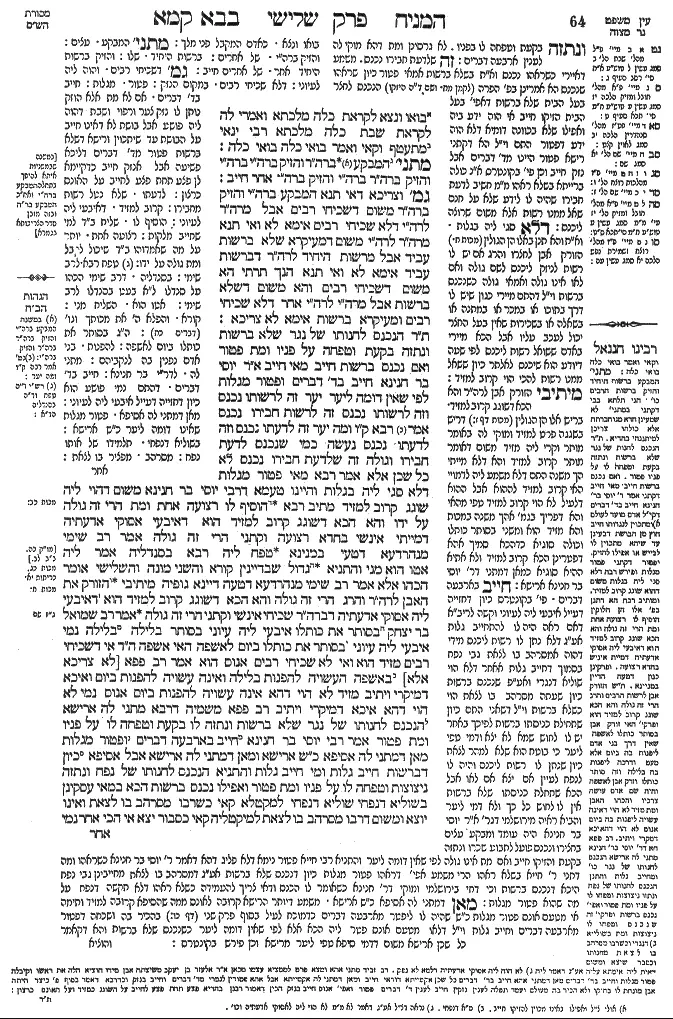
Bava Kamma 32b - Guemara
בואו ונצא לקראת כלה מלכתא ואמרי לה לקראת שבת כלה מלכתא רבי ינאי מתעטף וקאי ואמר בואי כלה בואי כלה:
מתני׳ המבקע ברה"ר והזיק ברה"י ברה"י והזיק ברה"ר ברה"י והזיק ברה"י אחר חייב:
גמ׳ וצריכא דאי תנא המבקע ברה"י והזיק ברה"ר משום דשכיחי רבים אבל מרה"ר לרה"י דלא שכיחי רבים אימא לא ואי תנא מרה"ר לרה"י משום דמעיקרא שלא ברשות עביד אבל מרשות היחיד לרה"ר דברשות עביד אימא לא ואי תנא הנך תרתי הא משום דשכיחי רבים והא משום דשלא ברשות אבל מרה"י לרה"י אחר דלא שכיחי רבים ומעיקרא ברשות אימא לא צריכא:
ת"ר הנכנס לחנותו של נגר שלא ברשות ונתזה בקעת וטפחה על פניו ומת פטור ואם נכנס ברשות חייב מאי חייב א"ר יוסי בר חנינא חייב בד' דברים ופטור מגלות לפי שאין דומה ליער יער זה לרשותו נכנס וזה לרשותו נכנס זה לרשות חבירו נכנס אמר רבא ק"ו ומה יער זה לדעתו נכנס וזה לדעתו נכנס נעשה כמי שנכנס לדעת חבירו וגולה זה שלדעת חבירו נכנס לא כל שכן אלא אמר רבא מאי פטור מגלות דלא סגי ליה בגלות והיינו טעמא דרבי יוסי בר חנינא משום דהוי ליה שוגג קרוב למזיד מתיב רבא הוסיף לו רצועה אחת ומת הרי זה גולה על ידו והא הכא דשוגג קרוב למזיד הוא דאיבעי אסוקי אדעתיה דמייתי אינשי בחדא רצועה וקתני הרי זה גולה אמר רב שימי מנהרדעא דטעי במנינא טפח ליה רבא בסנדליה אמר ליה אטו הוא מני והתניא גדול שבדיינין קורא והשני מונה והשלישי אומר הכהו אלא אמר רב שימי מנהרדעא דטעה דיינא גופיה מיתיבי הזורק את האבן לרה"ר והרג הרי זה גולה והא הכא דשוגג קרוב למזיד הוא דאיבעי ליה אסוקי אדעתיה דברה"ר שכיחי אינשי וקתני הרי זה גולה אמר רב שמואל בר יצחק בסותר את כותלו איבעי ליה עיוני בסותר בלילה בלילה נמי איבעי ליה עיוני בסותר את כותלו ביום לאשפה האי אשפה ה"ד אי דשכיחי רבים מזיד הוא ואי לא שכיחי רבים אנוס הוא אמר רב פפא [לא צריכא אלא] באשפה העשויה להפנות בלילה ואינה עשויה להפנות ביום ואיכא דמיקרי ויתיב מזיד לא הוי דהא אינה עשויה להפנות ביום אנוס נמי לא הוי דהא איכא דמיקרי ויתיב רב פפא משמיה דרבא מתני לה ארישא הנכנס לחנותו של נגר שלא ברשות ונתזה לו בקעת וטפחה לו על פניו ומת פטור אמר רבי יוסי בר חנינא חייב בארבעה דברים ופטור מגלות מאן דמתני לה אסיפא כ"ש ארישא ומאן דמתני לה ארישא אבל אסיפא כיון דברשות חייב גלות ומי חייב גלות והתניא הנכנס לחנותו של נפח ונתזה ניצוצות וטפחה לו על פניו ומת פטור ואפילו נכנס ברשות הכא במאי עסקינן בשוליא דנפחי שוליא דנפחי למקטלא קאי כשרבו מסרהב בו לצאת ואינו יוצא ומשום דרבו מסרהב בו לצאת למיקטליה קאי כסבור יצא אי הכי אחר נמי
Comments from Rashi on Masechet Bava Kamma Page 32b
בואו ונצא . כאדם המקבל פני מלך: מתני' המבקע . עצים: והזיק ברה"י . של אחרים: ברשות היחיד . שלו: והזיק ברשות היחיד אחר . של אחרים חייב: גמ' דשכיחי רבים . והוה ליה לעיוני: דלא שכיחי רבים . במקום הנזק: פטור . מגלות: חייב בד' דברים . אם לא מת אלא הוזק נותן לו נזק צער ורפוי ושבת דהוה ליה פושע אבל בושת לא דאינו חייב על הבושת עד שיתכוין ורישא דשלא ברשות פטור מד' דברים דליכא פשיעה אבל אנזק חייב כדקיימא לן פצע תחת פצע לחייב על האונס כרצון: חייב בד' דברים . דהתם נמי פושע הוא כיון דחזייה דעייל איבעי ליה לעיוני: לדעתו . שלא נטל רשות מחבירו: הוסיף לו . שליח ב"ד למי שחייב מלקות: רצועה אחת . יותר על מה שאמדוהו ב"ד שיכול לקבל ומת גולה על ידו: טפח רבא . לרב שימי: בסנדליה . דרב שימי הכהו על סנדלו ל"א בעט בסנדלו לרב שימי: אטו הוא . השליח מני: קורא . והפלא ה' את מכותך וגו' (דברים כח): ה"ג . בסותר את כותלו ביום לאשפה: להפנות . בני אדם נפנין בה לנקביהם: מאן דמתני לה אסיפא . פטור מגלות שאינו דומה ליער כ"ש ארישא: בשוליא דנפחי . תלמידו של אותו נפח: מסרהב . מפציר בו לצאת:
Comments from Tosafot - Bava Kamma 32b
ונתזה בקעת וטפחה לו בפניו . לא גרסינן ומת דהא מוקי לה לענין ארבעה דברים: זה שלדעת חבירו נכנס . משמע דאיירי כשראהו נכנס וא"ת בשלא ברשות אמאי פטור כיון שראהו שנכנס הא אמרינן בפ' הפרה (לקמן בבא קמא מח. ושם ד"ה היזקו) הנכנס לחצר בעל הבית שלא ברשות דאפי' בעל הבית הזיקו חייב אי הוה ידע ביה ואפילו שלא בכוונה דומיא דלא הוה ידע דפטור התם וי"ל הא דקתני רישא פטור היינו מד' דברים אבל נזק חייב וכן פי' בקונטרס א"נ כולה ברייתא בשלא ראהו מ"מ חשיב לדעת חבירו שהיה לו לידע שלא על חנם שאל ממנו רשות אלא משום שרוצה ליכנס: דלא סגי ליה בגלות . וא"ת והא תנן באלו הן הגולין (מכות ח.) הזורק אבן לחצרו והרג אם יש לו רשות לניזק ליכנס לשם גולה ואם לאו אינו גולה ואמאי גולה כשנכנס ברשות וי"ל דהתם מיירי כגון שיש לו דרך בתוכו או במכר או במתנה או בשאלה או בשכירות שאין בעל החצר יכול לעכב עליו אבל הכא מיירי באדם ששואל רשות ליכנס לפי שעה דיודע הוא שיכנס לאלתר כיון ששאל ממנו רשות להכי הוי קרוב למזיד: מיתיבי הזורק אבן לרה"ר והא הכא דשוגג קרוב למזיד . בריש אלו הן הגולין (מכות דף ז:) דריש בשגגה פרט למזיד ומוקי לה באומר מותר וקרי ליה מזיד משום דאומר מותר קרוב למזיד והא דלא מייתי הך משנה התם דלא משמע ליה לדמויי האי קרוב למזיד לההוא אבל ההוא דלעיל לא הוי קרוב למזיד טפי מהאי והא דפריך בגמ' אהך משנה במכות והא מזיד הוא ומשני בסותר כותלו וכולה סוגיא כדהכא סמיך אהא דפטרינן הכא קרוב למזיד ולא אתיא ההיא סוגיא כמאן דמתני דר' יוסי בר חנינא ארישא: חייב בארבעה דברים . פי' בקונטרס כיון דחזייה דעייל איבעי ליה לעיוני וקשה לריב"א דאם ראה היה לו להתחייב גלות אע"ג דלא נתן לו רשות ליכנס מידי דהוה אמסרהב בו לצאת גבי נפח בסמוך דחייב גלות אאחר דלא הוי שוליא דנגרי ואע"פ שנכנס ברשות כיון שעתה מסרהב בו לצאת הוי כשלא ברשות וי"ל דשאני התם כיון שתחילת כניסתו ברשות לפיכך באחר יש לו לחוש שמא לא יצא ודמי טפי ליער כי בוטח הוא שלא למהר לצאת כיון שנתן לו רשות ליכנס והיה לו לנפח לעיין אם יצא אם לאו אבל הכא שתחלת כניסתו שלא ברשות אין לו לחוש כל כך ולא דמי ליער והביא ראיה מירושלמי דגר' א"ר יוסי בר חנינא היה עומד ומבקע עצים בחצירו ונכנס פועל לתבוע שכרו ונתזה בקעת והזיקו חייב ואם מת אינו גולה לפי שאין דומה ליער והתניא רבי חייא פטור נימא דלא פליג דהא דאמר ר' יוסי בר חנינא כשראהו ומה דתני ר' חייא בשלא ראהו הרי משמע אפי' דראהו פטור מגלות כיון דנכנס שלא ברשות אע"ג דמסרהב בו לצאת מחייבינן גבי נפח היכא דנכנס ברשות וכי דחי בירושלמי ומוקי דר' חנינא כשאומר לו הכנס ודאי צריך להעמידה כשלא ראהו דלא תקשה דנפח על מה שהוא פטור מגלות: מאן דמתני לה אסיפא כ"ש ארישא . משמע דיותר הרישא קרובה לאונס ממה שהסיפא קרובה למזיד ותימה אי מטעם אונס פטור מגלות כ"ש שהיה לו ליפטר מארבעה דברים כדמוכח לעיל בסוף פרק שני (בבא קמא דף כו:) בהכיר בה ושכחה דפטור מארבעה דברים וחייב גלות וי"ל דלאו מטעם אונס פטר ליה הכא אלא לפי שאין דומה ליער כשנכנס שלא ברשות והא דקאמר כל שכן ארישא משום דדמי סיפא טפי ליער מרישא וכן פירש בקונטרס:
Bava Kamma 32b - Mishnah translated into english
Come and let us go out to greet the bride, the queen. And some say that this is what he would say: Come and let us go out to greet Shabbat, the bride, the queen. Rabbi Yannai would wrap himself in his tallit and stand at the eve of Shabbat at twilight, saying: Come, bride; come, bride. Similarly, it is appropriate for one to run out in honor of Shabbat.
MISHNA: With regard to one who was chopping wood in the public domain and a chip flew off and caused damage in the private property of another person, or one who was chopping wood in his private property and caused damage in the public domain, or one who was chopping wood in his private property and caused damage in the private property of another, in all these cases he is liable.
GEMARA: The Gemara comments: And it is necessary for the mishna to teach that he is liable in all these cases because in each one there is a novel element. As if it had taught only the case of one who was chopping wood in his private property and caused damage in the public domain, it might have been reasoned that he is liable, despite the fact that he was working in his private property, because it is common for the multitudes to be there. But if a chip flew from the public domain to another person’s private property, where it is not common for the multitudes to be, one might say that he is not liable. Therefore, it is necessary to teach this case as well.
And conversely, if it had taught that he is liable where the chip flew from the public domain to another’s private property, it might have been reasoned that he is liable because at the outset he was acting without permission by chopping wood in the public domain. But if it flew from his private property to the public domain, since he was acting with permission by chopping wood in his private property, one might say that he is not liable. Therefore, it is necessary to teach both cases.
And if the mishna had taught only that he is liable in these two cases, it might have been reasoned that in this case, where the damage was caused in the public domain, he is liable because it is common for the multitudes to be there, and in that case, where he was chopping in the public domain, he is liable because he was acting without permission. But in the last case, where the chip flew from his private property to another’s private property, where neither of the above reasons applies, as it is not common for the multitudes to be in the place where the damage was caused and he was acting with permission at the outset, one might say he is not liable. Therefore, it is necessary for the mishna to teach all these cases.
§ The Sages taught (Tosefta 6:25): With regard to one who entered the workshop of a carpenter without the latter’s permission, and a chip of wood flew off and hit him in the face and he died, the carpenter is exempt. But if he entered the shop with permission, the carpenter is liable.
The Gemara asks: What does the baraita mean when it rules that the carpenter is liable? Rabbi Yosei bar Ḥanina says: If the other person was injured, he is liable to pay four types of indemnity that one who injures another must pay. These are: Cost of the damage, pain, medical costs, and loss of livelihood. But if the one who entered was killed, he is exempt from exile.
The Gemara explains that he is exempt because this case is not similar to the case of a forest, which is the archetypal case stated in the Torah requiring one who kills unintentionally to be exiled, as it is written: “As when a man goes into the forest with his neighbor to chop wood, and his hand fetches a stroke with the axe to cut down the tree, and the head slips off the helve, and finds his neighbor, and he dies” (Deuteronomy 19:5). This is because in the case of the forest, both this one entered his domain and that one entered his domain, as anyone may use the public domain, whereas in this case, the victim entered another’s property. Therefore, the carpenter is not exiled.
Rava said: On the contrary; it can be inferred a fortiori that he is exiled. And if in the case of the forest, where this one entered of his own accord and that one entered of his own accord, neither asking for the other’s permission, nevertheless the victim is considered like one who entered with the other’s consent and therefore the one who kills unintentionally is exiled, all the more so is it not clear that in this case, where the victim entered another’s workshop with his consent, the carpenter should be exiled?
Rather, Rava said: What is the reason he is exempt from exile? As exile is not sufficient for him, and this is the reason of Rabbi Yosei bar Ḥanina, who exempts him from exile: Because it is an unintentional killing that is approaching intentional manslaughter. The purpose of exile is to atone for one who kills another completely unintentionally; if he was exceedingly negligent, exile is not sufficient to atone for him.
Rava raises an objection to his own explanation from a mishna: If one is sentenced to be flogged in court and the doctors assessed that he would be able to endure only a certain number of lashes, but the one administering the lashes added one lash to his punishment and he died, the agent of the court is exiled on account of him (Makkot 22b). But here, it is clear that it is a case of an unintentional killing that is approaching intentional manslaughter, as it should have entered his mind that people can die by one additional lash. And the tanna teaches that the agent of the court is exiled. Rav Shimi of Neharde’a said in response: It is a case where he erred in the counting, which is not considered approaching intentional manslaughter.
Rava slapped Rav Shimi on his sandal, a gesture of disparagement, and said to him: Is that to say that the one administering the lashes is the one who counts them? But isn’t it taught in a baraita that the eldest of the judges recites the verses that are read to a person while he receives lashes, and the second judge counts, and the third says to the one administering the lashes: Strike him? Accordingly, it is not the one administering the lashes who erred in counting.
Rather, Rav Shimi of Neharde’a said: It is a case where the judge himself erred in counting, and the one administering the lashes did not notice this error and meted out an extra lash, causing the person to die. It is therefore considered a completely unintentional killing. Consequently, he is exiled.
The Gemara raises an objection from another mishna: With regard to one who throws a stone into the public domain and kills someone, he is exiled. But here, it is clear that it is a case of an unintentional killing that is approaching intentional manslaughter, as it should have entered his mind that people are commonly found in the public domain. And the tanna teaches that he is exiled.
Rav Shmuel bar Yitzḥak said: It is not a case where one threw a stone into the public domain for no purpose, but rather where he demolishes his wall, which borders on the public domain, and stones fall into the public domain. Therefore, it is not considered to be approaching intentional manslaughter.
The Gemara questions this assertion: Nevertheless, he should have paid attention to see if there was anyone there, and therefore it should be considered an unintentional killing that approaches intentional manslaughter. The Gemara answers: It is a case where he demolishes the wall at night.
The Gemara asks: Even at night, he should also have paid attention to see if there was anyone there. The Gemara suggests an alternative interpretation: It is a case where he demolishes his wall during the day into a garbage dump, where people are not commonly found.
The Gemara asks: What are the circumstances of this garbage dump? If it is a garbage dump where the multitudes are commonly found, it is considered intentional manslaughter. And if the multitudes are not commonly found there, he should be considered not only one who kills unintentionally, but a victim of circumstances beyond his control, since he could not have anticipated that someone would be there. Therefore, he should be exempt from exile.
Rav Pappa said: This halakha is necessary only in the case of a garbage dump where people are given to relieve themselves at night and are not given to relieve themselves during the day, as it is near the public domain. But there are those who chance by and sit there for this purpose even during the day. On the one hand, he is not one who kills intentionally, as people are not given to relieve themselves there during the day. On the other hand, he is not a victim of circumstances beyond his control either, as there are those who chance by and sit there. Therefore, he is considered one who kills unintentionally and is liable to be exiled.
Rav Pappa taught in the name of Rava that this aforementioned statement of Rabbi Yosei bar Ḥanina is in reference not to the latter clause of the baraita but is in reference to the first clause: With regard to one who enters the workshop of a carpenter without permission, and a chip of wood flies off and strikes him in the face and he dies, the carpenter is exempt. In reference to this clause Rabbi Yosei bar Ḥanina says: If the one who entered was merely injured, the carpenter is liable to pay four types of indemnity. But if the one who entered was killed, he is exempt from exile.
The Gemara comments: With regard to the one who teaches this statement in reference to the last clause of the baraita, where one enters with permission, all the more so would he teach it in reference to the first clause, where one enters without permission. But the one who teaches this statement in reference to the first clause teaches it only in reference to that clause. But in the case of the last clause, since he entered with permission the carpenter is liable to go into exile.
The Gemara asks: But is he liable to go into exile when the victim had permission to enter? But isn’t it taught in a baraita that with regard to one who enters the workshop of a welder, and sparks [nitzotzot] fly off and strike him in his face and he dies, the welder is exempt, and this is the halakha even if the victim entered with permission?
The Gemara answers: With what are we dealing here, in this baraita? We are dealing with the welder’s apprentice who enters his workshop. The Gemara asks: Does the welder’s apprentice stand to be killed, i.e., is it permitted to kill him? The Gemara answers: It is a case where his mentor is urging him to leave, and he does not leave.
The Gemara asks: And because his mentor is urging him to leave, does he stand to be killed? The welder should be careful until his apprentice leaves. The Gemara answers: The welder thought that he had already left when the accident happened. The Gemara asks: If so, why establish that the baraita refers specifically to an apprentice? The welder would be exempt if it were any other person also.
Traduction : The William Davidson digital edition of the Koren Noé Talmud, with commentary by Rabbi Adin Even-Israel Steinsaltz.