 Talmud Bavli
The learning on the whole site is dedicated : L'ilui Nishmat Yechayahou ben Moche
The learning on the whole site is dedicated : L'ilui Nishmat Yaakov ben Myriam
The learning on the whole site is dedicated : L'ilui Nishmat Chemouel Eliezer ben Batcheva
Bava Kamma 33b : Youtube
Daf TubeYoutube
2 video classes :
Bava Kamma Page 33b
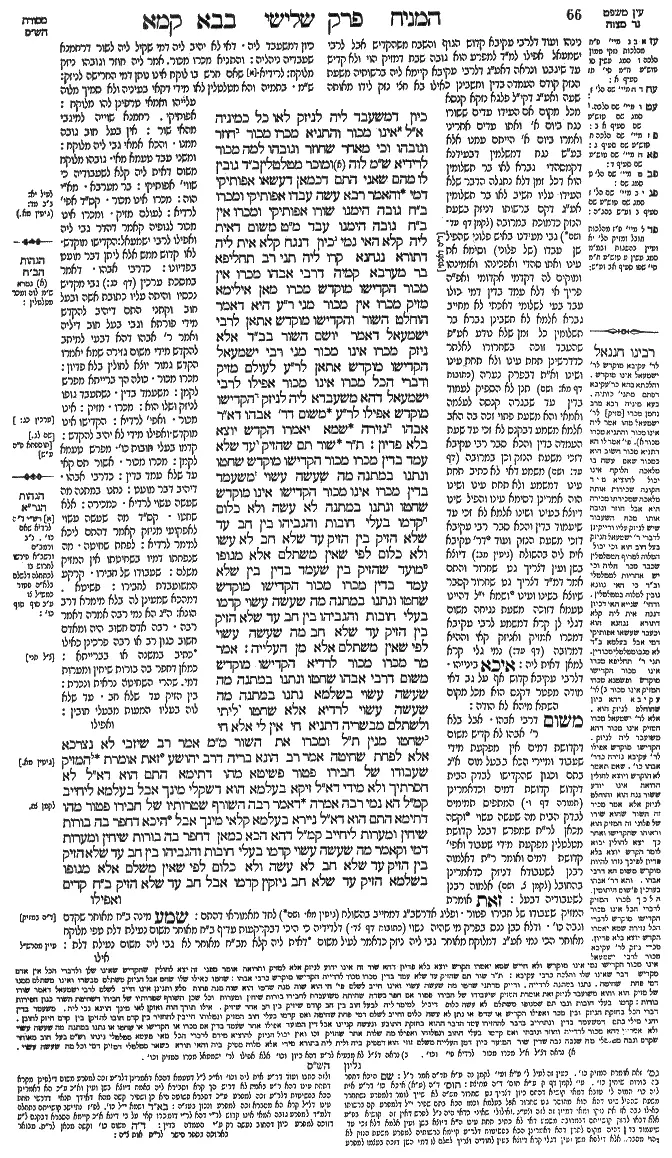
Bava Kamma 33b - Guemara
כיון דמשעבד ליה לניזק לאו כל כמיניה א"ל אינו מכור והתניא מכרו מכור חוזר וגובהו וכי מאחר שחוזר וגובהו למה מכור לרידיא ש"מ לוה ומוכר מטלטלין ב"ד גובין לו מהם שאני התם דכמאן דעשאו אפותיקי דמי והאמר רבא עשה עבדו אפותיקי ומכרו ב"ח גובה הימנו שורו אפותיקי ומכרו אין ב"ח גובה הימנו עבד מ"ט משום דאית ליה קלא האי נמי כיון דנגח קלא אית ליה דתורא נגחנא קרו ליה תני רב תחליפא בר מערבא קמיה דרבי אבהו מכרו אין מכור הקדישו מוקדש מכרו מאן אילימא מזיק מכרו אין מכור מני ר"ע היא דאמר הוחלט השור והקדישו מוקדש אתאן לרבי ישמעאל דאמר יושם השור בב"ד אלא ניזק מכרו אינו מכור מני רבי ישמעאל הקדישו מוקדש אתאן לר"ע לעולם מזיק ודברי הכל מכרו אינו מכור אפילו לרבי ישמעאל דהא משעבדא ליה לניזק הקדישו מוקדש אפילו לר"ע משום דר' אבהו דא"ר אבהו גזירה שמא יאמרו הקדש יוצא בלא פדיון:
ת"ר שור תם שהזיק עד שלא עמד בדין מכרו מכור הקדישו מוקדש שחטו ונתנו במתנה מה שעשה עשוי משעמד בדין מכרו אינו מכור הקדישו אינו מוקדש שחטו ונתנו במתנה לא עשה ולא כלום קדמו בעלי חובות והגביהו בין חב עד שלא הזיק בין הזיק עד שלא חב לא עשו ולא כלום לפי שאין משתלם אלא מגופו מועד שהזיק בין שעמד בדין בין שלא עמד בדין מכרו מכור הקדישו מוקדש שחטו ונתנו במתנה מה שעשה עשוי קדמו בעלי חובות והגביהו בין חב עד שלא הזיק בין הזיק עד שלא חב מה שעשה עשוי לפי שאין משתלם אלא מן העלייה:
אמר מר מכרו מכור לרדיא הקדישו מוקדש משום דרבי אבהו שחטו ונתנו במתנה מה שעשה עשוי בשלמא נתנו במתנה מה שעשה עשוי לרדיא אלא שחטו ליתי ולשתלם מבשריה דתניא חי אין לי אלא חי שחטו מנין ת"ל ומכרו את השור מ"מ אמר רב שיזבי לא נצרכא אלא לפחת שחיטה אמר רב הונא בריה דרב יהושע זאת אומרת המזיק שעבודו של חבירו פטור פשיטא מהו דתימא התם הוא דא"ל לא חסרתיך ולא מידי דא"ל זיקא בעלמא הוא דשקלי מינך אבל בעלמא ליחייב קמ"ל הא נמי רבה אמרה דאמר רבה השורף שטרותיו של חבירו פטור מהו דתימא התם הוא דא"ל ניירא בעלמא קלאי מינך אבל היכא דחפר בה בורות שיחין ומערות ליחייב קמ"ל דהא הכא כמאן דחפר בה בורות שיחין ומערות דמי וקאמר מה שעשה עשוי קדמו בעלי חובות והגביהו בין חב עד שלא הזיק בין הזיק עד שלא חב לא עשה ולא כלום לפי שאין משלם אלא מגופו בשלמא הזיק עד שלא חב ניזקין קדמו אבל חב עד שלא הזיק ב"ח קדים
Comments from Rashi on Masechet Bava Kamma Page 33b
כיון דמשעבד ליה . דאי לא יהיב ליה דמי שקיל ליה לשור דרחמנא שעבדיה ניהליה: והתניא מכרו מכור . אמר ליה חוזר וגובהו ניזק מלוקח: לרידיא . שאם חרש בו לוקח אינו נותן דמי החרישה לניזק: ש"מ . בתמיה והא מטלטלין לאו מידי דקאי בעיניה ולא סמיך מלוה עלייהו ואמאי טרפינן להו מלוקח: אפותיקי . רחמנא שוייה למיגבי מהאי שור: אין בעל חוב גובה ממנו . והכא אמאי גבי ליה מלוקח: ומשני עבד טעמא מאי . גובהו מלוקח משום דאית ליה קלא לשעבודיה כי שווי' אפותיקי: בר מערבא . מא"י הוה: מכרו אינו מכור . קס"ד אפי' לרדיא: לעולם מזיק . ומכרו אינו מכור לגופיה קאמר דהדר גבי ליה ואפילו לרבי ישמעאל: הקדישו מוקדש . לאו קדוש ממש אלא ליתן דבר מועט בפדיונו: כדרבי אבהו . דאמר במסכת ערכין (דף כג:) גבי מקדיש נכסיו והיתה עליו כתובת אשה ובעל חוב וקתני התם דיהיב להקדש מידי פורתא וגבי בעל חוב דיליה ואמר ר' אבהו דהא דבעי למיתב להקדש מידי משום גזירה שמא יאמרו הקדש גמור יוצא לחולין בלא פדיון: מכרו מכור . כולה הך ברייתא מפרש לקמן: משעמד בדין . נשתעבד גופו לניזק ושלו הוא: מכרו . מזיק: אינו מכור . ואפי' לרדיא: הקדישו אינו מוקדש . ואפילו מידי לא יהיב להקדש: קדמו בעלי חובות כו' . מפרש טעמא לקמן: מכרו מכור . אשור תם קאי עד שלא עמד בדין: כדרבי אבהו . דיהיב דבר מועט: נתנו במתנה מה שעשה עשוי לרדיא . כמכירה: אלא שחטו . קס"ד מה שעשה עשוי לאפקועי מניזק קאמר דהתם ליכא למימר לרדיא: נתנו במתנה מה שעשה עשוי לרדיא . כמכירה: לפחת שחיטה . מה שנפחתו דמיו בשחיטתו אין המזיק משלם: שעבודו של חבירו . קרקע המשועבדת לחבירו: פשיטא . דמהכא שמעינן לה בלא מימרא דרב הונא: ה"ג הא נמי רבה אמרה דאמר רבה . רבה אדם חשוב היה ומאדם חשוב כגון רב או רבה פרכינן כאילו כתיב במשנה או בברייתא: כמאן דחפר בה בורות שיחין ומערות דמי . שהרי השחיטה נראית ונכרת: בין הזיק עד שלא חב . עד שלא לוה בעליו המעות מבעלי חובין:
Comments from Tosafot - Bava Kamma 33b
משום דרבי אבהו . אבל בלא ר' אבהו לא קדיש משום דקדושת דמים אין מפקעת מידי שעבוד ומיירי הכא בבעל מום א"נ בתם וכגון שהקדישו לבדק הבית דקדוש קדושת דמים וכדאמרינן (תמורה דף ו.) המתפיס תמימים לבדק הבית מה שעשה עשוי וקשה מכאן לר"ת שמפרש דבכל קדושת מטלטלין מפקעת מידי שעבוד ואפי' קדושת דמים ואומר ר"ת דאלמוה רבנן לשעבודא דניזק כדאמרינן בהחובל (לקמן בבא קמא צ. ושם) אלמוה רבנן לשעבודיה דבעל: זאת אומרת המזיק שעבודו של חבירו פטור . ופליג אדרשב"ג דמחייב בהשולח (גיטין מא. ושם) לחד מאמוראי דהתם: שמע מינה ב"ח מאוחר שקדם וגבה כו' . ודלא כבן ננס בפרק מי שהיה נשוי (כתובות דף צד.) דלדידיה כי היכי דבקרקעות עדיף ב"ח מאוחר משום נעילת דלת טפי מלוקח מאוחר הכי נמי אע"ג דמלוקח מאוחר גבי ליה ניזק כדאמר לעיל משום. דאית ליה קלא מב"ח מאוחר לא גבי ליה משום נעילת דלת:
Bava Kamma 33b - Mishnah translated into english
does he say that since the ox is liened to the debt to the injured party, who will collect it should the ox’s owner not have sufficient funds, it is not in his power to sell it? Rav Naḥman said to him: It is not sold.
Rava asked him: But isn’t it taught in a baraita that if he sold it, it is sold? Rav Naḥman replied: Nevertheless, the injured party then collects it from the purchaser. The Gemara asks: Since the injured party then collects it from the purchaser, with regard to what matter is it sold? His right to collect it negates the effectiveness of the sale. The Gemara answers: It is sold for the purpose of plowing [ridya]. The purchaser may use the ox for plowing until the injured party collects it from him, and the purchaser is not required to reimburse the injured party for the use of his ox.
The Gemara asks: Should one conclude from this ruling that with regard to one who borrows money and then sells his movable property, the court can collect the debt from this property on behalf of the creditor, as according to Rabbi Yishmael the belligerent ox is only a lien for the debt owed to the injured party? The Gemara answers: There, in the case of the belligerent ox, it is different, as the owner of the ox is considered like one who rendered it designated payment of the debt, since the Torah specifies that the injured party collects damages from the ox. In general, however, movable property that is sold by a debtor cannot be collected by the creditor.
The Gemara asks: But doesn’t Rava say that if one rendered his slave as designated repayment for a debt and subsequently sold him, the creditor collects payment from the purchaser, whereas if one rendered his ox as designated repayment and then sold it, the creditor cannot collect it from the purchaser? This contradicts the previous statement that the belligerent ox is considered designated repayment, and therefore even if it is sold the injured party can collect it from the purchaser.
The Gemara answers: The distinction made in Rava’s statement answers this question. What is the reason that a slave who was rendered as designated repayment can be collected from the purchaser? It is because rendering a slave as designated repayment is not common and generates publicity. The purchaser was therefore aware of this when he bought the slave. Similarly, with regard to this ox as well, since it gored an animal, it generates publicity, as it is publicly called a goring ox, and so the purchaser was aware of the lien attached to it. Therefore, the injured party can collect it from the purchaser.
Rav Taḥalifa from the West, Eretz Yisrael, taught the following baraita with regard to the belligerent ox before Rabbi Abbahu: If he sold it, it is not sold, but if he consecrated it, it is consecrated.
The Gemara asks: Who sold it? Is it the injured party or the liable party? If we say it is the one liable for the damage, whose opinion is it that if he sold it, it is not sold? It is the opinion of Rabbi Akiva, who says that the ox was already assigned to the injured party. But in the following statement of the baraita, that if he consecrated it, it is consecrated, we arrive at the opinion of Rabbi Yishmael, who says that the ox shall be appraised in court.
If, rather, it is referring to the injured party selling it, whose opinion is it that if he sold it, it is not sold? It is the opinion of Rabbi Yishmael, who holds that the injured party has no share of ownership in the ox until it is transferred to him by the court. But in the statement that if he consecrated it, it is consecrated, we arrive at the opinion of Rabbi Akiva. The baraita does not seem to accord with either opinion.
The Gemara answers: Actually, it is referring to the one liable for the damage, and everyone agrees with its ruling. The ruling that if he sold it, it is not sold is the halakha even according to the opinion of Rabbi Yishmael, as the ox is liened to the injured party, precluding the owner from selling it.
The statement that if he consecrated it, it is consecrated, is the halakha even according to Rabbi Akiva, since it is not actually consecrated but is considered so only due to the statement of Rabbi Abbahu. As Rabbi Abbahu says that if one consecrates liened property, although the consecration does not take effect, nevertheless he is required to redeem it, due to a rabbinic decree lest people say that consecrated property can be removed from the ownership of the Temple treasury without redemption. Therefore, the ineffectiveness of the ox’s consecration notwithstanding, he is still required to redeem it, by means of minimal payment, so as not to cause the denigration of Temple property.
§ The Sages taught in a baraita: With regard to an innocuous ox that caused damage, if, before its owner stood trial, he sold it, it is sold. If he consecrated it, it is consecrated. If he slaughtered it or gave it as a gift, what he did is done, i.e., takes effect. By contrast, once he stood trial and is now obligated to pay the injured party, if he sold it, it is not sold; if he consecrated it, it is not consecrated; if he slaughtered it or gave it is a gift, he has done nothing.
If creditors of the ox’s owner collected the ox first, whether he owed the creditors before his ox caused the damage or whether it caused the damage before he owed them, they have done nothing. Their collection is void, because compensation to the injured party is paid only from the body of the ox, as it was innocuous, and it is therefore designated exclusively for this compensation.
The baraita continues: With regard to a forewarned ox that caused damage, whether its owner stood trial or whether he did not stand trial, if he sold it, it is sold; if he consecrated it, it is consecrated; if he slaughtered it or gave it as a gift, what he did is done. Likewise, if creditors collected the ox first, whether he owed them before it caused the damage, or whether it caused the damage before he owed them, what they did is done. This is because the restitution is paid only from his superior-quality property, not from the body of the ox. Therefore, what he or his creditors do with the ox takes effect.
The Gemara explains the baraita: The Master said above, with regard to an innocuous ox, that if he sold it, it is sold. As explained above, the sale is valid only with regard to the purchaser using the ox for plowing in the interim, until the injured party collects it.
The statement that if he consecrated it, it is consecrated does not mean that it is actually consecrated, but rather that it must be redeemed through payment of a minimal sum, due to Rabbi Abbahu’s statement mentioned above.
With regard to the statement that if he slaughtered it or gave it as a present, what he did is done, the Gemara asks: Granted, if he gave it as a present, what he did is done with regard to the recipient’s permission to use it for plowing. But if he slaughtered it, how does that affect the injured party’s rights? Let him come and receive payment from the slaughtered ox’s meat.
This is as it is taught in a baraita: It is stated in the Torah: “Then they shall sell the live ox” (Exodus 21:35). I have derived only that the injured party receives a share of ownership if the belligerent ox is alive. From where do I derive that this applies even if the ox’s owner slaughtered it? The verse states: “Then they shall sell the live ox,” indicating that in any case, whatever the circumstances, the injured party is paid from proceeds of the sale of the belligerent ox.
Rav Sheizevi said: This statement is necessary only with regard to the diminished value of the ox due to its slaughter. Although the value of the ox may no longer cover the damage, its owner is not liable to compensate the injured party beyond the ox’s current value.
Rav Huna, son of Rav Yehoshua, said: That is to say that one who causes damage to another’s liened property is exempt from paying compensation, since the property does not actually belong to the one who holds the lien.
The Gemara asks: Isn’t this inference from the baraita obvious? The Gemara answers: Rav Huna, son of Rav Yehoshua, states this halakha lest you say that it is specifically there, in the case where one slaughters a liened ox, that he is exempt, as he can say to him: I have not detracted anything from what is yours, as he can say to him: I took only spirit from what is yours. He detracted only the life of the ox, not its physical body, and one who causes damage to another’s liened property might be exempt from liability for this intangible damage. But generally one who causes damage to another’s lien should be liable. Therefore, Rav Huna, son of Rav Yehoshua, teaches us that one is exempt from liability for all types of damage he causes to another’s liened property.
The Gemara challenges this explanation: Rabba stated this principle, as well, and there would be no need for Rav Huna, son of Rav Yehoshua, to state it. As Rabba says: One who burns another’s documents, in which other people’s debts to him are recorded, is exempt, although the owner of the documents can no longer collect payment from liened property.
The Gemara answers: Rav Huna, son of Rav Yehoshua, states this principle lest you say that it is specifically there that he is exempt, as the perpetrator of the damage can say to the owner of the documents: I burned your mere paper, for which I am prepared to pay. But in a case where one dug pits, ditches, or caves on liened land, causing substantial damage, he should be liable to compensate the one holding the lien. Therefore, Rav Huna, son of Rav Yehoshua, teaches us that even in a case of substantial damage he is exempt, as the case here, where the ox was slaughtered, is like one who dug pits, ditches, or caves, as slaughter is considered substantial damage, and the tanna said that in this case what he did is done.
The Gemara continues to explain the baraita, which states: If creditors collected the innocuous ox first, whether its owner owed them before his ox caused damage or whether it caused damage before he owed them, they have done nothing, because restitution is paid only from the body of the ox.
The Gemara asks: Granted, in the case where it caused damage before he owed them, the injured parties came first, and the ox is liened to the debt. But in the case where he owed them before it caused damage, the creditor collected it first, so why does he not have the preemptive right to the ox?
Traduction : The William Davidson digital edition of the Koren Noé Talmud, with commentary by Rabbi Adin Even-Israel Steinsaltz.